WHAT ARE BIOMOLECULES?
Molecules are groups of atoms
that contain more than one element
and biomolecules involves in
maintenance and metabolic
processes of living organisms
Elements are atoms of one
particular type (from the periodic
table)
TYPES OF BIOMOLECULES
Carbohydrates
Lipids
Proteins
Nucleic acids
Made up of C,H,O
Function: source of energy
Examples: sugar, rice, apples,
bread
Polymer: polysaccharide
(carbohydrates)
Monomer: monosaccharide
1. CARBOHYDRATES
TYPES OF CARBO HYDRATES
1. Monosaccharides: single sugar.
Ex. Glucose, fructose, galactose
Aka – simple sugars
2. Disaccharide: 2 simple sugars
Ex. Sucrose (table sugar) maltose
3. Polysaccharides: 3 or more sugars
Ex. Cellulose – used in cell walls
Starch stores energy in plants
Glycogen – stored energy in animals
2. LIPIDS
Made of C,H,O
Function: Store energy
Examples: wax, oil, butter,
cholesterol
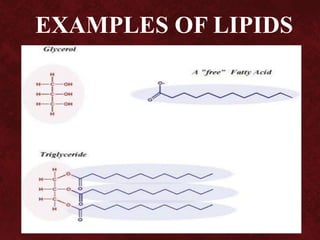
Structure: 1 glycerol and 3 fatty
acids
EXAMPLES OF LIPIDS
3. PROTEINS
Made of C,H,O,N
Function: Building and repairing cells,
speeds up or slows down chemical
reactions
Examples: meat/muscle, hair, nails,
enzymes
Polymer: Polypeptide (proteins)
Monomer: amino acid
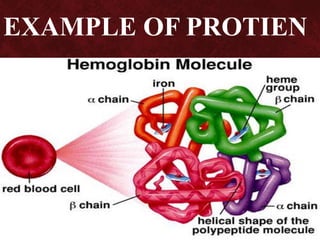
EXAMPLE OF PROTIEN
4. NUCLEIC ACIDS
Made of C,H,O,N,P
Function: Store genetic
information, determines physical
appearance
Example: DNA, RNA, ATP
(energy)
Polymer: nucleic acids
Monomer: nucleotides
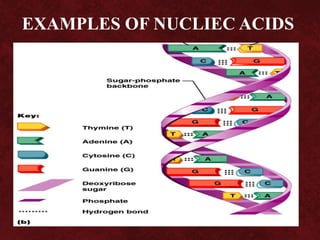
EXAMPLES OF NUCLIEC ACIDS
Austin Biomolecules

Austin Biomolecules

  • 2.
    WHAT ARE BIOMOLECULES? Moleculesare groups of atoms that contain more than one element and biomolecules involves in maintenance and metabolic processes of living organisms Elements are atoms of one particular type (from the periodic table)
  • 4.
  • 5.
    Made up ofC,H,O Function: source of energy Examples: sugar, rice, apples, bread Polymer: polysaccharide (carbohydrates) Monomer: monosaccharide 1. CARBOHYDRATES
  • 6.
    TYPES OF CARBOHYDRATES 1. Monosaccharides: single sugar. Ex. Glucose, fructose, galactose Aka – simple sugars 2. Disaccharide: 2 simple sugars Ex. Sucrose (table sugar) maltose 3. Polysaccharides: 3 or more sugars Ex. Cellulose – used in cell walls Starch stores energy in plants Glycogen – stored energy in animals
  • 7.
    2. LIPIDS Made ofC,H,O Function: Store energy Examples: wax, oil, butter, cholesterol Structure: 1 glycerol and 3 fatty acids
  • 8.
  • 9.
    3. PROTEINS Made ofC,H,O,N Function: Building and repairing cells, speeds up or slows down chemical reactions Examples: meat/muscle, hair, nails, enzymes Polymer: Polypeptide (proteins) Monomer: amino acid
  • 10.
  • 11.
    4. NUCLEIC ACIDS Madeof C,H,O,N,P Function: Store genetic information, determines physical appearance Example: DNA, RNA, ATP (energy) Polymer: nucleic acids Monomer: nucleotides
  • 12.