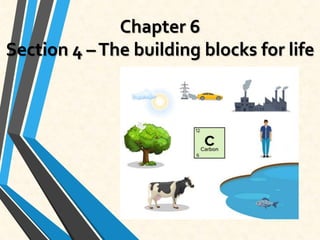
Chapter 6
Section 4 –The building blocks for life
Organic chemistry
The importance of Carbon
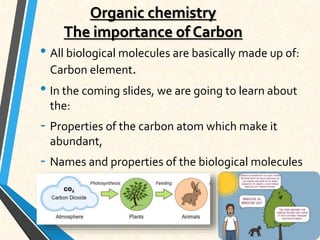
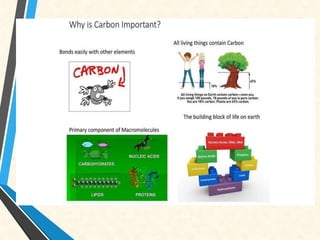
• All biological molecules are basically made up of:
Carbon element.
• In the coming slides, we are going to learn about
the:
- Properties of the carbon atom which make it
abundant,
- Names and properties of the biological molecules
Properties of Carbon
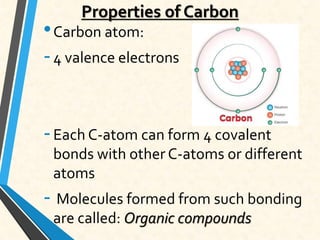
•Carbon atom:
-4 valence electrons
-Each C-atom can form 4 covalent
bonds with other C-atoms or different
atoms
- Molecules formed from such bonding
are called: Organic compounds
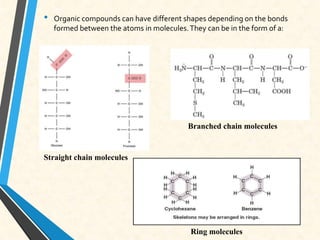
• Organic compounds can have different shapes depending on the bonds
formed between the atoms in molecules.They can be in the form of a:
Straight chain molecules
Branched chain molecules
Ring molecules
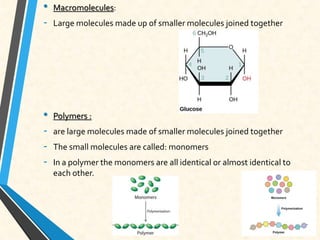
• Macromolecules:
- Large molecules made up of smaller molecules joined together
• Polymers :
- are large molecules made of smaller molecules joined together
- The small molecules are called: monomers
- In a polymer the monomers are all identical or almost identical to
each other.
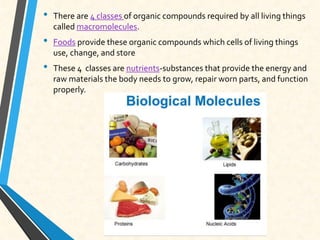
• There are 4 classes of organic compounds required by all living things
called macromolecules.
• Foods provide these organic compounds which cells of living things
use, change, and store
• These 4 classes are nutrients-substances that provide the energy and
raw materials the body needs to grow, repair worn parts, and function
properly.
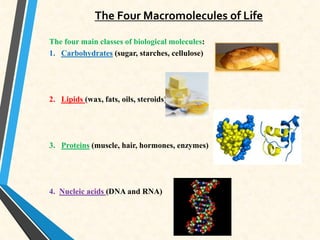
The Four Macromolecules of Life
The four main classes of biological molecules:
1. Carbohydrates (sugar, starches, cellulose)
2. Lipids (wax, fats, oils, steroids)
3. Proteins (muscle, hair, hormones, enzymes)
4. Nucleic acids (DNA and RNA)
Carbohydrates :
- energy-rich organic compounds
- made of the elements carbon, hydrogen and oxygen
- have a general formula (CH2O)n where n is the number of CH2O
units in the chain.
- Classified into 2 main groups:
 Simple carbohydrate :
-Where n is between 3 to 7
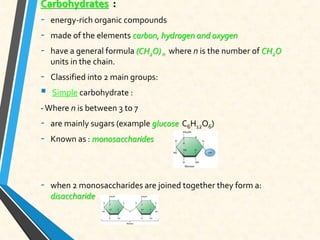
- are mainly sugars (example glucose C6H12O6)
- Known as : monosaccharides
- when 2 monosaccharides are joined together they form a:
disaccharide
Carbohydrates :
 Complex carbohydrate:
– for n ≥ 100
- a polymer made of smaller molecules of simple carbs bonded to
one another
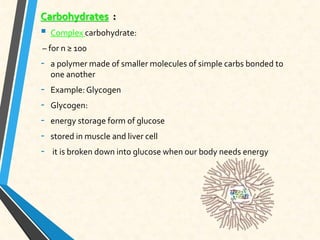
- Example:Glycogen
- Glycogen:
- energy storage form of glucose
- stored in muscle and liver cell
- it is broken down into glucose when our body needs energy
Proteins
• Proteins – formed from smaller
molecules called amino acids
• Amino acid – a monomer that is a
building block of proteins
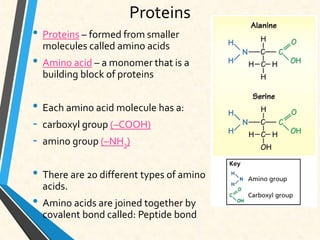
• Each amino acid molecule has a:
- carboxyl group (–COOH)
- amino group (–NH3)
• There are 20 different types of amino
acids.
• Amino acids are joined together by
covalent bond called: Peptide bond
PROTEINS are made up of smaller molecules or monomers
called AminoAcid
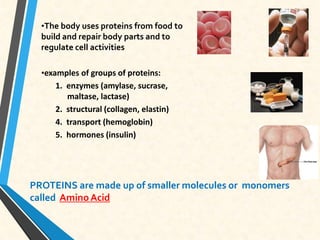
•The body uses proteins from food to
build and repair body parts and to
regulate cell activities
•examples of groups of proteins:
1. enzymes (amylase, sucrase,
maltase, lactase)
2. structural (collagen, elastin)
4. transport (hemoglobin)
5. hormones (insulin)
Lipids
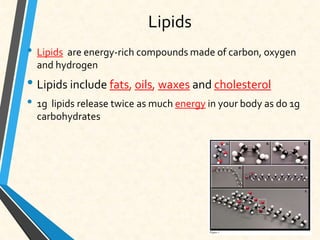
• Lipids are energy-rich compounds made of carbon, oxygen
and hydrogen
• Lipids include fats, oils, waxes and cholesterol
• 1g lipids release twice as much energy in your body as do 1g
carbohydrates
LIPIDS:
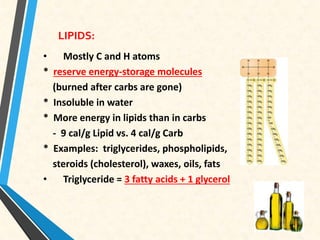
• Mostly C and H atoms
* reserve energy-storage molecules
(burned after carbs are gone)
* Insoluble in water
* More energy in lipids than in carbs
- 9 cal/g Lipid vs. 4 cal/g Carb
* Examples: triglycerides, phospholipids,
steroids (cholesterol), waxes, oils, fats
• Triglyceride = 3 fatty acids + 1 glycerol
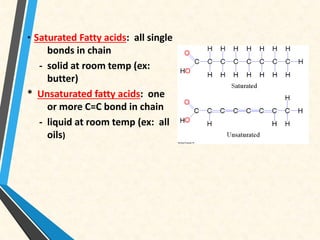
* Saturated Fatty acids: all single
bonds in chain
- solid at room temp (ex:
butter)
* Unsaturated fatty acids: one
or more C=C bond in chain
- liquid at room temp (ex: all
oils)
Nucleic Acids
• Nucleic acids – very large organic molecules made up of
carbon, oxygen, hydrogen, nitrogen and phosphorus
• Two types – DNA and RNA
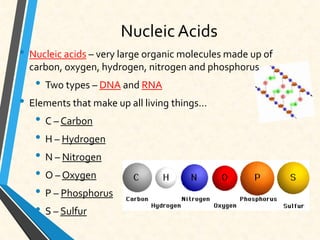
• Elements that make up all living things…
• C – Carbon
• H – Hydrogen
• N – Nitrogen
• O – Oxygen
• P – Phosphorus
• S – Sulfur
• Nucleic acids (DNA and RNA) store and transmit genetic
information
• DNA = Deoxyribonucleic acid
• RNA = Ribonucleic acid
• Large macromolecules containing C, H, O, N, P
• The sugars and phosphates are the backbone for the nucleic
acid
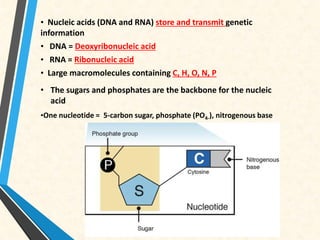
•One nucleotide = 5-carbon sugar, phosphate (PO4-), nitrogenous base
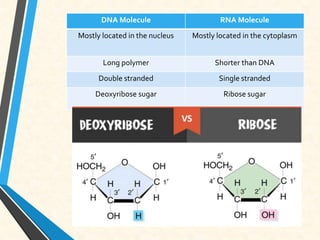
DNA Molecule RNA Molecule
Mostly located in the nucleus Mostly located in the cytoplasm
Long polymer Shorter than DNA
Double stranded Single stranded
Deoxyribose sugar Ribose sugar

Chapter 6 ppt.ppt

  • 1.
    Chapter 6 Section 4–The building blocks for life
  • 2.
    Organic chemistry The importanceof Carbon • All biological molecules are basically made up of: Carbon element. • In the coming slides, we are going to learn about the: - Properties of the carbon atom which make it abundant, - Names and properties of the biological molecules
  • 3.
    Properties of Carbon •Carbonatom: -4 valence electrons -Each C-atom can form 4 covalent bonds with other C-atoms or different atoms - Molecules formed from such bonding are called: Organic compounds
  • 5.
    • Organic compoundscan have different shapes depending on the bonds formed between the atoms in molecules.They can be in the form of a: Straight chain molecules Branched chain molecules Ring molecules
  • 6.
    • Macromolecules: - Largemolecules made up of smaller molecules joined together • Polymers : - are large molecules made of smaller molecules joined together - The small molecules are called: monomers - In a polymer the monomers are all identical or almost identical to each other.
  • 7.
    • There are4 classes of organic compounds required by all living things called macromolecules. • Foods provide these organic compounds which cells of living things use, change, and store • These 4 classes are nutrients-substances that provide the energy and raw materials the body needs to grow, repair worn parts, and function properly.
  • 8.
    The Four Macromoleculesof Life The four main classes of biological molecules: 1. Carbohydrates (sugar, starches, cellulose) 2. Lipids (wax, fats, oils, steroids) 3. Proteins (muscle, hair, hormones, enzymes) 4. Nucleic acids (DNA and RNA)
  • 9.
    Carbohydrates : - energy-richorganic compounds - made of the elements carbon, hydrogen and oxygen - have a general formula (CH2O)n where n is the number of CH2O units in the chain. - Classified into 2 main groups:  Simple carbohydrate : -Where n is between 3 to 7 - are mainly sugars (example glucose C6H12O6) - Known as : monosaccharides - when 2 monosaccharides are joined together they form a: disaccharide
  • 10.
    Carbohydrates :  Complexcarbohydrate: – for n ≥ 100 - a polymer made of smaller molecules of simple carbs bonded to one another - Example:Glycogen - Glycogen: - energy storage form of glucose - stored in muscle and liver cell - it is broken down into glucose when our body needs energy
  • 11.
    Proteins • Proteins –formed from smaller molecules called amino acids • Amino acid – a monomer that is a building block of proteins • Each amino acid molecule has a: - carboxyl group (–COOH) - amino group (–NH3) • There are 20 different types of amino acids. • Amino acids are joined together by covalent bond called: Peptide bond
  • 12.
    PROTEINS are madeup of smaller molecules or monomers called AminoAcid •The body uses proteins from food to build and repair body parts and to regulate cell activities •examples of groups of proteins: 1. enzymes (amylase, sucrase, maltase, lactase) 2. structural (collagen, elastin) 4. transport (hemoglobin) 5. hormones (insulin)
  • 13.
    Lipids • Lipids areenergy-rich compounds made of carbon, oxygen and hydrogen • Lipids include fats, oils, waxes and cholesterol • 1g lipids release twice as much energy in your body as do 1g carbohydrates
  • 14.
    LIPIDS: • Mostly Cand H atoms * reserve energy-storage molecules (burned after carbs are gone) * Insoluble in water * More energy in lipids than in carbs - 9 cal/g Lipid vs. 4 cal/g Carb * Examples: triglycerides, phospholipids, steroids (cholesterol), waxes, oils, fats • Triglyceride = 3 fatty acids + 1 glycerol
  • 15.
    * Saturated Fattyacids: all single bonds in chain - solid at room temp (ex: butter) * Unsaturated fatty acids: one or more C=C bond in chain - liquid at room temp (ex: all oils)
  • 16.
    Nucleic Acids • Nucleicacids – very large organic molecules made up of carbon, oxygen, hydrogen, nitrogen and phosphorus • Two types – DNA and RNA • Elements that make up all living things… • C – Carbon • H – Hydrogen • N – Nitrogen • O – Oxygen • P – Phosphorus • S – Sulfur
  • 17.
    • Nucleic acids(DNA and RNA) store and transmit genetic information • DNA = Deoxyribonucleic acid • RNA = Ribonucleic acid • Large macromolecules containing C, H, O, N, P • The sugars and phosphates are the backbone for the nucleic acid •One nucleotide = 5-carbon sugar, phosphate (PO4-), nitrogenous base
  • 18.
    DNA Molecule RNAMolecule Mostly located in the nucleus Mostly located in the cytoplasm Long polymer Shorter than DNA Double stranded Single stranded Deoxyribose sugar Ribose sugar