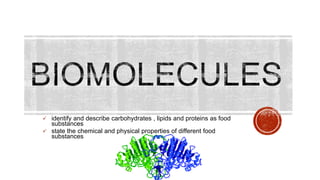
 identify and describe carbohydrates , lipids and proteins as food
substances
 state the chemical and physical properties of different food
substances
Biomolecules are molecules that occur naturally in living organisms.
Biomolecules include macromolecules like proteins, carbohydrates,
lipids and nucleic acids.
It also includes small molecules like primary and secondary
metabolites and natural products.
Biomolecules consists mainly of carbon and hydrogen with nitrogen,
oxygen, sulphur, and phosphorus.
Biomolecules are very large molecules of many atoms, that are
covalently bound together.
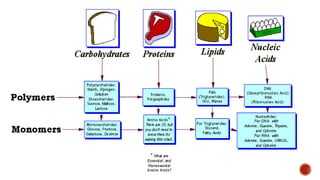
There are four major classes of biomolecules:
1. Carbohydrates
2. Lipids
3. Proteins
4. Nucleic acids
 Carbohydrates are organic molecules with the general formula CHO in a
1:2:1 ration.
 They constitute 1 to 2% of cell mass and provide the raw fuel for cellular
energy production
 They are classified based on molecular size and solubility. Smaller
molecules are more soluble than larger one!
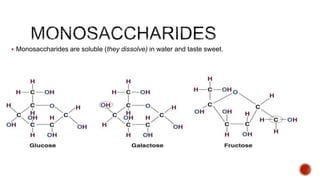
 Monosaccharides are soluble (they dissolve) in water and taste sweet.
 Two monosaccharides are joined together by dehydration synthesis to form a disaccharide molecule.
These are also soluble in water and taste sweet..
 Sucrose (table sugar): Glucose + fructose = sucrose + water
 Lactose (milk sugar): Glucose + galactose = lactose + water
 Maltose (malt sugar): Glucose + glucose = maltose + water
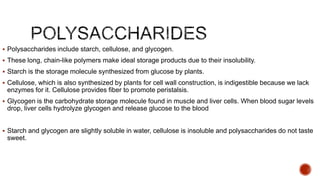
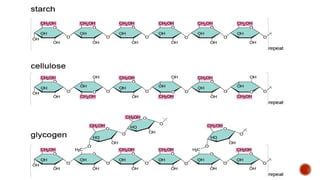
 Polysaccharides include starch, cellulose, and glycogen.
 These long, chain-like polymers make ideal storage products due to their insolubility.
 Starch is the storage molecule synthesized from glucose by plants.
 Cellulose, which is also synthesized by plants for cell wall construction, is indigestible because we lack
enzymes for it. Cellulose provides fiber to promote peristalsis.
 Glycogen is the carbohydrate storage molecule found in muscle and liver cells. When blood sugar levels
drop, liver cells hydrolyze glycogen and release glucose to the blood
 Starch and glycogen are slightly soluble in water, cellulose is insoluble and polysaccharides do not taste
sweet.
 Lipids are organic molecules that are insoluble in water.
 Made of carbon, hydrogen and oxygen.
 Lipids are composed of long hydrocarbon chains and hold a large amount of energy and are energy
storage molecules.
 Lipids are generally esters of fatty acids and are building blocks of biological membranes. Most of the
lipids have a polar head and non-polar tail.
 Fatty acids can be unsaturated and saturated fatty acids.
 There are three main groups of lipids:
1. Triglycerides
2. Phospholipids
3. Steroids
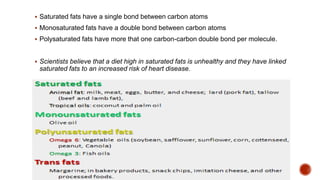
 Saturated fats have a single bond between carbon atoms
 Monosaturated fats have a double bond between carbon atoms
 Polysaturated fats have more that one carbon-carbon double bond per molecule.
 Scientists believe that a diet high in saturated fats is unhealthy and they have linked
saturated fats to an increased risk of heart disease.
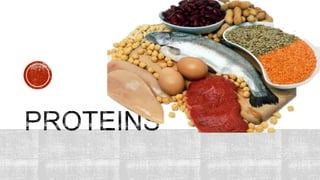
 Proteins are known as building blocks of life.
 Compounds contain carbon, hydrogen, oxygen, nitrogen and sometimes sulphur and
phosphorous.
 Perform variety of functions like catalyzing metabolic reactions, replication of DNA,
response to stimuli, and transporting molecules.
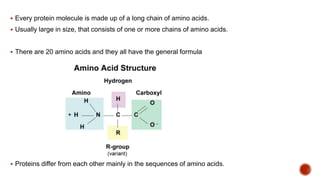
 Every protein molecule is made up of a long chain of amino acids.
 Usually large in size, that consists of one or more chains of amino acids.
 There are 20 amino acids and they all have the general formula
 Proteins differ from each other mainly in the sequences of amino acids.
1. Which three elements are found in carbohydrates, lipids and proteins
2. Define the term; ‘monosaccharide’ ‘hydrolysis’ ‘condensation’ and ‘polysaccharide’
3. In which kind of food would you find the following substances, cellulose, sucrose, oil, fat and amino acids
4. What is the main function of proteins?

Biomolecules

  • 1.
     identify anddescribe carbohydrates , lipids and proteins as food substances  state the chemical and physical properties of different food substances
  • 2.
    Biomolecules are moleculesthat occur naturally in living organisms. Biomolecules include macromolecules like proteins, carbohydrates, lipids and nucleic acids. It also includes small molecules like primary and secondary metabolites and natural products. Biomolecules consists mainly of carbon and hydrogen with nitrogen, oxygen, sulphur, and phosphorus. Biomolecules are very large molecules of many atoms, that are covalently bound together.
  • 3.
    There are fourmajor classes of biomolecules: 1. Carbohydrates 2. Lipids 3. Proteins 4. Nucleic acids
  • 5.
     Carbohydrates areorganic molecules with the general formula CHO in a 1:2:1 ration.  They constitute 1 to 2% of cell mass and provide the raw fuel for cellular energy production  They are classified based on molecular size and solubility. Smaller molecules are more soluble than larger one!
  • 7.
     Monosaccharides aresoluble (they dissolve) in water and taste sweet.
  • 8.
     Two monosaccharidesare joined together by dehydration synthesis to form a disaccharide molecule. These are also soluble in water and taste sweet..  Sucrose (table sugar): Glucose + fructose = sucrose + water  Lactose (milk sugar): Glucose + galactose = lactose + water  Maltose (malt sugar): Glucose + glucose = maltose + water
  • 9.
     Polysaccharides includestarch, cellulose, and glycogen.  These long, chain-like polymers make ideal storage products due to their insolubility.  Starch is the storage molecule synthesized from glucose by plants.  Cellulose, which is also synthesized by plants for cell wall construction, is indigestible because we lack enzymes for it. Cellulose provides fiber to promote peristalsis.  Glycogen is the carbohydrate storage molecule found in muscle and liver cells. When blood sugar levels drop, liver cells hydrolyze glycogen and release glucose to the blood  Starch and glycogen are slightly soluble in water, cellulose is insoluble and polysaccharides do not taste sweet.
  • 12.
     Lipids areorganic molecules that are insoluble in water.  Made of carbon, hydrogen and oxygen.  Lipids are composed of long hydrocarbon chains and hold a large amount of energy and are energy storage molecules.  Lipids are generally esters of fatty acids and are building blocks of biological membranes. Most of the lipids have a polar head and non-polar tail.  Fatty acids can be unsaturated and saturated fatty acids.  There are three main groups of lipids: 1. Triglycerides 2. Phospholipids 3. Steroids
  • 13.
     Saturated fatshave a single bond between carbon atoms  Monosaturated fats have a double bond between carbon atoms  Polysaturated fats have more that one carbon-carbon double bond per molecule.  Scientists believe that a diet high in saturated fats is unhealthy and they have linked saturated fats to an increased risk of heart disease.
  • 15.
     Proteins areknown as building blocks of life.  Compounds contain carbon, hydrogen, oxygen, nitrogen and sometimes sulphur and phosphorous.  Perform variety of functions like catalyzing metabolic reactions, replication of DNA, response to stimuli, and transporting molecules.
  • 16.
     Every proteinmolecule is made up of a long chain of amino acids.  Usually large in size, that consists of one or more chains of amino acids.  There are 20 amino acids and they all have the general formula  Proteins differ from each other mainly in the sequences of amino acids.
  • 18.
    1. Which threeelements are found in carbohydrates, lipids and proteins 2. Define the term; ‘monosaccharide’ ‘hydrolysis’ ‘condensation’ and ‘polysaccharide’ 3. In which kind of food would you find the following substances, cellulose, sucrose, oil, fat and amino acids 4. What is the main function of proteins?