

DEFINITION
 Leukemia is a cancer of blood. It is a group of
malignant disorders affecting the blood and tissue
forming the blood such as:
 Bone marrow
 Lymph system
 Spleen
 Leukemia may affect females and males of all
age groups
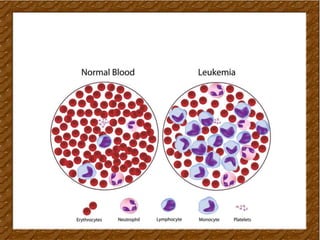
 Leukemic cells replace white blood cells and
makes the body very weaker and vulnerable to
any infection
TYPES OF LEUKEMIA
 Acute
 Acute Lymphoblastic Leukemia(ALL)
 Acute Myeloid Leukemia(AML)
 Chronic
 Chronic Myeloid Leukemia(CML)
 Chronic Lymphocytic Leukemia(CLL)
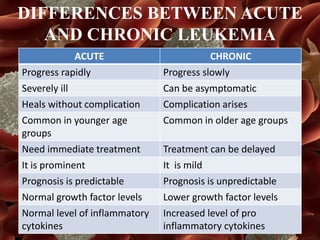
DIFFERENCES BETWEEN ACUTE
AND CHRONIC LEUKEMIA
ACUTE CHRONIC
Progress rapidly Progress slowly
Severely ill Can be asymptomatic
Heals without complication Complication arises
Common in younger age
groups
Common in older age groups
Need immediate treatment Treatment can be delayed
It is prominent It is mild
Prognosis is predictable Prognosis is unpredictable
Normal growth factor levels Lower growth factor levels
Normal level of inflammatory
cytokines
Increased level of pro
inflammatory cytokines
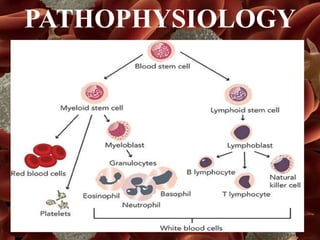
PATHOPHYSIOLOGY
ETIOLOGY
 Heredity
 Environmental factors
 Infections
 Consumption of alcohol
and drugs
 Smoking
 Radiation exposure
 Association with diseases
of immunity
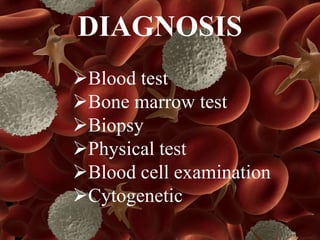
DIAGNOSIS
Blood test
Bone marrow test
Biopsy
Physical test
Blood cell examination
Cytogenetic
TREATMENTS
 Chemotherapy
 Biological Therapy
 Targeted Therapy
 Radiation Therapy
 Stem Cell Therapy
 Watchful Waiting
 Bone Marrow Transplantation
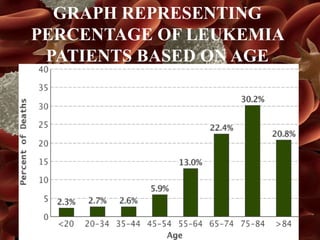
GRAPH REPRESENTING
PERCENTAGE OF LEUKEMIA
PATIENTS BASED ON AGE
Austin Leukemia

Austin Leukemia

  • 2.
    DEFINITION  Leukemia isa cancer of blood. It is a group of malignant disorders affecting the blood and tissue forming the blood such as:  Bone marrow  Lymph system  Spleen  Leukemia may affect females and males of all age groups  Leukemic cells replace white blood cells and makes the body very weaker and vulnerable to any infection
  • 4.
    TYPES OF LEUKEMIA Acute  Acute Lymphoblastic Leukemia(ALL)  Acute Myeloid Leukemia(AML)  Chronic  Chronic Myeloid Leukemia(CML)  Chronic Lymphocytic Leukemia(CLL)
  • 5.
    DIFFERENCES BETWEEN ACUTE ANDCHRONIC LEUKEMIA ACUTE CHRONIC Progress rapidly Progress slowly Severely ill Can be asymptomatic Heals without complication Complication arises Common in younger age groups Common in older age groups Need immediate treatment Treatment can be delayed It is prominent It is mild Prognosis is predictable Prognosis is unpredictable Normal growth factor levels Lower growth factor levels Normal level of inflammatory cytokines Increased level of pro inflammatory cytokines
  • 6.
  • 7.
    ETIOLOGY  Heredity  Environmentalfactors  Infections  Consumption of alcohol and drugs  Smoking  Radiation exposure  Association with diseases of immunity
  • 9.
    DIAGNOSIS Blood test Bone marrowtest Biopsy Physical test Blood cell examination Cytogenetic
  • 10.
    TREATMENTS  Chemotherapy  BiologicalTherapy  Targeted Therapy  Radiation Therapy  Stem Cell Therapy  Watchful Waiting  Bone Marrow Transplantation
  • 12.
    GRAPH REPRESENTING PERCENTAGE OFLEUKEMIA PATIENTS BASED ON AGE