SHAHINA AKHTER
           XI A
GULF ASIAN ENGLISH SCHOOL
1. ANALYSIS OF CHEMICAL COMPOSITION OF
                    LIVING ORGANISMS

• Take a living tissue, weigh & grind it in trichloroacidic acid
• Thick slurry is filtered through cheese cloth


       Filtrate                                  Retentate
•   Inorganic compounds – ‘ash analysis’
•   Living tissue is weighed to get wet weight
•   This is dried          dry weight
•   C                CO2 + H2O
•   Ca, Mg, Na, K
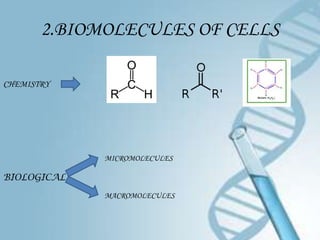
2.BIOMOLECULES OF CELLS

CHEMISTRY


             MICROMOLECULES

BIOLOGICAL
             MACROMOLECULES
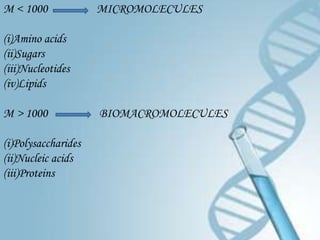
M < 1000             MICROMOLECULES

(i)Amino acids
(ii)Sugars
(iii)Nucleotides
(iv)Lipids

M > 1000             BIOMACROMOLECULES

(i)Polysaccharides
(ii)Nucleic acids
(iii)Proteins
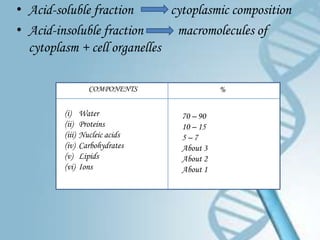
• Acid-soluble fraction       cytoplasmic composition
• Acid-insoluble fraction      macromolecules of
  cytoplasm + cell organelles

                   COMPONENTS              %

         (i)     Water           70 – 90
         (ii)    Proteins        10 – 15
         (iii)   Nucleic acids   5–7
         (iv)    Carbohydrates   About 3
         (v)     Lipids          About 2
         (vi)    Ions            About 1
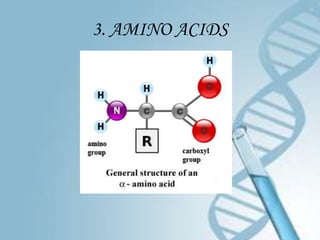
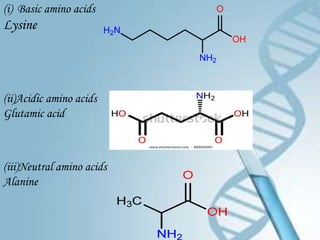
3. AMINO ACIDS
(i) Basic amino acids
Lysine


(ii)Acidic amino acids
Glutamic acid


(iii)Neutral amino acids
Alanine
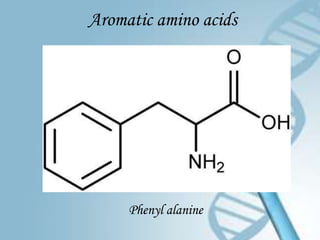
Aromatic amino acids


     Phenyl alanine
4.SUGARS
• Monosaccharides : simplest sugars, which cannot be
    hydrolysed further into smaller sugars
• Composed of 3-7 C atoms :
(i) Triose (3C) (Glyceraldehyde)
(ii) Tetrose (4C) (Erythrose)
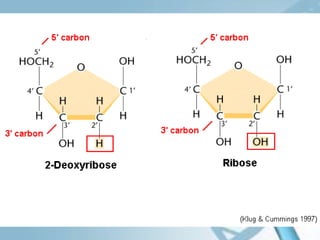
(iii) Pentose (5C) (Ribose)
(iv) Hexose (6C) (Glucose)
(v) Heptose (7C) (Sedoheptulose)
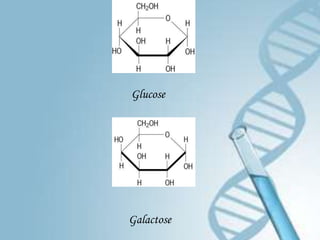
Glucose


Galactose
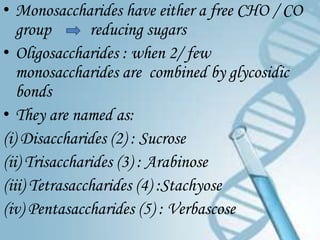
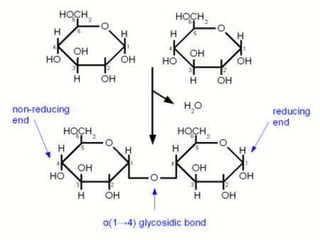
• Monosaccharides have either a free CHO / CO
   group       reducing sugars
• Oligosaccharides : when 2/ few
   monosaccharides are combined by glycosidic
   bonds
• They are named as:
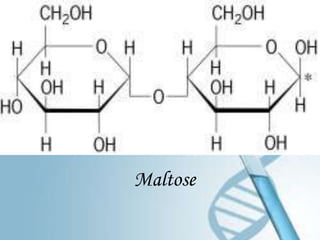
(i) Disaccharides (2) : Sucrose
(ii) Trisaccharides (3) : Arabinose
(iii) Tetrasaccharides (4) :Stachyose
(iv) Pentasaccharides (5) : Verbascose
Maltose
5.LIPIDS
• Heterogenous group of organic compunds

• Water insoluble but soluble in non-polar
  organic solvents
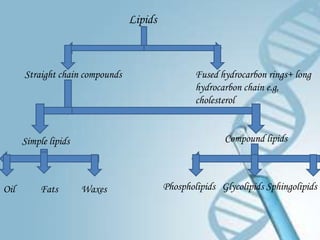
Lipids


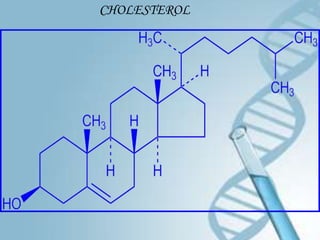
      Straight chain compounds                    Fused hydrocarbon rings+ long
                                                  hydrocarbon chain e.g,
                                                  cholesterol


      Simple lipids                                      Compound lipids


Oil        Fats       Waxes               Phospholipids Glycolipids Sphingolipids
CHOLESTEROL
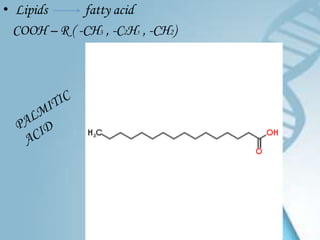
• Lipids      fatty acid
  COOH – R ( -CH3 , -C2H5 , -CH2)
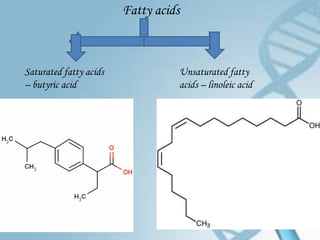
Fatty acids


Saturated fatty acids             Unsaturated fatty
– butyric acid                    acids – linoleic acid
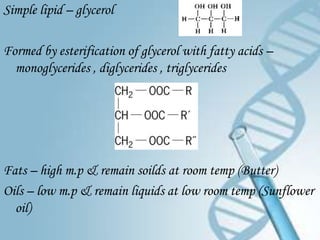
Simple lipid – glycerol

Formed by esterification of glycerol with fatty acids –
  monoglycerides , diglycerides , triglycerides


Fats – high m.p & remain soilds at room temp (Butter)
Oils – low m.p & remain liquids at low room temp (Sunflower
  oil)
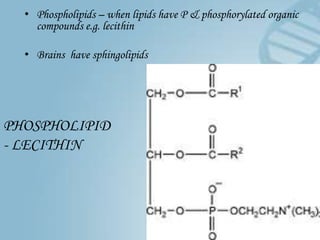
• Phospholipids – when lipids have P & phosphorylated organic
    compounds e.g. lecithin

  • Brains have sphingolipids


PHOSPHOLIPID
- LECITHIN
6.NUCLEOTIDES

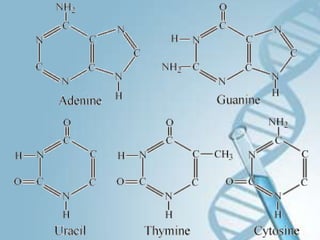
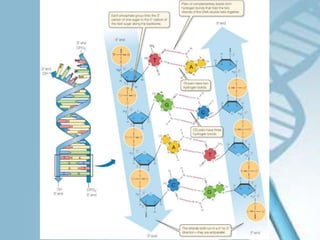
Phosphorylated nucleosides – adenylic acid, guanylic acid,
thymidylic acid, cytidylic acid & uridylic acid

N base attached to pentose sugar – adenosine, guanosine,
thymidine, cytidine & uridine
• Purine + pyridimine            monomers

• Higher nucleotides store energy in their high energy P
  bonds

• Nicotinamide + riboflavin          coenzymes
• Coenzymes : non – protein organic moiety of
  holoenzyme
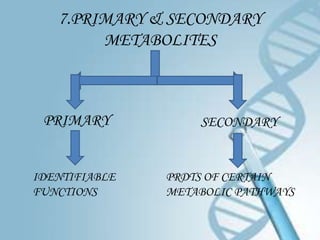
7.PRIMARY & SECONDARY
        METABOLITES


 PRIMARY           SECONDARY


IDENTIFIABLE   PRDTS OF CERTAIN
FUNCTIONS      METABOLIC PATHWAYS
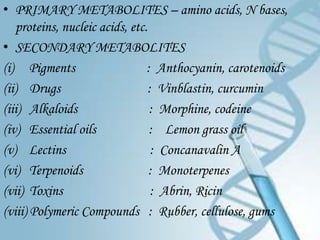
• PRIMARY METABOLITES – amino acids, N bases,
   proteins, nucleic acids, etc.
• SECONDARY METABOLITES
(i) Pigments                    : Anthocyanin, carotenoids
(ii) Drugs                      : Vinblastin, curcumin
(iii) Alkaloids                  : Morphine, codeine
(iv) Essential oils              : Lemon grass oil
(v) Lectins                      : Concanavalin A
(vi) Terpenoids                  : Monoterpenes
(vii) Toxins                     : Abrin, Ricin
(viii) Polymeric Compounds : Rubber, cellulose, gums
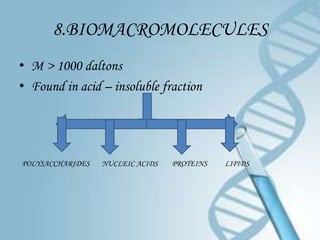
8.BIOMACROMOLECULES
• M > 1000 daltons
• Found in acid – insoluble fraction


POLYSACCHARIDES   NUCLEIC ACIDS   PROTEINS   LIPIDS
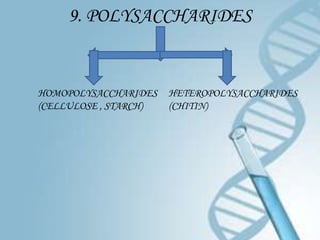
9. POLYSACCHARIDES


HOMOPOLYSACCHARIDES    HETEROPOLYSACCHARIDES
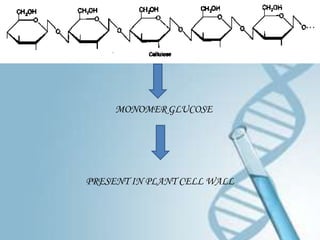
(CELLULOSE , STARCH)   (CHITIN)
MONOMER GLUCOSE


PRESENT IN PLANT CELL WALL
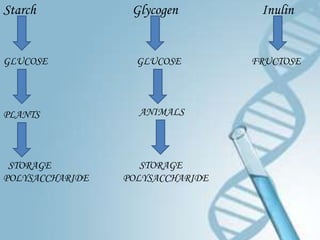
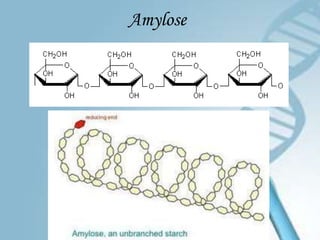
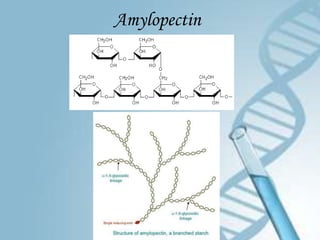
Starch            Glycogen         Inulin


GLUCOSE            GLUCOSE        FRUCTOSE


PLANTS             ANIMALS


 STORAGE            STORAGE
POLYSACCHARIDE   POLYSACCHARIDE
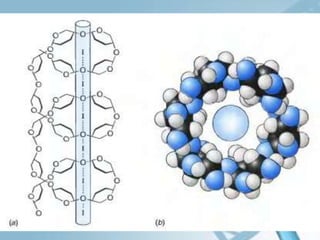
Amylose
Amylopectin
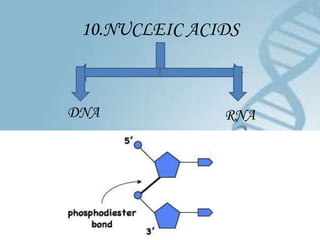
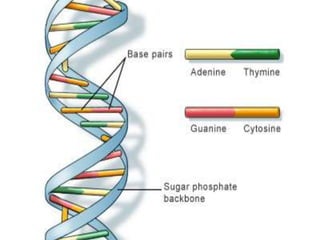
10.NUCLEIC ACIDS


DNA            RNA
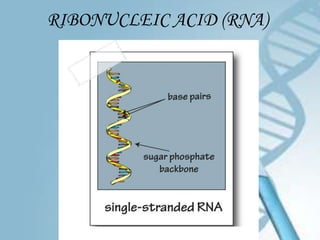
RIBONUCLEIC ACID (RNA)
mRNA : Carries information from DNA to ribosome
        Decides sequence of amino acids

   tRNA: Carries an amino acid from cytoplasm to
r ibosome

   rRNA: Forms parts of ribosomes
         Forms part of seat of protein synthesis
11.PROTEINS
• Heteropolymers containing string/strings
  of amino acids
• Types of proteins result from 20 amino
  acids
• Depending on
• (i) no. of amino acid residues
• (ii)sequence of amino acids
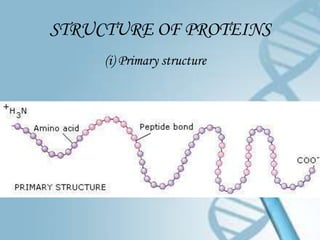
STRUCTURE OF PROTEINS
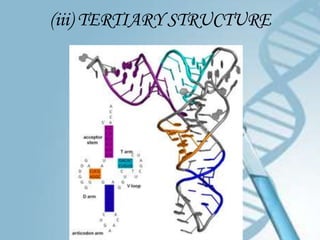
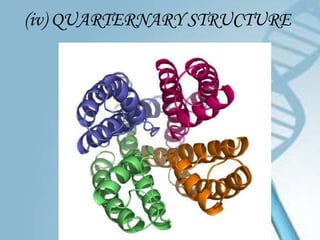
     (i) Primary structure
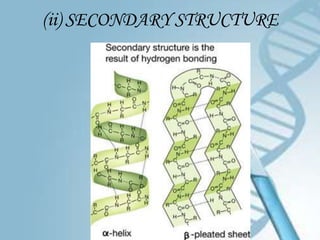
(ii) SECONDARY STRUCTURE
(iii) TERTIARY STRUCTURE
(iv) QUARTERNARY STRUCTURE
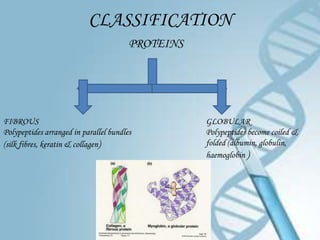
CLASSIFICATION
                                        PROTEINS


FIBROUS                                            GLOBULAR
Polypeptides arranged in parallel bundles          Polypeptides become coiled &
(silk fibres, keratin & collagen)                  folded (albumin, globulin,
                                                   haemoglobin )
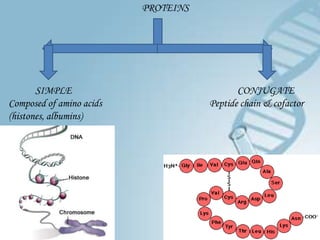
PROTEINS


       SIMPLE                               CONJUGATE
Composed of amino acids              Peptide chain & cofactor
(histones, albumins)
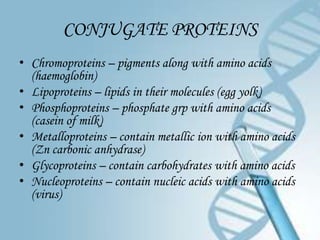
CONJUGATE PROTEINS
• Chromoproteins – pigments along with amino acids
  (haemoglobin)
• Lipoproteins – lipids in their molecules (egg yolk)
• Phosphoproteins – phosphate grp with amino acids
  (casein of milk)
• Metalloproteins – contain metallic ion with amino acids
  (Zn carbonic anhydrase)
• Glycoproteins – contain carbohydrates with amino acids
• Nucleoproteins – contain nucleic acids with amino acids
  (virus)
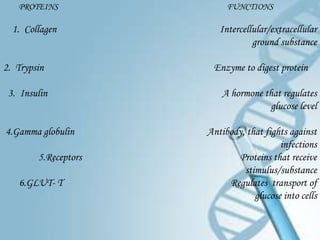
PROTEINS                FUNCTIONS

  1. Collagen            Intercellular/extracellular
                                  ground substance

2. Trypsin             Enzyme to digest protein

 3. Insulin               A hormone that regulates
                                      glucose level

4.Gamma globulin      Antibody, that fights against
                                         infections
        5.Receptors          Proteins that receive
                               stimulus/substance
   6.GLUT- T               Regulates transport of
                                  glucose into cells
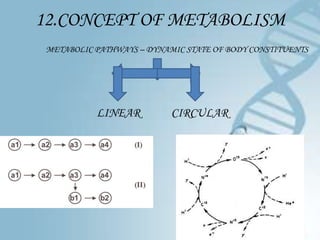
12.CONCEPT OF METABOLISM
 METABOLIC PATHWAYS – DYNAMIC STATE OF BODY CONSTITUENTS


           LINEAR          CIRCULAR
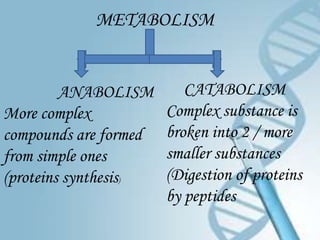
METABOLISM


         ANABOLISM        CATABOLISM
More complex           Complex substance is
compounds are formed   broken into 2 / more
from simple ones       smaller substances
(proteins synthesis)   (Digestion of proteins
                       by peptides
13. ENZYMES
   CHARACTERISTICS OF ENZYMES
• Proteins that catalyse biochemical reactions in living
  cells

• Each enzyme catalyses the reaction of 1 substrate

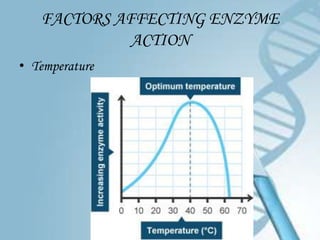
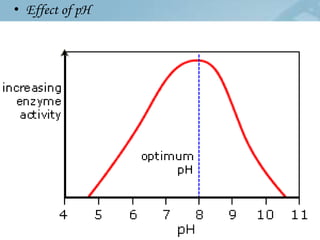
• Each enzyme requires a specific pH & temp

• They accelerate a reaction
SIMILARITIES BETWEEN ENZYMES
    & INORGANIC CATALYSTS

• Catalysts remain unchanged at the end of the reaction
  & they can be used again
• Required in far less quantities as compared to the
  substrate
• Do not initiate a reaction, but rate of reaction by
  lowering activation energy
• Do not alter eqm of a reversible reaction
• Form short-lived complexes with substrates
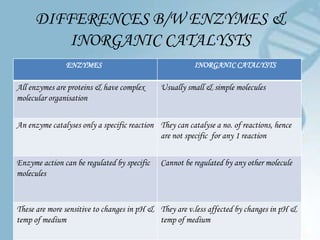
DIFFERENCES B/W ENZYMES &
        INORGANIC CATALYSTS
               ENZYMES                                  INORGANIC CATALYSTS

All enzymes are proteins & have complex       Usually small & simple molecules
molecular organisation


An enzyme catalyses only a specific reaction They can catalyse a no. of reactions, hence
                                             are not specific for any 1 reaction


Enzyme action can be regulated by specific    Cannot be regulated by any other molecule
molecules


These are more sensitive to changes in pH & They are v.less affected by changes in pH &
temp of medium                              temp of medium
NOMENCLATURE OF ENZYMES
• Adding suffix ‘ase’ to the substrate on which they act
  e.g.,sucrase , protease etc.
• Acc. To physiological activity it catalyses e.g.,oxidase
  , dehydrogenases, decarboxylase etc.
• Acc. To source from which they are obtained e.g.,
  papain, bromelain etc.
• Some have been named like ptyalin, trypsin etc .
CLASSIFICATION OF ENZYMES

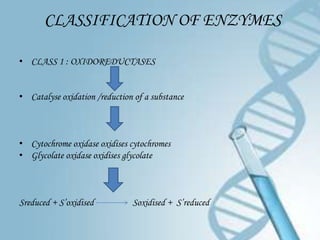
• CLASS 1 : OXIDOREDUCTASES


• Catalyse oxidation /reduction of a substance


• Cytochrome oxidase oxidises cytochromes
• Glycolate oxidase oxidises glycolate


Sreduced + S’oxidised          Soxidised + S’reduced
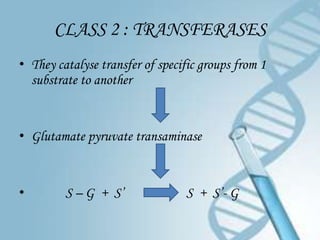
CLASS 2 : TRANSFERASES
• They catalyse transfer of specific groups from 1
  substrate to another


• Glutamate pyruvate transaminase


•        S – G + S’              S + S’- G
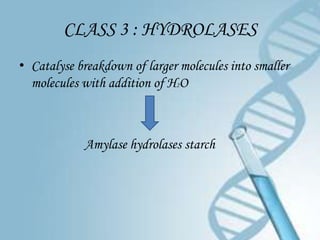
CLASS 3 : HYDROLASES
• Catalyse breakdown of larger molecules into smaller
  molecules with addition of H2O


            Amylase hydrolases starch
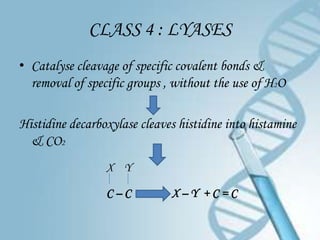
CLASS 4 : LYASES
• Catalyse cleavage of specific covalent bonds &
  removal of specific groups , without the use of H2O

Histidine decarboxylase cleaves histidine into histamine
  & CO2
                 X Y

                 C–C          X–Y +C=C
CLASS 5 : ISOMERASES
• Catalyse rearrangement of atoms in a molecule to
  form isomers


• Phosphohexose isomerase converts glucose 6-
  phosphate into fructose -6-phosphate
CLASS 6 : LIGASES
• Catalyse covalent bonding b/w 2 substrates to form a
  large molecule, mostly involving utilisation of energy
  by hydrolysis of ATP


RuBP carboxylase catalyses the joining of RuBP & CO2
  in photosynthetic C fixation
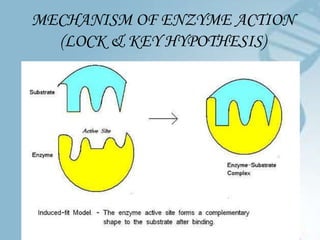
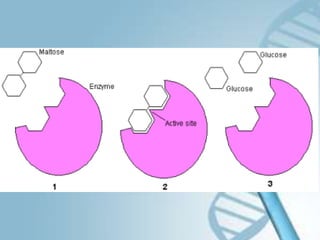
MECHANISM OF ENZYME ACTION
  (LOCK & KEY HYPOTHESIS)
CATALYTIC CYCLE :
(i) Substrate binds to active site of enzyme
(ii) Binding of substrate induces the enzyme to alter its
      shape & fit more tightly around substrate
(iii) Active site of enzyme, now in close proximity of
      substrate breaks the chemical bonds of substrate &
      an enzyme-product complex is formed
(iv) Enzyme releases the product of reaction & the free
      enzyme is ready to take up another molecule of
      substrate
FACTORS AFFECTING ENZYME
             ACTION
• Temperature
• Effect of pH
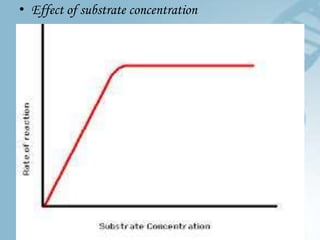
• Effect of substrate concentration
• Effects of chemicals
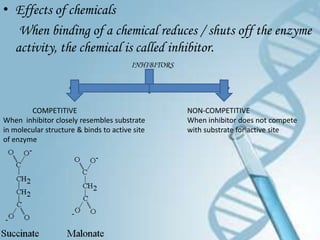
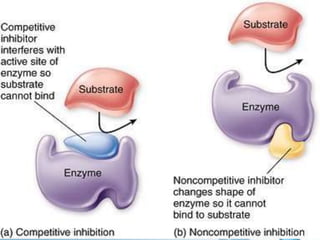
   When binding of a chemical reduces / shuts off the enzyme
  activity, the chemical is called inhibitor.
                                        INHIBITORS


        COMPETITIVE                                  NON-COMPETITIVE
When inhibitor closely resembles substrate           When inhibitor does not compete
in molecular structure & binds to active site        with substrate for active site
of enzyme
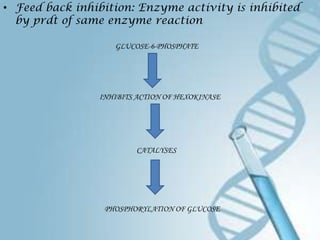
• Feed back inhibition: Enzyme activity is inhibited
  by prdt of same enzyme reaction

                   GLUCOSE-6-PHOSPHATE


                INHIBITS ACTION OF HEXOKINASE


                        CATALYSES


                 PHOSPHORYLATION OF GLUCOSE
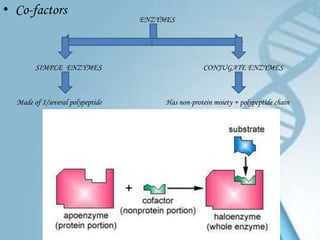
• Co-factors
                                  ENZYMES


        SIMPLE ENZYMES                             CONJUGATE ENZYMES


  Made of 1/several polypeptide        Has non-protein moiety + polypeptide chain
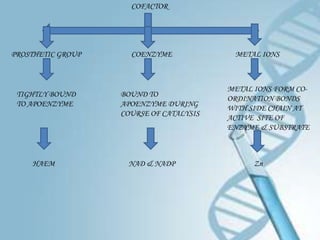
COFACTOR


PROSTHETIC GROUP     COENZYME             METAL IONS


                                         METAL IONS FORM CO-
 TIGHTLY BOUND     BOUND TO
                                         ORDINATION BONDS
 TO APOENZYME      APOENZYME DURING
                                         WITH SIDE CHAIN AT
                   COURSE OF CATALYSIS
                                         ACTIVE SITE OF
                                         ENZYME & SUBSTRATE


    HAEM            NAD & NADP                 Zn
I would like to express my special thanks of gratitude to
my teacher Mrs. Alarmelu Natchiar as well as our
principal Mrs Nasreen Banu who gave me the golden
opportunity to do this wonderful presentation on the topic
BIOMOLECULES, which also helped me in doing a
lot of Research and i came to know about so many new
things
I am really thankful to them.
Secondly I would also like to thank my parents and
friends who helped me a lot in finishing this presentation
within the limited time.

I am making this presentation not only for marks but to
also increase my knowledge .
THANKS AGAIN TO ALL WHO HELPED
ME.

Biomolecules

  • 1.
    SHAHINA AKHTER XI A GULF ASIAN ENGLISH SCHOOL
  • 3.
    1. ANALYSIS OFCHEMICAL COMPOSITION OF LIVING ORGANISMS • Take a living tissue, weigh & grind it in trichloroacidic acid • Thick slurry is filtered through cheese cloth Filtrate Retentate
  • 4.
    Inorganic compounds – ‘ash analysis’ • Living tissue is weighed to get wet weight • This is dried dry weight • C CO2 + H2O • Ca, Mg, Na, K
  • 5.
    2.BIOMOLECULES OF CELLS CHEMISTRY MICROMOLECULES BIOLOGICAL MACROMOLECULES
  • 6.
    M < 1000 MICROMOLECULES (i)Amino acids (ii)Sugars (iii)Nucleotides (iv)Lipids M > 1000 BIOMACROMOLECULES (i)Polysaccharides (ii)Nucleic acids (iii)Proteins
  • 7.
    • Acid-soluble fraction cytoplasmic composition • Acid-insoluble fraction macromolecules of cytoplasm + cell organelles COMPONENTS % (i) Water 70 – 90 (ii) Proteins 10 – 15 (iii) Nucleic acids 5–7 (iv) Carbohydrates About 3 (v) Lipids About 2 (vi) Ions About 1
  • 8.
  • 9.
    (i) Basic aminoacids Lysine (ii)Acidic amino acids Glutamic acid (iii)Neutral amino acids Alanine
  • 10.
    Aromatic amino acids Phenyl alanine
  • 11.
    4.SUGARS • Monosaccharides :simplest sugars, which cannot be hydrolysed further into smaller sugars • Composed of 3-7 C atoms : (i) Triose (3C) (Glyceraldehyde) (ii) Tetrose (4C) (Erythrose) (iii) Pentose (5C) (Ribose) (iv) Hexose (6C) (Glucose) (v) Heptose (7C) (Sedoheptulose)
  • 12.
  • 13.
    • Monosaccharides haveeither a free CHO / CO group reducing sugars • Oligosaccharides : when 2/ few monosaccharides are combined by glycosidic bonds • They are named as: (i) Disaccharides (2) : Sucrose (ii) Trisaccharides (3) : Arabinose (iii) Tetrasaccharides (4) :Stachyose (iv) Pentasaccharides (5) : Verbascose
  • 14.
  • 15.
    5.LIPIDS • Heterogenous groupof organic compunds • Water insoluble but soluble in non-polar organic solvents
  • 16.
    Lipids Straight chain compounds Fused hydrocarbon rings+ long hydrocarbon chain e.g, cholesterol Simple lipids Compound lipids Oil Fats Waxes Phospholipids Glycolipids Sphingolipids
  • 17.
  • 18.
    • Lipids fatty acid COOH – R ( -CH3 , -C2H5 , -CH2)
  • 19.
    Fatty acids Saturated fattyacids Unsaturated fatty – butyric acid acids – linoleic acid
  • 20.
    Simple lipid –glycerol Formed by esterification of glycerol with fatty acids – monoglycerides , diglycerides , triglycerides Fats – high m.p & remain soilds at room temp (Butter) Oils – low m.p & remain liquids at low room temp (Sunflower oil)
  • 21.
    • Phospholipids –when lipids have P & phosphorylated organic compounds e.g. lecithin • Brains have sphingolipids PHOSPHOLIPID - LECITHIN
  • 22.
    6.NUCLEOTIDES Phosphorylated nucleosides –adenylic acid, guanylic acid, thymidylic acid, cytidylic acid & uridylic acid N base attached to pentose sugar – adenosine, guanosine, thymidine, cytidine & uridine
  • 24.
    • Purine +pyridimine monomers • Higher nucleotides store energy in their high energy P bonds • Nicotinamide + riboflavin coenzymes • Coenzymes : non – protein organic moiety of holoenzyme
  • 25.
    7.PRIMARY & SECONDARY METABOLITES PRIMARY SECONDARY IDENTIFIABLE PRDTS OF CERTAIN FUNCTIONS METABOLIC PATHWAYS
  • 26.
    • PRIMARY METABOLITES– amino acids, N bases, proteins, nucleic acids, etc. • SECONDARY METABOLITES (i) Pigments : Anthocyanin, carotenoids (ii) Drugs : Vinblastin, curcumin (iii) Alkaloids : Morphine, codeine (iv) Essential oils : Lemon grass oil (v) Lectins : Concanavalin A (vi) Terpenoids : Monoterpenes (vii) Toxins : Abrin, Ricin (viii) Polymeric Compounds : Rubber, cellulose, gums
  • 27.
    8.BIOMACROMOLECULES • M >1000 daltons • Found in acid – insoluble fraction POLYSACCHARIDES NUCLEIC ACIDS PROTEINS LIPIDS
  • 28.
    9. POLYSACCHARIDES HOMOPOLYSACCHARIDES HETEROPOLYSACCHARIDES (CELLULOSE , STARCH) (CHITIN)
  • 29.
  • 30.
    Starch Glycogen Inulin GLUCOSE GLUCOSE FRUCTOSE PLANTS ANIMALS STORAGE STORAGE POLYSACCHARIDE POLYSACCHARIDE
  • 33.
  • 34.
  • 35.
  • 38.
  • 40.
    mRNA : Carriesinformation from DNA to ribosome Decides sequence of amino acids tRNA: Carries an amino acid from cytoplasm to r ibosome rRNA: Forms parts of ribosomes Forms part of seat of protein synthesis
  • 41.
    11.PROTEINS • Heteropolymers containingstring/strings of amino acids • Types of proteins result from 20 amino acids • Depending on • (i) no. of amino acid residues • (ii)sequence of amino acids
  • 42.
    STRUCTURE OF PROTEINS (i) Primary structure
  • 43.
  • 44.
  • 45.
  • 46.
    CLASSIFICATION PROTEINS FIBROUS GLOBULAR Polypeptides arranged in parallel bundles Polypeptides become coiled & (silk fibres, keratin & collagen) folded (albumin, globulin, haemoglobin )
  • 47.
    PROTEINS SIMPLE CONJUGATE Composed of amino acids Peptide chain & cofactor (histones, albumins)
  • 48.
    CONJUGATE PROTEINS • Chromoproteins– pigments along with amino acids (haemoglobin) • Lipoproteins – lipids in their molecules (egg yolk) • Phosphoproteins – phosphate grp with amino acids (casein of milk) • Metalloproteins – contain metallic ion with amino acids (Zn carbonic anhydrase) • Glycoproteins – contain carbohydrates with amino acids • Nucleoproteins – contain nucleic acids with amino acids (virus)
  • 49.
    PROTEINS FUNCTIONS 1. Collagen Intercellular/extracellular ground substance 2. Trypsin Enzyme to digest protein 3. Insulin A hormone that regulates glucose level 4.Gamma globulin Antibody, that fights against infections 5.Receptors Proteins that receive stimulus/substance 6.GLUT- T Regulates transport of glucose into cells
  • 50.
    12.CONCEPT OF METABOLISM METABOLIC PATHWAYS – DYNAMIC STATE OF BODY CONSTITUENTS LINEAR CIRCULAR
  • 51.
    METABOLISM ANABOLISM CATABOLISM More complex Complex substance is compounds are formed broken into 2 / more from simple ones smaller substances (proteins synthesis) (Digestion of proteins by peptides
  • 52.
    13. ENZYMES CHARACTERISTICS OF ENZYMES • Proteins that catalyse biochemical reactions in living cells • Each enzyme catalyses the reaction of 1 substrate • Each enzyme requires a specific pH & temp • They accelerate a reaction
  • 53.
    SIMILARITIES BETWEEN ENZYMES & INORGANIC CATALYSTS • Catalysts remain unchanged at the end of the reaction & they can be used again • Required in far less quantities as compared to the substrate • Do not initiate a reaction, but rate of reaction by lowering activation energy • Do not alter eqm of a reversible reaction • Form short-lived complexes with substrates
  • 54.
    DIFFERENCES B/W ENZYMES& INORGANIC CATALYSTS ENZYMES INORGANIC CATALYSTS All enzymes are proteins & have complex Usually small & simple molecules molecular organisation An enzyme catalyses only a specific reaction They can catalyse a no. of reactions, hence are not specific for any 1 reaction Enzyme action can be regulated by specific Cannot be regulated by any other molecule molecules These are more sensitive to changes in pH & They are v.less affected by changes in pH & temp of medium temp of medium
  • 55.
    NOMENCLATURE OF ENZYMES •Adding suffix ‘ase’ to the substrate on which they act e.g.,sucrase , protease etc. • Acc. To physiological activity it catalyses e.g.,oxidase , dehydrogenases, decarboxylase etc. • Acc. To source from which they are obtained e.g., papain, bromelain etc. • Some have been named like ptyalin, trypsin etc .
  • 56.
    CLASSIFICATION OF ENZYMES •CLASS 1 : OXIDOREDUCTASES • Catalyse oxidation /reduction of a substance • Cytochrome oxidase oxidises cytochromes • Glycolate oxidase oxidises glycolate Sreduced + S’oxidised Soxidised + S’reduced
  • 57.
    CLASS 2 :TRANSFERASES • They catalyse transfer of specific groups from 1 substrate to another • Glutamate pyruvate transaminase • S – G + S’ S + S’- G
  • 58.
    CLASS 3 :HYDROLASES • Catalyse breakdown of larger molecules into smaller molecules with addition of H2O Amylase hydrolases starch
  • 59.
    CLASS 4 :LYASES • Catalyse cleavage of specific covalent bonds & removal of specific groups , without the use of H2O Histidine decarboxylase cleaves histidine into histamine & CO2 X Y C–C X–Y +C=C
  • 60.
    CLASS 5 :ISOMERASES • Catalyse rearrangement of atoms in a molecule to form isomers • Phosphohexose isomerase converts glucose 6- phosphate into fructose -6-phosphate
  • 61.
    CLASS 6 :LIGASES • Catalyse covalent bonding b/w 2 substrates to form a large molecule, mostly involving utilisation of energy by hydrolysis of ATP RuBP carboxylase catalyses the joining of RuBP & CO2 in photosynthetic C fixation
  • 62.
    MECHANISM OF ENZYMEACTION (LOCK & KEY HYPOTHESIS)
  • 63.
    CATALYTIC CYCLE : (i)Substrate binds to active site of enzyme (ii) Binding of substrate induces the enzyme to alter its shape & fit more tightly around substrate (iii) Active site of enzyme, now in close proximity of substrate breaks the chemical bonds of substrate & an enzyme-product complex is formed (iv) Enzyme releases the product of reaction & the free enzyme is ready to take up another molecule of substrate
  • 65.
    FACTORS AFFECTING ENZYME ACTION • Temperature
  • 66.
  • 67.
    • Effect ofsubstrate concentration
  • 68.
    • Effects ofchemicals When binding of a chemical reduces / shuts off the enzyme activity, the chemical is called inhibitor. INHIBITORS COMPETITIVE NON-COMPETITIVE When inhibitor closely resembles substrate When inhibitor does not compete in molecular structure & binds to active site with substrate for active site of enzyme
  • 70.
    • Feed backinhibition: Enzyme activity is inhibited by prdt of same enzyme reaction GLUCOSE-6-PHOSPHATE INHIBITS ACTION OF HEXOKINASE CATALYSES PHOSPHORYLATION OF GLUCOSE
  • 71.
    • Co-factors ENZYMES SIMPLE ENZYMES CONJUGATE ENZYMES Made of 1/several polypeptide Has non-protein moiety + polypeptide chain
  • 72.
    COFACTOR PROSTHETIC GROUP COENZYME METAL IONS METAL IONS FORM CO- TIGHTLY BOUND BOUND TO ORDINATION BONDS TO APOENZYME APOENZYME DURING WITH SIDE CHAIN AT COURSE OF CATALYSIS ACTIVE SITE OF ENZYME & SUBSTRATE HAEM NAD & NADP Zn
  • 73.
    I would liketo express my special thanks of gratitude to my teacher Mrs. Alarmelu Natchiar as well as our principal Mrs Nasreen Banu who gave me the golden opportunity to do this wonderful presentation on the topic BIOMOLECULES, which also helped me in doing a lot of Research and i came to know about so many new things I am really thankful to them. Secondly I would also like to thank my parents and friends who helped me a lot in finishing this presentation within the limited time. I am making this presentation not only for marks but to also increase my knowledge . THANKS AGAIN TO ALL WHO HELPED ME.