TOPICS COVERED
 Introduction to CRO
 Block diagram of CRO
 Detailed description of CRT
 Multi –Input Oscilloscope
 Lissajous Patterns
 Types of Oscilloscope and it’s application
HOW A CRO LOOKS LIKE
INTRODUCTION TO CRO
 Versatile electronic instrument giving visual display
of signals
 Used for measurement of frequency , amplitude,
phase etc.
 Also used in determining the nature and
characteristics of various components.
 Has a high bandwidth range thus making it a
sensitive and accurate device.
 Easier to use as the internal routine act as a guide to
the user.
BASIC DIAGRAM
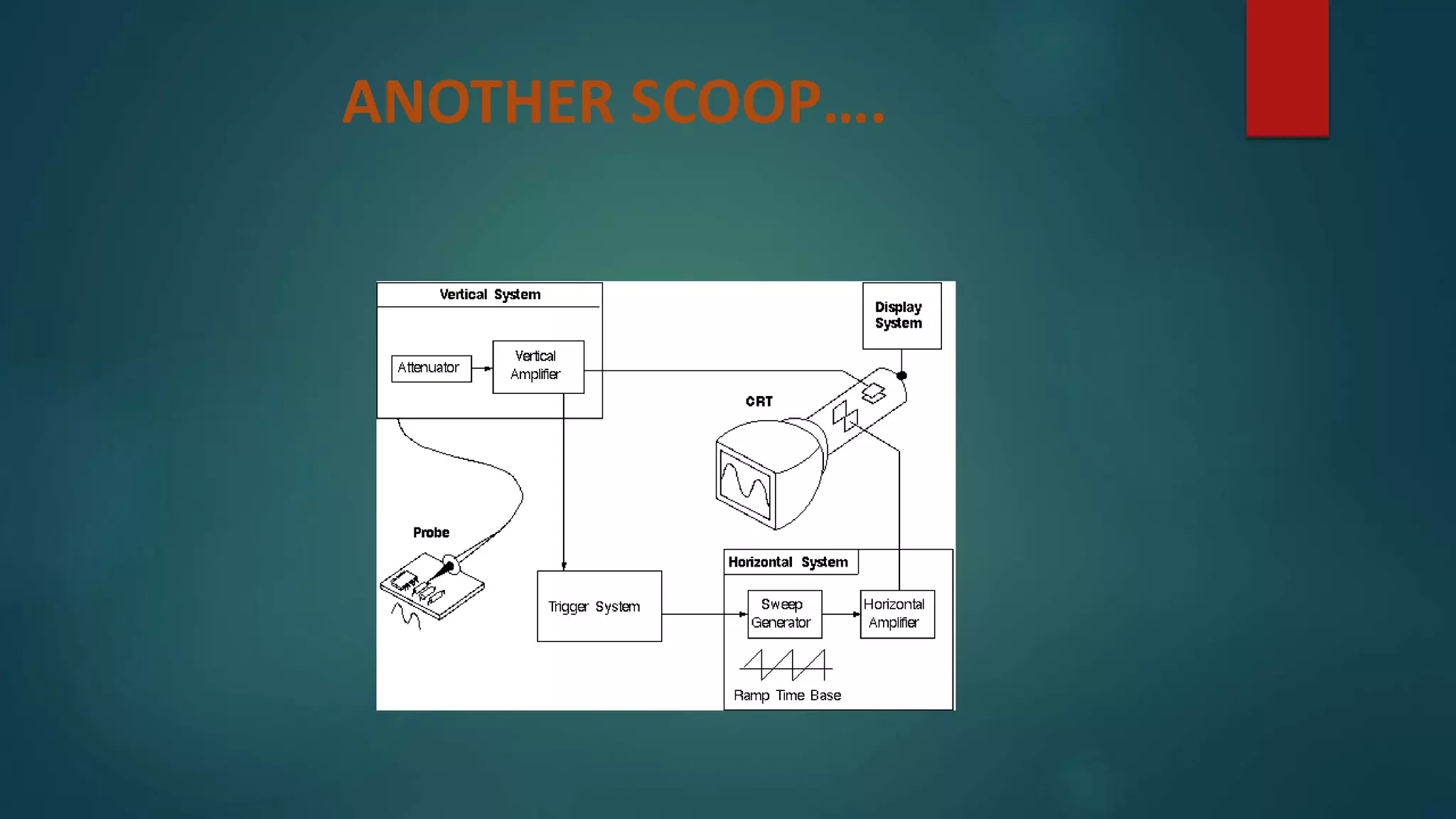
ANOTHER SCOOP….
WORKING OF A CRO
The main parts of Cathode
Ray Tube are:
 Electron Gun Assembly
 Focusing Anodes
 Deflection Plates
Assembly
 Screen for CRT
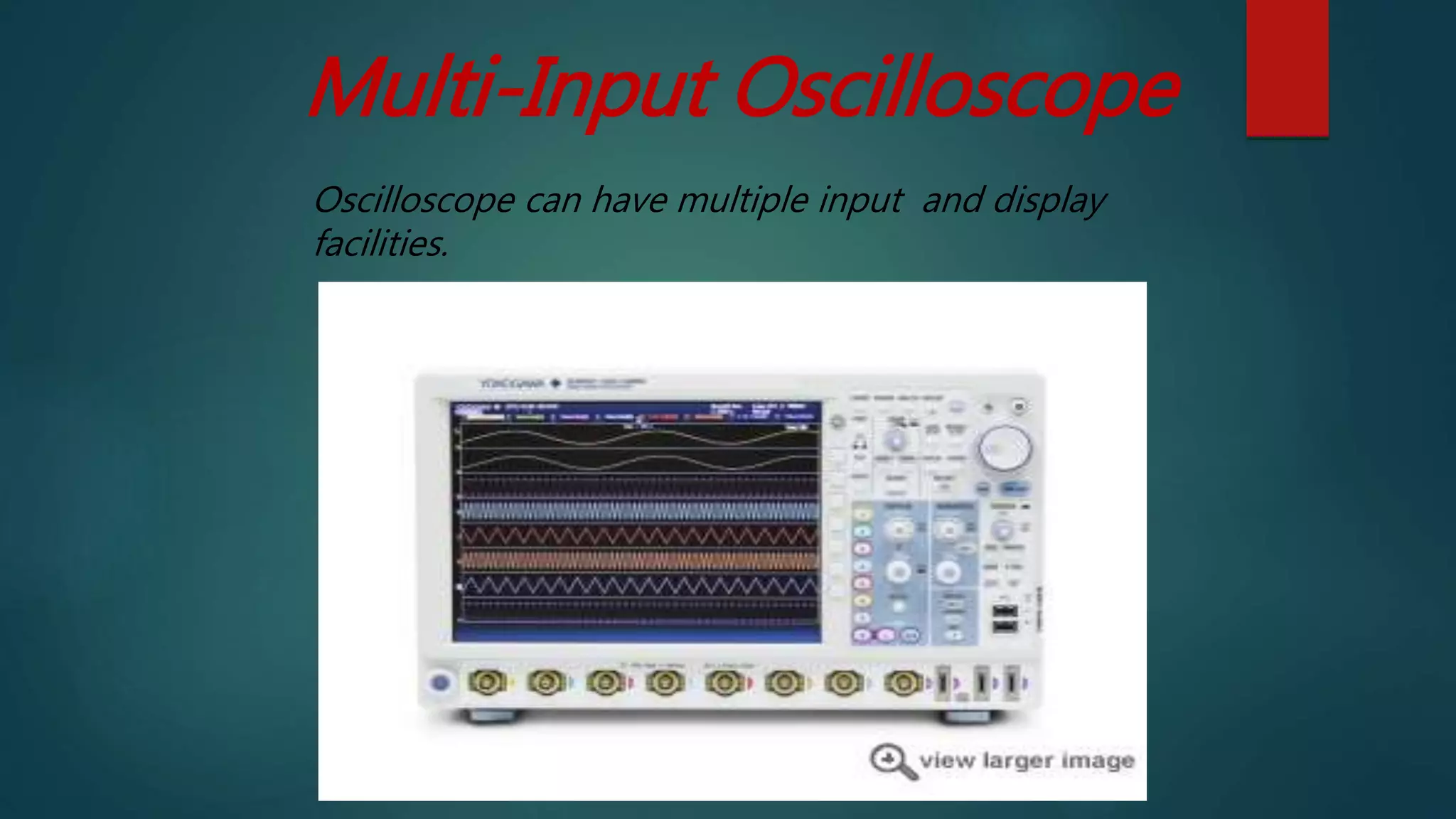
Multi-Input Oscilloscope
Oscilloscope can have multiple input and display
facilities.
The most common one is of - TWO INPUTS
.
Although FOUR and EIGHT inputs are available
for special applications
There are primary two types of multi-
input oscilloscope :-
Single Beam Oscilloscope
Dual Beam Oscilloscope
Both of them can be converted into a
further
Number of traces.
Dual Trace Oscilloscopes
In this oscilloscope two separate
vertical input channels are used.
There are two common operating
modes for the Electronic Switch, called
Alternate and Chop which can be
selected from the instrument’s front
panel.
Dual Trace Oscilloscopes
BLOCK DIAGRAM
Dual Beam Oscilloscope
The Dual Beam Oscilloscope has two
separate electron beams , and therefore
two completely separate vertical
channels.
There are two methods used for
generating the two electron beams
within the CRT.
The first method is :-
Double gun tube
Split Beam
Multiple input CRO works in
following two modes
• alternate mode
• chopped mode
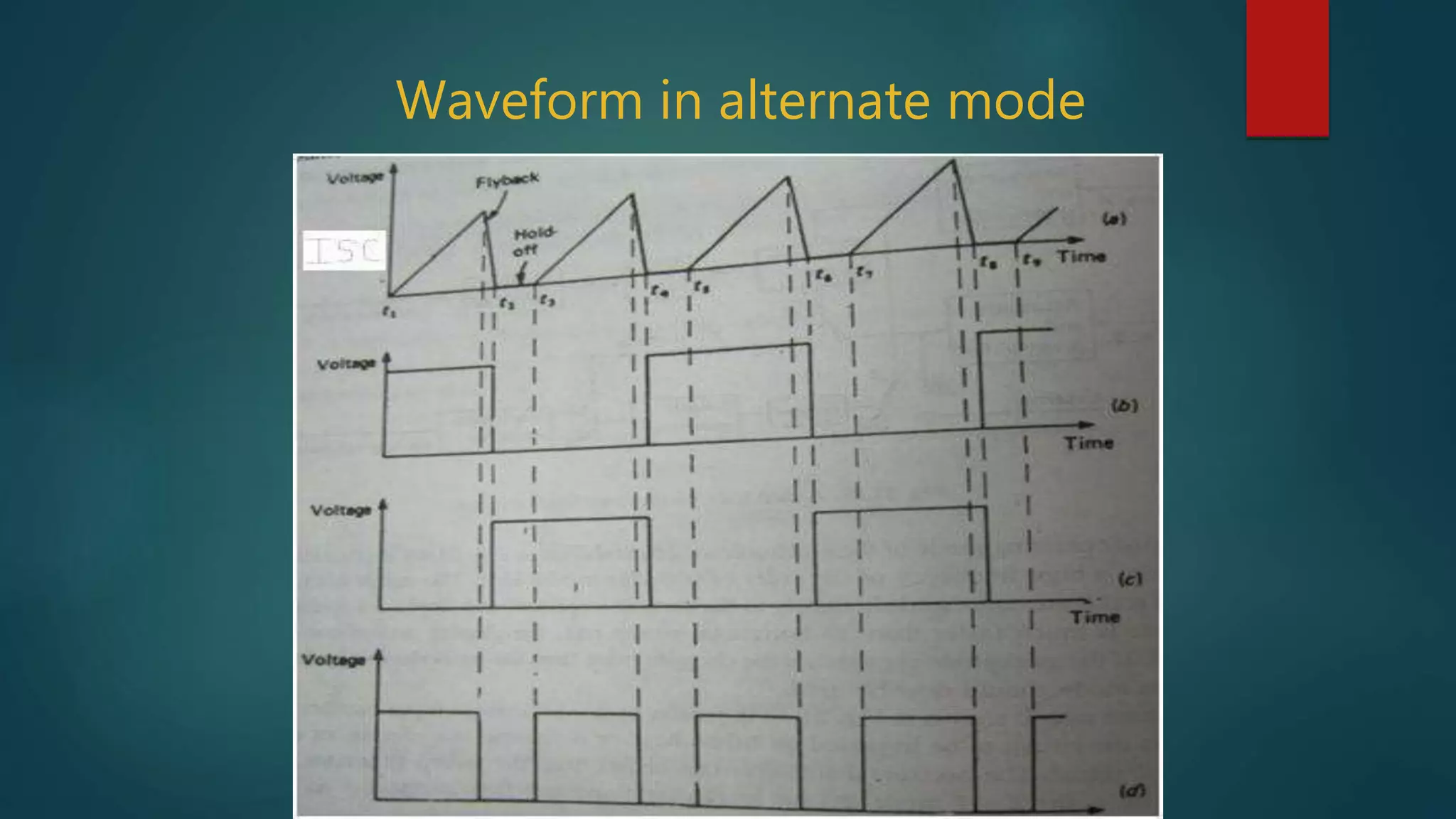
Alternate mode
In alternate mode the an electronic
switch alternates between sig A & B.
Waveform in alternate mode
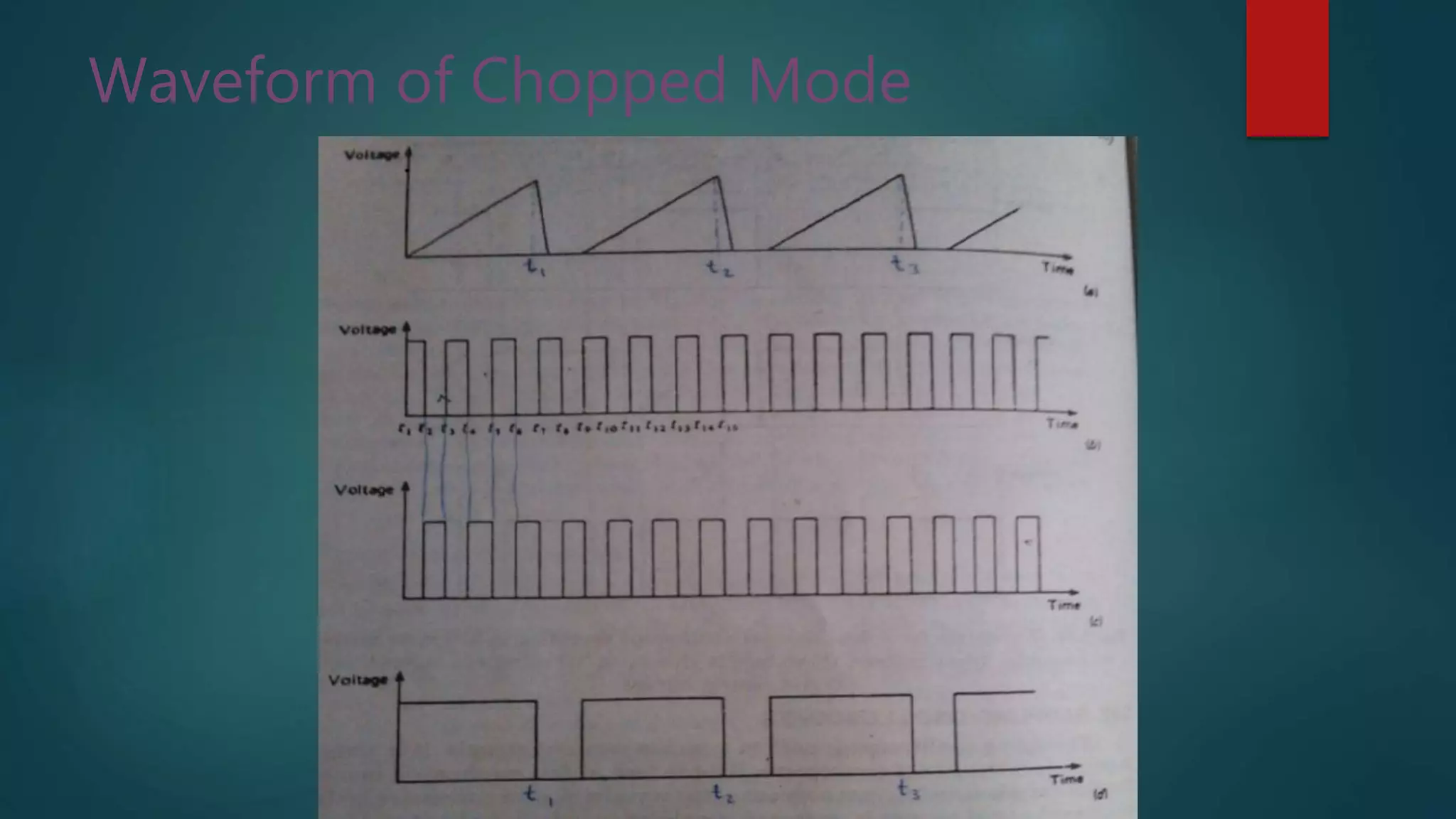
Chopped mode
In the chopped mode the switch
free runs at very high frequency.
Waveform of Chopped Mode
Pattern
When two sinusoidal voltage signals of
equal frequency having some phase
difference are applied to the deflection
plates of CRO, a straight line or an
ellipse appears on the screen these
figures are called Lissajous figures or
Lissajous curves or pattern.
Some examples of lissajous figures……..
With the help of lissajous figures
we can measure…….
Frequency
Phase
Frequency
Measurement
Fx/Fy = Hp/Vp
Fx = Unknown frequency
Fy = Known frequency
Hp = Points on horizontal tangencies
Vp = Points on vertical tangencies
Phase
Measurement
sin Ф = c/b
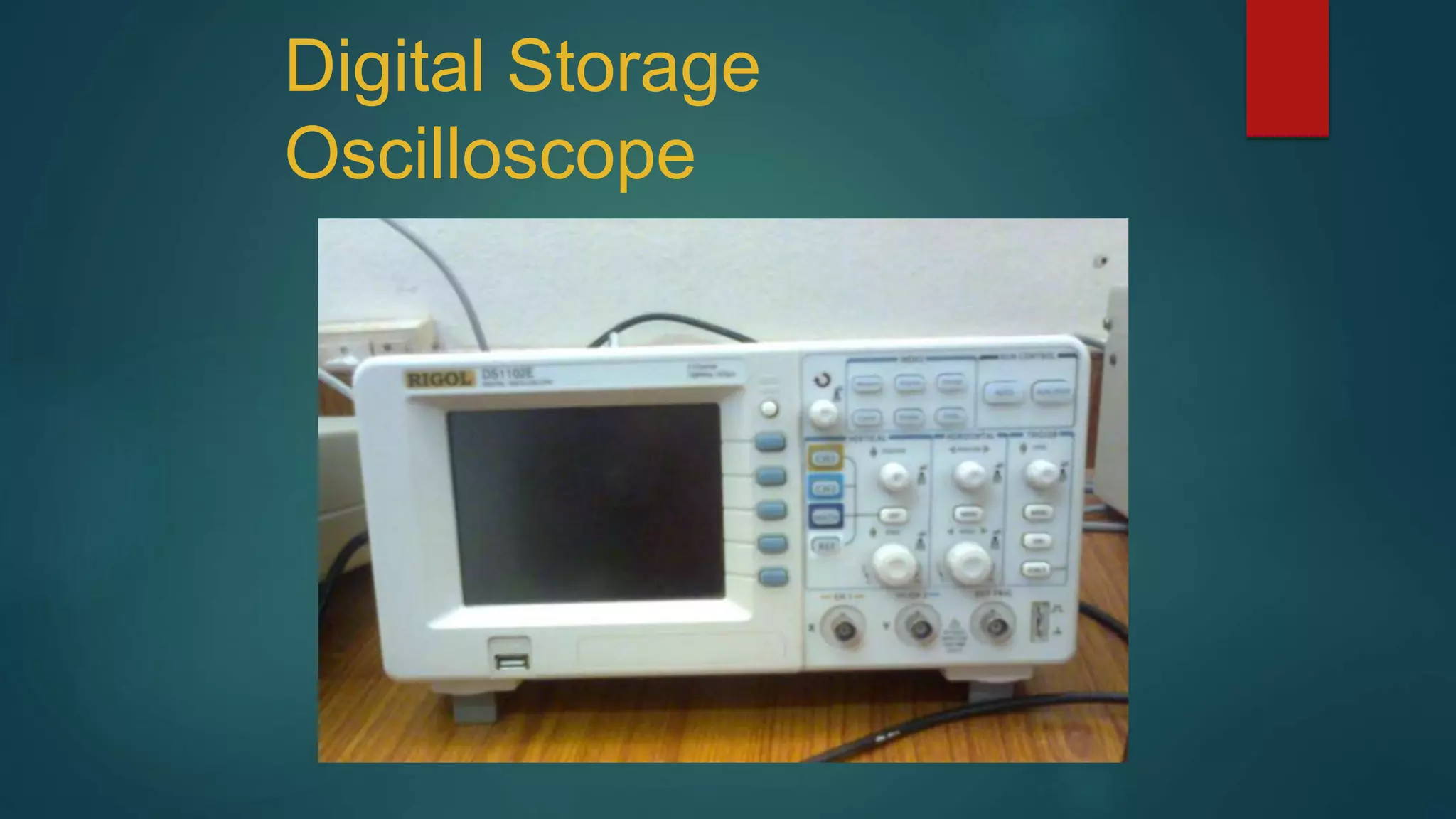
Digital Storage
Oscilloscope
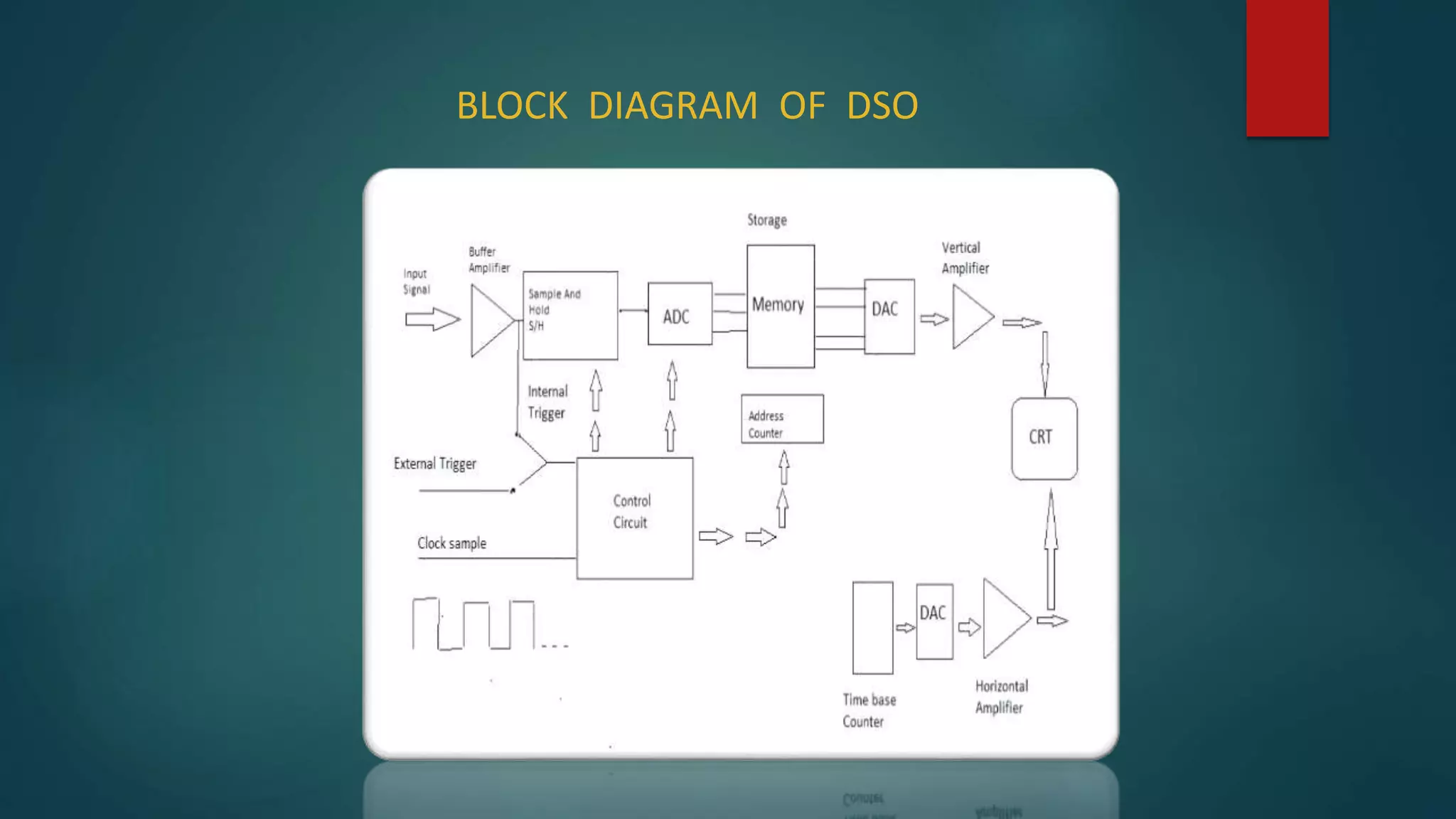
BLOCK DIAGRAM OF DSO
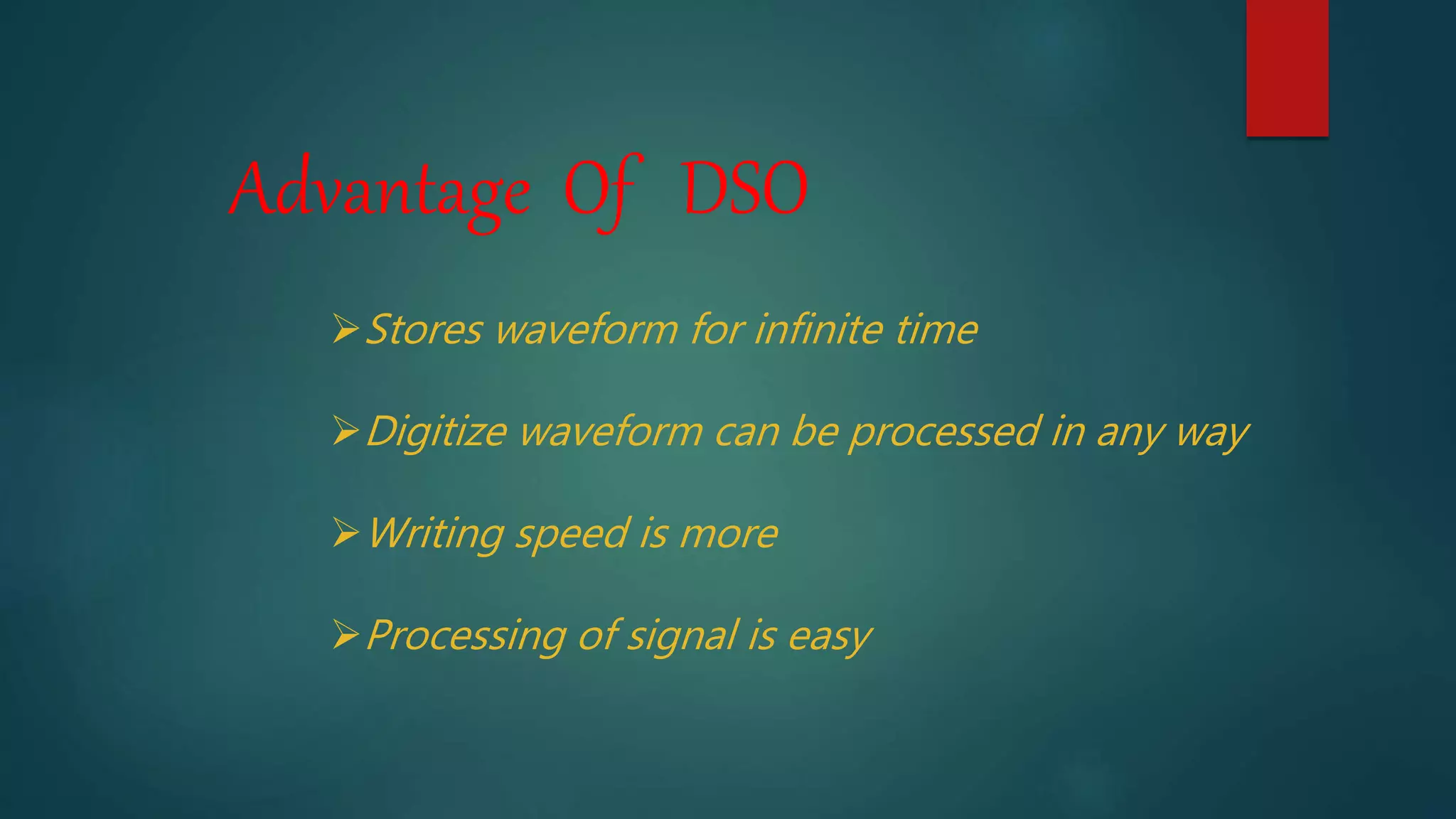
Advantage Of DSO
Stores waveform for infinite time
Digitize waveform can be processed in any way
Writing speed is more
Processing of signal is easy
Analog Storage Oscilloscope
Trace storage is an extra feature
They used direct-view storage CRTs
The storage is accomplished using the
principle of secondary emission
Briefings
Data can be stored
to infinite time
Image quality is
good
Writing speed is
high
Processing of
signal is easy
Data can be stored
for finite time
Image quality is not
poor
Writing speed is
poor
Processing of signal
is difficult
Difference between ASO & DSO
DSO ASO
THANK
u

Cathode Ray Oscilloscope CRO

  • 2.
    TOPICS COVERED  Introductionto CRO  Block diagram of CRO  Detailed description of CRT  Multi –Input Oscilloscope  Lissajous Patterns  Types of Oscilloscope and it’s application
  • 3.
    HOW A CROLOOKS LIKE
  • 4.
    INTRODUCTION TO CRO Versatile electronic instrument giving visual display of signals  Used for measurement of frequency , amplitude, phase etc.  Also used in determining the nature and characteristics of various components.  Has a high bandwidth range thus making it a sensitive and accurate device.  Easier to use as the internal routine act as a guide to the user.
  • 5.
  • 6.
  • 7.
  • 8.
    The main partsof Cathode Ray Tube are:  Electron Gun Assembly  Focusing Anodes  Deflection Plates Assembly  Screen for CRT
  • 14.
    Multi-Input Oscilloscope Oscilloscope canhave multiple input and display facilities.
  • 15.
    The most commonone is of - TWO INPUTS . Although FOUR and EIGHT inputs are available for special applications
  • 16.
    There are primarytwo types of multi- input oscilloscope :- Single Beam Oscilloscope Dual Beam Oscilloscope Both of them can be converted into a further Number of traces.
  • 17.
  • 18.
    In this oscilloscopetwo separate vertical input channels are used. There are two common operating modes for the Electronic Switch, called Alternate and Chop which can be selected from the instrument’s front panel. Dual Trace Oscilloscopes
  • 19.
  • 20.
    Dual Beam Oscilloscope TheDual Beam Oscilloscope has two separate electron beams , and therefore two completely separate vertical channels.
  • 21.
    There are twomethods used for generating the two electron beams within the CRT. The first method is :- Double gun tube Split Beam
  • 22.
    Multiple input CROworks in following two modes • alternate mode • chopped mode
  • 23.
    Alternate mode In alternatemode the an electronic switch alternates between sig A & B.
  • 24.
  • 25.
    Chopped mode In thechopped mode the switch free runs at very high frequency.
  • 26.
  • 27.
    Pattern When two sinusoidalvoltage signals of equal frequency having some phase difference are applied to the deflection plates of CRO, a straight line or an ellipse appears on the screen these figures are called Lissajous figures or Lissajous curves or pattern.
  • 28.
    Some examples oflissajous figures……..
  • 29.
    With the helpof lissajous figures we can measure……. Frequency Phase
  • 30.
    Frequency Measurement Fx/Fy = Hp/Vp Fx= Unknown frequency Fy = Known frequency Hp = Points on horizontal tangencies Vp = Points on vertical tangencies
  • 31.
  • 32.
  • 33.
  • 34.
    Advantage Of DSO Storeswaveform for infinite time Digitize waveform can be processed in any way Writing speed is more Processing of signal is easy
  • 35.
  • 36.
    Trace storage isan extra feature They used direct-view storage CRTs The storage is accomplished using the principle of secondary emission Briefings
  • 37.
    Data can bestored to infinite time Image quality is good Writing speed is high Processing of signal is easy Data can be stored for finite time Image quality is not poor Writing speed is poor Processing of signal is difficult Difference between ASO & DSO DSO ASO
  • 38.