HEARING
AUDITORY PATHWAY
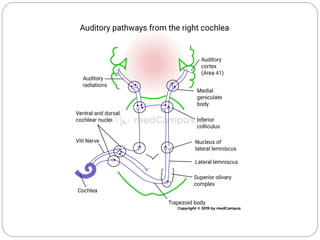
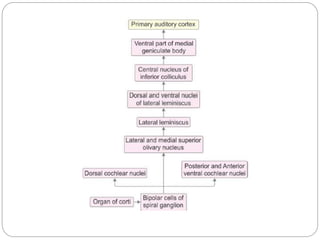
RELAY STATIONS:
spiral ganglion
superior olivary nucleus
,trapezoid n
 nucleus of lateral
lemniscus
 inferior coliiculus
 medial geniculate body
 auditory cortex
 from hair cells through cochlear division of
8th cranial nerve
SPIRAL GANGLION:
first order neurons –bipolar cells of spiral
ganglion.
dendrites of bipolar cells constitute afferent
fibres innervating the hair cells.
axons form the cochlear division of eight
cranial nerve
cochlear nerve ends in cochlear nuclei in
medulla.
COCHLEAR NUCLEI:
second order neurons
two cochlear nuclei-dorsal and ventral
axons pass medially in pons.
most of them cross to opposite side, some
remain uncrossed.
the crossing fibres of two sides form –
trapezoid body
SUPERIOR OLIVARYNUCLEUS,TRAPEZOID
NUCLEUS :
third order neurons
s o n-recieves large majority of fibres from
cochlear nucleus. form as ascending bundle
of lateral lemniscus.
few fibres relay in trapezoid nucleus before
reaching lateral lemniscus.
fibres of lateral lemniscus ascend in midbrain
to terminate in inferior colliculus.
INFERIOR COLLICULUS:
fourth order of neurons.
fibres terminate in medial geniculate body.
MEDIAL GENICULATE BODY:
FIFTH ORDER OF NEURONS
fibres form acoustic radiationsend in
auditory cortex.
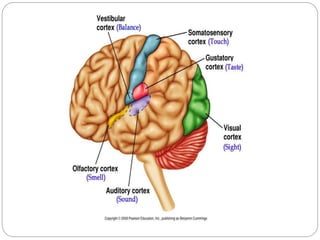
AUDITORY CORTEX:
temporal lobe
 primary auditory cortex(41,42)
 auditory association area(22,21,20)
PRIMARY AUDITORY
AREA/AUDIOSENSORY AREA:
centre of hearing
location:middle of superior temporal gyrus on
upper margin on its deep insular aspect.
APPLIED PHYSIOLOGY
 :
 HEARING LOSS :IMPAIRMENT OF
HEARING
 DEAFNESS:LITTLE OR NO HEARING
 TYPES OF HEARING LOSS:
 conductive
 sensory
 mixed
1.CONDUCTIVE HEARING LOSS:
interferes with conduction of sound from
external ear to cochlea.
CAUSES:
external ear
tympanic membrane
middle ear cavity
ear ossicles
eustachian tube obstruction
CHARACTERISTIC FEATURES:
never complete ,partial hearing loss present
speech discrimination is good
MANAGEMENT:
SENSORINEURAL HEARING LOSS:
results from lesions of cochlea/8th nerve and
its central connections.
causes:
congenital and acquired
acquired hearing loss later in life
infection of labyrynth,injury to labyrynth,noise
trauma,ototoxicity,acoustic neuroma,d m
,htn,senile degeneration of hair cells-
presbycusis, meniers disease.
LOSS OF HEARING –complete
speech discrimination –poor
management:
treat the underlying cause
hearing aids-cochlear implants
3.MIXED TYPE:
 TINITUS:
 Ringing sensation in ears caused either due to
irritative stimuli to inner ear or vestibulocochlear
nerve.
 HEARING TESTS:
 TO ASSESS THE TYPE OF HEARING
LOSS,DEGREE,SITE OF LESION, CAUSE OF
HEARING LOSS
 TWO TYPES
 CLINICAL TYPES AND AUDIOMETRIC TYPES.
 CLINICAL TYPES:
 1.FINGER FRICTION TEST-
2.WATCH TEST-
3.SPEECH TEST-
4. TUNING FORK TEST-
RINNE TEST-AC >BCPOSITIVE-
NORMAL & SENSORINEURAL DEAFNESS.
BC>AC-NEGATIVE RINNE TEST-
CONDUCTIVE DEAFNESS.
WEBER TEST:
CONDUCTIVE DEAFNESS –LATERALISED
TO WORSE EAR
SENSORINEURAL DEAFNESS –
LATERALISED TO BETTER EAR
SCHWABACH TEST:BC OF PATIENT AND
EXAMINER
REDUCED IN SENSORY NEURAL
DEAFNESS
AUDIOMETRIC TESTS:
ASSESMENT OF HEARING USING
ELECTRONIC EQUIPMENT.
PURE TONE AUDIOMETRY
SUBJECTIVE TEST.
AUDIOMETER –MACHINE
AUDIOGRAM –RECORDING
TO DETECT OR RULE OUT CONDUCTIVE
DEAFNESS
2.SPEECH AUDIOMETRY:
.
3.TONE DECAY TEST:
4.BRAIN STEM EVOKED RESPONSES:
POTENTIALS RECORDED FROM
AUDITORY PATHWAY IN RESPONSE TO
BRIEF AUDITORY STIMULATION.
ASSESS FUNCTIONAL STATUS OF
AUDITORY PATHWAY UPTO MID BRAIN

auditory pathway ppt

  • 1.
  • 2.
    AUDITORY PATHWAY RELAY STATIONS: spiralganglion superior olivary nucleus ,trapezoid n  nucleus of lateral lemniscus  inferior coliiculus  medial geniculate body  auditory cortex  from hair cells through cochlear division of 8th cranial nerve
  • 3.
    SPIRAL GANGLION: first orderneurons –bipolar cells of spiral ganglion. dendrites of bipolar cells constitute afferent fibres innervating the hair cells. axons form the cochlear division of eight cranial nerve cochlear nerve ends in cochlear nuclei in medulla.
  • 4.
    COCHLEAR NUCLEI: second orderneurons two cochlear nuclei-dorsal and ventral axons pass medially in pons. most of them cross to opposite side, some remain uncrossed. the crossing fibres of two sides form – trapezoid body
  • 5.
    SUPERIOR OLIVARYNUCLEUS,TRAPEZOID NUCLEUS : thirdorder neurons s o n-recieves large majority of fibres from cochlear nucleus. form as ascending bundle of lateral lemniscus. few fibres relay in trapezoid nucleus before reaching lateral lemniscus. fibres of lateral lemniscus ascend in midbrain to terminate in inferior colliculus.
  • 6.
    INFERIOR COLLICULUS: fourth orderof neurons. fibres terminate in medial geniculate body. MEDIAL GENICULATE BODY: FIFTH ORDER OF NEURONS fibres form acoustic radiationsend in auditory cortex.
  • 10.
    AUDITORY CORTEX: temporal lobe primary auditory cortex(41,42)  auditory association area(22,21,20) PRIMARY AUDITORY AREA/AUDIOSENSORY AREA: centre of hearing location:middle of superior temporal gyrus on upper margin on its deep insular aspect.
  • 11.
    APPLIED PHYSIOLOGY  : HEARING LOSS :IMPAIRMENT OF HEARING  DEAFNESS:LITTLE OR NO HEARING  TYPES OF HEARING LOSS:  conductive  sensory  mixed
  • 12.
    1.CONDUCTIVE HEARING LOSS: interfereswith conduction of sound from external ear to cochlea. CAUSES: external ear tympanic membrane middle ear cavity ear ossicles eustachian tube obstruction
  • 13.
    CHARACTERISTIC FEATURES: never complete,partial hearing loss present speech discrimination is good MANAGEMENT:
  • 14.
    SENSORINEURAL HEARING LOSS: resultsfrom lesions of cochlea/8th nerve and its central connections. causes: congenital and acquired acquired hearing loss later in life infection of labyrynth,injury to labyrynth,noise trauma,ototoxicity,acoustic neuroma,d m ,htn,senile degeneration of hair cells- presbycusis, meniers disease.
  • 15.
    LOSS OF HEARING–complete speech discrimination –poor management: treat the underlying cause hearing aids-cochlear implants 3.MIXED TYPE:
  • 16.
     TINITUS:  Ringingsensation in ears caused either due to irritative stimuli to inner ear or vestibulocochlear nerve.  HEARING TESTS:  TO ASSESS THE TYPE OF HEARING LOSS,DEGREE,SITE OF LESION, CAUSE OF HEARING LOSS  TWO TYPES  CLINICAL TYPES AND AUDIOMETRIC TYPES.  CLINICAL TYPES:  1.FINGER FRICTION TEST-
  • 17.
    2.WATCH TEST- 3.SPEECH TEST- 4.TUNING FORK TEST- RINNE TEST-AC >BCPOSITIVE- NORMAL & SENSORINEURAL DEAFNESS. BC>AC-NEGATIVE RINNE TEST- CONDUCTIVE DEAFNESS.
  • 18.
    WEBER TEST: CONDUCTIVE DEAFNESS–LATERALISED TO WORSE EAR SENSORINEURAL DEAFNESS – LATERALISED TO BETTER EAR
  • 19.
    SCHWABACH TEST:BC OFPATIENT AND EXAMINER REDUCED IN SENSORY NEURAL DEAFNESS
  • 20.
    AUDIOMETRIC TESTS: ASSESMENT OFHEARING USING ELECTRONIC EQUIPMENT. PURE TONE AUDIOMETRY SUBJECTIVE TEST. AUDIOMETER –MACHINE AUDIOGRAM –RECORDING TO DETECT OR RULE OUT CONDUCTIVE DEAFNESS
  • 21.
    2.SPEECH AUDIOMETRY: . 3.TONE DECAYTEST: 4.BRAIN STEM EVOKED RESPONSES: POTENTIALS RECORDED FROM AUDITORY PATHWAY IN RESPONSE TO BRIEF AUDITORY STIMULATION. ASSESS FUNCTIONAL STATUS OF AUDITORY PATHWAY UPTO MID BRAIN