
Vagus Nerve
By Dr. Piyush (MBBS, MD)
Answer Any cranial nerve under following headings:
• Introduction

• Functional components

• Formation

• Course 

• Branches

• Distribution: Motor + Sensory

• Applied:

• Tests of integrity

• Lesion
Introduction
• 10th cranial nerve

• MIXED mainly motor

• Wanderer nerve: extensive distribution (H&N, thorax &
abdomen)

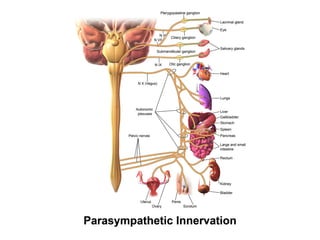
• Major Parasympathetic path.
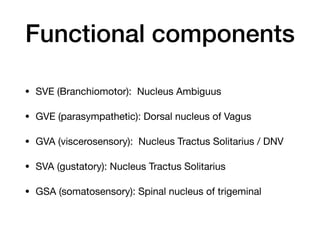
Functional components
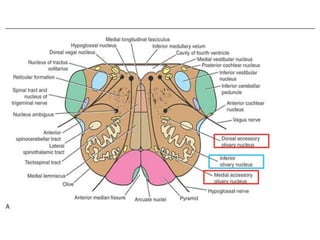
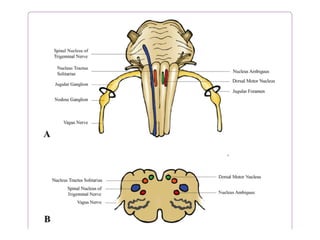
• SVE (Branchiomotor): Nucleus Ambiguus

• GVE (parasympathetic): Dorsal nucleus of Vagus

• GVA (viscerosensory): Nucleus Tractus Solitarius / DNV

• SVA (gustatory): Nucleus Tractus Solitarius

• GSA (somatosensory): Spinal nucleus of trigeminal
Formation
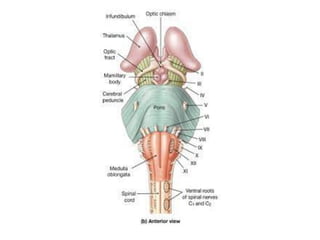
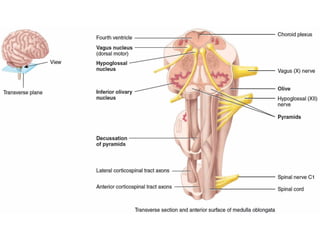
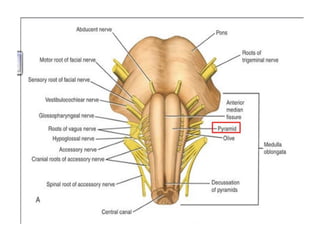
• Approx 10. rootlets from lateral aspect of medulla.

• Between olive and inferior cerebellar peduncle

• Between rootlets of IX and XIth nerve. 

• Rootlets unite to form vagal nerve trunk.
COURSE
• Arises from lateral aspect of medulla.

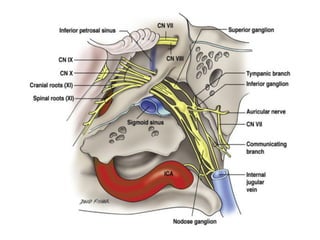
• leaves cranial cavity through intermediate compartment of
Jugular foramen.

• 2 ganglia:

• Superior ganglion (Jugular): small - present in jugular
fossa

• Inferior ganglion (Nodose): large

• Runs downward in carotid sheath
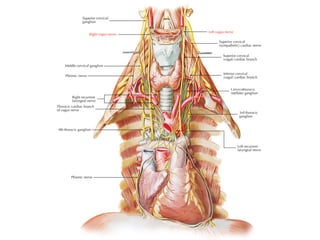
• @ root of neck enters thorax

• Rt side: front of Rt subclavian artery

• Lt side: between lt common carotid & Lt subclavian
artery.
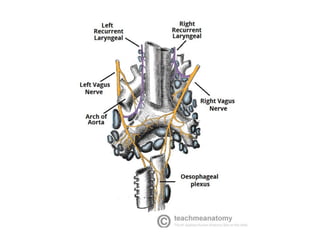
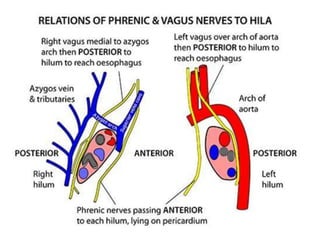
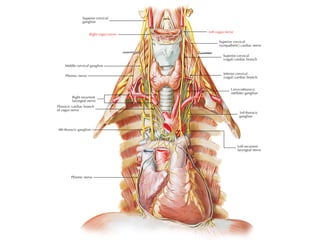
• In thorax:

• passes behind respective lung roots

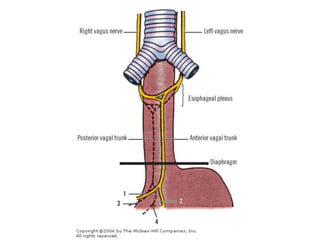
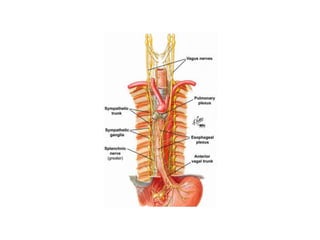
• Rt vagus behind oesophagus (posterior vagal trunk)

• Lt vagus in front of oesophagus (Anterior vagal trunk)

• Crosses diaphragm via oesophageal opening.

• In abdomen:

• vagal trunks divide into terminal branches.
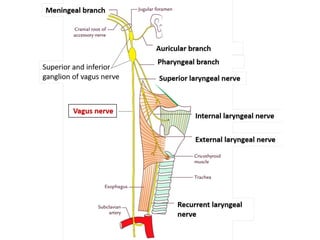
Branches:
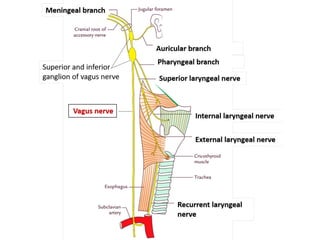
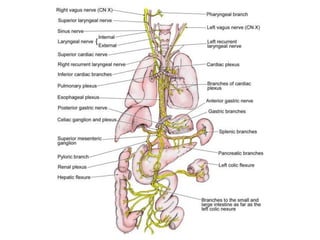
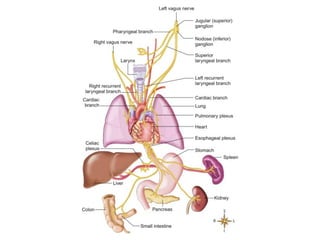
• in neck:

• auricular branch

• Meningeal branch

• Pharyngeal branches

• Superior laryngeal nerve: split in external & internal

• Right Recurrent laryngeal nerve

• Superior and inferior cervical cardiac branches
• In thorax:

• Left recurrent laryngeal nerve

• Cardiac branches

• oesophageal branches

• In abdomen:

• gastric branches

• Hepatic branches

• Coeliac branch
DIstribution
Motor
• Pharyngeal branches: muscles
of pharynx & soft palate

• External laryngeal: supplies
cricothyroid

• Recurrent laryngeal: intrinsic
muscles of larynx

• Cardiac branches:
parasympathetic &
cardioinhibitory
Sensory
• Auricular : posterior part of
external ear and external
auditory canal. 

• Meningeal: dura of
posterior cranial fossa

• Internal laryngeal:
laryngopharynx and upper
larynx
Motor
• oesophageal branches

• Gastric branches

• hepatic branches

• coeliac branches
Applied
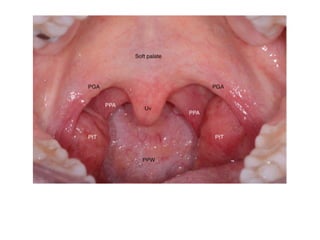
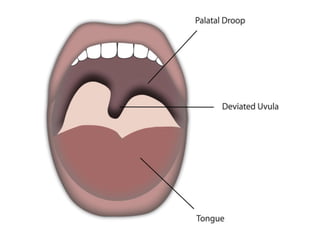
• Tests of integrity of nerve:

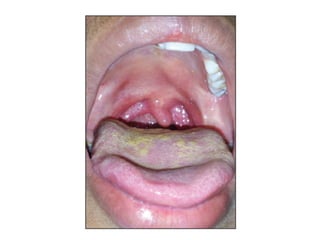
• Subject is ask to open Mouth and say “AA” (आ): Checking
for Palatal palsy

• Gag re
fl
ex
• Lesions:

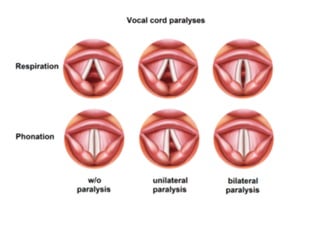
• Lower lesions: RLN palsy
• Hoarseness of voice

• Cadaveric position of vocal cord (paramedian)

• Higher lesions: RLN palsy + palatal palsy
• nasal regurgitation

• Dysphagia

• loss of gag & cough re
fl
ex
• The Alderman nerve phenomenon: auricular branch
behind ear was stimulated to improve loss of appetite. 

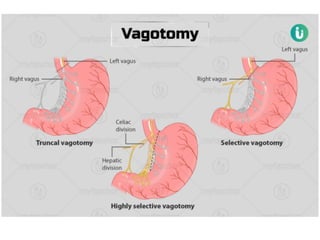
• Vagotomy in peptic ulcer cases.

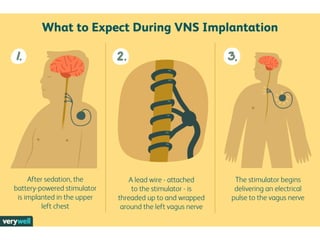
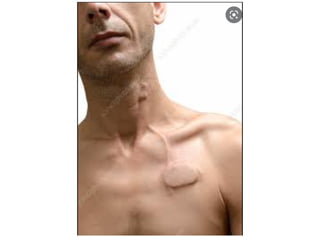
• Vagal nerve stimulation device implantation for
management of refractory epileptic seizures.
thank you

Vagus nerve

  • 1.
    Vagus Nerve By Dr.Piyush (MBBS, MD)
  • 2.
    Answer Any cranialnerve under following headings: • Introduction • Functional components • Formation • Course • Branches • Distribution: Motor + Sensory • Applied: • Tests of integrity • Lesion
  • 3.
    Introduction • 10th cranialnerve • MIXED mainly motor • Wanderer nerve: extensive distribution (H&N, thorax & abdomen) • Major Parasympathetic path.
  • 7.
    Functional components • SVE(Branchiomotor): Nucleus Ambiguus • GVE (parasympathetic): Dorsal nucleus of Vagus • GVA (viscerosensory): Nucleus Tractus Solitarius / DNV • SVA (gustatory): Nucleus Tractus Solitarius • GSA (somatosensory): Spinal nucleus of trigeminal
  • 9.
    Formation • Approx 10.rootlets from lateral aspect of medulla. • Between olive and inferior cerebellar peduncle • Between rootlets of IX and XIth nerve. • Rootlets unite to form vagal nerve trunk.
  • 12.
    COURSE • Arises fromlateral aspect of medulla. • leaves cranial cavity through intermediate compartment of Jugular foramen. • 2 ganglia: • Superior ganglion (Jugular): small - present in jugular fossa • Inferior ganglion (Nodose): large • Runs downward in carotid sheath
  • 15.
    • @ rootof neck enters thorax • Rt side: front of Rt subclavian artery • Lt side: between lt common carotid & Lt subclavian artery.
  • 17.
    • In thorax: •passes behind respective lung roots • Rt vagus behind oesophagus (posterior vagal trunk) • Lt vagus in front of oesophagus (Anterior vagal trunk) • Crosses diaphragm via oesophageal opening. • In abdomen: • vagal trunks divide into terminal branches.
  • 21.
    Branches: • in neck: •auricular branch • Meningeal branch • Pharyngeal branches • Superior laryngeal nerve: split in external & internal • Right Recurrent laryngeal nerve • Superior and inferior cervical cardiac branches
  • 23.
    • In thorax: •Left recurrent laryngeal nerve • Cardiac branches • oesophageal branches • In abdomen: • gastric branches • Hepatic branches • Coeliac branch
  • 28.
    DIstribution Motor • Pharyngeal branches:muscles of pharynx & soft palate • External laryngeal: supplies cricothyroid • Recurrent laryngeal: intrinsic muscles of larynx • Cardiac branches: parasympathetic & cardioinhibitory Sensory • Auricular : posterior part of external ear and external auditory canal. • Meningeal: dura of posterior cranial fossa • Internal laryngeal: laryngopharynx and upper larynx
  • 29.
    Motor • oesophageal branches •Gastric branches • hepatic branches • coeliac branches
  • 30.
    Applied • Tests ofintegrity of nerve: • Subject is ask to open Mouth and say “AA” (आ): Checking for Palatal palsy • Gag re fl ex
  • 34.
    • Lesions: • Lowerlesions: RLN palsy • Hoarseness of voice • Cadaveric position of vocal cord (paramedian) • Higher lesions: RLN palsy + palatal palsy • nasal regurgitation • Dysphagia • loss of gag & cough re fl ex
  • 36.
    • The Aldermannerve phenomenon: auricular branch behind ear was stimulated to improve loss of appetite. • Vagotomy in peptic ulcer cases. • Vagal nerve stimulation device implantation for management of refractory epileptic seizures.
  • 40.