Fourth ventricle
          By
  Dr. Noura El Tahawy
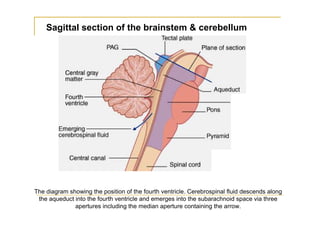
Sagittal section of the brainstem & cerebellum


The diagram showing the position of the fourth ventricle. Cerebrospinal fluid descends along
 the aqueduct into the fourth ventricle and emerges into the subarachnoid space via three
              apertures including the median aperture containing the arrow.
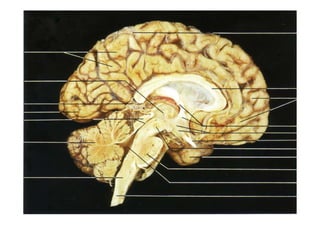
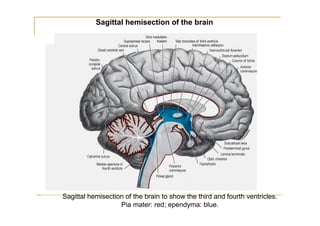
Sagittal hemisection of the brain


Sagittal hemisection of the brain to show the third and fourth ventricles.
                   Pia mater: red; ependyma: blue.
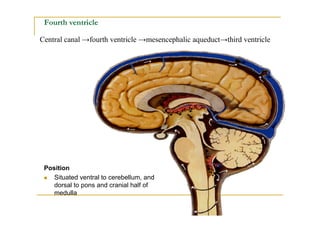
Fourth ventricle

Central canal →fourth ventricle →mesencephalic aqueduct→third ventricle


 Position
    Situated ventral to cerebellum, and
    dorsal to pons and cranial half of
    medulla
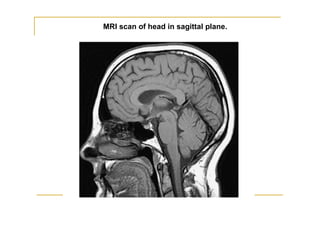
MRI scan of head in sagittal plane.
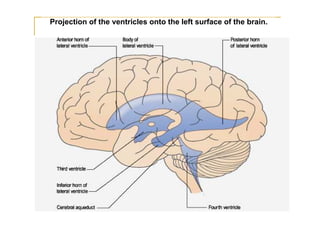
Projection of the ventricles onto the left surface of the brain.
Boundaries & floor of   4 th

      ventricle
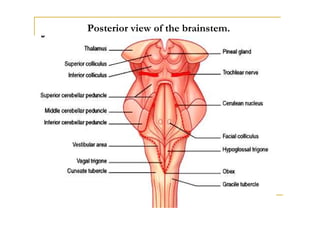
Posterior view of the brainstem.
Fourth ventricle

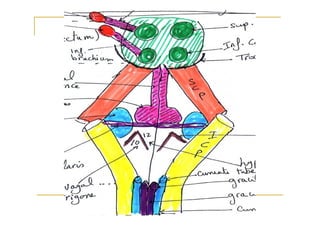
Boundaries
  Inferolateral:
  gracile and
  cuneate tubercles,
  inferior cerebellar
  peduncles
  Superolateral:
  superior cerebellar
  peduncle
  Lateral recess
Floor of the Fourth ventricle

Pontine part
  Median sulcus                       Vestibular area
  Sulcus limitans
  Medial eminence
   - Facial colliculus:
  overlies nucleus of
  abducent n. and genu of
  facial nerve
   - Hypoglossal triangle         •Striae medullares
  Vestibular area
   overlies vestibular
  nuclei
  Acoustic tubercle
  overlying dorsal
  cochlear nucleus
  Inferior fovea
   (Vagal triangle)
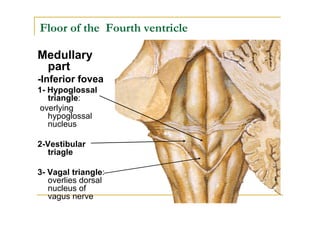
Floor of the Fourth ventricle

Medullary
 part
-Inferior fovea
1- Hypoglossal
   triangle:
 overlying
   hypoglossal
   nucleus

2-Vestibular
   triagle

3- Vagal triangle:
   overlies dorsal
   nucleus of
   vagus nerve
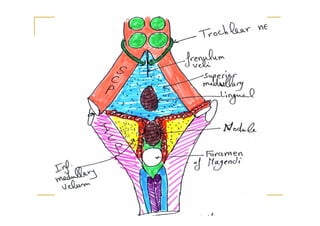
Roof of   4 th   Ventricle
Fourth ventricle
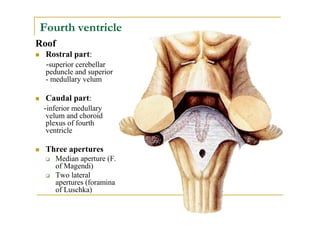
Roof
  Rostral part:
  -superior cerebellar
  peduncle and superior
  - medullary velum

  Caudal part:
 -inferior medullary
  velum and choroid
  plexus of fourth
  ventricle

  Three apertures
     Median aperture (F.
     of Magendi)
     Two lateral
     apertures (foramina
     of Luschka)
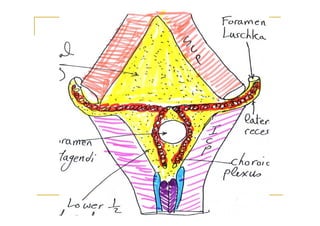
Recesses of   4th

  Ventricle
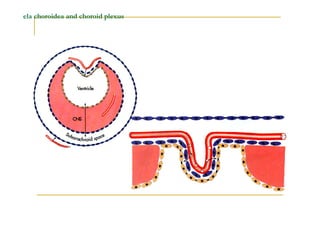
Tela choroidea and choroid plexus
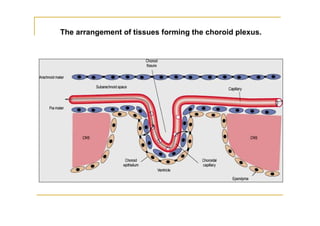
The arrangement of tissues forming the choroid plexus.
CSF


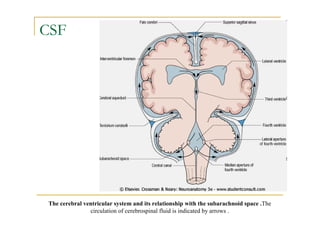
 The cerebral ventricular system and its relationship with the subarachnoid space .The
                circulation of cerebrospinal fluid is indicated by arrows .
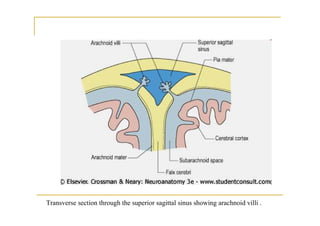
Transverse section through the superior sagittal sinus showing arachnoid villi .
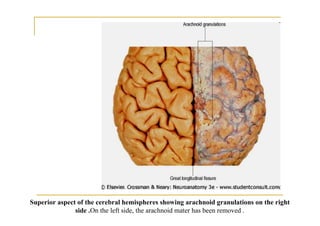
Superior aspect of the cerebral hemispheres showing arachnoid granulations on the right
               side .On the left side, the arachnoid mater has been removed .
Thanks


You can download this lecture from:

http://www.slideshare.net/drnosman

Fourth ventricle

  • 1.
    Fourth ventricle By Dr. Noura El Tahawy
  • 3.
    Sagittal section ofthe brainstem & cerebellum The diagram showing the position of the fourth ventricle. Cerebrospinal fluid descends along the aqueduct into the fourth ventricle and emerges into the subarachnoid space via three apertures including the median aperture containing the arrow.
  • 4.
    Sagittal hemisection ofthe brain Sagittal hemisection of the brain to show the third and fourth ventricles. Pia mater: red; ependyma: blue.
  • 5.
    Fourth ventricle Central canal→fourth ventricle →mesencephalic aqueduct→third ventricle Position Situated ventral to cerebellum, and dorsal to pons and cranial half of medulla
  • 6.
    MRI scan ofhead in sagittal plane.
  • 7.
    Projection of theventricles onto the left surface of the brain.
  • 8.
    Boundaries & floorof 4 th ventricle
  • 11.
    Posterior view ofthe brainstem.
  • 12.
    Fourth ventricle Boundaries Inferolateral: gracile and cuneate tubercles, inferior cerebellar peduncles Superolateral: superior cerebellar peduncle Lateral recess
  • 13.
    Floor of theFourth ventricle Pontine part Median sulcus Vestibular area Sulcus limitans Medial eminence - Facial colliculus: overlies nucleus of abducent n. and genu of facial nerve - Hypoglossal triangle •Striae medullares Vestibular area overlies vestibular nuclei Acoustic tubercle overlying dorsal cochlear nucleus Inferior fovea (Vagal triangle)
  • 14.
    Floor of theFourth ventricle Medullary part -Inferior fovea 1- Hypoglossal triangle: overlying hypoglossal nucleus 2-Vestibular triagle 3- Vagal triangle: overlies dorsal nucleus of vagus nerve
  • 15.
    Roof of 4 th Ventricle
  • 17.
    Fourth ventricle Roof Rostral part: -superior cerebellar peduncle and superior - medullary velum Caudal part: -inferior medullary velum and choroid plexus of fourth ventricle Three apertures Median aperture (F. of Magendi) Two lateral apertures (foramina of Luschka)
  • 18.
    Recesses of 4th Ventricle
  • 20.
    Tela choroidea andchoroid plexus
  • 21.
    The arrangement oftissues forming the choroid plexus.
  • 22.
    CSF The cerebralventricular system and its relationship with the subarachnoid space .The circulation of cerebrospinal fluid is indicated by arrows .
  • 23.
    Transverse section throughthe superior sagittal sinus showing arachnoid villi .
  • 24.
    Superior aspect ofthe cerebral hemispheres showing arachnoid granulations on the right side .On the left side, the arachnoid mater has been removed .
  • 25.
    Thanks You can downloadthis lecture from: http://www.slideshare.net/drnosman