Ataxia & Cerebellar disorders
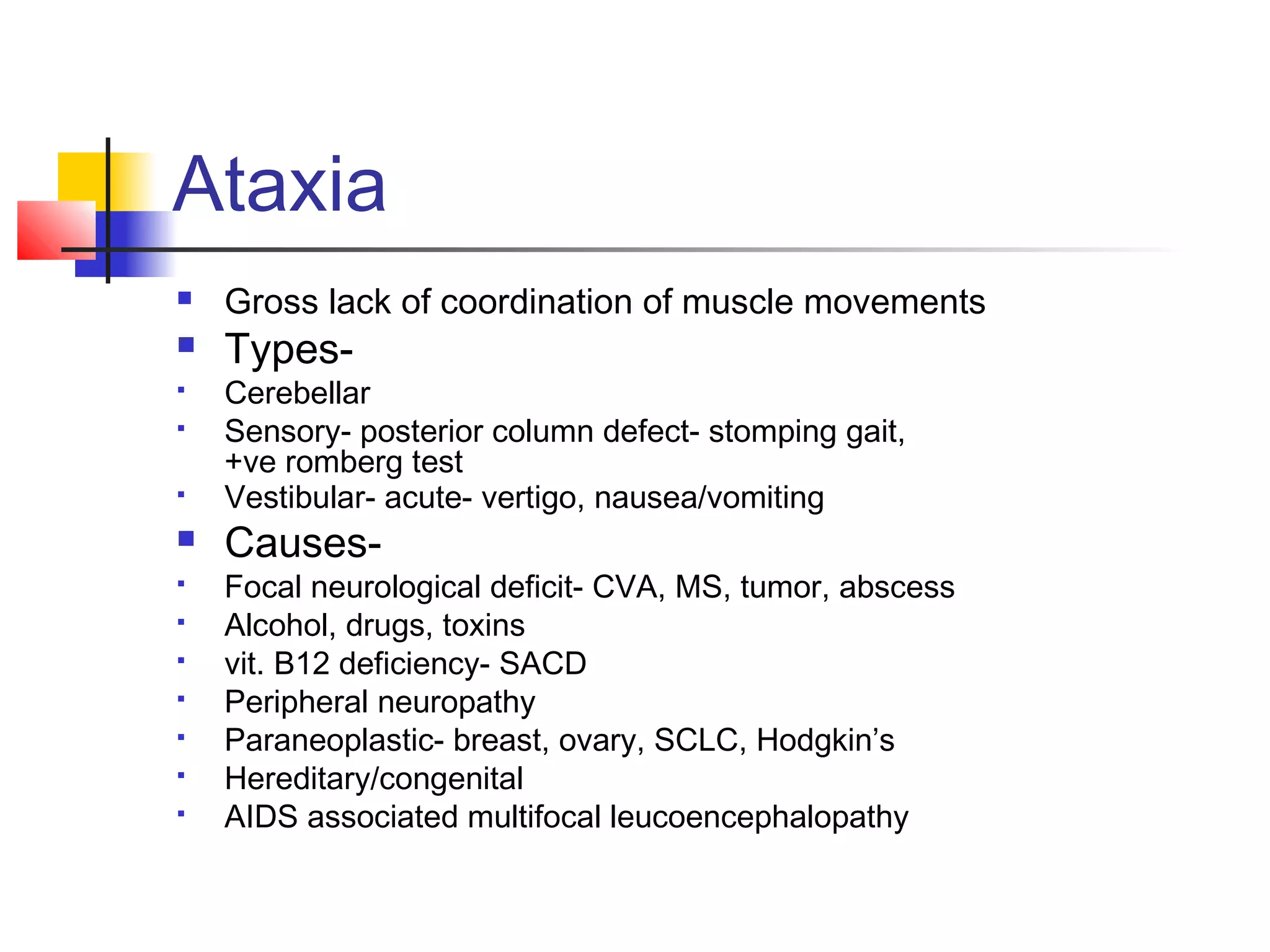
Ataxia
 Gross lack of coordination of muscle movements
 Types-
 Cerebellar
 Sensory- posterior column defect- stomping gait,
+ve romberg test
 Vestibular- acute- vertigo, nausea/vomiting
 Causes-
 Focal neurological deficit- CVA, MS, tumor, abscess
 Alcohol, drugs, toxins
 vit. B12 deficiency- SACD
 Peripheral neuropathy
 Paraneoplastic- breast, ovary, SCLC, Hodgkin’s
 Hereditary/congenital
 AIDS associated multifocal leucoencephalopathy
Signs of cerebellar disorders
 Ataxia- wide-based gait
 Decomposition of movement- inability to correctly
sequence fine coordinated acts
 Dysarthria- slurring & inappropriate phrasing
 Dysdiadochokinesia- inability to perform rapidly alternating
movements
 Dysmetria- inability to control range of movements
 Hypotonia
 Nystagmus- with fast component towards the site of lesion
 Scanning speech
 Intention tremor
Causes of cerebellar dysfunction
 Hereditary-
 Spinocerebellar ataxia
 Friedreich’s ataxia
 Congenital malformation- Dandy-Walker
 Acquired-
 Degenerative- multiple system atrophy
 Tumor- medulloblastoma, astrocytoma
 Systemic- alcoholism, hypothyroidism
 Drugs- lithium, phenytoin
 Toxins- heavy metals, carbon monoxide
Management
Dx- clinical + MRI
Rx- supportive &
of underlying cause, if
any
Management
Dx- clinical + MRI
Rx- supportive &
of underlying cause, if
any

Ataxia & cerebellar disorders

  • 1.
  • 2.
    Ataxia  Gross lackof coordination of muscle movements  Types-  Cerebellar  Sensory- posterior column defect- stomping gait, +ve romberg test  Vestibular- acute- vertigo, nausea/vomiting  Causes-  Focal neurological deficit- CVA, MS, tumor, abscess  Alcohol, drugs, toxins  vit. B12 deficiency- SACD  Peripheral neuropathy  Paraneoplastic- breast, ovary, SCLC, Hodgkin’s  Hereditary/congenital  AIDS associated multifocal leucoencephalopathy
  • 3.
    Signs of cerebellardisorders  Ataxia- wide-based gait  Decomposition of movement- inability to correctly sequence fine coordinated acts  Dysarthria- slurring & inappropriate phrasing  Dysdiadochokinesia- inability to perform rapidly alternating movements  Dysmetria- inability to control range of movements  Hypotonia  Nystagmus- with fast component towards the site of lesion  Scanning speech  Intention tremor
  • 4.
    Causes of cerebellardysfunction  Hereditary-  Spinocerebellar ataxia  Friedreich’s ataxia  Congenital malformation- Dandy-Walker  Acquired-  Degenerative- multiple system atrophy  Tumor- medulloblastoma, astrocytoma  Systemic- alcoholism, hypothyroidism  Drugs- lithium, phenytoin  Toxins- heavy metals, carbon monoxide
  • 5.
    Management Dx- clinical +MRI Rx- supportive & of underlying cause, if any
  • 6.
    Management Dx- clinical +MRI Rx- supportive & of underlying cause, if any