Downloaded 29 times
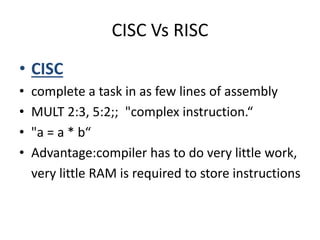
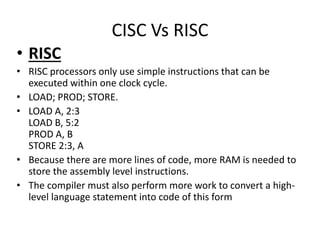
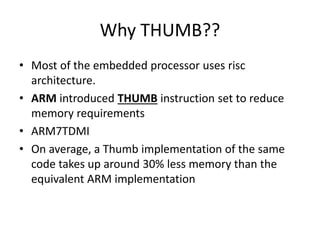
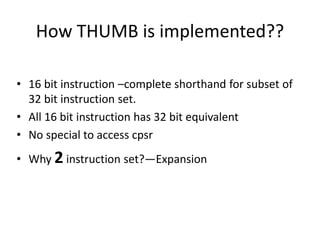
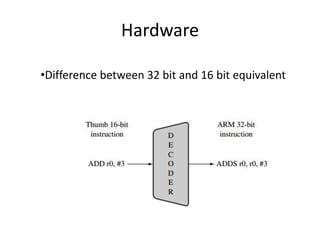
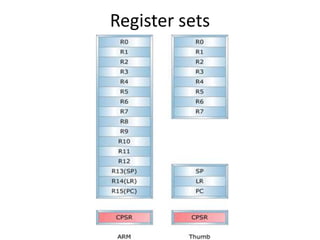

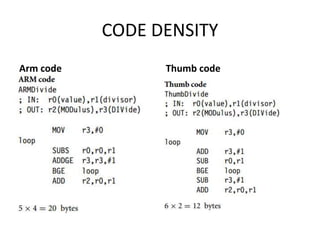
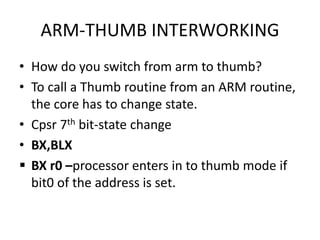
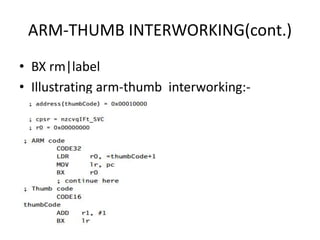
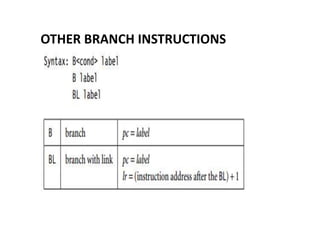
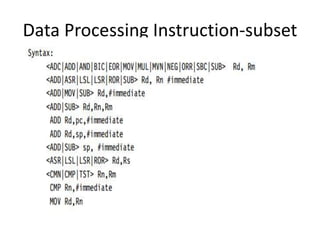
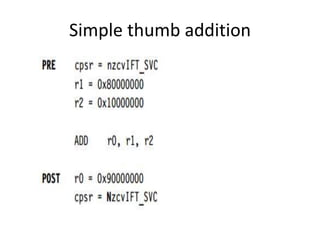
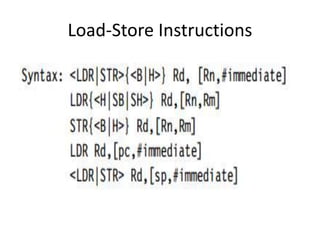
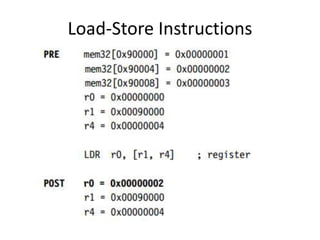
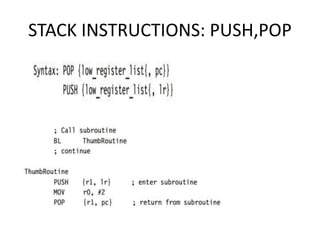
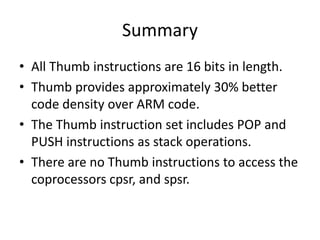


CISC processors use complex instructions to complete tasks in fewer lines of code, while RISC processors use only simple instructions that execute in one clock cycle. ARM introduced the Thumb instruction set, where instructions are 16 bits rather than ARM's 32 bits, to reduce memory requirements. Thumb code takes up around 30% less memory than equivalent ARM code. Thumb instructions allow switching between ARM and Thumb modes and provide stack operations like PUSH and POP with 16-bit instructions, improving code density for embedded systems that typically use RISC architectures.


