Sore throat
Done by : Yahyia Al-Abri
90440
Senior
The place of English in Oman school system
Do you think in
future there is
possibility of
doing
( your view )
Will they prove to
be effective
Changes in school
Curriculum to
improve English
proficiency student
Past and present
Outline
• Definition and deferential diagnosis
• How to approach?
• Acute Tonsillitis
• Peritonsillar abscess
• Viral and bacterial pharyngitis
• Adenoid hypertrophy.
Sore throat
Life threatening condition
• Epiglottitis
• Retropharyngeal abscess
• Lateral pharyngeal
abscesses
• Peritonsillar abscess
• Infectious mononucleosis
• Diphtheria
Common conditions
• Viral pharyngitis
• Bacterial pharyngitis
• Infectious mononucleosis
• Tonsillitis
Other conditions
• Foreign body
• Herpetic stomatitis
• Irritative pharyngitis
Refers to any painful sensation localized to the pharynx or
surrounding anatomy.
History
• Sore throat and respiratory distress
– Epiglottitis, retropharyngeal or lateral pharyngeal abscess, peritonsillar
abscess, massive tonsillar hypertrophy
• Fever
– Infectious causes
• Fatigue
– Particularly when prolonged, characterizes infectious mononucleosis.
• Abrupt onset
– pharyngitis, epiglottitis
• Days or weeks.
– infectious mononucleosis
• Immunocompromised
– Candida albicans
Physical examination
• Stridor, drooling, or respiratory distress
– indicate airway obstruction →epiglottitis or
retropharyngeal abscess
• An inflamed eardrum
– non-oropharyngeal site
• Generalized inflammation of the oral mucosa, in a
persistently febrile child
– Kawasaki disease
• A foreign body
• Significant asymmetry of the tonsils indicates a
– peritonsillar cellulitis
Sore throat
Life threatening condition
• Epiglottitis
• Retropharyngeal abscess
• Lateral pharyngeal
abscesses
• Peritonsillar abscess
• Infectious mononucleosis
• Diphtheria
Common conditions
• Viral pharyngitis
• Bacterial pharyngitis
• Infectious mononucleosis
• Tonsillitis
• Adenoid hypertrophy
Other conditions
• Foreign body
• Herpetic stomatitis
• Irritative pharyngitis
Refers to any painful sensation localized to the pharynx or
surrounding anatomy.
Anatomy of tensile
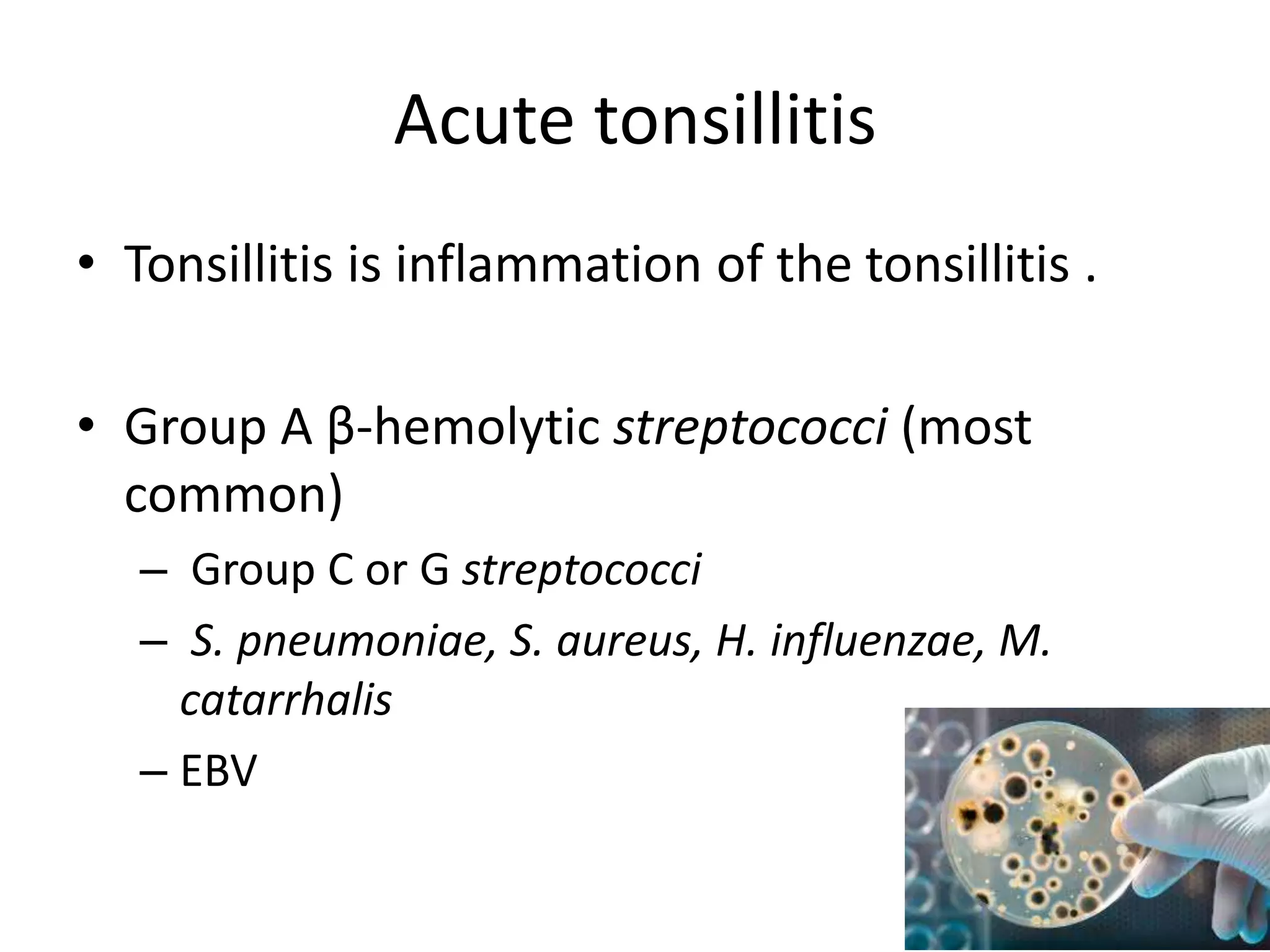
Acute tonsillitis
• Tonsillitis is inflammation of the tonsillitis .
• Group A β-hemolytic streptococci (most
common)
– Group C or G streptococci
– S. pneumoniae, S. aureus, H. influenzae, M.
catarrhalis
– EBV
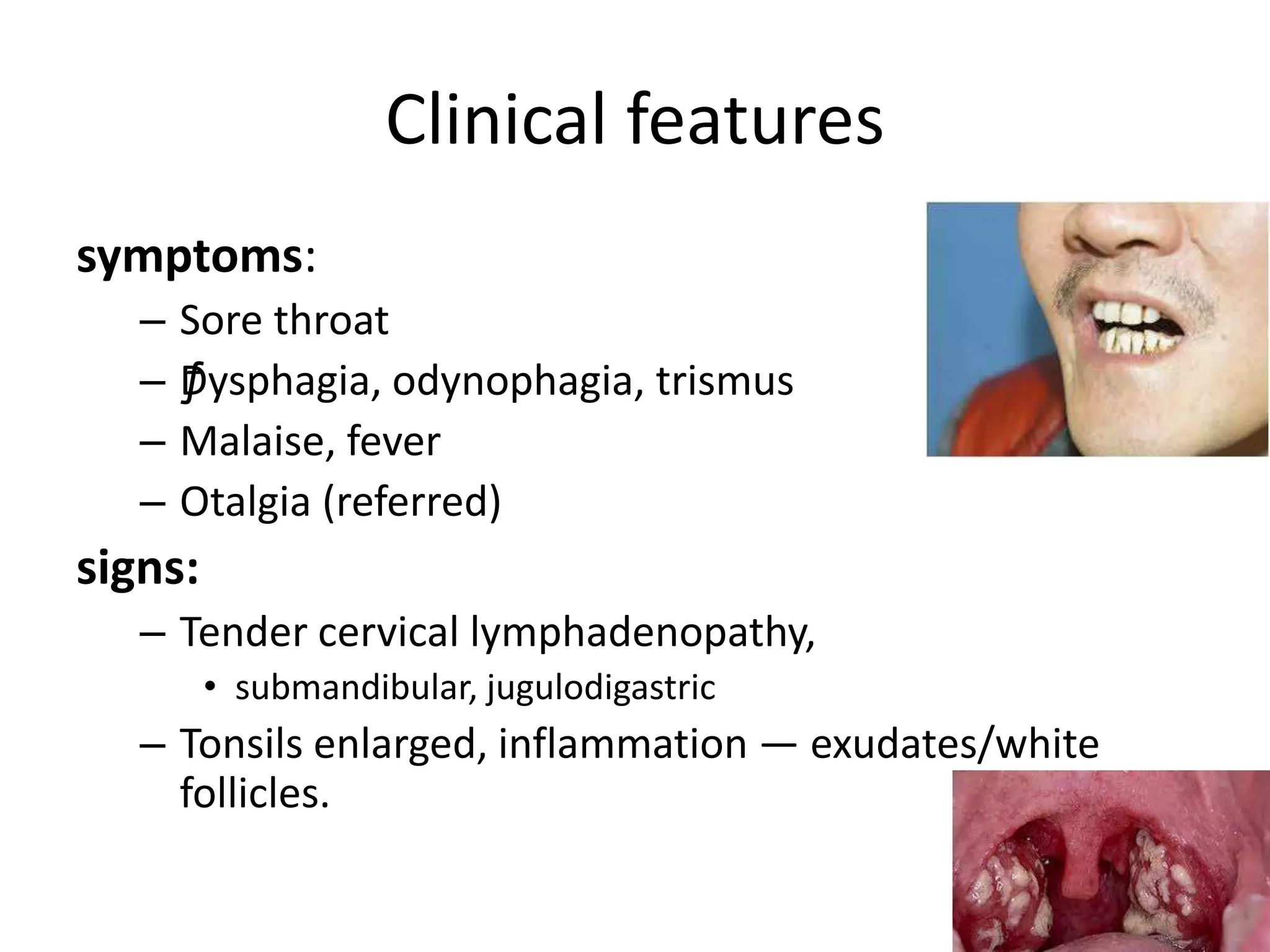
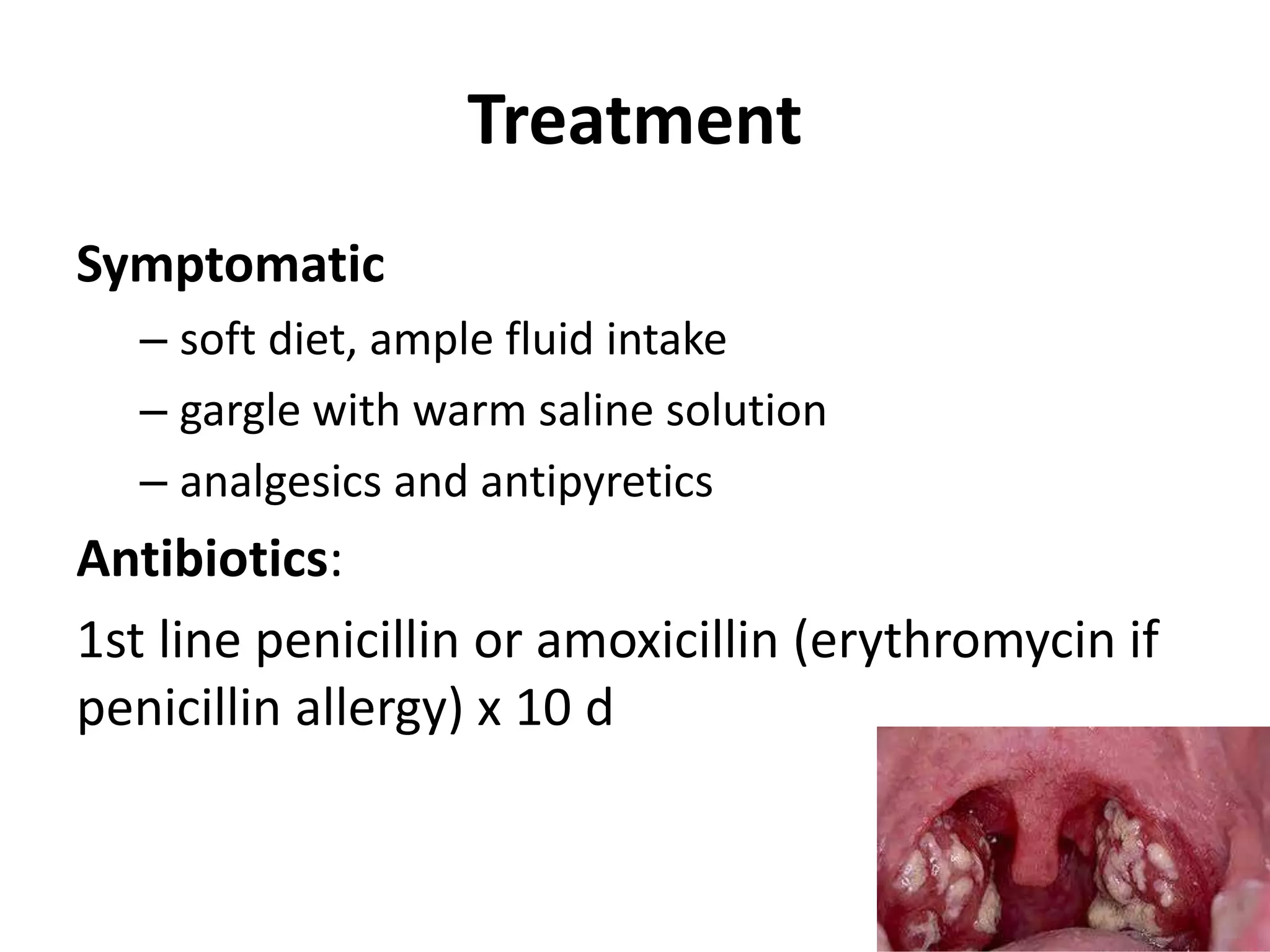
Clinical features
symptoms:
– Sore throat
– ƒDysphagia, odynophagia, trismus
– Malaise, fever
– Otalgia (referred)
signs:
– Tender cervical lymphadenopathy,
• submandibular, jugulodigastric
– Tonsils enlarged, inflammation ― exudates/white
follicles.
Investigations
• CBC
• Swab for C&S
• Rapid Strep Test
• Monospot – less reliable in children <2 year
old
– infectious mononucleosis
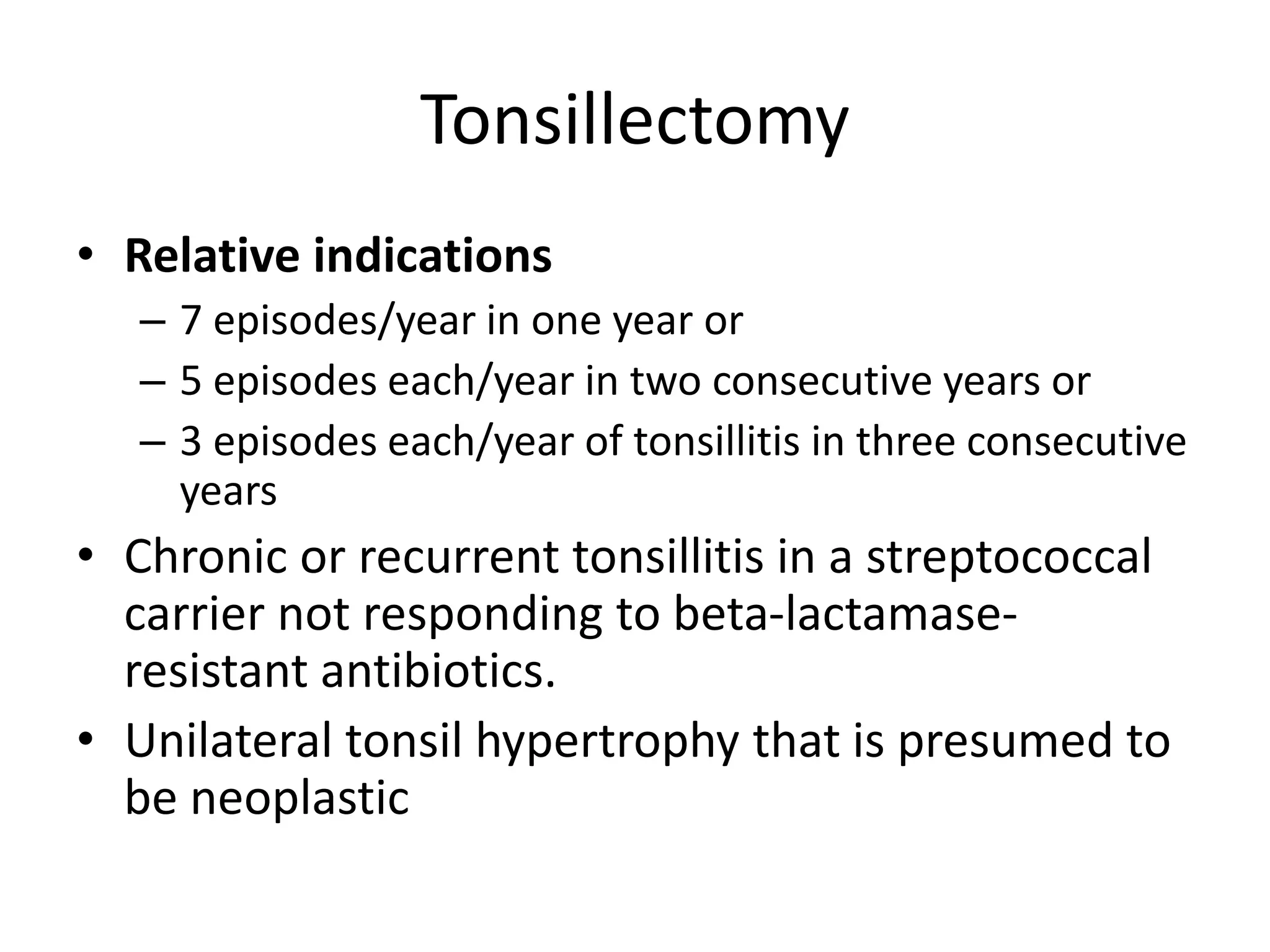
Treatment
Symptomatic
– soft diet, ample fluid intake
– gargle with warm saline solution
– analgesics and antipyretics
Antibiotics:
1st line penicillin or amoxicillin (erythromycin if
penicillin allergy) x 10 d
Tonsillectomy
• Absolute indications
– Enlarged tonsils that cause upper airway
obstruction, severe dysphagia, sleep disorders, or
cardiopulmonary complications.
– Peritonsillar abscess that is unresponsive to
medical management and drainage documented
by surgeon,
– Tonsillitis resulting in febrile convulsions
– Tonsils requiring biopsy to define tissue pathology
American Academy of Otolaryngology–Head and Neck Surgery (AAO-HNS
Tonsillectomy
• Relative indications
– 7 episodes/year in one year or
– 5 episodes each/year in two consecutive years or
– 3 episodes each/year of tonsillitis in three consecutive
years
• Chronic or recurrent tonsillitis in a streptococcal
carrier not responding to beta-lactamase-
resistant antibiotics.
• Unilateral tonsil hypertrophy that is presumed to
be neoplastic
Contraindication
• Bleeding diathesis
• Poor anesthetic risk or uncontrolled medical
illness
• Anemia
• Acute infection
Sore throat
Life threatening condition
• Epiglottitis
• Retropharyngeal abscess
• Lateral pharyngeal
abscesses
• Peritonsillar abscess
• Infectious mononucleosis
• Diphtheria
Common conditions
• Viral pharyngitis
• Bacterial pharyngitis
• Infectious mononucleosis
• Tonsillitis
Other conditions
• Foreign body
• Herpetic stomatitis
• Irritative pharyngitis
Refers to any painful sensation localized to the pharynx or
surrounding anatomy.
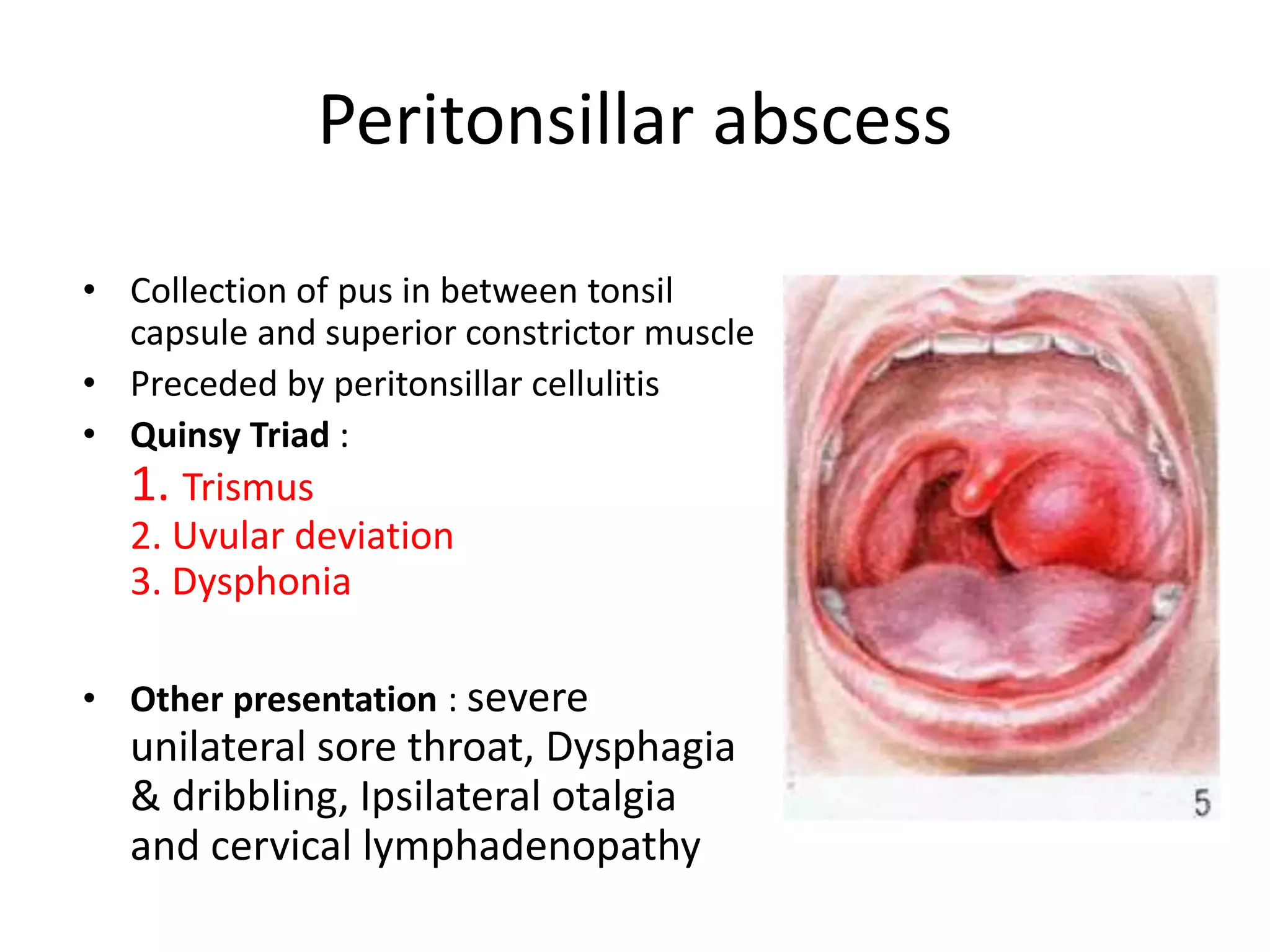
Peritonsillar abscess
• Collection of pus in between tonsil
capsule and superior constrictor muscle
• Preceded by peritonsillar cellulitis
• Quinsy Triad :
1. Trismus
2. Uvular deviation
3. Dysphonia
• Other presentation : severe
unilateral sore throat, Dysphagia
& dribbling, Ipsilateral otalgia
and cervical lymphadenopathy
Management
Peritonsillar cellulitis:
• Parentral antibiotics
Abscess:
• Incision & drainage
• Parentral antibiotics
Antibiotic of choice:
• Penicillin (most common causative organism
GABS)
• Clindamycin
Sore throat
Life threatening condition
• Epiglottitis
• Retropharyngeal abscess
• Lateral pharyngeal
abscesses
• Peritonsillar abscess
• Infectious mononucleosis
• Diphtheria
Common conditions
• Viral pharyngitis
• Bacterial pharyngitis
• Infectious mononucleosis
• Tonsillitis
• Adenoid hypertrophy
Other conditions
• Foreign body
• Herpetic stomatitis
• Irritative pharyngitis
Refers to any painful sensation localized to the pharynx or
surrounding anatomy.
Acute pharyngitis
• Acute pharyngitis is one of the most common
conditions encountered in office practice.
• Virus 80%
– adenoviruses, enteroviruses, coxsackie, upper
respiratory tract viruses, EBV, CMV
• Bacteria 20%
– mainly Group A Streptococcus, M. pneumonia
(older children), N. gonorrhea
Epidemiology
• GAS pharyngitis
– more common in late winter or early spring
– peak incidence at 5-12 year
• viral pharyngitis
– All age
– all year long
Clinical features of GAS
• Sudden onset of sore throat,
• Tonsillar exudate,
• Tender cervical adenitis,
• fever.
• Cough and significant rhinorrhea are usually
absent.
Investigation
• Rapid antigen detection test
– three or more Centor criteria.
– Sensitivity from 70 to 90 percent and specificity from 90 to 100
• Throat culture
– gold standard
– used as a backup test in patients with negative RADT where
clinical concern for GAS or bacterial pharyngitis is still high
• Patient with higher risk (eg, poorly-controlled diabetes
mellitus, immunocompromised, on chronic corticosteroids),
– throat culture can be obtained at the initial visit.
Treatment
• Patients who do not have GAS
– The pharyngitis will resolve in a few
– Symptomatic treatment should be offered
• Not improve with symptomatic treatment
within five to seven days or who have
worsening :
– Infectious mononucleosis or primary HIV infection
or a suppurative complication (eg, peritonsillar
abscess).
Treatment
• Oral penicillin V is the agent of choice
– proven efficacy, safety, narrow spectrum, and low
cost.
– 10 days.
• Recurrent GAS infection
– Cephalosporin
• Penicillin hypersensitivity,
– Cephalosporins (cefuroxime, ceftriaxone)
Sore throat
Life threatening condition
• Epiglottitis
• Retropharyngeal abscess
• Lateral pharyngeal
abscesses
• Peritonsillar abscess
• Infectious mononucleosis
• Diphtheria
Common conditions
• Viral pharyngitis
• Bacterial pharyngitis
• Infectious mononucleosis
• Tonsillitis
• Adenoid hypertrophy
Other conditions
• Foreign body
• Herpetic stomatitis
• Irritative pharyngitis
Refers to any painful sensation localized to the pharynx or
surrounding anatomy.
Adenoid hypertrophy
• Adenoids collection of Lymphoid tissue,
located in the post-nasal space.
• Adenoids hypertrophy occurs physiologically
in children between the age of 6–10 years, *1
• Atrophy at the age of 16 years *2
2-Yildirim N, Sahan M, Karslioğlu Y;Adenoid hypertrophy in adults: clinical and morphological characteristics.J Int Med Res.
2008 Jan-Feb; 36(1):157-62.
1-Hassmann E, Lipska A, Musiatowicz M:Naive and memory T cells in hypertrophied adenoids in children according to age.Wysocka J, Int J Pediatr
Otorhinolaryngol. 2003 Mar; 67(3):237-41
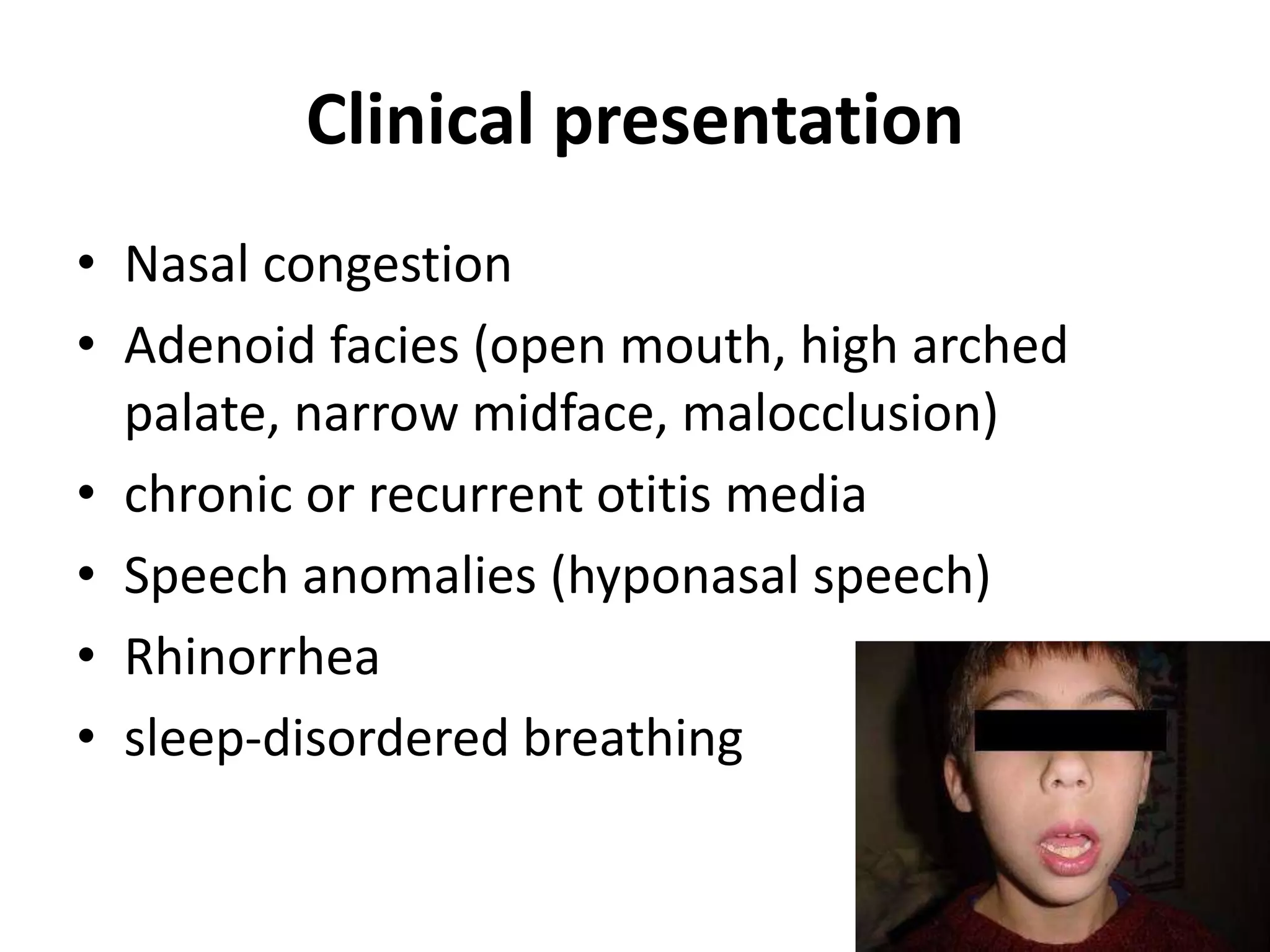
Clinical presentation
• Nasal congestion
• Adenoid facies (open mouth, high arched
palate, narrow midface, malocclusion)
• chronic or recurrent otitis media
• Speech anomalies (hyponasal speech)
• Rhinorrhea
• sleep-disordered breathing
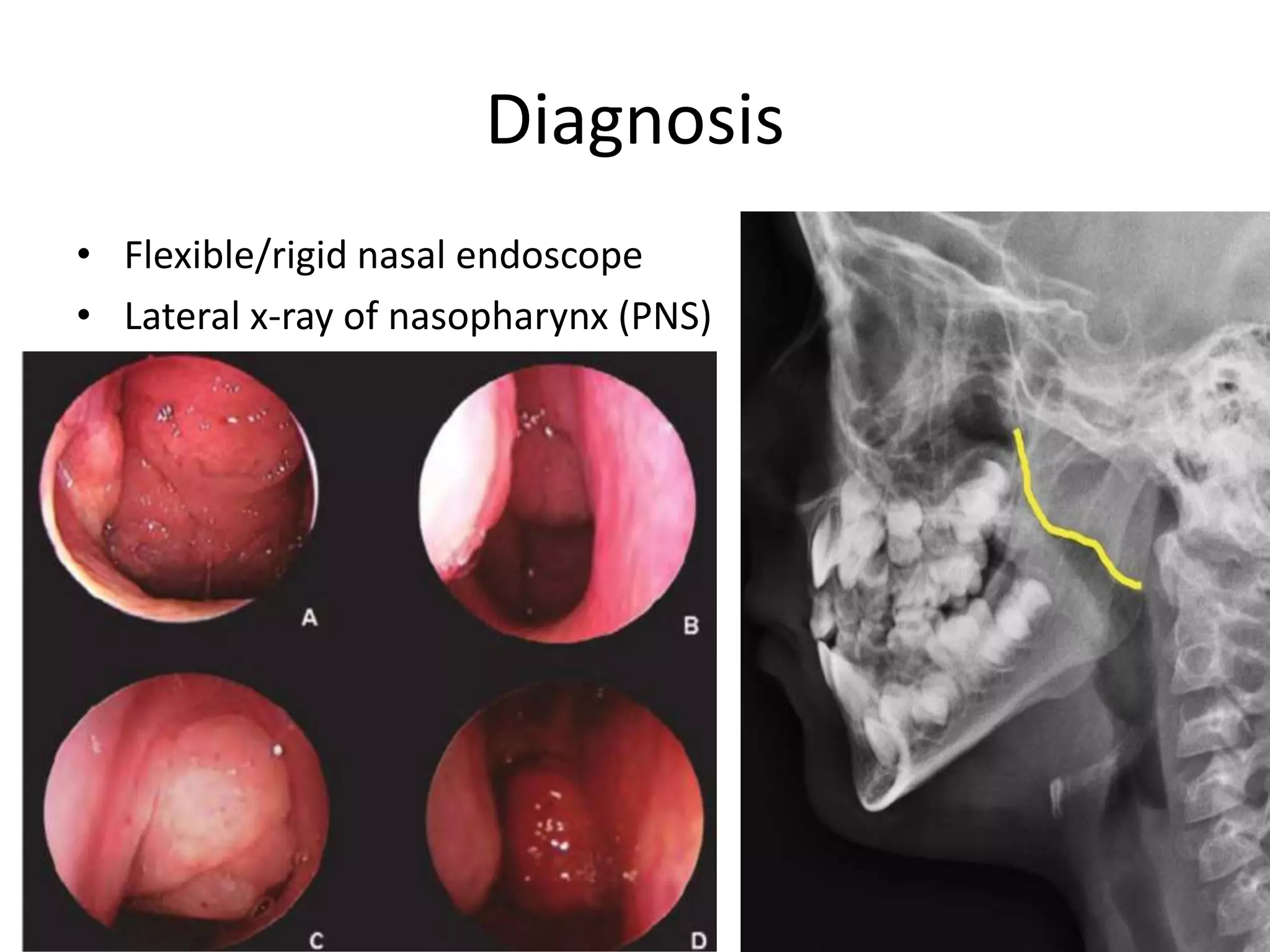
Diagnosis
• Flexible/rigid nasal endoscope
• Lateral x-ray of nasopharynx (PNS)
Adenoidectomy
Indications :
• Children with recurrent or persistent otitis media
• Chronic or recurrent sinusitis
• Nasal airway obstructive symptoms .
Contraindication:
• Severe bleeding disorder
• Recent pharyngeal infection
• Short or abnormal palate (cleft or false palate, zona pellucida)
References
• www.uptodate.com
• www.medscape.com
• www.researchgate.net
• https://radiopaedia.org/articles/adenoidal-hypertrophy
• 1-Hassmann E, Lipska A, Musiatowicz M:Naive and memory
T cells in hypertrophied adenoids in children according to
age.Wysocka J, Int J Pediatr Otorhinolaryngol. 2003 Mar;
67(3):237-41
• 2-Yildirim N, Sahan M, Karslioğlu Y;Adenoid hypertrophy in
adults: clinical and morphological characteristics.J Int Med
Res. 2008 Jan-Feb; 36(1):157-62.
approch to patient with Sore throat

approch to patient with Sore throat

  • 1.
    Sore throat Done by: Yahyia Al-Abri 90440 Senior
  • 2.
    The place ofEnglish in Oman school system Do you think in future there is possibility of doing ( your view ) Will they prove to be effective Changes in school Curriculum to improve English proficiency student Past and present
  • 3.
    Outline • Definition anddeferential diagnosis • How to approach? • Acute Tonsillitis • Peritonsillar abscess • Viral and bacterial pharyngitis • Adenoid hypertrophy.
  • 4.
    Sore throat Life threateningcondition • Epiglottitis • Retropharyngeal abscess • Lateral pharyngeal abscesses • Peritonsillar abscess • Infectious mononucleosis • Diphtheria Common conditions • Viral pharyngitis • Bacterial pharyngitis • Infectious mononucleosis • Tonsillitis Other conditions • Foreign body • Herpetic stomatitis • Irritative pharyngitis Refers to any painful sensation localized to the pharynx or surrounding anatomy.
  • 6.
    History • Sore throatand respiratory distress – Epiglottitis, retropharyngeal or lateral pharyngeal abscess, peritonsillar abscess, massive tonsillar hypertrophy • Fever – Infectious causes • Fatigue – Particularly when prolonged, characterizes infectious mononucleosis. • Abrupt onset – pharyngitis, epiglottitis • Days or weeks. – infectious mononucleosis • Immunocompromised – Candida albicans
  • 7.
    Physical examination • Stridor,drooling, or respiratory distress – indicate airway obstruction →epiglottitis or retropharyngeal abscess • An inflamed eardrum – non-oropharyngeal site • Generalized inflammation of the oral mucosa, in a persistently febrile child – Kawasaki disease • A foreign body • Significant asymmetry of the tonsils indicates a – peritonsillar cellulitis
  • 8.
    Sore throat Life threateningcondition • Epiglottitis • Retropharyngeal abscess • Lateral pharyngeal abscesses • Peritonsillar abscess • Infectious mononucleosis • Diphtheria Common conditions • Viral pharyngitis • Bacterial pharyngitis • Infectious mononucleosis • Tonsillitis • Adenoid hypertrophy Other conditions • Foreign body • Herpetic stomatitis • Irritative pharyngitis Refers to any painful sensation localized to the pharynx or surrounding anatomy.
  • 9.
  • 10.
    Acute tonsillitis • Tonsillitisis inflammation of the tonsillitis . • Group A β-hemolytic streptococci (most common) – Group C or G streptococci – S. pneumoniae, S. aureus, H. influenzae, M. catarrhalis – EBV
  • 11.
    Clinical features symptoms: – Sorethroat – ƒDysphagia, odynophagia, trismus – Malaise, fever – Otalgia (referred) signs: – Tender cervical lymphadenopathy, • submandibular, jugulodigastric – Tonsils enlarged, inflammation ― exudates/white follicles.
  • 14.
    Investigations • CBC • Swabfor C&S • Rapid Strep Test • Monospot – less reliable in children <2 year old – infectious mononucleosis
  • 15.
    Treatment Symptomatic – soft diet,ample fluid intake – gargle with warm saline solution – analgesics and antipyretics Antibiotics: 1st line penicillin or amoxicillin (erythromycin if penicillin allergy) x 10 d
  • 16.
    Tonsillectomy • Absolute indications –Enlarged tonsils that cause upper airway obstruction, severe dysphagia, sleep disorders, or cardiopulmonary complications. – Peritonsillar abscess that is unresponsive to medical management and drainage documented by surgeon, – Tonsillitis resulting in febrile convulsions – Tonsils requiring biopsy to define tissue pathology American Academy of Otolaryngology–Head and Neck Surgery (AAO-HNS
  • 17.
    Tonsillectomy • Relative indications –7 episodes/year in one year or – 5 episodes each/year in two consecutive years or – 3 episodes each/year of tonsillitis in three consecutive years • Chronic or recurrent tonsillitis in a streptococcal carrier not responding to beta-lactamase- resistant antibiotics. • Unilateral tonsil hypertrophy that is presumed to be neoplastic
  • 18.
    Contraindication • Bleeding diathesis •Poor anesthetic risk or uncontrolled medical illness • Anemia • Acute infection
  • 19.
    Sore throat Life threateningcondition • Epiglottitis • Retropharyngeal abscess • Lateral pharyngeal abscesses • Peritonsillar abscess • Infectious mononucleosis • Diphtheria Common conditions • Viral pharyngitis • Bacterial pharyngitis • Infectious mononucleosis • Tonsillitis Other conditions • Foreign body • Herpetic stomatitis • Irritative pharyngitis Refers to any painful sensation localized to the pharynx or surrounding anatomy.
  • 20.
    Peritonsillar abscess • Collectionof pus in between tonsil capsule and superior constrictor muscle • Preceded by peritonsillar cellulitis • Quinsy Triad : 1. Trismus 2. Uvular deviation 3. Dysphonia • Other presentation : severe unilateral sore throat, Dysphagia & dribbling, Ipsilateral otalgia and cervical lymphadenopathy
  • 22.
    Management Peritonsillar cellulitis: • Parentralantibiotics Abscess: • Incision & drainage • Parentral antibiotics Antibiotic of choice: • Penicillin (most common causative organism GABS) • Clindamycin
  • 24.
    Sore throat Life threateningcondition • Epiglottitis • Retropharyngeal abscess • Lateral pharyngeal abscesses • Peritonsillar abscess • Infectious mononucleosis • Diphtheria Common conditions • Viral pharyngitis • Bacterial pharyngitis • Infectious mononucleosis • Tonsillitis • Adenoid hypertrophy Other conditions • Foreign body • Herpetic stomatitis • Irritative pharyngitis Refers to any painful sensation localized to the pharynx or surrounding anatomy.
  • 25.
    Acute pharyngitis • Acutepharyngitis is one of the most common conditions encountered in office practice. • Virus 80% – adenoviruses, enteroviruses, coxsackie, upper respiratory tract viruses, EBV, CMV • Bacteria 20% – mainly Group A Streptococcus, M. pneumonia (older children), N. gonorrhea
  • 26.
    Epidemiology • GAS pharyngitis –more common in late winter or early spring – peak incidence at 5-12 year • viral pharyngitis – All age – all year long
  • 27.
    Clinical features ofGAS • Sudden onset of sore throat, • Tonsillar exudate, • Tender cervical adenitis, • fever. • Cough and significant rhinorrhea are usually absent.
  • 29.
    Investigation • Rapid antigendetection test – three or more Centor criteria. – Sensitivity from 70 to 90 percent and specificity from 90 to 100 • Throat culture – gold standard – used as a backup test in patients with negative RADT where clinical concern for GAS or bacterial pharyngitis is still high • Patient with higher risk (eg, poorly-controlled diabetes mellitus, immunocompromised, on chronic corticosteroids), – throat culture can be obtained at the initial visit.
  • 30.
    Treatment • Patients whodo not have GAS – The pharyngitis will resolve in a few – Symptomatic treatment should be offered • Not improve with symptomatic treatment within five to seven days or who have worsening : – Infectious mononucleosis or primary HIV infection or a suppurative complication (eg, peritonsillar abscess).
  • 31.
    Treatment • Oral penicillinV is the agent of choice – proven efficacy, safety, narrow spectrum, and low cost. – 10 days. • Recurrent GAS infection – Cephalosporin • Penicillin hypersensitivity, – Cephalosporins (cefuroxime, ceftriaxone)
  • 32.
    Sore throat Life threateningcondition • Epiglottitis • Retropharyngeal abscess • Lateral pharyngeal abscesses • Peritonsillar abscess • Infectious mononucleosis • Diphtheria Common conditions • Viral pharyngitis • Bacterial pharyngitis • Infectious mononucleosis • Tonsillitis • Adenoid hypertrophy Other conditions • Foreign body • Herpetic stomatitis • Irritative pharyngitis Refers to any painful sensation localized to the pharynx or surrounding anatomy.
  • 33.
    Adenoid hypertrophy • Adenoidscollection of Lymphoid tissue, located in the post-nasal space. • Adenoids hypertrophy occurs physiologically in children between the age of 6–10 years, *1 • Atrophy at the age of 16 years *2 2-Yildirim N, Sahan M, Karslioğlu Y;Adenoid hypertrophy in adults: clinical and morphological characteristics.J Int Med Res. 2008 Jan-Feb; 36(1):157-62. 1-Hassmann E, Lipska A, Musiatowicz M:Naive and memory T cells in hypertrophied adenoids in children according to age.Wysocka J, Int J Pediatr Otorhinolaryngol. 2003 Mar; 67(3):237-41
  • 35.
    Clinical presentation • Nasalcongestion • Adenoid facies (open mouth, high arched palate, narrow midface, malocclusion) • chronic or recurrent otitis media • Speech anomalies (hyponasal speech) • Rhinorrhea • sleep-disordered breathing
  • 36.
    Diagnosis • Flexible/rigid nasalendoscope • Lateral x-ray of nasopharynx (PNS)
  • 37.
    Adenoidectomy Indications : • Childrenwith recurrent or persistent otitis media • Chronic or recurrent sinusitis • Nasal airway obstructive symptoms . Contraindication: • Severe bleeding disorder • Recent pharyngeal infection • Short or abnormal palate (cleft or false palate, zona pellucida)
  • 38.
    References • www.uptodate.com • www.medscape.com •www.researchgate.net • https://radiopaedia.org/articles/adenoidal-hypertrophy • 1-Hassmann E, Lipska A, Musiatowicz M:Naive and memory T cells in hypertrophied adenoids in children according to age.Wysocka J, Int J Pediatr Otorhinolaryngol. 2003 Mar; 67(3):237-41 • 2-Yildirim N, Sahan M, Karslioğlu Y;Adenoid hypertrophy in adults: clinical and morphological characteristics.J Int Med Res. 2008 Jan-Feb; 36(1):157-62.

Editor's Notes

  • #5 Life-threatening conditionsDiphtheria is an infection caused by the bacterium Corynebacterium diphtheriae.[1] Signs and symptoms may vary from mild to severe.[2] They usually start two to five days after exposure.[1] Symptoms often come on fairly gradually beginning with a sore throat and fever.[2] In severe cases a grey or white patch develops in the throat.[1][2] This can block the airway and create a barking cough as in croup.[2] The neck may swell in part due to large lymph nodes.[1] A form of diphtheria that involves the skin, eyes, or genitals also exists.[1][2] Complications may include myocarditis, inflammation of nerves, kidney problems, and bleeding problems due to low blood platelets. Myocarditis may result in an abnormal heart rate and inflammation of the nerves may result in paralysis.[1] Diphtheria — Diphtheria is a life-threatening but seldom encountered cause of infectious pharyngitis, characterized by a thick pharyngeal membrane and marked cervical adenopathy
  • #7 Sore throat and respiratory distress – The combination of sore throat and respiratory distress suggests conditions in or near the pharynx that are producing an obstruction, including epiglottitis, retropharyngeal or lateral pharyngeal abscess, peritonsillar abscess, massive tonsillar hypertrophy secondary to infectious mononucleosis, and rarely diphtheria.
  • #9 Life-threatening conditions Diphtheria — Diphtheria is a life-threatening but seldom encountered cause of infectious pharyngitis, characterized by a thick pharyngeal membrane and marked cervical adenopathy
  • #12 Trismus spasm of the jaw muscles, causing the mouth to remain tightly closed
  • #20 Streptococcal: Rheumatic fever rheumatic heart disease Post streptococcal glomerulonephritis Peritonsillar abscess Systemic infection Septicemia or toxic shock syndrome Spread to nearby tissues: Rhinitis Sinusitis Otitis media Mastoiditis Pneumonia
  • #21 Life-threatening conditionsDiphtheria is an infection caused by the bacterium Corynebacterium diphtheriae.[1] Signs and symptoms may vary from mild to severe.[2] They usually start two to five days after exposure.[1] Symptoms often come on fairly gradually beginning with a sore throat and fever.[2] In severe cases a grey or white patch develops in the throat.[1][2] This can block the airway and create a barking cough as in croup.[2] The neck may swell in part due to large lymph nodes.[1] A form of diphtheria that involves the skin, eyes, or genitals also exists.[1][2] Complications may include myocarditis, inflammation of nerves, kidney problems, and bleeding problems due to low blood platelets. Myocarditis may result in an abnormal heart rate and inflammation of the nerves may result in paralysis.[1] Diphtheria — Diphtheria is a life-threatening but seldom encountered cause of infectious pharyngitis, characterized by a thick pharyngeal membrane and marked cervical adenopathy
  • #22 (hot potato voice)
  • #26 Life-threatening conditions Diphtheria — Diphtheria is a life-threatening but seldom encountered cause of infectious pharyngitis, characterized by a thick pharyngeal membrane and marked cervical adenopathy
  • #32 https://ezproxysrv.squ.edu.om:2398/contents/evaluation-of-acute-pharyngitis-in-adults?source=search_result&search=acute%20tonsillitis&selectedTitle=2~150#
  • #34 Life-threatening conditions Diphtheria — Diphtheria is a life-threatening but seldom encountered cause of infectious pharyngitis, characterized by a thick pharyngeal membrane and marked cervical adenopathy
  • #38 Adenoid facies refers to the long, open-mouthed face of children with adenoid hypertrophy. Hypertrophy of the nasopharyngeal pad of lymphoid tissues (the adenoids) is the most common cause of nasal obstruction in children. The mouth is always open because upper airway congestion has made patients obligatory mouth breathers. Persistent mouth breathing due to nasal obstruction in childhood may be associated with the development of craniofacial anomalies such as the adenoid facies ( also called the “long face syndrome”. The most common presenting symptoms are chronic mouth breathing and snoring”  The most dangerous symptom is sleep apnea.
  • #40 Contraindications bleeding disorders recent pharyngeal infection short or abnormal palate (cleft or false palate, zona pellucldum) risk of vpl velopharyngeal insufficiency Velopharyngeal insufficiency (VPI) is known as a failure of the separation between nose and mouth, because of an anatomical dysfunction of the soft palate the lateral or posterior wall of the pharynx.