Approach to patient with Ovarian
cysts
Done by: Yahyia Al-Abri
90440
Outline
• Definition of ovarian cyst
• Case scenario
• How to approach
– History, physical examination , investigation,
management.
• Functional ovarian cyst
• Benign ovarian neoplasm
• Mixed ovarian neoplasm
• Ovarian cancer
ovarian cyst
• An ovarian cyst is a sac filled with liquid or
semiliquid material that arises in an ovary.
• These cysts can develop in females at any stage of
life, from the neonatal period to postmenopausal
• Most ovarian cysts, occur during infancy and
adolescence, which are hormonally active periods
of development.
• Most are functional in nature and resolve without
treatment.
Case
• 19 years old Omani lady, Unmarried,
Presented to the A&E with history of
Abdominal left iliac fossa pain started 15
minutes prior coming to the hospital.
History Examination
InvestigationManagement
History
• Most patients with ovarian cysts are
asymptomatic
• Pain or discomfort may occur in the lower
abdomen
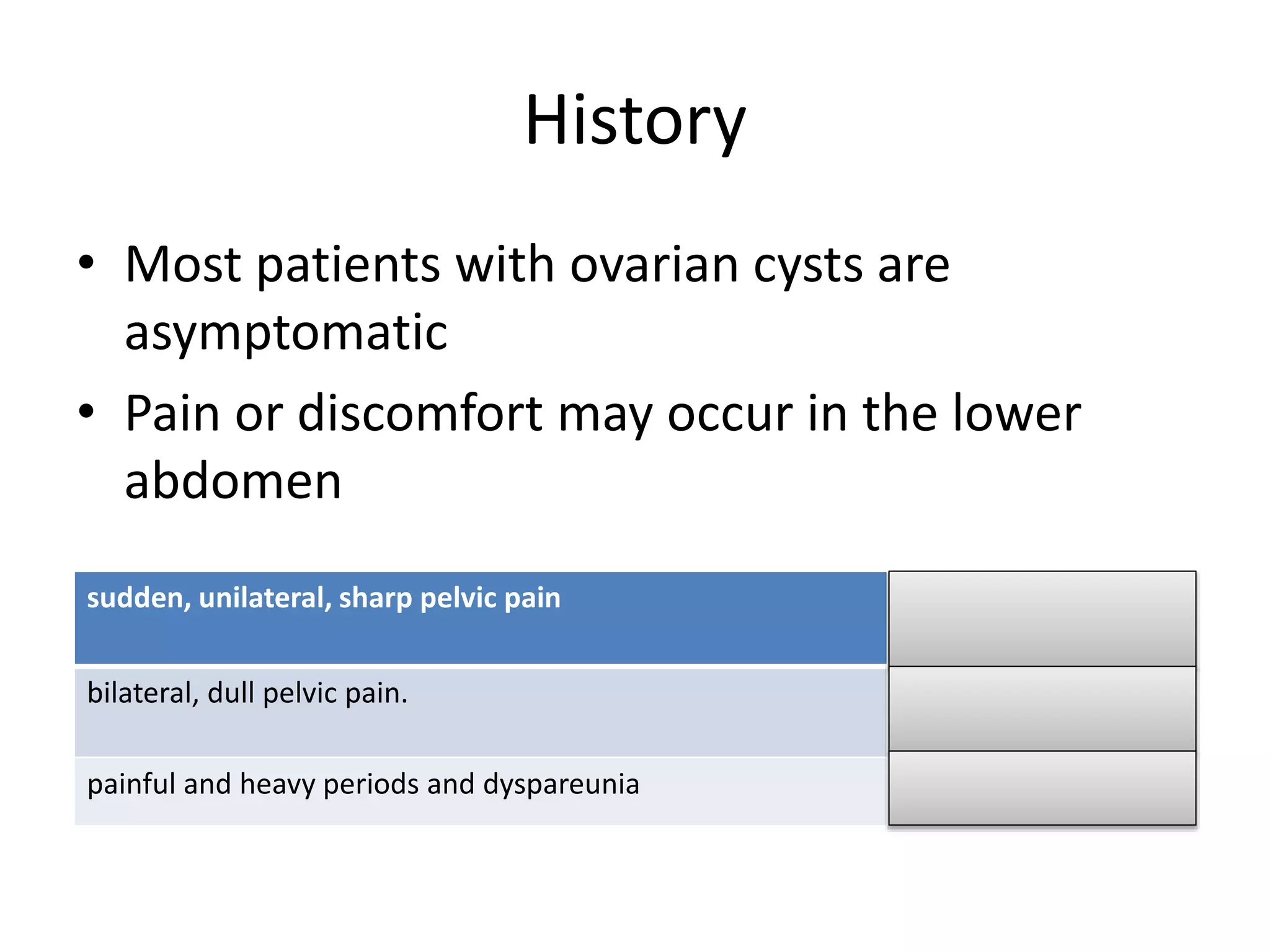
sudden, unilateral, sharp pelvic pain Cyst rupture
bilateral, dull pelvic pain. Theca-lutein cysts
painful and heavy periods and dyspareunia Endometriomas
History
• Associated symptoms
– Patients may experience abdominal fullness, bloating and
tenesmus.
• Irregularity of the menstrual cycle.
• Young children may present with precocious puberty
(Granulosa-theca cell tumors) and early onset of
menarche.
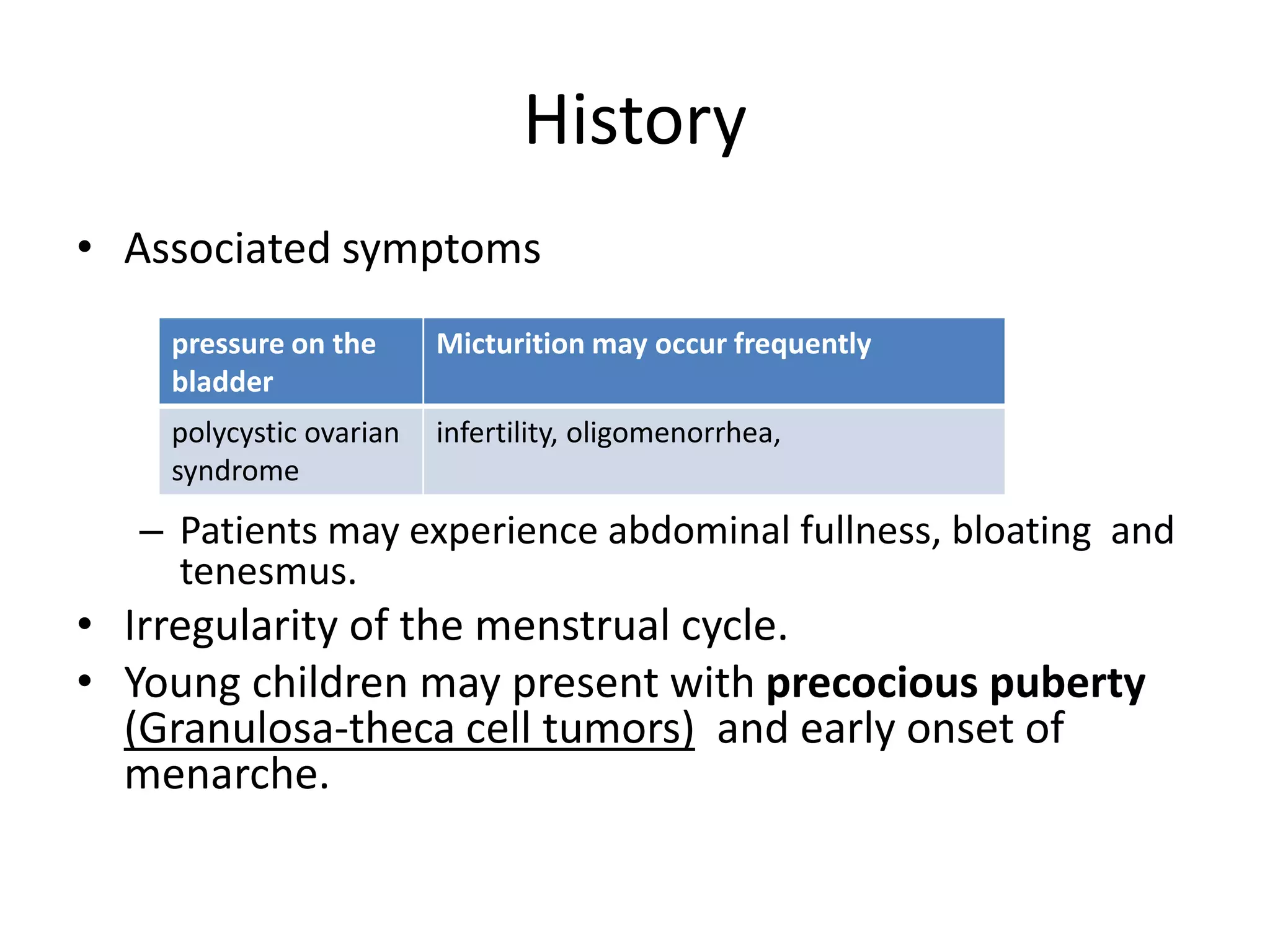
pressure on the
bladder
Micturition may occur frequently
polycystic ovarian
syndrome
infertility, oligomenorrhea,
Our case
 She described the pain as colicky, intermittent, located
in left iliac fossa radiates to the suprapubic area.
 Severe pain
 Pain better slightly on lying down
 No h/o of nausea or vomitting
 No h/o fever
 No urinary symptoms
 No PV bleeding.
 Her LMP was at 07/11/2015
 Regular period
Our case
Past medical history:
• She has similar episodes of pain since March
2015, several visits to the student clinic and
A&E for the same complain
• CT abdomen was done(prominent ovaries
with cysts likely functional) on 26/3/2015
• Follow up US on 20/9/2015: evidence of large
cyst in left adnexa measuring 7.5x6.2 mm in
size
What is your differential diagnosis ?
• Ovarian cyst accidents
– cyst rupture,
– haemorrhage
– torsion
• Acute PID
Physical examination
• General examination
• Abdominal examination
• Pelvic examination
Physical examination
• A large cyst may be palpable on abdominal
examination
• Functional cyts
• mobile, unilateral, and not associated with ascites.
• Tender to palpation
Physical examination
Signs Diagnosis
hirsutism, obesity, and acne Polycystic ovarian syndrome
hyperpyrexia complications of ovarian cysts, such
as ovarian torsion
diffusely tender abdomen with rebound
tenderness and guarding
hemorrhage or peritonitis
cachexia and weight loss, lymphadenopathy in
the neck, shortness of breath, and signs of
pleural effusion.
Advanced malignant disease
Tachycardia and hypotension. Hemorrhage due to cyst rupture
T
Our case
O/E:
• vitals: normal
• Abdomen:
– mild tenderness in the lower abdomen
– no guarding ,no rigidity
Investigation (laboratory)
• No laboratory tests are diagnostic for ovarian
cysts.
• Investigations aid in the differential diagnosis
– Urinary pregnancy test
– CBC ( Anemia + infection)
– Urinalysis (UTI and stones)
– Endocervical swabs
– Cancer antigen 125
Investigation (radiology )
• Ultrasonography
– primary imaging tool for a patient considered to
have an ovarian cyst
– help to define a cyst’s morphologic characteristics
– Follow up exclude ovarian neoplasm/show
resolution of a cyst
– A normal ovary is 2.5-5 cm long, 1.5-3 cm wide,
and 0.6-1.5 cm thick
Ultrasonography
• simple ovarian cysts
– uniformly thin, rounded wall and a unilocular
– hypoechoic or anechoic.
– They usually measure 2.5-15 cm in diameter, and
posterior acoustic enhancement
• Complex cysts
– Multilocular ,thickening of the wall, projections
into the lumen or on the surface,
Radiology
• CT scanning
– more sensitive but less specific than
ultrasonography in detecting ovarian cysts.
– best in imaging hemorrhagic ovarian cysts or
hemoperitoneum due to cyst rupture
– to distinguish other intra-abdominal causes
• CT scanning should be avoided in pregnancy,
– MRI
Procedure
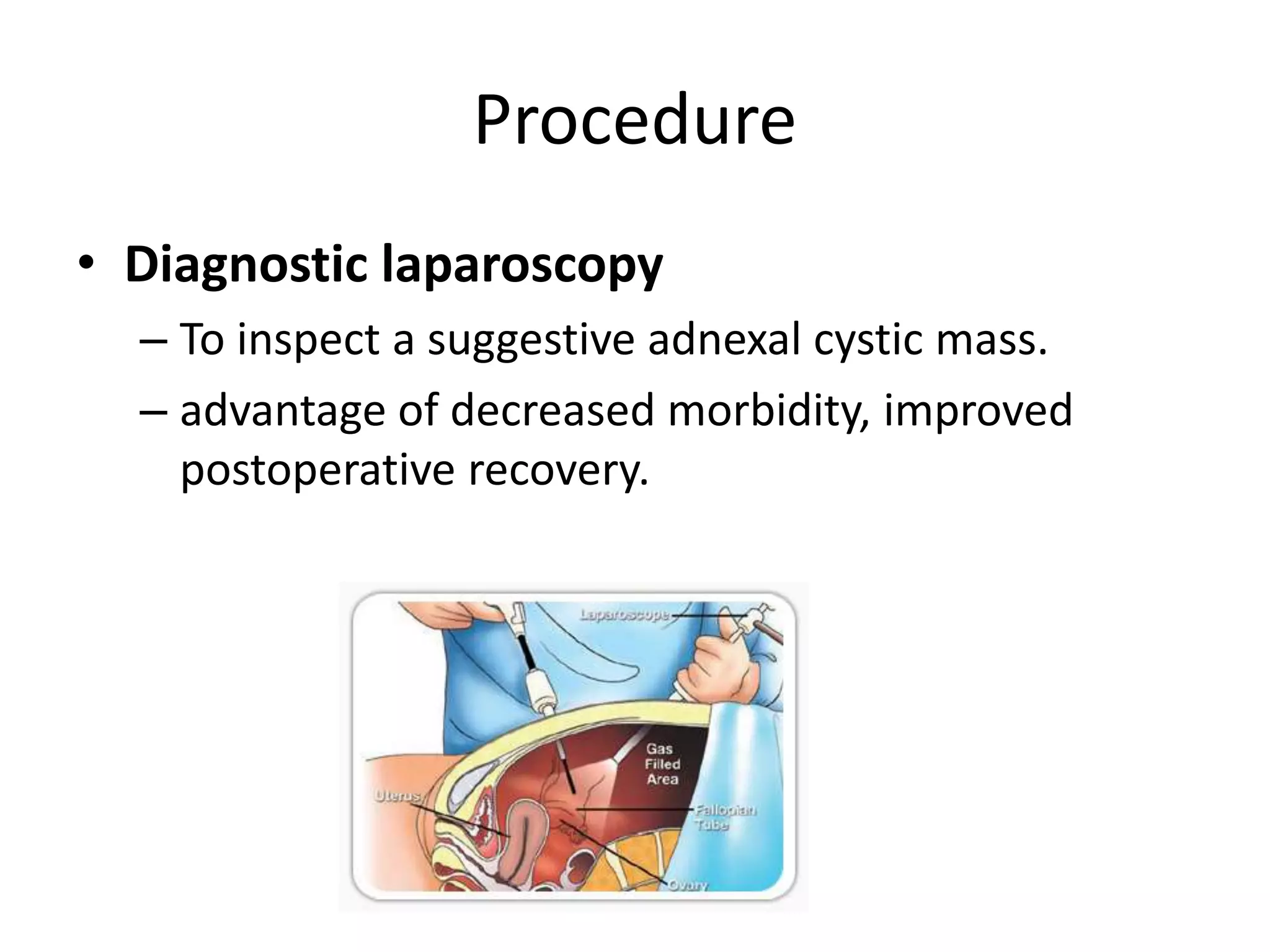
• Diagnostic laparoscopy
– To inspect a suggestive adnexal cystic mass.
– advantage of decreased morbidity, improved
postoperative recovery.
Our case
• Labs done in the A&E:
- Hb 11.6 WCC 8.7
- U&E Normal
- Tumor markers normal
• U/S pelvis done:
– The right ovary is normal in size and appearance.
hyperechoic lesion about 5 cm on left ovary that is
new from old scan that can be hemorrhagic
complex cyst & can not rue out/in torsion
Calculation of the Risk Of Malignancy
Index (RMI)
Risk of Malignancy Index = A x B x C. A cut-off value of 200
discriminate a benign from malignant mass with a
Sensitivity of (87%) and a specificity of(97%).
Functional Cysts - Management
• If the RMI is low and the cyst is considered to be
functional.
– Wait and re-examine the patient after her next menses.
– Low-dose contraceptive agents may be given to suppress
gonadotropin levels and prevent development of another cyst.
• If it is solid, painful, or fixed or has an elevated RMI.
– surgical exploration may be necessary.
– Laparoscopic cystectomy to allow histologic evaluation may be
needed to differentiate between a functional and a neoplastic
ovarian cyst.
Ovarian Cyst Rupture
• Conservative in stable patient.
• Surgical care
– laparoscopy or laparotomy, depending on clinical
presentation, amount of blood in the abdomen,
patient stability.
Our case
PLAN:
• consent taken for :
– Emergency laparoscopy ovarain cystectomy ,+/-
salpingectomy +/- salpingo oopherectomy
– risk of converted to laparotomy ,risk of veesels ,bowel
,bladder injuries ,risk of thrombosis , risk of infection all
explined to the pateint ,pateint`s father and mother
• Cross match, NPO
• Shift direct from A&E to the OT
Our case
Laproscopic findings:
– Left ovarian cystectomy
– Post-op Diagnosis: hemorrhagic cyst with clots, No ovarian
torsion
– Findings: Normal R ovary , pelvis, uterus and upper abdomen
• Day 1 Post op:
She is complaining of mild pain at surgical site.
- Mobilizing.
- Voided well.
- To be discharged with encouraging oral hydration and
analgesia.
- Appointment for tracing histopathology after 6 wks
- Earlier to A&E if any complains as explained.
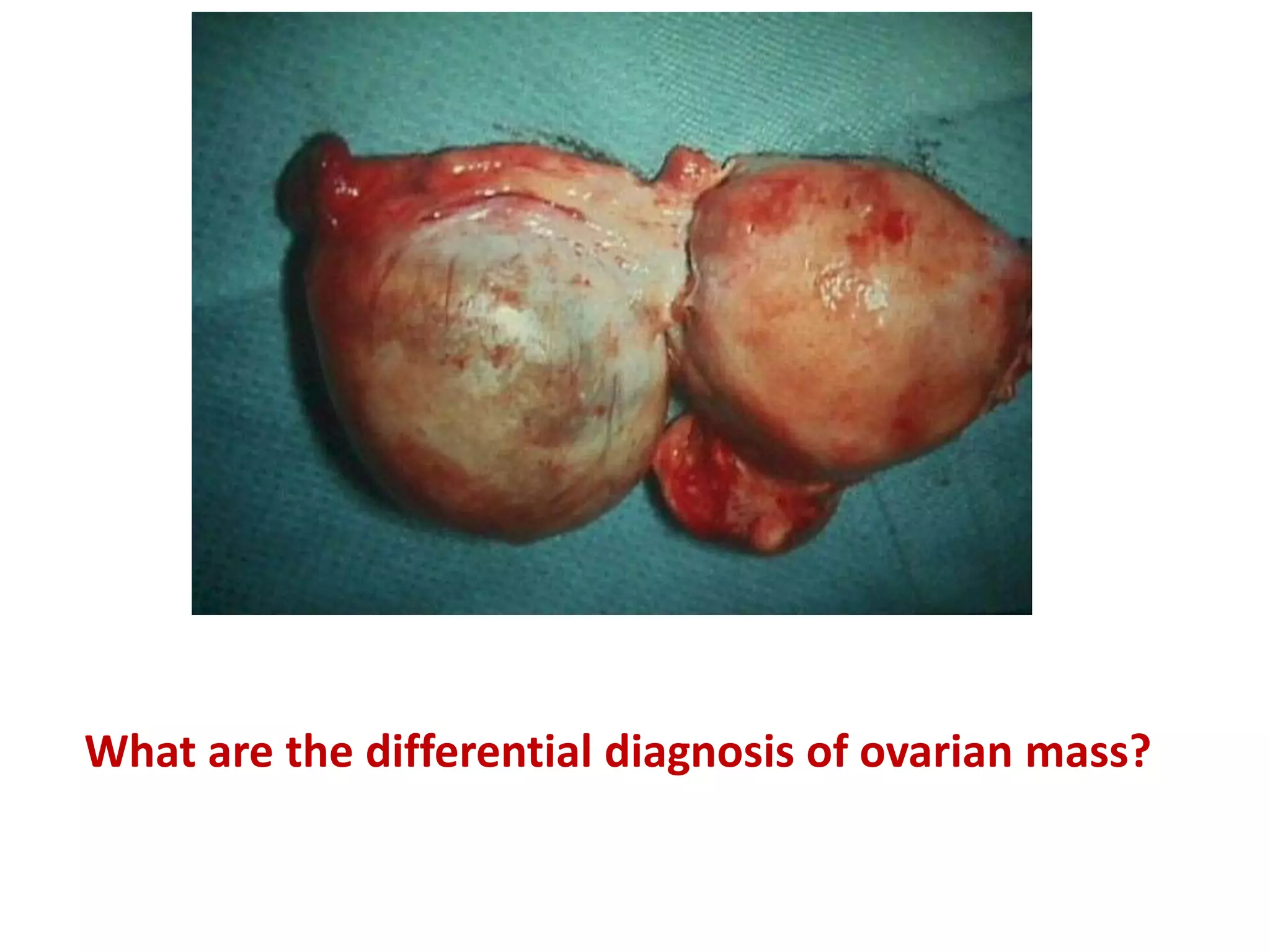
What are the differential diagnosis of ovarian mass?
Specific typePathogenesis
Follicular cysts
Lutein cyst
Polycystic ovaries
Functional
Salpingo-oophoritis
Pyogenic oophoritis-puerperal,
abortal, or related to an intrauterine
device
Granulomatous oophoritis
Inflammatory
EndometriomasMetaplastic
Premenarchal years-10% are
malignant
Menestruating years-15% are
malignant
Postmenopausal years-50% are
malignant
Neoplastic
follicular cysts
-Arise when physiologic release of the mature ovum
fails (follicle fail to rupture).
-Follicular growth continues.
-Excessive stimulation by FSH.
-Lack of the normal preovulatory LH surge.
- 3 cm _Rarely grow larger than 10 cm.
-Most are asymptomatic.
-Larger cysts may cause pelvic discomfort or
heaviness.
-Thin-walled, unilocular
-Usually unilaterally.
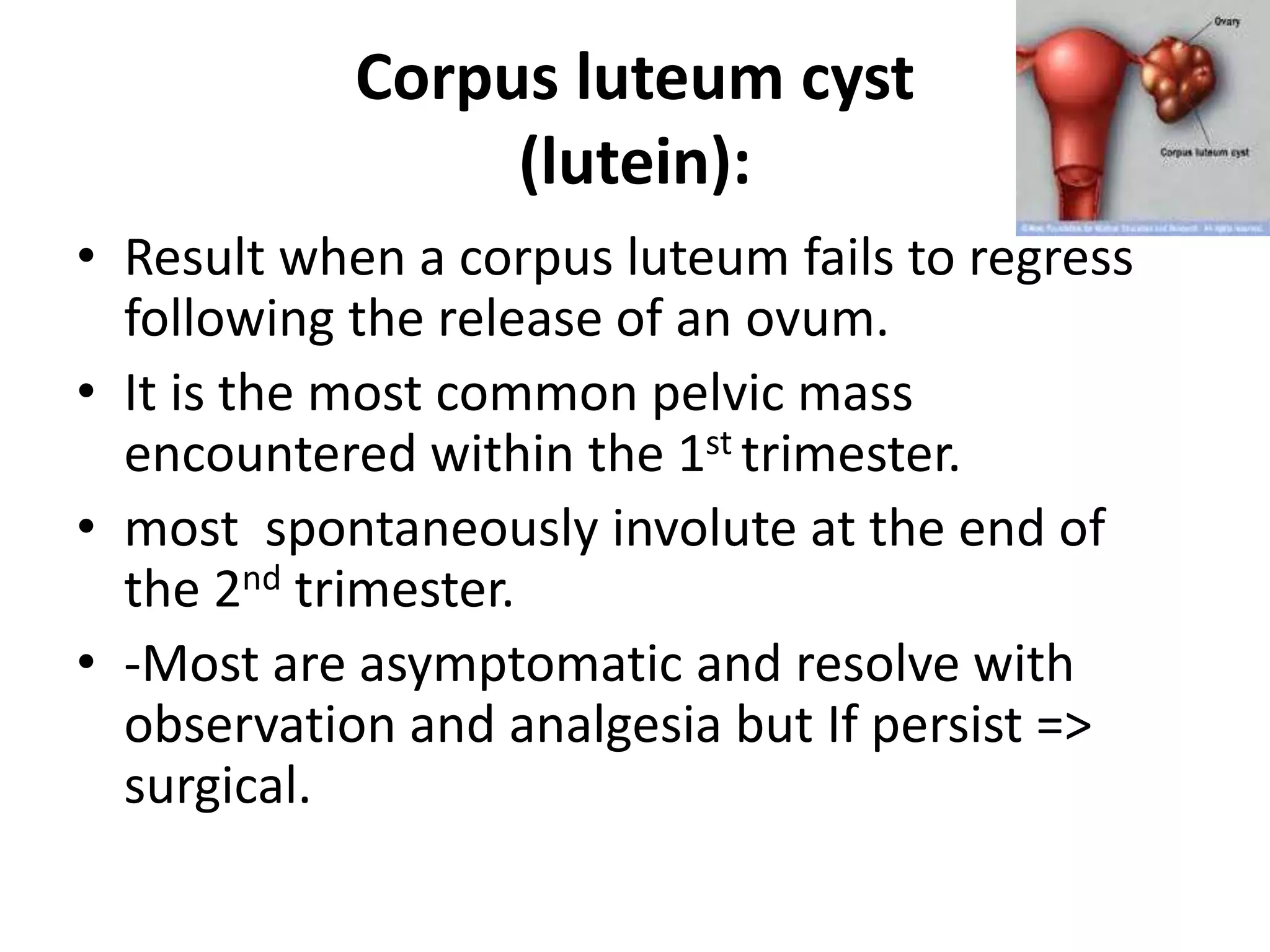
Corpus luteum cyst
(lutein):
• Result when a corpus luteum fails to regress
following the release of an ovum.
• It is the most common pelvic mass
encountered within the 1st trimester.
• most spontaneously involute at the end of
the 2nd trimester.
• -Most are asymptomatic and resolve with
observation and analgesia but If persist =>
surgical.
Hemorrhagic corpus luteum cysts
• Results from invasion of ovarian vessels into
corpus luteum
• They are more likely to cause symptoms and
more likely to rupture.
• Ruptured hemorrhagic corpus luteum cysts
can result in a Hemoperitoneum requiring
surgery
Theca-lutein cysts
• hypertrophy of the theca interna cell layer in response to
excessive stimulation from hCG.
• Present with
– hydatidiform mole.
– multiple gestation.
– choriocarcinoma.
– ovulation induction with gonadotropins or clomiphene.
• usually bilateral.
• may become quite large (>30 cm)
• characteristically regress slowly after the gonadotropin level
falls.
luteoma of pregnancy
• Prolonged hCG stimulation during pregnancy
leading to hyperplasic reaction of ovarian theca
cells.
• Appear as brown to reddish-brown nodules that
may be cystic or solid.
• Multifocal and usually bilateral
• Can cause maternal virilization in 30% of women
and ambiguous genitalia in a female fetus.
• regress spontaneously postpartum.
Benign neoplastic ovarian tumors
Divided by cell
type of origin
Epithelial Stromal Germ cell
•Mucinous
•Serous
•Brenner
•Fibromas
•Granulosa-
theca cell tumors
•Sertoli-Leydig
cell tumors
•Benign cystic
teratoma
US/CytologyPRESENTATIONDESCRIPTIONTYPE
•Often multilocular
•Histologicaly contain
Psammoma bodies
(calcified concentric
concretions)
10% bilateral
• most common is serous
cystadenoma
•70 % benign
•5-10%borderline
malignant
•20% to 25% are malignant
Serous
•Resembles
endocervical
epithelium
•Often multilocular
•Often associated with
a mucocele of the
appendix
Huge size,
Often filling entire
pelvis
•may be
complicated by
pseudomyxoma
peritonei
•85% benign
•20% of epithelial tumors
Mucinous
•Has a large fibrotic
component that
encases epithelioid
cells that resemble
transitional cells of the
bladder.
•a small, smooth
solid ovarian
neoplasm.
•usually benign
•33% are associated with
mucinous epithelial
elements.
Brenner
1- Epithelial ovarian neoplasms
US/Cytology•PRESENTATION•DESCRIPTIONTYPE
Form encapsulated, solid,
smooth-surfaced tumor,
composed of spindle-
shaped cells.
• Non-functioning
• associated with Meigs
syndrome
• benignFibroma
-solid-yellow appearance
-Histologic hallmark of
cancer is small groups of
cells known as Call-Exner
bodies
Estrogen-producing
feminizing effects
(precocious
puberty, menorrhagia,
postmenopausal
bleeding)
•Can be associated with
endometrial cancer
•Inhibin is tumor marker
Granulosa-theca cell
tumors (benign or
malignant)
Androgen-producing
virilizing effects
(hairsutism, deep voice,
recession of front hair)
Can measure elevated
androgens as tumor
markers
Sertoli-leydig cell
tumors (benign or
malignant)
Sex Cord–Stromal Ovarian Neoplasm
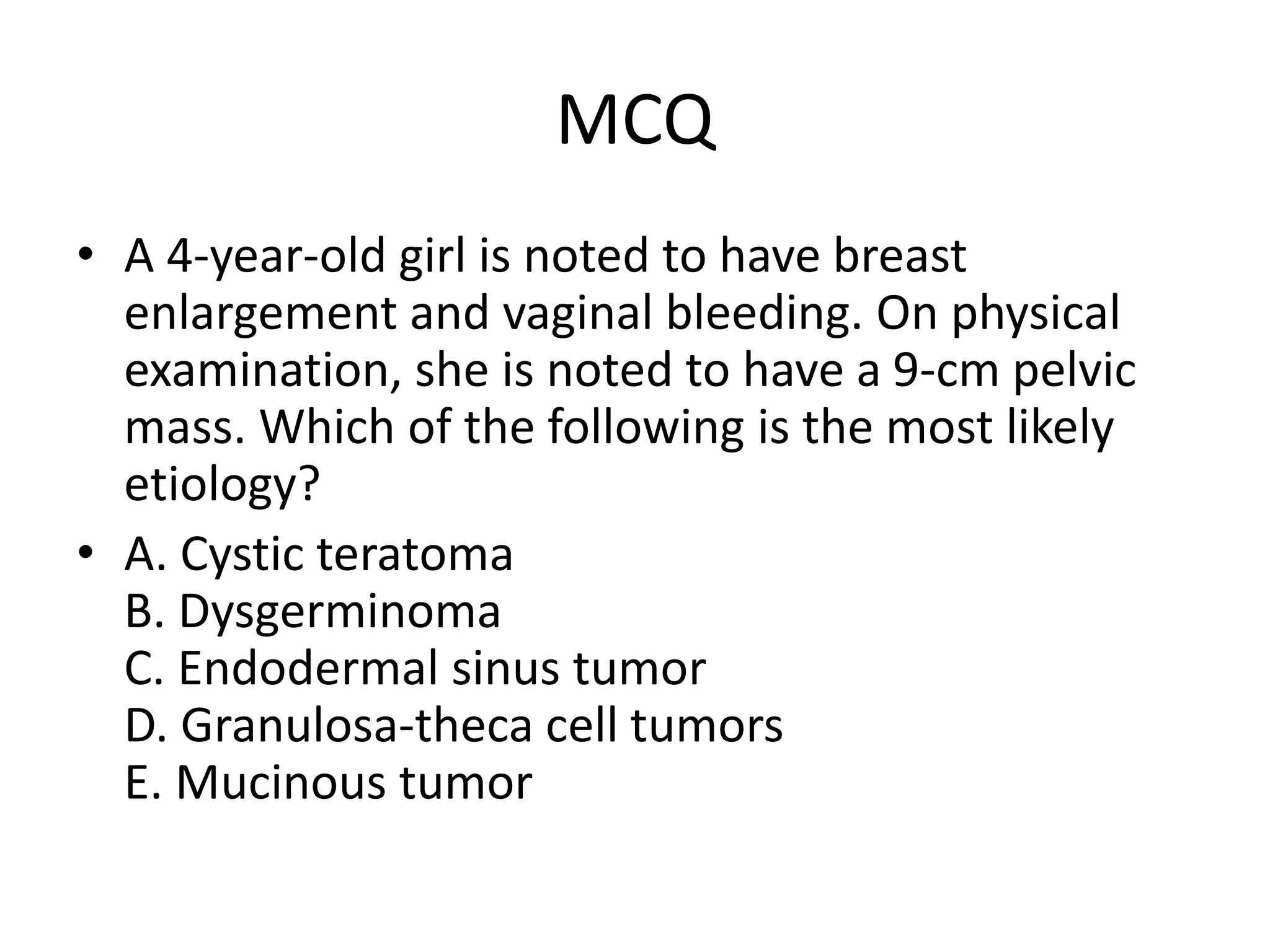
MCQ
• A 4-year-old girl is noted to have breast
enlargement and vaginal bleeding. On physical
examination, she is noted to have a 9-cm pelvic
mass. Which of the following is the most likely
etiology?
• A. Cystic teratoma
B. Dysgerminoma
C. Endodermal sinus tumor
D. Granulosa-theca cell tumors
E. Mucinous tumor
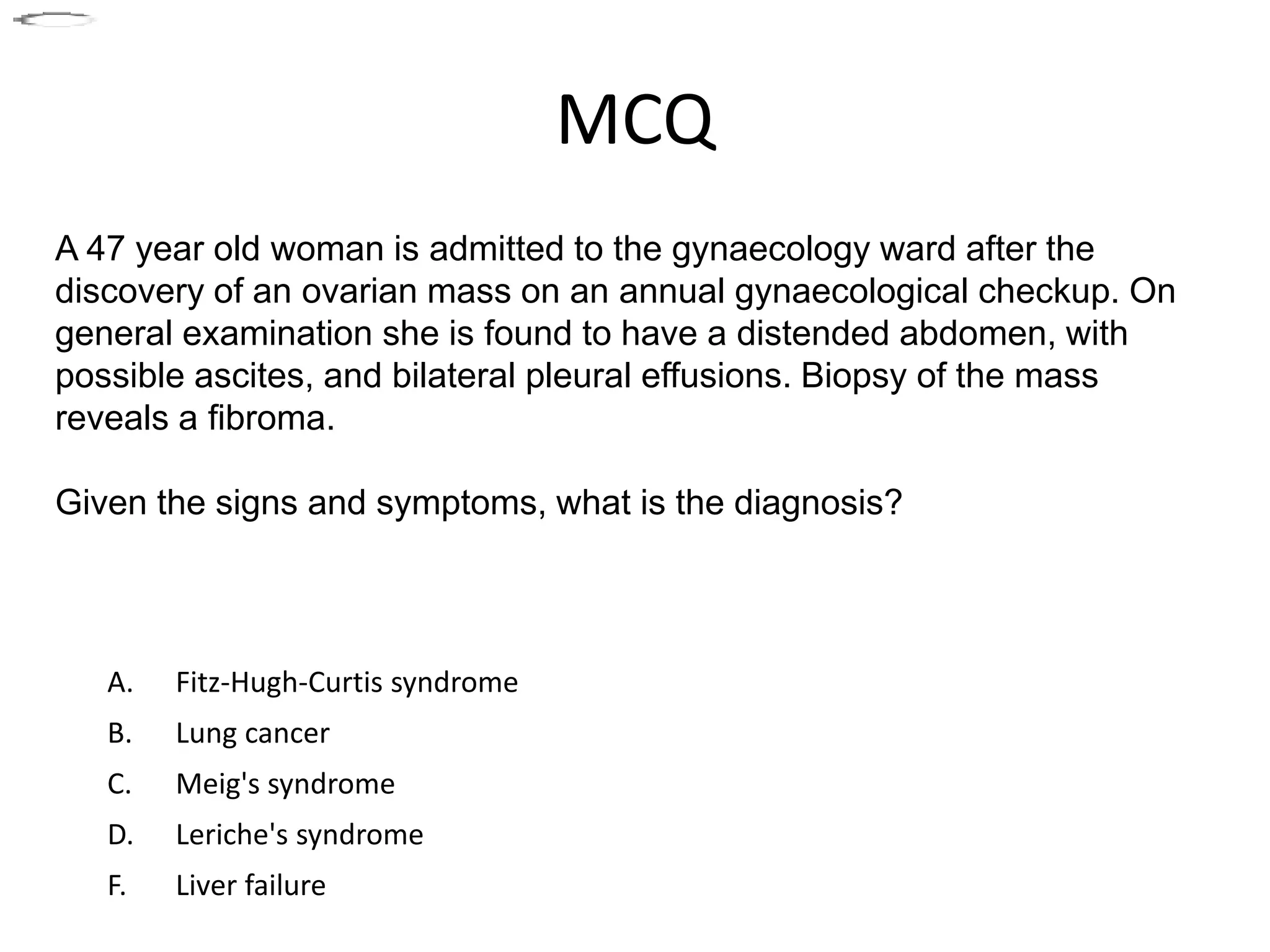
MCQ
A. Fitz-Hugh-Curtis syndrome
B. Lung cancer
C. Meig's syndrome
D. Leriche's syndrome
F. Liver failure
A 47 year old woman is admitted to the gynaecology ward after the
discovery of an ovarian mass on an annual gynaecological checkup. On
general examination she is found to have a distended abdomen, with
possible ascites, and bilateral pleural effusions. Biopsy of the mass
reveals a fibroma.
Given the signs and symptoms, what is the diagnosis?
Germ cell tumors
• Occur at any age.
• Make up about 60% of ovarian neoplasms occurring in
infants and children.
• Most common benign cystic teratoma (dermoid cyst).
• 10-15% are bilateral.
• Slow growing tumor.
• Diagnosed b/w 25-50 yrs of age.
• <10 cm in diameter.
Teratomas
Dermoid cysts (teratomas) are one of the
most common types of cysts , half are
diagnosed in women between 25 and 50 years
Composed primarily of ectodermal tissue
(sweat & sebaceous glands, hair follicles, and
teeth), with some mesodermal and rarely
endodermal elements
A dermoid cyst (mature cystic
teratoma) after opening the abdomen.
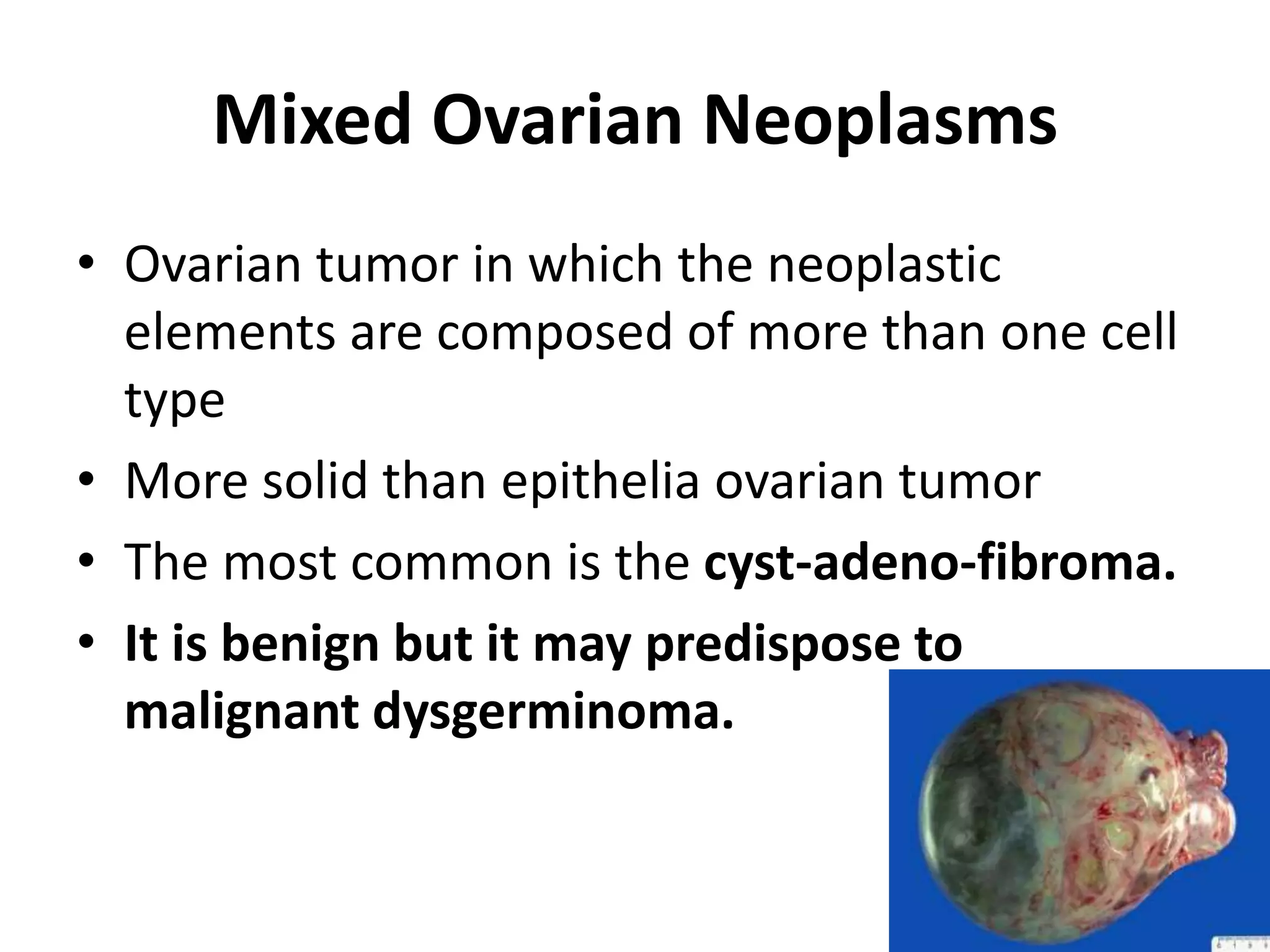
Mixed Ovarian Neoplasms
• Ovarian tumor in which the neoplastic
elements are composed of more than one cell
type
• More solid than epithelia ovarian tumor
• The most common is the cyst-adeno-fibroma.
• It is benign but it may predispose to
malignant dysgerminoma.
Benign Ovarian Tumors- Management
• Benign epithelial ovarian neoplasms are
generally treated by unilateral salpingo-
oophorectomy.
– cystectomy with preservation of the depending on
the neoplasm (cystic teratoma) and age of patient.
– Gonadoblastoma, dysgenetic ovaries = bilateral
salpingo-oorphrectomy
• Appendectomy should also be done in mucinous
cystadenoma. Because it is associated with a
mucocele of the appendix
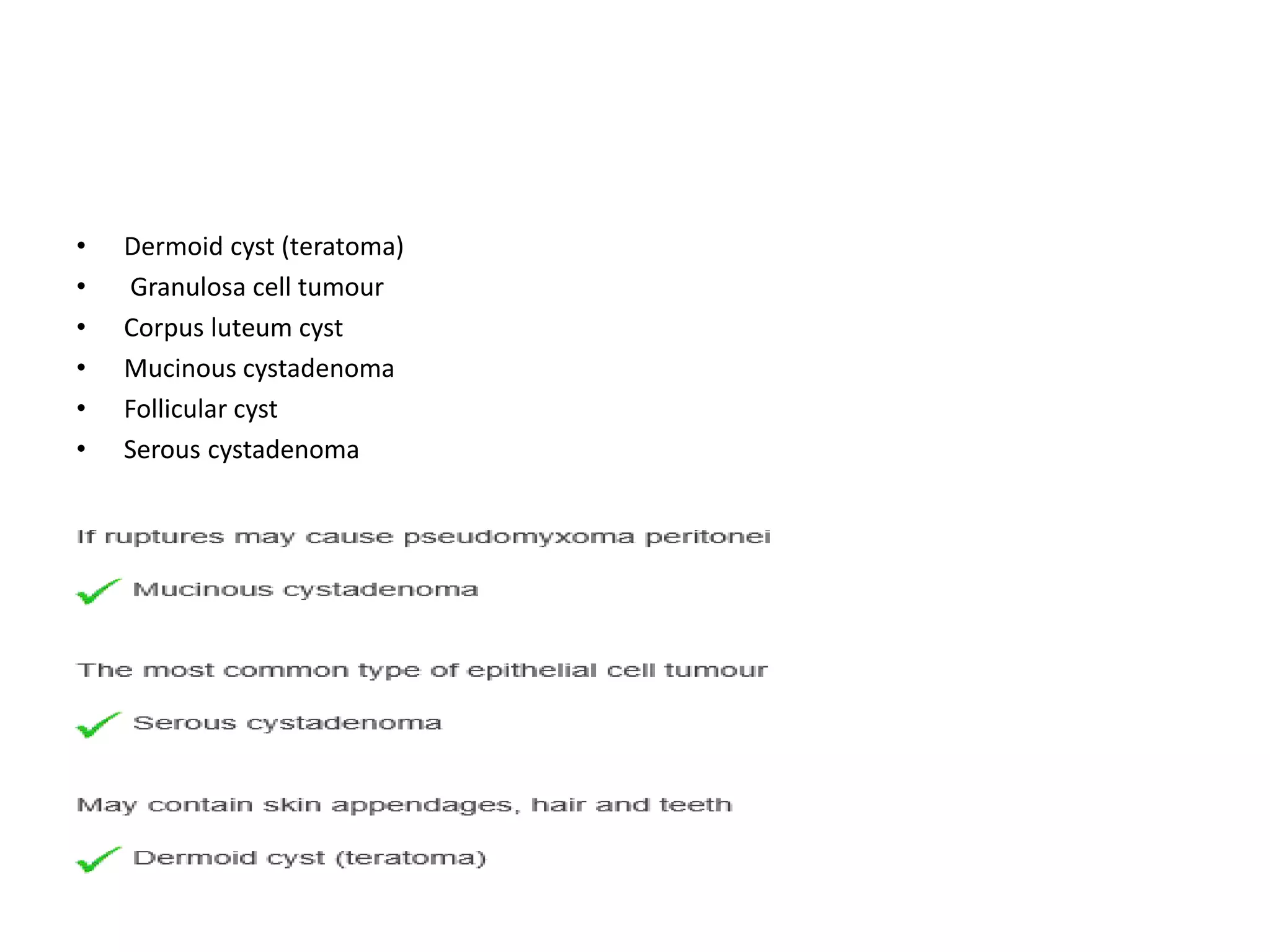
• Dermoid cyst (teratoma)
• Granulosa cell tumour
• Corpus luteum cyst
• Mucinous cystadenoma
• Follicular cyst
• Serous cystadenoma
• If ruptures may cause pseudomyxoma peritonei
• The most common type of epithelial cell tumour
• May contain skin appendages, hair and teeth
MCQ
A. Follicular cyst
B. Teratoma (dermoid cyst)
C. Endometrioma
D. Ovarian adenocarcinoma
E. Ovarian fibroma
A 20-year-old female presents with a 3 month history of
abdominal pain. Abdominal ultrasound shows a 8cm mass
in the right ovary. Histopathological analysis reveals
Rokitansky's protuberance. What is the most likely
diagnosis?
Ovarian cancer
• It is the leading cause of death from gynecologic cancer
because it is difficult to detect before it disseminates.
• Most women with ovarian cancer are in the 5th or 6th
decade of life.
• Population screening is not feasible because
ultrasonography and available tumor markers, lack
specificity and sensitivity for early-stage disease.
Ovarian Cancer- Clinical features
• In early-stage disease, vague abdominal pain or
bloating
– Other symptoms include dyspareunia, urinary
frequency or constipation and menstrual irregularity
or Postmenopausal bleeding.
• In advanced-stage disease, patients most often
present with abdominal pain or swelling (from
the tumor itself or from associated ascites).
• In bimanual pelvic examination
– a solid, irregular, fixed pelvic mass.
Ovarian Cancer- Management
• Depending on the stage of the cancer.
• In postmenopausal women they are best
treated by a total abdominal hysterectomy
and bilateral salpingo-oophorectomy.
• In premenopausal women , the contralateral
ovary and the uterus can be preserved in
some types.
References
• Essentials of obstetrics and gynecology,HACKER
and MOORES.
• Medscape
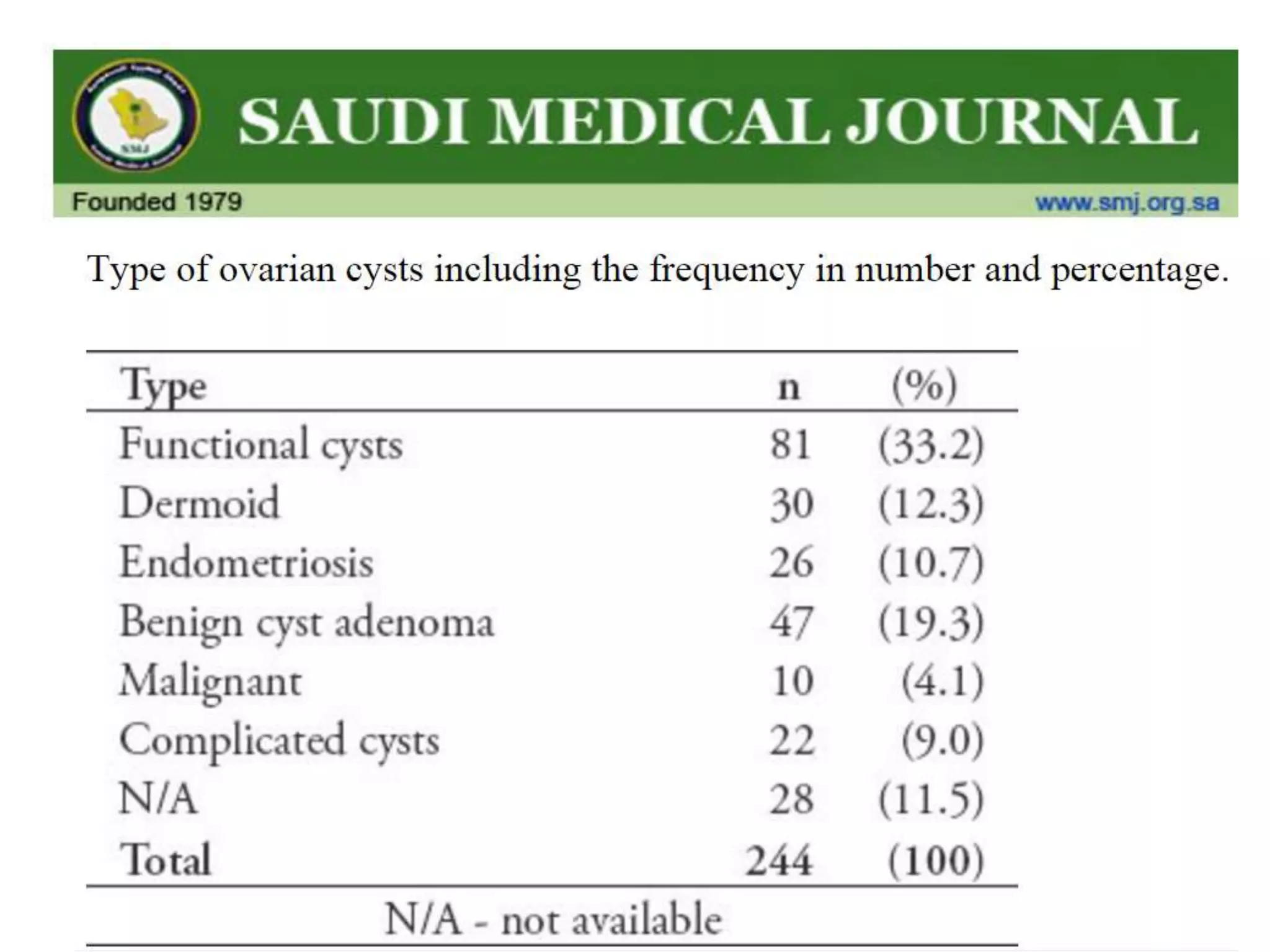
• Abduljabbar HS, Bukhari Y. Review of 244 cases
of ovarian cysts. Saudi Med J 2015; Vol. 36 (7)
• www.ncbi.nlm.nih.gov/pubmed/21991700
• https://www.womenshealth.gov/publications/o
ur-publications/fact-sheet/ovarian-cysts.html

Approach to patient with ovarian cysts

  • 1.
    Approach to patientwith Ovarian cysts Done by: Yahyia Al-Abri 90440
  • 2.
    Outline • Definition ofovarian cyst • Case scenario • How to approach – History, physical examination , investigation, management. • Functional ovarian cyst • Benign ovarian neoplasm • Mixed ovarian neoplasm • Ovarian cancer
  • 3.
    ovarian cyst • Anovarian cyst is a sac filled with liquid or semiliquid material that arises in an ovary. • These cysts can develop in females at any stage of life, from the neonatal period to postmenopausal • Most ovarian cysts, occur during infancy and adolescence, which are hormonally active periods of development. • Most are functional in nature and resolve without treatment.
  • 6.
    Case • 19 yearsold Omani lady, Unmarried, Presented to the A&E with history of Abdominal left iliac fossa pain started 15 minutes prior coming to the hospital.
  • 7.
  • 8.
    History • Most patientswith ovarian cysts are asymptomatic • Pain or discomfort may occur in the lower abdomen sudden, unilateral, sharp pelvic pain Cyst rupture bilateral, dull pelvic pain. Theca-lutein cysts painful and heavy periods and dyspareunia Endometriomas
  • 9.
    History • Associated symptoms –Patients may experience abdominal fullness, bloating and tenesmus. • Irregularity of the menstrual cycle. • Young children may present with precocious puberty (Granulosa-theca cell tumors) and early onset of menarche. pressure on the bladder Micturition may occur frequently polycystic ovarian syndrome infertility, oligomenorrhea,
  • 10.
    Our case  Shedescribed the pain as colicky, intermittent, located in left iliac fossa radiates to the suprapubic area.  Severe pain  Pain better slightly on lying down  No h/o of nausea or vomitting  No h/o fever  No urinary symptoms  No PV bleeding.  Her LMP was at 07/11/2015  Regular period
  • 11.
    Our case Past medicalhistory: • She has similar episodes of pain since March 2015, several visits to the student clinic and A&E for the same complain • CT abdomen was done(prominent ovaries with cysts likely functional) on 26/3/2015 • Follow up US on 20/9/2015: evidence of large cyst in left adnexa measuring 7.5x6.2 mm in size
  • 12.
    What is yourdifferential diagnosis ? • Ovarian cyst accidents – cyst rupture, – haemorrhage – torsion • Acute PID
  • 13.
    Physical examination • Generalexamination • Abdominal examination • Pelvic examination
  • 14.
    Physical examination • Alarge cyst may be palpable on abdominal examination • Functional cyts • mobile, unilateral, and not associated with ascites. • Tender to palpation
  • 15.
    Physical examination Signs Diagnosis hirsutism,obesity, and acne Polycystic ovarian syndrome hyperpyrexia complications of ovarian cysts, such as ovarian torsion diffusely tender abdomen with rebound tenderness and guarding hemorrhage or peritonitis cachexia and weight loss, lymphadenopathy in the neck, shortness of breath, and signs of pleural effusion. Advanced malignant disease Tachycardia and hypotension. Hemorrhage due to cyst rupture T
  • 16.
    Our case O/E: • vitals:normal • Abdomen: – mild tenderness in the lower abdomen – no guarding ,no rigidity
  • 17.
    Investigation (laboratory) • Nolaboratory tests are diagnostic for ovarian cysts. • Investigations aid in the differential diagnosis – Urinary pregnancy test – CBC ( Anemia + infection) – Urinalysis (UTI and stones) – Endocervical swabs – Cancer antigen 125
  • 18.
    Investigation (radiology ) •Ultrasonography – primary imaging tool for a patient considered to have an ovarian cyst – help to define a cyst’s morphologic characteristics – Follow up exclude ovarian neoplasm/show resolution of a cyst – A normal ovary is 2.5-5 cm long, 1.5-3 cm wide, and 0.6-1.5 cm thick
  • 19.
    Ultrasonography • simple ovariancysts – uniformly thin, rounded wall and a unilocular – hypoechoic or anechoic. – They usually measure 2.5-15 cm in diameter, and posterior acoustic enhancement • Complex cysts – Multilocular ,thickening of the wall, projections into the lumen or on the surface,
  • 20.
    Radiology • CT scanning –more sensitive but less specific than ultrasonography in detecting ovarian cysts. – best in imaging hemorrhagic ovarian cysts or hemoperitoneum due to cyst rupture – to distinguish other intra-abdominal causes • CT scanning should be avoided in pregnancy, – MRI
  • 21.
    Procedure • Diagnostic laparoscopy –To inspect a suggestive adnexal cystic mass. – advantage of decreased morbidity, improved postoperative recovery.
  • 22.
    Our case • Labsdone in the A&E: - Hb 11.6 WCC 8.7 - U&E Normal - Tumor markers normal • U/S pelvis done: – The right ovary is normal in size and appearance. hyperechoic lesion about 5 cm on left ovary that is new from old scan that can be hemorrhagic complex cyst & can not rue out/in torsion
  • 23.
    Calculation of theRisk Of Malignancy Index (RMI) Risk of Malignancy Index = A x B x C. A cut-off value of 200 discriminate a benign from malignant mass with a Sensitivity of (87%) and a specificity of(97%).
  • 24.
    Functional Cysts -Management • If the RMI is low and the cyst is considered to be functional. – Wait and re-examine the patient after her next menses. – Low-dose contraceptive agents may be given to suppress gonadotropin levels and prevent development of another cyst. • If it is solid, painful, or fixed or has an elevated RMI. – surgical exploration may be necessary. – Laparoscopic cystectomy to allow histologic evaluation may be needed to differentiate between a functional and a neoplastic ovarian cyst.
  • 25.
    Ovarian Cyst Rupture •Conservative in stable patient. • Surgical care – laparoscopy or laparotomy, depending on clinical presentation, amount of blood in the abdomen, patient stability.
  • 26.
    Our case PLAN: • consenttaken for : – Emergency laparoscopy ovarain cystectomy ,+/- salpingectomy +/- salpingo oopherectomy – risk of converted to laparotomy ,risk of veesels ,bowel ,bladder injuries ,risk of thrombosis , risk of infection all explined to the pateint ,pateint`s father and mother • Cross match, NPO • Shift direct from A&E to the OT
  • 27.
    Our case Laproscopic findings: –Left ovarian cystectomy – Post-op Diagnosis: hemorrhagic cyst with clots, No ovarian torsion – Findings: Normal R ovary , pelvis, uterus and upper abdomen • Day 1 Post op: She is complaining of mild pain at surgical site. - Mobilizing. - Voided well. - To be discharged with encouraging oral hydration and analgesia. - Appointment for tracing histopathology after 6 wks - Earlier to A&E if any complains as explained.
  • 28.
    What are thedifferential diagnosis of ovarian mass?
  • 29.
    Specific typePathogenesis Follicular cysts Luteincyst Polycystic ovaries Functional Salpingo-oophoritis Pyogenic oophoritis-puerperal, abortal, or related to an intrauterine device Granulomatous oophoritis Inflammatory EndometriomasMetaplastic Premenarchal years-10% are malignant Menestruating years-15% are malignant Postmenopausal years-50% are malignant Neoplastic
  • 31.
    follicular cysts -Arise whenphysiologic release of the mature ovum fails (follicle fail to rupture). -Follicular growth continues. -Excessive stimulation by FSH. -Lack of the normal preovulatory LH surge. - 3 cm _Rarely grow larger than 10 cm. -Most are asymptomatic. -Larger cysts may cause pelvic discomfort or heaviness. -Thin-walled, unilocular -Usually unilaterally.
  • 32.
    Corpus luteum cyst (lutein): •Result when a corpus luteum fails to regress following the release of an ovum. • It is the most common pelvic mass encountered within the 1st trimester. • most spontaneously involute at the end of the 2nd trimester. • -Most are asymptomatic and resolve with observation and analgesia but If persist => surgical.
  • 33.
    Hemorrhagic corpus luteumcysts • Results from invasion of ovarian vessels into corpus luteum • They are more likely to cause symptoms and more likely to rupture. • Ruptured hemorrhagic corpus luteum cysts can result in a Hemoperitoneum requiring surgery
  • 34.
    Theca-lutein cysts • hypertrophyof the theca interna cell layer in response to excessive stimulation from hCG. • Present with – hydatidiform mole. – multiple gestation. – choriocarcinoma. – ovulation induction with gonadotropins or clomiphene. • usually bilateral. • may become quite large (>30 cm) • characteristically regress slowly after the gonadotropin level falls.
  • 35.
    luteoma of pregnancy •Prolonged hCG stimulation during pregnancy leading to hyperplasic reaction of ovarian theca cells. • Appear as brown to reddish-brown nodules that may be cystic or solid. • Multifocal and usually bilateral • Can cause maternal virilization in 30% of women and ambiguous genitalia in a female fetus. • regress spontaneously postpartum.
  • 37.
    Benign neoplastic ovariantumors Divided by cell type of origin Epithelial Stromal Germ cell •Mucinous •Serous •Brenner •Fibromas •Granulosa- theca cell tumors •Sertoli-Leydig cell tumors •Benign cystic teratoma
  • 38.
    US/CytologyPRESENTATIONDESCRIPTIONTYPE •Often multilocular •Histologicaly contain Psammomabodies (calcified concentric concretions) 10% bilateral • most common is serous cystadenoma •70 % benign •5-10%borderline malignant •20% to 25% are malignant Serous •Resembles endocervical epithelium •Often multilocular •Often associated with a mucocele of the appendix Huge size, Often filling entire pelvis •may be complicated by pseudomyxoma peritonei •85% benign •20% of epithelial tumors Mucinous •Has a large fibrotic component that encases epithelioid cells that resemble transitional cells of the bladder. •a small, smooth solid ovarian neoplasm. •usually benign •33% are associated with mucinous epithelial elements. Brenner 1- Epithelial ovarian neoplasms
  • 40.
    US/Cytology•PRESENTATION•DESCRIPTIONTYPE Form encapsulated, solid, smooth-surfacedtumor, composed of spindle- shaped cells. • Non-functioning • associated with Meigs syndrome • benignFibroma -solid-yellow appearance -Histologic hallmark of cancer is small groups of cells known as Call-Exner bodies Estrogen-producing feminizing effects (precocious puberty, menorrhagia, postmenopausal bleeding) •Can be associated with endometrial cancer •Inhibin is tumor marker Granulosa-theca cell tumors (benign or malignant) Androgen-producing virilizing effects (hairsutism, deep voice, recession of front hair) Can measure elevated androgens as tumor markers Sertoli-leydig cell tumors (benign or malignant) Sex Cord–Stromal Ovarian Neoplasm
  • 41.
    MCQ • A 4-year-oldgirl is noted to have breast enlargement and vaginal bleeding. On physical examination, she is noted to have a 9-cm pelvic mass. Which of the following is the most likely etiology? • A. Cystic teratoma B. Dysgerminoma C. Endodermal sinus tumor D. Granulosa-theca cell tumors E. Mucinous tumor
  • 42.
    MCQ A. Fitz-Hugh-Curtis syndrome B.Lung cancer C. Meig's syndrome D. Leriche's syndrome F. Liver failure A 47 year old woman is admitted to the gynaecology ward after the discovery of an ovarian mass on an annual gynaecological checkup. On general examination she is found to have a distended abdomen, with possible ascites, and bilateral pleural effusions. Biopsy of the mass reveals a fibroma. Given the signs and symptoms, what is the diagnosis?
  • 43.
    Germ cell tumors •Occur at any age. • Make up about 60% of ovarian neoplasms occurring in infants and children. • Most common benign cystic teratoma (dermoid cyst). • 10-15% are bilateral. • Slow growing tumor. • Diagnosed b/w 25-50 yrs of age. • <10 cm in diameter.
  • 44.
    Teratomas Dermoid cysts (teratomas)are one of the most common types of cysts , half are diagnosed in women between 25 and 50 years Composed primarily of ectodermal tissue (sweat & sebaceous glands, hair follicles, and teeth), with some mesodermal and rarely endodermal elements
  • 45.
    A dermoid cyst(mature cystic teratoma) after opening the abdomen.
  • 46.
    Mixed Ovarian Neoplasms •Ovarian tumor in which the neoplastic elements are composed of more than one cell type • More solid than epithelia ovarian tumor • The most common is the cyst-adeno-fibroma. • It is benign but it may predispose to malignant dysgerminoma.
  • 47.
    Benign Ovarian Tumors-Management • Benign epithelial ovarian neoplasms are generally treated by unilateral salpingo- oophorectomy. – cystectomy with preservation of the depending on the neoplasm (cystic teratoma) and age of patient. – Gonadoblastoma, dysgenetic ovaries = bilateral salpingo-oorphrectomy • Appendectomy should also be done in mucinous cystadenoma. Because it is associated with a mucocele of the appendix
  • 48.
    • Dermoid cyst(teratoma) • Granulosa cell tumour • Corpus luteum cyst • Mucinous cystadenoma • Follicular cyst • Serous cystadenoma • If ruptures may cause pseudomyxoma peritonei • The most common type of epithelial cell tumour • May contain skin appendages, hair and teeth
  • 49.
    MCQ A. Follicular cyst B.Teratoma (dermoid cyst) C. Endometrioma D. Ovarian adenocarcinoma E. Ovarian fibroma A 20-year-old female presents with a 3 month history of abdominal pain. Abdominal ultrasound shows a 8cm mass in the right ovary. Histopathological analysis reveals Rokitansky's protuberance. What is the most likely diagnosis?
  • 50.
    Ovarian cancer • Itis the leading cause of death from gynecologic cancer because it is difficult to detect before it disseminates. • Most women with ovarian cancer are in the 5th or 6th decade of life. • Population screening is not feasible because ultrasonography and available tumor markers, lack specificity and sensitivity for early-stage disease.
  • 51.
    Ovarian Cancer- Clinicalfeatures • In early-stage disease, vague abdominal pain or bloating – Other symptoms include dyspareunia, urinary frequency or constipation and menstrual irregularity or Postmenopausal bleeding. • In advanced-stage disease, patients most often present with abdominal pain or swelling (from the tumor itself or from associated ascites). • In bimanual pelvic examination – a solid, irregular, fixed pelvic mass.
  • 52.
    Ovarian Cancer- Management •Depending on the stage of the cancer. • In postmenopausal women they are best treated by a total abdominal hysterectomy and bilateral salpingo-oophorectomy. • In premenopausal women , the contralateral ovary and the uterus can be preserved in some types.
  • 53.
    References • Essentials ofobstetrics and gynecology,HACKER and MOORES. • Medscape • Abduljabbar HS, Bukhari Y. Review of 244 cases of ovarian cysts. Saudi Med J 2015; Vol. 36 (7) • www.ncbi.nlm.nih.gov/pubmed/21991700 • https://www.womenshealth.gov/publications/o ur-publications/fact-sheet/ovarian-cysts.html

Editor's Notes

  • #7 Acute diverticulitis Chronic constipation Colon cancer Ectopic pregnancy Inflammatory bowel disease Irritable bowel syndrome Pelvic inflammatory disease Rectal cancer Torsion of ovarian cyst Ulcerative colitis
  • #19 However, the following laboratory tests can aid in the differential diagnosis and in the diagnosis of cyst-related complications: Endocervical swabs - Should be obtained to assess for chlamydia and gonorrhea if pelvic inflammatory disease is among the differential diagnoses CA125 should not be drawn in pregnant patients with ovarian cysts or in the acute setting with ovarian cyst accidents, as this marker is raised in peritonitis, hemorrhage, cyst rupture, and infection, as well as in menstruation, fibroids, and endometriosis. The finding of an elevated CA125 level is most useful when combined with an ultrasonographic investigation while assessing a postmenopausal woman with an ovarian cyst.
  • #22 MRI scans have better soft tissue contrast than do to CT scans, particularly for identifying fat and blood products, and can provide a better idea of the organ of origin for gynecologic masses.
  • #23 Performing diagnostic laparoscopy may sometimes be necessary to inspect a suggestive adnexal cystic mass. Laparoscopy offers the advantage of decreased morbidity, improved postoperative recovery, and decreased cost compared with laparotomy.
  • #25 All suspesious adenxial mass should be evaluated The RMI has high sensitivity (87%) and specificity (97%).
  • #26 Aspiration of the fluid as a diagnostic tool is inappropriate because the false-negative rate for the cytologic examination is high and slow leakage of the fluid disseminates cancer if the cyst is malignant. When the patient is in her late 40s, the chances of an ovarian neoplasm are increased, and observational delays should be undertaken with caution.
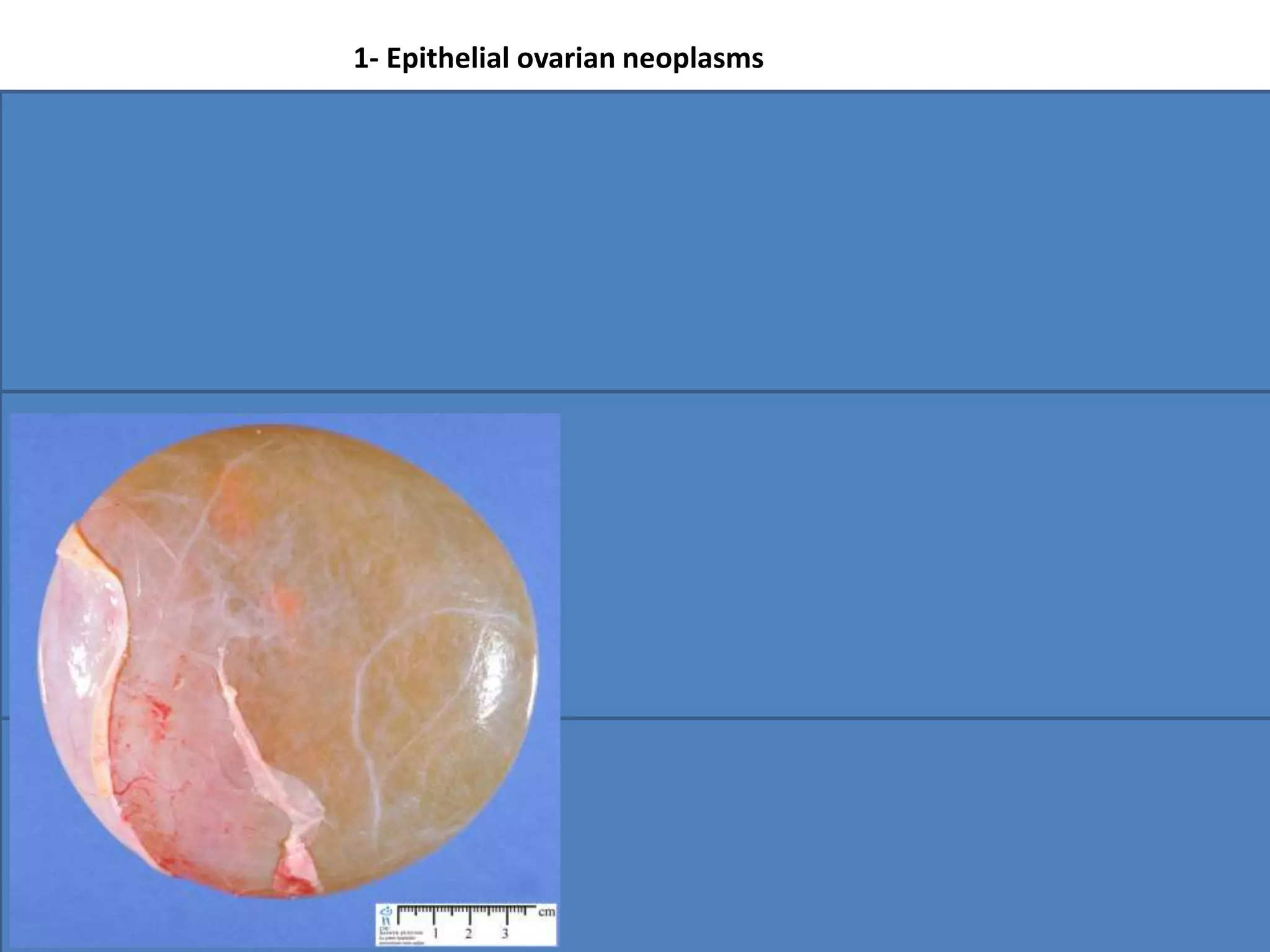
  • #33 follicular cysts may result from a lack of physiologic release of the ovum due to excessive FSH stimulation or lack of the normal LH surge at midcycle just before ovulation. Hormonal stimulation causes these cysts to continue to grow. Follicular cysts are typically larger than 2.5 cm in diameter and manifest as a discomfort and heaviness. Granulosa cells that line the follicle may also persist, leading to excess estradiol production, which, in turn, leads to decreased frequency of menstruation and menorrhagia
  • #36 A hydatidiform mole is a growing mass of tissue inside your womb (uterus) that will not develop into a baby. It is the result of abnormal conception Choriocarcinoma is a fast-growing form of cancer that occurs in a woman's uterus (womb). The abnormal cells start in the tissue that would normally become the placenta. Clomifene (INN) or clomiphene (USAN) is a selective estrogen receptor modulator
  • #39 Are believed to be devied to 3 types The most common type it epithelia
  • #40 Are believed to be derived from the mesothelia cell lining the peritoneal cavity and the lining surface of the ovary The most common is serous cystoadenoma need surgical excision because of their large size Pseudomyxoma peritonei is a very rare type of cancer that usually begins in your appendix as a small growth
  • #42 Meig's syndrome: -Ascites and hydrothorax associate with fibroma. -Ascites caused by transudation of fluid from ovarian fibroid. -Flow of ascites through transdiaphragmatics lymphatics to right plural cavity hydrothorax The functioning characteristics are responsible for a variety of associated presenting signs and symptoms.  The granulosa-theca cell tumors promote feminizing signs and symptoms. during infancy and childhood: precocious menarche, precocious thelarche, or premenarchal uterine bleeding. In the reproductive years: menorrhagia (with alternating amenorrhea), endometrial hyperplasia, endometrial cancer, breast tenderness, and fluid retention Sertoli-Leydig cell tumors are responsible for virilizing effects: hirsutism, temporal baldness, deepening of the voice, clitoromegaly, and a defeminizing change in body habitus to a muscular build. Fifteen percent of these tumors produce no obvious endocrinologic effects. Fibromas are not hormonally active, but may cause Meigs’ syndrome. Postmenopausal bleeding.
  • #43 d
  • #44 C
  • #49 The contralateral ovary must be carefully inspected to exclude a bilateral lesion If the patient is young and nulliparous, the ovarian neoplasm is unilocular, and there are no excrescences within the cyst, an ovarian cystectomy with preservation of the ovary may be performed. In an older woman, a total abdominal hysterectomy and bilateral salpingo-oophorectomy may be appropriate, particularly if there is any suspicion of malignancy. Stromal cell neoplasms of the ovary are generally treated by unilateral salpingo-oophorectomy when future pregnancies are a consideration. Ovarian fibromas, even when associated with ascites and a right hydrothorax (Meigs’ syndrome), are almost always benign and might even be treated by resection from the ovary in a young woman. Cystic teratomas (“dermoids”) can be treated by ovarian cystectomy.Because 15% to 20% are bilateral, the contralateral ovary should be carefully evaluated and any cysts resected.
  • #51 B