Hoarseness
Abdullatiff Sami Al-Rashed
Block 4.2
College of Medicine, King Faisal University
Al-Ahsa, Saudi Arabia
Objectives
Treatment
Deferential Diagnosis
Clinical evaluation
Etiology of Hoarseness
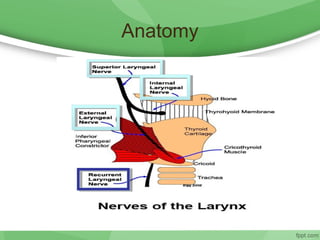
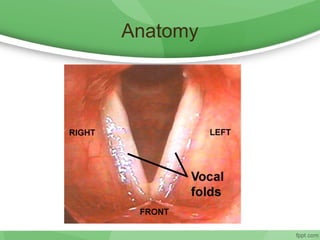
Anatomy of Larynx
Definition of Hoarseness
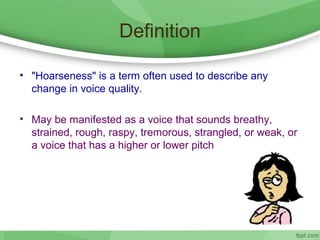
Definition
• "Hoarseness" is a term often used to describe any
change in voice quality.
• May be manifested as a voice that sounds breathy,
strained, rough, raspy, tremorous, strangled, or weak, or
a voice that has a higher or lower pitch
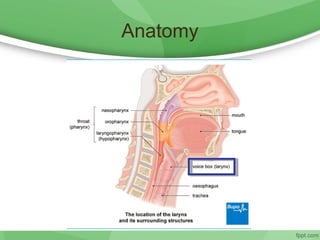
Anatomy
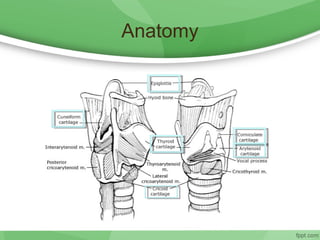
Anatomy
Anatomy
Anatomy
Etiology
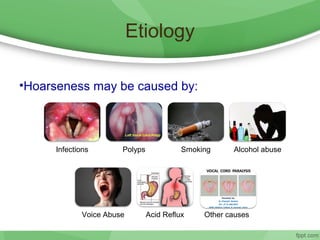
•Hoarseness may be caused by:
Infections Polyps Smoking Alcohol abuse
Voice Abuse Acid Reflux Other causes
• Hoarseness videos:
Clinical Evaluation
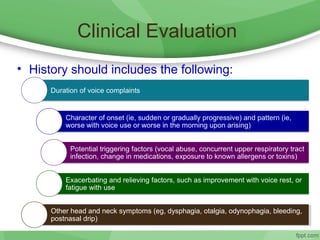
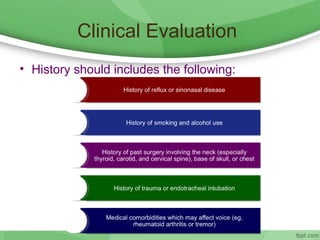
• History should includes the following:
Other head and neck symptoms (eg, dysphagia, otalgia, odynophagia, bleeding,
postnasal drip)
Clinical Evaluation
• History should includes the following:
Clinical Evaluation
• Physical Examination:
• The physical examination should begin by noting the
quality of the patient's voice.
• Although not absolutely definitive, various voice qualities
may correlate with underlying etiologies for the voice
disorder.
Clinical Evaluation
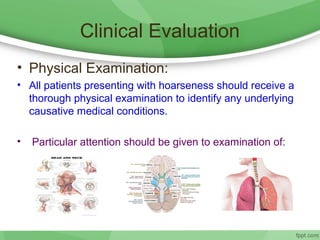
• Physical Examination:
• All patients presenting with hoarseness should receive a
thorough physical examination to identify any underlying
causative medical conditions.
• Particular attention should be given to examination of:
Clinical Evaluation
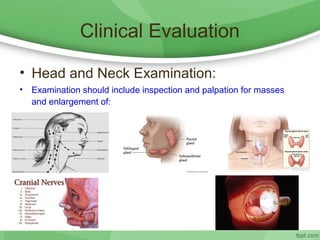
• Head and Neck Examination:
• Examination should include inspection and palpation for masses
and enlargement of:
Clinical Evaluation
• Head and Neck Examination:
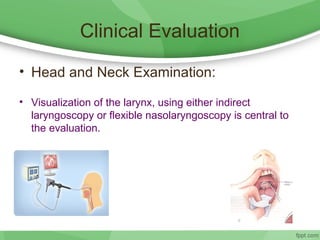
• Visualization of the larynx, using either indirect
laryngoscopy or flexible nasolaryngoscopy is central to
the evaluation.
Clinical Evaluation
• Neurological examination
• The patient should be examined for:
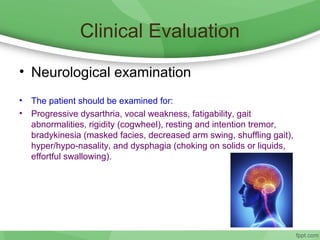
• Progressive dysarthria, vocal weakness, fatigability, gait
abnormalities, rigidity (cogwheel), resting and intention tremor,
bradykinesia (masked facies, decreased arm swing, shuffling gait),
hyper/hypo-nasality, and dysphagia (choking on solids or liquids,
effortful swallowing).
Clinical Evaluation
• Respiratory examination
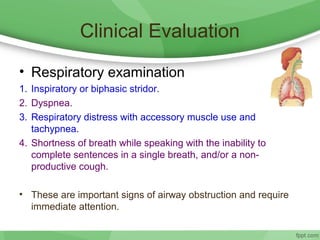
1. Inspiratory or biphasic stridor.
2. Dyspnea.
3. Respiratory distress with accessory muscle use and
tachypnea.
4. Shortness of breath while speaking with the inability to
complete sentences in a single breath, and/or a non-
productive cough.
• These are important signs of airway obstruction and require
immediate attention.
Deferential Diagnosis
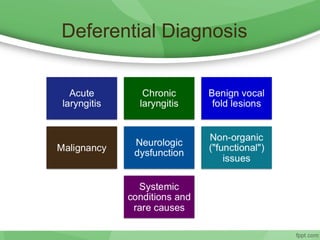
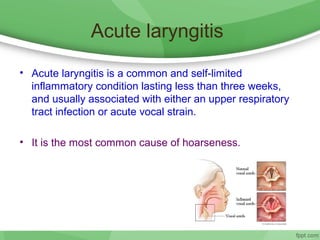
Acute laryngitis
• Acute laryngitis is a common and self-limited
inflammatory condition lasting less than three weeks,
and usually associated with either an upper respiratory
tract infection or acute vocal strain.
• It is the most common cause of hoarseness.
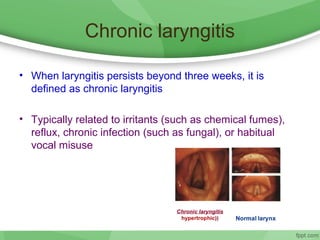
Chronic laryngitis
• When laryngitis persists beyond three weeks, it is
defined as chronic laryngitis
• Typically related to irritants (such as chemical fumes),
reflux, chronic infection (such as fungal), or habitual
vocal misuse
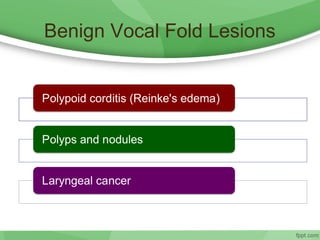
Benign Vocal Fold Lesions
Polypoid Corditis (Reinke's Edema)
Viscous material accumulates in the Reinke's space
of the true vocal folds as a result of chronic irritation
and inflammation secondary to smoking.
Affects women over 40 who are smokers & frequent
professional speakers
Causing Hoarseness & deepening of voice. (patient
often complains of “sounding like a man.”)
Reinke edema
Polyps
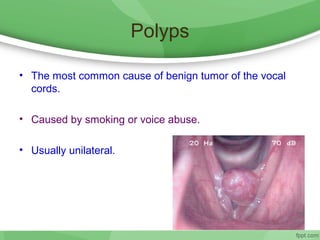
• The most common cause of benign tumor of the vocal
cords.
• Caused by smoking or voice abuse.
• Usually unilateral.
Vocal Nodules
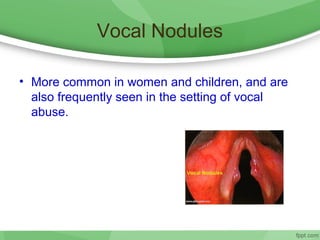
• More common in women and children, and are
also frequently seen in the setting of vocal
abuse.
Laryngeal Carcinoma
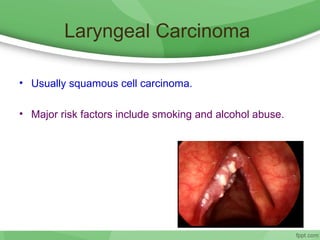
• Usually squamous cell carcinoma.
• Major risk factors include smoking and alcohol abuse.
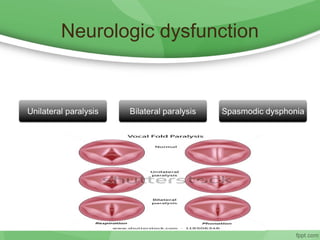
Neurologic dysfunction
Management
Treatment options for hoarseness vary
depending on the underlying etiology.
Treatment generally consists of voice rest,
voice therapy,
pharmacotherapy, and/or surgery
Treatment options for hoarseness vary
depending on the underlying etiology.
Treatment generally consists of voice rest,
voice therapy,
pharmacotherapy, and/or surgery
Management
Disease Management lines
Acute laryngitis hydration, humidification, and voice rest.
Resolve spontaneously
Chronic laryngitis Chronic laryngitis due to irritants
generally resolves with removal of the
offending agent.
Reinke's edema smoking cessation, reflux management,
and voice therapy. Surgical debulking /
recontouring may be necessary in
certain cases.
Polyps usually requires surgical removal of the
polyps
Nodules aimed at correcting vocal strain and
maladaptive vocal habits, and usually
does not require surgery.
References
Hoarseness

Hoarseness

  • 1.
    Hoarseness Abdullatiff Sami Al-Rashed Block4.2 College of Medicine, King Faisal University Al-Ahsa, Saudi Arabia
  • 2.
    Objectives Treatment Deferential Diagnosis Clinical evaluation Etiologyof Hoarseness Anatomy of Larynx Definition of Hoarseness
  • 3.
    Definition • "Hoarseness" isa term often used to describe any change in voice quality. • May be manifested as a voice that sounds breathy, strained, rough, raspy, tremorous, strangled, or weak, or a voice that has a higher or lower pitch
  • 4.
  • 5.
  • 6.
  • 7.
  • 8.
    Etiology •Hoarseness may becaused by: Infections Polyps Smoking Alcohol abuse Voice Abuse Acid Reflux Other causes
  • 9.
  • 10.
    Clinical Evaluation • Historyshould includes the following: Other head and neck symptoms (eg, dysphagia, otalgia, odynophagia, bleeding, postnasal drip)
  • 11.
    Clinical Evaluation • Historyshould includes the following:
  • 12.
    Clinical Evaluation • PhysicalExamination: • The physical examination should begin by noting the quality of the patient's voice. • Although not absolutely definitive, various voice qualities may correlate with underlying etiologies for the voice disorder.
  • 13.
    Clinical Evaluation • PhysicalExamination: • All patients presenting with hoarseness should receive a thorough physical examination to identify any underlying causative medical conditions. • Particular attention should be given to examination of:
  • 14.
    Clinical Evaluation • Headand Neck Examination: • Examination should include inspection and palpation for masses and enlargement of:
  • 15.
    Clinical Evaluation • Headand Neck Examination: • Visualization of the larynx, using either indirect laryngoscopy or flexible nasolaryngoscopy is central to the evaluation.
  • 16.
    Clinical Evaluation • Neurologicalexamination • The patient should be examined for: • Progressive dysarthria, vocal weakness, fatigability, gait abnormalities, rigidity (cogwheel), resting and intention tremor, bradykinesia (masked facies, decreased arm swing, shuffling gait), hyper/hypo-nasality, and dysphagia (choking on solids or liquids, effortful swallowing).
  • 17.
    Clinical Evaluation • Respiratoryexamination 1. Inspiratory or biphasic stridor. 2. Dyspnea. 3. Respiratory distress with accessory muscle use and tachypnea. 4. Shortness of breath while speaking with the inability to complete sentences in a single breath, and/or a non- productive cough. • These are important signs of airway obstruction and require immediate attention.
  • 18.
  • 19.
    Acute laryngitis • Acutelaryngitis is a common and self-limited inflammatory condition lasting less than three weeks, and usually associated with either an upper respiratory tract infection or acute vocal strain. • It is the most common cause of hoarseness.
  • 20.
    Chronic laryngitis • Whenlaryngitis persists beyond three weeks, it is defined as chronic laryngitis • Typically related to irritants (such as chemical fumes), reflux, chronic infection (such as fungal), or habitual vocal misuse
  • 21.
  • 22.
    Polypoid Corditis (Reinke'sEdema) Viscous material accumulates in the Reinke's space of the true vocal folds as a result of chronic irritation and inflammation secondary to smoking. Affects women over 40 who are smokers & frequent professional speakers Causing Hoarseness & deepening of voice. (patient often complains of “sounding like a man.”)
  • 23.
  • 24.
    Polyps • The mostcommon cause of benign tumor of the vocal cords. • Caused by smoking or voice abuse. • Usually unilateral.
  • 25.
    Vocal Nodules • Morecommon in women and children, and are also frequently seen in the setting of vocal abuse.
  • 26.
    Laryngeal Carcinoma • Usuallysquamous cell carcinoma. • Major risk factors include smoking and alcohol abuse.
  • 27.
  • 28.
    Management Treatment options forhoarseness vary depending on the underlying etiology. Treatment generally consists of voice rest, voice therapy, pharmacotherapy, and/or surgery Treatment options for hoarseness vary depending on the underlying etiology. Treatment generally consists of voice rest, voice therapy, pharmacotherapy, and/or surgery
  • 29.
    Management Disease Management lines Acutelaryngitis hydration, humidification, and voice rest. Resolve spontaneously Chronic laryngitis Chronic laryngitis due to irritants generally resolves with removal of the offending agent. Reinke's edema smoking cessation, reflux management, and voice therapy. Surgical debulking / recontouring may be necessary in certain cases. Polyps usually requires surgical removal of the polyps Nodules aimed at correcting vocal strain and maladaptive vocal habits, and usually does not require surgery.
  • 30.

Editor's Notes

  • #6 The larynx is located in the anterior neck at level of C3-C6 vertebrae. The larynx consists of cartilages, muscles, ligaments & membranes and vocal cords. There are 9 cartilages Extrinsic muscles :affects the position of the entire larynx , for example during swallowing Intrinsic are responsible for movement of the vocal folds within the larynx The larynx is supplied by branches of the vagus nerve. There are Two main branches 1- superior laryngeal nerve and it further subdivided to internal and external 2- recurrent laryngeal nerve
  • #10 https://www.youtube.com/watch?v=ltrlBpXI9UQ https://www.youtube.com/watch?v=z0dpCVbWFrA
  • #15 Examination should include inspection and palpation for masses and enlargement of: Cervical lymph nodes, Thyroid gland, and salivary glands Cranial nerve examination Intra-oral inspection and palpation of the lips, cheeks, floor of mouth, tongue (including lateral borders), tonsillar pillars and fossae, hard and soft palate, and gingival tissue.
  • #19 Acute laryngitis, which is self-limited and related to acute respiratory illness or acute voice misuse Chronic laryngitis, which is related to irritants, reflux, chronic infection (such as fungal), or habitual vocal misuse Benign vocal fold lesions Malignancy Neurologic dysfunction Non-organic ("functional") issues Systemic conditions and rare causes