Acute and chronic pharyngitis
By
Dr Saeed Ullah MBBS, FCPS
Classified ENT, Head and Neck Surgeon
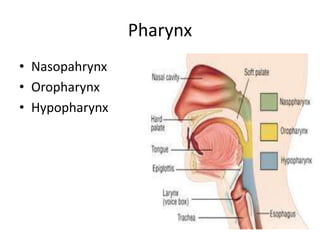
Pharynx
• Nasopahrynx
• Oropharynx
• Hypopharynx
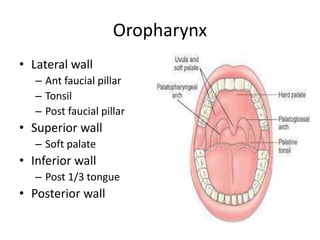
Oropharynx
• Lateral wall
– Ant faucial pillar
– Tonsil
– Post faucial pillar
• Superior wall
– Soft palate
• Inferior wall
– Post 1/3 tongue
• Posterior wall
Acute pharyngitis
Viral (42%)
Adenovirus (most common 31%)
Epstein –Barr virus(6%)
Influenza virus(5%)
Bacterial –Mixed infection common(48%)
 beta-hemolytic streptococci (GABHS-38%)
 H. influenza
 staphylococcus aureus
 Corynebacterium diphtheria
 gonococcus
 anaerobes remain uncertain.
Fungal –Candida albicans
Pathophysiology
• Invasion of mucosa
• Local inflammation
• Irritation of mucosa by secretion
• Release of local toxins, proteases
• M-protein fragment of GABHS and
sarcolemma antigens of myocardium
• Antigen-antibodies complex deposition in
glomeruli
Clinical features
• Sore throat, fever, chills,
• Malaise, headaches, anorexia, abdominal
pains
• History of exposure to known carriers
• Pain on swallowing
• Redness, congestion of pharynx
• Enlarged congested tonsils
• Cervical lymphadenitis
Viral infections
• Herpangina-coxsakie virus
• Infectious mononucleosis-EBV
• Cytomegalovirus
• Pharyngoconjunctival fever-Adenovirus
• Acute lymphonodular pharyngitis-coxsakie
virus
• Measles and chickenpox
Investigations
• Throat swab for C/S
• Rapid antigen testing against GABHS
• Kleb loafler’s bacillus (KLB)
• Leukocytosis
• Monospot test for EBV
Treatment
• NSAIDS
• Antibiotics
• Oral penicillin V given six-hourly for ten days
goldstandard
• Cephalosporins (cefixime)
• Augmented Amoxicillin
• Macrolids
Recurrent sore throat
• Benzathine penicillin
• Clindamycins
• Cefuroxime
• Tonsillectomy
Complications
• Routes of spread
– Hematogenous
– Lymphatics
– Direct spread
Complications
• Peritonsillar abscess,
• Septicaemia,
• Toxic shock
• Otitis media/mastoiditis,
• Descending necrotizing mediastinitis,
• Septic thrombophlebitis, internal jugular vein
• Orbital myositis
• Epiglottitis,
• Rhinosinusitis
• Pneumonia.
Acute tonsillitis
• GABHS
• Hemophilus influenzae
• Viral
Types of acute tonsillitis
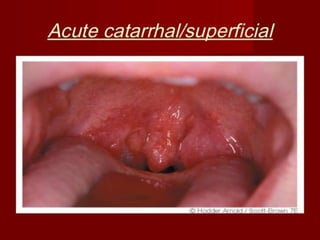
• Acute catarrhal or superficial
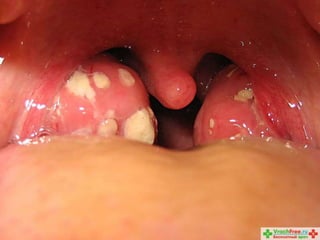
• Acute follicular
• Acute parenchymatous
• Acute membranous
Symptoms
• Sore throat
• Painfull swallowing
• Fever
• Earache
• Constitutional
– Headache
– Body aches
– Malaise
Signs
• Coated tongue
• Hyperemia of pillars
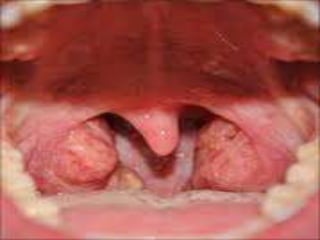
• Enlarged, red, congested tonsils
• Follicles
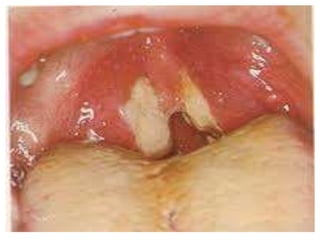
• Membranes
Treatment
• Bed rest
• Analgesics
• Antibiotics
Tonsillectomy
• SIGN guidelines
– sore throats are due to tonsillitis;
– there are five or more episodes per year
– there are symptoms for at least a year;
– the episodes of sore throat are disabling and
prevent normal functioning
Indications
• OSA
• Unilateral enlargement
• 2nd attack of quinsy
• As an oncological procedure
• Large symptomatic tonsilolith
Peritonsillar abscess (Quinsy)
• Streptococcus pyogenous
• S. Aureus
• Anaerobes
Clinical features
• High grade fever with rigors
• Severe throat pain (unilateral)
• Odynophagia
• Muffled and thick speech (hot potato voice)
• Foul breath
• Trismus
• Earache (ipsilateral)
On examination
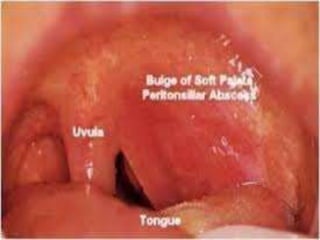
• Swollen tonsil, pillars, soft palate
• Uvula swollen and pushed
• Bulging of soft palate above the tonsil
• Cervical lymphadenitis
• Torticollis
Treatment
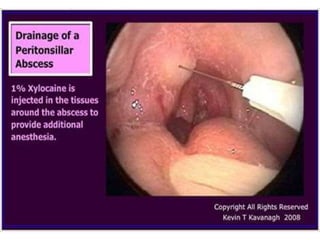
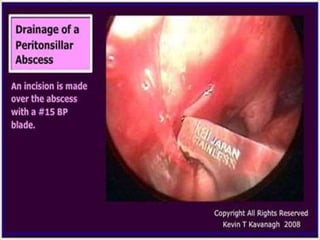
• Needle drainage and antibiotics
• Incision and drainage and antibiotics
• Abscess tonsillectomy
• Interval tonsillectomy
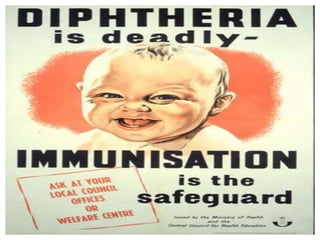
Diphtheria
• Corynebecterium diphtherae
• Droplet infection
• Carrier state
Clinical features
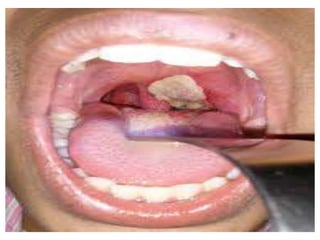
• Membrane over the tonsils, palate, uvula
• Tenacious, difficult to remove
• Bleeding on removal
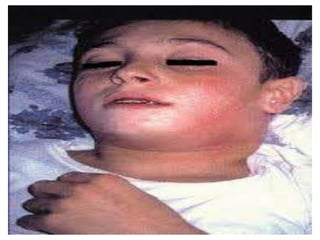
• Bull’s neck
• Toxic looking
• Breathing difficulty
Investigations
• Culture for KLB
• ECG
Complications
• Exotoxins
– Myocarditis
– Cardiac arrhythmias
– Circulatory failure
– Paralysis of soft palate
– Paralysis of diaphragm
– Paralysis of ocular muscles
Treatment
• Exotoxins in blood
• Organisms in tonsil
• Started on suspicion
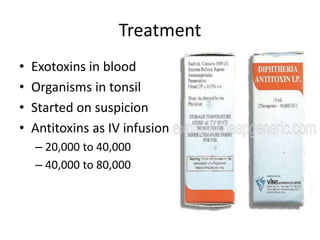
• Antitoxins as IV infusion
– 20,000 to 40,000
– 40,000 to 80,000
Parapharyngeal abscess
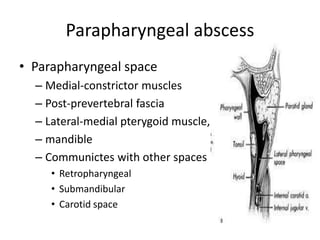
• Parapharyngeal space
– Medial-constrictor muscles
– Post-prevertebral fascia
– Lateral-medial pterygoid muscle,
– mandible
– Communictes with other spaces
• Retropharyngeal
• Submandibular
• Carotid space
Causes
• Pharynx
• Teeth
• Ear
• Other spaces
• External trauma
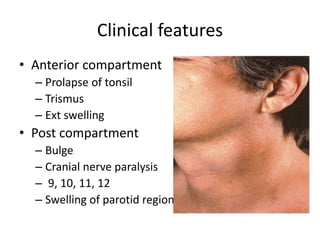
Clinical features
• Anterior compartment
– Prolapse of tonsil
– Trismus
– Ext swelling
• Post compartment
– Bulge
– Cranial nerve paralysis
– 9, 10, 11, 12
– Swelling of parotid region
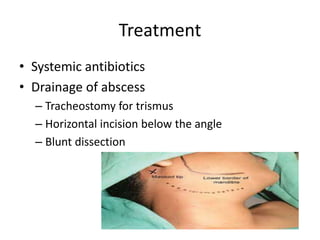
Treatment
• Systemic antibiotics
• Drainage of abscess
– Tracheostomy for trismus
– Horizontal incision below the angle
– Blunt dissection
Retropharyngeal abscess
• Acute
– In children
• Suppuration of lymph nodes
– In adults
• Penetrating trauma
• Chronic
– Tubercolous
• Lymph nodes
• Cervical spine
Clinical features
• Dysphagia
• Torticollis
• Bulge in post wall
• Stridor
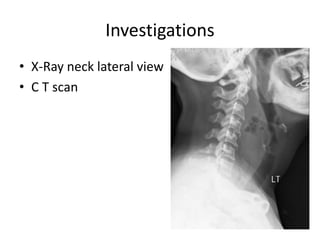
Investigations
• X-Ray neck lateral view
• C T scan
Treatment
• I & D
• Anti TB drugs
Chronic pharyngitis
• Chronic inflammatory of the pharynx
characterized by hypertrophy of mucosa,
seromucinous glands and sub epithelial
lymphoid tissues
Chronic pharyngitis
• Chronic non specific
• Chronic specific
Non specific
• Persistent infection in neighborhood
• Mouth breathing
• Chronic irritants
• Environmental pollution
Symptoms
• Discomfort in throat
• Foreign body sensation
• Cough
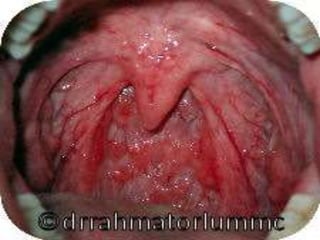
Signs
• Congested post wall
• Odema of the wall
• Nodules on the wall
• Lateral pharyngeal bands
Treatment
• Predisposing factors
• Saline gargles
• Anti inflammatory drugs
• Cautry of the nodules
Questions
Thank you

Acute and chronic pharyngitis