How plasma cell produce antibodies?
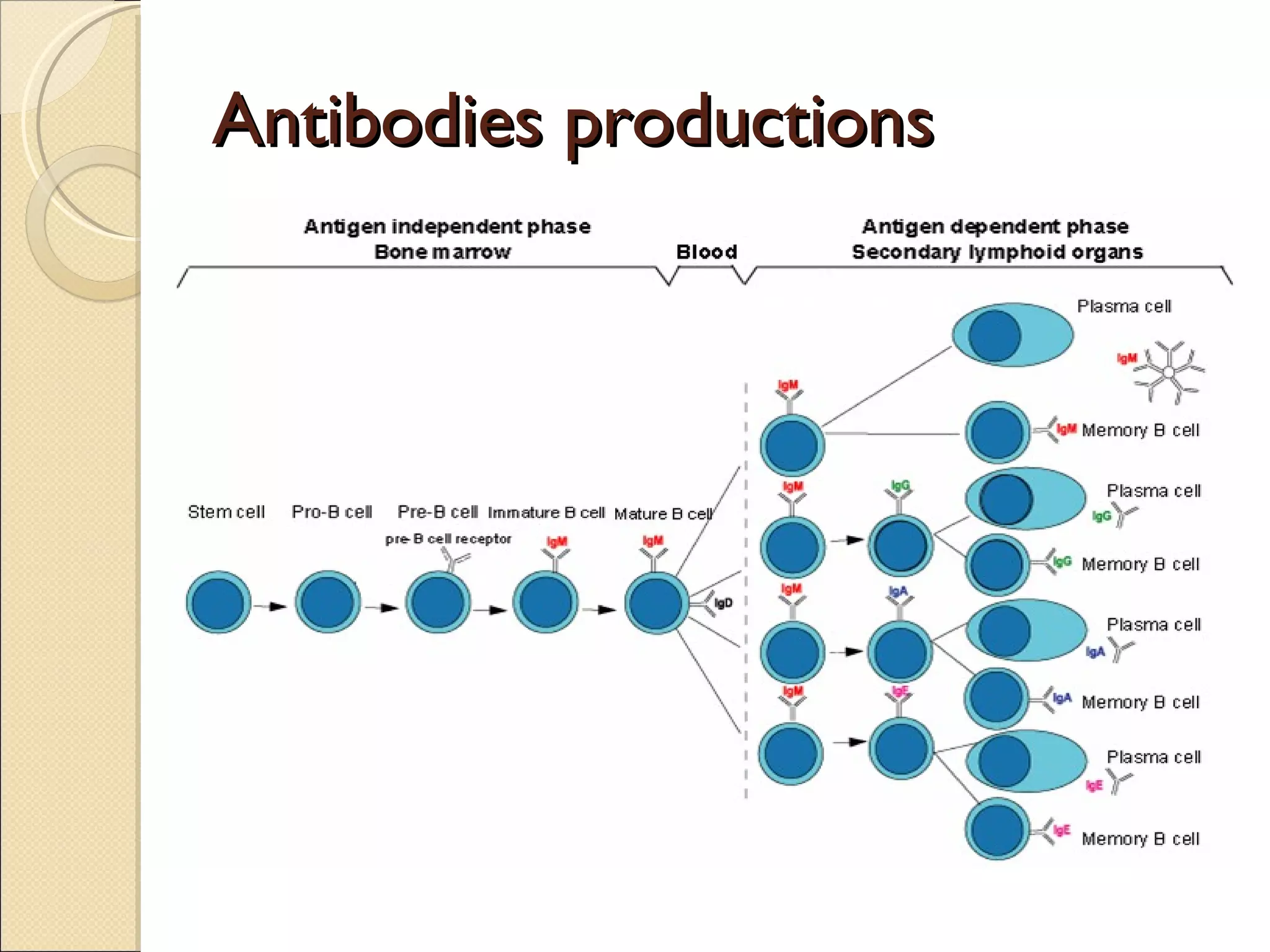
What is plasma cell? A type of  WBC  that produces and secretes antibodies. Also called  plasma B cell  or  plasmocytes Originated in  bone marrow They travel to  spleen  or  lymph nodes  to secrete antibodies
What is antibodies? Antibodies = Ab Also called  Immunoglobulin (Ig) Specific     each react with only one type    of antigen Antibody binding sites  =  idiotype  /  paratope Specific protein in antigen = epitope
What is antibodies? Antibody recognize the specific epitope, so it will bind with the antigen Bonding between Ab and Ag is not covalent Hydrogen bond, Van der Walls forces and hydrophobic interactions Y shaped
Antibody structure Parts of the antibody (Ab) are  constan t, i.e., the same for every antibody -  Parts are  variable   - the arms of the “Y” have different amino acid sequences that cause specific binding to antigen
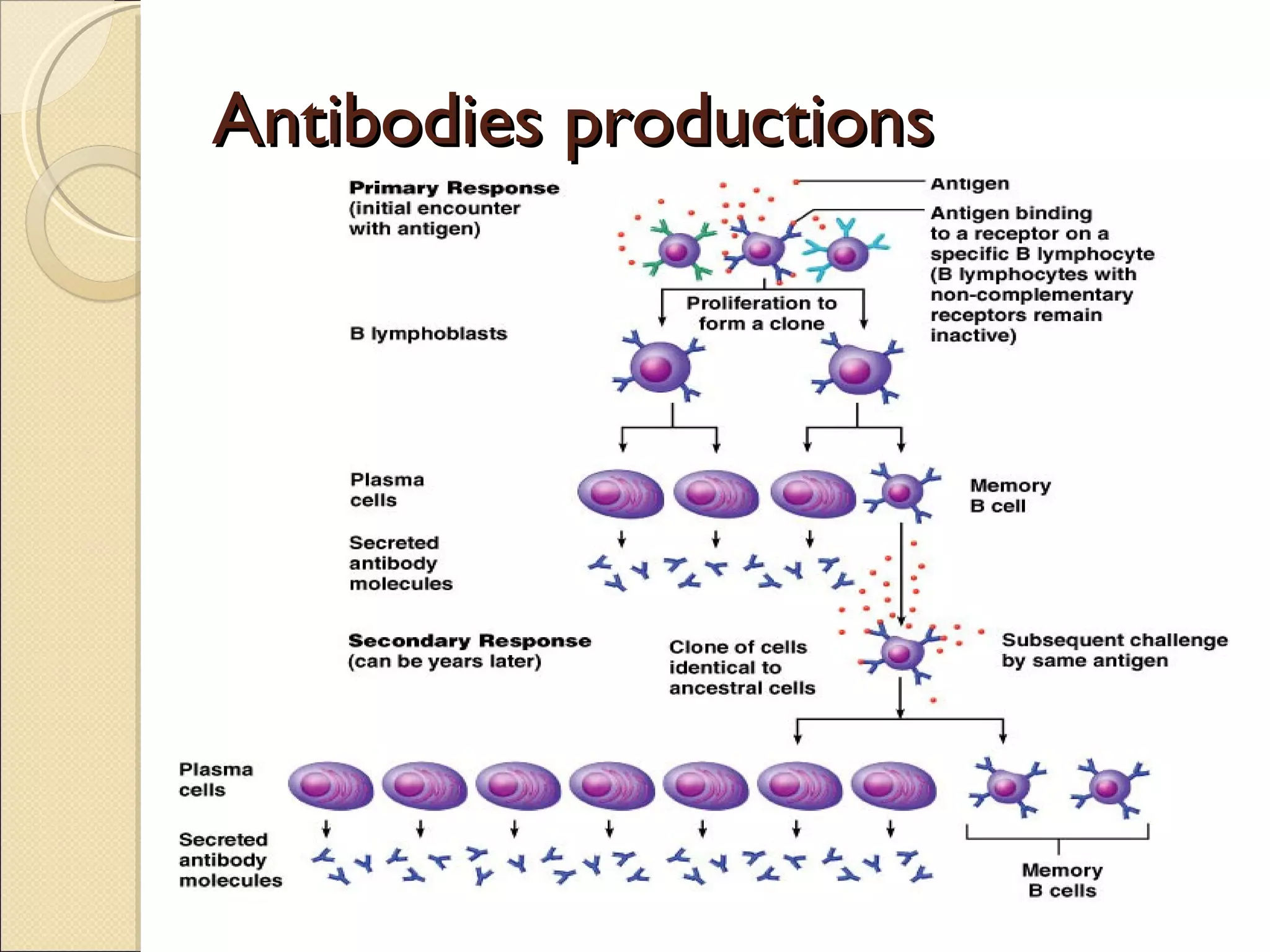
Antibodies productions Once Ab bind with Ag,  Ab start to  divide  rapidly  B cells are  activated Matured B cell  differentiate  into plasma cell and memory cell Stimulation by [CD4 + lymphocytes] Proliferation  form  plasma cell  and  memory cell
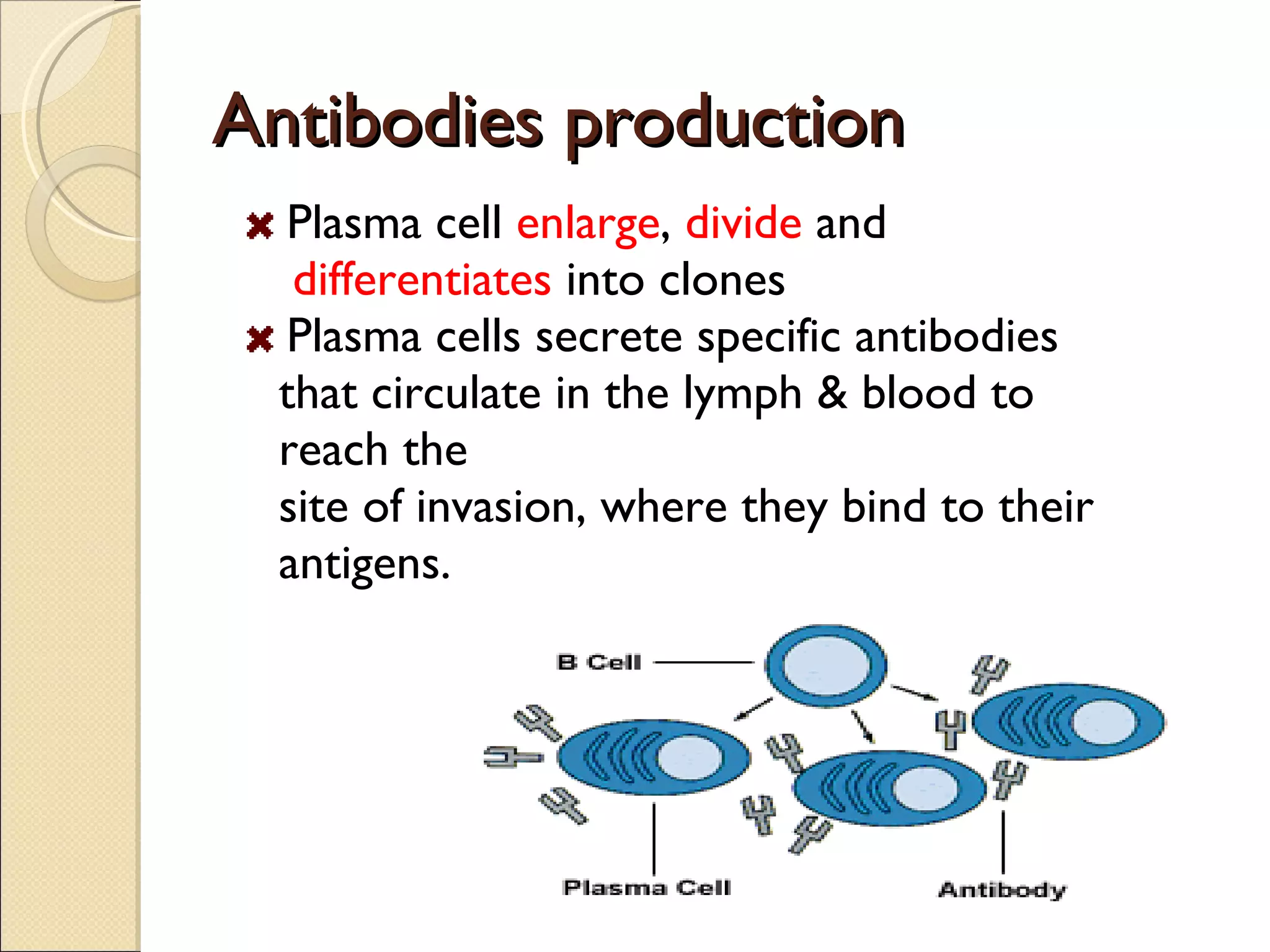
Antibodies production Plasma cell  enlarge ,  divide  and differentiates  into clones Plasma cells secrete specific antibodies that circulate in the lymph & blood to reach the site of invasion, where they bind to their antigens.
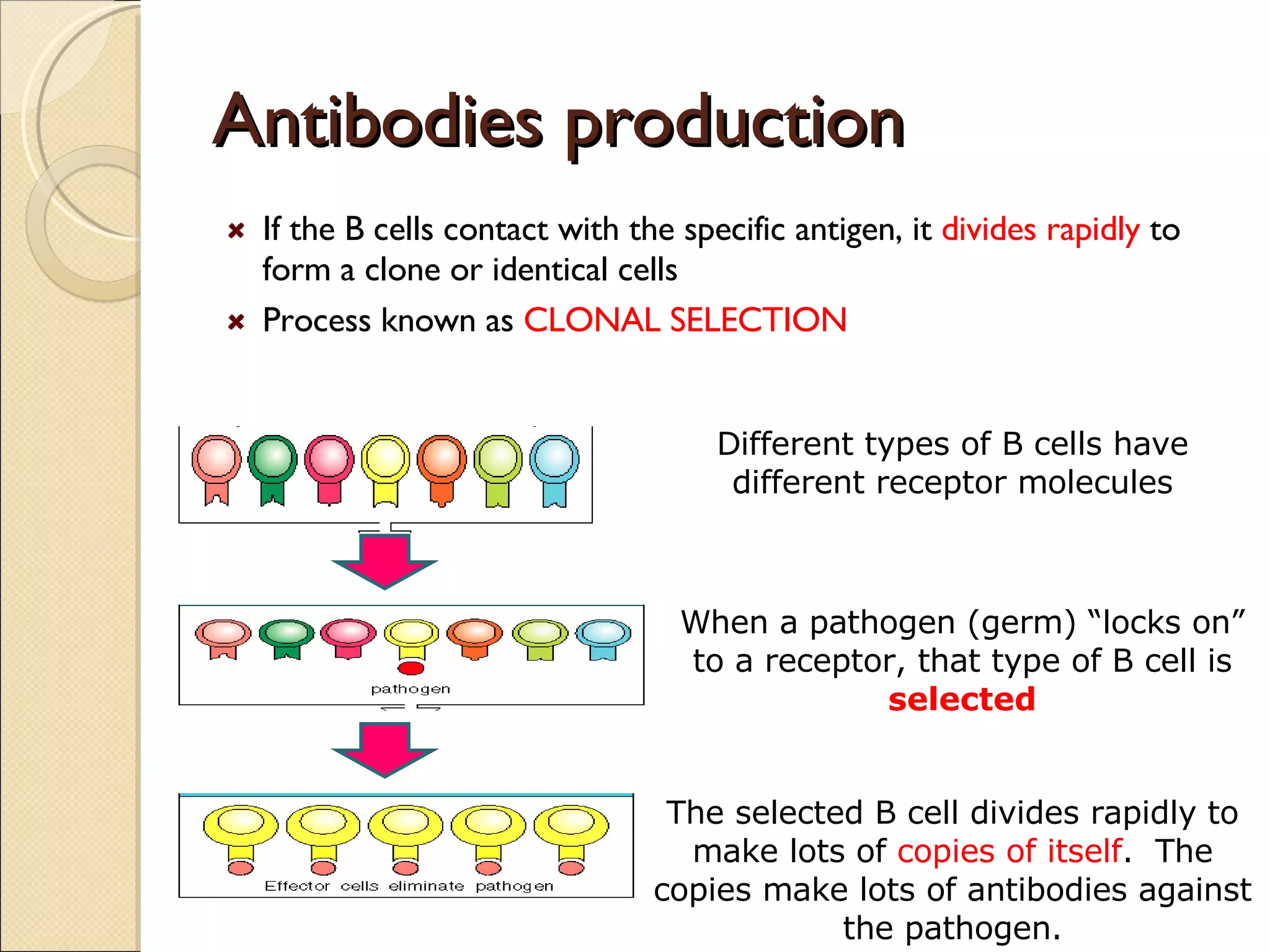
Antibodies production If the B cells contact with the specific antigen, it  divides rapidly  to form a clone or identical cells  Process known as  CLONAL SELECTION Different types of B cells have different receptor molecules When a pathogen (germ) “locks on” to a receptor, that type of B cell is  selected The selected B cell divides rapidly to make lots of  copies of itself .  The copies make lots of antibodies against the pathogen.
Antibodies productions Some of the activated B cell becomes  memory cells Memory cell continues to produce small amounts of antibodies after the infection have overcome Fx   So body will be  ready  if the same    infections occur  The reactions becomes  faster Secondary immune system  components Remain in circulation for a  long time
Antibodies productions
Antibodies reactions When an antibody binds to an antigen on a cell, it acts as a  signal  for neutrophils, eosinophils, basophils, & macrophages to engulf & kill (phagocytose) it This process is known as  OPSINISATION . Opsonisation is mediated by  COMPLEMENT COMPONENTS .
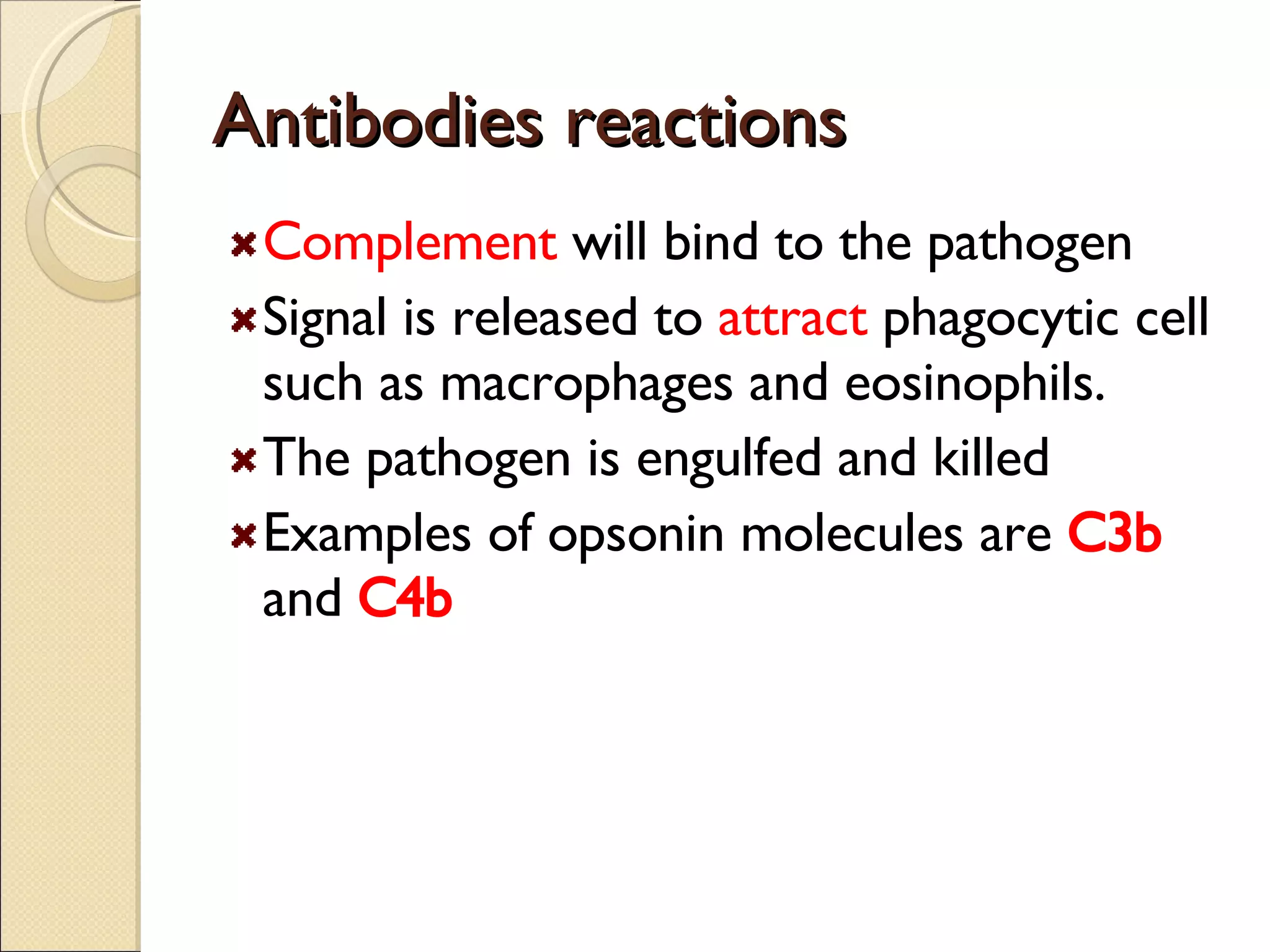
Antibodies reactions Complement  will bind to the pathogen Signal is released to  attract  phagocytic cell such as macrophages and eosinophils. The pathogen is engulfed and killed Examples of opsonin molecules are  C3b  and  C4b
Opsonization  Complement bind to bacteria Signal attract macrophages Macrophages go to the bacteria Bacteria is engulfed and killed Most phagocytic binding cannot occur without opsonization
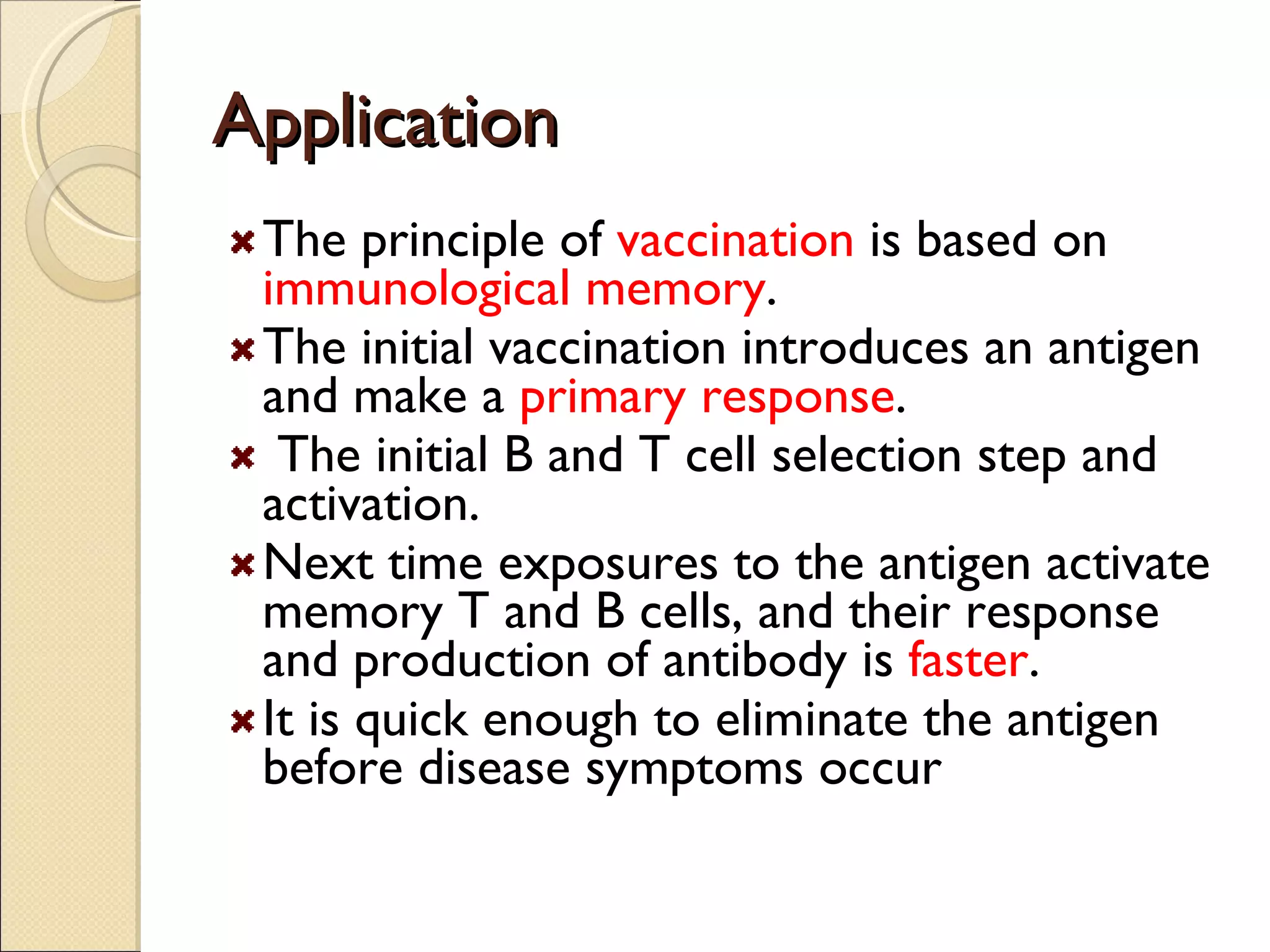
Application The principle of  vaccination  is based on  immunological memory .  The initial vaccination introduces an antigen and make a  primary response . The initial B and T cell selection step and activation.  Next time exposures to the antigen activate memory T and B cells, and their response and production of antibody is  faster . It is quick enough to eliminate the antigen before disease symptoms occur

Antibodies Productions

  • 1.
    How plasma cellproduce antibodies?
  • 2.
    What is plasmacell? A type of WBC that produces and secretes antibodies. Also called plasma B cell or plasmocytes Originated in bone marrow They travel to spleen or lymph nodes to secrete antibodies
  • 3.
    What is antibodies?Antibodies = Ab Also called Immunoglobulin (Ig) Specific  each react with only one type of antigen Antibody binding sites = idiotype / paratope Specific protein in antigen = epitope
  • 4.
    What is antibodies?Antibody recognize the specific epitope, so it will bind with the antigen Bonding between Ab and Ag is not covalent Hydrogen bond, Van der Walls forces and hydrophobic interactions Y shaped
  • 5.
    Antibody structure Partsof the antibody (Ab) are constan t, i.e., the same for every antibody - Parts are variable - the arms of the “Y” have different amino acid sequences that cause specific binding to antigen
  • 6.
    Antibodies productions OnceAb bind with Ag, Ab start to divide rapidly B cells are activated Matured B cell differentiate into plasma cell and memory cell Stimulation by [CD4 + lymphocytes] Proliferation form plasma cell and memory cell
  • 7.
    Antibodies production Plasmacell enlarge , divide and differentiates into clones Plasma cells secrete specific antibodies that circulate in the lymph & blood to reach the site of invasion, where they bind to their antigens.
  • 8.
    Antibodies production Ifthe B cells contact with the specific antigen, it divides rapidly to form a clone or identical cells Process known as CLONAL SELECTION Different types of B cells have different receptor molecules When a pathogen (germ) “locks on” to a receptor, that type of B cell is selected The selected B cell divides rapidly to make lots of copies of itself . The copies make lots of antibodies against the pathogen.
  • 9.
    Antibodies productions Someof the activated B cell becomes memory cells Memory cell continues to produce small amounts of antibodies after the infection have overcome Fx  So body will be ready if the same infections occur  The reactions becomes faster Secondary immune system components Remain in circulation for a long time
  • 10.
  • 11.
  • 12.
    Antibodies reactions Whenan antibody binds to an antigen on a cell, it acts as a signal for neutrophils, eosinophils, basophils, & macrophages to engulf & kill (phagocytose) it This process is known as OPSINISATION . Opsonisation is mediated by COMPLEMENT COMPONENTS .
  • 13.
    Antibodies reactions Complement will bind to the pathogen Signal is released to attract phagocytic cell such as macrophages and eosinophils. The pathogen is engulfed and killed Examples of opsonin molecules are C3b and C4b
  • 14.
    Opsonization Complementbind to bacteria Signal attract macrophages Macrophages go to the bacteria Bacteria is engulfed and killed Most phagocytic binding cannot occur without opsonization
  • 15.
    Application The principleof vaccination is based on immunological memory . The initial vaccination introduces an antigen and make a primary response . The initial B and T cell selection step and activation. Next time exposures to the antigen activate memory T and B cells, and their response and production of antibody is faster . It is quick enough to eliminate the antigen before disease symptoms occur