Antibodies as Drugs Lauren Lahey April 26, 2007
Overview An emerging theme Historical breakthroughs Terms to know A look at antibody structure Production of monoclonal antibodies Antibodies as biopharmaceutical Autoimmune Disease Rheumatoid Arthritis Variations and future directions
Emerging Themes Antibodies are naturally occurring  Discovery of their innate properties hinted at great therapeutic potential  High-specificity in binding Already present in the body Can activate and couple components of the immune system Modification to structure and refinement in production methods have made antibodies a viable modern drug
At the turn of the 20 th  century: Emil Adolf von Behring  Developed serum therapy as an effective treatment against diphtheria and tetanus  For this, he received the first ever Noble Prize in Physiology or Medicine in 1901 The serum derived from immunized animals was latter shown to be effective because of the antibodies it contained Paul Ehrlich Side-chain theory: Toxins and antitoxins were chemical substances Antitoxins were side-chains on cells that could bind with a toxin like a lock and key Predicted autoimmunity or “horror autotoxicus” Received the 1908 Nobel Prize in Physiology or Medicine for his work in immunity
More recently: “ Discovery” of antibody chemical structure Gerald Edelman and Rodney Porter, circa 1961 Received the 1972 Nobel Prize in Physiology or Medicine Development of hybridoma technology Jerne, Kohler, and Milstein, 1975 Received the 1984 Nobel Prize in Physiology or Medicine  Production of the 1 st  monoclonal antibody In 1986, OKT-3 was approved for use in organ transplant rejection
Important Terms Antibody –  immunoglobulin secreted by B cells Antigen ( anti body  gen erator)  – any substance capable of eliciting an adaptive immune response Monoclonal antibodies (mAbs)  – antibodies secreted from a single B cell, have identical paratopes Epitope  – region of the antigen recognized by an antibody Paratope  – region of the antibody that binds the epitope
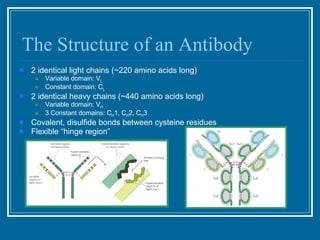
The Structure of an Antibody 2 identical light chains (~220 amino acids long) Variable domain: V L Constant domain: C L 2 identical heavy chains (~440 amino acids long) Variable domain: V H 3 Constant domains: C H 1, C H 2, C H 3 Covalent, disulfide bonds between cysteine residues Flexible “hinge region”
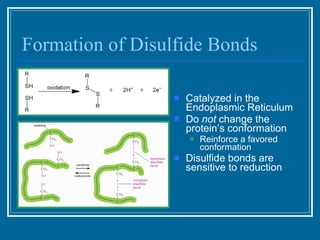
Formation of Disulfide Bonds Catalyzed in the Endoplasmic Reticulum Do  not  change the protein’s conformation Reinforce a favored conformation Disulfide bonds are sensitive to reduction
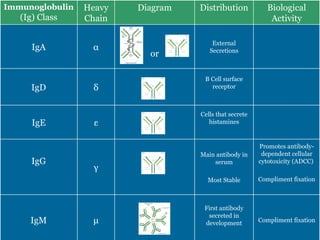
Compliment fixation First antibody secreted in development μ IgM Promotes antibody-dependent cellular cytotoxicity (ADCC)  Compliment fixation Main antibody in serum Most Stable γ IgG Cells that secrete histamines ε IgE B Cell surface receptor δ IgD External Secretions or α IgA Biological Activity Distribution Diagram Heavy Chain Immunoglobulin   (Ig) Class
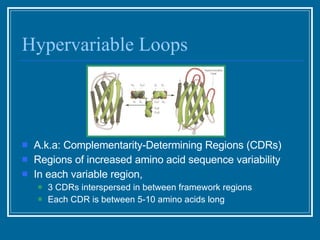
Hypervariable Loops  A.k.a: Complementarity-Determining Regions (CDRs)  Regions of increased amino acid sequence variability  In each variable region,  3 CDRs interspersed in between framework regions Each CDR is between 5-10 amino acids long
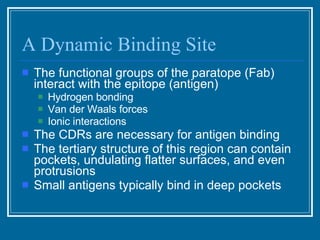
A Dynamic Binding Site The functional groups of the paratope (Fab) interact with the epitope (antigen)  Hydrogen bonding Van der Waals forces Ionic interactions The CDRs are necessary for antigen binding The tertiary structure of this region can contain pockets, undulating flatter surfaces, and even protrusions Small antigens typically bind in deep pockets
Antibody Pharmokinetics Antigen binding is reversible Antigen (Ag) + Antibody (Ab)  ↔  AntigenAntibody (AgAb) [bound]  K affinity  =  [AgAb]    [Ag][Ab] For some therapeutic mAbs, the affinity must be balanced so that effective antigen binding occurs while tissue penetration is allowed
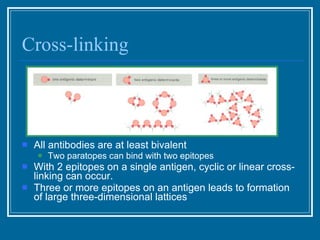
Cross-linking All antibodies are at least bivalent  Two paratopes can bind with two epitopes With 2 epitopes on a single antigen, cyclic or linear cross-linking can occur.  Three or more epitopes on an antigen leads to formation of large three-dimensional lattices
Mechanisms of Action Blocking action of molecular targets Can work antagonistically by binding a  receptor  to prevent activation Can also bind the  antigen  and prevent activation  “ Magic Bullet”  Compound with target specificity is coupled with various effector groups Toxins, radionuclei, enzymes, DNA Signal molecules Coupled to mediators of apoptosis, cell division, etc.
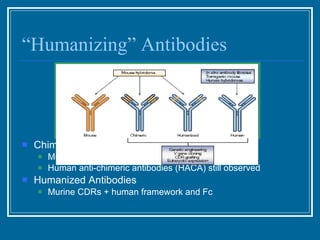
“Humanizing” Antibodies Chimeric Antibodies Murine Fv + human Fc Human anti-chimeric antibodies (HACA) still observed Humanized Antibodies Murine CDRs + human framework and Fc
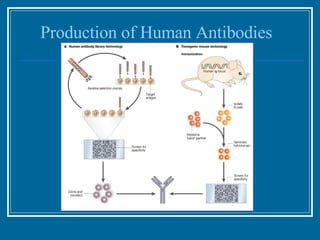
Production of Human Antibodies
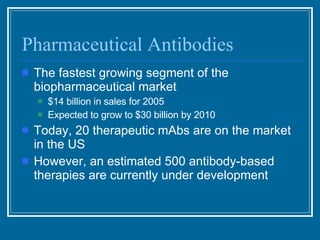
Pharmaceutical Antibodies The fastest growing segment of the biopharmaceutical market $14 billion in sales for 2005 Expected to grow to $30 billion by 2010 Today, 20 therapeutic mAbs are on the market in the US However, an estimated 500 antibody-based therapies are currently under development
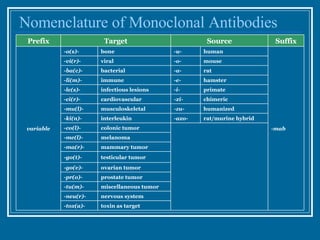
Nomenclature of Monoclonal Antibodies toxin as target -tox(a)- nervous system -neu(r)- miscellaneous tumor -tu(m)- prostate tumor -pr(o)- ovarian tumor -go(v)- testicular tumor -go(t)- mammary tumor -ma(r)- melanoma -me(l)- colonic tumor -co(l)- rat/murine hybrid -axo- interleukin -ki(n)- humanized -zu- musculoskeletal -mu(l)- chimeric -xi- cardiovascular -ci(r)- primate -i- infectious lesions -le(s)- hamster -e- immune -li(m)- rat -a- bacterial -ba(c)- mouse -o- viral -vi(r)- -mab human -u- bone -o(s)- variable Suffix Source Target Prefix
Autoimmune Disease An immune reaction against self Mechanism unknown, arises out of a failure in immune regulation Examples: Rheumatoid arthritis Systemic lupus erythematosus Multiple sclerosis (MS) Insulin-dependent diabetes mellitus And the list goes on…
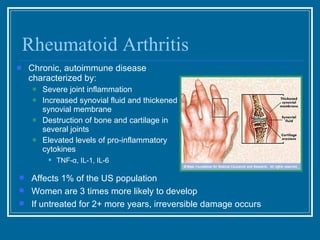
Rheumatoid Arthritis Chronic, autoimmune disease characterized by: Severe joint inflammation Increased synovial fluid and thickened synovial membrane Destruction of bone and cartilage in several joints Elevated levels of pro-inflammatory cytokines TNF- α , IL-1, IL-6 Affects 1% of the US population Women are 3 times more likely to develop If untreated for 2+ more years, irreversible damage occurs
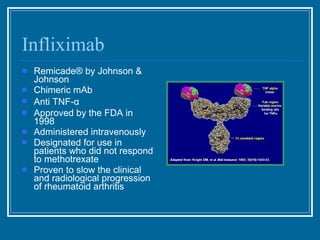
Infliximab Remicade ®  by Johnson & Johnson Chimeric mAb Anti TNF- α Approved by the FDA in 1998 Administered intravenously Designated for use in patients who did not respond to methotrexate Proven to slow the clinical and radiological progression of rheumatoid arthritis
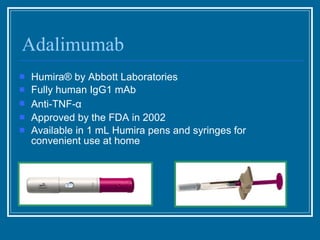
Adalimumab Humira ® by Abbott Laboratories Fully human IgG1 mAb Anti-TNF- α Approved by the FDA in 2002 Available in 1 mL Humira pens and syringes for convenient use at home
Rituximab Rituxan ® by Genentech Anti-B cell (CD20) antibody First approved in 1997 for use in B-cell lymphoma Given in combination with Methotrexate Directed for patients who do not respond to Anti-TNF treatments Indicates the rheumatoid arthritis has a B cell component to its pathology
Interesting Variations Small antibody fragments (Fv or Fab) are also effective in blocking cytokines Benefit: More readily penetrate tissue Coupling of antibody fragments to form dimers and tetramers Increases avidity and cross-linking Engineered Diabodies Two different antigen specificities One against the target The other against effectors Can cross-link effector cells
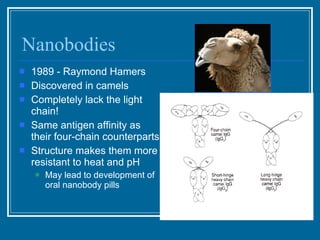
Nanobodies 1989 - Raymond Hamers  Discovered in camels Completely lack the light chain! Same antigen affinity as their four-chain counterparts  Structure makes them more resistant to heat and pH May lead to development of oral nanobody pills
References Alberts, Bruce, et al.  Molecular biology of the cell . New York: Garland Science, 2002. Brekke, Ole Henrik; Sandlie, Inger. Therapeutic Antibodies for Human Disease at the Dawn of the Twenty-first Century. Nature Reviews. Drug discovery (2003), 2(1), 52-62 Browning, Jeffery L. B cells move to centre stage: novel opportunities for autoimmune disease treatment. Nature reviews. Drug discovery (2006), 5(7), 564-576 2 Feb. 2007 <http://www.wikipedia.org> Patrick, Graham L.  An introduction to Medicinal Chemistry . New York: Oxford Press, 2005. Campbell, Neil A., Reece, Jane B.  Biology . San Francisco: Benjamin Cummings,2002. Casadevall, Arturo; Scharff, Matthew D. Serum therapy revisited: animal models of infection and development of passive antibody therapy. Antimicrobial Agents and Chemotherapy (1994), 38(8), 1695-1702.  Encyclopedia Britanica.  Paul Ehrlich: immunity and the side-chain theory.  20 Apr. 2007 <http://www.britannica.com/eb/article-2053/Paul-Ehrlich> World Health Organization.  Guidelines on the Use of International Nonproprietary Names (INNs) for Pharmaceutical Substances.  (1997) United States. Federal Drug Administration.  Product approval information. 1998. 20 Apr. 2007 <http://www.fda.gov>  The Mayo Clinic.  Rheumatoid arthritis.  8 Apr. 2002 < http://www.mayoclinic.com/ health/rheumatoid-arthritis/DS00020> Cvetkovi’c, Risto S.; Scott, Lesley J.; Adalimumab: a review of its use in adult patients with rheumatoid arthritis. Biodrugs (2006), 20(5), 293-311 Nicolaides, Nicholas C.; Sass, Philip M.; Grasso, Luigi. Monoclonal antibodies: a morphing landscape for therapeutics. Drug Development Research (2006), 67(10), 781-789. Doan, Tanya; Massarotii, Elena. Rheumatoid arthritis: an overview of new and emerging therapies. J. Clin. Pharmacol. (2005), 45, 751-762 Atarhouch, T.; Hamers, C. Naturally occurring antibodies devoid of light chains. Nature (1993), 363, 464-468 Graninger, Winfried; Smolen, Josef. Treatment of rheumatoid arthritis by TNF-blocking agents. International archives of allergy and immunology (2002), 127(1), 10-14

Antibodies as Drugs

  • 1.
    Antibodies as DrugsLauren Lahey April 26, 2007
  • 2.
    Overview An emergingtheme Historical breakthroughs Terms to know A look at antibody structure Production of monoclonal antibodies Antibodies as biopharmaceutical Autoimmune Disease Rheumatoid Arthritis Variations and future directions
  • 3.
    Emerging Themes Antibodiesare naturally occurring Discovery of their innate properties hinted at great therapeutic potential High-specificity in binding Already present in the body Can activate and couple components of the immune system Modification to structure and refinement in production methods have made antibodies a viable modern drug
  • 4.
    At the turnof the 20 th century: Emil Adolf von Behring Developed serum therapy as an effective treatment against diphtheria and tetanus For this, he received the first ever Noble Prize in Physiology or Medicine in 1901 The serum derived from immunized animals was latter shown to be effective because of the antibodies it contained Paul Ehrlich Side-chain theory: Toxins and antitoxins were chemical substances Antitoxins were side-chains on cells that could bind with a toxin like a lock and key Predicted autoimmunity or “horror autotoxicus” Received the 1908 Nobel Prize in Physiology or Medicine for his work in immunity
  • 5.
    More recently: “Discovery” of antibody chemical structure Gerald Edelman and Rodney Porter, circa 1961 Received the 1972 Nobel Prize in Physiology or Medicine Development of hybridoma technology Jerne, Kohler, and Milstein, 1975 Received the 1984 Nobel Prize in Physiology or Medicine Production of the 1 st monoclonal antibody In 1986, OKT-3 was approved for use in organ transplant rejection
  • 6.
    Important Terms Antibody– immunoglobulin secreted by B cells Antigen ( anti body gen erator) – any substance capable of eliciting an adaptive immune response Monoclonal antibodies (mAbs) – antibodies secreted from a single B cell, have identical paratopes Epitope – region of the antigen recognized by an antibody Paratope – region of the antibody that binds the epitope
  • 7.
    The Structure ofan Antibody 2 identical light chains (~220 amino acids long) Variable domain: V L Constant domain: C L 2 identical heavy chains (~440 amino acids long) Variable domain: V H 3 Constant domains: C H 1, C H 2, C H 3 Covalent, disulfide bonds between cysteine residues Flexible “hinge region”
  • 8.
    Formation of DisulfideBonds Catalyzed in the Endoplasmic Reticulum Do not change the protein’s conformation Reinforce a favored conformation Disulfide bonds are sensitive to reduction
  • 9.
    Compliment fixation Firstantibody secreted in development μ IgM Promotes antibody-dependent cellular cytotoxicity (ADCC) Compliment fixation Main antibody in serum Most Stable γ IgG Cells that secrete histamines ε IgE B Cell surface receptor δ IgD External Secretions or α IgA Biological Activity Distribution Diagram Heavy Chain Immunoglobulin (Ig) Class
  • 10.
    Hypervariable Loops A.k.a: Complementarity-Determining Regions (CDRs) Regions of increased amino acid sequence variability In each variable region, 3 CDRs interspersed in between framework regions Each CDR is between 5-10 amino acids long
  • 11.
    A Dynamic BindingSite The functional groups of the paratope (Fab) interact with the epitope (antigen) Hydrogen bonding Van der Waals forces Ionic interactions The CDRs are necessary for antigen binding The tertiary structure of this region can contain pockets, undulating flatter surfaces, and even protrusions Small antigens typically bind in deep pockets
  • 12.
    Antibody Pharmokinetics Antigenbinding is reversible Antigen (Ag) + Antibody (Ab) ↔ AntigenAntibody (AgAb) [bound] K affinity = [AgAb] [Ag][Ab] For some therapeutic mAbs, the affinity must be balanced so that effective antigen binding occurs while tissue penetration is allowed
  • 13.
    Cross-linking All antibodiesare at least bivalent Two paratopes can bind with two epitopes With 2 epitopes on a single antigen, cyclic or linear cross-linking can occur. Three or more epitopes on an antigen leads to formation of large three-dimensional lattices
  • 14.
    Mechanisms of ActionBlocking action of molecular targets Can work antagonistically by binding a receptor to prevent activation Can also bind the antigen and prevent activation “ Magic Bullet” Compound with target specificity is coupled with various effector groups Toxins, radionuclei, enzymes, DNA Signal molecules Coupled to mediators of apoptosis, cell division, etc.
  • 15.
    “Humanizing” Antibodies ChimericAntibodies Murine Fv + human Fc Human anti-chimeric antibodies (HACA) still observed Humanized Antibodies Murine CDRs + human framework and Fc
  • 16.
  • 17.
    Pharmaceutical Antibodies Thefastest growing segment of the biopharmaceutical market $14 billion in sales for 2005 Expected to grow to $30 billion by 2010 Today, 20 therapeutic mAbs are on the market in the US However, an estimated 500 antibody-based therapies are currently under development
  • 18.
    Nomenclature of MonoclonalAntibodies toxin as target -tox(a)- nervous system -neu(r)- miscellaneous tumor -tu(m)- prostate tumor -pr(o)- ovarian tumor -go(v)- testicular tumor -go(t)- mammary tumor -ma(r)- melanoma -me(l)- colonic tumor -co(l)- rat/murine hybrid -axo- interleukin -ki(n)- humanized -zu- musculoskeletal -mu(l)- chimeric -xi- cardiovascular -ci(r)- primate -i- infectious lesions -le(s)- hamster -e- immune -li(m)- rat -a- bacterial -ba(c)- mouse -o- viral -vi(r)- -mab human -u- bone -o(s)- variable Suffix Source Target Prefix
  • 19.
    Autoimmune Disease Animmune reaction against self Mechanism unknown, arises out of a failure in immune regulation Examples: Rheumatoid arthritis Systemic lupus erythematosus Multiple sclerosis (MS) Insulin-dependent diabetes mellitus And the list goes on…
  • 20.
    Rheumatoid Arthritis Chronic,autoimmune disease characterized by: Severe joint inflammation Increased synovial fluid and thickened synovial membrane Destruction of bone and cartilage in several joints Elevated levels of pro-inflammatory cytokines TNF- α , IL-1, IL-6 Affects 1% of the US population Women are 3 times more likely to develop If untreated for 2+ more years, irreversible damage occurs
  • 21.
    Infliximab Remicade ® by Johnson & Johnson Chimeric mAb Anti TNF- α Approved by the FDA in 1998 Administered intravenously Designated for use in patients who did not respond to methotrexate Proven to slow the clinical and radiological progression of rheumatoid arthritis
  • 22.
    Adalimumab Humira ®by Abbott Laboratories Fully human IgG1 mAb Anti-TNF- α Approved by the FDA in 2002 Available in 1 mL Humira pens and syringes for convenient use at home
  • 23.
    Rituximab Rituxan ®by Genentech Anti-B cell (CD20) antibody First approved in 1997 for use in B-cell lymphoma Given in combination with Methotrexate Directed for patients who do not respond to Anti-TNF treatments Indicates the rheumatoid arthritis has a B cell component to its pathology
  • 24.
    Interesting Variations Smallantibody fragments (Fv or Fab) are also effective in blocking cytokines Benefit: More readily penetrate tissue Coupling of antibody fragments to form dimers and tetramers Increases avidity and cross-linking Engineered Diabodies Two different antigen specificities One against the target The other against effectors Can cross-link effector cells
  • 25.
    Nanobodies 1989 -Raymond Hamers Discovered in camels Completely lack the light chain! Same antigen affinity as their four-chain counterparts Structure makes them more resistant to heat and pH May lead to development of oral nanobody pills
  • 26.
    References Alberts, Bruce,et al. Molecular biology of the cell . New York: Garland Science, 2002. Brekke, Ole Henrik; Sandlie, Inger. Therapeutic Antibodies for Human Disease at the Dawn of the Twenty-first Century. Nature Reviews. Drug discovery (2003), 2(1), 52-62 Browning, Jeffery L. B cells move to centre stage: novel opportunities for autoimmune disease treatment. Nature reviews. Drug discovery (2006), 5(7), 564-576 2 Feb. 2007 <http://www.wikipedia.org> Patrick, Graham L. An introduction to Medicinal Chemistry . New York: Oxford Press, 2005. Campbell, Neil A., Reece, Jane B. Biology . San Francisco: Benjamin Cummings,2002. Casadevall, Arturo; Scharff, Matthew D. Serum therapy revisited: animal models of infection and development of passive antibody therapy. Antimicrobial Agents and Chemotherapy (1994), 38(8), 1695-1702. Encyclopedia Britanica. Paul Ehrlich: immunity and the side-chain theory. 20 Apr. 2007 <http://www.britannica.com/eb/article-2053/Paul-Ehrlich> World Health Organization. Guidelines on the Use of International Nonproprietary Names (INNs) for Pharmaceutical Substances. (1997) United States. Federal Drug Administration. Product approval information. 1998. 20 Apr. 2007 <http://www.fda.gov> The Mayo Clinic. Rheumatoid arthritis. 8 Apr. 2002 < http://www.mayoclinic.com/ health/rheumatoid-arthritis/DS00020> Cvetkovi’c, Risto S.; Scott, Lesley J.; Adalimumab: a review of its use in adult patients with rheumatoid arthritis. Biodrugs (2006), 20(5), 293-311 Nicolaides, Nicholas C.; Sass, Philip M.; Grasso, Luigi. Monoclonal antibodies: a morphing landscape for therapeutics. Drug Development Research (2006), 67(10), 781-789. Doan, Tanya; Massarotii, Elena. Rheumatoid arthritis: an overview of new and emerging therapies. J. Clin. Pharmacol. (2005), 45, 751-762 Atarhouch, T.; Hamers, C. Naturally occurring antibodies devoid of light chains. Nature (1993), 363, 464-468 Graninger, Winfried; Smolen, Josef. Treatment of rheumatoid arthritis by TNF-blocking agents. International archives of allergy and immunology (2002), 127(1), 10-14