Animal Physiology
Chapter 5
Transport Part 2
Passive Solute Transport by Facilitated Diffusion
• Polar, organic, hydrophilic solutes such as glucose and amino
acids
• Noncovalent and reversible binding of the solutes to
transporter/carrier proteins
• Always in the direction of electrochemical equilibrium
• Faster then non-facilitated diffusion
Active Transport
• Carrier-mediated
• Requires energy (ATP)
• Can move solutes against the electrochemical gradient
• Subject to saturation kinetics
• Many different solutes – inorganic ions, amino acids, sugars
• Not H2O or O2
• Can create voltage difference:
– Electroneutral- do not generate a an imbalance of charge
– Electrogenic-do create an imbalance of charge
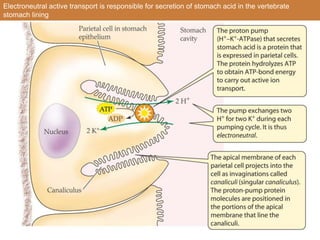
Electroneutral active transport is responsible for secretion of stomach acid in the vertebrate
stomach lining
Figure 5.10 Summary of active and passive ion transport in a typical animal cell
Primary Active Transport
• Draws energy immediately from the hydrolysis of ATP-
transporter is an ATPase
Na+-K+-ATPase
• P-type ATPases: the protein becomes phosphorylated and
dephosphorylated during each pumping cycle (others include
CA2+-ATPase and H+-K+-ATPase)
• Exhibit strict coupling between their molecular conformation
and ATP hydrolysis
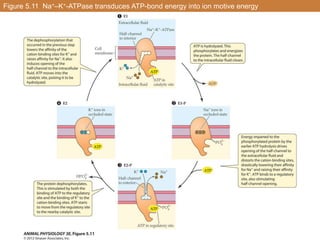
Figure 5.11 Na+–K+-ATPase transduces ATP-bond energy into ion motive energy
Secondary Active Transport
• Draws energy from an electrochemical gradient of a solute
• Usual mechanism of transport for organic solutes
• ATP is used to create the gradient
• Example: glucose absorption in the small intestine of the
hummingbird
-glucose is moved from [low][high]
-it is carrier-mediated
-the energy source for the uphill transport is metabolism:
draws energy from an electrochemical gradient of a
solute
Box 5.1 Two examples of energy coupling via an intermediate step in which energy is temporarily
stored as potential energy
Figure 5.12 The secondary active transport of glucose into an epithelial cell of the vertebrate small
intestine
Cotransport: a transporter protein moves two solutes in a linked
fashion in one direction
Countertransport: a transporter moves two solutes in
obligatorily linked fashion in opposite directions (the protein is
called a countertransporter)
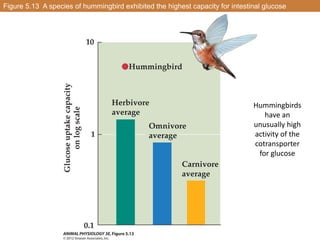
Figure 5.13 A species of hummingbird exhibited the highest capacity for intestinal glucose
absorption of 42 vertebrate species measured
Hummingbirds
have an
unusually high
activity of the
cotransporter
for glucose
Figure 5.15 A whole-epithelium view of active ion transport across the gill epithelium of a typical
freshwater fish
Summary of Active Transport
• Converts energy obtained from the catabolism of foodstuffs into solute
motive energy and therefore away from electrochemical equilibrium.
• Solutes must bind noncovalently to a transporter protein for active
transport to occur (carrier-mediated). A 2nd type is facilitated diffusion
which does not use metabolic energy and is therefore only towards
equilibrium.
• Active transport is primary if the transporter protein is an ATPase and thus
draws energy directly from ATP bonds. Primary active-transport
mechanisms pump ions.
• Active transport is secondary if the energy source is a solute gradient and
requires transporter proteins (used for ions and organic solutes).
Diversity and Modulation of Channels and Transporters
• Channels and transporter proteins exist in multiple molecular forms.
– Can have distinct transport, catalytic and modulation characteristics providing
opportunity for adaptation.
• Controlled by gene expression
• Noncovalent (ligand gating) and covalent (phosphorylation) modification
occurs
• Insertion and retrieval modulation (i.e. H+-K+-ATPase in acid-secreting cells
of the stomach move from intracellular membranes to extracellular
membranes when a meal is ingested)
Colligative Properties of Aqueous Solutions
Depends on the number of dissolved entities per unit of volume rather than
the chemical nature of the dissolved entities
1. Osmotic pressure: the property of a solution that allows one to predict
whether the solution will gain or lose water by osmosis when it
undergoes exchange with another solution
2. Freezing point: the highest temperature capable of inducing freezing
3. Water vapor pressure: the tendency of a solution to evaporate
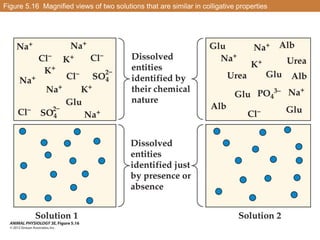
Figure 5.16 Magnified views of two solutions that are similar in colligative properties
Raising the concentration of dissolved entities in a solution increases the
osmotic pressure of the solution and lowers the solution’s freezing point and
water vapor pressure the osmotic pressure is proportional to the
concentration of dissolved entities
For example: doubling the concentration of solutes doubles the osmotic
pressure
However, doubling [solute] doubles the difference between the freezing point
or water vapor pressure of a solution and that of pure water (freezing-point
or water-vapor depression)
So…osmotic pressure, freezing-point depression and water-vapor-pressure
depression are all proportional to each other. Therefore if you know one you
can calculate the others!
Solutions of nonelectolytes that are equal in their molar chemical
concentrations are identical in their osmostic pressures and other colligative
properties.
Solutions of electrolytes (i.e. NaCl) will dissociate in solution and therefore
have more dissolved entities and therefore corresponding colligative
properties (i.e. a 0.1-M NaCl solution will have an osmotic pressure and
freezing-point depression 2 times higher than a 0.1-M glucose solution)
Units of Osmolarity
A 1-osmolar (Osm) solution behaves as if it has 1 Avogadro’s number of
independent dissolved entities per liter a 1-Osm solution has the same
osmotic pressure as is exhibited by a 1M solution of ideal nonelectrolyte
Seawater and blood are ~1 Osm
Milliosmolarity (mOsm): a 1 mOsm behaves as if it has 0.001 Avogadro’s
number of independent dissolved entities per liter
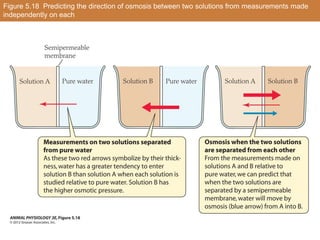
Figure 5.18 Predicting the direction of osmosis between two solutions from measurements made
independently on each
Osmosis
• Passive transport of water across a membrane
• Water moves from LowHigh osmotic pressure
• Water itself is more abundant per unit of volume where dissolved matter
is less abundant
• Two solutions are isosmotic if they have the same osmotic pressures
• If two solutions have different pressures the lower one is termed
hyposmotic and the higher one is hyperosmotic
• Osmosis can occur through simple diffusion across cell membranes or 5 to
50 fold faster through aquaporins (channel-mediated water transport)
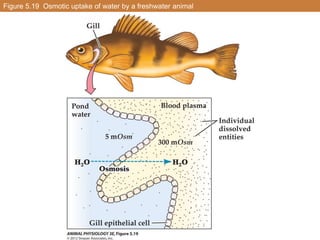
Figure 5.19 Osmotic uptake of water by a freshwater animal

Animal phys chapter 5 part 2

  • 1.
  • 2.
    Passive Solute Transportby Facilitated Diffusion • Polar, organic, hydrophilic solutes such as glucose and amino acids • Noncovalent and reversible binding of the solutes to transporter/carrier proteins • Always in the direction of electrochemical equilibrium • Faster then non-facilitated diffusion
  • 3.
    Active Transport • Carrier-mediated •Requires energy (ATP) • Can move solutes against the electrochemical gradient • Subject to saturation kinetics • Many different solutes – inorganic ions, amino acids, sugars • Not H2O or O2 • Can create voltage difference: – Electroneutral- do not generate a an imbalance of charge – Electrogenic-do create an imbalance of charge
  • 4.
    Electroneutral active transportis responsible for secretion of stomach acid in the vertebrate stomach lining
  • 5.
    Figure 5.10 Summaryof active and passive ion transport in a typical animal cell
  • 6.
    Primary Active Transport •Draws energy immediately from the hydrolysis of ATP- transporter is an ATPase Na+-K+-ATPase • P-type ATPases: the protein becomes phosphorylated and dephosphorylated during each pumping cycle (others include CA2+-ATPase and H+-K+-ATPase) • Exhibit strict coupling between their molecular conformation and ATP hydrolysis
  • 7.
    Figure 5.11 Na+–K+-ATPasetransduces ATP-bond energy into ion motive energy
  • 8.
    Secondary Active Transport •Draws energy from an electrochemical gradient of a solute • Usual mechanism of transport for organic solutes • ATP is used to create the gradient • Example: glucose absorption in the small intestine of the hummingbird -glucose is moved from [low][high] -it is carrier-mediated -the energy source for the uphill transport is metabolism: draws energy from an electrochemical gradient of a solute
  • 9.
    Box 5.1 Twoexamples of energy coupling via an intermediate step in which energy is temporarily stored as potential energy
  • 10.
    Figure 5.12 Thesecondary active transport of glucose into an epithelial cell of the vertebrate small intestine
  • 11.
    Cotransport: a transporterprotein moves two solutes in a linked fashion in one direction Countertransport: a transporter moves two solutes in obligatorily linked fashion in opposite directions (the protein is called a countertransporter)
  • 12.
    Figure 5.13 Aspecies of hummingbird exhibited the highest capacity for intestinal glucose absorption of 42 vertebrate species measured Hummingbirds have an unusually high activity of the cotransporter for glucose
  • 13.
    Figure 5.15 Awhole-epithelium view of active ion transport across the gill epithelium of a typical freshwater fish
  • 14.
    Summary of ActiveTransport • Converts energy obtained from the catabolism of foodstuffs into solute motive energy and therefore away from electrochemical equilibrium. • Solutes must bind noncovalently to a transporter protein for active transport to occur (carrier-mediated). A 2nd type is facilitated diffusion which does not use metabolic energy and is therefore only towards equilibrium. • Active transport is primary if the transporter protein is an ATPase and thus draws energy directly from ATP bonds. Primary active-transport mechanisms pump ions. • Active transport is secondary if the energy source is a solute gradient and requires transporter proteins (used for ions and organic solutes).
  • 15.
    Diversity and Modulationof Channels and Transporters • Channels and transporter proteins exist in multiple molecular forms. – Can have distinct transport, catalytic and modulation characteristics providing opportunity for adaptation. • Controlled by gene expression • Noncovalent (ligand gating) and covalent (phosphorylation) modification occurs • Insertion and retrieval modulation (i.e. H+-K+-ATPase in acid-secreting cells of the stomach move from intracellular membranes to extracellular membranes when a meal is ingested)
  • 16.
    Colligative Properties ofAqueous Solutions Depends on the number of dissolved entities per unit of volume rather than the chemical nature of the dissolved entities 1. Osmotic pressure: the property of a solution that allows one to predict whether the solution will gain or lose water by osmosis when it undergoes exchange with another solution 2. Freezing point: the highest temperature capable of inducing freezing 3. Water vapor pressure: the tendency of a solution to evaporate
  • 17.
    Figure 5.16 Magnifiedviews of two solutions that are similar in colligative properties
  • 18.
    Raising the concentrationof dissolved entities in a solution increases the osmotic pressure of the solution and lowers the solution’s freezing point and water vapor pressure the osmotic pressure is proportional to the concentration of dissolved entities For example: doubling the concentration of solutes doubles the osmotic pressure However, doubling [solute] doubles the difference between the freezing point or water vapor pressure of a solution and that of pure water (freezing-point or water-vapor depression)
  • 19.
    So…osmotic pressure, freezing-pointdepression and water-vapor-pressure depression are all proportional to each other. Therefore if you know one you can calculate the others! Solutions of nonelectolytes that are equal in their molar chemical concentrations are identical in their osmostic pressures and other colligative properties. Solutions of electrolytes (i.e. NaCl) will dissociate in solution and therefore have more dissolved entities and therefore corresponding colligative properties (i.e. a 0.1-M NaCl solution will have an osmotic pressure and freezing-point depression 2 times higher than a 0.1-M glucose solution)
  • 20.
    Units of Osmolarity A1-osmolar (Osm) solution behaves as if it has 1 Avogadro’s number of independent dissolved entities per liter a 1-Osm solution has the same osmotic pressure as is exhibited by a 1M solution of ideal nonelectrolyte Seawater and blood are ~1 Osm Milliosmolarity (mOsm): a 1 mOsm behaves as if it has 0.001 Avogadro’s number of independent dissolved entities per liter
  • 21.
    Figure 5.18 Predictingthe direction of osmosis between two solutions from measurements made independently on each
  • 22.
    Osmosis • Passive transportof water across a membrane • Water moves from LowHigh osmotic pressure • Water itself is more abundant per unit of volume where dissolved matter is less abundant • Two solutions are isosmotic if they have the same osmotic pressures • If two solutions have different pressures the lower one is termed hyposmotic and the higher one is hyperosmotic • Osmosis can occur through simple diffusion across cell membranes or 5 to 50 fold faster through aquaporins (channel-mediated water transport)
  • 23.
    Figure 5.19 Osmoticuptake of water by a freshwater animal

Editor's Notes

  • #5 AnPhys3e-Fig-05-09-0.jpg
  • #6 AnPhys3e-Fig-05-10-0.jpg
  • #8 AnPhys3e-Fig-05-11-0.jpg
  • #10 AnPhys3e-Box-05-01-0.jpg
  • #11 AnPhys3e-Fig-05-12-0.jpg
  • #13 AnPhys3e-Fig-05-13-0.jpg
  • #14 AnPhys3e-Fig-05-15-0.jpg
  • #18 AnPhys3e-Fig-05-16-0.jpg
  • #22 AnPhys3e-Fig-05-18-0.jpg
  • #24 AnPhys3e-Fig-05-19-0.jpg