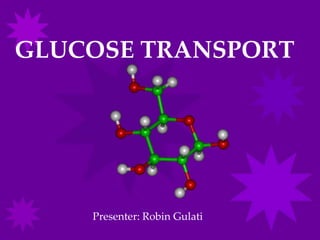
GLUCOSE TRANSPORT


    Presenter: Robin Gulati
Contents
• Introduction
• Glucose transporters
• Regulation of glucose transport
Intro
• Concentration-driven transport
• Five proteins with a high degree of homology
  are involved: GLUT Family
• Special physiological functions and tissue
  distribution.
• Transport proteins mediate facilitated transport
  only, that is, they can only transport glucose
  (or fructose) from areas of high concentration to
  areas of lower concentration.
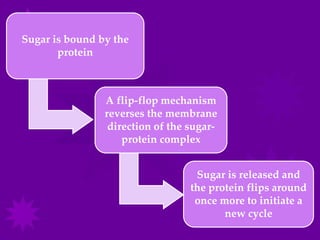
Sugar is bound by the
       protein


                A flip-flop mechanism
                reverses the membrane
                 direction of the sugar-
                    protein complex


                                   Sugar is released and
                                  the protein flips around
                                   once more to initiate a
                                         new cycle
• In most tissues the internal glucose
  concentration is quite low; transport can only
  proceed from the extracellular area into the
  cell.

• In gluconeogenetic tissues (liver and
  kidney), intracellular glucose concentration
  can exceed blood glucose concentration in the
  post-absorptive or fasting states.
Glucose transporters
• Glucose transporters are integral membrane
  glycoproteins with molecular masses of about
  50,000 daltons, and each has 12 membrane-
  spanning α-helical domains.
• Transporter exposes a single substrate binding
  site toward either the outside or the inside of
  the cell.
• Binding of glucose to one site provokes a
  conformational change associated with
  transport, and releases glucose to the other side
  of the membrane.
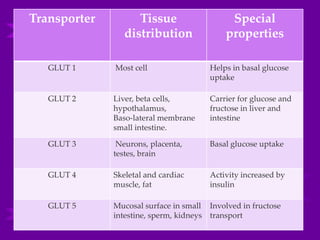
Transporter         Tissue                   Special
                 distribution               properties

   GLUT 1     Most cell                Helps in basal glucose
                                       uptake

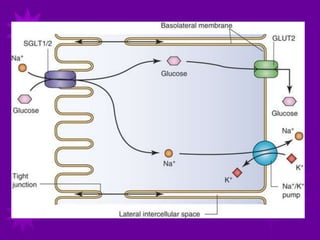
   GLUT 2     Liver, beta cells,       Carrier for glucose and
              hypothalamus,            fructose in liver and
              Baso-lateral membrane    intestine
              small intestine.

   GLUT 3      Neurons, placenta,      Basal glucose uptake
              testes, brain

   GLUT 4     Skeletal and cardiac     Activity increased by
              muscle, fat              insulin

   GLUT 5     Mucosal surface in small Involved in fructose
              intestine, sperm, kidneys transport
Regulation of Glucose Transport
• Glucose enters cells by facilitated diffusion.
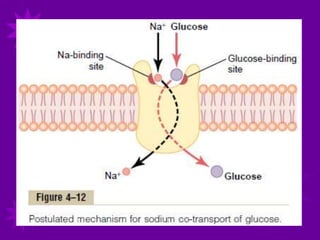
• GLUT transporters are thought to be involved
  in Na+-independent facilitated diffusion of
  glucose (co-transport system) into cells.
• Insulin stimulates glucose transport by
  promoting translocation of intracellular vesicles
  that contain the GLUT4 and GLUT1 glucose
  transporters to the plasma membrane.
• This effect is reversible.
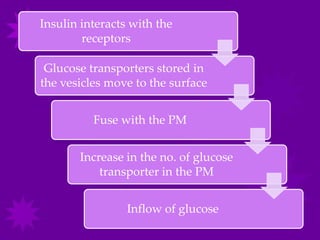
Insulin interacts with the
        receptors

 Glucose transporters stored in
the vesicles move to the surface


          Fuse with the PM


       Increase in the no. of glucose
           transporter in the PM


                 Inflow of glucose
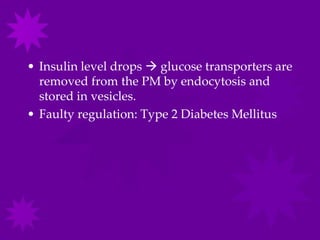
• Insulin level drops  glucose transporters are
  removed from the PM by endocytosis and
  stored in vesicles.
• Faulty regulation: Type 2 Diabetes Mellitus
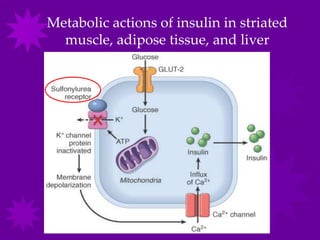
Metabolic actions of insulin in striated
  muscle, adipose tissue, and liver
THANK
 YOU!

Glucose transport

  • 1.
    GLUCOSE TRANSPORT Presenter: Robin Gulati
  • 2.
    Contents • Introduction • Glucosetransporters • Regulation of glucose transport
  • 3.
    Intro • Concentration-driven transport •Five proteins with a high degree of homology are involved: GLUT Family • Special physiological functions and tissue distribution. • Transport proteins mediate facilitated transport only, that is, they can only transport glucose (or fructose) from areas of high concentration to areas of lower concentration.
  • 4.
    Sugar is boundby the protein A flip-flop mechanism reverses the membrane direction of the sugar- protein complex Sugar is released and the protein flips around once more to initiate a new cycle
  • 5.
    • In mosttissues the internal glucose concentration is quite low; transport can only proceed from the extracellular area into the cell. • In gluconeogenetic tissues (liver and kidney), intracellular glucose concentration can exceed blood glucose concentration in the post-absorptive or fasting states.
  • 6.
    Glucose transporters • Glucosetransporters are integral membrane glycoproteins with molecular masses of about 50,000 daltons, and each has 12 membrane- spanning α-helical domains. • Transporter exposes a single substrate binding site toward either the outside or the inside of the cell. • Binding of glucose to one site provokes a conformational change associated with transport, and releases glucose to the other side of the membrane.
  • 7.
    Transporter Tissue Special distribution properties GLUT 1 Most cell Helps in basal glucose uptake GLUT 2 Liver, beta cells, Carrier for glucose and hypothalamus, fructose in liver and Baso-lateral membrane intestine small intestine. GLUT 3 Neurons, placenta, Basal glucose uptake testes, brain GLUT 4 Skeletal and cardiac Activity increased by muscle, fat insulin GLUT 5 Mucosal surface in small Involved in fructose intestine, sperm, kidneys transport
  • 8.
    Regulation of GlucoseTransport • Glucose enters cells by facilitated diffusion. • GLUT transporters are thought to be involved in Na+-independent facilitated diffusion of glucose (co-transport system) into cells. • Insulin stimulates glucose transport by promoting translocation of intracellular vesicles that contain the GLUT4 and GLUT1 glucose transporters to the plasma membrane. • This effect is reversible.
  • 9.
    Insulin interacts withthe receptors Glucose transporters stored in the vesicles move to the surface Fuse with the PM Increase in the no. of glucose transporter in the PM Inflow of glucose
  • 10.
    • Insulin leveldrops  glucose transporters are removed from the PM by endocytosis and stored in vesicles. • Faulty regulation: Type 2 Diabetes Mellitus
  • 13.
    Metabolic actions ofinsulin in striated muscle, adipose tissue, and liver
  • 15.