
Lysosomes
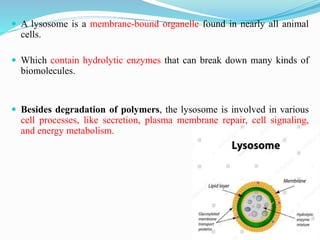
 A lysosome is a membrane-bound organelle found in nearly all animal
cells.
 Which contain hydrolytic enzymes that can break down many kinds of
biomolecules.
 Besides degradation of polymers, the lysosome is involved in various
cell processes, like secretion, plasma membrane repair, cell signaling,
and energy metabolism.
 The size of lysosomes varies from 0.1 μm to 1.2 μm.
 With a pH ranging from 4.5 to 5.0, the interior of the lysosomes
is acidic compared to the slightly basic cytosol (pH 7.2).
 Lysosome contains at least 50 different hydrolytic enzymes.
 Mutations in the genes that encode these enzymes are responsible
for more than 30 different human genetic diseases, which are called
lysosomal storage diseases.
 For example, Gaucher disease results from a mutation in the gene
that encodes a lysosomal enzyme required for the breakdown of
glycolipids.

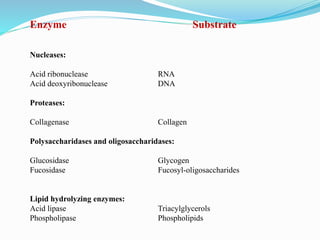
Enzyme Substrate
Nucleases:
Acid ribonuclease RNA
Acid deoxyribonuclease DNA
Proteases:
Collagenase Collagen
Polysaccharidases and oligosaccharidases:
Glucosidase Glycogen
Fucosidase Fucosyl-oligosaccharides
Lipid hydrolyzing enzymes:
Acid lipase Triacylglycerols
Phospholipase Phospholipids
Formation of Lysosomes:
 Lysosomes tiny vesicles that separate, or "buded", from the ends
of the Golgi body (Trans Glogi).
 Vesicles formed in this way that contain enzymes such as
proteases, nucleases and lipases etc are called primary lysosomes.
 Secondary lysosomes are formed when primary lysosomes fusion
with other membrane-bound vesicles (eg. Phagosomes).
Phagocytosis :
 In phagocytosis, specialized cells, such as macrophages, take up and
degrade large particles, like bacteria, cell debris, and aged cells.
 Such large particles are taken up in phagosomes, which then fuse
with lysosomes and form phagolysosome, resulting in digestion of
their contents.
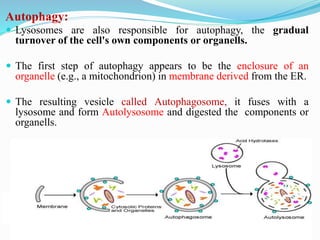
Autophagy:
 Lysosomes are also responsible for autophagy, the gradual
turnover of the cell's own components or organells.
 The first step of autophagy appears to be the enclosure of an
organelle (e.g., a mitochondrion) in membrane derived from the ER.
 The resulting vesicle called Autophagosome, it fuses with a
lysosome and form Autolysosome and digested the components or
organells.
How many lysosomes are present in a typical cell ?
 Many human cells contain hundreds of lysosomes while phagocytic
cells often contain thousands of lysosomes.
 Erythrocytes (red blood cells) do not contain any lysosomes.
 Lysosomes are particularly abundant in secretory cells e.g.
epithelial cells and in the kidneys..
Lysosomes

Lysosomes

  • 1.
  • 2.
     A lysosomeis a membrane-bound organelle found in nearly all animal cells.  Which contain hydrolytic enzymes that can break down many kinds of biomolecules.  Besides degradation of polymers, the lysosome is involved in various cell processes, like secretion, plasma membrane repair, cell signaling, and energy metabolism.
  • 3.
     The sizeof lysosomes varies from 0.1 μm to 1.2 μm.  With a pH ranging from 4.5 to 5.0, the interior of the lysosomes is acidic compared to the slightly basic cytosol (pH 7.2).
  • 4.
     Lysosome containsat least 50 different hydrolytic enzymes.  Mutations in the genes that encode these enzymes are responsible for more than 30 different human genetic diseases, which are called lysosomal storage diseases.  For example, Gaucher disease results from a mutation in the gene that encodes a lysosomal enzyme required for the breakdown of glycolipids. 
  • 5.
    Enzyme Substrate Nucleases: Acid ribonucleaseRNA Acid deoxyribonuclease DNA Proteases: Collagenase Collagen Polysaccharidases and oligosaccharidases: Glucosidase Glycogen Fucosidase Fucosyl-oligosaccharides Lipid hydrolyzing enzymes: Acid lipase Triacylglycerols Phospholipase Phospholipids
  • 6.
    Formation of Lysosomes: Lysosomes tiny vesicles that separate, or "buded", from the ends of the Golgi body (Trans Glogi).  Vesicles formed in this way that contain enzymes such as proteases, nucleases and lipases etc are called primary lysosomes.  Secondary lysosomes are formed when primary lysosomes fusion with other membrane-bound vesicles (eg. Phagosomes).
  • 7.
    Phagocytosis :  Inphagocytosis, specialized cells, such as macrophages, take up and degrade large particles, like bacteria, cell debris, and aged cells.  Such large particles are taken up in phagosomes, which then fuse with lysosomes and form phagolysosome, resulting in digestion of their contents.
  • 8.
    Autophagy:  Lysosomes arealso responsible for autophagy, the gradual turnover of the cell's own components or organells.  The first step of autophagy appears to be the enclosure of an organelle (e.g., a mitochondrion) in membrane derived from the ER.  The resulting vesicle called Autophagosome, it fuses with a lysosome and form Autolysosome and digested the components or organells.
  • 9.
    How many lysosomesare present in a typical cell ?  Many human cells contain hundreds of lysosomes while phagocytic cells often contain thousands of lysosomes.  Erythrocytes (red blood cells) do not contain any lysosomes.  Lysosomes are particularly abundant in secretory cells e.g. epithelial cells and in the kidneys..