
100’s of free ppt’s from  www.pptpoint.com  library
actin and myosin dr shabeel pn www.hi-dentfinishingschool.blogspot.com
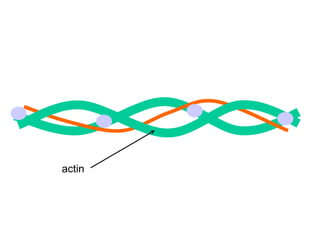
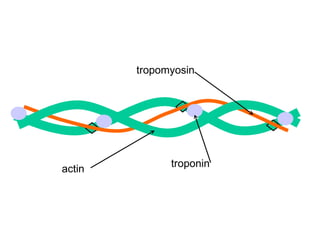
actin
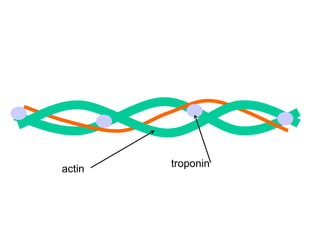
actin troponin
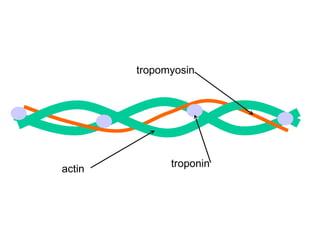
actin troponin tropomyosin
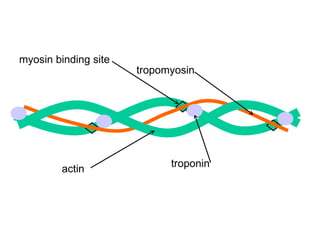
actin troponin tropomyosin myosin binding site
 
Ca 2+ Ca 2+ Ca 2+ Ca 2+
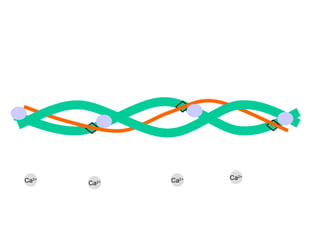
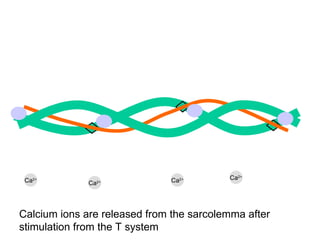
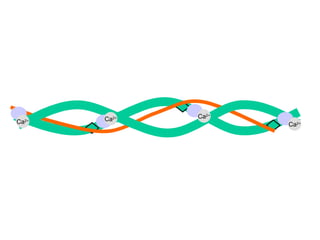
Ca 2+ Ca 2+ Ca 2+ Ca 2+ Calcium ions are released from the sarcolemma after stimulation from the T system
Ca 2+ Ca 2+ Ca 2+ Ca 2+
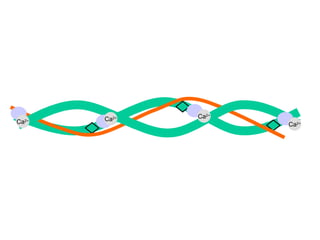
Ca 2+ Ca 2+ Ca 2+ Ca 2+ the calcium ions bind to the troponin and changes its shape
Ca 2+ Ca 2+ Ca 2+ Ca 2+
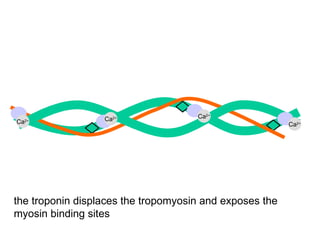
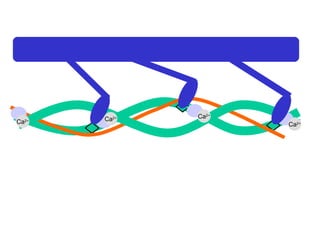
Ca 2+ Ca 2+ Ca 2+ Ca 2+ the troponin displaces the tropomyosin and exposes the myosin binding sites
Ca 2+ Ca 2+ Ca 2+ Ca 2+
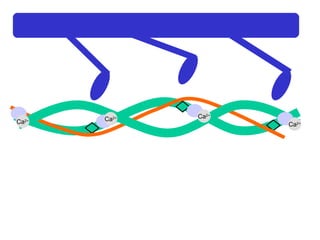
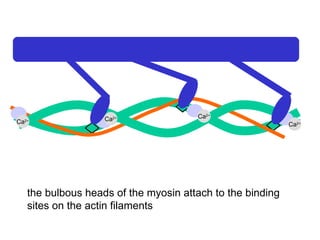
Ca 2+ Ca 2+ Ca 2+ Ca 2+ the bulbous heads of the myosin attach to the binding sites on the actin filaments
Ca 2+ Ca 2+ Ca 2+ Ca 2+
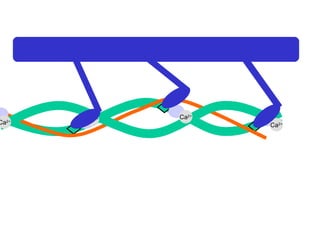
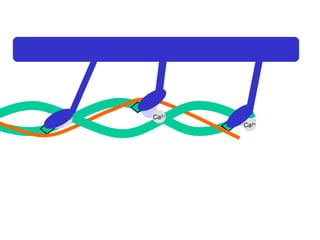
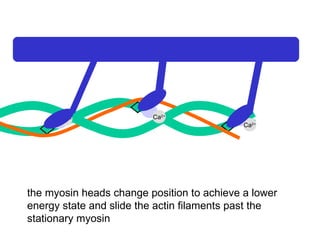
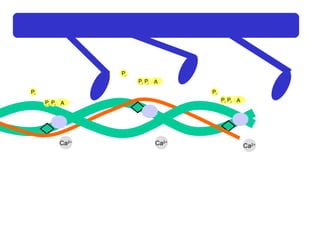
Ca 2+ Ca 2+ Ca 2+ Ca 2+ the myosin heads change position to achieve a lower energy state and slide the actin filaments past the stationary myosin
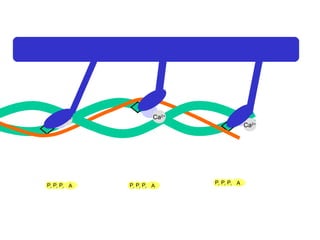
Ca 2+ Ca 2+ Ca 2+ Ca 2+ A P i P i P i A P i P i P i A P i P i P i
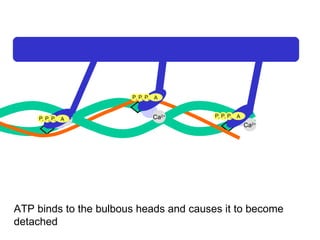
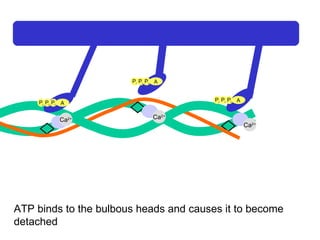
Ca 2+ Ca 2+ Ca 2+ Ca 2+ ATP binds to the bulbous heads and causes it to become detached A P i P i P i A P i P i P i A P i P i P i
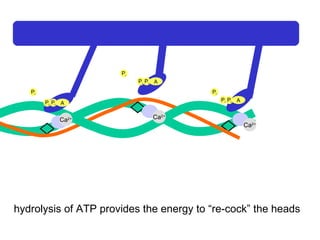
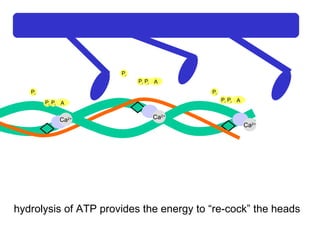
Ca 2+ Ca 2+ Ca 2+ Ca 2+ A P i P i P i A P i P i P i A P i P i P i hydrolysis of ATP provides the energy to “re-cock” the heads
Ca 2+ Ca 2+ Ca 2+ Ca 2+ A P i P i P i A P i P i P i A P i P i P i
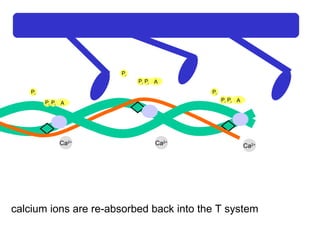
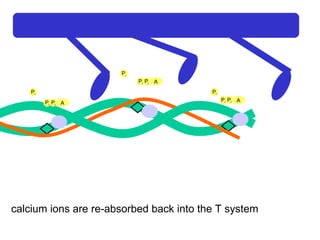
Ca 2+ Ca 2+ Ca 2+ Ca 2+ A P i P i P i A P i P i P i A P i P i P i calcium ions are re-absorbed back into the T system
Ca 2+ A P i P i P i A P i P i P i A P i P i P i calcium ions are re-absorbed back into the T system
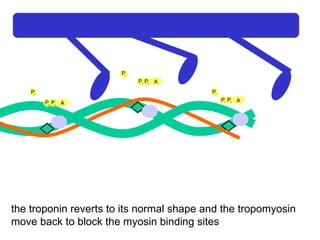
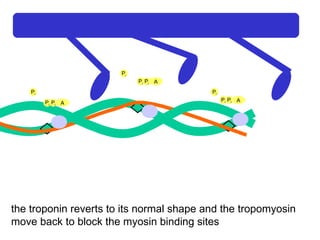
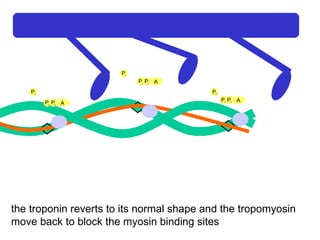
Ca 2+ A P i P i P i A P i P i P i A P i P i P i the troponin reverts to its normal shape and the tropomyosin move back to block the myosin binding sites
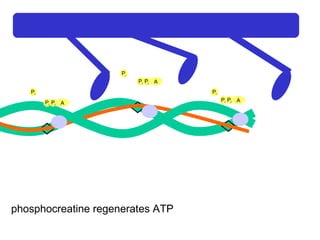
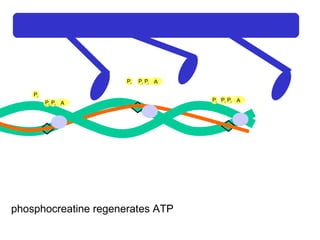
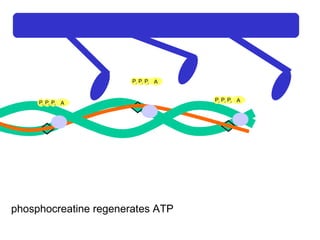
Ca 2+ A P i P i P i A P i P i P i A P i P i P i phosphocreatine regenerates ATP

Actin and myosin

  • 1.
    100’s of freeppt’s from www.pptpoint.com library
  • 2.
    actin and myosindr shabeel pn www.hi-dentfinishingschool.blogspot.com
  • 3.
  • 4.
  • 5.
  • 6.
  • 7.
    actin troponin tropomyosinmyosin binding site
  • 8.
  • 9.
    Ca 2+ Ca2+ Ca 2+ Ca 2+
  • 10.
    Ca 2+ Ca2+ Ca 2+ Ca 2+ Calcium ions are released from the sarcolemma after stimulation from the T system
  • 11.
    Ca 2+ Ca2+ Ca 2+ Ca 2+
  • 12.
    Ca 2+ Ca2+ Ca 2+ Ca 2+ the calcium ions bind to the troponin and changes its shape
  • 13.
    Ca 2+ Ca2+ Ca 2+ Ca 2+ the calcium ions bind to the troponin and changes its shape
  • 14.
    Ca 2+ Ca2+ Ca 2+ Ca 2+
  • 15.
    Ca 2+ Ca2+ Ca 2+ Ca 2+
  • 16.
    Ca 2+ Ca2+ Ca 2+ Ca 2+ the troponin displaces the tropomyosin and exposes the myosin binding sites
  • 17.
    Ca 2+ Ca2+ Ca 2+ Ca 2+
  • 18.
    Ca 2+ Ca2+ Ca 2+ Ca 2+
  • 19.
    Ca 2+ Ca2+ Ca 2+ Ca 2+ the bulbous heads of the myosin attach to the binding sites on the actin filaments
  • 20.
    Ca 2+ Ca2+ Ca 2+ Ca 2+
  • 21.
    Ca 2+ Ca2+ Ca 2+ Ca 2+
  • 22.
    Ca 2+ Ca2+ Ca 2+ Ca 2+ the myosin heads change position to achieve a lower energy state and slide the actin filaments past the stationary myosin
  • 23.
    Ca 2+ Ca2+ Ca 2+ Ca 2+ A P i P i P i A P i P i P i A P i P i P i
  • 24.
    Ca 2+ Ca2+ Ca 2+ Ca 2+ A P i P i P i A P i P i P i A P i P i P i
  • 25.
    Ca 2+ Ca2+ Ca 2+ Ca 2+ ATP binds to the bulbous heads and causes it to become detached A P i P i P i A P i P i P i A P i P i P i
  • 26.
    Ca 2+ Ca2+ Ca 2+ Ca 2+ ATP binds to the bulbous heads and causes it to become detached A P i P i P i A P i P i P i A P i P i P i
  • 27.
    Ca 2+ Ca2+ Ca 2+ Ca 2+ A P i P i P i A P i P i P i A P i P i P i hydrolysis of ATP provides the energy to “re-cock” the heads
  • 28.
    Ca 2+ Ca2+ Ca 2+ Ca 2+ A P i P i P i A P i P i P i A P i P i P i hydrolysis of ATP provides the energy to “re-cock” the heads
  • 29.
    Ca 2+ Ca2+ Ca 2+ Ca 2+ A P i P i P i A P i P i P i A P i P i P i
  • 30.
    Ca 2+ Ca2+ Ca 2+ Ca 2+ A P i P i P i A P i P i P i A P i P i P i calcium ions are re-absorbed back into the T system
  • 31.
    Ca 2+ AP i P i P i A P i P i P i A P i P i P i calcium ions are re-absorbed back into the T system
  • 32.
    Ca 2+ AP i P i P i A P i P i P i A P i P i P i the troponin reverts to its normal shape and the tropomyosin move back to block the myosin binding sites
  • 33.
    Ca 2+ AP i P i P i A P i P i P i A P i P i P i the troponin reverts to its normal shape and the tropomyosin move back to block the myosin binding sites
  • 34.
    Ca 2+ AP i P i P i A P i P i P i A P i P i P i the troponin reverts to its normal shape and the tropomyosin move back to block the myosin binding sites
  • 35.
    Ca 2+ AP i P i P i A P i P i P i A P i P i P i phosphocreatine regenerates ATP
  • 36.
    Ca 2+ AP i P i P i A P i P i P i A P i P i P i phosphocreatine regenerates ATP
  • 37.
    Ca 2+ AP i P i P i A P i P i P i A P i P i P i phosphocreatine regenerates ATP