ANIMAL & INSECT BITES James Taclin C. Banez, MD, FPCS, FPSGS, DPBS, DPSA
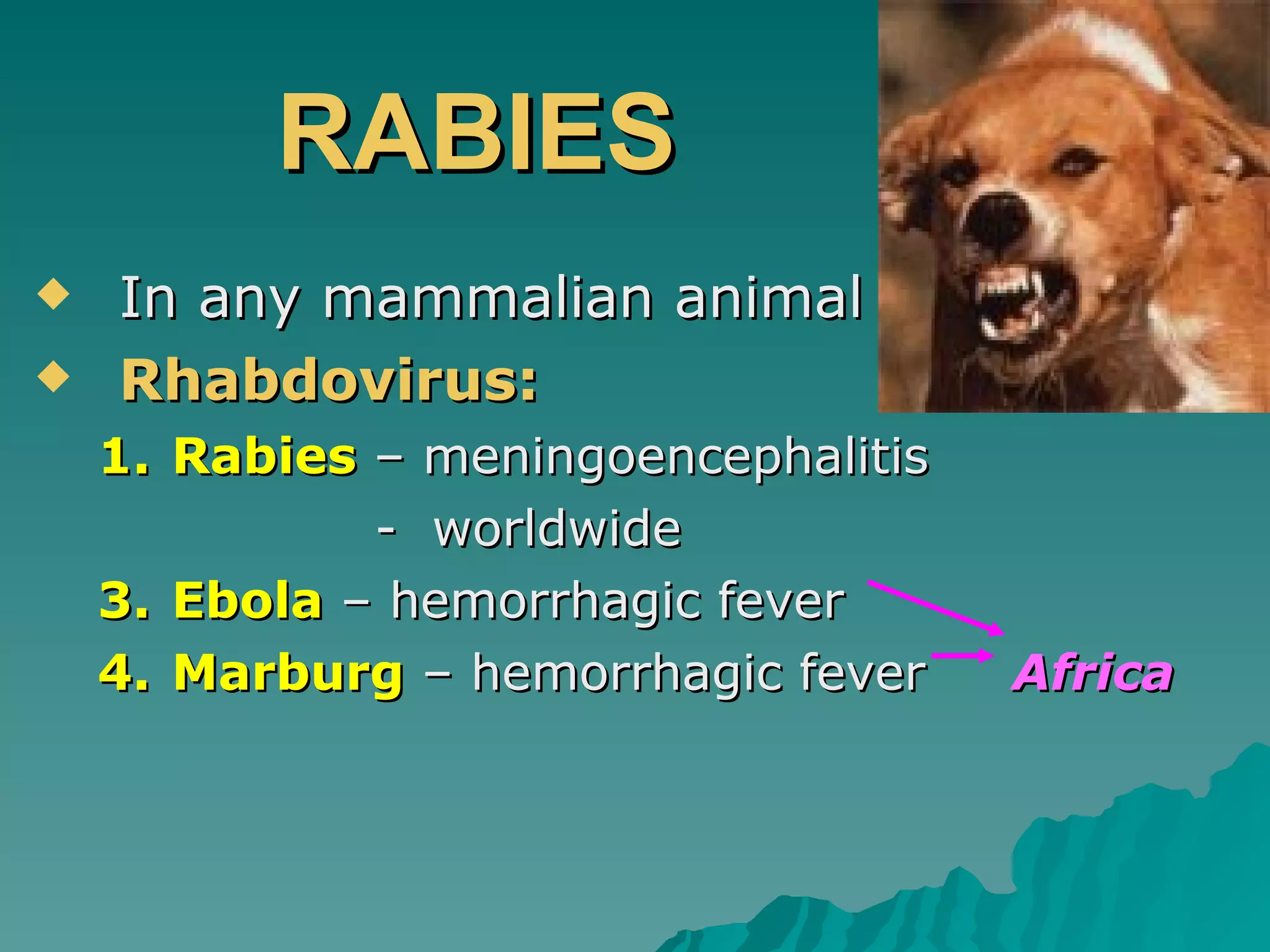
RABIES In any mammalian animal Rhabdovirus: Rabies  – meningoencephalitis    -  worldwide Ebola   – hemorrhagic fever Marburg  – hemorrhagic fever  Africa
RABIES Developed countries ---> raccoons,    skunks, bats, etc Developing and under developed Dogs (90%-Phil.) Cats, cattle, horse, sheep, bats and exotic animals (5-10%) Small rodents, birds and reptiles does not serve as reservoir of infection
Epidemiology (Rabies) Incidence rate:  5–7/million Average cases: 450 annually (Phil.) Philippine is 3 rd  worldwide San Lazaro Hospital: Pet dogs – 88% of cases Stray dogs – 10% of cases Cats – 2% of cases
Prevention Avoidance of said animals Vaccination of pets (dogs, cats) Exotic animals: Quarantine for 90 days then vaccinate after another 30 days Pet bitten by rabid animals: No previous vaccine ---> isolate for 6 months, vaccinate 1 month---->release w/ vaccine ----> give vaccine again and isolated for 90 days
Transmission Bites of rabid animals Licking of the mucosa or open wound Period of communicability : Dogs & cats =  3-5 days  before the onset of the symptoms until the entire course of the illness.
Transmission Incubation periods (Human): 1 days to 5 yrs.  (average  8wks ) Variations: Severity of the bite Site of bite in relation to nerve supply and distance from CNS Size of innoculum, protection offered by clothing and other factors Age and immune status of the host
Transmission Virus stays in : CNS Liver Salivary gland Travels thru the  nerve Incubation periods: 1 days to 5 yrs. (average 8wks)
Diagnosis Circumstances of bite: Provokes/unprovoked (domestic) Vaccination of dogs ----> 90% effective Wild animal  ----> considered rabid Extent & location of bite: Severe:  multiple or deep puncture wound Head, face, neck hands or fingers Mild: Superficial laceration, scratches Bites on other sites mentioned
Diagnosis Laboratory diagnosis: Pre-mortem (human): Fluorescent microscopy of skin biopsies from nape of the neck. Isolation of virus from saliva and CSF Detection of antibody in serum and CSF in unvaccinated person Postmortem (human): Fluorescent microscopy of brain and salivary gland Animal brain : Histology = negri bodies Demonstration of virus in brain tissue
Natural History of Clinical Rabies  in Man Infected pts. usually go through 4 stages: Exposure: Incubation Period  20-90 days: >95% present s/sx w/in 6 months of exposure >98% w/in 1 yr. First Symptoms  (Prodrome)  2-10 days Virus reaches the spinal cord Nonspecific s/sx: Fever, Anorexia, N/V, Headache, Malaise, lethargy 1 st  rabies specific symptom: Pain , itching or paresthesias at site of bite
Natural History of Clinical Rabies  in Man First Neurological Signs/Acute Neurological Phase:  2-7 days Virus reaches the brain, multiplies and disseminates rapidly to the rest of the body organs notably the salivary glands Pt may die at this stage
Natural History of Clinical Rabies  in Man First Neurological Signs/Acute Neurological Phase:  2-7 days May present in 2 ways: Encephalitic or Furious rabies  (80%): Hyperactive episodes: Combative, presents bizarre behavior, may be very agitated or apprehensive Alternating w/ lucid moments where pt appears well Hydrophobia  – elicited by giving pt glass of water; positive rxn. – agitation, caused by painful contraction of laryngeal muscles upon drinking Aerophobia  – elicited by fanning the pt
Natural History of Clinical Rabies  in Man First Neurological Signs/Acute Neurological Phase:  2-7 days May present in 2 ways: Paralytic or “dumb” rabies  (20%) Starts as paralysis of the bitten area w/c spreads to involve all limbs and eventually ends in respiratory paralysis Most often missed due to absent hydrophobia and aerophobia High index of suspicion who came in w/ paralysis or encephalitis of undetermined etiology. Hx of prior exposure (bite or non-bite)
Natural History of Clinical Rabies  in Man Onset of Coma  0-14d Pituitary dysfunction Hypoventilation, apnea Hypotension Cardiac arrhythmia, cardiac arrest Coma Death: Secondary infection, nutritional deficiency and  respiratory problem
Management   Biting animals: Domestic  =  observe for 10 days Wild = vaccine shd. be given Patients management: Immediate local care: Thorough irrigation w/ copious water/soap Debridement / antibiotic / tetanus toxoid Immediate suturing of wound (not advisable)
Management   Patients management: Immediate local care : Head & neck bites: Healing by secondary intention produces an unacceptable scar. Primary closure has best outcome w/ less risk of infection Severe human bite and avulsion injuries of the face requires flaps to close the wound
Management   Patients management: Immediate local care: Hand Injuries: 1/3 of dog bites in the hand becomes infected even w/ adequate therapy Healing by secondary intention is recommended for most hand laceration. All tendons and nerve injuries should be managed by delayed repair After thorough exploration, irrigation and debridement, the hand shd. be immobilized, wrapped in a bulky dressing
Management   Patients management: Immediate local care: Other parts of the body:
Management   Patients management: Prophylaxis: Post-exposure prophylaxis: Incubation period 10 days to 1 year (20-90d) Incubation of <30 days (head & neck, upper extremities)
Management Prophylaxis: Immunization: Passive: Human Rabies Immune Globulin (HRIG) 20 I.U./KgBW Equine Rabies Immune Globulin 40 I.U./KgBW A portion is infiltrated into the wound Given with in 8 days
Management Prophylaxis: Immunization: Active: Human Diploid Cell Vaccine (HDCV) 5 dose IM (1ml) ----> 0, 3 rd , 7 th ,14 th  and 28 th  days   WHO -  90 th  day Booster: HDCV – 2 dose (0 and 3 rd  day) Antibodies levels checked every 6 months
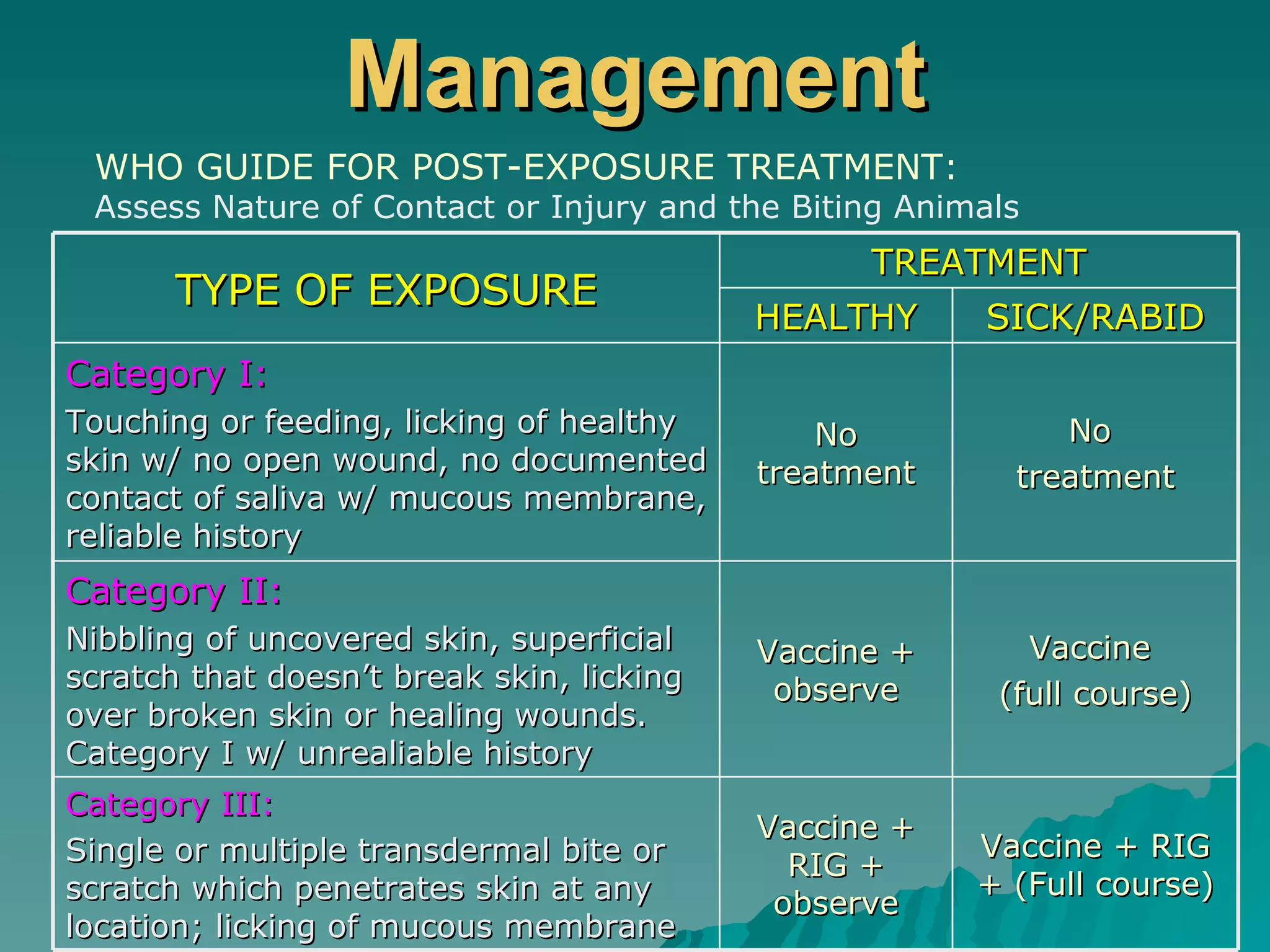
Management WHO GUIDE FOR POST-EXPOSURE TREATMENT: Assess Nature of Contact or Injury and the Biting Animals TYPE OF EXPOSURE TREATMENT HEALTHY SICK/RABID Category I: Touching or feeding, licking of healthy skin w/ no open wound, no documented contact of saliva w/ mucous membrane, reliable history No treatment No  treatment Category II: Nibbling of uncovered skin, superficial scratch that doesn’t break skin, licking over broken skin or healing wounds. Category I w/ unrealiable history Vaccine + observe Vaccine  (full course) Category III: Single or multiple transdermal bite or scratch which penetrates skin at any location; licking of mucous membrane Vaccine + RIG + observe Vaccine + RIG + (Full course)
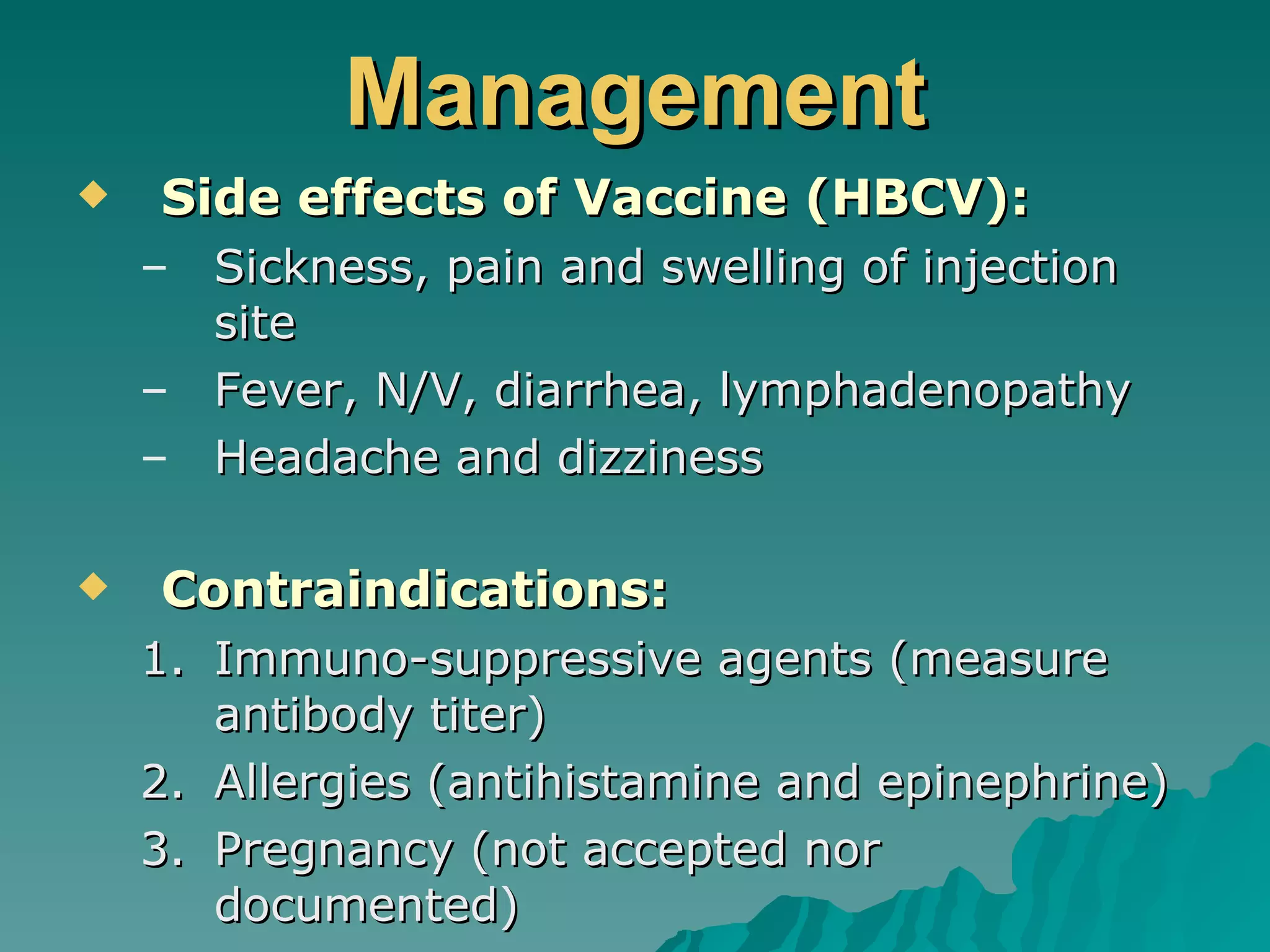
Management Side effects of Vaccine (HBCV): Sickness, pain and swelling of injection site Fever, N/V, diarrhea, lymphadenopathy Headache and dizziness Contraindications: Immuno-suppressive agents (measure antibody titer) Allergies (antihistamine and epinephrine) Pregnancy (not accepted nor documented)
Management Treatment for symptomatic patients: Supportive: Sedation Respiratory support Management heart arrhythmia and seizures Nursing care INTERFERON  (not effective)
SNAKE BITE
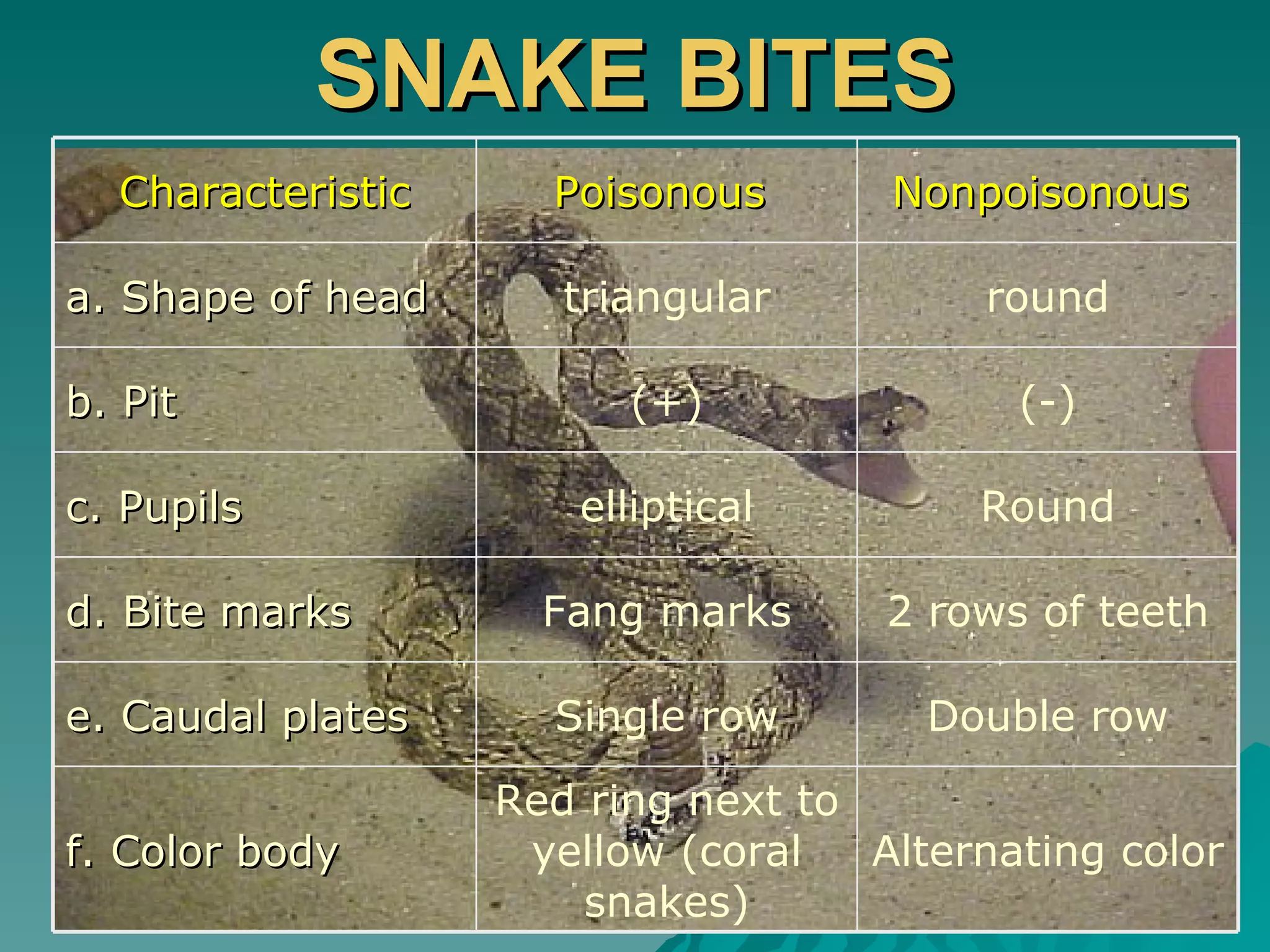
SNAKE BITES Characteristic Poisonous  Nonpoisonous  a. Shape of head  triangular round b. Pit (+) (-) c. Pupils elliptical Round d. Bite marks Fang marks 2 rows of teeth e. Caudal plates Single row Double row f. Color body Red ring next to yellow (coral snakes) Alternating color
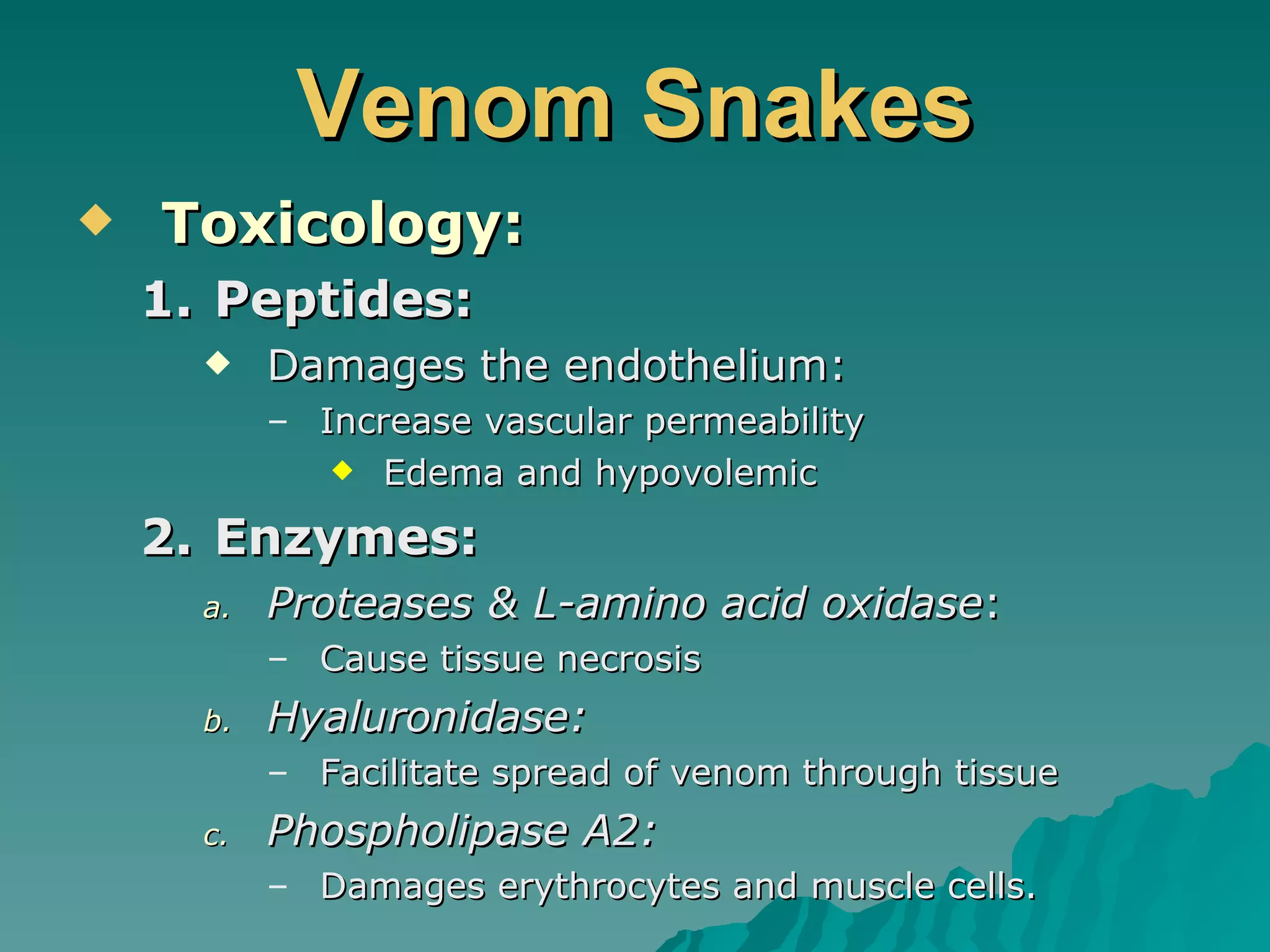
Venom Snakes Toxicology: Peptides: Damages the endothelium: Increase vascular permeability Edema and hypovolemic  Enzymes: Proteases & L-amino acid oxidase : Cause tissue necrosis Hyaluronidase: Facilitate spread of venom through tissue Phospholipase A2: Damages erythrocytes and muscle cells.
Venom Snakes Neurotoxin: Blocks neuromuscular junction Others: Endonuclease, alkaline and acid phosphatase, cholinesterase Other deleterious effect: Affects cardiovascular, pulmonary, renal and neurologic systems Affects coagulation, fibrinolysis, platelet function and vascular integrity causing hemorrhagic or thrombotic sequelae
Clinical Manifestations Local: 20% of pit vipers do not cause envenomation Venom causes burning pain w/in minutes, followed by edema and erythema ----> edema progresses over the next few hrs w/ development of ecchymoses and hemorrhagic bullae
Clinical Manifestations Systemic: Pt usually complain of weakness, N/V, perioral paresthesias, metallic taste and fasiculations. Continuing capillary leak leads to  hypotension   --->  shock, pulmonary edema Coagulopathy  can develop w/in an hour and manifest: Bleeding (gingiva, bite site, venipuncture site and recent wounds Leads to DIC (disseminated intravascular coagulopathy)
Clinical Manifestations Systemic: Acute renal failure   due to: Direct nephrotoxin Circulatory collapse Consumption coagulopathy Neurotoxic venom (black mamba/coral snake/sea snake): Local injury is minimal or absent Cranial nerve dysfunction and loss of deep tendon reflexes  Progress to respiratory depression and paralysis after several hours.
Laboratory Examination CBC DIC panel Serum electrolyte BUN, Creatinine Urinalysis ECG
Management Field Therapy: Calm the pt.  / cleansed / immobilized below the level of the heart. Tourniquet , to occlude the vein; removed when:  as soon as IVF is started Antivenom is ready for administration Patient is not in shock
Management Field Therapy: Incision & Suction: Effective if done w/in 5 mins and continued for at least 30 minutes. If done > 5mins ----> loss 50% 0f it’s value If delayed > 30mins ----> loss 100% value Excision of the bite wound: In severe bites Pt allergic to horse serum Those pt. seen w/in 1 hr. following the bit Cryotherapy  – not recommended
Management Hospital Management: History: Hx. Of incident Type of snake Field management and prior antivenin tx. PE: Vital signs Size and wound appearance (degree of envenomation / neurological examination for coral snake)
Management Hospital Management: Wound care: Cleansed thoroughly and extremity splinted Debridement if necessary Tetanus toxoid and tetanus immune globulin Broad spectrum antibiotic (3-5days) Fasciotomy: Done only if compartment pressure are over 30mmhg. Routine fasciotomies to prevent compartment syndrome have not proved to be beneficial.
Management Hospital Management: Degree of Envenomation: Grade 0:  No envenomation Minimal pain in wound, <1 inch of edema & erythema, no systemic symptoms Grade I:   Minimal Moderate to severe pain 1-5inches edema & erythema at 12hrs. No systemic symptoms
Management Hospital Management: Degree of Envenomation: Grade II:  Moderate Severe pain 6-12inches of edema & erythema at 12hrs. N/V, shock or neurotoxic symptoms Grade III:   Severe Severe pain, >12 inches edema/erythema at 12hrs Grade II plus generalized petechia and ecchymosis
Management Hospital Management: Degree of Envenomation: Grade IV:  Very Severe Renal failure/blood tinged secretions Coma and death Local edema extend beyond involved extremity
Antivenin Therapy Most important tx Horse serum;  skin testing  (0.02ml of 1:10 dilution of antivenum w/ 0.9% NaCl intradermally). (+) allergy ----> premedication w/  diphenhydramine HCL  25-50ug IV and an epinephrine drip (2-20ug/min) during antivenin administration.
Antivenin Therapy Antivenin dose depends on the severity of envenomation and administered over 2-4hrs. Grade I = No antivenin Grade II = 3-4 amp. in 500ml NSS Grade III = 5-15amp. in 500ml NSS Pt re-evaluated every  2hrs  and if necessary a repeat dose of ativenin shld be evaluated and given.
Antivenin Therapy Children: antivenin be increased by 50% bec. of higher rate of venom to body mass. Pregnancy is not contraindicated  Antivenin for coral snake bite should be initiated even if envenomation is only suspected for there are frequently no local manifestation
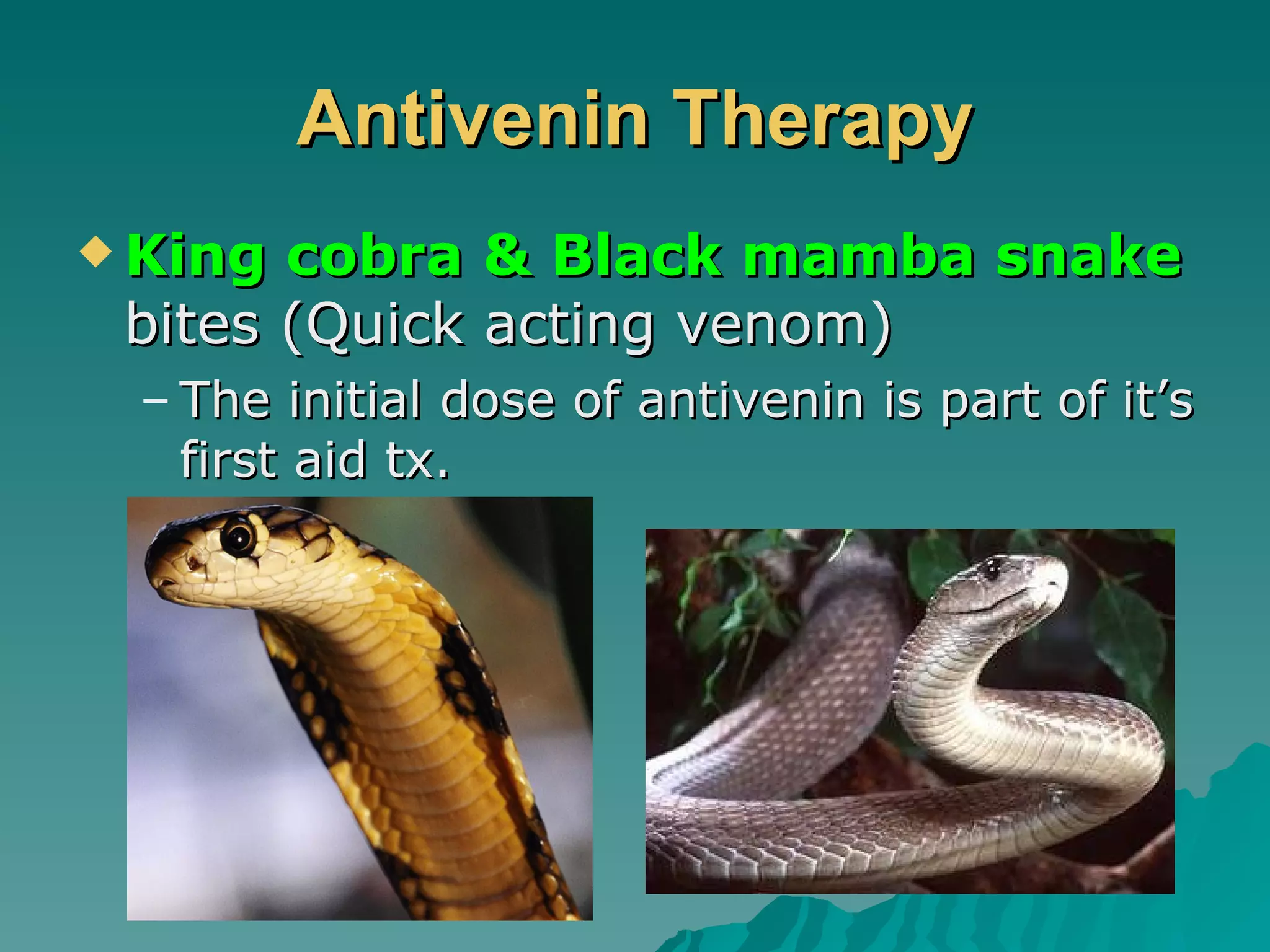
Antivenin Therapy King cobra & Black mamba snake  bites (Quick acting venom) The initial dose of antivenin is part of it’s first aid tx.
Other form of Management Need for respirator ---> for respiratory failure Dialysis ----> for renal failure CNS Decompression Transfusion of blood and its derivatives Nutrition
ARTHROPOD  BITE
Hymenoptera BEES  (Honeybee/bumble bee/ black hornet),   Venom: drop by drop similar to rattle snake Bees has a barb-shaped stinger  Venom: H istamine/serotonin  (local rxn & pain) Causes tissue necrosis Phospholipase/hyaluronidase  Destroy collagen Allergen – can elicit IgE mediated response
Manifestation Local rxn: Sting produced localize pain,  wheal --> pustule 20% produced large local rxn as erythematous, edematous, painful and pruritic areas larger than 10cm. For 2-5 days Represents combination of IgE mediated, cell mediated
Manifestation Systemic rxn: Multiple stings can produced toxic rxns. Vomiting, diarrhea, generalized edema Cardiovascular collapse  Hemolysis 3% causes death due to anaphylaxis w/in 1 hr. Starts as urticaria ---->  angioedema ,  respiratory arrest  2 nd  to airway edema and cardiovascular collapse
Treatment Local therapy: Removal of sting (gentle scraping) Clean the site Pain:  - apply ice - vinegar - topical or injected lidocaine Pruritus: - antihistamine Larger area: – elevate the site   - analgesia   - prednisone (1mg/k/day)
Treatment Systemic therapy: Mild anaphylaxis : 0.3 ml of 1:1000 epinephrine subQ (children – 0.01ml/kg) Oral or IV antihistamine Severe anaphylaxis: IVF   - endotracheal intubation Vasopressor  - steroid  Bronchodilator  - ICU monitoring
Spiders Lactrodectus spiders   (Black Widow) Worldwide female: black color w/ a distinctive red ventral marking w/ hourglass shape Nocturnal spider; bites defensively Has  neurotoxic venom Act at presynaptic terminal Enhance neurotransmitter release Acetylcholine  = neuromuscular junction (muscle spasm) Norepinephrine   = produces adrenergic stimulation
Spiders Lactrodectus spiders  ( Black Widow) Manifestation: Erythema & pain at bite site Neuromuscular symptoms (30mins) Severe pain & spasm of large muscle grp Abdominal cramps (like acute abd) Dyspnea (chest tightness) Adrenergic stimulation: HPN / diaphoresis / tachycardia Fasciculation / Nausea/vomiting Headache / paresthesia / fatigue / salivation Acute symptoms peak several hours & resolve in 1-2 days Death unusual
Spiders Lactrodectus spiders   (Black Widow) Treatment: Mild envenomation Local wound care: Clean the site Apply ice – to alleviate pain tetanus prophylaxis Severe envenomation IV  calcium gluconate  (transient effect) Narcotic & benzodiazepine  -  relieve muscle pain Antivenin (horse serum) – reserve for severe envenomation due to anaphylaxis & serum sickness (side effect)
Spiders Lactrodectus spiders   (Black Widow) Treatment: Severe envenomation Antivenum is recommended: Pregnant women Children under 16 yrs Patients w/ severe reaction: Uncontrolled HPN Respiratory distress Seizures Skin testing = if (+) shd. Receive pretx w/ diphenhydramine. Recommended antivenin dose = 1 vial, repeated as necessary
Spiders Brown Recluse   (loxosceles): Necrotic arachnidism / loxoscelism North & South America, Africa & Europe Char. = dark brown  violin shape   marking over the cephalothorax Has 3 pairs of eye Both male & female bites when threatened
Spiders Brown Recluse   (loxosceles): Toxicology: Sphingomyelinase  (phospholipase) Dermonecrotic factor Destroy cell membrane or RBC ---> hemolysis Destroy endothelial cells ---> coagulation Interact w/ platelets ----> platelet    aggregation Necrosis – most severe in fatty areas  (abdomen & thigh)
Spiders Brown Recluse   (loxosceles): Manifestation: Local: Mild irritation to severe necrosis w/ ulceration Ischemia (pain, itching, swelling & erythema) ---> blister ----> central area turns purple and peripheral becomes pale due to vasoconstriction ----> necrosis ---> replaced by eschar that separates producing ----> large ulcer that heals w/in 2 months.
Spiders Brown Recluse   (loxosceles): Manifestation: Systemic: N/V, headache, fever, malaise, arthralgia Maculopapular rash Thrombocytopenia / Disseminated intravascular coagulation Hemolytic anemia Coma and rarely death
Spiders Brown Recluse   (loxosceles): Treatment: Bite site elevated Cold compress: Cold can Inhibits venom Decrease inflammation & ulcer formation Dapson  = reduces local inflammation by inhibiting neutrophil function. (100mg/d) Debridement is recommended be done 1-2 wks after the margin are defined Split thickness skin grafting done while dapsone is being continued No antivenin
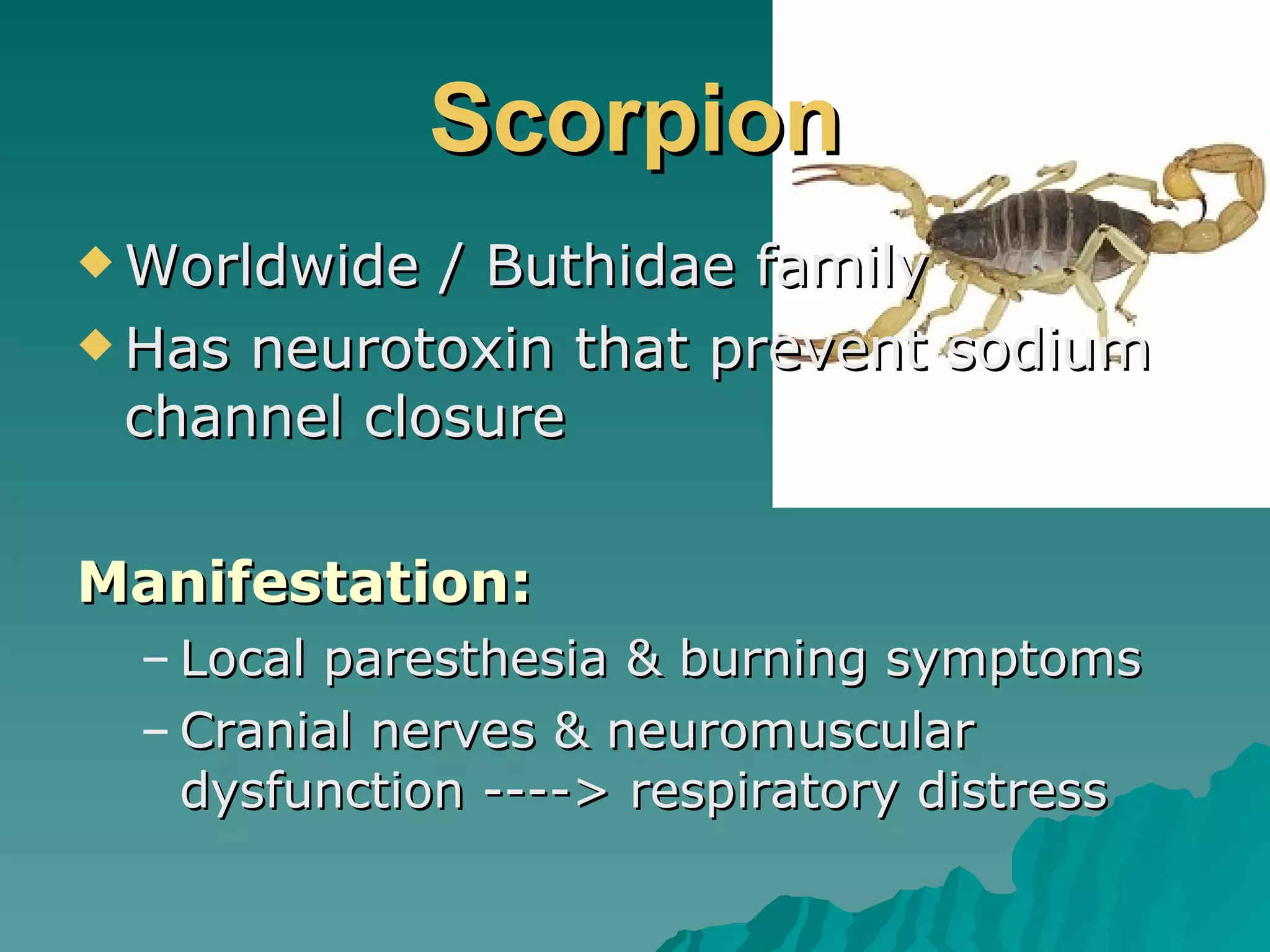
Scorpion Worldwide / Buthidae family Has neurotoxin that prevent sodium channel closure Manifestation: Local paresthesia & burning symptoms Cranial nerves & neuromuscular dysfunction ----> respiratory distress
Scorpion Treatment: Local: Ice pack therapy / analgesic -> for pain Tetanus prophylaxis Systemic: Monitor closely cardiovascular & respiratory status in ICU Antivenin  can reverses cranial nerve & neuromuscular symptoms but can cause anaphylaxis & delayed serum sickness Dose = 1 vial; if sensitive (diphenhydramine)
Marine Trauma & Envenomation Considerations: Hypothermia Drowning Decompression syndrome (air embolism) Follow ABC Bacterial isolates: C/S impt. Gram (-) rods (vibrio sp.) Staph / strep Tetanus vaccine
Marine Trauma & Envenomation Considerations: Antibiotics: 3 rd  generation cephalosphorin Quinolones Gentamicin Trimethoprin-sulfamethoxazole Debridement  = to lower infection & promote healing Wound are loosely closed & drained; primary closure of distal extremity are avoided. Antivenin  if available is given after skin testing
Injuries from Nonvenous Aquatic Animals: SHARK: tiger / great white / bull shark Most injuries are lower extremities Powerful jaws & sharp teeth produces crushing & tearing injuries Causes of death: hypovolemic shock drowning
Injuries from Nonvenous Aquatic Animals: Moray Eels: Residing in holes or crevices at the floor of the sea Bites and produces multiple puncture wounds Hands is the most frequently bitten Alligators / Crocodile Similar to shark bites
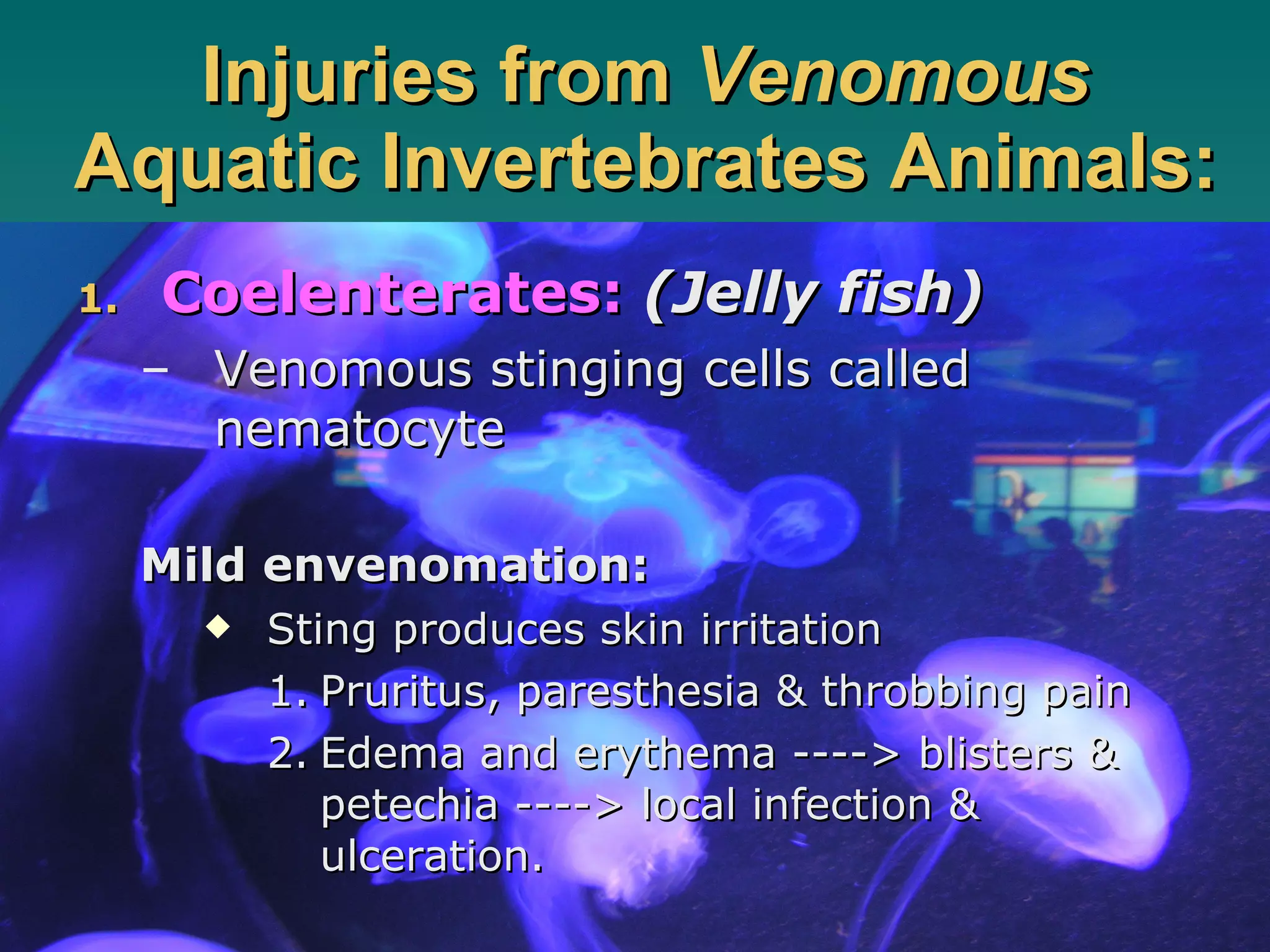
Injuries from  Venomous  Aquatic Invertebrates Animals: Coelenterates:   (Jelly fish) Venomous stinging cells called nematocyte Mild envenomation: Sting produces skin irritation Pruritus, paresthesia & throbbing pain Edema and erythema ----> blisters & petechia ----> local infection & ulceration.
Injuries from Venous Aquatic Invertebrates Animals: Coelenterates:   (Jelly fish) Systemic envenomation: Manifestation of anaphylactic rxn Fever, N/V, body malaise Death due to hypotension and cardio-respiratory arrest.
Injuries from Venous Aquatic Invertebrates Animals: Coelenterates:  (Jelly fish) Treatment: Clean the wound w/ sea water Apply diluted 5%  acetic acid (vinegar) or baking soda;  it can inactivate the toxin; applied for 30 mins or until the pain is relieved After wound irrigation ---> remaining nematocyst are removed by applying shaving cream and shave the area w/ razor Local anesthesia, atihistamine or steroids can relieve pain after the toxin is inactivated. Prophylactic antibiotic are usually unnecessary
Injuries from Venous Aquatic Invertebrates Animals: Echinodermata  ( sea urchins & sea cucumber) Causes contact dermatitis Sea cucumbers feeds on coelenterates and secrete nematocytes hence local therapy for coelenterates shd be done Sea urchins – venomous spines causing local & systemic rxn like coelenterates
Injuries from Venous Aquatic Invertebrates Animals: Echinodermata  ( starfish, sea   urchins & sea cucumber ) Treatment: Soak w/ hot water Spines of the organism located w/ x-ray or MRI and shd be removed Swelling alleviated w/ steroids
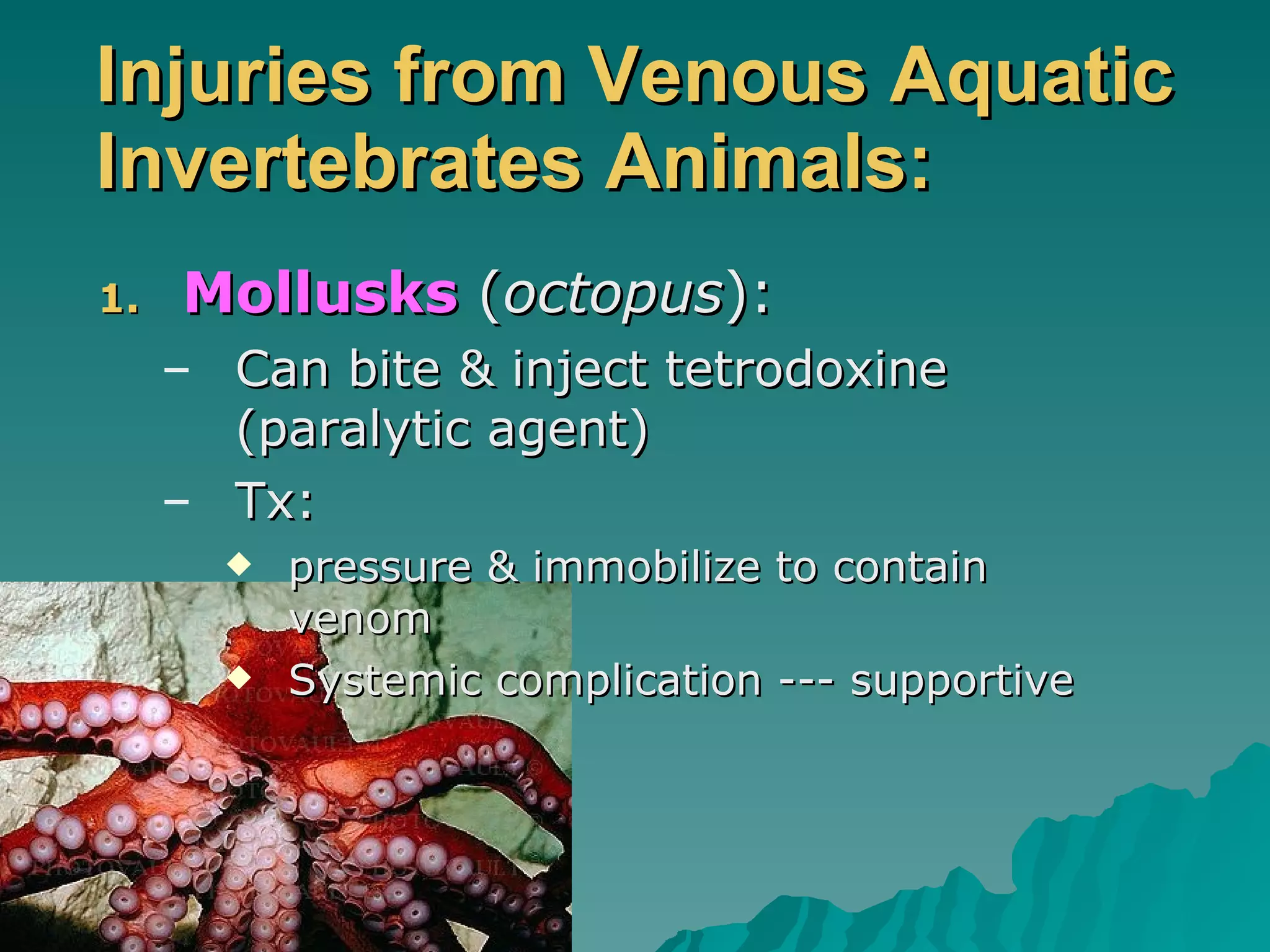
Injuries from Venous Aquatic Invertebrates Animals: Mollusks  ( octopus ): Can bite & inject tetrodoxine (paralytic agent) Tx:  pressure & immobilize to contain venom Systemic complication --- supportive
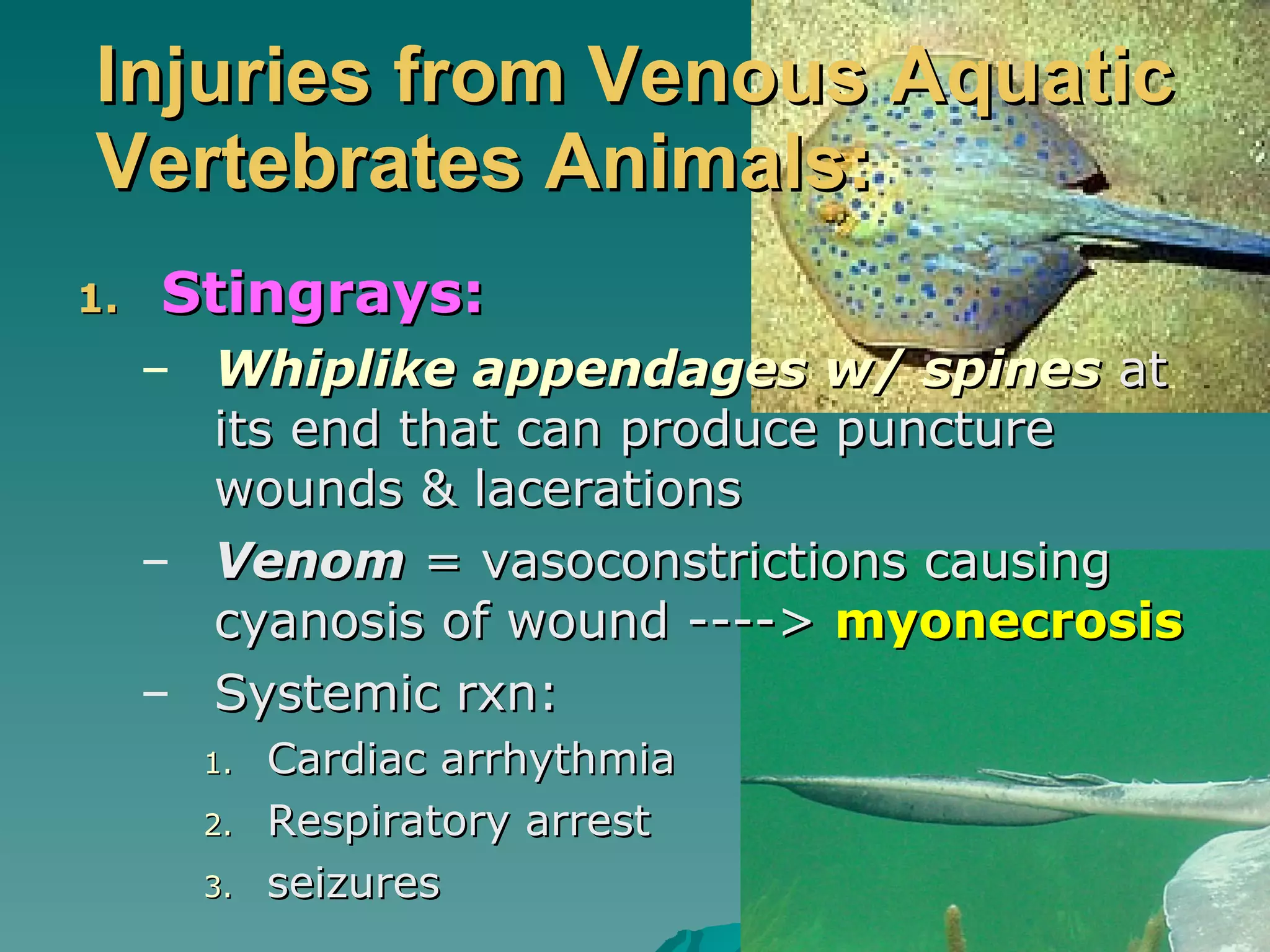
Injuries from Venous Aquatic Vertebrates Animals: Stingrays: Whiplike appendages w/ spines  at its end that can produce puncture wounds & lacerations Venom  = vasoconstrictions causing cyanosis of wound ---->  myonecrosis Systemic rxn: Cardiac arrhythmia Respiratory arrest seizures
Injuries from Venous Aquatic Vertebrates Animals: Stingrays: Treatment: Wound irrigated and soaked w/water for an hour Debridement, exploration and removal of spines Wound is elevated, dressed and not closed primarily Pain relieved locally and systemically
Injuries from Venous Aquatic Vertebrates Animals: Sea Snakes:  ( Hydrophiidae ) neurologic sign and symptoms Death is due to paralysis and resp. arrest Tx similar to coral snake Pressure, immobilize technique Antivenin administration 1 ampule initially then repeated as needed
THANK YOU

Animal And Insect Bites

  • 1.
    ANIMAL & INSECTBITES James Taclin C. Banez, MD, FPCS, FPSGS, DPBS, DPSA
  • 2.
    RABIES In anymammalian animal Rhabdovirus: Rabies – meningoencephalitis - worldwide Ebola – hemorrhagic fever Marburg – hemorrhagic fever Africa
  • 3.
    RABIES Developed countries---> raccoons, skunks, bats, etc Developing and under developed Dogs (90%-Phil.) Cats, cattle, horse, sheep, bats and exotic animals (5-10%) Small rodents, birds and reptiles does not serve as reservoir of infection
  • 4.
    Epidemiology (Rabies) Incidencerate: 5–7/million Average cases: 450 annually (Phil.) Philippine is 3 rd worldwide San Lazaro Hospital: Pet dogs – 88% of cases Stray dogs – 10% of cases Cats – 2% of cases
  • 5.
    Prevention Avoidance ofsaid animals Vaccination of pets (dogs, cats) Exotic animals: Quarantine for 90 days then vaccinate after another 30 days Pet bitten by rabid animals: No previous vaccine ---> isolate for 6 months, vaccinate 1 month---->release w/ vaccine ----> give vaccine again and isolated for 90 days
  • 6.
    Transmission Bites ofrabid animals Licking of the mucosa or open wound Period of communicability : Dogs & cats = 3-5 days before the onset of the symptoms until the entire course of the illness.
  • 7.
    Transmission Incubation periods(Human): 1 days to 5 yrs. (average 8wks ) Variations: Severity of the bite Site of bite in relation to nerve supply and distance from CNS Size of innoculum, protection offered by clothing and other factors Age and immune status of the host
  • 8.
    Transmission Virus staysin : CNS Liver Salivary gland Travels thru the nerve Incubation periods: 1 days to 5 yrs. (average 8wks)
  • 9.
    Diagnosis Circumstances ofbite: Provokes/unprovoked (domestic) Vaccination of dogs ----> 90% effective Wild animal ----> considered rabid Extent & location of bite: Severe: multiple or deep puncture wound Head, face, neck hands or fingers Mild: Superficial laceration, scratches Bites on other sites mentioned
  • 10.
    Diagnosis Laboratory diagnosis:Pre-mortem (human): Fluorescent microscopy of skin biopsies from nape of the neck. Isolation of virus from saliva and CSF Detection of antibody in serum and CSF in unvaccinated person Postmortem (human): Fluorescent microscopy of brain and salivary gland Animal brain : Histology = negri bodies Demonstration of virus in brain tissue
  • 11.
    Natural History ofClinical Rabies in Man Infected pts. usually go through 4 stages: Exposure: Incubation Period 20-90 days: >95% present s/sx w/in 6 months of exposure >98% w/in 1 yr. First Symptoms (Prodrome) 2-10 days Virus reaches the spinal cord Nonspecific s/sx: Fever, Anorexia, N/V, Headache, Malaise, lethargy 1 st rabies specific symptom: Pain , itching or paresthesias at site of bite
  • 12.
    Natural History ofClinical Rabies in Man First Neurological Signs/Acute Neurological Phase: 2-7 days Virus reaches the brain, multiplies and disseminates rapidly to the rest of the body organs notably the salivary glands Pt may die at this stage
  • 13.
    Natural History ofClinical Rabies in Man First Neurological Signs/Acute Neurological Phase: 2-7 days May present in 2 ways: Encephalitic or Furious rabies (80%): Hyperactive episodes: Combative, presents bizarre behavior, may be very agitated or apprehensive Alternating w/ lucid moments where pt appears well Hydrophobia – elicited by giving pt glass of water; positive rxn. – agitation, caused by painful contraction of laryngeal muscles upon drinking Aerophobia – elicited by fanning the pt
  • 14.
    Natural History ofClinical Rabies in Man First Neurological Signs/Acute Neurological Phase: 2-7 days May present in 2 ways: Paralytic or “dumb” rabies (20%) Starts as paralysis of the bitten area w/c spreads to involve all limbs and eventually ends in respiratory paralysis Most often missed due to absent hydrophobia and aerophobia High index of suspicion who came in w/ paralysis or encephalitis of undetermined etiology. Hx of prior exposure (bite or non-bite)
  • 15.
    Natural History ofClinical Rabies in Man Onset of Coma 0-14d Pituitary dysfunction Hypoventilation, apnea Hypotension Cardiac arrhythmia, cardiac arrest Coma Death: Secondary infection, nutritional deficiency and respiratory problem
  • 16.
    Management Biting animals: Domestic = observe for 10 days Wild = vaccine shd. be given Patients management: Immediate local care: Thorough irrigation w/ copious water/soap Debridement / antibiotic / tetanus toxoid Immediate suturing of wound (not advisable)
  • 17.
    Management Patients management: Immediate local care : Head & neck bites: Healing by secondary intention produces an unacceptable scar. Primary closure has best outcome w/ less risk of infection Severe human bite and avulsion injuries of the face requires flaps to close the wound
  • 18.
    Management Patients management: Immediate local care: Hand Injuries: 1/3 of dog bites in the hand becomes infected even w/ adequate therapy Healing by secondary intention is recommended for most hand laceration. All tendons and nerve injuries should be managed by delayed repair After thorough exploration, irrigation and debridement, the hand shd. be immobilized, wrapped in a bulky dressing
  • 19.
    Management Patients management: Immediate local care: Other parts of the body:
  • 20.
    Management Patients management: Prophylaxis: Post-exposure prophylaxis: Incubation period 10 days to 1 year (20-90d) Incubation of <30 days (head & neck, upper extremities)
  • 21.
    Management Prophylaxis: Immunization:Passive: Human Rabies Immune Globulin (HRIG) 20 I.U./KgBW Equine Rabies Immune Globulin 40 I.U./KgBW A portion is infiltrated into the wound Given with in 8 days
  • 22.
    Management Prophylaxis: Immunization:Active: Human Diploid Cell Vaccine (HDCV) 5 dose IM (1ml) ----> 0, 3 rd , 7 th ,14 th and 28 th days WHO - 90 th day Booster: HDCV – 2 dose (0 and 3 rd day) Antibodies levels checked every 6 months
  • 23.
    Management WHO GUIDEFOR POST-EXPOSURE TREATMENT: Assess Nature of Contact or Injury and the Biting Animals TYPE OF EXPOSURE TREATMENT HEALTHY SICK/RABID Category I: Touching or feeding, licking of healthy skin w/ no open wound, no documented contact of saliva w/ mucous membrane, reliable history No treatment No treatment Category II: Nibbling of uncovered skin, superficial scratch that doesn’t break skin, licking over broken skin or healing wounds. Category I w/ unrealiable history Vaccine + observe Vaccine (full course) Category III: Single or multiple transdermal bite or scratch which penetrates skin at any location; licking of mucous membrane Vaccine + RIG + observe Vaccine + RIG + (Full course)
  • 24.
    Management Side effectsof Vaccine (HBCV): Sickness, pain and swelling of injection site Fever, N/V, diarrhea, lymphadenopathy Headache and dizziness Contraindications: Immuno-suppressive agents (measure antibody titer) Allergies (antihistamine and epinephrine) Pregnancy (not accepted nor documented)
  • 25.
    Management Treatment forsymptomatic patients: Supportive: Sedation Respiratory support Management heart arrhythmia and seizures Nursing care INTERFERON (not effective)
  • 26.
  • 27.
    SNAKE BITES CharacteristicPoisonous Nonpoisonous a. Shape of head triangular round b. Pit (+) (-) c. Pupils elliptical Round d. Bite marks Fang marks 2 rows of teeth e. Caudal plates Single row Double row f. Color body Red ring next to yellow (coral snakes) Alternating color
  • 28.
    Venom Snakes Toxicology:Peptides: Damages the endothelium: Increase vascular permeability Edema and hypovolemic Enzymes: Proteases & L-amino acid oxidase : Cause tissue necrosis Hyaluronidase: Facilitate spread of venom through tissue Phospholipase A2: Damages erythrocytes and muscle cells.
  • 29.
    Venom Snakes Neurotoxin:Blocks neuromuscular junction Others: Endonuclease, alkaline and acid phosphatase, cholinesterase Other deleterious effect: Affects cardiovascular, pulmonary, renal and neurologic systems Affects coagulation, fibrinolysis, platelet function and vascular integrity causing hemorrhagic or thrombotic sequelae
  • 30.
    Clinical Manifestations Local:20% of pit vipers do not cause envenomation Venom causes burning pain w/in minutes, followed by edema and erythema ----> edema progresses over the next few hrs w/ development of ecchymoses and hemorrhagic bullae
  • 31.
    Clinical Manifestations Systemic:Pt usually complain of weakness, N/V, perioral paresthesias, metallic taste and fasiculations. Continuing capillary leak leads to hypotension ---> shock, pulmonary edema Coagulopathy can develop w/in an hour and manifest: Bleeding (gingiva, bite site, venipuncture site and recent wounds Leads to DIC (disseminated intravascular coagulopathy)
  • 32.
    Clinical Manifestations Systemic:Acute renal failure due to: Direct nephrotoxin Circulatory collapse Consumption coagulopathy Neurotoxic venom (black mamba/coral snake/sea snake): Local injury is minimal or absent Cranial nerve dysfunction and loss of deep tendon reflexes Progress to respiratory depression and paralysis after several hours.
  • 33.
    Laboratory Examination CBCDIC panel Serum electrolyte BUN, Creatinine Urinalysis ECG
  • 34.
    Management Field Therapy:Calm the pt. / cleansed / immobilized below the level of the heart. Tourniquet , to occlude the vein; removed when: as soon as IVF is started Antivenom is ready for administration Patient is not in shock
  • 35.
    Management Field Therapy:Incision & Suction: Effective if done w/in 5 mins and continued for at least 30 minutes. If done > 5mins ----> loss 50% 0f it’s value If delayed > 30mins ----> loss 100% value Excision of the bite wound: In severe bites Pt allergic to horse serum Those pt. seen w/in 1 hr. following the bit Cryotherapy – not recommended
  • 36.
    Management Hospital Management:History: Hx. Of incident Type of snake Field management and prior antivenin tx. PE: Vital signs Size and wound appearance (degree of envenomation / neurological examination for coral snake)
  • 37.
    Management Hospital Management:Wound care: Cleansed thoroughly and extremity splinted Debridement if necessary Tetanus toxoid and tetanus immune globulin Broad spectrum antibiotic (3-5days) Fasciotomy: Done only if compartment pressure are over 30mmhg. Routine fasciotomies to prevent compartment syndrome have not proved to be beneficial.
  • 38.
    Management Hospital Management:Degree of Envenomation: Grade 0: No envenomation Minimal pain in wound, <1 inch of edema & erythema, no systemic symptoms Grade I: Minimal Moderate to severe pain 1-5inches edema & erythema at 12hrs. No systemic symptoms
  • 39.
    Management Hospital Management:Degree of Envenomation: Grade II: Moderate Severe pain 6-12inches of edema & erythema at 12hrs. N/V, shock or neurotoxic symptoms Grade III: Severe Severe pain, >12 inches edema/erythema at 12hrs Grade II plus generalized petechia and ecchymosis
  • 40.
    Management Hospital Management:Degree of Envenomation: Grade IV: Very Severe Renal failure/blood tinged secretions Coma and death Local edema extend beyond involved extremity
  • 41.
    Antivenin Therapy Mostimportant tx Horse serum; skin testing (0.02ml of 1:10 dilution of antivenum w/ 0.9% NaCl intradermally). (+) allergy ----> premedication w/ diphenhydramine HCL 25-50ug IV and an epinephrine drip (2-20ug/min) during antivenin administration.
  • 42.
    Antivenin Therapy Antivenindose depends on the severity of envenomation and administered over 2-4hrs. Grade I = No antivenin Grade II = 3-4 amp. in 500ml NSS Grade III = 5-15amp. in 500ml NSS Pt re-evaluated every 2hrs and if necessary a repeat dose of ativenin shld be evaluated and given.
  • 43.
    Antivenin Therapy Children:antivenin be increased by 50% bec. of higher rate of venom to body mass. Pregnancy is not contraindicated Antivenin for coral snake bite should be initiated even if envenomation is only suspected for there are frequently no local manifestation
  • 44.
    Antivenin Therapy Kingcobra & Black mamba snake bites (Quick acting venom) The initial dose of antivenin is part of it’s first aid tx.
  • 45.
    Other form ofManagement Need for respirator ---> for respiratory failure Dialysis ----> for renal failure CNS Decompression Transfusion of blood and its derivatives Nutrition
  • 46.
  • 47.
    Hymenoptera BEES (Honeybee/bumble bee/ black hornet), Venom: drop by drop similar to rattle snake Bees has a barb-shaped stinger Venom: H istamine/serotonin (local rxn & pain) Causes tissue necrosis Phospholipase/hyaluronidase Destroy collagen Allergen – can elicit IgE mediated response
  • 48.
    Manifestation Local rxn:Sting produced localize pain, wheal --> pustule 20% produced large local rxn as erythematous, edematous, painful and pruritic areas larger than 10cm. For 2-5 days Represents combination of IgE mediated, cell mediated
  • 49.
    Manifestation Systemic rxn:Multiple stings can produced toxic rxns. Vomiting, diarrhea, generalized edema Cardiovascular collapse Hemolysis 3% causes death due to anaphylaxis w/in 1 hr. Starts as urticaria ----> angioedema , respiratory arrest 2 nd to airway edema and cardiovascular collapse
  • 50.
    Treatment Local therapy:Removal of sting (gentle scraping) Clean the site Pain: - apply ice - vinegar - topical or injected lidocaine Pruritus: - antihistamine Larger area: – elevate the site - analgesia - prednisone (1mg/k/day)
  • 51.
    Treatment Systemic therapy:Mild anaphylaxis : 0.3 ml of 1:1000 epinephrine subQ (children – 0.01ml/kg) Oral or IV antihistamine Severe anaphylaxis: IVF - endotracheal intubation Vasopressor - steroid Bronchodilator - ICU monitoring
  • 52.
    Spiders Lactrodectus spiders (Black Widow) Worldwide female: black color w/ a distinctive red ventral marking w/ hourglass shape Nocturnal spider; bites defensively Has neurotoxic venom Act at presynaptic terminal Enhance neurotransmitter release Acetylcholine = neuromuscular junction (muscle spasm) Norepinephrine = produces adrenergic stimulation
  • 53.
    Spiders Lactrodectus spiders ( Black Widow) Manifestation: Erythema & pain at bite site Neuromuscular symptoms (30mins) Severe pain & spasm of large muscle grp Abdominal cramps (like acute abd) Dyspnea (chest tightness) Adrenergic stimulation: HPN / diaphoresis / tachycardia Fasciculation / Nausea/vomiting Headache / paresthesia / fatigue / salivation Acute symptoms peak several hours & resolve in 1-2 days Death unusual
  • 54.
    Spiders Lactrodectus spiders (Black Widow) Treatment: Mild envenomation Local wound care: Clean the site Apply ice – to alleviate pain tetanus prophylaxis Severe envenomation IV calcium gluconate (transient effect) Narcotic & benzodiazepine - relieve muscle pain Antivenin (horse serum) – reserve for severe envenomation due to anaphylaxis & serum sickness (side effect)
  • 55.
    Spiders Lactrodectus spiders (Black Widow) Treatment: Severe envenomation Antivenum is recommended: Pregnant women Children under 16 yrs Patients w/ severe reaction: Uncontrolled HPN Respiratory distress Seizures Skin testing = if (+) shd. Receive pretx w/ diphenhydramine. Recommended antivenin dose = 1 vial, repeated as necessary
  • 56.
    Spiders Brown Recluse (loxosceles): Necrotic arachnidism / loxoscelism North & South America, Africa & Europe Char. = dark brown violin shape marking over the cephalothorax Has 3 pairs of eye Both male & female bites when threatened
  • 57.
    Spiders Brown Recluse (loxosceles): Toxicology: Sphingomyelinase (phospholipase) Dermonecrotic factor Destroy cell membrane or RBC ---> hemolysis Destroy endothelial cells ---> coagulation Interact w/ platelets ----> platelet aggregation Necrosis – most severe in fatty areas (abdomen & thigh)
  • 58.
    Spiders Brown Recluse (loxosceles): Manifestation: Local: Mild irritation to severe necrosis w/ ulceration Ischemia (pain, itching, swelling & erythema) ---> blister ----> central area turns purple and peripheral becomes pale due to vasoconstriction ----> necrosis ---> replaced by eschar that separates producing ----> large ulcer that heals w/in 2 months.
  • 59.
    Spiders Brown Recluse (loxosceles): Manifestation: Systemic: N/V, headache, fever, malaise, arthralgia Maculopapular rash Thrombocytopenia / Disseminated intravascular coagulation Hemolytic anemia Coma and rarely death
  • 60.
    Spiders Brown Recluse (loxosceles): Treatment: Bite site elevated Cold compress: Cold can Inhibits venom Decrease inflammation & ulcer formation Dapson = reduces local inflammation by inhibiting neutrophil function. (100mg/d) Debridement is recommended be done 1-2 wks after the margin are defined Split thickness skin grafting done while dapsone is being continued No antivenin
  • 61.
    Scorpion Worldwide /Buthidae family Has neurotoxin that prevent sodium channel closure Manifestation: Local paresthesia & burning symptoms Cranial nerves & neuromuscular dysfunction ----> respiratory distress
  • 62.
    Scorpion Treatment: Local:Ice pack therapy / analgesic -> for pain Tetanus prophylaxis Systemic: Monitor closely cardiovascular & respiratory status in ICU Antivenin can reverses cranial nerve & neuromuscular symptoms but can cause anaphylaxis & delayed serum sickness Dose = 1 vial; if sensitive (diphenhydramine)
  • 63.
    Marine Trauma &Envenomation Considerations: Hypothermia Drowning Decompression syndrome (air embolism) Follow ABC Bacterial isolates: C/S impt. Gram (-) rods (vibrio sp.) Staph / strep Tetanus vaccine
  • 64.
    Marine Trauma &Envenomation Considerations: Antibiotics: 3 rd generation cephalosphorin Quinolones Gentamicin Trimethoprin-sulfamethoxazole Debridement = to lower infection & promote healing Wound are loosely closed & drained; primary closure of distal extremity are avoided. Antivenin if available is given after skin testing
  • 65.
    Injuries from NonvenousAquatic Animals: SHARK: tiger / great white / bull shark Most injuries are lower extremities Powerful jaws & sharp teeth produces crushing & tearing injuries Causes of death: hypovolemic shock drowning
  • 66.
    Injuries from NonvenousAquatic Animals: Moray Eels: Residing in holes or crevices at the floor of the sea Bites and produces multiple puncture wounds Hands is the most frequently bitten Alligators / Crocodile Similar to shark bites
  • 67.
    Injuries from Venomous Aquatic Invertebrates Animals: Coelenterates: (Jelly fish) Venomous stinging cells called nematocyte Mild envenomation: Sting produces skin irritation Pruritus, paresthesia & throbbing pain Edema and erythema ----> blisters & petechia ----> local infection & ulceration.
  • 68.
    Injuries from VenousAquatic Invertebrates Animals: Coelenterates: (Jelly fish) Systemic envenomation: Manifestation of anaphylactic rxn Fever, N/V, body malaise Death due to hypotension and cardio-respiratory arrest.
  • 69.
    Injuries from VenousAquatic Invertebrates Animals: Coelenterates: (Jelly fish) Treatment: Clean the wound w/ sea water Apply diluted 5% acetic acid (vinegar) or baking soda; it can inactivate the toxin; applied for 30 mins or until the pain is relieved After wound irrigation ---> remaining nematocyst are removed by applying shaving cream and shave the area w/ razor Local anesthesia, atihistamine or steroids can relieve pain after the toxin is inactivated. Prophylactic antibiotic are usually unnecessary
  • 70.
    Injuries from VenousAquatic Invertebrates Animals: Echinodermata ( sea urchins & sea cucumber) Causes contact dermatitis Sea cucumbers feeds on coelenterates and secrete nematocytes hence local therapy for coelenterates shd be done Sea urchins – venomous spines causing local & systemic rxn like coelenterates
  • 71.
    Injuries from VenousAquatic Invertebrates Animals: Echinodermata ( starfish, sea urchins & sea cucumber ) Treatment: Soak w/ hot water Spines of the organism located w/ x-ray or MRI and shd be removed Swelling alleviated w/ steroids
  • 72.
    Injuries from VenousAquatic Invertebrates Animals: Mollusks ( octopus ): Can bite & inject tetrodoxine (paralytic agent) Tx: pressure & immobilize to contain venom Systemic complication --- supportive
  • 73.
    Injuries from VenousAquatic Vertebrates Animals: Stingrays: Whiplike appendages w/ spines at its end that can produce puncture wounds & lacerations Venom = vasoconstrictions causing cyanosis of wound ----> myonecrosis Systemic rxn: Cardiac arrhythmia Respiratory arrest seizures
  • 74.
    Injuries from VenousAquatic Vertebrates Animals: Stingrays: Treatment: Wound irrigated and soaked w/water for an hour Debridement, exploration and removal of spines Wound is elevated, dressed and not closed primarily Pain relieved locally and systemically
  • 75.
    Injuries from VenousAquatic Vertebrates Animals: Sea Snakes: ( Hydrophiidae ) neurologic sign and symptoms Death is due to paralysis and resp. arrest Tx similar to coral snake Pressure, immobilize technique Antivenin administration 1 ampule initially then repeated as needed
  • 76.

Editor's Notes