

ANJALI TRIATHI
BSC (H) MICROBIOLOGY
DEPARTMENT OF INDUSTRIAL MICROBIOLOGY
16BSMBH012
CONTENT
 Definition
 Introduction
 Sign and Symptoms
 Prognosis
 Treatment
 Prevention
Definition
 Rabies is a viral disease that causes
acute encephalitis
(inflammation of the brain) in warm
blooded animals.
 Rabies is a zoonotic disease (a
disease that is transmitted to
humans from animals) that is caused
by a virus
INTRODUCTION
 The disease infects domestic and wild animals,and is
spread to people through close contact with infected
saliva via bites or scratches.
 Dogs are the source of 99% of human rabies deaths
 Once symptoms of the disease of the disease develop,
rabies is nearly always fatal
SOURCE OF INFECTION
 The source of infection to manis the saliva of rabid
animals.
 In dogs and cats ,the virus may be present in the saliva
for 3-4 days before the clinical onset and during the
course of illness till death.
INCUBATION PERIOD
 It is highly variable in man,commonly3-8 weeks
following exposure.
 The closure the bite to the brain,the shorter the
incubation.
 Rabies virus travels one centimeters per day
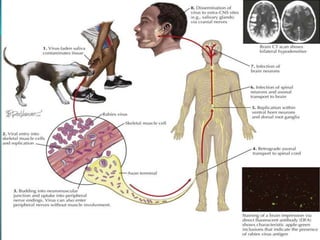
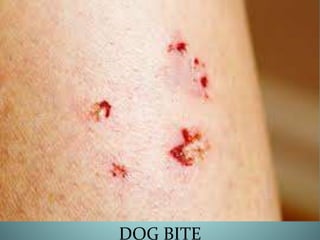
DOG BITE
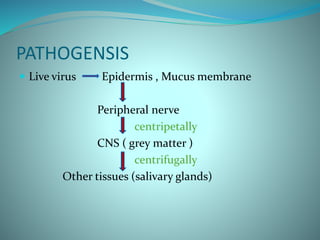
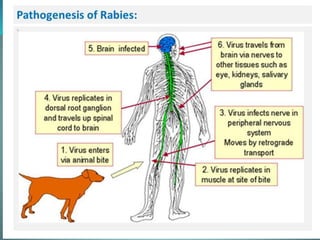
PATHOGENSIS
 Live virus Epidermis , Mucus membrane
Peripheral nerve
centripetally
CNS ( grey matter )
centrifugally
Other tissues (salivary glands)
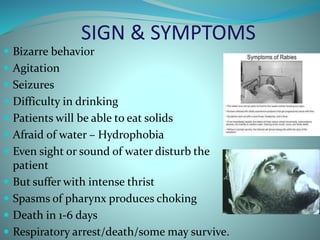
SIGN & SYMPTOMS
 Bizarre behavior
 Agitation
 Seizures
 Difficulty in drinking
 Patients will be able to eat solids
 Afraid of water – Hydrophobia
 Even sight or sound of water disturb the
patient
 But suffer with intense thrist
 Spasms of pharynx produces choking
 Death in 1-6 days
 Respiratory arrest/death/some may survive.
Continued..
 Headache, fever, sorethroat
 Nervousness, confusion
 Pain and tingling at the site of bite
 Hallucinations
 Paralysis
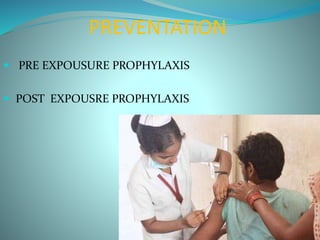
PREVENTATION
 PRE EXPOUSURE PROPHYLAXIS
 POST EXPOUSRE PROPHYLAXIS
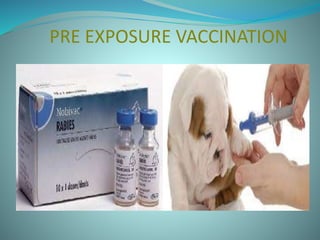
PRE EXPOSURE VACCINATION
PRE EXPOSURE PROPHYLAXIS
 Provided to subjects at the risk before occupational or
vocational exposure to rabies.
 Subject include diagnosticians laboratory and vaccine
workers, vatenarians, cavers.
 Simplifies post exposure management.
 Only vaccine used.
POST EXPOSURE PROPHYLAXIS
 Provided to subjects after rabies exposure.
 Consist of wound care, rabies immune globulin, and vaccine
 Cleansing.
 Chemical treatment.
 Suturing.
 Anti-rabies serum.
 Antibiotics and anti-tetanus measure.
 Observe the animal for 10 days.
 Wash lesions well with soap and water.
 Infiltrate rabies immune globulin (20 IU/kg) into and around
the margin of bites.
 Administer vaccine around 90 days.
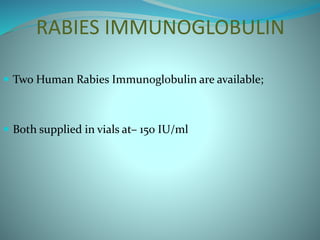
RABIES IMMUNOGLOBULIN
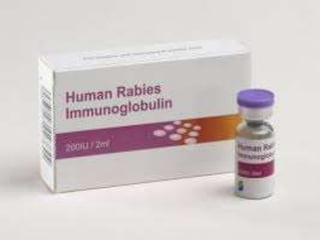
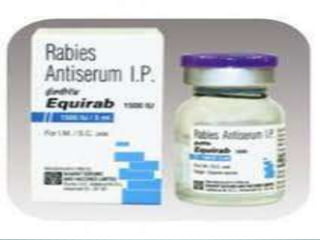
 Two Human Rabies Immunoglobulin are available;
 Both supplied in vials at– 150 IU/ml
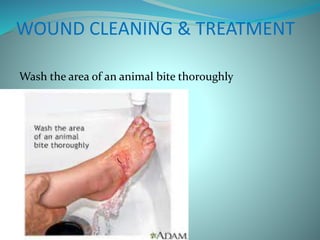
WOUND CLEANING & TREATMENT
Wash the area of an animal bite thoroughly
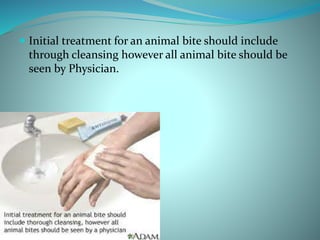
 Initial treatment for an animal bite should include
through cleansing however all animal bite should be
seen by Physician.
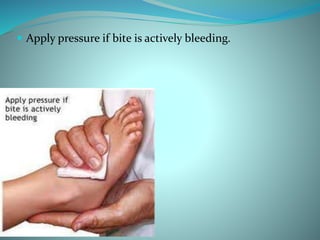
 Apply pressure if bite is actively bleeding.
TREATMENT
 POST EXPOSURE TREATMENT
A. LOCAL WOUND TREATMENT
Wash with soap/detergent and warter preferably for 10
minutes.
Apply alcohol, povidone iodine/ any antiseptic.
Anti-tetanus
Avoid suturing wounds.
Do not apply oinment, creams/ wound dressing
ANTIMICROBIAL
Amoxicillin
Cloxacillin
Cefuroxime
For those instances where there is no obvious signs of
infection (Amoxicillin as prophylaxis)
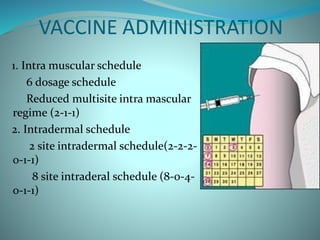
VACCINE ADMINISTRATION
1. Intra muscular schedule
6 dosage schedule
Reduced multisite intra mascular
regime (2-1-1)
2. Intradermal schedule
2 site intradermal schedule(2-2-2-
0-1-1)
8 site intraderal schedule (8-0-4-
0-1-1)
Vaccination
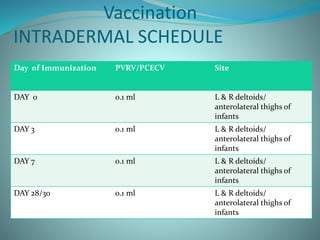
INTRADERMAL SCHEDULE
Day of Immunization PVRV/PCECV Site
DAY 0 0.1 ml L & R deltoids/
anterolateral thighs of
infants
DAY 3 0.1 ml L & R deltoids/
anterolateral thighs of
infants
DAY 7 0.1 ml L & R deltoids/
anterolateral thighs of
infants
DAY 28/30 0.1 ml L & R deltoids/
anterolateral thighs of
infants
MANAGEMENT OF RABIES PATIENT
 Once symptoms start, treatment should centre on comfort
care, using sedation and avoidance of intubation and life
support measures once diagnosis is certain.
 MEDICATIONS
Diazepam
Midazolam
Haloperidol + Dipenhydramine
2. SUPPORTIVE CARE
Confirmed rabies should receive adequate sedation and
comfort care in an appropriate medical facility
once rabies diagnosis has been confirnmed invasive
procedure must be avoided
Provide suitable emotional and physical support
Discussion and provide important information to relative
concerning tranmission of disease and indication for PET of
contacts.
Honest, gentle communication should be provided to
relatives of patients.
3. INFECTION CONTROL
Patient should be admitted in a quiet, draft-free
isolation room.
HLCR workers and relatives in contact with patients
should wear proper personal protective equipment.
4. DISPOSAL OF DEAD BODY
THANK YOU

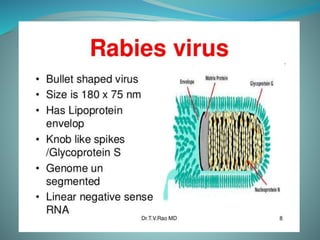
Rabies virus

  • 1.
    ANJALI TRIATHI BSC (H)MICROBIOLOGY DEPARTMENT OF INDUSTRIAL MICROBIOLOGY 16BSMBH012
  • 2.
    CONTENT  Definition  Introduction Sign and Symptoms  Prognosis  Treatment  Prevention
  • 3.
    Definition  Rabies isa viral disease that causes acute encephalitis (inflammation of the brain) in warm blooded animals.  Rabies is a zoonotic disease (a disease that is transmitted to humans from animals) that is caused by a virus
  • 5.
    INTRODUCTION  The diseaseinfects domestic and wild animals,and is spread to people through close contact with infected saliva via bites or scratches.  Dogs are the source of 99% of human rabies deaths  Once symptoms of the disease of the disease develop, rabies is nearly always fatal
  • 6.
    SOURCE OF INFECTION The source of infection to manis the saliva of rabid animals.  In dogs and cats ,the virus may be present in the saliva for 3-4 days before the clinical onset and during the course of illness till death.
  • 8.
    INCUBATION PERIOD  Itis highly variable in man,commonly3-8 weeks following exposure.  The closure the bite to the brain,the shorter the incubation.  Rabies virus travels one centimeters per day
  • 9.
  • 10.
    PATHOGENSIS  Live virusEpidermis , Mucus membrane Peripheral nerve centripetally CNS ( grey matter ) centrifugally Other tissues (salivary glands)
  • 12.
    SIGN & SYMPTOMS Bizarre behavior  Agitation  Seizures  Difficulty in drinking  Patients will be able to eat solids  Afraid of water – Hydrophobia  Even sight or sound of water disturb the patient  But suffer with intense thrist  Spasms of pharynx produces choking  Death in 1-6 days  Respiratory arrest/death/some may survive.
  • 13.
    Continued..  Headache, fever,sorethroat  Nervousness, confusion  Pain and tingling at the site of bite  Hallucinations  Paralysis
  • 14.
    PREVENTATION  PRE EXPOUSUREPROPHYLAXIS  POST EXPOUSRE PROPHYLAXIS
  • 15.
  • 16.
    PRE EXPOSURE PROPHYLAXIS Provided to subjects at the risk before occupational or vocational exposure to rabies.  Subject include diagnosticians laboratory and vaccine workers, vatenarians, cavers.  Simplifies post exposure management.  Only vaccine used.
  • 17.
    POST EXPOSURE PROPHYLAXIS Provided to subjects after rabies exposure.  Consist of wound care, rabies immune globulin, and vaccine  Cleansing.  Chemical treatment.  Suturing.  Anti-rabies serum.  Antibiotics and anti-tetanus measure.  Observe the animal for 10 days.  Wash lesions well with soap and water.  Infiltrate rabies immune globulin (20 IU/kg) into and around the margin of bites.  Administer vaccine around 90 days.
  • 18.
    RABIES IMMUNOGLOBULIN  TwoHuman Rabies Immunoglobulin are available;  Both supplied in vials at– 150 IU/ml
  • 21.
    WOUND CLEANING &TREATMENT Wash the area of an animal bite thoroughly
  • 22.
     Initial treatmentfor an animal bite should include through cleansing however all animal bite should be seen by Physician.
  • 23.
     Apply pressureif bite is actively bleeding.
  • 24.
    TREATMENT  POST EXPOSURETREATMENT A. LOCAL WOUND TREATMENT Wash with soap/detergent and warter preferably for 10 minutes. Apply alcohol, povidone iodine/ any antiseptic. Anti-tetanus Avoid suturing wounds. Do not apply oinment, creams/ wound dressing
  • 25.
    ANTIMICROBIAL Amoxicillin Cloxacillin Cefuroxime For those instanceswhere there is no obvious signs of infection (Amoxicillin as prophylaxis)
  • 26.
    VACCINE ADMINISTRATION 1. Intramuscular schedule 6 dosage schedule Reduced multisite intra mascular regime (2-1-1) 2. Intradermal schedule 2 site intradermal schedule(2-2-2- 0-1-1) 8 site intraderal schedule (8-0-4- 0-1-1)
  • 27.
    Vaccination INTRADERMAL SCHEDULE Day ofImmunization PVRV/PCECV Site DAY 0 0.1 ml L & R deltoids/ anterolateral thighs of infants DAY 3 0.1 ml L & R deltoids/ anterolateral thighs of infants DAY 7 0.1 ml L & R deltoids/ anterolateral thighs of infants DAY 28/30 0.1 ml L & R deltoids/ anterolateral thighs of infants
  • 28.
    MANAGEMENT OF RABIESPATIENT  Once symptoms start, treatment should centre on comfort care, using sedation and avoidance of intubation and life support measures once diagnosis is certain.  MEDICATIONS Diazepam Midazolam Haloperidol + Dipenhydramine
  • 29.
    2. SUPPORTIVE CARE Confirmedrabies should receive adequate sedation and comfort care in an appropriate medical facility once rabies diagnosis has been confirnmed invasive procedure must be avoided Provide suitable emotional and physical support Discussion and provide important information to relative concerning tranmission of disease and indication for PET of contacts. Honest, gentle communication should be provided to relatives of patients.
  • 30.
    3. INFECTION CONTROL Patientshould be admitted in a quiet, draft-free isolation room. HLCR workers and relatives in contact with patients should wear proper personal protective equipment. 4. DISPOSAL OF DEAD BODY
  • 31.