Insect bites and stings
                 Paleerat Jariyakanjana, MD
    Faculty of Medicine, Naresuan University
                                17 Jan 2013
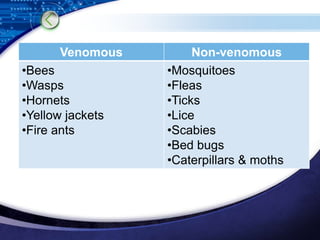
Venomous         Non-venomous
•Bees             •Mosquitoes
•Wasps            •Fleas
•Hornets          •Ticks
•Yellow jackets   •Lice
•Fire ants        •Scabies
                  •Bed bugs
                  •Caterpillars & moths
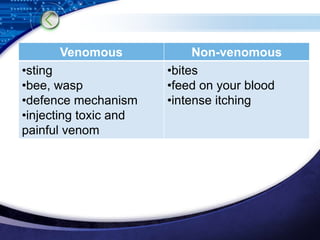
Venomous              Non-venomous
•sting                 •bites
•bee, wasp             •feed on your blood
•defence mechanism     •intense itching
•injecting toxic and
painful venom
Signs and Symptoms

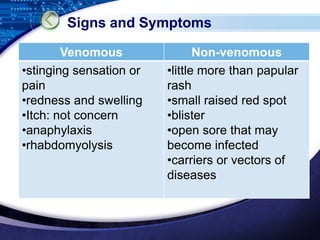
        Venomous                Non-venomous
•stinging sensation or   •little more than papular
pain                     rash
•redness and swelling    •small raised red spot
•Itch: not concern       •blister
•anaphylaxis             •open sore that may
•rhabdomyolysis          become infected
                         •carriers or vectors of
                         diseases
Management

 No specific antivenin
 Treatment: local wound care and general
  supportive measures
 venom apparatus
   removed by scraping edge of scalpel blade parallel to
    skin and lifting apparatus away from skin
Management

 Ice bag wrapped in towel: reduce pain and
  swelling
 Oral antihistamine
 Anaphylaxis
   adrenaline, H1- & H2- blocker, corticosteroids
 Tetanus toxoid: considered
 Antibiotic: controversial
Prevention







Prevention





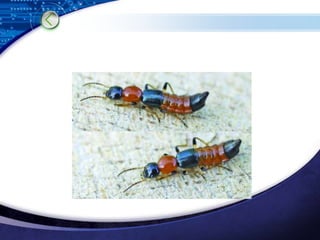
PAEDERUS
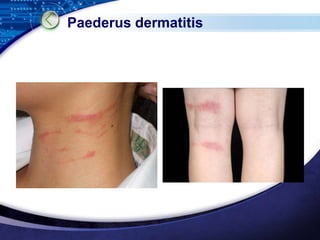
Paederus dermatitis

 contact dermatitis characterized by a sudden
  onset of erythematobullous lesions on exposed
  areas of body
 does not bite or sting
 release paederin
 Characteristically lesions
   linear
   kissing lesion
 Scarring usually does not occur.
Paederus dermatitis
Treatment
 removing irritant by washing area with soap and
  water
 blistered site
   cool wet soaks
   topical steroid
   considered oral antibiotic: prevent bacterial infection
 antihistamine
Prevention









Reference

   Tintinalli's Emergency Medicine, 7th ed
   Rosen’s emergency medicine, 7th ed
   http://dermnetnz.org/arthropods/bites.html
   http://www.ncbi.nlm.nih.gov/pmc/articles/PMC32
    25135/
ANY QUESTIONS?

Insect bites and stings

  • 1.
    Insect bites andstings Paleerat Jariyakanjana, MD Faculty of Medicine, Naresuan University 17 Jan 2013
  • 2.
    Venomous Non-venomous •Bees •Mosquitoes •Wasps •Fleas •Hornets •Ticks •Yellow jackets •Lice •Fire ants •Scabies •Bed bugs •Caterpillars & moths
  • 4.
    Venomous Non-venomous •sting •bites •bee, wasp •feed on your blood •defence mechanism •intense itching •injecting toxic and painful venom
  • 5.
    Signs and Symptoms Venomous Non-venomous •stinging sensation or •little more than papular pain rash •redness and swelling •small raised red spot •Itch: not concern •blister •anaphylaxis •open sore that may •rhabdomyolysis become infected •carriers or vectors of diseases
  • 7.
    Management  No specificantivenin  Treatment: local wound care and general supportive measures  venom apparatus  removed by scraping edge of scalpel blade parallel to skin and lifting apparatus away from skin
  • 8.
    Management  Ice bagwrapped in towel: reduce pain and swelling  Oral antihistamine  Anaphylaxis  adrenaline, H1- & H2- blocker, corticosteroids  Tetanus toxoid: considered  Antibiotic: controversial
  • 9.
  • 10.
  • 11.
  • 13.
    Paederus dermatitis  contactdermatitis characterized by a sudden onset of erythematobullous lesions on exposed areas of body  does not bite or sting  release paederin  Characteristically lesions  linear  kissing lesion  Scarring usually does not occur.
  • 14.
  • 15.
    Treatment  removing irritantby washing area with soap and water  blistered site  cool wet soaks  topical steroid  considered oral antibiotic: prevent bacterial infection  antihistamine
  • 16.
  • 17.
    Reference  Tintinalli's Emergency Medicine, 7th ed  Rosen’s emergency medicine, 7th ed  http://dermnetnz.org/arthropods/bites.html  http://www.ncbi.nlm.nih.gov/pmc/articles/PMC32 25135/
  • 18.