BITES
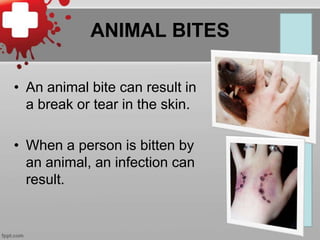
-Is a wound received from the
teeth of an animal, including
humans.
-Animals may bite in selfdefense, in an attempt to prey
in food, & as part of normal
interactions.
ANIMAL BITES
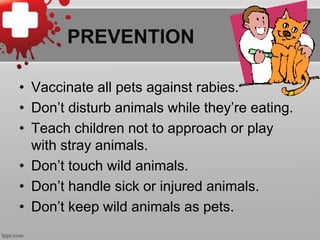
• An animal bite can result in
a break or tear in the skin.
• When a person is bitten by
an animal, an infection can
result.
PREVENTION
• Vaccinate all pets against rabies.
• Don’t disturb animals while they’re eating.
• Teach children not to approach or play
with stray animals.
• Don’t touch wild animals.
• Don’t handle sick or injured animals.
• Don’t keep wild animals as pets.
TREATMENT

How to Treat a Cat or Dog

Bite.mp4

1. STOP BLEEDING
• Apply direct pressure until bleeding stops.

2.CLEAN AND PROTECT
• Gently clean with soap and warm water, rinse for
several minutes after cleaning.
• Apply antibiotic cream to reduce the risk of infection
and cover with a sterile bandage.
3. GET HELP
• Consult a doctor immediately. (He will treat
the wound more effectively & decide what
measures are necessary to guard against
rabies and tetanus infection.
• If the animal’s owner is available, find out if
the animal’s rabies shots are up-to-date. (Give
this information to your health care provider.)
4. FOLLOW UP
• The health care provider will make sure the wound is
thoroughly clean &may prescribe antibiotics.

• If there is any risk of rabies infection, the health care
provider will recommend anti-rabies treatment &
tetanus shot or booster.
• The health care provider may recommend pain
relievers.
INSECT BITES
-Insect, spider, and bee bites usually cause
a localized reaction with
swelling, redness, & itching.
- Some people have severe skin reactions to
insect or spider bites & few have allergic
reactions that affect the whole body.
PREVENTION
• To avoid bee stings, wear white or light colored
solid fabrics.
• Avoid wearing perfume and colognes when you
are outside.
• Apply an insect repellent every few hours when
in insect and spider infested area.
• Wear gloves and tuck pants when working in
woodpiles, sheds, & basements & storerooms
where spiders are found.
TREATMENT
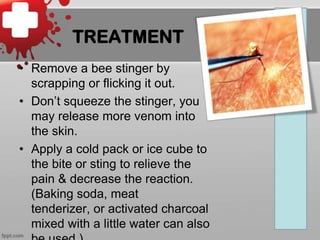
• Remove a bee stinger by
scrapping or flicking it out.
• Don’t squeeze the stinger, you
may release more venom into
the skin.
• Apply a cold pack or ice cube to
the bite or sting to relieve the
pain & decrease the reaction.
(Baking soda, meat
tenderizer, or activated charcoal
mixed with a little water can also
• An oral antihistamine(Benadryl) may help
relieve itching if there are many bites.
• Trim fingernails to prevent scratching, which
can lead to infection.
• Seek emergency help if signs of a severe
allergic reaction develop soon after being
stung by insect.
TICK BITES
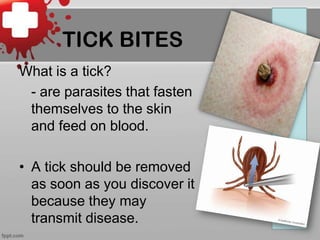
What is a tick?
- are parasites that fasten
themselves to the skin
and feed on blood.
• A tick should be removed
as soon as you discover it
because they may
transmit disease.
Prevention
• Check regularly for ticks when you are out in the
fields or woods. (Wear light-colored clothing to
easily detect ticks)
• Apply an insect repellant to exposed areas of
skin when in tick infested areas.
• Don’t put repellant on small children’s
hands, because they often put their hands in
their mouths,
• After returning indoors, wash the repellant off
with soap and water.
• Thoroughly examine your skin and scalp
when you return home.
• Check your pets too.(The sooner ticks are
removed, the less likely they are to spread
bacteria.)
TREATMENT
1. Dislodge the embedded tick loose from
the skin with a few drops of heavy oil or
petroleum jelly.
-This closes the tick’s breathing pores,
which will often cause it to disengage itself
from the skin)
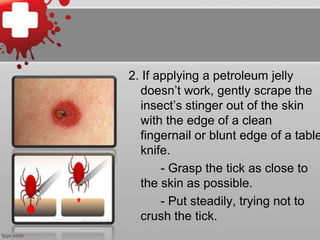
2. If applying a petroleum jelly
doesn’t work, gently scrape the
insect’s stinger out of the skin
with the edge of a clean
fingernail or blunt edge of a table
knife.
- Grasp the tick as close to
the skin as possible.
- Put steadily, trying not to
crush the tick.
3. Wash the areas and apply an antiseptic.

4. Get a medical help if allergic reaction
occurs.
SNAKE BITES
-Snakes are one of the
dangerous animals.
-They have their salivary
glands which produces venom
which is injected through
grooved or tubular fangs.
-If you were attacked by a
snake & you didn’t give yourself
a first aid it may cost some
complications and at some
cases it may lead to death.
PREVENTION

•
•
•
•

Don’t make snakes as your pet.
Clean your backyards.
Don’t live near the forest.
If you see a snake don’t touch it. Ask help
to those who know how to catch a snake.
TREATMENT
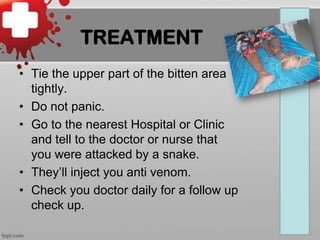
• Tie the upper part of the bitten area
tightly.
• Do not panic.
• Go to the nearest Hospital or Clinic
and tell to the doctor or nurse that
you were attacked by a snake.
• They’ll inject you anti venom.
• Check you doctor daily for a follow up
check up.
BUT ALWAYS REMEMBER
PREVENTION IS ALWAYS
BETTER THAN CURE! 

Bites first aid

  • 1.
    BITES -Is a woundreceived from the teeth of an animal, including humans. -Animals may bite in selfdefense, in an attempt to prey in food, & as part of normal interactions.
  • 2.
    ANIMAL BITES • Ananimal bite can result in a break or tear in the skin. • When a person is bitten by an animal, an infection can result.
  • 3.
    PREVENTION • Vaccinate allpets against rabies. • Don’t disturb animals while they’re eating. • Teach children not to approach or play with stray animals. • Don’t touch wild animals. • Don’t handle sick or injured animals. • Don’t keep wild animals as pets.
  • 4.
    TREATMENT How to Treata Cat or Dog Bite.mp4 1. STOP BLEEDING • Apply direct pressure until bleeding stops. 2.CLEAN AND PROTECT • Gently clean with soap and warm water, rinse for several minutes after cleaning. • Apply antibiotic cream to reduce the risk of infection and cover with a sterile bandage.
  • 5.
    3. GET HELP •Consult a doctor immediately. (He will treat the wound more effectively & decide what measures are necessary to guard against rabies and tetanus infection. • If the animal’s owner is available, find out if the animal’s rabies shots are up-to-date. (Give this information to your health care provider.)
  • 6.
    4. FOLLOW UP •The health care provider will make sure the wound is thoroughly clean &may prescribe antibiotics. • If there is any risk of rabies infection, the health care provider will recommend anti-rabies treatment & tetanus shot or booster. • The health care provider may recommend pain relievers.
  • 7.
    INSECT BITES -Insect, spider,and bee bites usually cause a localized reaction with swelling, redness, & itching. - Some people have severe skin reactions to insect or spider bites & few have allergic reactions that affect the whole body.
  • 8.
    PREVENTION • To avoidbee stings, wear white or light colored solid fabrics. • Avoid wearing perfume and colognes when you are outside. • Apply an insect repellent every few hours when in insect and spider infested area. • Wear gloves and tuck pants when working in woodpiles, sheds, & basements & storerooms where spiders are found.
  • 9.
    TREATMENT • Remove abee stinger by scrapping or flicking it out. • Don’t squeeze the stinger, you may release more venom into the skin. • Apply a cold pack or ice cube to the bite or sting to relieve the pain & decrease the reaction. (Baking soda, meat tenderizer, or activated charcoal mixed with a little water can also
  • 10.
    • An oralantihistamine(Benadryl) may help relieve itching if there are many bites. • Trim fingernails to prevent scratching, which can lead to infection. • Seek emergency help if signs of a severe allergic reaction develop soon after being stung by insect.
  • 11.
    TICK BITES What isa tick? - are parasites that fasten themselves to the skin and feed on blood. • A tick should be removed as soon as you discover it because they may transmit disease.
  • 12.
    Prevention • Check regularlyfor ticks when you are out in the fields or woods. (Wear light-colored clothing to easily detect ticks) • Apply an insect repellant to exposed areas of skin when in tick infested areas. • Don’t put repellant on small children’s hands, because they often put their hands in their mouths, • After returning indoors, wash the repellant off with soap and water.
  • 13.
    • Thoroughly examineyour skin and scalp when you return home. • Check your pets too.(The sooner ticks are removed, the less likely they are to spread bacteria.)
  • 14.
    TREATMENT 1. Dislodge theembedded tick loose from the skin with a few drops of heavy oil or petroleum jelly. -This closes the tick’s breathing pores, which will often cause it to disengage itself from the skin)
  • 15.
    2. If applyinga petroleum jelly doesn’t work, gently scrape the insect’s stinger out of the skin with the edge of a clean fingernail or blunt edge of a table knife. - Grasp the tick as close to the skin as possible. - Put steadily, trying not to crush the tick.
  • 16.
    3. Wash theareas and apply an antiseptic. 4. Get a medical help if allergic reaction occurs.
  • 17.
    SNAKE BITES -Snakes areone of the dangerous animals. -They have their salivary glands which produces venom which is injected through grooved or tubular fangs. -If you were attacked by a snake & you didn’t give yourself a first aid it may cost some complications and at some cases it may lead to death.
  • 18.
    PREVENTION • • • • Don’t make snakesas your pet. Clean your backyards. Don’t live near the forest. If you see a snake don’t touch it. Ask help to those who know how to catch a snake.
  • 19.
    TREATMENT • Tie theupper part of the bitten area tightly. • Do not panic. • Go to the nearest Hospital or Clinic and tell to the doctor or nurse that you were attacked by a snake. • They’ll inject you anti venom. • Check you doctor daily for a follow up check up.
  • 20.
    BUT ALWAYS REMEMBER PREVENTIONIS ALWAYS BETTER THAN CURE! 