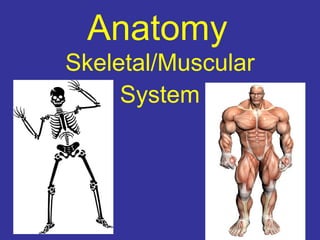
Anatomy
Skeletal/Muscular
System
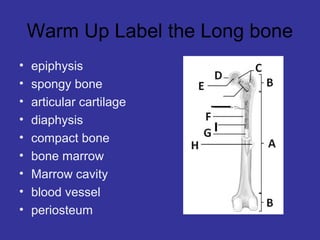
Warm Up Label the Long bone
• epiphysis
• spongy bone
• articular cartilage
• diaphysis
• compact bone
• bone marrow
• Marrow cavity
• blood vessel
• periosteum
I
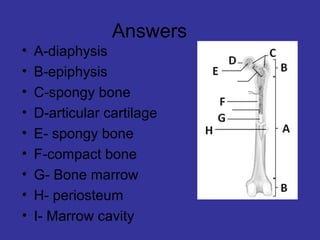
Answers
• A-diaphysis
• B-epiphysis
• C-spongy bone
• D-articular cartilage
• E- spongy bone
• F-compact bone
• G- Bone marrow
• H- periosteum
• I- Marrow cavity
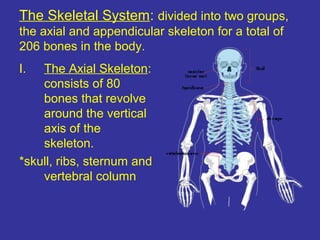
The Skeletal System: divided into two groups,
the axial and appendicular skeleton for a total of
206 bones in the body.
I. The Axial Skeleton:
consists of 80
bones that revolve
around the vertical
axis of the
skeleton.
*skull, ribs, sternum and
vertebral column
A. Bones of the Axial Skeleton
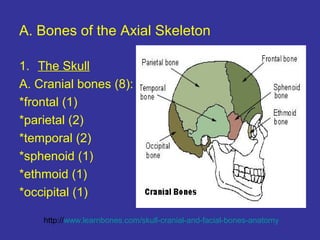
1. The Skull
A. Cranial bones (8):
*frontal (1)
*parietal (2)
*temporal (2)
*sphenoid (1)
*ethmoid (1)
*occipital (1)
http://www.learnbones.com/skull-cranial-and-facial-bones-anatomy
A. Bones of the Axial Skeleton
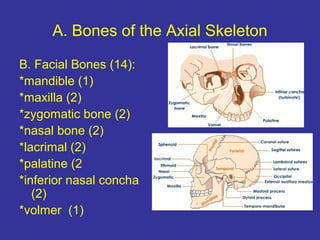
B. Facial Bones (14):
*mandible (1)
*maxilla (2)
*zygomatic bone (2)
*nasal bone (2)
*lacrimal (2)
*palatine (2
*inferior nasal concha
(2)
*volmer (1)
A. Bones of the Axial Skeleton
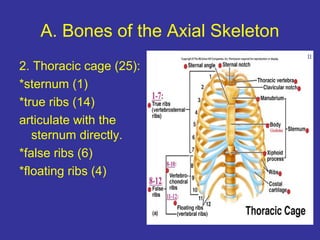
2. Thoracic cage (25):
*sternum (1)
*true ribs (14)
articulate with the
sternum directly.
*false ribs (6)
*floating ribs (4)
A. Bones of the Axial Skeleton
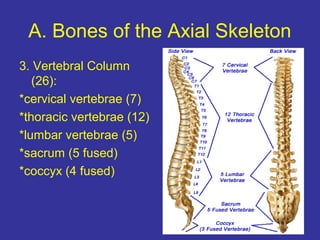
3. Vertebral Column
(26):
*cervical vertebrae (7)
*thoracic vertebrae (12)
*lumbar vertebrae (5)
*sacrum (5 fused)
*coccyx (4 fused)
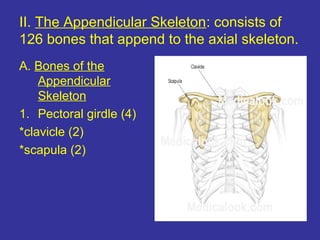
II. The Appendicular Skeleton: consists of
126 bones that append to the axial skeleton.
A. Bones of the
Appendicular
Skeleton
1. Pectoral girdle (4)
*clavicle (2)
*scapula (2)
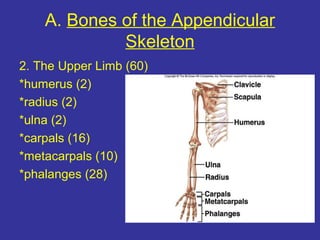
A. Bones of the Appendicular
Skeleton
2. The Upper Limb (60)
*humerus (2)
*radius (2)
*ulna (2)
*carpals (16)
*metacarpals (10)
*phalanges (28)
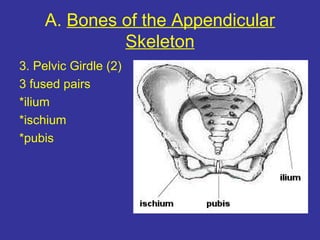
A. Bones of the Appendicular
Skeleton
3. Pelvic Girdle (2)
3 fused pairs
*ilium
*ischium
*pubis
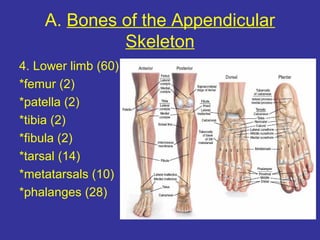
A. Bones of the Appendicular
Skeleton
4. Lower limb (60)
*femur (2)
*patella (2)
*tibia (2)
*fibula (2)
*tarsal (14)
*metatarsals (10)
*phalanges (28)
III. Functions of the Skeletal System
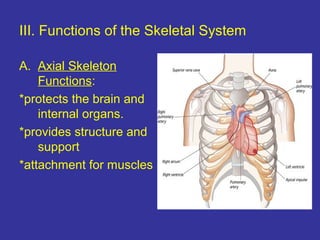
A. Axial Skeleton
Functions:
*protects the brain and
internal organs.
*provides structure and
support
*attachment for muscles
III. Functions of the Skeletal System
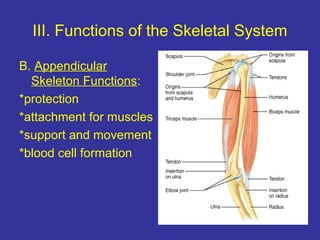
B. Appendicular
Skeleton Functions:
*protection
*attachment for muscles
*support and movement
*blood cell formation
IV. Types of Bones
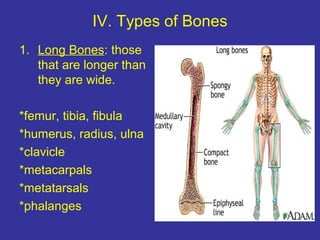
1. Long Bones: those
that are longer than
they are wide.
*femur, tibia, fibula
*humerus, radius, ulna
*clavicle
*metacarpals
*metatarsals
*phalanges
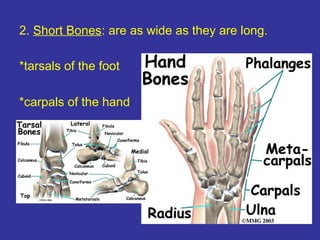
2. Short Bones: are as wide as they are long.
*tarsals of the foot
*carpals of the hand
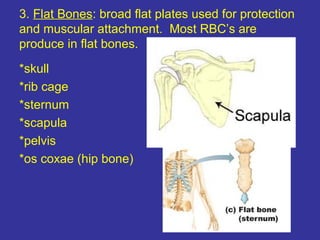
3. Flat Bones: broad flat plates used for protection
and muscular attachment. Most RBC’s are
produce in flat bones.
*skull
*rib cage
*sternum
*scapula
*pelvis
*os coxae (hip bone)
4. Irregular Bones: have peculiar shapes and
cannot be grouped in the other bone categories.
*verterbrae
*sacrum
*coccyx
*mandible
*maxilla
*hyoid
long bone
structure
V. Anatomical Terminology
1. Anterior: towards the
front.
2. Posterior: towards
the back.
3. Superior: towards
the head.
4. Inferior: towards the
feet.
5. Proximal: nearest;
closer to any point of
reference.
6. Distal: remote; farther
from any point of
reference.
7. Lateral: point that is
more distant from the
median plane.
8. Medial: point that is
closer to the median
plane
Food for Thought
• http://www.gwc.maricopa.edu/class/bio201/ver
VI. Connective Tissue
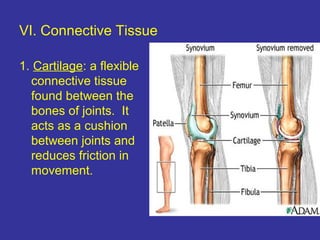
1. Cartilage: a flexible
connective tissue
found between the
bones of joints. It
acts as a cushion
between joints and
reduces friction in
movement.
VI. Connective Tissue
2. Ligament: dense,
flexible tissue that
connects bone to
bone at a joint.
VI. Connective Tissue
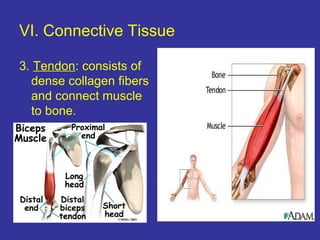
3. Tendon: consists of
dense collagen fibers
and connect muscle
to bone.
VII. Joint: point where two or more bones articulate
allowing movement and mechanical support.
A. Types of Joints
1. Fibrous: held
together by fibrous
connective tissue.
Usually immovable
or slightly moveable.
Ex. Suture joints
between cranial
bones and distal
joint of tibia and
fibula.
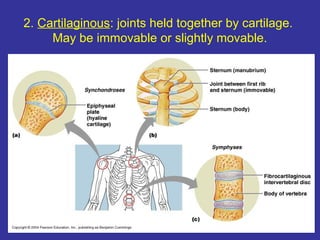
2. Cartilaginous: joints held together by cartilage.
May be immovable or slightly movable.
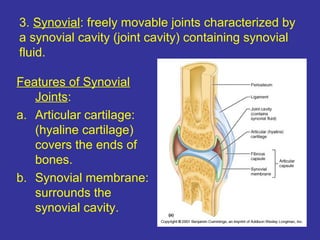
3. Synovial: freely movable joints characterized by
a synovial cavity (joint cavity) containing synovial
fluid.
Features of Synovial
Joints:
a. Articular cartilage:
(hyaline cartilage)
covers the ends of
bones.
b. Synovial membrane:
surrounds the
synovial cavity.
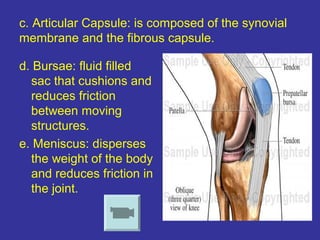
c. Articular Capsule: is composed of the synovial
membrane and the fibrous capsule.
d. Bursae: fluid filled
sac that cushions and
reduces friction
between moving
structures.
e. Meniscus: disperses
the weight of the body
and reduces friction in
the joint.
Types of Synovial joints
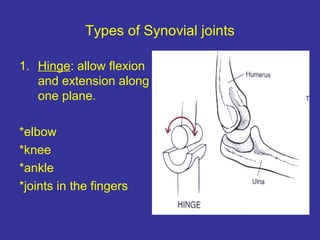
1. Hinge: allow flexion
and extension along
one plane.
*elbow
*knee
*ankle
*joints in the fingers
Types of Synovial joints
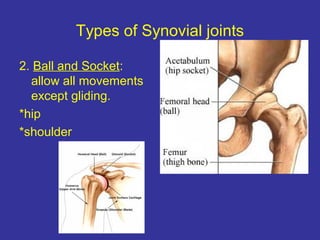
2. Ball and Socket:
allow all movements
except gliding.
*hip
*shoulder
Types of Synovial joints
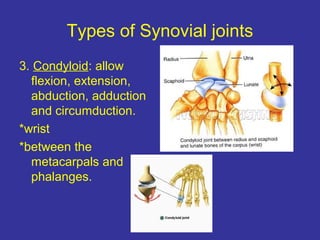
3. Condyloid: allow
flexion, extension,
abduction, adduction
and circumduction.
*wrist
*between the
metacarpals and
phalanges.
Types of Synovial joints
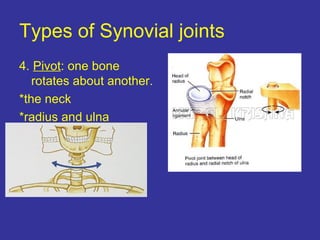
4. Pivot: one bone
rotates about another.
*the neck
*radius and ulna
Types of Synovial joints
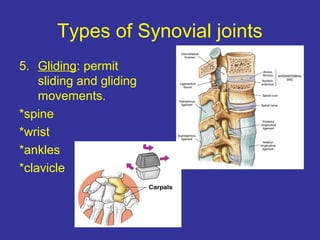
5. Gliding: permit
sliding and gliding
movements.
*spine
*wrist
*ankles
*clavicle
Types of Synovial joints
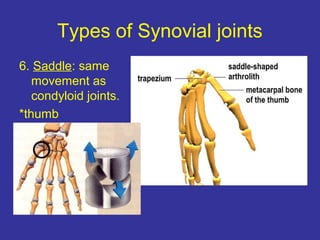
6. Saddle: same
movement as
condyloid joints.
*thumb
Write a 1 page essay
outlining the function of
connective tissue.
Discuss the role played
by cartilage, ligaments and
tendons citing examples from
specific joints.
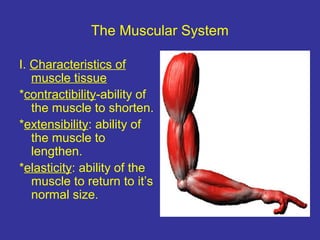
The Muscular System
I. Characteristics of
muscle tissue
*contractibility-ability of
the muscle to shorten.
*extensibility: ability of
the muscle to
lengthen.
*elasticity: ability of the
muscle to return to it’s
normal size.
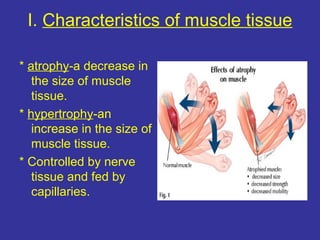
I. Characteristics of muscle tissue
* atrophy-a decrease in
the size of muscle
tissue.
* hypertrophy-an
increase in the size of
muscle tissue.
* Controlled by nerve
tissue and fed by
capillaries.
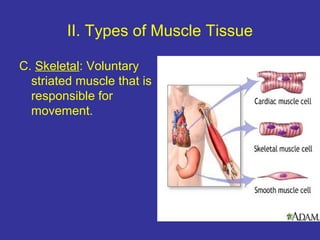
II. Types of Muscle Tissue
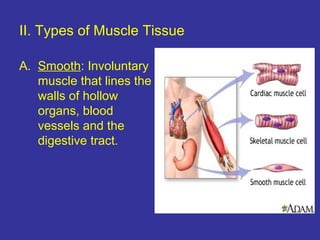
A. Smooth: Involuntary
muscle that lines the
walls of hollow
organs, blood
vessels and the
digestive tract.
II. Types of Muscle Tissue
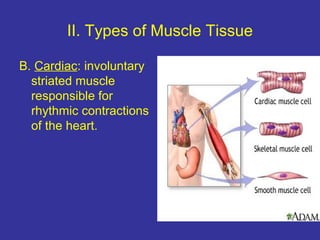
B. Cardiac: involuntary
striated muscle
responsible for
rhythmic contractions
of the heart.
II. Types of Muscle Tissue
C. Skeletal: Voluntary
striated muscle that is
responsible for
movement.
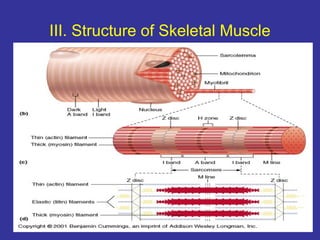
III. Structure of Skeletal Muscle
IV. Muscle Attachment
1. Origin: the point of
attachment of a
muscle tendon to a
stationary bone.
2. Insertion: point of
attachment of a
muscle tendon to a
movable bone.
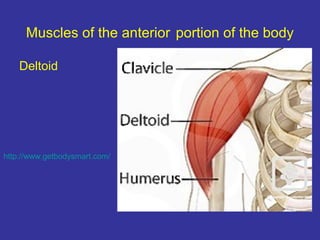
Muscles of the anterior portion of the body
Deltoid
http://www.getbodysmart.com/
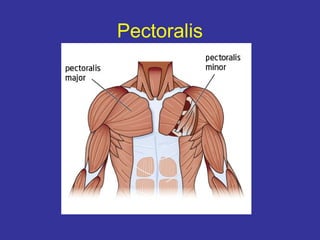
Pectoralis
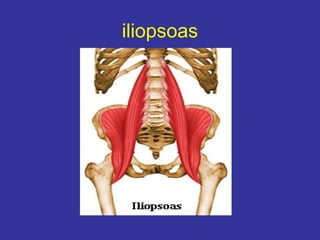
iliopsoas
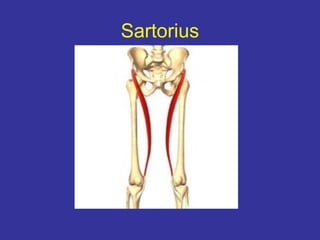
Sartorius
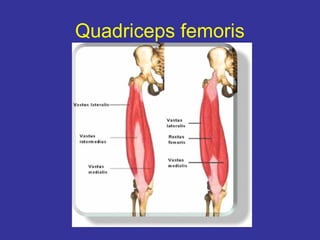
Quadriceps femoris
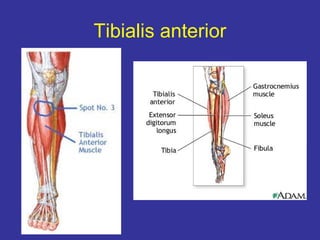
Tibialis anterior
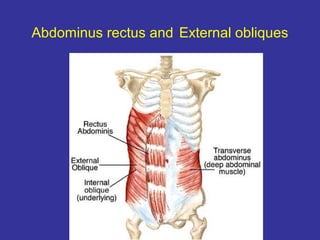
Abdominus rectus and External obliques
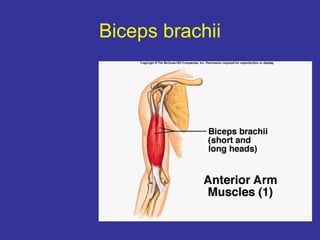
Biceps brachii
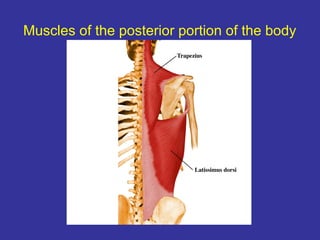
Muscles of the posterior portion of the body
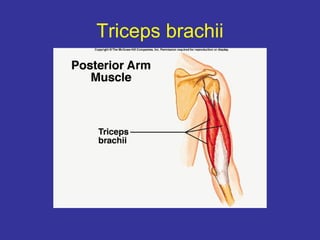
Triceps brachii
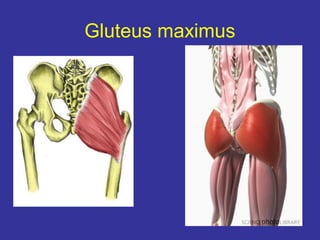
Gluteus maximus
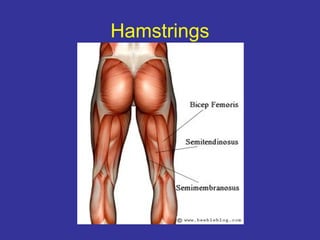
Hamstrings
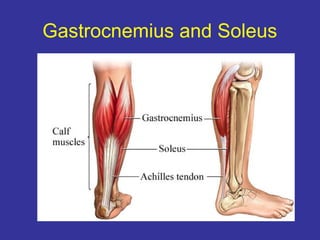
Gastrocnemius and Soleus
Erector spinae

Anatomy skeletal muscular

  • 1.
  • 2.
    Warm Up Labelthe Long bone • epiphysis • spongy bone • articular cartilage • diaphysis • compact bone • bone marrow • Marrow cavity • blood vessel • periosteum I
  • 3.
    Answers • A-diaphysis • B-epiphysis •C-spongy bone • D-articular cartilage • E- spongy bone • F-compact bone • G- Bone marrow • H- periosteum • I- Marrow cavity
  • 4.
    The Skeletal System:divided into two groups, the axial and appendicular skeleton for a total of 206 bones in the body. I. The Axial Skeleton: consists of 80 bones that revolve around the vertical axis of the skeleton. *skull, ribs, sternum and vertebral column
  • 5.
    A. Bones ofthe Axial Skeleton 1. The Skull A. Cranial bones (8): *frontal (1) *parietal (2) *temporal (2) *sphenoid (1) *ethmoid (1) *occipital (1) http://www.learnbones.com/skull-cranial-and-facial-bones-anatomy
  • 6.
    A. Bones ofthe Axial Skeleton B. Facial Bones (14): *mandible (1) *maxilla (2) *zygomatic bone (2) *nasal bone (2) *lacrimal (2) *palatine (2 *inferior nasal concha (2) *volmer (1)
  • 7.
    A. Bones ofthe Axial Skeleton 2. Thoracic cage (25): *sternum (1) *true ribs (14) articulate with the sternum directly. *false ribs (6) *floating ribs (4)
  • 8.
    A. Bones ofthe Axial Skeleton 3. Vertebral Column (26): *cervical vertebrae (7) *thoracic vertebrae (12) *lumbar vertebrae (5) *sacrum (5 fused) *coccyx (4 fused)
  • 9.
    II. The AppendicularSkeleton: consists of 126 bones that append to the axial skeleton. A. Bones of the Appendicular Skeleton 1. Pectoral girdle (4) *clavicle (2) *scapula (2)
  • 10.
    A. Bones ofthe Appendicular Skeleton 2. The Upper Limb (60) *humerus (2) *radius (2) *ulna (2) *carpals (16) *metacarpals (10) *phalanges (28)
  • 11.
    A. Bones ofthe Appendicular Skeleton 3. Pelvic Girdle (2) 3 fused pairs *ilium *ischium *pubis
  • 12.
    A. Bones ofthe Appendicular Skeleton 4. Lower limb (60) *femur (2) *patella (2) *tibia (2) *fibula (2) *tarsal (14) *metatarsals (10) *phalanges (28)
  • 13.
    III. Functions ofthe Skeletal System A. Axial Skeleton Functions: *protects the brain and internal organs. *provides structure and support *attachment for muscles
  • 14.
    III. Functions ofthe Skeletal System B. Appendicular Skeleton Functions: *protection *attachment for muscles *support and movement *blood cell formation
  • 15.
    IV. Types ofBones 1. Long Bones: those that are longer than they are wide. *femur, tibia, fibula *humerus, radius, ulna *clavicle *metacarpals *metatarsals *phalanges
  • 16.
    2. Short Bones:are as wide as they are long. *tarsals of the foot *carpals of the hand
  • 17.
    3. Flat Bones:broad flat plates used for protection and muscular attachment. Most RBC’s are produce in flat bones. *skull *rib cage *sternum *scapula *pelvis *os coxae (hip bone)
  • 18.
    4. Irregular Bones:have peculiar shapes and cannot be grouped in the other bone categories. *verterbrae *sacrum *coccyx *mandible *maxilla *hyoid
  • 19.
  • 20.
  • 21.
    V. Anatomical Terminology 1.Anterior: towards the front. 2. Posterior: towards the back. 3. Superior: towards the head. 4. Inferior: towards the feet. 5. Proximal: nearest; closer to any point of reference. 6. Distal: remote; farther from any point of reference. 7. Lateral: point that is more distant from the median plane. 8. Medial: point that is closer to the median plane
  • 22.
    Food for Thought •http://www.gwc.maricopa.edu/class/bio201/ver
  • 23.
    VI. Connective Tissue 1.Cartilage: a flexible connective tissue found between the bones of joints. It acts as a cushion between joints and reduces friction in movement.
  • 24.
    VI. Connective Tissue 2.Ligament: dense, flexible tissue that connects bone to bone at a joint.
  • 25.
    VI. Connective Tissue 3.Tendon: consists of dense collagen fibers and connect muscle to bone.
  • 26.
    VII. Joint: pointwhere two or more bones articulate allowing movement and mechanical support. A. Types of Joints 1. Fibrous: held together by fibrous connective tissue. Usually immovable or slightly moveable. Ex. Suture joints between cranial bones and distal joint of tibia and fibula.
  • 27.
    2. Cartilaginous: jointsheld together by cartilage. May be immovable or slightly movable.
  • 28.
    3. Synovial: freelymovable joints characterized by a synovial cavity (joint cavity) containing synovial fluid. Features of Synovial Joints: a. Articular cartilage: (hyaline cartilage) covers the ends of bones. b. Synovial membrane: surrounds the synovial cavity.
  • 29.
    c. Articular Capsule:is composed of the synovial membrane and the fibrous capsule. d. Bursae: fluid filled sac that cushions and reduces friction between moving structures. e. Meniscus: disperses the weight of the body and reduces friction in the joint.
  • 30.
    Types of Synovialjoints 1. Hinge: allow flexion and extension along one plane. *elbow *knee *ankle *joints in the fingers
  • 31.
    Types of Synovialjoints 2. Ball and Socket: allow all movements except gliding. *hip *shoulder
  • 32.
    Types of Synovialjoints 3. Condyloid: allow flexion, extension, abduction, adduction and circumduction. *wrist *between the metacarpals and phalanges.
  • 33.
    Types of Synovialjoints 4. Pivot: one bone rotates about another. *the neck *radius and ulna
  • 34.
    Types of Synovialjoints 5. Gliding: permit sliding and gliding movements. *spine *wrist *ankles *clavicle
  • 35.
    Types of Synovialjoints 6. Saddle: same movement as condyloid joints. *thumb
  • 36.
    Write a 1page essay outlining the function of connective tissue. Discuss the role played by cartilage, ligaments and tendons citing examples from specific joints.
  • 37.
    The Muscular System I.Characteristics of muscle tissue *contractibility-ability of the muscle to shorten. *extensibility: ability of the muscle to lengthen. *elasticity: ability of the muscle to return to it’s normal size.
  • 38.
    I. Characteristics ofmuscle tissue * atrophy-a decrease in the size of muscle tissue. * hypertrophy-an increase in the size of muscle tissue. * Controlled by nerve tissue and fed by capillaries.
  • 39.
    II. Types ofMuscle Tissue A. Smooth: Involuntary muscle that lines the walls of hollow organs, blood vessels and the digestive tract.
  • 40.
    II. Types ofMuscle Tissue B. Cardiac: involuntary striated muscle responsible for rhythmic contractions of the heart.
  • 41.
    II. Types ofMuscle Tissue C. Skeletal: Voluntary striated muscle that is responsible for movement.
  • 42.
    III. Structure ofSkeletal Muscle
  • 43.
    III. Structure ofSkeletal Muscle
  • 44.
    IV. Muscle Attachment 1.Origin: the point of attachment of a muscle tendon to a stationary bone. 2. Insertion: point of attachment of a muscle tendon to a movable bone.
  • 45.
    Muscles of theanterior portion of the body Deltoid http://www.getbodysmart.com/
  • 46.
  • 47.
  • 48.
  • 49.
  • 50.
  • 51.
    Abdominus rectus andExternal obliques
  • 52.
  • 53.
    Muscles of theposterior portion of the body
  • 54.
  • 55.
  • 56.
  • 57.
  • 58.