Muscular Anatomy
Muscular system
•   3 types of muscular tissue
    1. Smooth
      Involuntary – line internal organs
      Move substance through out the body
    1. Cardiac
      Found only in the heart – involuntary
    1. Skeletal
      Voluntary
      Main source of power and movement
• There are over 600 muscles in the body,
  but for this class were are going to learn
  just a few.
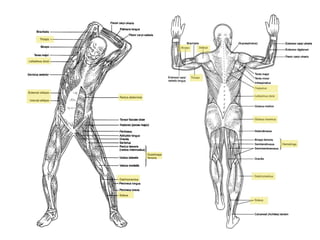
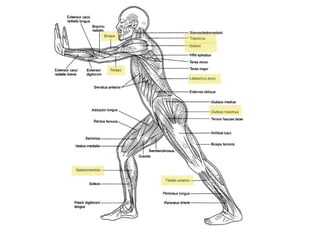
• We will learn the highlighted muscles on
  the following slides
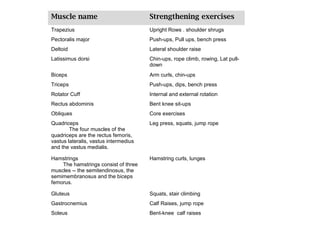
Muscle name                            Strengthening exercises
Trapezius                              Upright Rows . shoulder shrugs
Pectoralis major                       Push-ups, Pull ups, bench press
Deltoid                                Lateral shoulder raise
Latissimus dorsi                       Chin-ups, rope climb, rowing, Lat pull-
                                       down
Biceps                                 Arm curls, chin-ups
Triceps                                Push-ups, dips, bench press
Rotator Cuff                           Internal and external rotation
Rectus abdominis                       Bent knee sit-ups
Obliques                               Core exercises
Quadriceps                             Leg press, squats, jump rope
        The four muscles of the
quadriceps are the rectus femoris,
vastus lateralis, vastus intermedius
and the vastus medialis.

Hamstrings                             Hamstring curls, lunges
    The hamstrings consist of three
muscles -- the semitendinosus, the
semimembranosus and the biceps
femorus.

Gluteus                                Squats, stair climbing
Gastrocnemius                          Calf Raises, jump rope
Soleus                                 Bent-knee calf raises
The Rotator Cuff
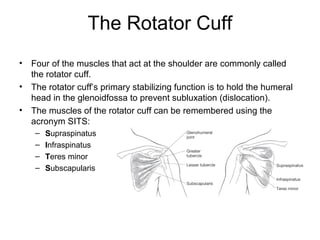
•   Four of the muscles that act at the shoulder are commonly called
    the rotator cuff.
•   The rotator cuff’s primary stabilizing function is to hold the humeral
    head in the glenoidfossa to prevent subluxation (dislocation).
•   The muscles of the rotator cuff can be remembered using the
    acronym SITS:
     –   Supraspinatus
     –   Infraspinatus
     –   Teres minor
     –   Subscapularis

Muscular anatomy

  • 1.
  • 2.
    Muscular system • 3 types of muscular tissue 1. Smooth Involuntary – line internal organs Move substance through out the body 1. Cardiac Found only in the heart – involuntary 1. Skeletal Voluntary Main source of power and movement
  • 3.
    • There areover 600 muscles in the body, but for this class were are going to learn just a few. • We will learn the highlighted muscles on the following slides
  • 6.
    Muscle name Strengthening exercises Trapezius Upright Rows . shoulder shrugs Pectoralis major Push-ups, Pull ups, bench press Deltoid Lateral shoulder raise Latissimus dorsi Chin-ups, rope climb, rowing, Lat pull- down Biceps Arm curls, chin-ups Triceps Push-ups, dips, bench press Rotator Cuff Internal and external rotation Rectus abdominis Bent knee sit-ups Obliques Core exercises Quadriceps Leg press, squats, jump rope The four muscles of the quadriceps are the rectus femoris, vastus lateralis, vastus intermedius and the vastus medialis. Hamstrings Hamstring curls, lunges The hamstrings consist of three muscles -- the semitendinosus, the semimembranosus and the biceps femorus. Gluteus Squats, stair climbing Gastrocnemius Calf Raises, jump rope Soleus Bent-knee calf raises
  • 7.
    The Rotator Cuff • Four of the muscles that act at the shoulder are commonly called the rotator cuff. • The rotator cuff’s primary stabilizing function is to hold the humeral head in the glenoidfossa to prevent subluxation (dislocation). • The muscles of the rotator cuff can be remembered using the acronym SITS: – Supraspinatus – Infraspinatus – Teres minor – Subscapularis