Prohibition of Alcohol
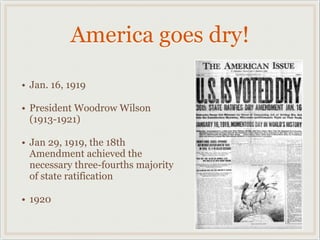
America goes dry!
• Jan. 16, 1919
• President Woodrow Wilson
(1913-1921)
• Jan 29, 1919, the 18th
Amendment achieved the
necessary three-fourths majority
of state ratification
• 1920
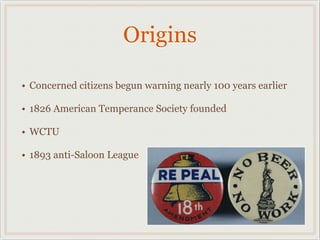
Origins
• Concerned citizens begun warning nearly 100 years earlier
• 1826 American Temperance Society founded
• WCTU
• 1893 anti-Saloon League
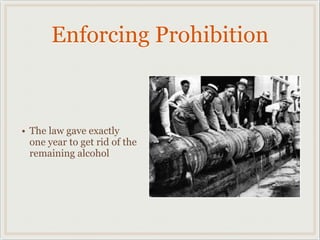
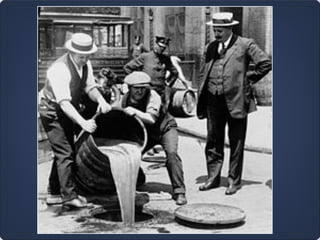
Enforcing Prohibition
• The law gave exactly
one year to get rid of the
remaining alcohol
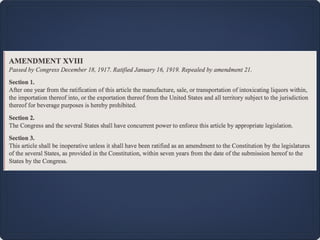
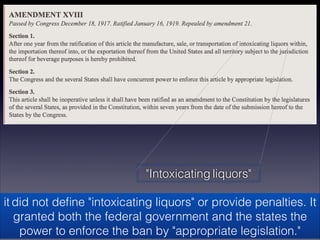
"Intoxicating liquors"
it did not define "intoxicating liquors" or provide penalties. It
granted both the federal government and the states the
power to enforce the ban by "appropriate legislation."
Problems Arise
• Deaths in NY
• 1919-20: aprox. 70
• 1926: aprox. 700
Organized Crime
• Demand is higher than ever
• Illegal producers and benders of alcohol were known as
bootleggers. They would make homemade liquor however
they could,
• Off-the-graph prices
• Control of the market
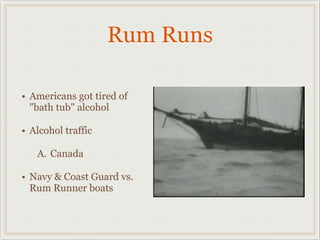
Rum Runs
• Americans got tired of
"bath tub" alcohol
• Alcohol traffic
A. Canada
• Navy & Coast Guard vs.
Rum Runner boats
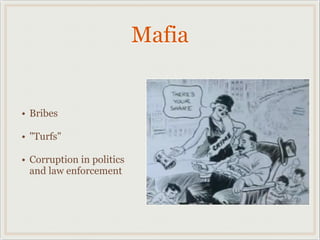
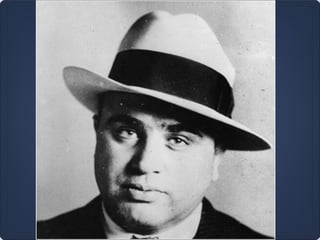
Mafia
• Bribes
• "Turfs"
• Corruption in politics
and law enforcement
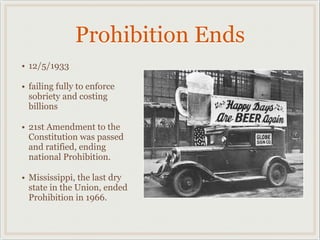
Prohibition Ends
• 12/5/1933
• failing fully to enforce
sobriety and costing
billions
• 21st Amendment to the
Constitution was passed
and ratified, ending
national Prohibition.
• Mississippi, the last dry
state in the Union, ended
Prohibition in 1966.
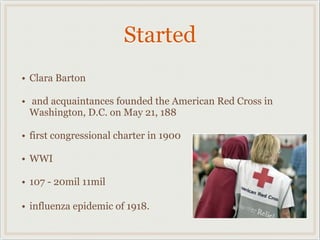
Started
• Clara Barton
• and acquaintances founded the American Red Cross in
Washington, D.C. on May 21, 188
• first congressional charter in 1900
• WWI
• 107 - 20mil 11mil
• influenza epidemic of 1918.

Alcohol Prohibition

  • 1.
  • 2.
    America goes dry! •Jan. 16, 1919 • President Woodrow Wilson (1913-1921) • Jan 29, 1919, the 18th Amendment achieved the necessary three-fourths majority of state ratification • 1920
  • 3.
    Origins • Concerned citizensbegun warning nearly 100 years earlier • 1826 American Temperance Society founded • WCTU • 1893 anti-Saloon League
  • 5.
    Enforcing Prohibition • Thelaw gave exactly one year to get rid of the remaining alcohol
  • 8.
    "Intoxicating liquors" it didnot define "intoxicating liquors" or provide penalties. It granted both the federal government and the states the power to enforce the ban by "appropriate legislation."
  • 9.
    Problems Arise • Deathsin NY • 1919-20: aprox. 70 • 1926: aprox. 700
  • 10.
    Organized Crime • Demandis higher than ever • Illegal producers and benders of alcohol were known as bootleggers. They would make homemade liquor however they could, • Off-the-graph prices • Control of the market
  • 11.
    Rum Runs • Americansgot tired of "bath tub" alcohol • Alcohol traffic A. Canada • Navy & Coast Guard vs. Rum Runner boats
  • 12.
    Mafia • Bribes • "Turfs" •Corruption in politics and law enforcement
  • 14.
    Prohibition Ends • 12/5/1933 •failing fully to enforce sobriety and costing billions • 21st Amendment to the Constitution was passed and ratified, ending national Prohibition. • Mississippi, the last dry state in the Union, ended Prohibition in 1966.
  • 16.
    Started • Clara Barton •and acquaintances founded the American Red Cross in Washington, D.C. on May 21, 188 • first congressional charter in 1900 • WWI • 107 - 20mil 11mil • influenza epidemic of 1918.