Anaphylaxis
Hasan Radi Al-Shabaan
214010094
Learning Objectives
• 1/ What is anaphylaxis? And what are its clinical
features?
• 2/ What is the cause of anaphylaxis? And what is its
pathophysiology?
• 3/ First-Aid management of anaphylaxis?
• 4/ Which groups of drugs are used and why?
Hypersensitivity
• Exaggerated and inappropriate immune
response, resulting in tissue injury.
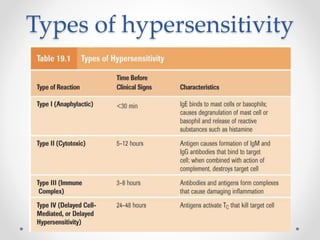
Types of hypersensitivity
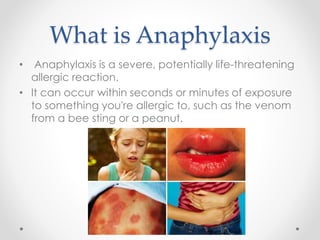
What is Anaphylaxis
• Anaphylaxis is a severe, potentially life-threatening
allergic reaction.
• It can occur within seconds or minutes of exposure
to something you're allergic to, such as the venom
from a bee sting or a peanut.
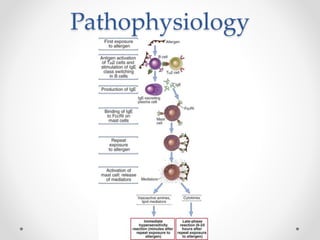
Pathophysiology
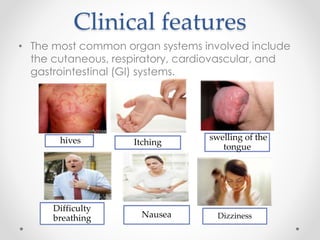
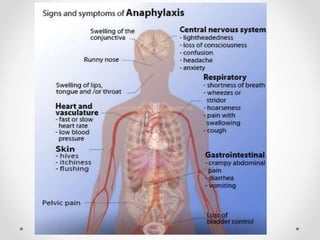
Clinical features
• The most common organ systems involved include
the cutaneous, respiratory, cardiovascular, and
gastrointestinal (GI) systems.
Difficulty
breathing DizzinessNausea
swelling of the
tongue
Itchinghives
Causes of anaphylaxis
• Foods:
• peanuts, seafood, milk
• Medications:
• penicillin, NSAIDs
• Insect stings:
• bees, wasps, ants
• Less common causes:
• Latex
• Exercise
First-Aid management of
anaphylaxis
• 1. Seek emergency care
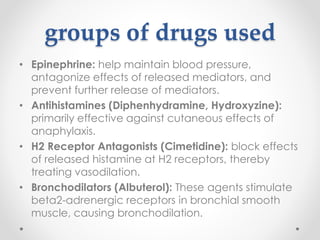
• Call for help
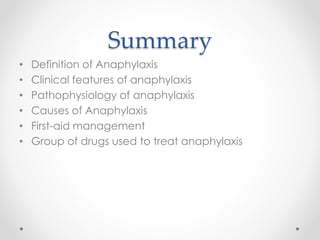
• 2. Inject Epinephrine Immediately
• Inject epinephrine into outer muscle of the thigh.
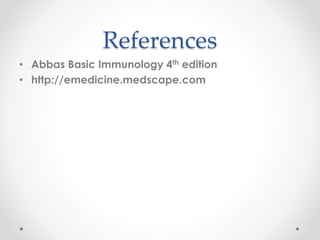
• 3. Do CPR if the Person Stops Breathing
groups of drugs used
• Epinephrine: help maintain blood pressure,
antagonize effects of released mediators, and
prevent further release of mediators.
• Antihistamines (Diphenhydramine, Hydroxyzine):
primarily effective against cutaneous effects of
anaphylaxis.
• H2 Receptor Antagonists (Cimetidine): block effects
of released histamine at H2 receptors, thereby
treating vasodilation.
• Bronchodilators (Albuterol): These agents stimulate
beta2-adrenergic receptors in bronchial smooth
muscle, causing bronchodilation.
Summary
• Definition of Anaphylaxis
• Clinical features of anaphylaxis
• Pathophysiology of anaphylaxis
• Causes of Anaphylaxis
• First-aid management
• Group of drugs used to treat anaphylaxis
References
• Abbas Basic Immunology 4th edition
• http://emedicine.medscape.com
Anaphylaxis

Anaphylaxis

  • 1.
  • 2.
    Learning Objectives • 1/What is anaphylaxis? And what are its clinical features? • 2/ What is the cause of anaphylaxis? And what is its pathophysiology? • 3/ First-Aid management of anaphylaxis? • 4/ Which groups of drugs are used and why?
  • 3.
    Hypersensitivity • Exaggerated andinappropriate immune response, resulting in tissue injury.
  • 4.
  • 5.
    What is Anaphylaxis •Anaphylaxis is a severe, potentially life-threatening allergic reaction. • It can occur within seconds or minutes of exposure to something you're allergic to, such as the venom from a bee sting or a peanut.
  • 6.
  • 7.
    Clinical features • Themost common organ systems involved include the cutaneous, respiratory, cardiovascular, and gastrointestinal (GI) systems. Difficulty breathing DizzinessNausea swelling of the tongue Itchinghives
  • 9.
    Causes of anaphylaxis •Foods: • peanuts, seafood, milk • Medications: • penicillin, NSAIDs • Insect stings: • bees, wasps, ants • Less common causes: • Latex • Exercise
  • 10.
    First-Aid management of anaphylaxis •1. Seek emergency care • Call for help • 2. Inject Epinephrine Immediately • Inject epinephrine into outer muscle of the thigh. • 3. Do CPR if the Person Stops Breathing
  • 11.
    groups of drugsused • Epinephrine: help maintain blood pressure, antagonize effects of released mediators, and prevent further release of mediators. • Antihistamines (Diphenhydramine, Hydroxyzine): primarily effective against cutaneous effects of anaphylaxis. • H2 Receptor Antagonists (Cimetidine): block effects of released histamine at H2 receptors, thereby treating vasodilation. • Bronchodilators (Albuterol): These agents stimulate beta2-adrenergic receptors in bronchial smooth muscle, causing bronchodilation.
  • 12.
    Summary • Definition ofAnaphylaxis • Clinical features of anaphylaxis • Pathophysiology of anaphylaxis • Causes of Anaphylaxis • First-aid management • Group of drugs used to treat anaphylaxis
  • 13.
    References • Abbas BasicImmunology 4th edition • http://emedicine.medscape.com