ALLERGIC
RESPONSES
Several of the drugs administered to patients
undergoing oral surgery can act as antigenic
stimuli, provoking allergic reactions.
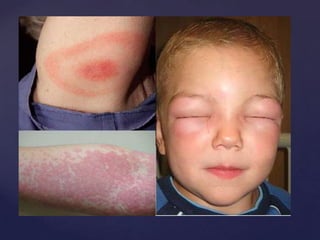
SKIN SIGNS
MANEFESTATIONS:
1.) Delayed-onset skin signs: erythema, urticarial, pruritus, angioedema
MANG’T:
• Stop administration of all drugs presently in use.
• Administer IV or IM Benadryl* 50mg or Chlor-Trimeton 10mg
• Refer to physician
• Prescribe oral histamine, such as Benadryl 50mg q6h or Chlor-Trimeton 10mg q6h
MANIFESTATIONS AND MANAGEMENT OF
HYPERSENSITIVITY (ALLERGIC) REACTIONS
MANIFESTATIONS:
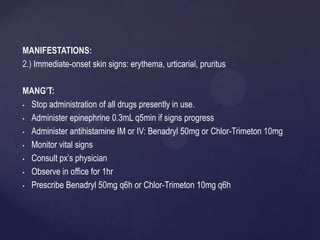
2.) Immediate-onset skin signs: erythema, urticarial, pruritus
MANG’T:
• Stop administration of all drugs presently in use.
• Administer epinephrine 0.3mL q5min if signs progress
• Administer antihistamine IM or IV: Benadryl 50mg or Chlor-Trimeton 10mg
• Monitor vital signs
• Consult px’s physician
• Observe in office for 1hr
• Prescribe Benadryl 50mg q6h or Chlor-Trimeton 10mg q6h
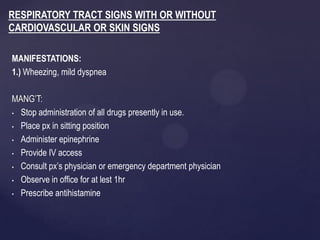
MANIFESTATIONS:
1.) Wheezing, mild dyspnea
MANG’T:
• Stop administration of all drugs presently in use.
• Place px in sitting position
• Administer epinephrine
• Provide IV access
• Consult px’s physician or emergency department physician
• Observe in office for at lest 1hr
• Prescribe antihistamine
RESPIRATORY TRACT SIGNS WITH OR WITHOUT
CARDIOVASCULAR OR SKIN SIGNS
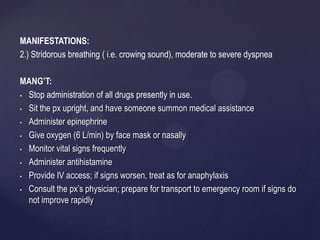
MANIFESTATIONS:
2.) Stridorous breathing ( i.e. crowing sound), moderate to severe dyspnea
MANG’T:
• Stop administration of all drugs presently in use.
• Sit the px upright, and have someone summon medical assistance
• Administer epinephrine
• Give oxygen (6 L/min) by face mask or nasally
• Monitor vital signs frequently
• Administer antihistamine
• Provide IV access; if signs worsen, treat as for anaphylaxis
• Consult the px’s physician; prepare for transport to emergency room if signs do
not improve rapidly
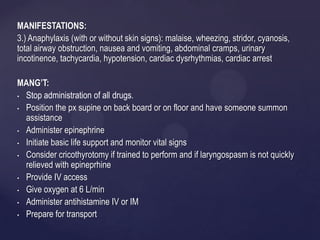
MANIFESTATIONS:
3.) Anaphylaxis (with or without skin signs): malaise, wheezing, stridor, cyanosis,
total airway obstruction, nausea and vomiting, abdominal cramps, urinary
incotinence, tachycardia, hypotension, cardiac dysrhythmias, cardiac arrest
MANG’T:
• Stop administration of all drugs.
• Position the px supine on back board or on floor and have someone summon
assistance
• Administer epinephrine
• Initiate basic life support and monitor vital signs
• Consider cricothyrotomy if trained to perform and if laryngospasm is not quickly
relieved with epineprhine
• Provide IV access
• Give oxygen at 6 L/min
• Administer antihistamine IV or IM
• Prepare for transport
EPINEPHRINE
the one drug necessary for the management of
allergic reaction.
Lidocaine
is an amide anesthetic and allergies to it are rare.
Anaphylaxis is not one of the most common medical emergencies
that occurs in the dental office. However, when it does occur, it is going to
require the swiftest response. Having a preloaded syringe of epinephrine in
the emergency drug kit can save valuable time. No other drug has to be
administered as swiftly in an emergency. In addition, no other drug in the
emergency drug kit should be in a preloaded syringe as it could lead to
confusion in a case of anaphylaxis.
Benadryl
blocks histamine release, and cortisone provides anti-inflammatory
effects. Benadryl is effective against histamine release and the mild reaction of rash
or hives. But it does nothing to block the action of other chemical mediators of
anaphylaxis that cause bronchospasm and cardiovascular collapse.
The determining factor is "breathing." If a patient is in respiratory
distress, epinephrine must be administered no matter what medication the
patient has taken. At that point, if epinephrine is not administered, the
patient will die. If breathing is not a problem and only rash and mild reaction
are present, oral administration of diphenhydramine (Benadryl) is all that
should be done to manage the allergic reaction.
The most common adverse reaction to local anesthetics is a toxicity
reaction, not an allergic reaction. Toxicity reaction is more common when the
anesthetic is used plain (without a vasoconstrictor, which prevents the
anesthetic from leaving the anesthetized site too rapidly). Amide-type
anesthetics have not been a problem in allergic reactions.
Amide-type anesthetics have not been a problem in allergic
reactions. ( lidocaine, mepivacaine, prilocaine)
Ester-type anesthetics can cause allergic reactions.
These anesthetics, such as procaine, propoxycaine, and
chloroprocaine
Ester-type anesthetics are not commonly used for local
anesthesia injections. The exception is for a patient with a liver disorder
which contraindicates the use of amide anesthetics. Ester anesthetics
are used for topical application for injection sites and scaling sites.
Topical anesthetics such as Hurricaine and Solarcaine should be used
very sparingly and not allowed to flow into the oropharynx. Excessive
amounts or contact with the oropharynx could intensify an allergic
reaction.
• It is important to remember that allergic reactions worsen rapidly and
reverse slowly. Do not hesitate to call EMS. If you call EMS and notice a
marked improvement in the patient`s condition, you can cancel the request
while they are en route or allow paramedics to evaluate the patient and not
necessarily transport the patient to the hospital. It is assuring to know that
they are on the way in case the reaction is not reversed or worsens.
• We cannot always prevent an allergic reaction from occurring so we must
be prepared to manage such an emergency. Epinephrine is one of the most
dangerous drugs in the medical emergency drug kit as it could cause a
stroke or heart attack if given to a patient with underlying conditions which
contraindicate its use. But if you do not have epinephrine available or fail to
use it in the case of respiratory depression and/or anaphylaxis, a patient will
die.
• Take a minute to check the office emergency drug kit. Locate the epinephrine and
check the expiration date. If the drug has expired, request a replacement for it.
These few actions could save a life since someone took the time to prepare for a
life-threatening medical emergency.

Allergy and Its Management

  • 1.
  • 2.
    Several of thedrugs administered to patients undergoing oral surgery can act as antigenic stimuli, provoking allergic reactions.
  • 3.
    SKIN SIGNS MANEFESTATIONS: 1.) Delayed-onsetskin signs: erythema, urticarial, pruritus, angioedema MANG’T: • Stop administration of all drugs presently in use. • Administer IV or IM Benadryl* 50mg or Chlor-Trimeton 10mg • Refer to physician • Prescribe oral histamine, such as Benadryl 50mg q6h or Chlor-Trimeton 10mg q6h MANIFESTATIONS AND MANAGEMENT OF HYPERSENSITIVITY (ALLERGIC) REACTIONS
  • 5.
    MANIFESTATIONS: 2.) Immediate-onset skinsigns: erythema, urticarial, pruritus MANG’T: • Stop administration of all drugs presently in use. • Administer epinephrine 0.3mL q5min if signs progress • Administer antihistamine IM or IV: Benadryl 50mg or Chlor-Trimeton 10mg • Monitor vital signs • Consult px’s physician • Observe in office for 1hr • Prescribe Benadryl 50mg q6h or Chlor-Trimeton 10mg q6h
  • 6.
    MANIFESTATIONS: 1.) Wheezing, milddyspnea MANG’T: • Stop administration of all drugs presently in use. • Place px in sitting position • Administer epinephrine • Provide IV access • Consult px’s physician or emergency department physician • Observe in office for at lest 1hr • Prescribe antihistamine RESPIRATORY TRACT SIGNS WITH OR WITHOUT CARDIOVASCULAR OR SKIN SIGNS
  • 7.
    MANIFESTATIONS: 2.) Stridorous breathing( i.e. crowing sound), moderate to severe dyspnea MANG’T: • Stop administration of all drugs presently in use. • Sit the px upright, and have someone summon medical assistance • Administer epinephrine • Give oxygen (6 L/min) by face mask or nasally • Monitor vital signs frequently • Administer antihistamine • Provide IV access; if signs worsen, treat as for anaphylaxis • Consult the px’s physician; prepare for transport to emergency room if signs do not improve rapidly
  • 8.
    MANIFESTATIONS: 3.) Anaphylaxis (withor without skin signs): malaise, wheezing, stridor, cyanosis, total airway obstruction, nausea and vomiting, abdominal cramps, urinary incotinence, tachycardia, hypotension, cardiac dysrhythmias, cardiac arrest MANG’T: • Stop administration of all drugs. • Position the px supine on back board or on floor and have someone summon assistance • Administer epinephrine • Initiate basic life support and monitor vital signs • Consider cricothyrotomy if trained to perform and if laryngospasm is not quickly relieved with epineprhine • Provide IV access • Give oxygen at 6 L/min • Administer antihistamine IV or IM • Prepare for transport
  • 9.
    EPINEPHRINE the one drugnecessary for the management of allergic reaction.
  • 10.
    Lidocaine is an amideanesthetic and allergies to it are rare.
  • 11.
    Anaphylaxis is notone of the most common medical emergencies that occurs in the dental office. However, when it does occur, it is going to require the swiftest response. Having a preloaded syringe of epinephrine in the emergency drug kit can save valuable time. No other drug has to be administered as swiftly in an emergency. In addition, no other drug in the emergency drug kit should be in a preloaded syringe as it could lead to confusion in a case of anaphylaxis.
  • 12.
    Benadryl blocks histamine release,and cortisone provides anti-inflammatory effects. Benadryl is effective against histamine release and the mild reaction of rash or hives. But it does nothing to block the action of other chemical mediators of anaphylaxis that cause bronchospasm and cardiovascular collapse.
  • 13.
    The determining factoris "breathing." If a patient is in respiratory distress, epinephrine must be administered no matter what medication the patient has taken. At that point, if epinephrine is not administered, the patient will die. If breathing is not a problem and only rash and mild reaction are present, oral administration of diphenhydramine (Benadryl) is all that should be done to manage the allergic reaction.
  • 14.
    The most commonadverse reaction to local anesthetics is a toxicity reaction, not an allergic reaction. Toxicity reaction is more common when the anesthetic is used plain (without a vasoconstrictor, which prevents the anesthetic from leaving the anesthetized site too rapidly). Amide-type anesthetics have not been a problem in allergic reactions. Amide-type anesthetics have not been a problem in allergic reactions. ( lidocaine, mepivacaine, prilocaine) Ester-type anesthetics can cause allergic reactions. These anesthetics, such as procaine, propoxycaine, and chloroprocaine
  • 15.
    Ester-type anesthetics arenot commonly used for local anesthesia injections. The exception is for a patient with a liver disorder which contraindicates the use of amide anesthetics. Ester anesthetics are used for topical application for injection sites and scaling sites. Topical anesthetics such as Hurricaine and Solarcaine should be used very sparingly and not allowed to flow into the oropharynx. Excessive amounts or contact with the oropharynx could intensify an allergic reaction.
  • 16.
    • It isimportant to remember that allergic reactions worsen rapidly and reverse slowly. Do not hesitate to call EMS. If you call EMS and notice a marked improvement in the patient`s condition, you can cancel the request while they are en route or allow paramedics to evaluate the patient and not necessarily transport the patient to the hospital. It is assuring to know that they are on the way in case the reaction is not reversed or worsens.
  • 17.
    • We cannotalways prevent an allergic reaction from occurring so we must be prepared to manage such an emergency. Epinephrine is one of the most dangerous drugs in the medical emergency drug kit as it could cause a stroke or heart attack if given to a patient with underlying conditions which contraindicate its use. But if you do not have epinephrine available or fail to use it in the case of respiratory depression and/or anaphylaxis, a patient will die.
  • 18.
    • Take aminute to check the office emergency drug kit. Locate the epinephrine and check the expiration date. If the drug has expired, request a replacement for it. These few actions could save a life since someone took the time to prepare for a life-threatening medical emergency.