Dr. NDAYISABA CORNEILLE
CEO of CHG
MBChB,DCM,BCSIT,CCNA
Supported BY
METRONIDAZOLE
 A nitroimidazole antibiotic used particularly for;
 Anaerobic bacteria &
 Protozoa
 Its an antimicrobial drug which is highly active
against;
 Anaerobic bacteria
 Some protozoa
 Amoeba
 Thus metronidazole is an;
 Antibiotic drug
 Ameobicide
 Antiprotozoal
 Its common trade name is Fragyl in USA & Uganda
 Tinidazole is similar to metronidazole but with a
long duration of action
Anti-bacterial ,anti-protozoal & amoebic activity of
metronidazole
This drug is kills;
1. Anaerobic bacteria like;
 Bacteroides fragilis spp
 Fusobacterium spp
 Clostridium spp; c. tetani ,c. difficile ,
c. perfringens
 Peptococcus spp
 Peptostreptococcus spp
 Prevotella spp etc
2. Protozoa like giardia lamblia which coz giardiasis
3. Amoeba like entamoeba histolytica which can coz
bacillary dysentery, hepatic abscess (amoebema)
Pharmacodynamics
Mechanism of action
 Metro is selectively absorbed by anaerobic
bacteria, sensitive protozoa & amoeba
 Within these micro-organisms fragyl is
converted to a toxic form that damages the
DNA of the microorganisms
Pharmacokinetics
 Its available in form of;
 Tabs
 Syrups
 IV solutions
 Topical application gel
 Rectal preparations (suppositories)
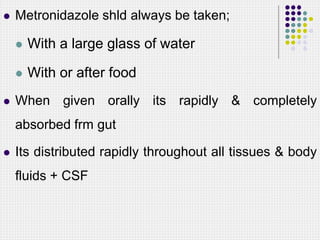
 Metronidazole shld always be taken;
 With a large glass of water
 With or after food
 When given orally its rapidly & completely
absorbed frm gut
 Its distributed rapidly throughout all tissues & body
fluids + CSF
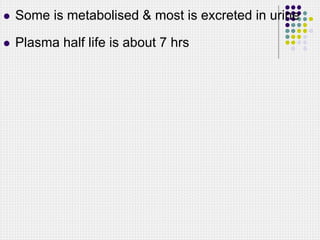
 Some is metabolised & most is excreted in urine
 Plasma half life is about 7 hrs
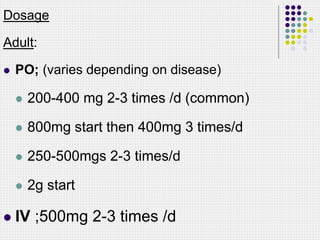
Dosage
Adult:
 PO; (varies depending on disease)
 200-400 mg 2-3 times /d (common)
 800mg start then 400mg 3 times/d
 250-500mgs 2-3 times/d
 2g start
 IV ;500mg 2-3 times /d
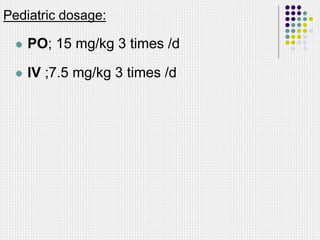
Pediatric dosage:
 PO; 15 mg/kg 3 times /d
 IV ;7.5 mg/kg 3 times /d
INDICATIONS OF
METRONIDAZOLE
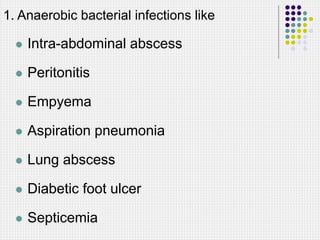
1. Anaerobic bacterial infections like
 Intra-abdominal abscess
 Peritonitis
 Empyema
 Aspiration pneumonia
 Lung abscess
 Diabetic foot ulcer
 Septicemia
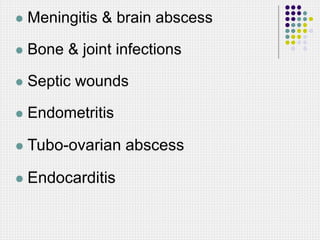
 Meningitis & brain abscess
 Bone & joint infections
 Septic wounds
 Endometritis
 Tubo-ovarian abscess
 Endocarditis
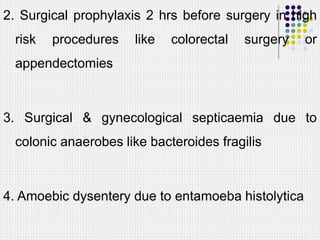
2. Surgical prophylaxis 2 hrs before surgery in high
risk procedures like colorectal surgery or
appendectomies
3. Surgical & gynecological septicaemia due to
colonic anaerobes like bacteroides fragilis
4. Amoebic dysentery due to entamoeba histolytica
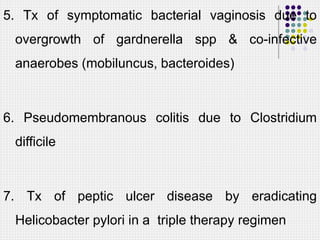
5. Tx of symptomatic bacterial vaginosis due to
overgrowth of gardnerella spp & co-infective
anaerobes (mobiluncus, bacteroides)
6. Pseudomembranous colitis due to Clostridium
difficile
7. Tx of peptic ulcer disease by eradicating
Helicobacter pylori in a triple therapy regimen
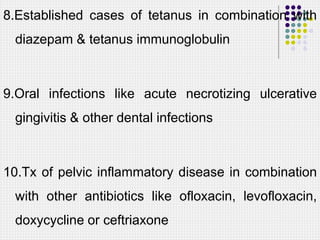
8.Established cases of tetanus in combination with
diazepam & tetanus immunoglobulin
9.Oral infections like acute necrotizing ulcerative
gingivitis & other dental infections
10.Tx of pelvic inflammatory disease in combination
with other antibiotics like ofloxacin, levofloxacin,
doxycycline or ceftriaxone
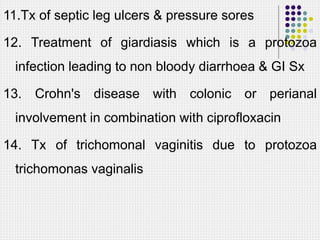
11.Tx of septic leg ulcers & pressure sores
12. Treatment of giardiasis which is a protozoa
infection leading to non bloody diarrhoea & GI Sx
13. Crohn's disease with colonic or perianal
involvement in combination with ciprofloxacin
14. Tx of trichomonal vaginitis due to protozoa
trichomonas vaginalis
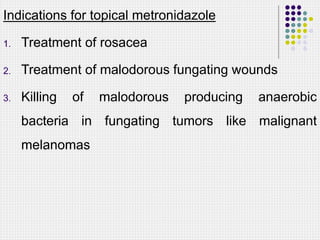
Indications for topical metronidazole
1. Treatment of rosacea
2. Treatment of malodorous fungating wounds
3. Killing of malodorous producing anaerobic
bacteria in fungating tumors like malignant
melanomas
unwanted effects
of
metronidazole
 Its has few S/Es
1. Minor Gl disturbances like
 Metallic & bitter mouth taste
 Nausea & vomiting
 Anorexia
 Diarrhoea
 Furred tongue
 Oral mucositis
2. Thrombophlebitis after IV drug
Other very rare S/Es
1. Blood disorders like thrombocytopenia,
neutropenia, pancytopenia etc
2. Hypersensitivity reactions like;
 Rash
 Pruritus
 Fevers
 Flushing of the skin
3. CNS disturbances
 Dizziness
 Drowsiness
 Headache
 Ataxia (staggering gait)
 Psychosis
 Seizures
 Sensory neuropathies
4. Hepatitis
5. Jaundice
6. Pancreatitis
7. Visual disturbances
8. Myalgias & arthralgias
9. Darkening of urine
Contraindications
1. First trimester of pregnancy
2. Relatively contraindicated in pts with hepatic
impairment & hepatic encephalopathy
3. Concurrent intake of alcohol with metronidazole
bcoz Fragyl inhibits alcohol metabolism leading to
flushing, DIB, tachycardia, N&V etc
4. Acute porphyria
END
BY
DR NDAYISABA CORNEILLE
MBChB,DCM,BCSIT,CCNA,Cyber Security
contact: amentalhealths@gmail.com ,
ndayicoll@gmail.com
whatsaps :+256772497591 /+250788958241
THANKS FOR LISTENING

Metronidazole.ppt

  • 1.
    Dr. NDAYISABA CORNEILLE CEOof CHG MBChB,DCM,BCSIT,CCNA Supported BY METRONIDAZOLE
  • 2.
     A nitroimidazoleantibiotic used particularly for;  Anaerobic bacteria &  Protozoa  Its an antimicrobial drug which is highly active against;  Anaerobic bacteria  Some protozoa  Amoeba
  • 3.
     Thus metronidazoleis an;  Antibiotic drug  Ameobicide  Antiprotozoal  Its common trade name is Fragyl in USA & Uganda  Tinidazole is similar to metronidazole but with a long duration of action
  • 4.
    Anti-bacterial ,anti-protozoal &amoebic activity of metronidazole This drug is kills; 1. Anaerobic bacteria like;  Bacteroides fragilis spp  Fusobacterium spp  Clostridium spp; c. tetani ,c. difficile , c. perfringens
  • 5.
     Peptococcus spp Peptostreptococcus spp  Prevotella spp etc 2. Protozoa like giardia lamblia which coz giardiasis 3. Amoeba like entamoeba histolytica which can coz bacillary dysentery, hepatic abscess (amoebema)
  • 6.
    Pharmacodynamics Mechanism of action Metro is selectively absorbed by anaerobic bacteria, sensitive protozoa & amoeba  Within these micro-organisms fragyl is converted to a toxic form that damages the DNA of the microorganisms
  • 7.
    Pharmacokinetics  Its availablein form of;  Tabs  Syrups  IV solutions  Topical application gel  Rectal preparations (suppositories)
  • 8.
     Metronidazole shldalways be taken;  With a large glass of water  With or after food  When given orally its rapidly & completely absorbed frm gut  Its distributed rapidly throughout all tissues & body fluids + CSF
  • 9.
     Some ismetabolised & most is excreted in urine  Plasma half life is about 7 hrs
  • 10.
    Dosage Adult:  PO; (variesdepending on disease)  200-400 mg 2-3 times /d (common)  800mg start then 400mg 3 times/d  250-500mgs 2-3 times/d  2g start  IV ;500mg 2-3 times /d
  • 11.
    Pediatric dosage:  PO;15 mg/kg 3 times /d  IV ;7.5 mg/kg 3 times /d
  • 12.
  • 13.
    1. Anaerobic bacterialinfections like  Intra-abdominal abscess  Peritonitis  Empyema  Aspiration pneumonia  Lung abscess  Diabetic foot ulcer  Septicemia
  • 14.
     Meningitis &brain abscess  Bone & joint infections  Septic wounds  Endometritis  Tubo-ovarian abscess  Endocarditis
  • 15.
    2. Surgical prophylaxis2 hrs before surgery in high risk procedures like colorectal surgery or appendectomies 3. Surgical & gynecological septicaemia due to colonic anaerobes like bacteroides fragilis 4. Amoebic dysentery due to entamoeba histolytica
  • 16.
    5. Tx ofsymptomatic bacterial vaginosis due to overgrowth of gardnerella spp & co-infective anaerobes (mobiluncus, bacteroides) 6. Pseudomembranous colitis due to Clostridium difficile 7. Tx of peptic ulcer disease by eradicating Helicobacter pylori in a triple therapy regimen
  • 17.
    8.Established cases oftetanus in combination with diazepam & tetanus immunoglobulin 9.Oral infections like acute necrotizing ulcerative gingivitis & other dental infections 10.Tx of pelvic inflammatory disease in combination with other antibiotics like ofloxacin, levofloxacin, doxycycline or ceftriaxone
  • 18.
    11.Tx of septicleg ulcers & pressure sores 12. Treatment of giardiasis which is a protozoa infection leading to non bloody diarrhoea & GI Sx 13. Crohn's disease with colonic or perianal involvement in combination with ciprofloxacin 14. Tx of trichomonal vaginitis due to protozoa trichomonas vaginalis
  • 19.
    Indications for topicalmetronidazole 1. Treatment of rosacea 2. Treatment of malodorous fungating wounds 3. Killing of malodorous producing anaerobic bacteria in fungating tumors like malignant melanomas
  • 20.
  • 21.
     Its hasfew S/Es 1. Minor Gl disturbances like  Metallic & bitter mouth taste  Nausea & vomiting  Anorexia  Diarrhoea  Furred tongue  Oral mucositis 2. Thrombophlebitis after IV drug
  • 22.
    Other very rareS/Es 1. Blood disorders like thrombocytopenia, neutropenia, pancytopenia etc 2. Hypersensitivity reactions like;  Rash  Pruritus  Fevers  Flushing of the skin
  • 23.
    3. CNS disturbances Dizziness  Drowsiness  Headache  Ataxia (staggering gait)  Psychosis  Seizures  Sensory neuropathies
  • 24.
    4. Hepatitis 5. Jaundice 6.Pancreatitis 7. Visual disturbances 8. Myalgias & arthralgias 9. Darkening of urine
  • 25.
    Contraindications 1. First trimesterof pregnancy 2. Relatively contraindicated in pts with hepatic impairment & hepatic encephalopathy 3. Concurrent intake of alcohol with metronidazole bcoz Fragyl inhibits alcohol metabolism leading to flushing, DIB, tachycardia, N&V etc 4. Acute porphyria
  • 26.
    END BY DR NDAYISABA CORNEILLE MBChB,DCM,BCSIT,CCNA,CyberSecurity contact: amentalhealths@gmail.com , ndayicoll@gmail.com whatsaps :+256772497591 /+250788958241 THANKS FOR LISTENING