DRUG ALLERGIES
DRUG ALLERGIES
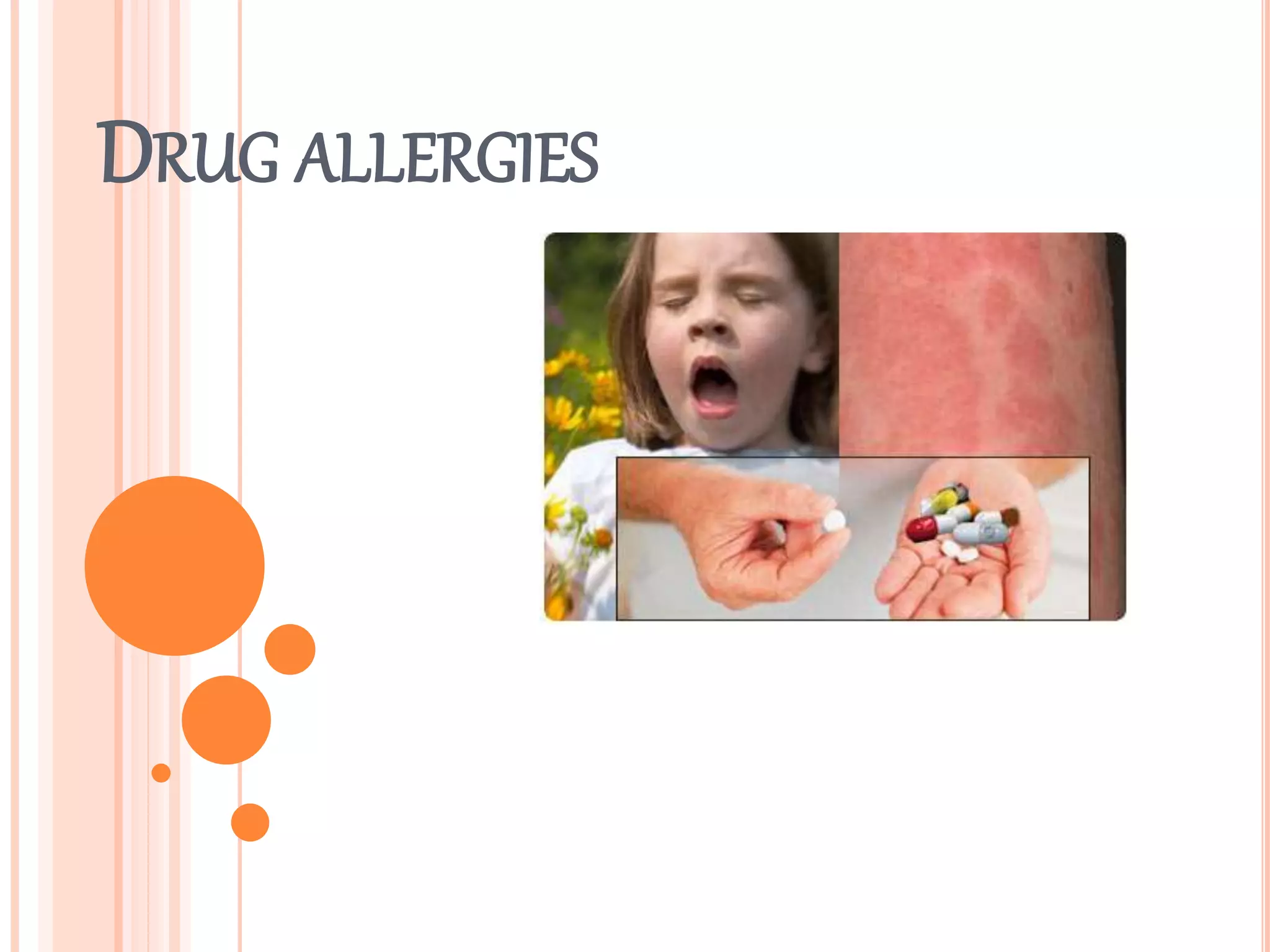
Drug allergies are a group of symptoms
caused by an allergic reaction to a drug
(medicine).
Causes
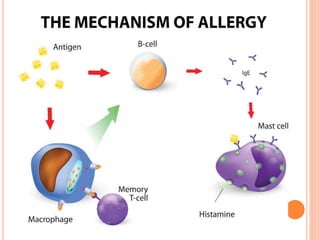
 A drug allergy involves an immune response in the body
that produces an allergic reaction to a medicine.
 The first time you take the medicine, you may have no
problems. But, your body's immune system may
produce a substance (antibody) against that drug. The
next time you take the drug, the antibody may tell
your white blood cells to make chemical called
histamine. Histamines and other chemicals cause your
allergy symptoms.
COMMON ALLERGY-CAUSING DRUGS INCLUDE:
 Drugs used to treat seizures
 Insulin (especially animal sources of insulin)
 Substances containing iodine, such as x-ray
contrast dyes (these can cause allergy-like
reactions)
 Penicillin and related antibiotics
 Sulfa drugs
SYMPTOMS
 Most drug allergies cause minor skin rashes and
hives. These symptoms may occur right away or
hours after receiving the drug. Serum sickness is
a delayed type of drug allergy that occurs a
week or more after you are exposed to a
medicine or vaccine.
 Common symptoms of a drug allergy include:
 Hives
 Itching of the skin or eyes (common)
 Skin rash (common)
 Swelling of the lips, tongue, or face
 Wheezing
INTERACTION OF DRUGS WITH THE
IMMUNE SYSTEM
Drugs can elicit drug-specific
immune responses in two ways
The drug may act as an antigen and
elicit one of several classic immune
responses.
The drug may directly interact with
immune receptors, and under certain
circumstances, lead to activation of
specific immune cells.
 Drugs acting as antigens — Most
medications are small molecular weight
compounds with simple chemical
structures which are not easily
recognized by immune cells and are
considered too small to interact with
immune receptors with sufficient
strength to activate T or B cells. Thus,
most drugs are not effective antigens and
are not immunogenic in their native state.
EXAMS AND TESTS
An examination may show:
 Decreased blood pressure
 Hives
 Rash
 Swelling of the lips, face, or tongue
 Wheezing
 Skin testing may help diagnose an allergy to penicillin-
type medicines. There is no good skin or blood tests
to help diagnose other drug allergies.
 If you have had allergy-like symptoms after taking a
medicine or receiving contrast (dye) before getting
an x-ray, your health care provider will often tell you
that this is proof of a drug allergy. You do not need
more testing.
The goal of treatment is to
relieve symptoms and prevent a
severe reaction.
Treatment may include:
Antihistamines to relieve mild
symptoms such as rash, hives,
and itching
Bronchodilators such as
albuterol to reduce asthma-like
symptoms (moderate wheezing
or cough)
Corticosteroids applied to the
skin, given by mouth, or given
through a vein (intravenously)
Epinephrine by injection to
treat anaphylaxis
The offending medicine and
similar drugs should be avoided.
Make sure all your providers --
including dentists and hospital
staff -- know about any drug
allergies that you or your
children have.
In some cases, penicillin (or other
drug) allergy responds to
desensitization. This treatment
involves being given very small doses
at first, followed by larger and
larger doses of a medicine to
improve your tolerance of the drug.
This process should be done only by
an allergist, when there is no
alternative drug for you to take.
PREVENTION
 There is generally no way to prevent a drug allergy.
 If you have a known drug allergy, avoiding the drug is the
best way to prevent an allergic reaction. You may also be
told to avoid similar medicines.
 In some cases, a provider may approve the use of a drug
that causes an allergy if you are first treated with
medicines that slow or block the immune response. These
include corticosteroids (such as prednisone) and
antihistamines. Do not try this without a provider's
supervision. Pretreatment with corticosteroids and
antihistamines has been shown to prevent allergic
reactions in people who need to get x-ray contrast dye.
Allergies due to drugs

Allergies due to drugs

  • 1.
  • 3.
    DRUG ALLERGIES Drug allergiesare a group of symptoms caused by an allergic reaction to a drug (medicine). Causes  A drug allergy involves an immune response in the body that produces an allergic reaction to a medicine.  The first time you take the medicine, you may have no problems. But, your body's immune system may produce a substance (antibody) against that drug. The next time you take the drug, the antibody may tell your white blood cells to make chemical called histamine. Histamines and other chemicals cause your allergy symptoms.
  • 4.
    COMMON ALLERGY-CAUSING DRUGSINCLUDE:  Drugs used to treat seizures  Insulin (especially animal sources of insulin)  Substances containing iodine, such as x-ray contrast dyes (these can cause allergy-like reactions)  Penicillin and related antibiotics  Sulfa drugs
  • 5.
    SYMPTOMS  Most drugallergies cause minor skin rashes and hives. These symptoms may occur right away or hours after receiving the drug. Serum sickness is a delayed type of drug allergy that occurs a week or more after you are exposed to a medicine or vaccine.  Common symptoms of a drug allergy include:  Hives  Itching of the skin or eyes (common)  Skin rash (common)  Swelling of the lips, tongue, or face  Wheezing
  • 7.
    INTERACTION OF DRUGSWITH THE IMMUNE SYSTEM Drugs can elicit drug-specific immune responses in two ways The drug may act as an antigen and elicit one of several classic immune responses. The drug may directly interact with immune receptors, and under certain circumstances, lead to activation of specific immune cells.
  • 8.
     Drugs actingas antigens — Most medications are small molecular weight compounds with simple chemical structures which are not easily recognized by immune cells and are considered too small to interact with immune receptors with sufficient strength to activate T or B cells. Thus, most drugs are not effective antigens and are not immunogenic in their native state.
  • 9.
    EXAMS AND TESTS Anexamination may show:  Decreased blood pressure  Hives  Rash  Swelling of the lips, face, or tongue  Wheezing  Skin testing may help diagnose an allergy to penicillin- type medicines. There is no good skin or blood tests to help diagnose other drug allergies.  If you have had allergy-like symptoms after taking a medicine or receiving contrast (dye) before getting an x-ray, your health care provider will often tell you that this is proof of a drug allergy. You do not need more testing.
  • 10.
    The goal oftreatment is to relieve symptoms and prevent a severe reaction. Treatment may include: Antihistamines to relieve mild symptoms such as rash, hives, and itching
  • 11.
    Bronchodilators such as albuterolto reduce asthma-like symptoms (moderate wheezing or cough) Corticosteroids applied to the skin, given by mouth, or given through a vein (intravenously)
  • 12.
    Epinephrine by injectionto treat anaphylaxis The offending medicine and similar drugs should be avoided. Make sure all your providers -- including dentists and hospital staff -- know about any drug allergies that you or your children have.
  • 13.
    In some cases,penicillin (or other drug) allergy responds to desensitization. This treatment involves being given very small doses at first, followed by larger and larger doses of a medicine to improve your tolerance of the drug. This process should be done only by an allergist, when there is no alternative drug for you to take.
  • 14.
    PREVENTION  There isgenerally no way to prevent a drug allergy.  If you have a known drug allergy, avoiding the drug is the best way to prevent an allergic reaction. You may also be told to avoid similar medicines.  In some cases, a provider may approve the use of a drug that causes an allergy if you are first treated with medicines that slow or block the immune response. These include corticosteroids (such as prednisone) and antihistamines. Do not try this without a provider's supervision. Pretreatment with corticosteroids and antihistamines has been shown to prevent allergic reactions in people who need to get x-ray contrast dye.