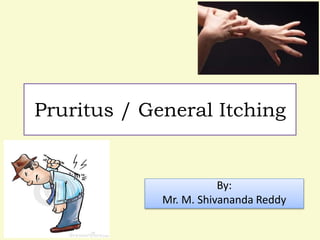
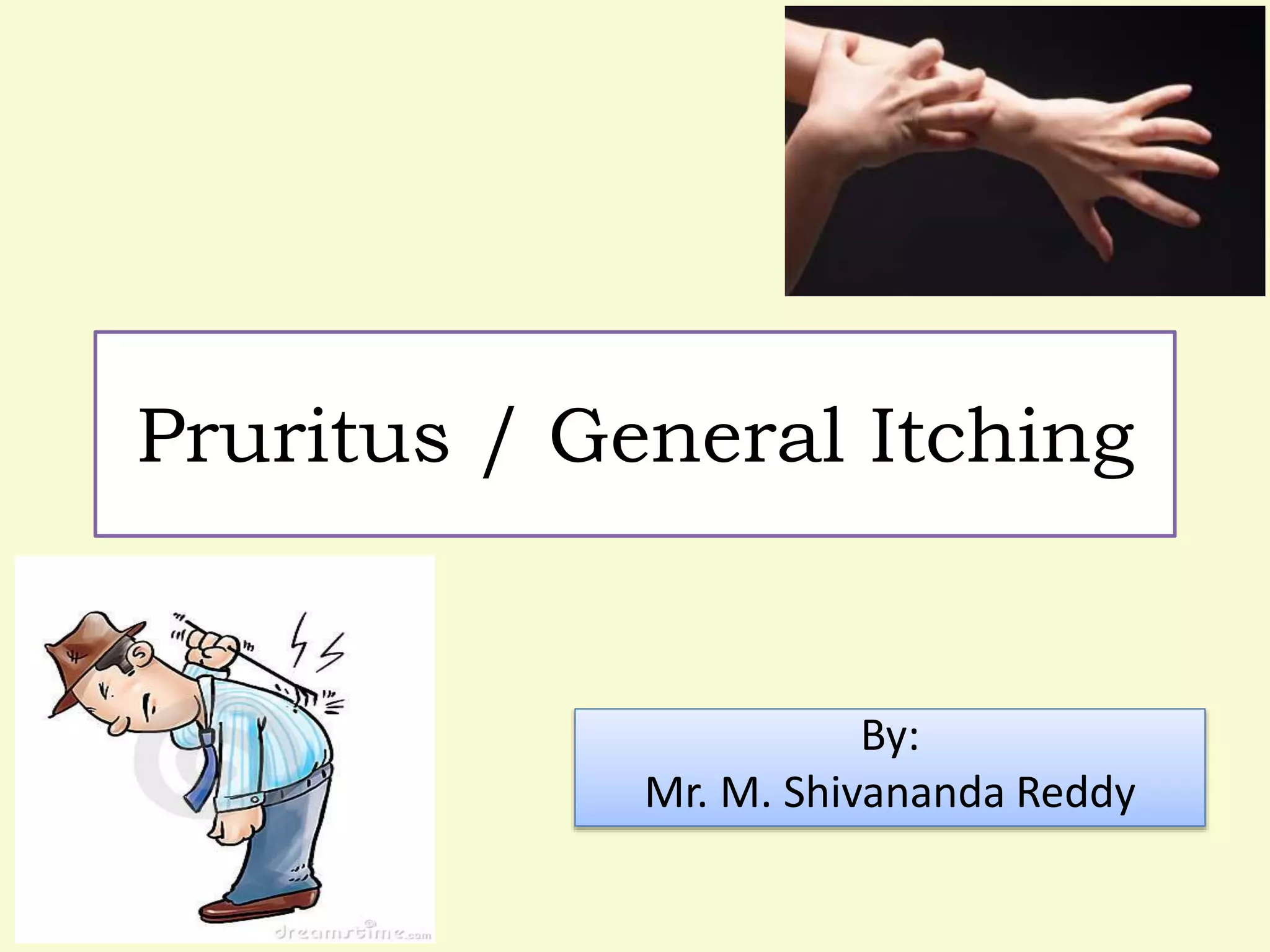
Pruritus / General Itching
By:
Mr. M. Shivananda Reddy
Introduction
• Pruritus is one of the most common symptoms of
patients with dermatologic disorders.
• Itch receptors are unmyelinated, penicillate( brushlike)
nerve endings that are found exclusively in the skin,
mucous membranes, and cornea.
• Although pruritus is usually caused by primary skin
disease with resultant rash or lesions, it may occur
without a rash or lesion.
Definition:
• Pruritus or itch is an uncomfortable sensation
and emotional experience associated with an
actual or perceived disturbance to the skin that
provokes the desire to scratch.
Causes:
• Dry skin.
Dry skin usually results from environmental factors such as
hot or cold weather with low humidity and washing or
bathing too much.
• Skin conditions and rashes.
Many skin conditions like dermatitis, psoriasis, scabies,
mycotic, bacterial and viral infections, pediculosis, insect
bites, folliculitis, chickenpox etc causes itching.
• Systemic diseases.
These include liver disease, kidney failure( uremia), thyroid
problems and diabetes etc. The itching usually affects the whole
body
• Nerve disorders.
Conditions that affect the nervous system — such as brachioradial
pruritus, spinal tumors, diabetes can cause itching.
• Irritation and allergic reactions.
Wool, chemicals, cosmetics, soaps and other substances can irritate
the skin and cause itching. Food allergies also may cause skin to
itch.
• Drugs.
 Anaphylactic reactions can cause widespread rashes and itching.
 Aspirin, antibiotics, hormones (estrogens, testosterone, or oral
contraceptives), and opioids (morphine or cocaine) may cause
pruritus directly or by increasing sensitivity to ultraviolet light.
• Psychological Factors:
 Acute and chronic stress
• Pregnancy
CLASSIFICATION OF PRURITUS
Based on etiology of pruritus its classified into different
categories:
• Category I: Dermatological diseases
• Category II: Systemic diseases including diseases of
pregnancy and drug-induced pruritus:
• Category III: Neurological pruritus:
• Category IV: Psychiatric / psychosomatic diseases.
• Category V: Mixed overlapping and coexistence of several
diseases
• Category VI: Undetermined origins.
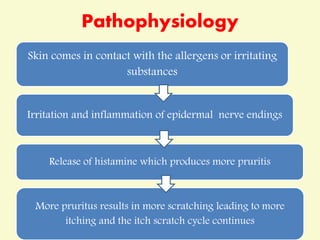
Pathophysiology
Skin comes in contact with the allergens or irritating
substances
Irritation and inflammation of epidermal nerve endings
Release of histamine which produces more pruritis
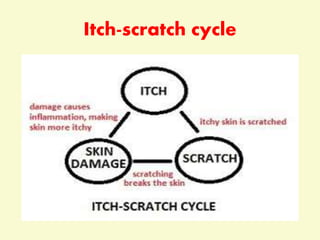
More pruritus results in more scratching leading to more
itching and the itch scratch cycle continues
Itch-scratch cycle
Signs and symptoms:
• Dry, cracked skin
• Leathery or scaly texture to the skin
• Excoriation, redness, raised areas (ie, wheals),
infection, or changes in pigmentation may result.
• Pruritus usually is more severe at night and is less
frequently reported during waking hours, due to
distraction by daily activities.
Diagnosis
• History collection
• Physical examination
• Blood tests. A complete blood count can provide
evidence of systemic disease.
• Liver function tests
• Kidney function tests
• Thyroid function test. Thyroid abnormalities, such as
hyperthyroidism, may cause itching.
Management
Medical management:
• Topical Corticosteroids-
Prednisolone, Dexamethasone Etc.
• Oral antihistamines.
An antihistamine, such as diphenhydramine
(Benadryl) or hydroxyzine (Atarax), prescribed in a
sedative dose at bedtime is effective in producing a
restful and comfortable sleep.
• Antidepressants.
Tricyclic antidepressants, such as doxepin, may be
prescribed for pruritus of neuro-psychogenic origin.
• Treating the underlying disease
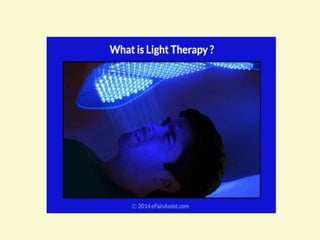
• Light therapy (phototherapy)
Phototherapy involves exposing the skin to certain
wavelengths of ultraviolet light. Multiple sessions are
usually scheduled until the itching is under control.
• A warm bath with a mild soap followed by
application of a bland emollient to moist skin can
control xerosis (ie, dry skin).
• Applying a cold compress, ice cube, or cool agents
that contain menthol and camphor (which
constrict blood vessels) may also help relieve
pruritus.
Nursing Management
NURSING DIAGNOSIS:
• Altered comfort: pruritus
• Risk for Impaired Skin Integrity related to
pruritis
Nursing interventions:
• Determine the cause of pruritus
• Assist client and family with identifying and
avoiding irritants that exacerbate pruritus.
• Apply cool, moist compresses to pruritic areas
• Keep client's fingernails short; have client wear
mitts if necessary. Scratching with fingernails can
excoriate the area and increase skin damage.
• Leave pruritic area open to the air if possible.
Covering the area with a non-ventilated
dressing can increase itching sensation and
warmth in the area.
• Use non-allergenic mild soap and use it
limited.
Many soaps can be irritating to the skin and
increase the itching sensation.
• Apply emollient creams or ointments frequently to
prevent dryness.
• Pat skin dry after bathing, making sure to dry
thoroughly
• Provide distraction techniques such as music,
Television, or massage to distract the client from the
itching sensation.
• Administer Antihistamins and Corticosteroids as
prescribed.
Complications
• Skin injury
• Infection
• Scarring
Pruritis or itching

Pruritis or itching

  • 1.
    Pruritus / GeneralItching By: Mr. M. Shivananda Reddy
  • 2.
    Introduction • Pruritus isone of the most common symptoms of patients with dermatologic disorders. • Itch receptors are unmyelinated, penicillate( brushlike) nerve endings that are found exclusively in the skin, mucous membranes, and cornea. • Although pruritus is usually caused by primary skin disease with resultant rash or lesions, it may occur without a rash or lesion.
  • 3.
    Definition: • Pruritus oritch is an uncomfortable sensation and emotional experience associated with an actual or perceived disturbance to the skin that provokes the desire to scratch.
  • 4.
    Causes: • Dry skin. Dryskin usually results from environmental factors such as hot or cold weather with low humidity and washing or bathing too much. • Skin conditions and rashes. Many skin conditions like dermatitis, psoriasis, scabies, mycotic, bacterial and viral infections, pediculosis, insect bites, folliculitis, chickenpox etc causes itching.
  • 5.
    • Systemic diseases. Theseinclude liver disease, kidney failure( uremia), thyroid problems and diabetes etc. The itching usually affects the whole body • Nerve disorders. Conditions that affect the nervous system — such as brachioradial pruritus, spinal tumors, diabetes can cause itching. • Irritation and allergic reactions. Wool, chemicals, cosmetics, soaps and other substances can irritate the skin and cause itching. Food allergies also may cause skin to itch.
  • 6.
    • Drugs.  Anaphylacticreactions can cause widespread rashes and itching.  Aspirin, antibiotics, hormones (estrogens, testosterone, or oral contraceptives), and opioids (morphine or cocaine) may cause pruritus directly or by increasing sensitivity to ultraviolet light. • Psychological Factors:  Acute and chronic stress • Pregnancy
  • 7.
    CLASSIFICATION OF PRURITUS Basedon etiology of pruritus its classified into different categories: • Category I: Dermatological diseases • Category II: Systemic diseases including diseases of pregnancy and drug-induced pruritus: • Category III: Neurological pruritus: • Category IV: Psychiatric / psychosomatic diseases. • Category V: Mixed overlapping and coexistence of several diseases • Category VI: Undetermined origins.
  • 8.
    Pathophysiology Skin comes incontact with the allergens or irritating substances Irritation and inflammation of epidermal nerve endings Release of histamine which produces more pruritis More pruritus results in more scratching leading to more itching and the itch scratch cycle continues
  • 9.
  • 10.
    Signs and symptoms: •Dry, cracked skin • Leathery or scaly texture to the skin • Excoriation, redness, raised areas (ie, wheals), infection, or changes in pigmentation may result. • Pruritus usually is more severe at night and is less frequently reported during waking hours, due to distraction by daily activities.
  • 11.
    Diagnosis • History collection •Physical examination • Blood tests. A complete blood count can provide evidence of systemic disease. • Liver function tests • Kidney function tests • Thyroid function test. Thyroid abnormalities, such as hyperthyroidism, may cause itching.
  • 12.
    Management Medical management: • TopicalCorticosteroids- Prednisolone, Dexamethasone Etc. • Oral antihistamines. An antihistamine, such as diphenhydramine (Benadryl) or hydroxyzine (Atarax), prescribed in a sedative dose at bedtime is effective in producing a restful and comfortable sleep.
  • 13.
    • Antidepressants. Tricyclic antidepressants,such as doxepin, may be prescribed for pruritus of neuro-psychogenic origin. • Treating the underlying disease • Light therapy (phototherapy) Phototherapy involves exposing the skin to certain wavelengths of ultraviolet light. Multiple sessions are usually scheduled until the itching is under control.
  • 15.
    • A warmbath with a mild soap followed by application of a bland emollient to moist skin can control xerosis (ie, dry skin). • Applying a cold compress, ice cube, or cool agents that contain menthol and camphor (which constrict blood vessels) may also help relieve pruritus.
  • 16.
    Nursing Management NURSING DIAGNOSIS: •Altered comfort: pruritus • Risk for Impaired Skin Integrity related to pruritis
  • 17.
    Nursing interventions: • Determinethe cause of pruritus • Assist client and family with identifying and avoiding irritants that exacerbate pruritus. • Apply cool, moist compresses to pruritic areas • Keep client's fingernails short; have client wear mitts if necessary. Scratching with fingernails can excoriate the area and increase skin damage.
  • 18.
    • Leave pruriticarea open to the air if possible. Covering the area with a non-ventilated dressing can increase itching sensation and warmth in the area. • Use non-allergenic mild soap and use it limited. Many soaps can be irritating to the skin and increase the itching sensation.
  • 19.
    • Apply emollientcreams or ointments frequently to prevent dryness. • Pat skin dry after bathing, making sure to dry thoroughly • Provide distraction techniques such as music, Television, or massage to distract the client from the itching sensation. • Administer Antihistamins and Corticosteroids as prescribed.
  • 20.
    Complications • Skin injury •Infection • Scarring