Psoriasis
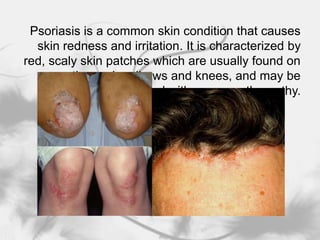
Psoriasis is a common skin condition that causes skin redness and irritation. It is characterized by red, scaly skin patches which are usually found on the scalp, elbows and knees, and may be associated with severe arthropathy.
Signs and Symptoms
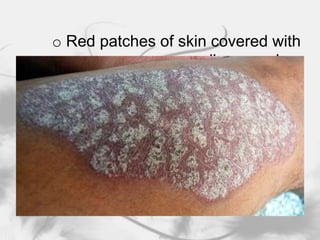
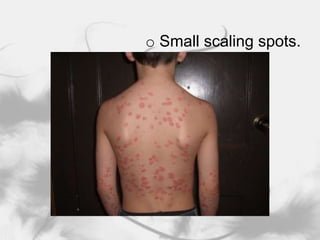
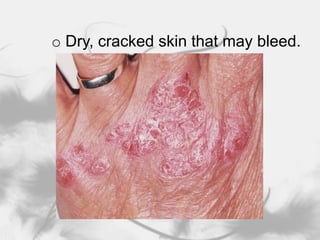
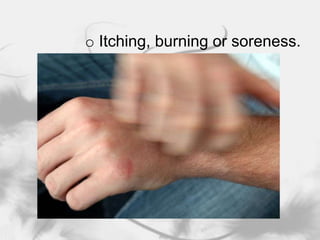
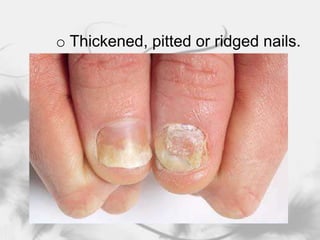
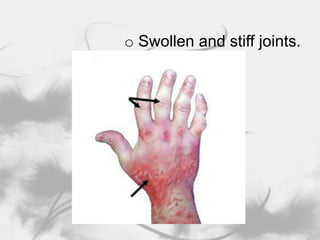
 Red patches of skin covered with silvery scales.Small scaling spots. Dry, cracked skin that may bleed.Itching, burning or soreness.Thickened, pitted or ridged nails.Swollen and stiff joints.Mode of Transmission
Researchers feel that psoriasis is an immune system disorder but also think that genetics and the environment contribute to flare-ups. There are several triggers that can make psoriasis worse.medicationweather stresssmokingalcoholism
Methods of Control
Topical medications such as lotions, ointments, creams, and shampoos.
Body-wide (systemic) medications, which are pills or injections that affect the whole body, not just the skin
Phototherapy, which uses light to treat psoriasis.Diseases
Thickened skin and bacterial skin infections caused by scratching in an attempt to relieve severe itching
Fluid and electrolyte imbalance in the case of severe pustular psoriasis
Low self-esteem, depression, stress and anxiety, social isolation.Screening Procedure
Your doctor will look at your skin. Diagnosis is usually based on what the skin looks like. Sometimes, a skin biopsy is done to rule out other possible conditions. If you have joint pain, your doctor may order x-rays.
Psoriasis
Psoriasis
Psoriasis
Psoriasis
Psoriasis

Psoriasis

  • 1.
  • 2.
    Psoriasis is acommon skin condition that causes skin redness and irritation. It is characterized by red, scaly skin patches which are usually found on the scalp, elbows and knees, and may be associated with severe arthropathy.
  • 3.
  • 4.
    Red patchesof skin covered with silvery scales.Small scaling spots. Dry, cracked skin that may bleed.Itching, burning or soreness.Thickened, pitted or ridged nails.Swollen and stiff joints.Mode of Transmission
  • 5.
    Researchers feel thatpsoriasis is an immune system disorder but also think that genetics and the environment contribute to flare-ups. There are several triggers that can make psoriasis worse.medicationweather stresssmokingalcoholism
  • 6.
  • 7.
    Topical medications suchas lotions, ointments, creams, and shampoos.
  • 8.
    Body-wide (systemic) medications,which are pills or injections that affect the whole body, not just the skin
  • 9.
    Phototherapy, which useslight to treat psoriasis.Diseases
  • 10.
    Thickened skin andbacterial skin infections caused by scratching in an attempt to relieve severe itching
  • 11.
    Fluid and electrolyteimbalance in the case of severe pustular psoriasis
  • 12.
    Low self-esteem, depression,stress and anxiety, social isolation.Screening Procedure
  • 13.
    Your doctor willlook at your skin. Diagnosis is usually based on what the skin looks like. Sometimes, a skin biopsy is done to rule out other possible conditions. If you have joint pain, your doctor may order x-rays.