AGROBACTERIUM MEDIATED
GENE TRANSFER
Prepared by:
Dr.E.Gayathiri
Department of Plant Biology and Plant Biotechnology
Subject: Plant Biotechnology
Subject Code : 16UPBTC09
What to Know:
Learning Objectives
 Overview:
Introduction
Agrobacterium species
Ti Plasmid
Organization of T.- DNA
Gene Required for transfer of T- DNA
Mode of action/ Transfer
Agrobacterium tumefaciencs
 Agrobacterium is a gram-negative, rod shaped , soil
pathogenic bacteria involved in causing crown gall
formation disease in dicot plant species.
 Ex: A.tumefaciens and A. rhizogenes
 It had been considered as natural genetic engineer,
so they can transform into the plant.
 It is serious pathogen of walnut, grape vines, stone
fruit, nut trees, sugar beets, horse radish etc,
 Optimum temperature:28⁰ C.
 Doubling time 2.5 to 4 hours
 Grow aerobically
 No spore formation
 Motile having on to six peritrichous flagella.
Agrobacterium tumefaciencs
 Bacterium contain tumour inducing plasmid
(Ti plasmid or pTi plasmid) contains T-DNA
and all gene necessary to transfer T-DNA into
plant cell.
 Many strain do not have pTi plasmid
 The bacteria parasitize the plant tissue by
intergrating its own DNA in plant genome and
changes the expression of the plant
metabolism.
Agrobacterium tumefaciencs is used as a
tools in genetic engineering to engineer
the desired gene.
 Agrobacterium species.
 1.A.tumefaciens has Ti
plasmid that is responsible
for tumor induction (crown
gall disease) in plants
 2. A.tumefaciens is also known
as A.radiobacter/Rhizobium
radiobater
 3.A.rhizogene had Ri plamid
which is analogue to Ti plasmid
 4. A.rubi cause cane gall in
sugar cane plant
 5. A.vitis gall in grape plant
Ti Plasmid
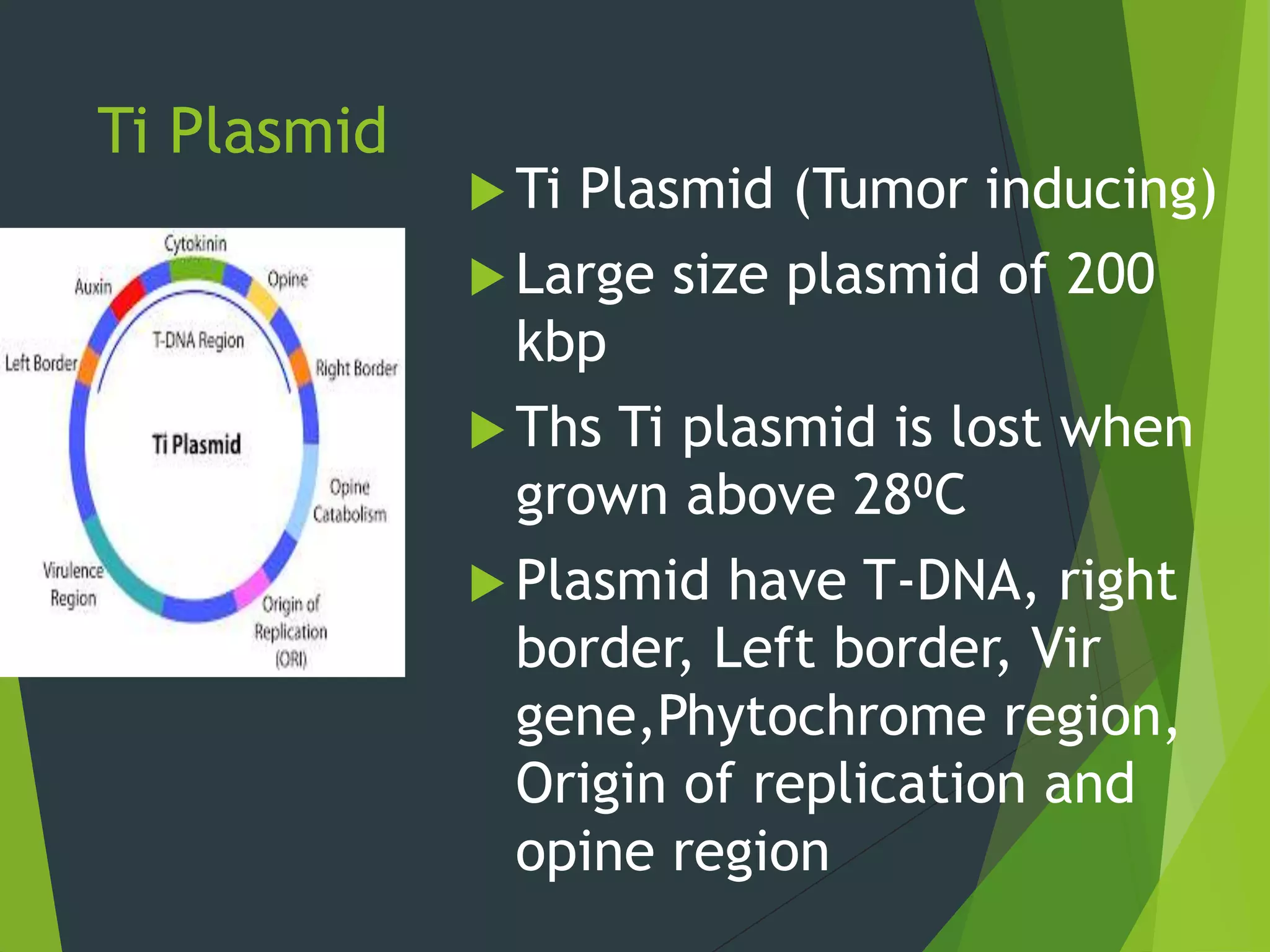
 Ti Plasmid (Tumor inducing)
 Large size plasmid of 200
kbp
 Ths Ti plasmid is lost when
grown above 28⁰C
 Plasmid have T-DNA, right
border, Left border, Vir
gene,Phytochrome region,
Origin of replication and
opine region
Organization of T- DNA
 T- DNA is the transferred DNA of the tumor inducing (Ti)
plasmid.
 The size of T- DNA is between 15-30 kb
 It had RB and LB, RB helps in transfer and integration of T-
DNA.
 T-DNA carry genes for Phytohormones (Auxin and Cytokinin)
and opine that are expressed in plant cell
 Over expression of the hormones at site of infection is
responsible for the proliferation of wounded cell in gall/
tumor.
 The tumor can harbor a plenty of bacteria.
Organization of T- DNA
 Opines are low molecular weight compounds found in
plants crown gall tumors or hairy root tumors
 Opines are used as important source of nitrogen,
carbon and energy
 Opines are condensation products of
 1. An amino acid and a keto acid or
 2. Amino acid and sugar
 Different types of opine may present: Nopaline,
Octopine and agropia
Organization of T- DNA
 Genes for auxin, cytokinin and opines are transcribed
and translated in plant cell
 Example of T-DNA genes in Ti plasmid
Genes required for transfer
of T- DNA
Mode of action/Transfer
 Steps in transformation
of plant cell
 1. Plant stress condition
 2. Phenolics production
 3. Signal of bacteria
 4. Virulence system
activation
 5. Generation of T-DNA
complex
 6. T-DNA transfer
 7.T-DNA integration in
plant genome.
Role as a genetic tool
 T- DNA region get replaced by any gene of
interest and then targeted to plant cell for
transformation
NOTE:
 Monocot are not good host for Agrobacterium
 There is a hypothetical believe that monocot
are resistant to Agrobacterium because they do
not produce phenolic that can induce virulence
genes
22-06-2009 First Asian PGPR Congress, Hyderabad 21-24 June 2009 1
Thank you

Agrobacterium mediated gene transfer

  • 1.
    AGROBACTERIUM MEDIATED GENE TRANSFER Preparedby: Dr.E.Gayathiri Department of Plant Biology and Plant Biotechnology Subject: Plant Biotechnology Subject Code : 16UPBTC09
  • 2.
    What to Know: LearningObjectives  Overview: Introduction Agrobacterium species Ti Plasmid Organization of T.- DNA Gene Required for transfer of T- DNA Mode of action/ Transfer
  • 3.
    Agrobacterium tumefaciencs  Agrobacteriumis a gram-negative, rod shaped , soil pathogenic bacteria involved in causing crown gall formation disease in dicot plant species.  Ex: A.tumefaciens and A. rhizogenes  It had been considered as natural genetic engineer, so they can transform into the plant.  It is serious pathogen of walnut, grape vines, stone fruit, nut trees, sugar beets, horse radish etc,  Optimum temperature:28⁰ C.  Doubling time 2.5 to 4 hours  Grow aerobically  No spore formation  Motile having on to six peritrichous flagella.
  • 4.
    Agrobacterium tumefaciencs  Bacteriumcontain tumour inducing plasmid (Ti plasmid or pTi plasmid) contains T-DNA and all gene necessary to transfer T-DNA into plant cell.  Many strain do not have pTi plasmid  The bacteria parasitize the plant tissue by intergrating its own DNA in plant genome and changes the expression of the plant metabolism. Agrobacterium tumefaciencs is used as a tools in genetic engineering to engineer the desired gene.
  • 5.
     Agrobacterium species. 1.A.tumefaciens has Ti plasmid that is responsible for tumor induction (crown gall disease) in plants  2. A.tumefaciens is also known as A.radiobacter/Rhizobium radiobater  3.A.rhizogene had Ri plamid which is analogue to Ti plasmid  4. A.rubi cause cane gall in sugar cane plant  5. A.vitis gall in grape plant
  • 6.
    Ti Plasmid  TiPlasmid (Tumor inducing)  Large size plasmid of 200 kbp  Ths Ti plasmid is lost when grown above 28⁰C  Plasmid have T-DNA, right border, Left border, Vir gene,Phytochrome region, Origin of replication and opine region
  • 7.
    Organization of T-DNA  T- DNA is the transferred DNA of the tumor inducing (Ti) plasmid.  The size of T- DNA is between 15-30 kb  It had RB and LB, RB helps in transfer and integration of T- DNA.  T-DNA carry genes for Phytohormones (Auxin and Cytokinin) and opine that are expressed in plant cell  Over expression of the hormones at site of infection is responsible for the proliferation of wounded cell in gall/ tumor.  The tumor can harbor a plenty of bacteria.
  • 8.
    Organization of T-DNA  Opines are low molecular weight compounds found in plants crown gall tumors or hairy root tumors  Opines are used as important source of nitrogen, carbon and energy  Opines are condensation products of  1. An amino acid and a keto acid or  2. Amino acid and sugar  Different types of opine may present: Nopaline, Octopine and agropia
  • 9.
    Organization of T-DNA  Genes for auxin, cytokinin and opines are transcribed and translated in plant cell  Example of T-DNA genes in Ti plasmid
  • 10.
    Genes required fortransfer of T- DNA
  • 11.
    Mode of action/Transfer Steps in transformation of plant cell  1. Plant stress condition  2. Phenolics production  3. Signal of bacteria  4. Virulence system activation  5. Generation of T-DNA complex  6. T-DNA transfer  7.T-DNA integration in plant genome.
  • 12.
    Role as agenetic tool  T- DNA region get replaced by any gene of interest and then targeted to plant cell for transformation NOTE:  Monocot are not good host for Agrobacterium  There is a hypothetical believe that monocot are resistant to Agrobacterium because they do not produce phenolic that can induce virulence genes
  • 13.
    22-06-2009 First AsianPGPR Congress, Hyderabad 21-24 June 2009 1 Thank you