Co-Integrated Vector
Name – Nirbhayaditya Vaghela
Roll number - 233
Introduction to Co-integrated Vector
• This vectors were among the first types of modified and engineered Ti plasmids
devised for Agrobacterium - mediated transformation.
• These vectors is made by the homologous recombination of bacterial plasmid with T-
DNA region of Ti plasmid in Agrobacterium.
• Agrobacterium is also known as natural genetic engineer. The bacterium transfers
part of its DNA to the plant, and this DNA integrates into the plant’s genome, causing
the production of tumor and associated changes in plant metabolism.
• But this Co-integrated vector method is not widely used today.
• Three type of vectors are necessary in this system.
 Disarmed Agrobacterium Ti plasmids
 Intermediate vectors
 Helper vectors
1) Disarmed Agrobacterium Ti plasmids
• In this we remove the oncogenes present in T-DNA of Agrobacterium responsible
for tumor formation.
• We replace the oncogenes with exogenous DNA.
• The example of this vector is pGV series.
• In pGV series we replace the phytohormone genes with the part of pBR322 vector
sequence.
• The left and right border sequences, the nopaline synthase gene and vir regulon of
the Ti plasmid are conserved.
2) Intermediate vectors
• T-DNA isolated from a parent Ti plasmid was subcloned in conventional E.Coli
plasmid vector.
• It's used to overcome the problems derived from the large size of disarmed Ti
plasmids and their lack of unique restriction sites.
• Intermediate vectors are replicated in E. coli and are transferred into
Agrobacterium by conjugation.
• They cannot replicate in A. tumefaciens.
• It carries the pBR322 sequence which is also present in disarmed Ti plasmid. It
also have our gene of interest .
• This pBR322 sequence is responsible for homologous recombination between
intermediate and disarmed Ti plasmid
3) Helper Vector
• These are the plasmid present in E.Coli which contain transfer and mobilization
gene.
• This gene allow the transfer of the conjugation-deficient intermediate vectors into
Agrobacterium
Procedure
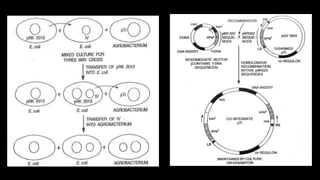
• Conjugation between the two E.Coli will take place in which the helper vectors
will transfer to E.Coli having intermediate vector.
• Which was in turn mobilized and transferred to the recipient Agrobacterium.
• Homologous recombination between the T-DNA sequence of the disarmed Ti
plasmid and intermediate vector takes place and forms large co-
integrate plasmid.
• Now with the help of sequences present in our co-integrated plasmid (example-
vir gene) the recombinant T-DNA (which have our gene of interest) will transfer
to the plant genome.
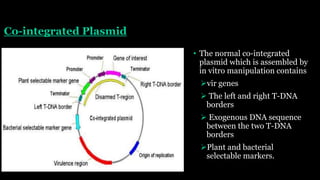
Co-integrated Plasmid
• The normal co-integrated
plasmid which is assembled by
in vitro manipulation contains
vir genes
 The left and right T-DNA
borders
 Exogenous DNA sequence
between the two T-DNA
borders
Plant and bacterial
selectable markers.
Drawbacks
• Long homologies required between the Ti plasmid and the E. coli plasmids
making them difficult to engineer and use.
• The transfer of gene is relatively inefficient compared to binary vectors.
References
• The basic principles of gene
cloning and DNA Analysis
• Google images

Co integrated vector

  • 1.
    Co-Integrated Vector Name –Nirbhayaditya Vaghela Roll number - 233
  • 2.
    Introduction to Co-integratedVector • This vectors were among the first types of modified and engineered Ti plasmids devised for Agrobacterium - mediated transformation. • These vectors is made by the homologous recombination of bacterial plasmid with T- DNA region of Ti plasmid in Agrobacterium. • Agrobacterium is also known as natural genetic engineer. The bacterium transfers part of its DNA to the plant, and this DNA integrates into the plant’s genome, causing the production of tumor and associated changes in plant metabolism. • But this Co-integrated vector method is not widely used today. • Three type of vectors are necessary in this system.  Disarmed Agrobacterium Ti plasmids  Intermediate vectors  Helper vectors
  • 3.
    1) Disarmed AgrobacteriumTi plasmids • In this we remove the oncogenes present in T-DNA of Agrobacterium responsible for tumor formation. • We replace the oncogenes with exogenous DNA. • The example of this vector is pGV series. • In pGV series we replace the phytohormone genes with the part of pBR322 vector sequence. • The left and right border sequences, the nopaline synthase gene and vir regulon of the Ti plasmid are conserved.
  • 4.
    2) Intermediate vectors •T-DNA isolated from a parent Ti plasmid was subcloned in conventional E.Coli plasmid vector. • It's used to overcome the problems derived from the large size of disarmed Ti plasmids and their lack of unique restriction sites. • Intermediate vectors are replicated in E. coli and are transferred into Agrobacterium by conjugation. • They cannot replicate in A. tumefaciens. • It carries the pBR322 sequence which is also present in disarmed Ti plasmid. It also have our gene of interest . • This pBR322 sequence is responsible for homologous recombination between intermediate and disarmed Ti plasmid
  • 5.
    3) Helper Vector •These are the plasmid present in E.Coli which contain transfer and mobilization gene. • This gene allow the transfer of the conjugation-deficient intermediate vectors into Agrobacterium
  • 6.
    Procedure • Conjugation betweenthe two E.Coli will take place in which the helper vectors will transfer to E.Coli having intermediate vector. • Which was in turn mobilized and transferred to the recipient Agrobacterium. • Homologous recombination between the T-DNA sequence of the disarmed Ti plasmid and intermediate vector takes place and forms large co- integrate plasmid. • Now with the help of sequences present in our co-integrated plasmid (example- vir gene) the recombinant T-DNA (which have our gene of interest) will transfer to the plant genome.
  • 8.
    Co-integrated Plasmid • Thenormal co-integrated plasmid which is assembled by in vitro manipulation contains vir genes  The left and right T-DNA borders  Exogenous DNA sequence between the two T-DNA borders Plant and bacterial selectable markers.
  • 9.
    Drawbacks • Long homologiesrequired between the Ti plasmid and the E. coli plasmids making them difficult to engineer and use. • The transfer of gene is relatively inefficient compared to binary vectors.
  • 10.
    References • The basicprinciples of gene cloning and DNA Analysis • Google images