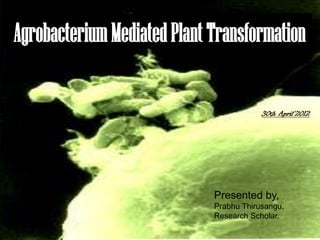
AgrobacteriumMediatedPlantTransformation
30th April’2012
Presented by,
Prabhu Thirusangu,
Research Scholar,
Transformation – the process of obtaining transgenic plants
Transgenic plant – a plant with a foreign gene (or genes) from another
plant/animal that is incorporated into its chromosome
Marc Van Montagu and Jeff Schell, discovered the gene transfer mechanism between
Agrobacterium and plants, which resulted in the development of methods to alter the bacterium into
an efficient delivery system for genetic engineering in plants.
Most common genes (and traits) in transgenic or biotech crops
herbicide resistance
Insecticide resistance
Bt genes in field corn (maize)
virus-resistance (coat-protein) genes
Transgenic plants – An introduction
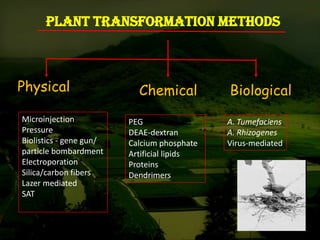
Plant Transformation Methods
Physical Chemical Biological
Microinjection
Pressure
Biolistics - gene gun/
particle bombardment
Electroporation
Silica/carbon fibers
Lazer mediated
SAT
PEG
DEAE-dextran
Calcium phosphate
Artificial lipids
Proteins
Dendrimers
A. Tumefaciens
A. Rhizogenes
Virus-mediated
4
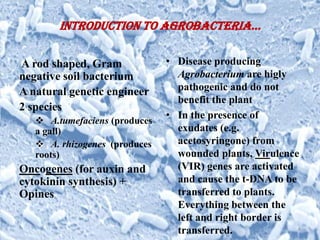
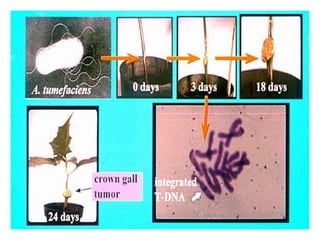
Introduction to Agrobacteria…
A rod shaped, Gram
negative soil bacterium
A natural genetic engineer
2 species
 A.tumefaciens (produces
a gall)
 A. rhizogenes (produces
roots)
Oncogenes (for auxin and
cytokinin synthesis) +
Opines
• Disease producing
Agrobacterium are higly
pathogenic and do not
benefit the plant
• In the presence of
exudates (e.g.
acetosyringone) from
wounded plants, Virulence
(VIR) genes are activated
and cause the t-DNA to be
transferred to plants.
Everything between the
left and right border is
transferred.
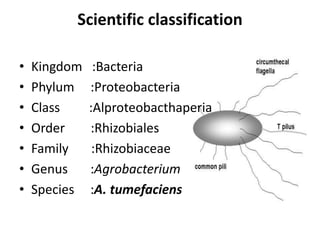
Scientific classification
• Kingdom :Bacteria
• Phylum :Proteobacteria
• Class :Alproteobacthaperia
• Order :Rhizobiales
• Family :Rhizobiaceae
• Genus :Agrobacterium
• Species :A. tumefaciens
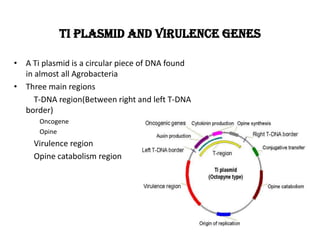
Ti plasmid and virulence genes
• A Ti plasmid is a circular piece of DNA found
in almost all Agrobacteria
• Three main regions
T-DNA region(Between right and left T-DNA
border)
Oncogene
Opine
Virulence region
Opine catabolism region
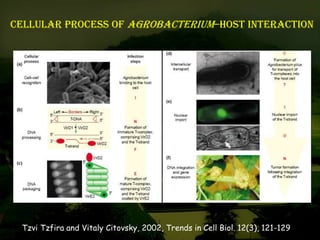
Cellular process of Agrobacterium–host interaction
Tzvi Tzfira and Vitaly Citovsky, 2002, Trends in Cell Biol. 12(3), 121-129
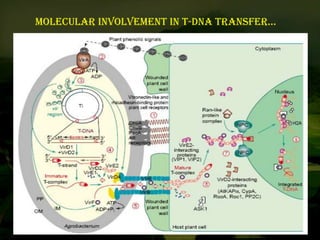
Molecular involvement in t-DNA trANsFEr…
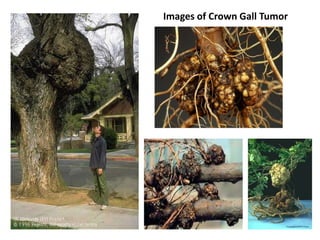
Images of Crown Gall Tumor
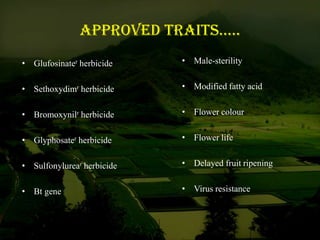
Approved Traits.....
• Glufosinater herbicide
• Sethoxydimr herbicide
• Bromoxynilr herbicide
• Glyphosater herbicide
• Sulfonylurear herbicide
• Bt gene
• Male-sterility
• Modified fatty acid
• Flower colour
• Flower life
• Delayed fruit ripening
• Virus resistance
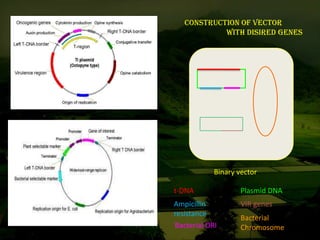
Binary vector
t-DNA
VIR genes
Plasmid DNA
Bacterial
ChromosomeBacterial ORI
Ampicillin
resistance
Construction of vector
with disired genes
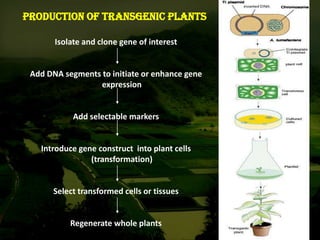
Production of transgenic plants
Isolate and clone gene of interest
Add DNA segments to initiate or enhance gene
expression
Add selectable markers
Introduce gene construct into plant cells
(transformation)
Select transformed cells or tissues
Regenerate whole plants
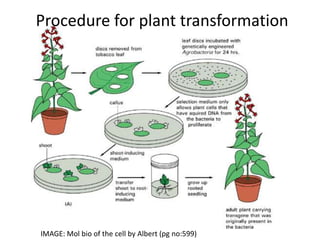
Procedure for plant transformation
IMAGE: Mol bio of the cell by Albert (pg no:599)
Regeneration, Selection And Detection...
Regeneration: for shoot organogenesis, cytokinin (lower
amounts of auxin) are required
Selection: two antibiotics are required
• an antibiotic to kill the Agrobacterium, while not affecting the
plant's cell growth and division
• a second antibiotic allows growth of transformed shoots
(w/selectable marker) but inhibits growth of untranformed plant
cells.
Detection of the "trait" gene
PCR methods can detect the presence of the "trait" DNA
protein detection methods are used where a gene product is produced
that defines the trait
verification of the incorporation of the trait gene into the plant's
chromosome
• by Southern hybridization
• by demonstrating transfer of the trait to the original transformant's
progeny
Approved Transgenic plants.....
• Soybean
• Corn
• Cotton
• Oil Seed rape
• Sugarbeet
• Squash
• Tomato
• Tobacco
• Carnations
• Potato
• Flax
• Papaya
• Chicory
• Rice
• Melon
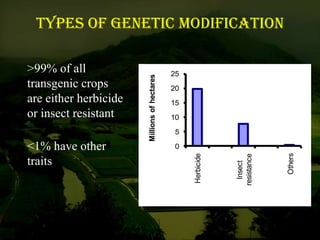
Types of genetic modification
>99% of all
transgenic crops
are either herbicide
or insect resistant
<1% have other
traits
0
5
10
15
20
25
Herbicide
Insect
resistance
Others
Millionsofhectares
Problems and potential
Ø Scientists can insert any gene they want into the plasmid in place of the tumor
causing genes and subsequently into the plant cell genome
Ø By varying experimental materials, culture conditions, bacterial strains, etc.
scientists have successfully used A. tumefaciens Gene Transfer to produce BT Corn
Ø This method of gene transfer enables large DNA strands to be transferred into
the plant cell without risk of rearrangement whereas other methods like the Gene Gun
have trouble doing this
Ø The vast majority of approved genetically engineered agriculture has been
transformed by means of Agrobacterium tumefaciens Mediated Gene Transfer
Ø Original problems existed in that Agrobacterium tumefaciens only affects
dicotyledonous plants
Ø Monocotyledon plants are not very susceptible to the bacterial infection
Benefits and Problems with
Agrabacteria….
Transformed plants will help the world to meet the human demands for food,
energy, medicine, shelter, clothing, and a cleaner environment.
Gene transfer technology is being used to produce plants capable of hyper
accumulating toxic metals from soil and water, thus contributing to a cleaner
environment
Increases in plant production are needed to meet growing demands for food.
Transformed Plants offers significant advantages over traditional plant breeding
in developing improved crops.
CoNClusioN…..
References
Introduction to plant biotechnology by H.S Chawla
Molecular biology of the cell by Albert et al
Online References
http://www.nepadbiosafety.net/for-regulators/resources/subjects/biotechnology/
plant-transformation-agro
http://www.bio.davidson.edu/people/kabernd/seminar/2002/method/dsmeth/ds.htm
http://arabidopsis.info/students/agrobacterium/uses.html
http://microbewiki.kenyon.edu/index.php/Agrobacterium_tumefacien0073
http://www.apsnet.org/edcenter/intropp/lessons/prokaryotes/Pages/CrownGall.aspx
http://www.ag.ndsu.edu/pubs/plantsci/crops/a1219w.htm
By,
T.Prabhu,
30th April’2012

Agrobacterium mediated gene transfer

  • 1.
  • 2.
    Transformation – theprocess of obtaining transgenic plants Transgenic plant – a plant with a foreign gene (or genes) from another plant/animal that is incorporated into its chromosome Marc Van Montagu and Jeff Schell, discovered the gene transfer mechanism between Agrobacterium and plants, which resulted in the development of methods to alter the bacterium into an efficient delivery system for genetic engineering in plants. Most common genes (and traits) in transgenic or biotech crops herbicide resistance Insecticide resistance Bt genes in field corn (maize) virus-resistance (coat-protein) genes Transgenic plants – An introduction
  • 3.
    Plant Transformation Methods PhysicalChemical Biological Microinjection Pressure Biolistics - gene gun/ particle bombardment Electroporation Silica/carbon fibers Lazer mediated SAT PEG DEAE-dextran Calcium phosphate Artificial lipids Proteins Dendrimers A. Tumefaciens A. Rhizogenes Virus-mediated
  • 4.
    4 Introduction to Agrobacteria… Arod shaped, Gram negative soil bacterium A natural genetic engineer 2 species  A.tumefaciens (produces a gall)  A. rhizogenes (produces roots) Oncogenes (for auxin and cytokinin synthesis) + Opines • Disease producing Agrobacterium are higly pathogenic and do not benefit the plant • In the presence of exudates (e.g. acetosyringone) from wounded plants, Virulence (VIR) genes are activated and cause the t-DNA to be transferred to plants. Everything between the left and right border is transferred.
  • 5.
    Scientific classification • Kingdom:Bacteria • Phylum :Proteobacteria • Class :Alproteobacthaperia • Order :Rhizobiales • Family :Rhizobiaceae • Genus :Agrobacterium • Species :A. tumefaciens
  • 6.
    Ti plasmid andvirulence genes • A Ti plasmid is a circular piece of DNA found in almost all Agrobacteria • Three main regions T-DNA region(Between right and left T-DNA border) Oncogene Opine Virulence region Opine catabolism region
  • 7.
    Cellular process ofAgrobacterium–host interaction Tzvi Tzfira and Vitaly Citovsky, 2002, Trends in Cell Biol. 12(3), 121-129
  • 8.
    Molecular involvement int-DNA trANsFEr…
  • 10.
    Images of CrownGall Tumor
  • 11.
    Approved Traits..... • Glufosinaterherbicide • Sethoxydimr herbicide • Bromoxynilr herbicide • Glyphosater herbicide • Sulfonylurear herbicide • Bt gene • Male-sterility • Modified fatty acid • Flower colour • Flower life • Delayed fruit ripening • Virus resistance
  • 12.
    Binary vector t-DNA VIR genes PlasmidDNA Bacterial ChromosomeBacterial ORI Ampicillin resistance Construction of vector with disired genes
  • 13.
    Production of transgenicplants Isolate and clone gene of interest Add DNA segments to initiate or enhance gene expression Add selectable markers Introduce gene construct into plant cells (transformation) Select transformed cells or tissues Regenerate whole plants
  • 14.
    Procedure for planttransformation IMAGE: Mol bio of the cell by Albert (pg no:599)
  • 15.
    Regeneration, Selection AndDetection... Regeneration: for shoot organogenesis, cytokinin (lower amounts of auxin) are required Selection: two antibiotics are required • an antibiotic to kill the Agrobacterium, while not affecting the plant's cell growth and division • a second antibiotic allows growth of transformed shoots (w/selectable marker) but inhibits growth of untranformed plant cells. Detection of the "trait" gene PCR methods can detect the presence of the "trait" DNA protein detection methods are used where a gene product is produced that defines the trait verification of the incorporation of the trait gene into the plant's chromosome • by Southern hybridization • by demonstrating transfer of the trait to the original transformant's progeny
  • 16.
    Approved Transgenic plants..... •Soybean • Corn • Cotton • Oil Seed rape • Sugarbeet • Squash • Tomato • Tobacco • Carnations • Potato • Flax • Papaya • Chicory • Rice • Melon
  • 17.
    Types of geneticmodification >99% of all transgenic crops are either herbicide or insect resistant <1% have other traits 0 5 10 15 20 25 Herbicide Insect resistance Others Millionsofhectares
  • 18.
  • 19.
    Ø Scientists caninsert any gene they want into the plasmid in place of the tumor causing genes and subsequently into the plant cell genome Ø By varying experimental materials, culture conditions, bacterial strains, etc. scientists have successfully used A. tumefaciens Gene Transfer to produce BT Corn Ø This method of gene transfer enables large DNA strands to be transferred into the plant cell without risk of rearrangement whereas other methods like the Gene Gun have trouble doing this Ø The vast majority of approved genetically engineered agriculture has been transformed by means of Agrobacterium tumefaciens Mediated Gene Transfer Ø Original problems existed in that Agrobacterium tumefaciens only affects dicotyledonous plants Ø Monocotyledon plants are not very susceptible to the bacterial infection Benefits and Problems with Agrabacteria….
  • 20.
    Transformed plants willhelp the world to meet the human demands for food, energy, medicine, shelter, clothing, and a cleaner environment. Gene transfer technology is being used to produce plants capable of hyper accumulating toxic metals from soil and water, thus contributing to a cleaner environment Increases in plant production are needed to meet growing demands for food. Transformed Plants offers significant advantages over traditional plant breeding in developing improved crops. CoNClusioN…..
  • 21.
    References Introduction to plantbiotechnology by H.S Chawla Molecular biology of the cell by Albert et al Online References http://www.nepadbiosafety.net/for-regulators/resources/subjects/biotechnology/ plant-transformation-agro http://www.bio.davidson.edu/people/kabernd/seminar/2002/method/dsmeth/ds.htm http://arabidopsis.info/students/agrobacterium/uses.html http://microbewiki.kenyon.edu/index.php/Agrobacterium_tumefacien0073 http://www.apsnet.org/edcenter/intropp/lessons/prokaryotes/Pages/CrownGall.aspx http://www.ag.ndsu.edu/pubs/plantsci/crops/a1219w.htm
  • 22.