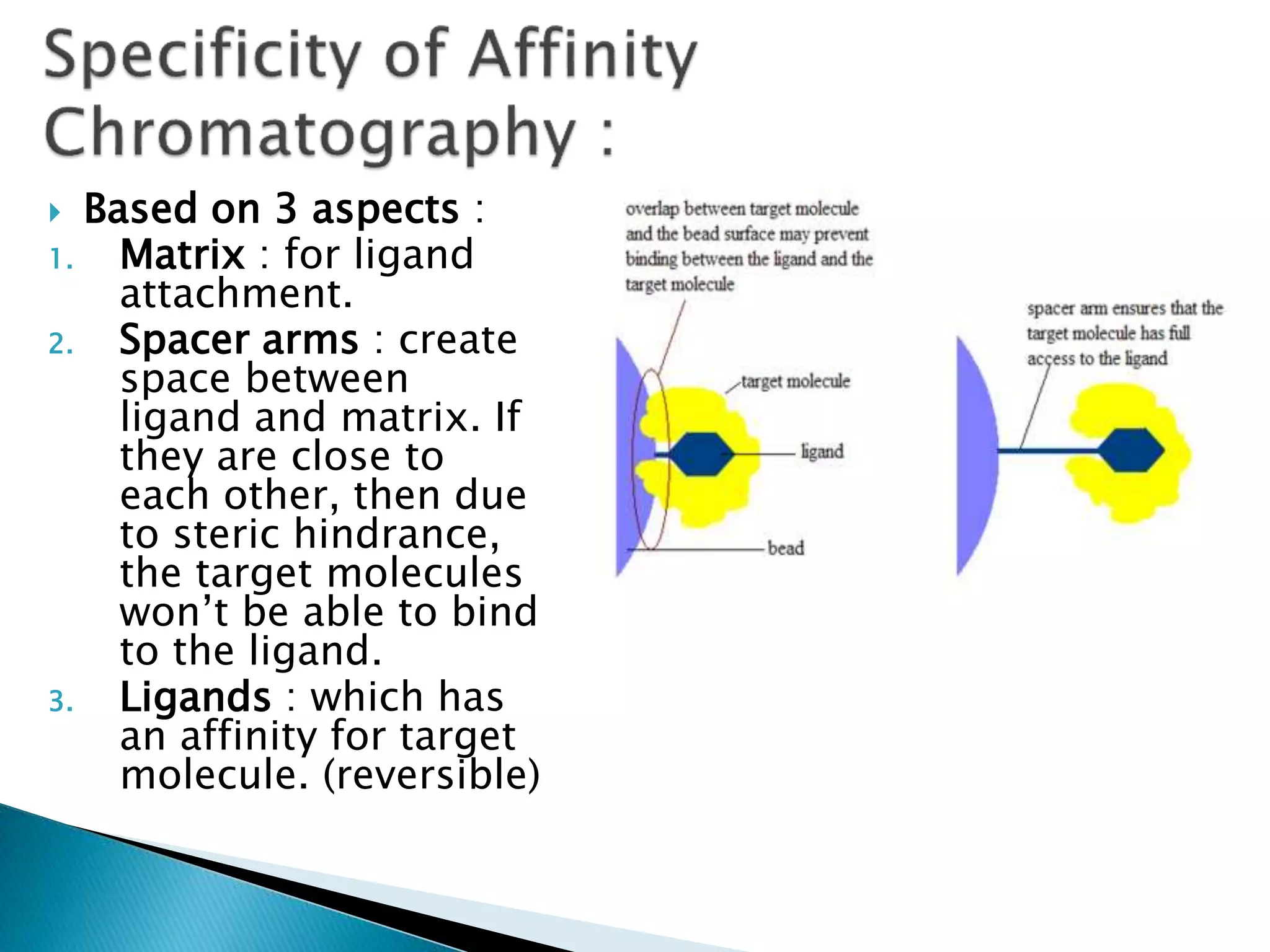
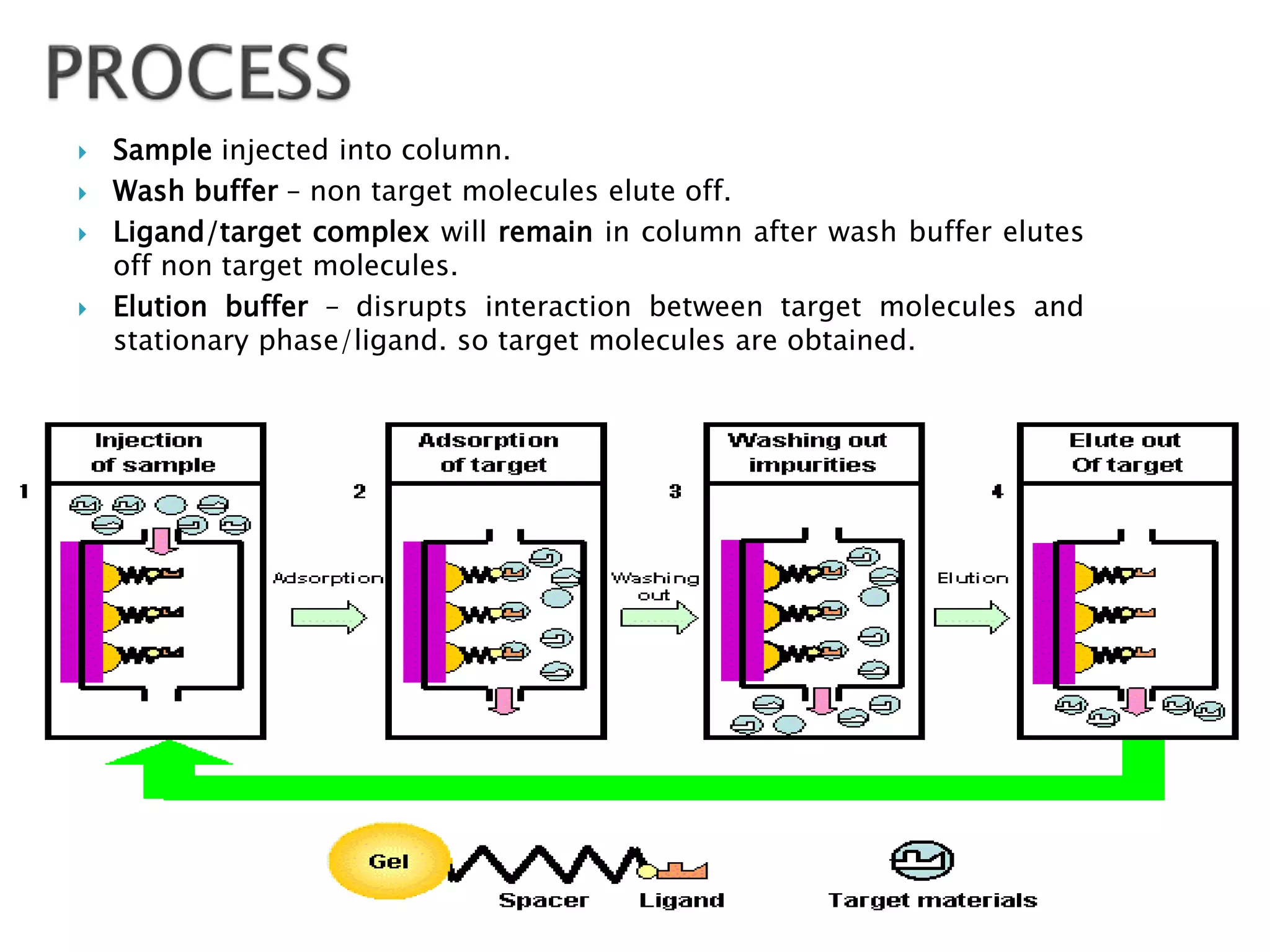
Affinity chromatography, developed by Pedro Cuatrecasas and Meir Wilcheck in 1968, is a technique for separating biochemical mixtures based on specific interactions between an immobilized ligand and target molecules, such as antibodies and antigens. The method involves the use of a matrix for ligand attachment, spacer arms to prevent steric hindrance, and ligands that bind reversibly to target molecules. While it provides high specificity and purity, challenges include leakage of ligands and the potential for non-specific adsorption.