Tumor Targeting Drug
Delivery
By: Manikant Prasad Shah
Mpharm II Sem.
Mallige college of Pharmacy,
Bangalore
1
Tumor
 It is an abnormal mass of tissue which is
a classic sign of inflammation.
 It is a fluid-filled lesion that may or may
not be formed by an abnormal growth of
neoplastic cells that appears enlarged in
size.
 The term cancer refers to a new growth
which has the ability to invade
surrounding tissues, metastasize (spread
to other organs) and which may
eventually lead to the patient's death if
untreated.
2
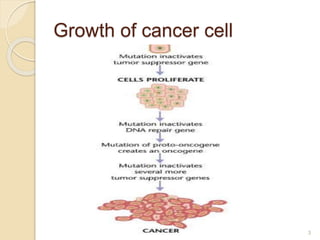
Growth of cancer cell
3
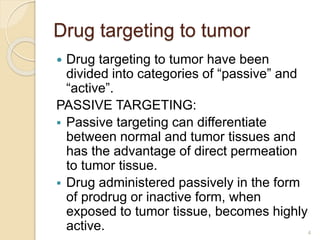
Drug targeting to tumor
 Drug targeting to tumor have been
divided into categories of “passive” and
“active”.
PASSIVE TARGETING:
 Passive targeting can differentiate
between normal and tumor tissues and
has the advantage of direct permeation
to tumor tissue.
 Drug administered passively in the form
of prodrug or inactive form, when
exposed to tumor tissue, becomes highly
active. 4
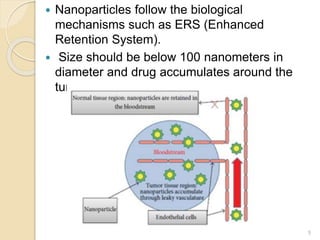
 Nanoparticles follow the biological
mechanisms such as ERS (Enhanced
Retention System).
 Size should be below 100 nanometers in
diameter and drug accumulates around the
tumors with leaky vasculature.
5
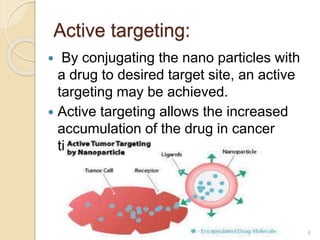
Active targeting:
 By conjugating the nano particles with
a drug to desired target site, an active
targeting may be achieved.
 Active targeting allows the increased
accumulation of the drug in cancer
tissue.
6
Targeted Therapies available in
tumor treatment
 Many different targeted therapies have
been approved for use in cancer
treatment.
These are:
Hormone therapies,
Signal transduction inhibitors,
Gene expression modulator,
Apoptosis inducer,
Angiogenesis inhibitor,
Immunotherapies, and
Toxin delivery molecules
7
Treatment with targeted
molecular therapy
 It is a type of personalized medical
therapy designed to treat cancer by
interrupting unique molecular
abnormalities that drive cancer
growth.
 Targeted therapies are drugs that are
designed to interfere with a specific
biochemical pathway that is central to
the development, growth and spread
of that particular cancer.
8
Treatment with
immunotherapy
 Immunotherapy is designed to repair,
stimulate, or enhance the immune system's
responses using patients’ own immune
systems to fight cancer.
It uses the body's own immune system to:
 Target specific cancer cells, thereby
potentially avoiding damage to normal cells.
 Make cancer cells easier for the immune
system to recognize and destroy.
 Prevent or slow tumor growth and spread of
cancer cells.
Example: vaccine therapy.
9
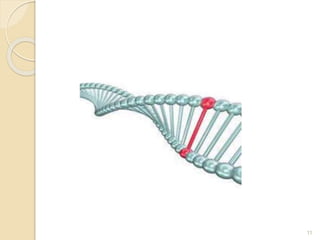
Treatment with Gene therapy
 Cancer is caused by changes in our
genes.
 Gene therapy is designed to modify
cancer cells at the molecular level and
replace a missing or bad gene with a
healthy one.
 The new gene is delivered to the
target cell via a ‘vector,’ which is
usually an inactive virus or liposome, a
tiny fat bubble.
10
11
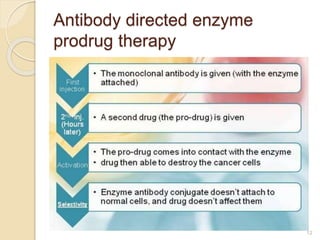
Antibody directed enzyme
prodrug therapy
12
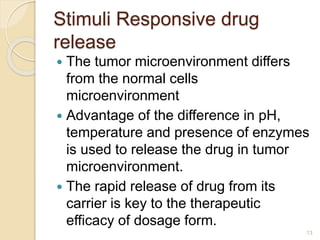
Stimuli Responsive drug
release
 The tumor microenvironment differs
from the normal cells
microenvironment
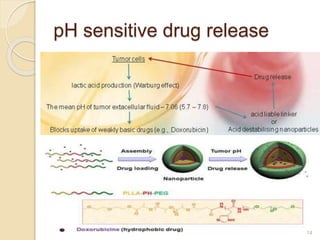
 Advantage of the difference in pH,
temperature and presence of enzymes
is used to release the drug in tumor
microenvironment.
 The rapid release of drug from its
carrier is key to the therapeutic
efficacy of dosage form.
13
pH sensitive drug release
14
Limitations of tumor targeting
Cancer cells can become resistant to
them. Resistance can occur in two
ways—
 The target itself changes through
mutation so that the targeted therapy
no longer interacts well with it.
 The tumor finds a new pathway to
achieve tumor growth that does not
depend on the target.
15
SIDE EFFECTS
The most common side effects seen
with targeted therapies are :
 Diarrhea and liver problems, such as
hepatitis and elevated liver enzymes.
 Skin problems (rash, dry skin, nail
changes, hair depigmentation)
 Problems with blood clotting and
wound healing
 High blood pressure.
16
Future perspectives
 For cancer therapies, the ideal targeted
drug delivery system is the one that
delivers the drug only to the target tumor.
 As tumors may not be eradicated by just
aiming at one target, it may also be
necessary to simultaneously aim at
multiple targets. Thus, it may be
worthwhile to develop “magic shotgun”
strategies that deliver multiple drugs,
and/or deliver the drug to multiple
targets. 17
Thank You
Manikant Prasad Shah
MPharm 1st year
Mallige college of pharmacy,Bangalore
shahmanikant664@gmail.com
18

Tumor targeting drug delivery

  • 1.
    Tumor Targeting Drug Delivery By:Manikant Prasad Shah Mpharm II Sem. Mallige college of Pharmacy, Bangalore 1
  • 2.
    Tumor  It isan abnormal mass of tissue which is a classic sign of inflammation.  It is a fluid-filled lesion that may or may not be formed by an abnormal growth of neoplastic cells that appears enlarged in size.  The term cancer refers to a new growth which has the ability to invade surrounding tissues, metastasize (spread to other organs) and which may eventually lead to the patient's death if untreated. 2
  • 3.
  • 4.
    Drug targeting totumor  Drug targeting to tumor have been divided into categories of “passive” and “active”. PASSIVE TARGETING:  Passive targeting can differentiate between normal and tumor tissues and has the advantage of direct permeation to tumor tissue.  Drug administered passively in the form of prodrug or inactive form, when exposed to tumor tissue, becomes highly active. 4
  • 5.
     Nanoparticles followthe biological mechanisms such as ERS (Enhanced Retention System).  Size should be below 100 nanometers in diameter and drug accumulates around the tumors with leaky vasculature. 5
  • 6.
    Active targeting:  Byconjugating the nano particles with a drug to desired target site, an active targeting may be achieved.  Active targeting allows the increased accumulation of the drug in cancer tissue. 6
  • 7.
    Targeted Therapies availablein tumor treatment  Many different targeted therapies have been approved for use in cancer treatment. These are: Hormone therapies, Signal transduction inhibitors, Gene expression modulator, Apoptosis inducer, Angiogenesis inhibitor, Immunotherapies, and Toxin delivery molecules 7
  • 8.
    Treatment with targeted moleculartherapy  It is a type of personalized medical therapy designed to treat cancer by interrupting unique molecular abnormalities that drive cancer growth.  Targeted therapies are drugs that are designed to interfere with a specific biochemical pathway that is central to the development, growth and spread of that particular cancer. 8
  • 9.
    Treatment with immunotherapy  Immunotherapyis designed to repair, stimulate, or enhance the immune system's responses using patients’ own immune systems to fight cancer. It uses the body's own immune system to:  Target specific cancer cells, thereby potentially avoiding damage to normal cells.  Make cancer cells easier for the immune system to recognize and destroy.  Prevent or slow tumor growth and spread of cancer cells. Example: vaccine therapy. 9
  • 10.
    Treatment with Genetherapy  Cancer is caused by changes in our genes.  Gene therapy is designed to modify cancer cells at the molecular level and replace a missing or bad gene with a healthy one.  The new gene is delivered to the target cell via a ‘vector,’ which is usually an inactive virus or liposome, a tiny fat bubble. 10
  • 11.
  • 12.
  • 13.
    Stimuli Responsive drug release The tumor microenvironment differs from the normal cells microenvironment  Advantage of the difference in pH, temperature and presence of enzymes is used to release the drug in tumor microenvironment.  The rapid release of drug from its carrier is key to the therapeutic efficacy of dosage form. 13
  • 14.
  • 15.
    Limitations of tumortargeting Cancer cells can become resistant to them. Resistance can occur in two ways—  The target itself changes through mutation so that the targeted therapy no longer interacts well with it.  The tumor finds a new pathway to achieve tumor growth that does not depend on the target. 15
  • 16.
    SIDE EFFECTS The mostcommon side effects seen with targeted therapies are :  Diarrhea and liver problems, such as hepatitis and elevated liver enzymes.  Skin problems (rash, dry skin, nail changes, hair depigmentation)  Problems with blood clotting and wound healing  High blood pressure. 16
  • 17.
    Future perspectives  Forcancer therapies, the ideal targeted drug delivery system is the one that delivers the drug only to the target tumor.  As tumors may not be eradicated by just aiming at one target, it may also be necessary to simultaneously aim at multiple targets. Thus, it may be worthwhile to develop “magic shotgun” strategies that deliver multiple drugs, and/or deliver the drug to multiple targets. 17
  • 18.
    Thank You Manikant PrasadShah MPharm 1st year Mallige college of pharmacy,Bangalore shahmanikant664@gmail.com 18