Instrumental Method of Analysis
Unit 5 (3)
Affinity Chromatography
Mrs Vandana Sharma
Assistant Professor
 Introduction
 Theory
 Instrumentation
 applications
Content
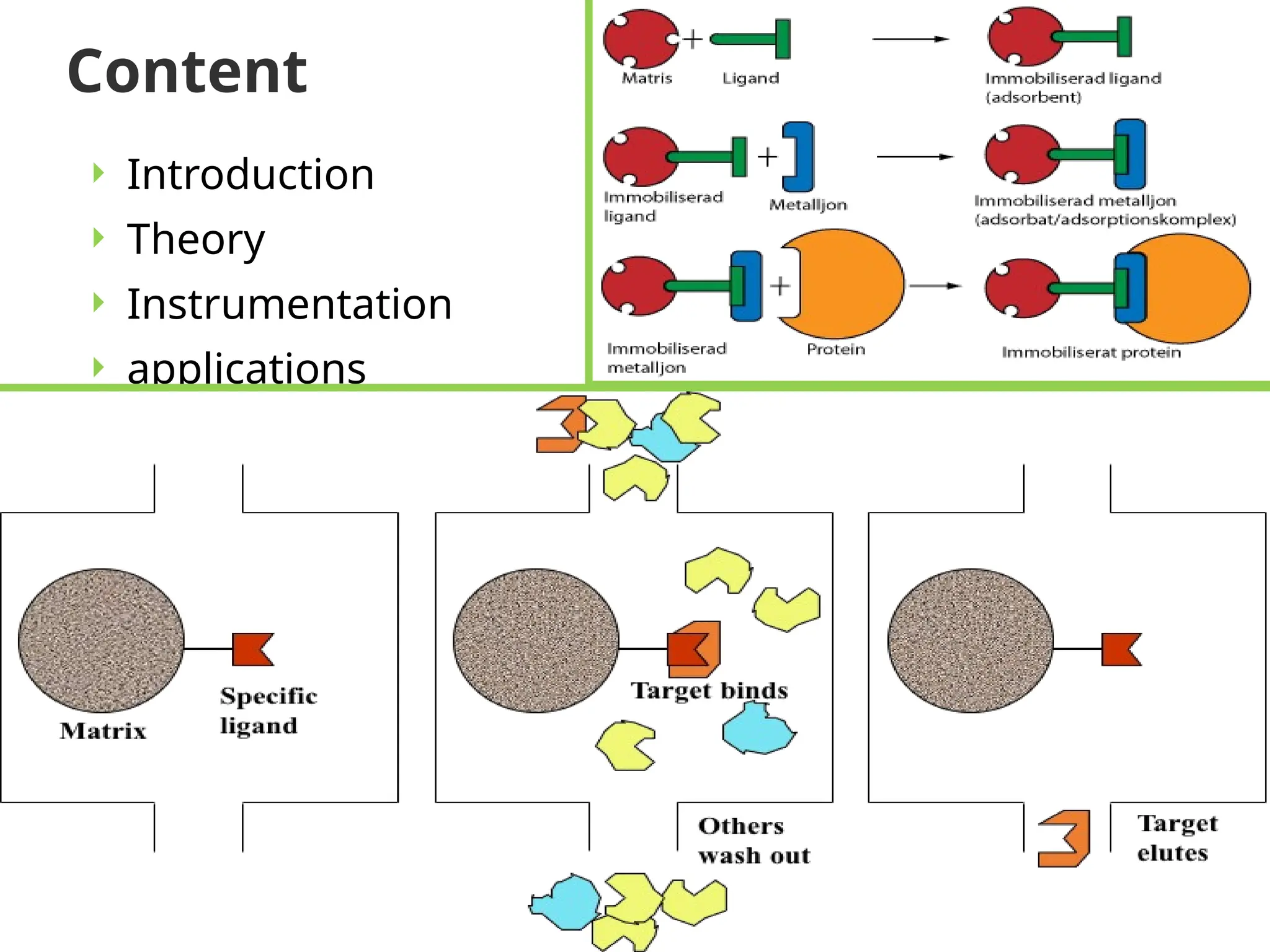
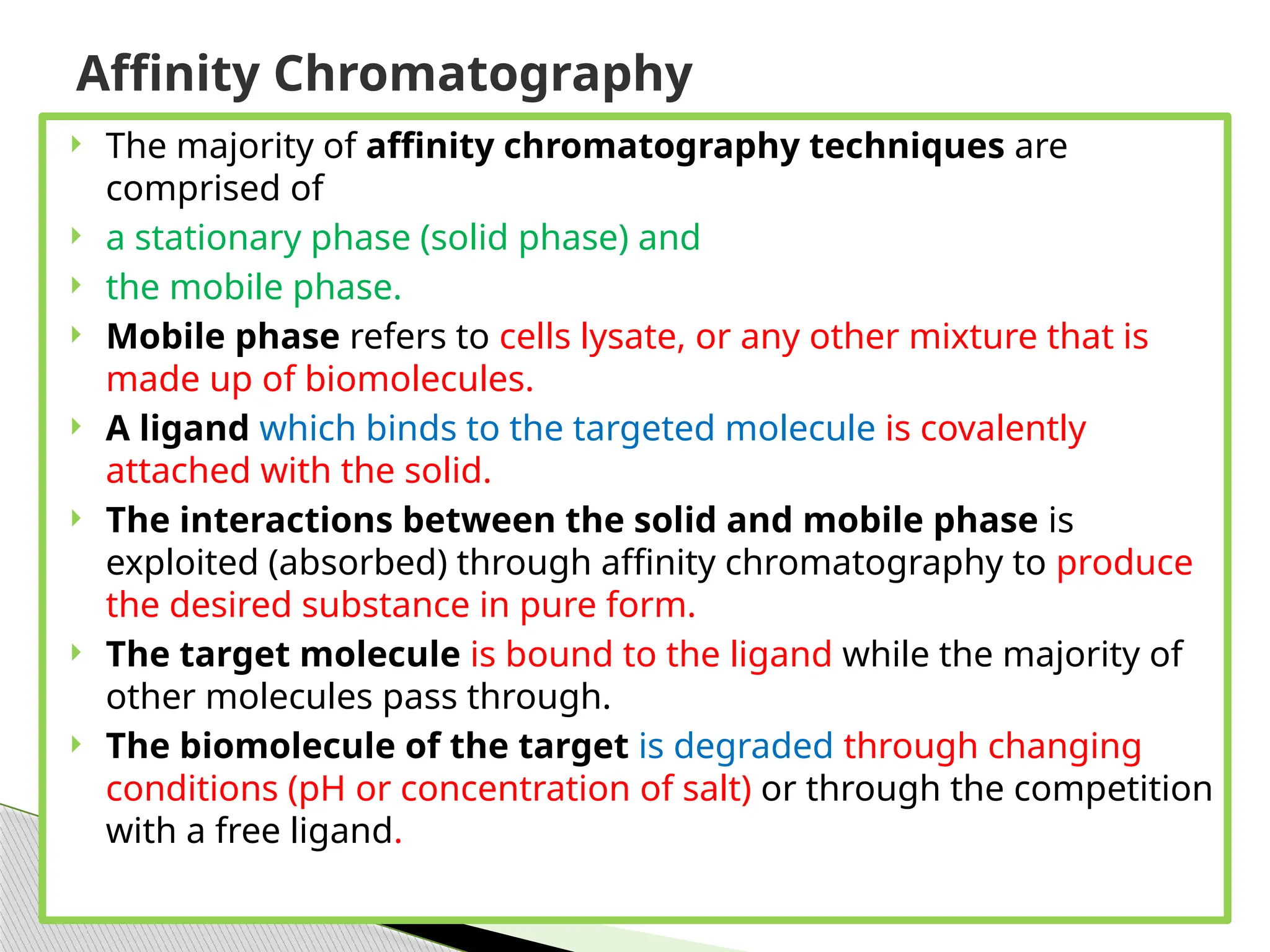
 The majority of affinity chromatography techniques are
comprised of
 a stationary phase (solid phase) and
 the mobile phase.
 Mobile phase refers to cells lysate, or any other mixture that is
made up of biomolecules.
 A ligand which binds to the targeted molecule is covalently
attached with the solid.
 The interactions between the solid and mobile phase is
exploited (absorbed) through affinity chromatography to produce
the desired substance in pure form.
 The target molecule is bound to the ligand while the majority of
other molecules pass through.
 The biomolecule of the target is degraded through changing
conditions (pH or concentration of salt) or through the competition
with a free ligand.
Affinity Chromatography
 The most crucial property the solid phase should possess is the
ability to immobilize ligand. Many materials, such as acrylates and
silica gels work well.
 spacer -To stop steric interference of the target molecule with the
ligand the inhibitor is bonded in the phase of solid. This inhibitor is
- spacer.
 The most common spacer can be described as an inhibitor with
an Hydrocarbon Chain (CH2 spacer).
 Chemicals such as cyanogen bromide and epoxy can functionize
the solid phase using hydrocarbon chains that result in different
lengths of the carbon chain according to the chemical
 Principle
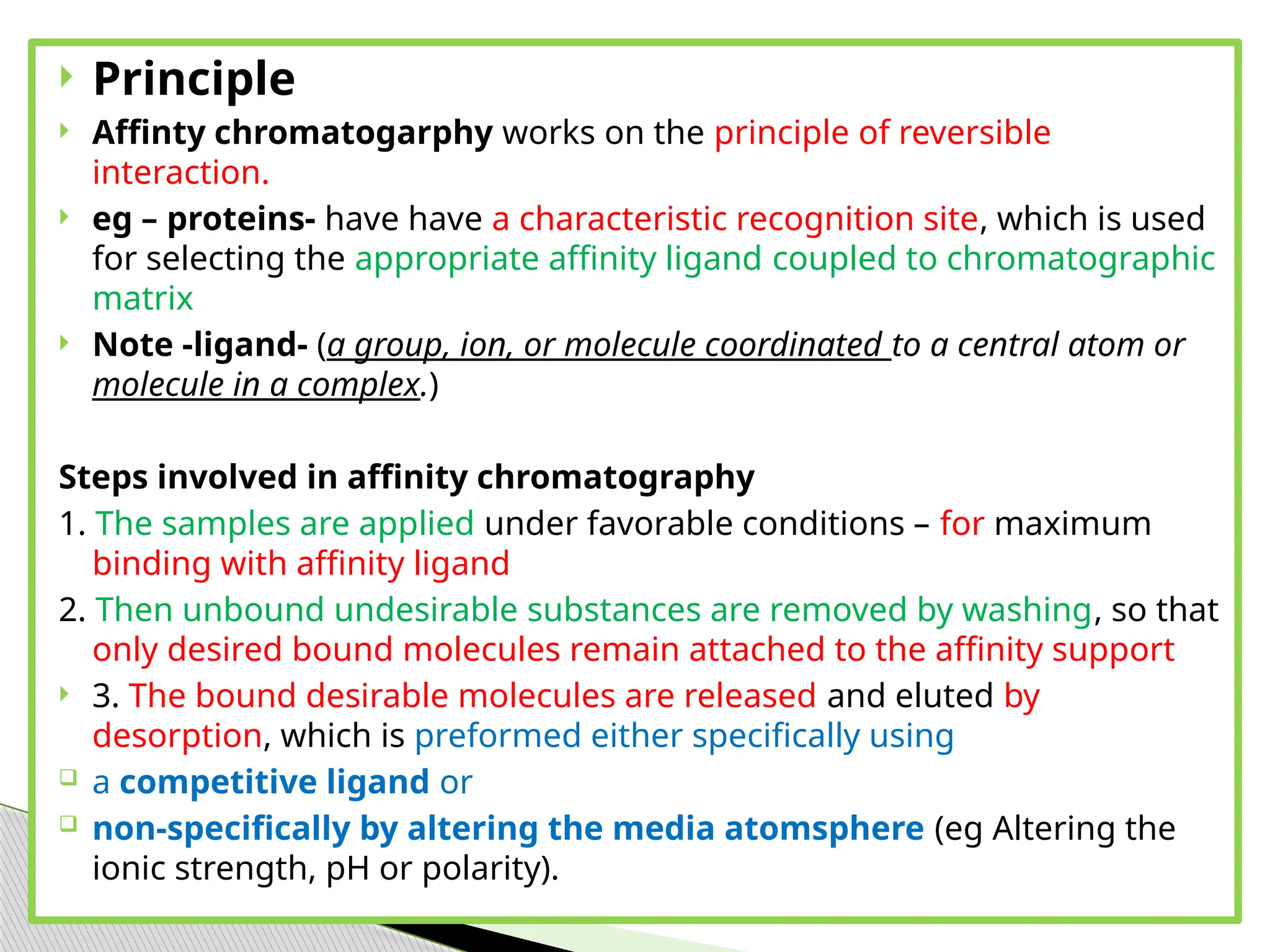
 Affinty chromatogarphy works on the principle of reversible
interaction.
 eg – proteins- have have a characteristic recognition site, which is used
for selecting the appropriate affinity ligand coupled to chromatographic
matrix
 Note -ligand- (a group, ion, or molecule coordinated to a central atom or
molecule in a complex.)
Steps involved in affinity chromatography
1. The samples are applied under favorable conditions – for maximum
binding with affinity ligand
2. Then unbound undesirable substances are removed by washing, so that
only desired bound molecules remain attached to the affinity support
 3. The bound desirable molecules are released and eluted by
desorption, which is preformed either specifically using
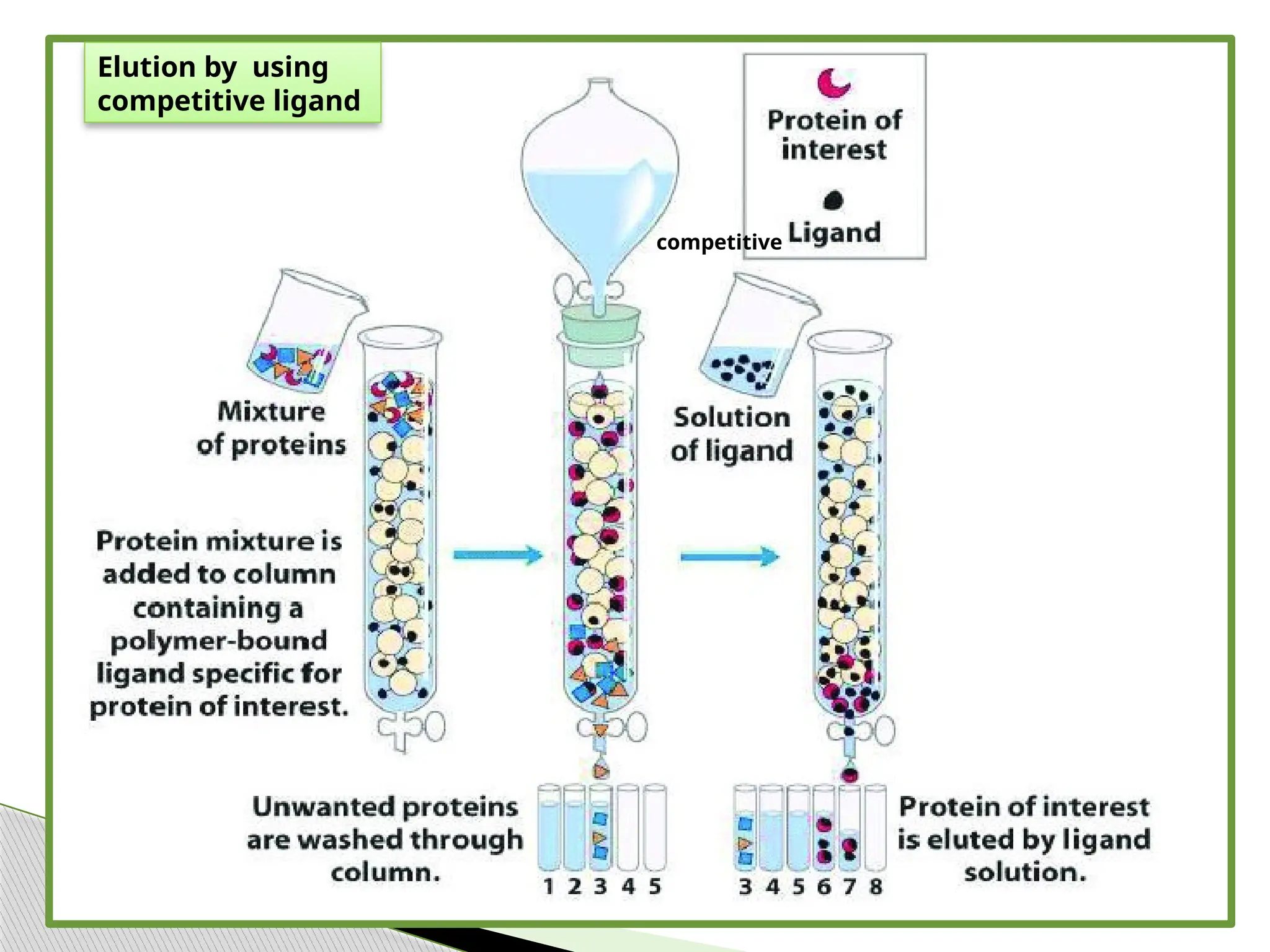
 a competitive ligand or
 non-specifically by altering the media atomsphere (eg Altering the
ionic strength, pH or polarity).
 4. During the elution process, the purified protein is obtained in a
concentrated form.
ADDITIONAL DIAGRAMS
FOR EXPLANATION
Elution by using
competitive ligand
competitive
Elution by adding high
concentration of substrate
Elution by altering pH
not
not
Theory
 Affinity chromatography is a type of – Liquid chromatography-
used for separating and analyzing the sample components
 It utilize reversible biological interaction (or molecular
reorganization)= so that specific analytes of a sample can be
separated and analyzed
The Ligand- One of the component is immobilized on solid metrix
Use- ligand is used for selective purification of desired protein.
This protein can also be eluted out by adding a competing ligand in
mobile phase or by altering the pH.
 Affinity chromatography mainly designed for purification of
proteins but also used for purification of nucleotides, nucleic acids,
immunoglobuline, membrane receptors
 The biological interaction occur in affinity chromatography-
mostly non-covalently interaction between reactive groups of
targeted molecule for purification and ligand.
Kd= A dissociation constant
 Where, A= targeted molecule
 B= Ligand
 AB= Complex formed between A and B
Kd =
[A][B]
[AB]
Note-
A nucleotide building blocks, of DNA and RNA. A nucleotide consists of
a base (one of four chemicals: adenine, thymine, guanine, and cytosine) +
a molecule of sugar + one of phosphoric acid.
Nucleic acids- either of two acids (DNA and RNA), that are present in all
living cells
Immunoglobuline- any of a class of proteins present in the serum and
cells of the immune system, which function as antibodies.
An antibody, also known as an immunoglobulin, is a large, Y-shaped
protein used by the immune system to identify and neutralize foreign
objects such as pathogenic bacteria and viruses. The antibody recognizes a
unique molecule of the pathogen, called an antigen.
Advantages of affinity chromatography
 High specificity
 Target molecules can be obtained in a highly pure state
 Single step purification
 The matrix can be reused rapidly.
 The matrix is a solid, can be easily washed and dried.
 Give purified product with high yield.
 Affinity chromatography can also be used to remove specific
contaminants, such as proteases (an enzyme that breaks down
protein).
Limitations of Affinity Chromatography
 Time consuming method.
 More amounts of solvents are required which may be expensive.
 Intense labour
 Non-specific adsorption cannot be totally eliminated, it can only be
minimized.
 Limited availability and high cost of immobilized ligands.
 Proteins get denatured if required pH is not adjusted.
1. Matrix
 The matrix is an inert support to which a ligand can be directly or
indirectly coupled.
 In order to for the matrix to be effective it must have certain
characters:
1. Matrix should be chemically and physically inert.
2. It must be insoluble in solvents and buffers employed in the
process
3. It must be chemically and mechanically stable.
4. It must be easily coupled to a ligand or spacer arm onto which the
ligand can be attached.
5. It must exhibit good flow properties and have a relatively large
surface area for attachment.
6. The most useful matrix materials are agarose and
polyacrylamide.
Instrumentation
Features
Agarose
hydrophilic, almost no unspecific bonds, the gold standard for
protein purification
Silica gel
nanoporous (leads to unspecific bonds), functionalized via
silane, silanes are washed away by alkaline buffer → reduced
stability, applications: bound nucleic acids chaotropic
Aluminium oxide
acidic surface, binds amines irreversibly, used to reduce the
amount of specific substances
Acrylate
partially hydrophobic (unspecific bounds possible),
monodisperse particles, used for cell separation
Organic polymers
partially hydrophobic (unspecific bounds possible),
monodisperse particlescan be used for ligand coupling, not
recommended for protein purification because of unspecific
bounds
Additional information
2. Spacer arm
 It is used to improve binding between ligand and target molecule
by overcoming any effects of steric hindrance.
 It prevents the ligand from attaching to the matrix, which could
interfere with its ability to bond to macromolecules.
 The optimal length is 6-10 carbon atoms or equivalent.
 Most commonly, it is utilized for smaller immobilized ligands.
Examples of Spacer arms are 1,6-diamino Hexane and 6-amino
Hexanoic Acid.
Chemical use as ligand Chain length of spacer arm
Cyanogen bromide C1
Epoxide C3
Epoxide with C6 acid C10
Diamin C10
3. Ligand
 It refers to the molecule that binds reversibly to a specific target
molecule.
 The ligand can be selected only after --- the nature of the
macromolecule to be isolated is known.
 Eg- When a hormone receptor protein is to be purified by affinity
chromatography, the hormone itself is an ideal candidate for the
ligand.
 Eg- For antibody isolation, an antigen or hapten may be used as
ligand.
 Eg- If an enzyme is to be purified, a substrate analog, inhibitor,
cofactor, or effector may be used as a the immobilized ligand.
Ligand Target
Antibody Antigen
Iron-, aluminium-ions Phosphoproteins
Avidin Biotin
Glutathione GST
Ligand Target
Chelator + Ni-, Co-
ions
His-tagged proteins
Types of Affinity Chromatography on the bases of
ligand used
Affinity chromatography is futher divided - based on the nature of
receptor present on matrix to binds tag present on the analyte
molecule. Different types of affinity chromatography procedure are
i) Bio-affinity chromatography
 Biomolecules are used as receptor (Ligand) present on matrix and
it exploit the biological affinity phenomenon such as antibody-
antigen. In addition, enzyme-substrate or enzyme-inhibitor is also
belong to this class. Ex. GST-Glutathione.
ii) Pseudo-affinity chromatography
 A non-biological molecule is used as receptor ( ligand) on matrix
to exploit the separation and purification of biomolecules. There are
two specific example to this class.
A) Dye-affinity chromatography
 Matrix is coupled to the reactive dye (Ligand) and the matrix
bound dye has specificity towards a particular enzyme. For ex.
Cibacron Blue F3G-A dye coupled to the dextran matrix has
strong affinity towards dehydrogenases.
 B) Metal-affinity chromatography
 Transition metals such as Fe2+,
Ni2+
or Zn2+
(Ligand) is coupled
to the matrix and the matrix bound metal form multidentate
complex with protein containing poly-his tag (6x His).
Steps in Affinity Chromatography
Step: 1 Attach ligand to column matrix
 The binding of the ligand with the matrix requires that a covalent bond is
created between both.
 This is accomplished through derivatization of the sugar-based”hydroxyl
groups.
 It is essential to understand that the substrate may not be able to access
the active site of the ligand, in the event that it is hidden inside the ligand.
The majority of ligands are connected to spacer arms that are then
attached onto the matrix.
 The matrix-ligand gel is loaded into an column of elution.
Step: 2 Load analyte mixture (Protein Mixture )onto the Column
 After the column is made, the mix containing isolate is then poured into
the column for elution.
 Gravity pulls the solution into the gel because most of the (mixture
containg isolate) proteins don’t attach to the ligand-matrix.
 If ligand that is recognized as substrate (analyte) moves through the gel it
bonds to the ligand-matrix complex, stopping its flow within the gel.
 Certain impurities pass through the gel because of gravity, however the
majority remain unbound in the gel column.
Step 3: Proteins ( desired Analyte ) Binds to the ligand
 To remove these impurities which are not bound the wash must be of high pH
or salt concentration or temperature is passed across the gel.
 It is crucial to make the most powerful wash possible to ensure all impurities
are eliminated.
 After the impurities have been removed then the only thing left of the (desire
analytes) protein mixture must be the specific isolates.
 Step 4: Wash the column to remove the unwanted Materials
 To finally collect the an isolate that is attached to the ligand matrix in the gel
second wash is run over the column.
 Step 5: Wash off the Proteins that are loosely bind
 The second wash is based on the reversible properties of binding of the ligand.
This lets the bound protein separate from its ligand in the presence of the
more powerful wash.
Step 6: Elute proteins that are tightly bound to ligand and collect purified
protein and interest
 The protein then has the freedom to pass through the gel before being
removed.
STEPS OF AFFINITY
CHROMATOGRAPHY
IN BRIEF
 Affinity medium is equilibrated in binding buffer.
 Sample is applied under conditions that favor specific binding of the
target molecule(s) to a complementary binding substance (the ligand).
 Target substances bind specifically, but reversibly, to the ligand and
unbound material washes through the column.
 Elution is performed specifically, using
a competitive ligand, or
non-specifically, (by changing the pH, ionic strength or polarity).
 Target protein is collected in a purified, concentrated form.
 Affinity medium is re-equilibrated with binding buffer.
These events can be summarized into the following three major
steps:
1. Preparation of Column
 The column is loaded with solid support such as sepharose, agarose,
cellulose etc.
 Ligand is selected according to the desired isolate.
 Spacer arm is attached between the ligand and solid support.
2. Loading of Sample
 Solution containing a mixture of substances is poured into the
elution column and allowed to run at a controlled rate.
3. Elution of Ligand-Molecule Complex
 Target substance is recovered by changing conditions to favor
elution of the bound molecules.
 Affinity chromatography is one of the most useful methods for the
separation and purification of specific products.
 It is essentially a sample purification technique, used primarily for
biological molecules such as proteins.
 Its major application includes:
 Separation of mixture of compounds.
 Removal of impurities or in purification process.
 In enzyme assays
 Detection of substrates
 Investigation of binding sites of enzymes
 In in vitro antigen-antibody reactions
 Detection of Single Nuceotide polymorphisms and mutations in
nucleic acids
Applications of Affinity Chromatography
Thanks

Affinity chromatography Introduction Theory Instrumentation applications .pptx

  • 1.
    Instrumental Method ofAnalysis Unit 5 (3) Affinity Chromatography Mrs Vandana Sharma Assistant Professor
  • 3.
     Introduction  Theory Instrumentation  applications Content
  • 4.
     The majorityof affinity chromatography techniques are comprised of  a stationary phase (solid phase) and  the mobile phase.  Mobile phase refers to cells lysate, or any other mixture that is made up of biomolecules.  A ligand which binds to the targeted molecule is covalently attached with the solid.  The interactions between the solid and mobile phase is exploited (absorbed) through affinity chromatography to produce the desired substance in pure form.  The target molecule is bound to the ligand while the majority of other molecules pass through.  The biomolecule of the target is degraded through changing conditions (pH or concentration of salt) or through the competition with a free ligand. Affinity Chromatography
  • 5.
     The mostcrucial property the solid phase should possess is the ability to immobilize ligand. Many materials, such as acrylates and silica gels work well.  spacer -To stop steric interference of the target molecule with the ligand the inhibitor is bonded in the phase of solid. This inhibitor is - spacer.  The most common spacer can be described as an inhibitor with an Hydrocarbon Chain (CH2 spacer).  Chemicals such as cyanogen bromide and epoxy can functionize the solid phase using hydrocarbon chains that result in different lengths of the carbon chain according to the chemical
  • 6.
     Principle  Affintychromatogarphy works on the principle of reversible interaction.  eg – proteins- have have a characteristic recognition site, which is used for selecting the appropriate affinity ligand coupled to chromatographic matrix  Note -ligand- (a group, ion, or molecule coordinated to a central atom or molecule in a complex.) Steps involved in affinity chromatography 1. The samples are applied under favorable conditions – for maximum binding with affinity ligand 2. Then unbound undesirable substances are removed by washing, so that only desired bound molecules remain attached to the affinity support  3. The bound desirable molecules are released and eluted by desorption, which is preformed either specifically using  a competitive ligand or  non-specifically by altering the media atomsphere (eg Altering the ionic strength, pH or polarity).
  • 7.
     4. Duringthe elution process, the purified protein is obtained in a concentrated form.
  • 8.
  • 9.
    Elution by using competitiveligand competitive
  • 10.
    Elution by addinghigh concentration of substrate
  • 11.
  • 12.
    Theory  Affinity chromatographyis a type of – Liquid chromatography- used for separating and analyzing the sample components  It utilize reversible biological interaction (or molecular reorganization)= so that specific analytes of a sample can be separated and analyzed The Ligand- One of the component is immobilized on solid metrix Use- ligand is used for selective purification of desired protein. This protein can also be eluted out by adding a competing ligand in mobile phase or by altering the pH.  Affinity chromatography mainly designed for purification of proteins but also used for purification of nucleotides, nucleic acids, immunoglobuline, membrane receptors  The biological interaction occur in affinity chromatography- mostly non-covalently interaction between reactive groups of targeted molecule for purification and ligand. Kd= A dissociation constant
  • 13.
     Where, A=targeted molecule  B= Ligand  AB= Complex formed between A and B Kd = [A][B] [AB] Note- A nucleotide building blocks, of DNA and RNA. A nucleotide consists of a base (one of four chemicals: adenine, thymine, guanine, and cytosine) + a molecule of sugar + one of phosphoric acid. Nucleic acids- either of two acids (DNA and RNA), that are present in all living cells Immunoglobuline- any of a class of proteins present in the serum and cells of the immune system, which function as antibodies. An antibody, also known as an immunoglobulin, is a large, Y-shaped protein used by the immune system to identify and neutralize foreign objects such as pathogenic bacteria and viruses. The antibody recognizes a unique molecule of the pathogen, called an antigen.
  • 14.
    Advantages of affinitychromatography  High specificity  Target molecules can be obtained in a highly pure state  Single step purification  The matrix can be reused rapidly.  The matrix is a solid, can be easily washed and dried.  Give purified product with high yield.  Affinity chromatography can also be used to remove specific contaminants, such as proteases (an enzyme that breaks down protein). Limitations of Affinity Chromatography  Time consuming method.  More amounts of solvents are required which may be expensive.  Intense labour  Non-specific adsorption cannot be totally eliminated, it can only be minimized.  Limited availability and high cost of immobilized ligands.  Proteins get denatured if required pH is not adjusted.
  • 15.
    1. Matrix  Thematrix is an inert support to which a ligand can be directly or indirectly coupled.  In order to for the matrix to be effective it must have certain characters: 1. Matrix should be chemically and physically inert. 2. It must be insoluble in solvents and buffers employed in the process 3. It must be chemically and mechanically stable. 4. It must be easily coupled to a ligand or spacer arm onto which the ligand can be attached. 5. It must exhibit good flow properties and have a relatively large surface area for attachment. 6. The most useful matrix materials are agarose and polyacrylamide. Instrumentation
  • 16.
    Features Agarose hydrophilic, almost nounspecific bonds, the gold standard for protein purification Silica gel nanoporous (leads to unspecific bonds), functionalized via silane, silanes are washed away by alkaline buffer → reduced stability, applications: bound nucleic acids chaotropic Aluminium oxide acidic surface, binds amines irreversibly, used to reduce the amount of specific substances Acrylate partially hydrophobic (unspecific bounds possible), monodisperse particles, used for cell separation Organic polymers partially hydrophobic (unspecific bounds possible), monodisperse particlescan be used for ligand coupling, not recommended for protein purification because of unspecific bounds Additional information
  • 17.
    2. Spacer arm It is used to improve binding between ligand and target molecule by overcoming any effects of steric hindrance.  It prevents the ligand from attaching to the matrix, which could interfere with its ability to bond to macromolecules.  The optimal length is 6-10 carbon atoms or equivalent.  Most commonly, it is utilized for smaller immobilized ligands. Examples of Spacer arms are 1,6-diamino Hexane and 6-amino Hexanoic Acid. Chemical use as ligand Chain length of spacer arm Cyanogen bromide C1 Epoxide C3 Epoxide with C6 acid C10 Diamin C10
  • 18.
    3. Ligand  Itrefers to the molecule that binds reversibly to a specific target molecule.  The ligand can be selected only after --- the nature of the macromolecule to be isolated is known.  Eg- When a hormone receptor protein is to be purified by affinity chromatography, the hormone itself is an ideal candidate for the ligand.  Eg- For antibody isolation, an antigen or hapten may be used as ligand.  Eg- If an enzyme is to be purified, a substrate analog, inhibitor, cofactor, or effector may be used as a the immobilized ligand. Ligand Target Antibody Antigen Iron-, aluminium-ions Phosphoproteins Avidin Biotin Glutathione GST Ligand Target Chelator + Ni-, Co- ions His-tagged proteins
  • 19.
    Types of AffinityChromatography on the bases of ligand used Affinity chromatography is futher divided - based on the nature of receptor present on matrix to binds tag present on the analyte molecule. Different types of affinity chromatography procedure are i) Bio-affinity chromatography  Biomolecules are used as receptor (Ligand) present on matrix and it exploit the biological affinity phenomenon such as antibody- antigen. In addition, enzyme-substrate or enzyme-inhibitor is also belong to this class. Ex. GST-Glutathione. ii) Pseudo-affinity chromatography  A non-biological molecule is used as receptor ( ligand) on matrix to exploit the separation and purification of biomolecules. There are two specific example to this class. A) Dye-affinity chromatography  Matrix is coupled to the reactive dye (Ligand) and the matrix bound dye has specificity towards a particular enzyme. For ex. Cibacron Blue F3G-A dye coupled to the dextran matrix has strong affinity towards dehydrogenases.
  • 20.
     B) Metal-affinitychromatography  Transition metals such as Fe2+, Ni2+ or Zn2+ (Ligand) is coupled to the matrix and the matrix bound metal form multidentate complex with protein containing poly-his tag (6x His). Steps in Affinity Chromatography
  • 21.
    Step: 1 Attachligand to column matrix  The binding of the ligand with the matrix requires that a covalent bond is created between both.  This is accomplished through derivatization of the sugar-based”hydroxyl groups.  It is essential to understand that the substrate may not be able to access the active site of the ligand, in the event that it is hidden inside the ligand. The majority of ligands are connected to spacer arms that are then attached onto the matrix.  The matrix-ligand gel is loaded into an column of elution. Step: 2 Load analyte mixture (Protein Mixture )onto the Column  After the column is made, the mix containing isolate is then poured into the column for elution.  Gravity pulls the solution into the gel because most of the (mixture containg isolate) proteins don’t attach to the ligand-matrix.  If ligand that is recognized as substrate (analyte) moves through the gel it bonds to the ligand-matrix complex, stopping its flow within the gel.  Certain impurities pass through the gel because of gravity, however the majority remain unbound in the gel column.
  • 22.
    Step 3: Proteins( desired Analyte ) Binds to the ligand  To remove these impurities which are not bound the wash must be of high pH or salt concentration or temperature is passed across the gel.  It is crucial to make the most powerful wash possible to ensure all impurities are eliminated.  After the impurities have been removed then the only thing left of the (desire analytes) protein mixture must be the specific isolates.  Step 4: Wash the column to remove the unwanted Materials  To finally collect the an isolate that is attached to the ligand matrix in the gel second wash is run over the column.  Step 5: Wash off the Proteins that are loosely bind  The second wash is based on the reversible properties of binding of the ligand. This lets the bound protein separate from its ligand in the presence of the more powerful wash. Step 6: Elute proteins that are tightly bound to ligand and collect purified protein and interest  The protein then has the freedom to pass through the gel before being removed.
  • 24.
  • 25.
     Affinity mediumis equilibrated in binding buffer.  Sample is applied under conditions that favor specific binding of the target molecule(s) to a complementary binding substance (the ligand).  Target substances bind specifically, but reversibly, to the ligand and unbound material washes through the column.  Elution is performed specifically, using a competitive ligand, or non-specifically, (by changing the pH, ionic strength or polarity).  Target protein is collected in a purified, concentrated form.  Affinity medium is re-equilibrated with binding buffer. These events can be summarized into the following three major steps: 1. Preparation of Column  The column is loaded with solid support such as sepharose, agarose, cellulose etc.  Ligand is selected according to the desired isolate.  Spacer arm is attached between the ligand and solid support.
  • 26.
    2. Loading ofSample  Solution containing a mixture of substances is poured into the elution column and allowed to run at a controlled rate. 3. Elution of Ligand-Molecule Complex  Target substance is recovered by changing conditions to favor elution of the bound molecules.
  • 27.
     Affinity chromatographyis one of the most useful methods for the separation and purification of specific products.  It is essentially a sample purification technique, used primarily for biological molecules such as proteins.  Its major application includes:  Separation of mixture of compounds.  Removal of impurities or in purification process.  In enzyme assays  Detection of substrates  Investigation of binding sites of enzymes  In in vitro antigen-antibody reactions  Detection of Single Nuceotide polymorphisms and mutations in nucleic acids Applications of Affinity Chromatography
  • 28.