CORTISOL HORMONE
Cortisol hormone
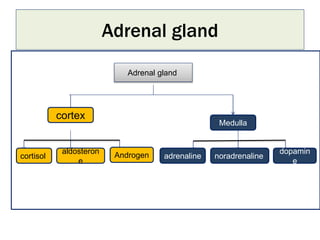
Adrenal gland
Adrenal gland
cortex
Medulla
cortisol
aldosteron
e
Androgen adrenaline noradrenaline
dopamin
e
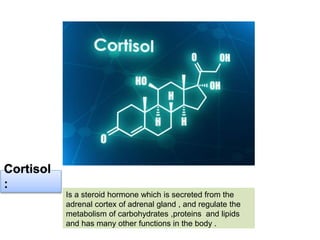
Cortisol
:
Is a steroid hormone which is secreted from the
adrenal cortex of adrenal gland , and regulate the
metabolism of carbohydrates ,proteins and lipids
and has many other functions in the body .
Action of cortisol (glucocorticoids):
1- metabolic effect :
Carbohydrates metabolism
Stimulation of
gluconeogenesis
Anti-insulin effect
Activation of glucose
6-phosphate
A
z
1- Metabolic effect
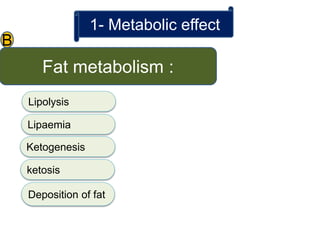
Fat metabolism :
Lipolysis
Lipaemia
Ketogenesis
ketosis
Deposition of fat
B
1- Metabolic effect
Proteins metabolism :
In extra hepatic
tissue
In hepatic tissue
Action of cortisol (glucocorticoids):
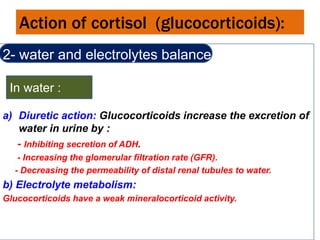
2- water and electrolytes balance :
a) Diuretic action: Glucocorticoids increase the excretion of
water in urine by :
- Inhibiting secretion of ADH.
- Increasing the glomerular filtration rate (GFR).
- Decreasing the permeability of distal renal tubules to water.
b) Electrolyte metabolism:
Glucocorticoids have a weak mineralocorticoid activity.
In water :
Action of cortisol (glucocorticoids):
• Decrease lymphocyte, eosinophil and basophil count.
• Increase neutrophil, R.B.Cs and platelet count.
• Decrease the output of T-lymphocytes and antibodies.
Decrease the size of lymph nodes and spleen.
3-Blood cells and lymphatic
tissues
Action of cortisol (glucocorticoids):
• 4- Anti-inflammatory effect:
• Glucocorticoids in large doses inhibit inflammatory
reactions because they:
(a) Inhibiting release of the lysosomal enzymes
(b) Formation of leukotriene and interleukins
(c) Decreasing the capillary permeability
Action of cortisol (glucocorticoids):
5- Anti-allergic effect:
• Glucocorticoids in large doses suppress all manifestations
of allergy by preventing release of histamine from the mast
cells.
Action of cortisol (glucocorticoids):
Through:
• a -Increasing the response to catecholamine.
• b- Extra hepatic mobilization of A.As and their
uptake by the liver cells for synthesis of essential
substance.
• c- Mobilization of fatty acids as a source for energy
during emergency.
• d- Inhibiting the formation of prostacyclin.
6- resistance to stress :
Action of cortisol (glucocorticoids):
7- Permissive action :
– Glucagon hormone to produce gluconeogenesis.
– Catecholamine to produce their V.C, lipolytic, calorigenic and
bronchodilator.
Action of cortisol (glucocorticoids):
8- Effect on the respiratory system:
During fetal life, the glucocorticoids accelerate the
formation of surfactant in the lungs.
9-Effect on other hormones:
Glucocorticoids decrease the secretion of growth
hormone and TSH.
Action of cortisol (glucocorticoids):
10-Other action of glucocorticoids:
• a) Increase appetite.
• b) Stimulate gastric HCl and pepsin
secretion.
• c) Increase excitability of brain cells.

Cortisol hormone1.pptx

  • 1.
  • 2.
  • 3.
    Cortisol : Is a steroidhormone which is secreted from the adrenal cortex of adrenal gland , and regulate the metabolism of carbohydrates ,proteins and lipids and has many other functions in the body .
  • 4.
    Action of cortisol(glucocorticoids): 1- metabolic effect : Carbohydrates metabolism Stimulation of gluconeogenesis Anti-insulin effect Activation of glucose 6-phosphate A
  • 5.
    z 1- Metabolic effect Fatmetabolism : Lipolysis Lipaemia Ketogenesis ketosis Deposition of fat B
  • 6.
    1- Metabolic effect Proteinsmetabolism : In extra hepatic tissue In hepatic tissue
  • 7.
    Action of cortisol(glucocorticoids): 2- water and electrolytes balance : a) Diuretic action: Glucocorticoids increase the excretion of water in urine by : - Inhibiting secretion of ADH. - Increasing the glomerular filtration rate (GFR). - Decreasing the permeability of distal renal tubules to water. b) Electrolyte metabolism: Glucocorticoids have a weak mineralocorticoid activity. In water :
  • 8.
    Action of cortisol(glucocorticoids): • Decrease lymphocyte, eosinophil and basophil count. • Increase neutrophil, R.B.Cs and platelet count. • Decrease the output of T-lymphocytes and antibodies. Decrease the size of lymph nodes and spleen. 3-Blood cells and lymphatic tissues
  • 9.
    Action of cortisol(glucocorticoids): • 4- Anti-inflammatory effect: • Glucocorticoids in large doses inhibit inflammatory reactions because they: (a) Inhibiting release of the lysosomal enzymes (b) Formation of leukotriene and interleukins (c) Decreasing the capillary permeability
  • 10.
    Action of cortisol(glucocorticoids): 5- Anti-allergic effect: • Glucocorticoids in large doses suppress all manifestations of allergy by preventing release of histamine from the mast cells.
  • 11.
    Action of cortisol(glucocorticoids): Through: • a -Increasing the response to catecholamine. • b- Extra hepatic mobilization of A.As and their uptake by the liver cells for synthesis of essential substance. • c- Mobilization of fatty acids as a source for energy during emergency. • d- Inhibiting the formation of prostacyclin. 6- resistance to stress :
  • 12.
    Action of cortisol(glucocorticoids): 7- Permissive action : – Glucagon hormone to produce gluconeogenesis. – Catecholamine to produce their V.C, lipolytic, calorigenic and bronchodilator.
  • 13.
    Action of cortisol(glucocorticoids): 8- Effect on the respiratory system: During fetal life, the glucocorticoids accelerate the formation of surfactant in the lungs. 9-Effect on other hormones: Glucocorticoids decrease the secretion of growth hormone and TSH.
  • 14.
    Action of cortisol(glucocorticoids): 10-Other action of glucocorticoids: • a) Increase appetite. • b) Stimulate gastric HCl and pepsin secretion. • c) Increase excitability of brain cells.