Adrenal Cortex
Dr. Mrs. Minakshi Ashok Randive
Professor & Head
Tilak ayurved mahavidyalaya , Pune.
Adrenal Cortex
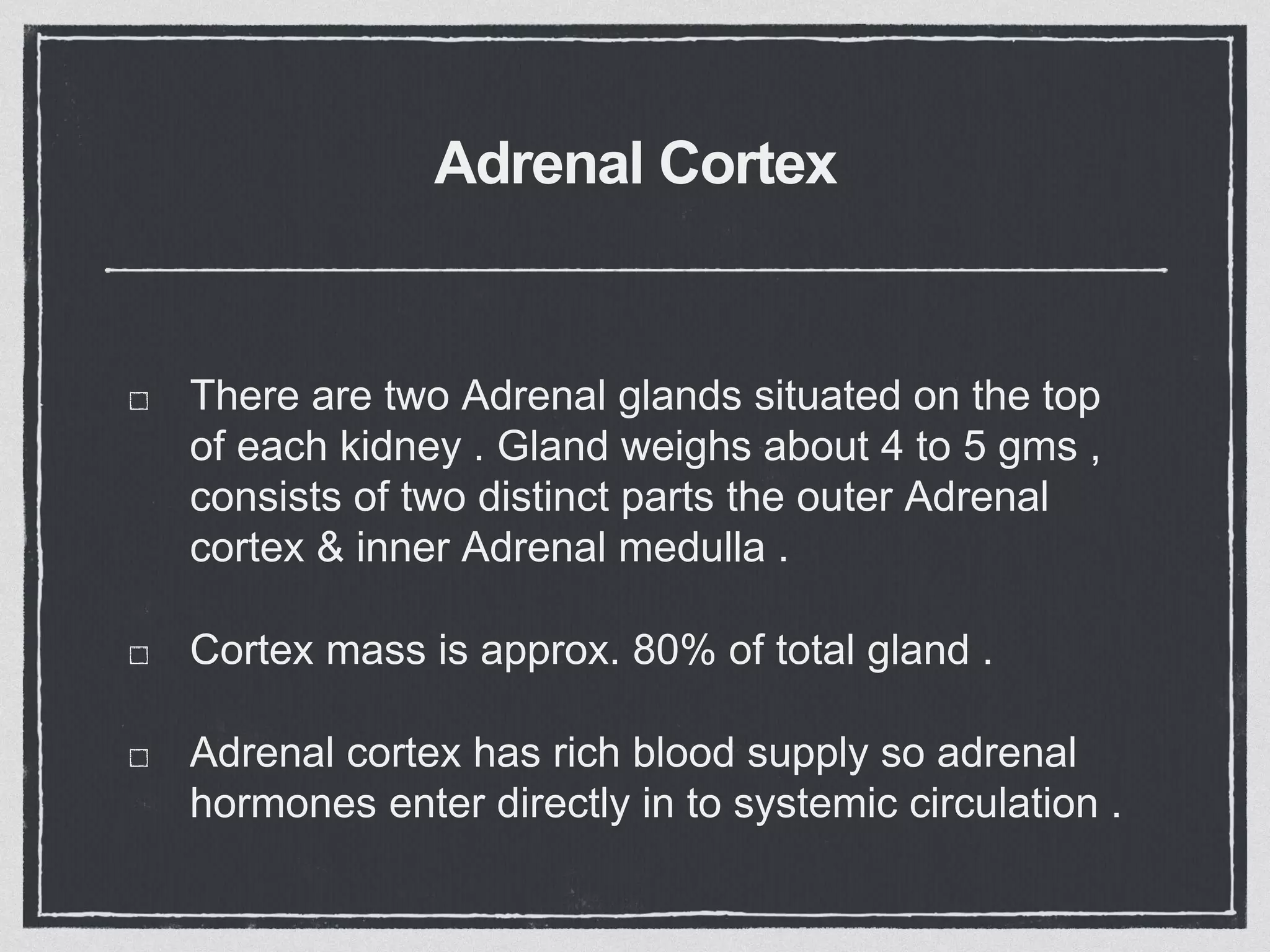
There are two Adrenal glands situated on the top
of each kidney . Gland weighs about 4 to 5 gms ,
consists of two distinct parts the outer Adrenal
cortex & inner Adrenal medulla .
Cortex mass is approx. 80% of total gland .
Adrenal cortex has rich blood supply so adrenal
hormones enter directly in to systemic circulation .
Adrenal Cortex
Adrenal cortex has 3 layers of structures .
1 - Zona glmerulosa - outer most .
2 - Zona fasciculate - middle layer .
3 - Zona reticularis - inner layer .
Hormones - Adrenocortical hormones or
Corticosteroids classified into three groups ,
1 - Minaralocorticoids
2 - Glucocorticoids
3 - Sex hormones
Synthesis ,Transport ,Fate
Synthesis - these hormones are steroid in nature ,
mainly formed from Cholesterol absorbed from
direct circulating blood .
Transport - Minaralocorticoids are carried by
plasma proteins -globulins . 50% of hormones are
in free form .
Glucocorticoids - special plasma protein called as
Glucocorticoid - binding globulin or transcortin
carries 94% . About 6% are found free in plasma .
Synthesis ,Transport ,Fate
Corticosteroids Fate - mainly degraded in liver ,
and get conjugated to form glucuronides and to
lesser extent , form sulphates .
Near about 25% of corticosteroids excreted in Bile
and faces and 75% in urine .
Glucocorticoid
Glucocorticoids - mainly act on Glucose
metabolism , glucocorticoids are - 1 - Cortisol , 2 -
Corticosterone , 3 - cortisone .
Chemical structure - C 21steroids having 21
carbon atoms .
Secretion - secreted mainly by Zona fasciculata of
adrenal cortex ,a small amount is also secreted by
Zona Reticularis .
Glucocorticoids- functions
Life protection - cortisol is a life protecting
hormone .it helps in stress .
They have metabolic effects on fats ,
carbohydrates, protein and water .
Fat metabolism - glucocorticoids mobilise and
redistribute of fats - a) - mobilization of fatty acids
from adipose tissue , b) - increase the
concentration of fatty acids in blood , c ) - increase
the utilisation
Glucocorticoids - functions
Glucocorticoids decreas the use of glucose , and
use the fatty acids for liberation of energy , it leads
to formation of large amount of Ketone bodies (
ketogenic effect ) .
Hyper secretion of glucocorticoids leads to obesity
.
On Carbohydrate metabolism - glucocorticoids
increase the blood sugar level in 2 ways , a)
promotion of gluconeogenesis in liver from amino
acids , b) inhibition of glucose uptake and
utilisation by peripheral cells .
Glucocorticoids function
Carbohydrate metabolism - hypersecretion of
glucocorticoid increases the blood glucose level
resulting in hyperglycaemia .
Protein metabolism - promotes protein catabolism .
Glucocorticoids increase plasma amino acids and
proteins in the liver and decrease proteins in the cell
.
In hyper secretion of glucocorticoids there is
reduction in the growth , muscle wasting .
Glucocorticoids function
On Muscles - glucocorticoids increase the release
of amino acids from muscle by catabolism . So
there is muscular weakness .
On Water metabolism - glucocorticoids are
important in maintainance of water balance , it
accelerates excretion of water so adrenal
defficiency causes water retention and it this
condition causes intoxication .
Glucocorticoids function
On Mineral metabolism - Glucocorticoids enhance
the retention of Sodium and slightly increase the
excretion of potassium .
Hyper secretion of glucocorticoids is responsible
for hypertension , edema (swelling) ,hypokalemia
(reduced sodium) , decrease in blood calcium by
inhibiting absorption from intestine and increasing
excretion of calcium through urine .
Glucocorticoids functions
on Central Nervous system - inadequacy of these
hormones causes Irritability , lack of concentration
,sensitivity to olfactory and taste stimuli increases .
On Blood cells - eosinophils are destructed in
reticuloendothelial cells, even basophils and
lymphocytes also get decreased , and there is
increase in number rbcs,and platelets .
Glucocorticoids functions
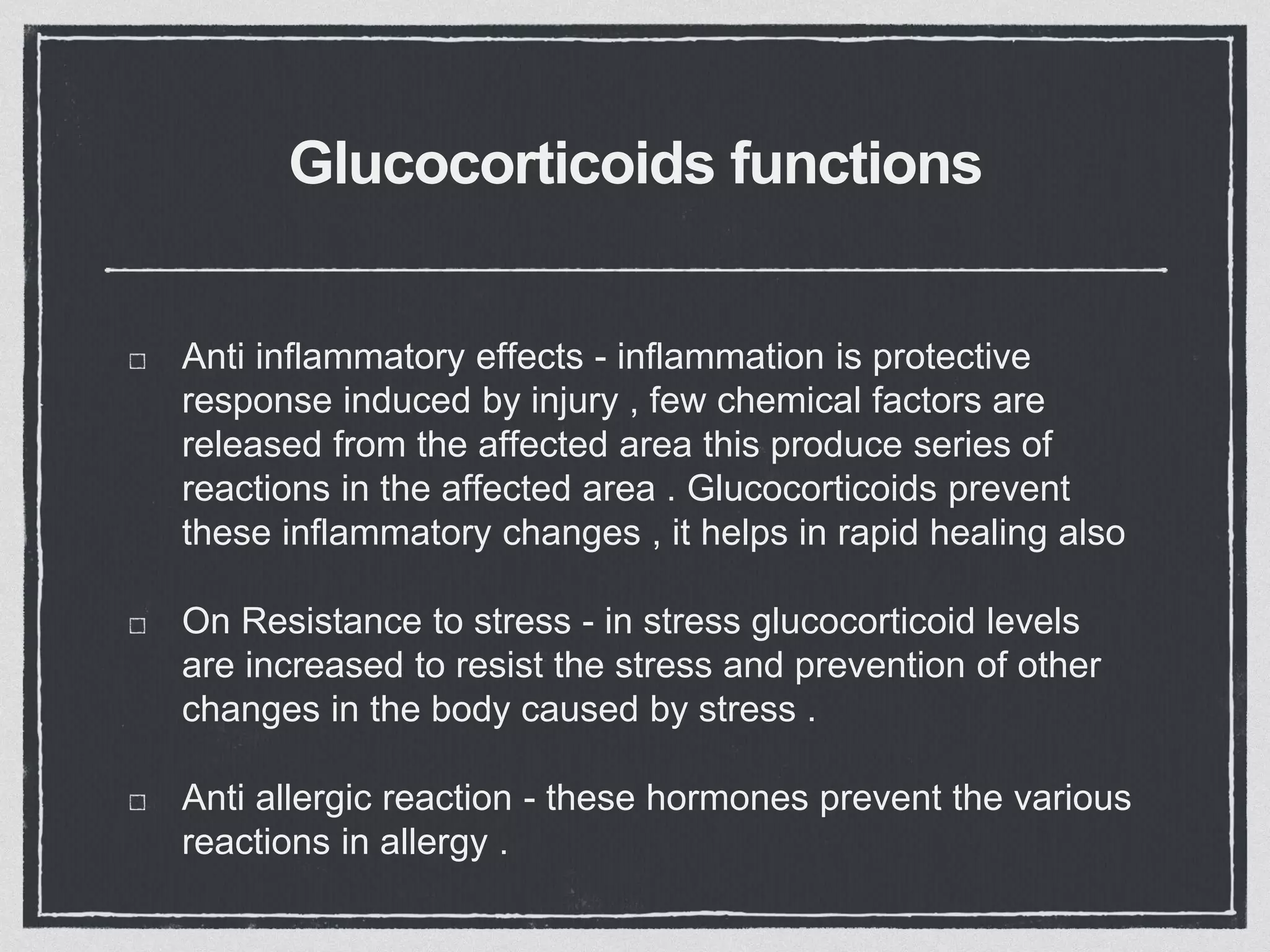
Anti inflammatory effects - inflammation is protective
response induced by injury , few chemical factors are
released from the affected area this produce series of
reactions in the affected area . Glucocorticoids prevent
these inflammatory changes , it helps in rapid healing also
On Resistance to stress - in stress glucocorticoid levels
are increased to resist the stress and prevention of other
changes in the body caused by stress .
Anti allergic reaction - these hormones prevent the various
reactions in allergy .
Glucocorticoid functions
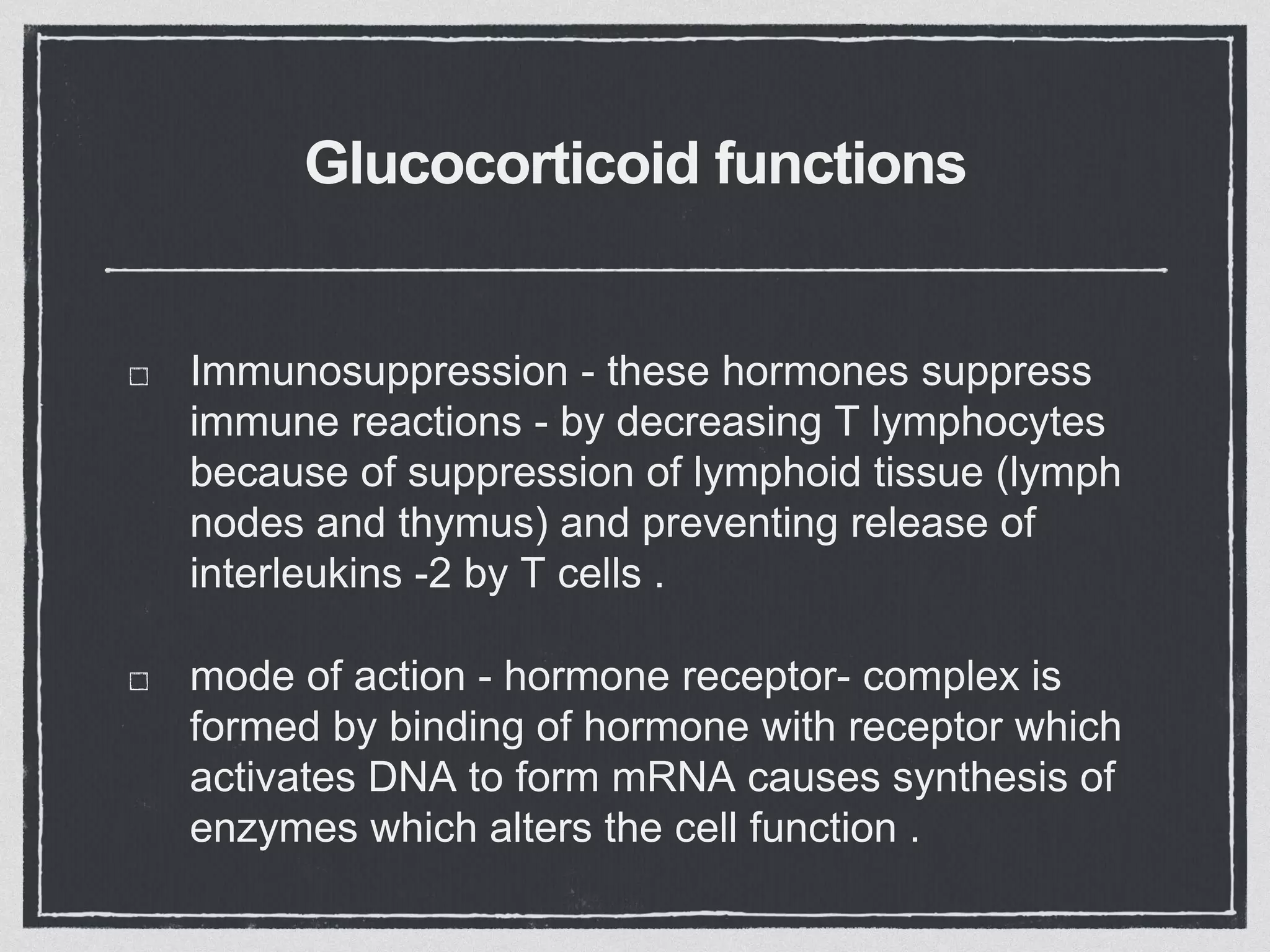
Immunosuppression - these hormones suppress
immune reactions - by decreasing T lymphocytes
because of suppression of lymphoid tissue (lymph
nodes and thymus) and preventing release of
interleukins -2 by T cells .
mode of action - hormone receptor- complex is
formed by binding of hormone with receptor which
activates DNA to form mRNA causes synthesis of
enzymes which alters the cell function .
Regulation of secretion
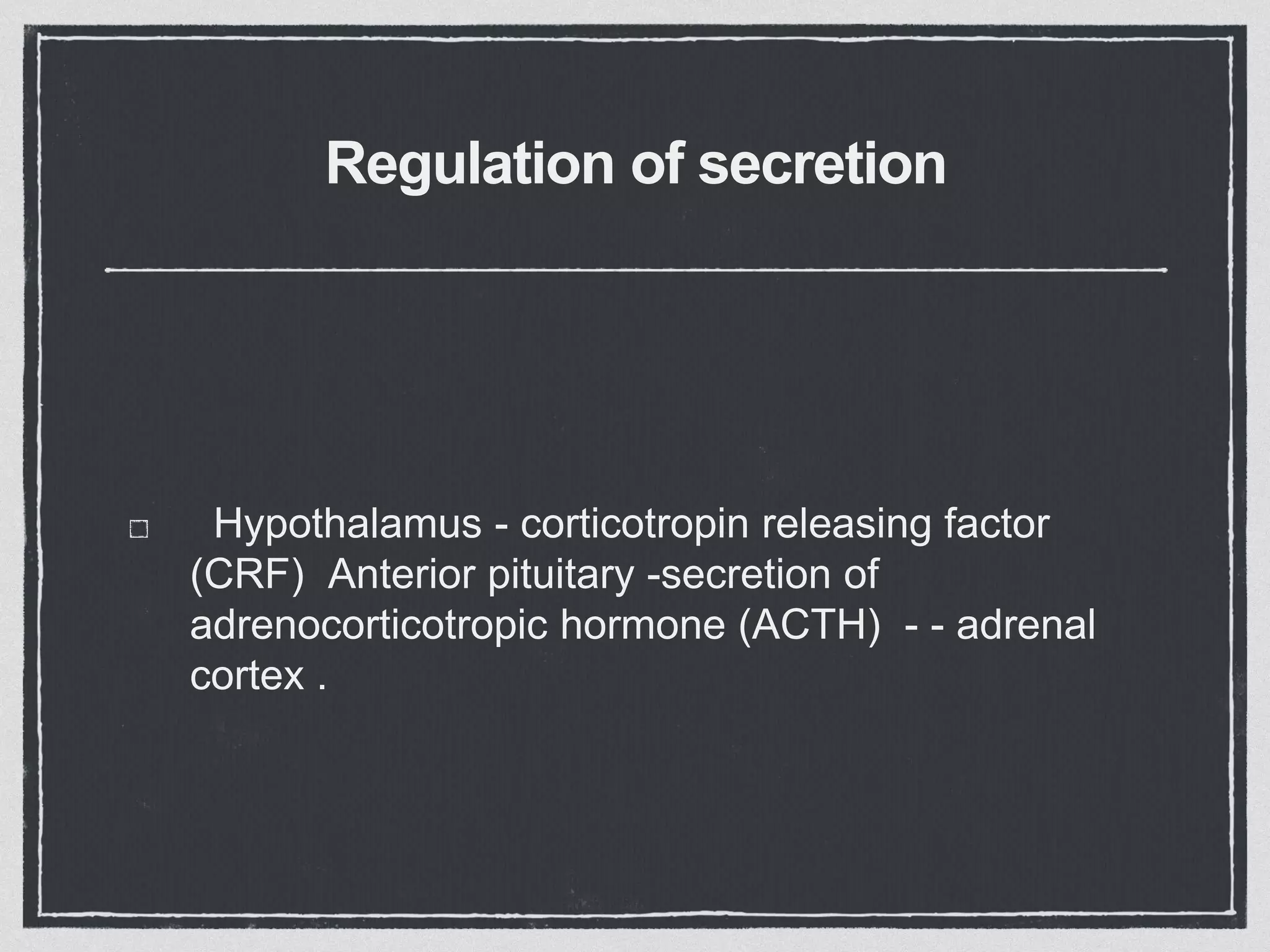
Hypothalamus - corticotropin releasing factor
(CRF) Anterior pituitary -secretion of
adrenocorticotropic hormone (ACTH) - - adrenal
cortex .
Regulation of secretion
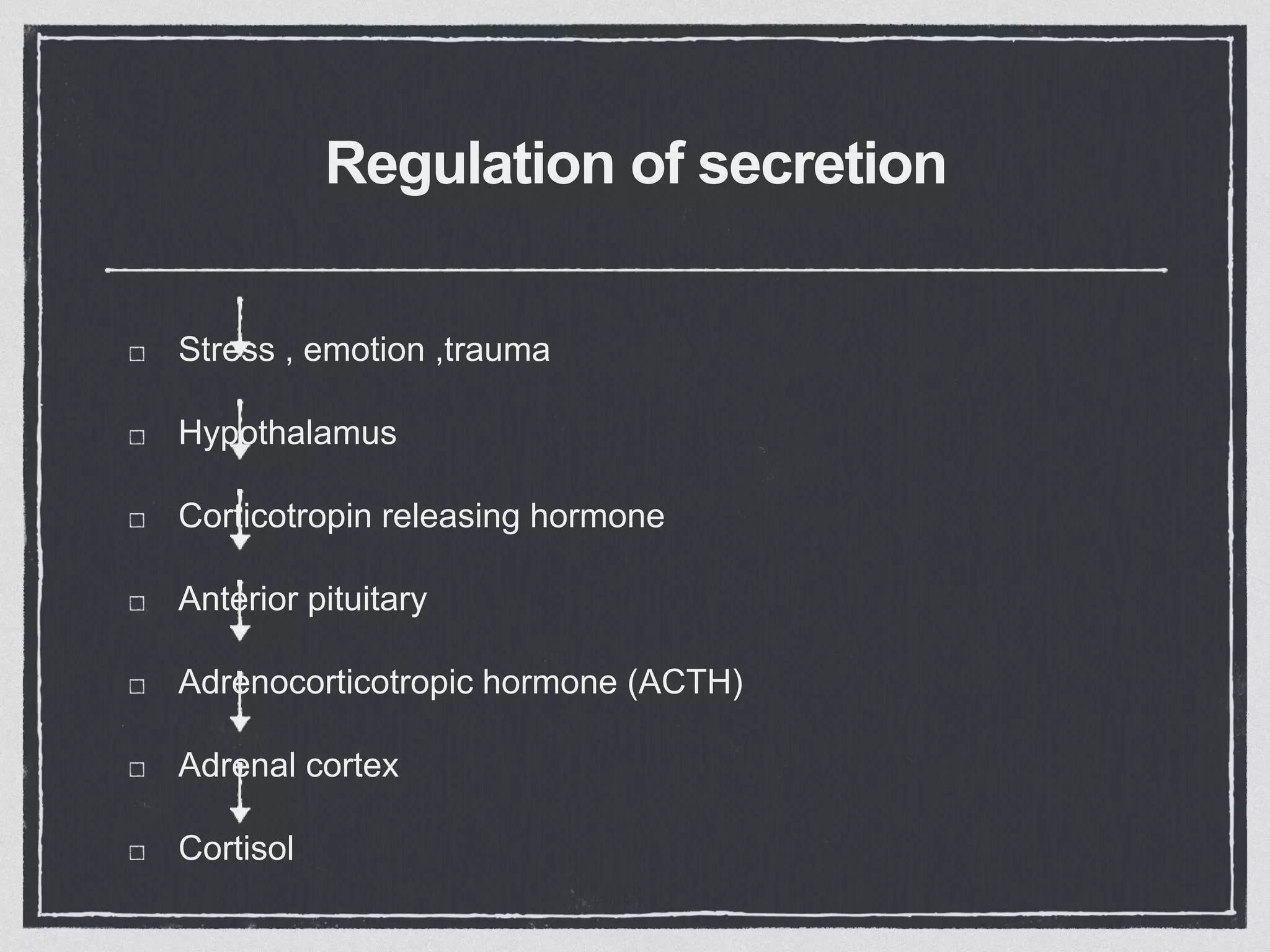
Stress , emotion ,trauma
Hypothalamus
Corticotropin releasing hormone
Anterior pituitary
Adrenocorticotropic hormone (ACTH)
Adrenal cortex
Cortisol
Adrenal sex hormones
Secreted mainly by Zona reticularis and in small amount by
Zona fasciculata .
Secreted hormones are mainly male sex hormones
(androgenes) and small quantity of female hormones -
oestrogen and progesterone .
Androgenes - a) Dehydroepiandrostrone - most active ,
b) Androstenedione C) Testosterone
Androgens are responsible for masculine features of the body
, but as the secretions are low in quantity have insignificant
physiological effects .
Mineralocorticoids
Minaralocorticoids act on the mineral - electrocyte
metabolism especially sodium and potassium .
Mineralocorticoids are - a) Aldesterone ,
b) 11-Deoxycorticosterone .
Source of secretion - are secreted by zone
glomerulosa of adrenal cortex .
Chemistry - C12 steroids having 21 carbon atoms
Mineralocorticoids - functions
90% of mineralocorticoid activity is provided by aldosterone .
Life saving hormone -loss of these hormones cause death within
2 to 3 weeks .
Aldesterone - 1 - increase the reabsorption of sodium from renal
tubules . 2 - increase the reabsorption of potassium from the
renal tubules .
On Sodium ions - regulates the concentration of sodium .
On Extra cellular fluid - when sodium ions are reabsorbed from
the renal tubules water is also reabsorbed simultaneously so
there is increase in ECF volume .
Mineralocorticoids functions
On Blood pressure - increase in ECF the blood volume ,
increases the Blood pressure .
On Hydrogen ion concentration - aldosterone causes
tubular secretion of hydrogen ions while increasing the
sodium reabsorption , it reduces the hydrogen ion
concentration in ECF .
On potassium ions - potassium excretion is increased
through renal tubules due to aldesteron , so whenever
there is deficiency of aldesteron the amount of potassium
is increased in ECF the condition is called as
Hyperkalemia
Mineralocorticoids functions
Hyperkalemia condition is responsible for cardiac -
arrhythmia , in severe conditions it may cause death
also .
If aldesteron secretion increases then it lead to
hypokalaemia and muscular weakness .
On Sweat glands and Salivary glands - due to
aldesterone sodium is reabsorbed from the sweat
glands so the loss of sodium is prevented , same
effect is seen on the salivary glands .
Mode of action of aldesteron
Aldesteron diffuses through the lipid layer in to the interior of the
tubular epithelial cells .
In the tubular cells cytoplasm aldesteron binds with specific
receptor protein .
Aldesteron - receptor protein complex diffuses in the nucleus -
and formation of mRNA.
mRNA diffuses back in to the cytoplasm and with ribosomes it
causes protein synthesis ,most of the proteins are in form of
enzymes , sodium -potassium ATPase is the enzyme formed
which is responsible for exchange of sodium and potassium
through Sodium potassium pump .
Regulation of secretion
Following are the important factors when secretion
of aldosterone takes place
1- increase in potassium ion concentration in the
ECF .
2 - decrease in sodium ion concentration in the
ECF .
3 - decrease in ECF volume
4 - adrenocorticotropic hormone .
Applied physiology
Hyperactivity of Adrenal cortex -
1- kushings syndrome , 2 - Hyperaldosteronism ,
3 - Adrenogenital syndrome .
Hyperactivity of Adrenal cortex -
1 - Addisons disease or chronic adrenal
insufficiency 2 - Addisonian crisis or
Adrenal crisis 3 - Congenital
adrenal hyperplasia .
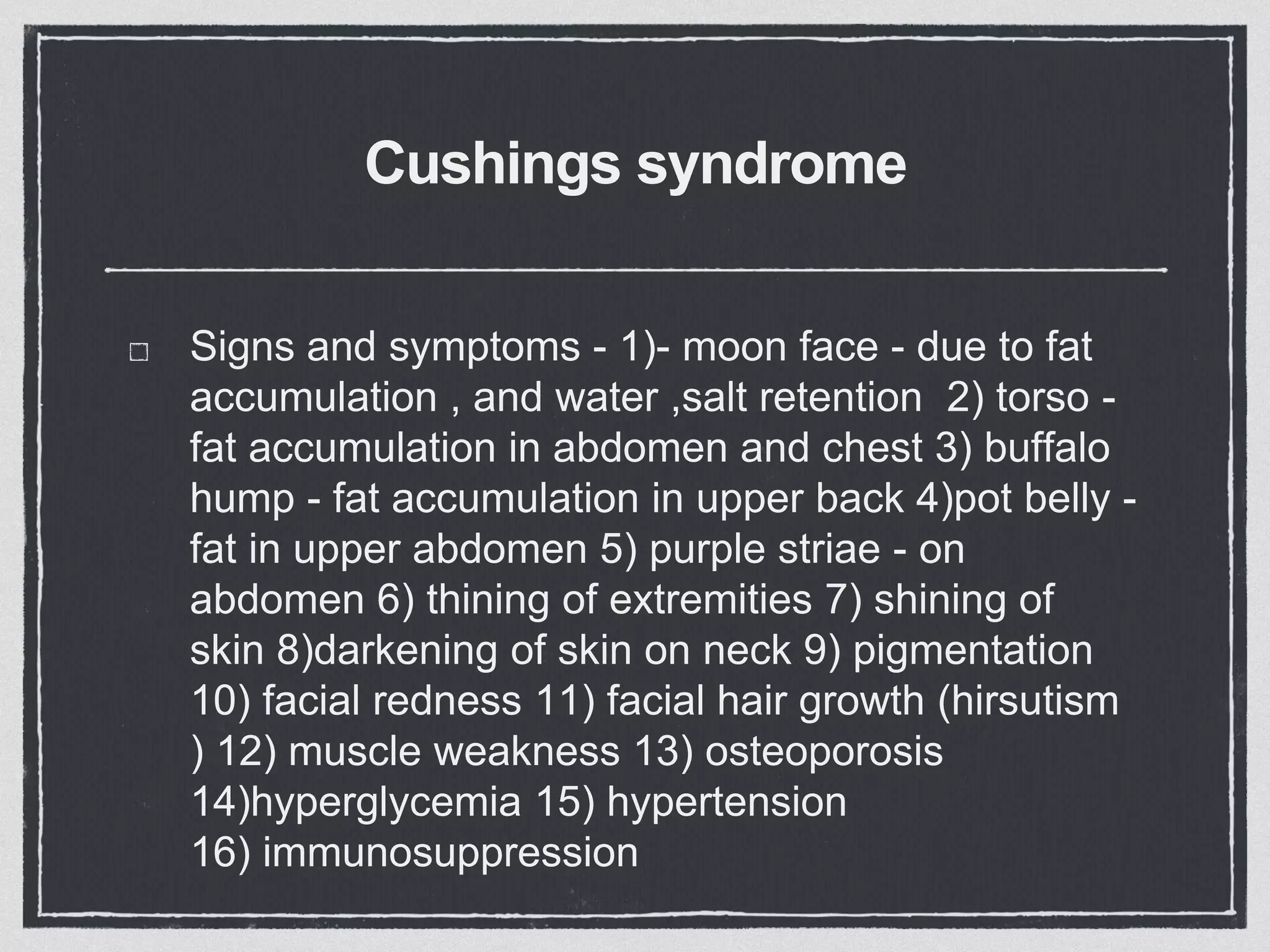
Cushings syndrome
Signs and symptoms - 1)- moon face - due to fat
accumulation , and water ,salt retention 2) torso -
fat accumulation in abdomen and chest 3) buffalo
hump - fat accumulation in upper back 4)pot belly -
fat in upper abdomen 5) purple striae - on
abdomen 6) thining of extremities 7) shining of
skin 8)darkening of skin on neck 9) pigmentation
10) facial redness 11) facial hair growth (hirsutism
) 12) muscle weakness 13) osteoporosis
14)hyperglycemia 15) hypertension
16) immunosuppression
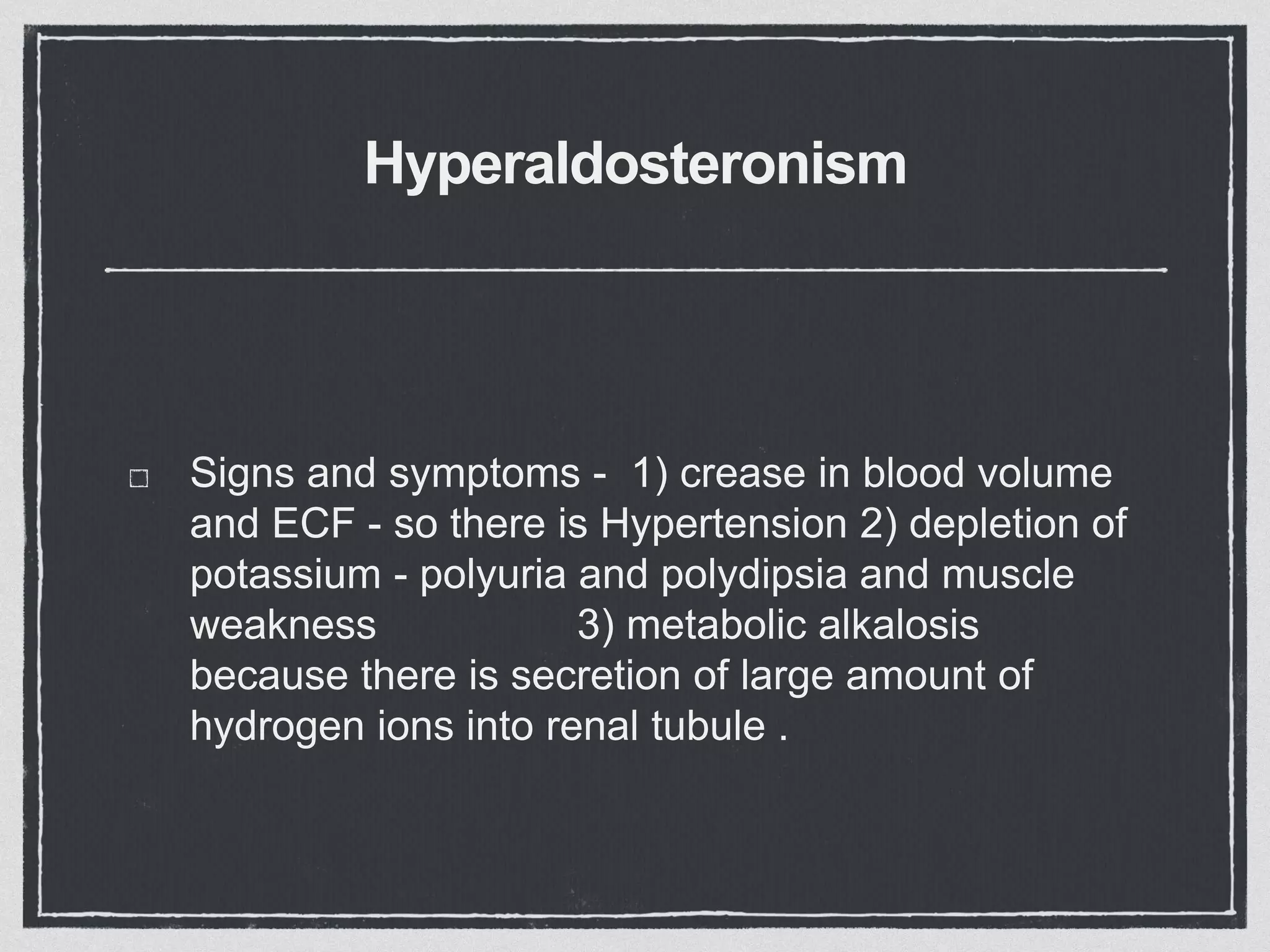
Hyperaldosteronism
Signs and symptoms - 1) crease in blood volume
and ECF - so there is Hypertension 2) depletion of
potassium - polyuria and polydipsia and muscle
weakness 3) metabolic alkalosis
because there is secretion of large amount of
hydrogen ions into renal tubule .
Adrenogenital syndrome
Signs and symptoms - 1) development of
secondary sex characters of opposite sex .
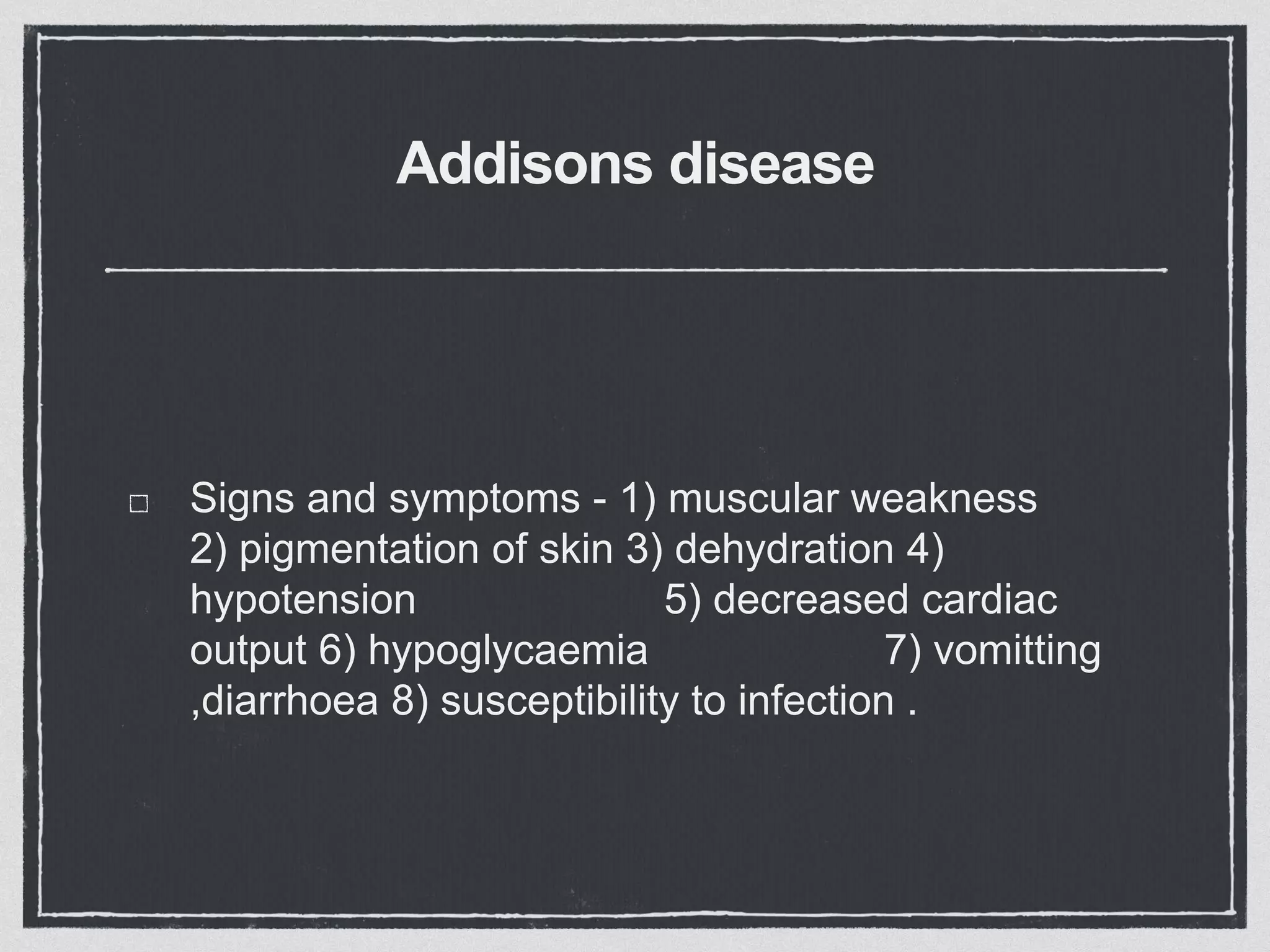
Addisons disease
Signs and symptoms - 1) muscular weakness
2) pigmentation of skin 3) dehydration 4)
hypotension 5) decreased cardiac
output 6) hypoglycaemia 7) vomitting
,diarrhoea 8) susceptibility to infection .
Addisonian crisis
1) sudden colapse
2) death
Congenital Adrenal hyperplasia
Precocious body growth
Precocious sexual development with enlarged
penis even at age of 4 years .
Masculinisation in girls .
Bibliography
Essentials of Medical Physiology - K Sembulingam
.
Medical Physiology - Subir Chowdhary
Adrenal cortex 1

Adrenal cortex 1

  • 1.
    Adrenal Cortex Dr. Mrs.Minakshi Ashok Randive Professor & Head Tilak ayurved mahavidyalaya , Pune.
  • 2.
    Adrenal Cortex There aretwo Adrenal glands situated on the top of each kidney . Gland weighs about 4 to 5 gms , consists of two distinct parts the outer Adrenal cortex & inner Adrenal medulla . Cortex mass is approx. 80% of total gland . Adrenal cortex has rich blood supply so adrenal hormones enter directly in to systemic circulation .
  • 3.
    Adrenal Cortex Adrenal cortexhas 3 layers of structures . 1 - Zona glmerulosa - outer most . 2 - Zona fasciculate - middle layer . 3 - Zona reticularis - inner layer . Hormones - Adrenocortical hormones or Corticosteroids classified into three groups , 1 - Minaralocorticoids 2 - Glucocorticoids 3 - Sex hormones
  • 4.
    Synthesis ,Transport ,Fate Synthesis- these hormones are steroid in nature , mainly formed from Cholesterol absorbed from direct circulating blood . Transport - Minaralocorticoids are carried by plasma proteins -globulins . 50% of hormones are in free form . Glucocorticoids - special plasma protein called as Glucocorticoid - binding globulin or transcortin carries 94% . About 6% are found free in plasma .
  • 5.
    Synthesis ,Transport ,Fate CorticosteroidsFate - mainly degraded in liver , and get conjugated to form glucuronides and to lesser extent , form sulphates . Near about 25% of corticosteroids excreted in Bile and faces and 75% in urine .
  • 6.
    Glucocorticoid Glucocorticoids - mainlyact on Glucose metabolism , glucocorticoids are - 1 - Cortisol , 2 - Corticosterone , 3 - cortisone . Chemical structure - C 21steroids having 21 carbon atoms . Secretion - secreted mainly by Zona fasciculata of adrenal cortex ,a small amount is also secreted by Zona Reticularis .
  • 7.
    Glucocorticoids- functions Life protection- cortisol is a life protecting hormone .it helps in stress . They have metabolic effects on fats , carbohydrates, protein and water . Fat metabolism - glucocorticoids mobilise and redistribute of fats - a) - mobilization of fatty acids from adipose tissue , b) - increase the concentration of fatty acids in blood , c ) - increase the utilisation
  • 8.
    Glucocorticoids - functions Glucocorticoidsdecreas the use of glucose , and use the fatty acids for liberation of energy , it leads to formation of large amount of Ketone bodies ( ketogenic effect ) . Hyper secretion of glucocorticoids leads to obesity . On Carbohydrate metabolism - glucocorticoids increase the blood sugar level in 2 ways , a) promotion of gluconeogenesis in liver from amino acids , b) inhibition of glucose uptake and utilisation by peripheral cells .
  • 9.
    Glucocorticoids function Carbohydrate metabolism- hypersecretion of glucocorticoid increases the blood glucose level resulting in hyperglycaemia . Protein metabolism - promotes protein catabolism . Glucocorticoids increase plasma amino acids and proteins in the liver and decrease proteins in the cell . In hyper secretion of glucocorticoids there is reduction in the growth , muscle wasting .
  • 10.
    Glucocorticoids function On Muscles- glucocorticoids increase the release of amino acids from muscle by catabolism . So there is muscular weakness . On Water metabolism - glucocorticoids are important in maintainance of water balance , it accelerates excretion of water so adrenal defficiency causes water retention and it this condition causes intoxication .
  • 11.
    Glucocorticoids function On Mineralmetabolism - Glucocorticoids enhance the retention of Sodium and slightly increase the excretion of potassium . Hyper secretion of glucocorticoids is responsible for hypertension , edema (swelling) ,hypokalemia (reduced sodium) , decrease in blood calcium by inhibiting absorption from intestine and increasing excretion of calcium through urine .
  • 12.
    Glucocorticoids functions on CentralNervous system - inadequacy of these hormones causes Irritability , lack of concentration ,sensitivity to olfactory and taste stimuli increases . On Blood cells - eosinophils are destructed in reticuloendothelial cells, even basophils and lymphocytes also get decreased , and there is increase in number rbcs,and platelets .
  • 13.
    Glucocorticoids functions Anti inflammatoryeffects - inflammation is protective response induced by injury , few chemical factors are released from the affected area this produce series of reactions in the affected area . Glucocorticoids prevent these inflammatory changes , it helps in rapid healing also On Resistance to stress - in stress glucocorticoid levels are increased to resist the stress and prevention of other changes in the body caused by stress . Anti allergic reaction - these hormones prevent the various reactions in allergy .
  • 14.
    Glucocorticoid functions Immunosuppression -these hormones suppress immune reactions - by decreasing T lymphocytes because of suppression of lymphoid tissue (lymph nodes and thymus) and preventing release of interleukins -2 by T cells . mode of action - hormone receptor- complex is formed by binding of hormone with receptor which activates DNA to form mRNA causes synthesis of enzymes which alters the cell function .
  • 15.
    Regulation of secretion Hypothalamus- corticotropin releasing factor (CRF) Anterior pituitary -secretion of adrenocorticotropic hormone (ACTH) - - adrenal cortex .
  • 16.
    Regulation of secretion Stress, emotion ,trauma Hypothalamus Corticotropin releasing hormone Anterior pituitary Adrenocorticotropic hormone (ACTH) Adrenal cortex Cortisol
  • 17.
    Adrenal sex hormones Secretedmainly by Zona reticularis and in small amount by Zona fasciculata . Secreted hormones are mainly male sex hormones (androgenes) and small quantity of female hormones - oestrogen and progesterone . Androgenes - a) Dehydroepiandrostrone - most active , b) Androstenedione C) Testosterone Androgens are responsible for masculine features of the body , but as the secretions are low in quantity have insignificant physiological effects .
  • 18.
    Mineralocorticoids Minaralocorticoids act onthe mineral - electrocyte metabolism especially sodium and potassium . Mineralocorticoids are - a) Aldesterone , b) 11-Deoxycorticosterone . Source of secretion - are secreted by zone glomerulosa of adrenal cortex . Chemistry - C12 steroids having 21 carbon atoms
  • 19.
    Mineralocorticoids - functions 90%of mineralocorticoid activity is provided by aldosterone . Life saving hormone -loss of these hormones cause death within 2 to 3 weeks . Aldesterone - 1 - increase the reabsorption of sodium from renal tubules . 2 - increase the reabsorption of potassium from the renal tubules . On Sodium ions - regulates the concentration of sodium . On Extra cellular fluid - when sodium ions are reabsorbed from the renal tubules water is also reabsorbed simultaneously so there is increase in ECF volume .
  • 20.
    Mineralocorticoids functions On Bloodpressure - increase in ECF the blood volume , increases the Blood pressure . On Hydrogen ion concentration - aldosterone causes tubular secretion of hydrogen ions while increasing the sodium reabsorption , it reduces the hydrogen ion concentration in ECF . On potassium ions - potassium excretion is increased through renal tubules due to aldesteron , so whenever there is deficiency of aldesteron the amount of potassium is increased in ECF the condition is called as Hyperkalemia
  • 21.
    Mineralocorticoids functions Hyperkalemia conditionis responsible for cardiac - arrhythmia , in severe conditions it may cause death also . If aldesteron secretion increases then it lead to hypokalaemia and muscular weakness . On Sweat glands and Salivary glands - due to aldesterone sodium is reabsorbed from the sweat glands so the loss of sodium is prevented , same effect is seen on the salivary glands .
  • 22.
    Mode of actionof aldesteron Aldesteron diffuses through the lipid layer in to the interior of the tubular epithelial cells . In the tubular cells cytoplasm aldesteron binds with specific receptor protein . Aldesteron - receptor protein complex diffuses in the nucleus - and formation of mRNA. mRNA diffuses back in to the cytoplasm and with ribosomes it causes protein synthesis ,most of the proteins are in form of enzymes , sodium -potassium ATPase is the enzyme formed which is responsible for exchange of sodium and potassium through Sodium potassium pump .
  • 23.
    Regulation of secretion Followingare the important factors when secretion of aldosterone takes place 1- increase in potassium ion concentration in the ECF . 2 - decrease in sodium ion concentration in the ECF . 3 - decrease in ECF volume 4 - adrenocorticotropic hormone .
  • 24.
    Applied physiology Hyperactivity ofAdrenal cortex - 1- kushings syndrome , 2 - Hyperaldosteronism , 3 - Adrenogenital syndrome . Hyperactivity of Adrenal cortex - 1 - Addisons disease or chronic adrenal insufficiency 2 - Addisonian crisis or Adrenal crisis 3 - Congenital adrenal hyperplasia .
  • 25.
    Cushings syndrome Signs andsymptoms - 1)- moon face - due to fat accumulation , and water ,salt retention 2) torso - fat accumulation in abdomen and chest 3) buffalo hump - fat accumulation in upper back 4)pot belly - fat in upper abdomen 5) purple striae - on abdomen 6) thining of extremities 7) shining of skin 8)darkening of skin on neck 9) pigmentation 10) facial redness 11) facial hair growth (hirsutism ) 12) muscle weakness 13) osteoporosis 14)hyperglycemia 15) hypertension 16) immunosuppression
  • 26.
    Hyperaldosteronism Signs and symptoms- 1) crease in blood volume and ECF - so there is Hypertension 2) depletion of potassium - polyuria and polydipsia and muscle weakness 3) metabolic alkalosis because there is secretion of large amount of hydrogen ions into renal tubule .
  • 27.
    Adrenogenital syndrome Signs andsymptoms - 1) development of secondary sex characters of opposite sex .
  • 28.
    Addisons disease Signs andsymptoms - 1) muscular weakness 2) pigmentation of skin 3) dehydration 4) hypotension 5) decreased cardiac output 6) hypoglycaemia 7) vomitting ,diarrhoea 8) susceptibility to infection .
  • 29.
  • 30.
    Congenital Adrenal hyperplasia Precociousbody growth Precocious sexual development with enlarged penis even at age of 4 years . Masculinisation in girls .
  • 31.
    Bibliography Essentials of MedicalPhysiology - K Sembulingam . Medical Physiology - Subir Chowdhary