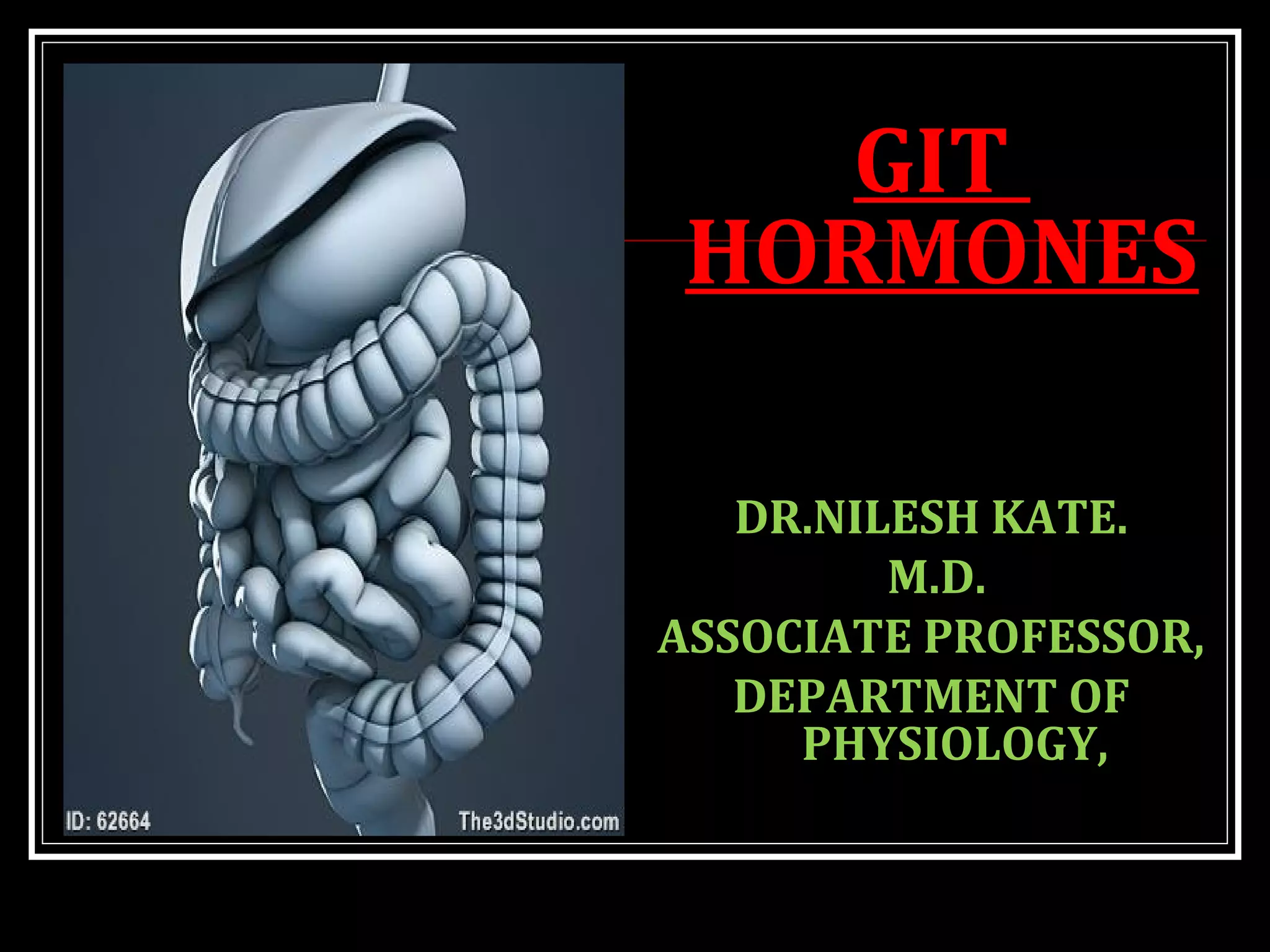
GIT
HORMONES
DR.NILESH KATE.
M.D.
ASSOCIATE PROFESSOR,
DEPARTMENT OF
PHYSIOLOGY,
OBJECTIVES
 INTRODUCTION.
 HISTORY.
 CLASSIFICATION.
 COMMON DESCRIPTION.
 CELLS PRODUCING – SOURCE.
 CLASSIFICATION.
 LOCATION.
 STIMULUS.
 MECHANISM OF ACTION.
 ACTIONS.
 APPLIED.
INTRODUCTION
 Earlier ---Believed Regulatory mechanisms were
controlled by the nervous system
 Later numerous chemicals in the name of
hormones were found
 Hormones -- Play an integral role in most of the
regulatory mechanisms in our body
 Main objective of learning this topic in detail
INTRODUCTION. (Cont….)
 Largest endocrine organ
 Enteric endocrine system.
 Total about 30 GIT hormones.
 These are biologically active
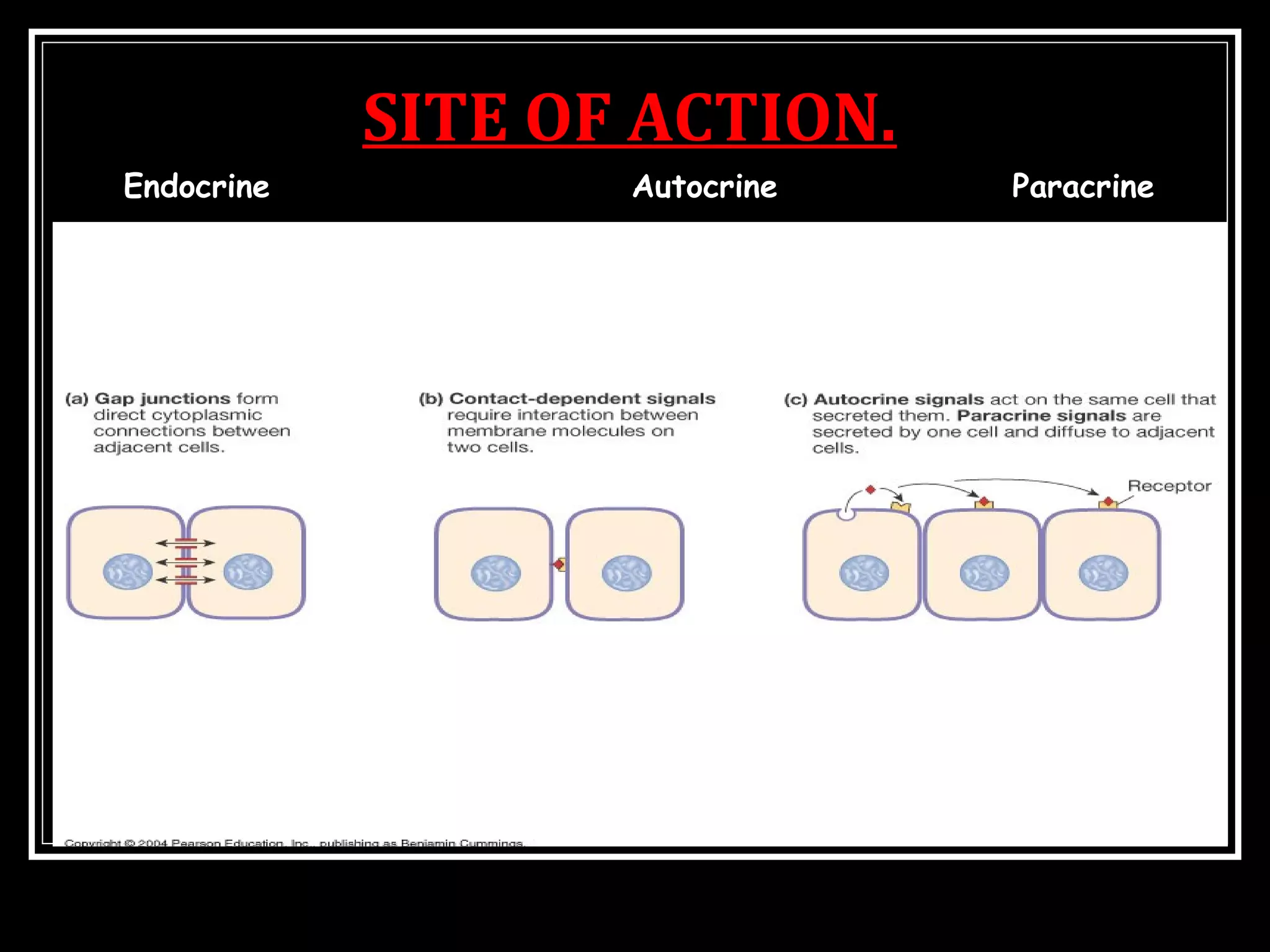
polypeptide & act in a paracrine
fashion.
 Main function is:
 1. To regulate the git secretion
 2. To regulate the movement of GI
tract.
PARACRINE HORMONES.
SITE OF ACTION.
Endocrine Autocrine Paracrine
HISTORY.
 BAYLISS & STARLING (1902) discovered the first
GIT hormone secretin.
 GREGORY AND TRACY (1964) --chemical
definition of Gastrin.
 YALOW AND BENSON (1966) invented RIA to
estimate quantity .
 JORPES AND MUTT (1996) chemical nature of
secretin and cholecystokinin and a group of other
hormones.
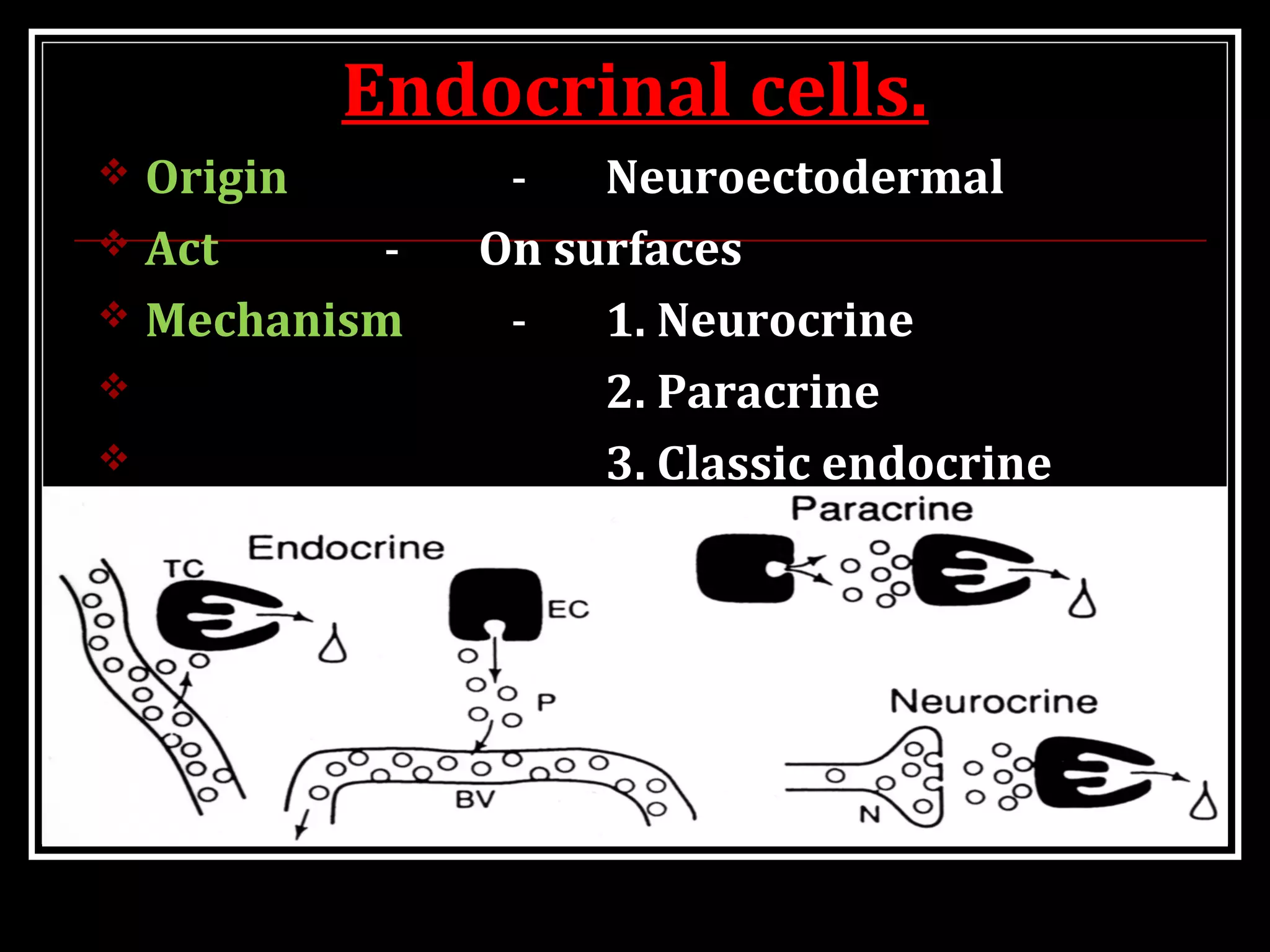
Endocrinal cells.Endocrinal cells.
 Origin - Neuroectodermal
 Act - On surfaces
 Mechanism - 1. Neurocrine
 2. Paracrine
 3. Classic endocrine
Endocrine cells - GIT
“Enteroendocrine cells”
 More than 15 types present
 Spread all over --stomach, small
intestine,
colon
 Many cells secrete only one
hormone
eg. G cells, S cells, K cells, M
cells
 Cells that manufacture Serotonin
in addition to polypeptides –
Entero- chromaffin cells.
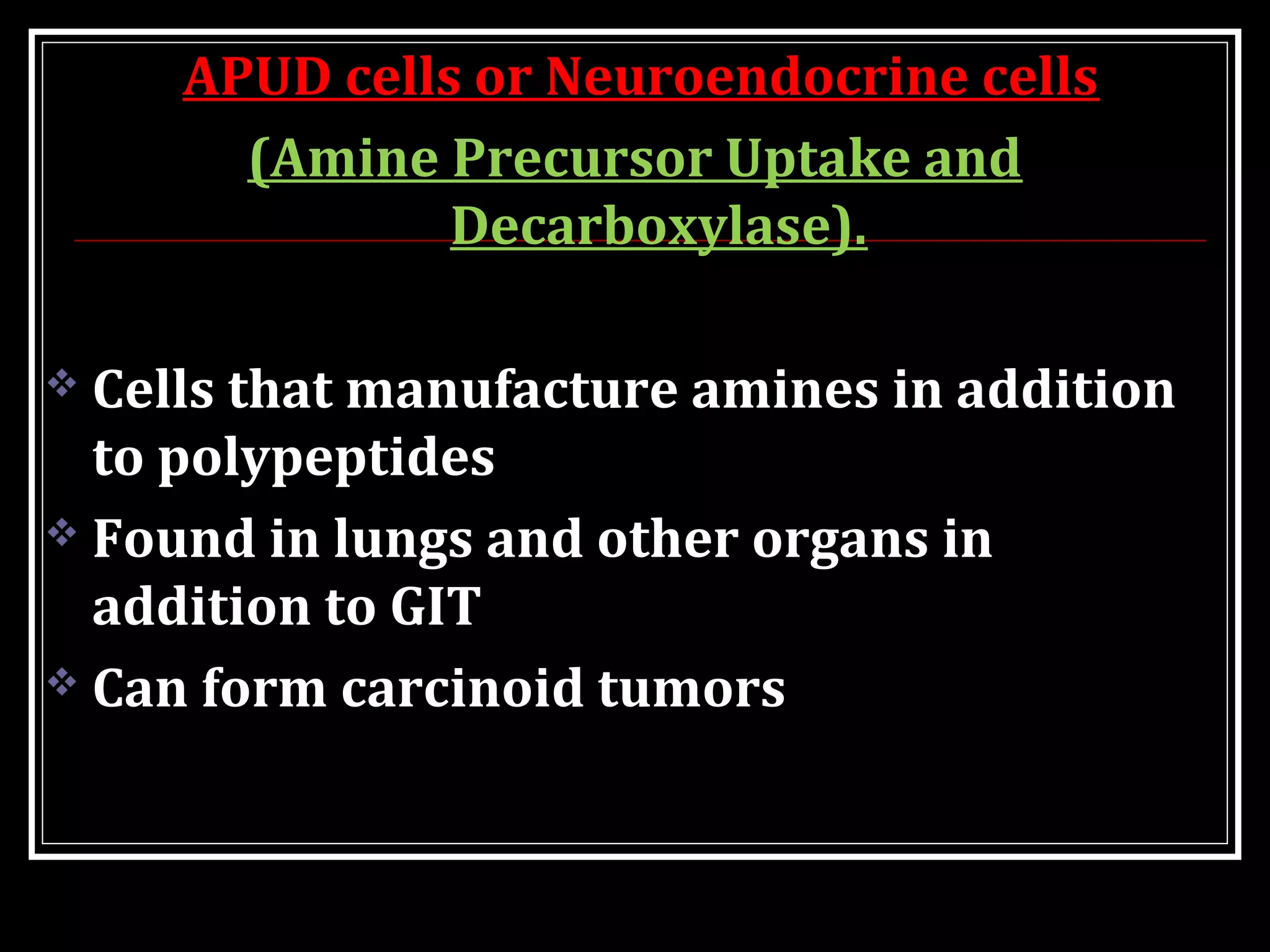
APUD cells or Neuroendocrine cells
(Amine Precursor Uptake and
Decarboxylase).
 Cells that manufacture amines in addition
to polypeptides
 Found in lungs and other organs in
addition to GIT
 Can form carcinoid tumors
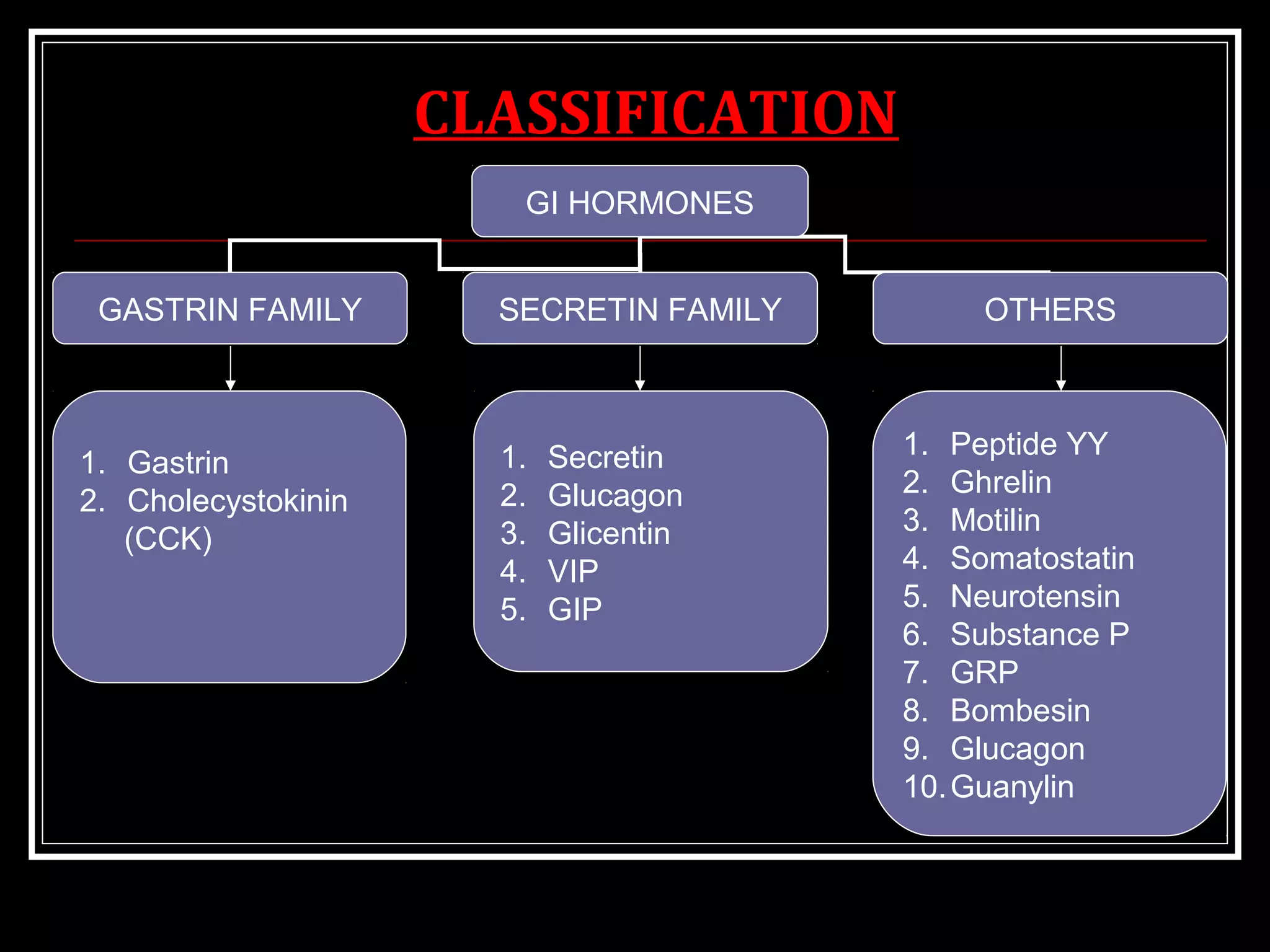
GI HORMONES
GASTRIN FAMILY SECRETIN FAMILY OTHERS
1. Secretin
2. Glucagon
3. Glicentin
4. VIP
5. GIP
1. Gastrin
2. Cholecystokinin
(CCK)
1. Peptide YY
2. Ghrelin
3. Motilin
4. Somatostatin
5. Neurotensin
6. Substance P
7. GRP
8. Bombesin
9. Glucagon
10.Guanylin
CLASSIFICATION
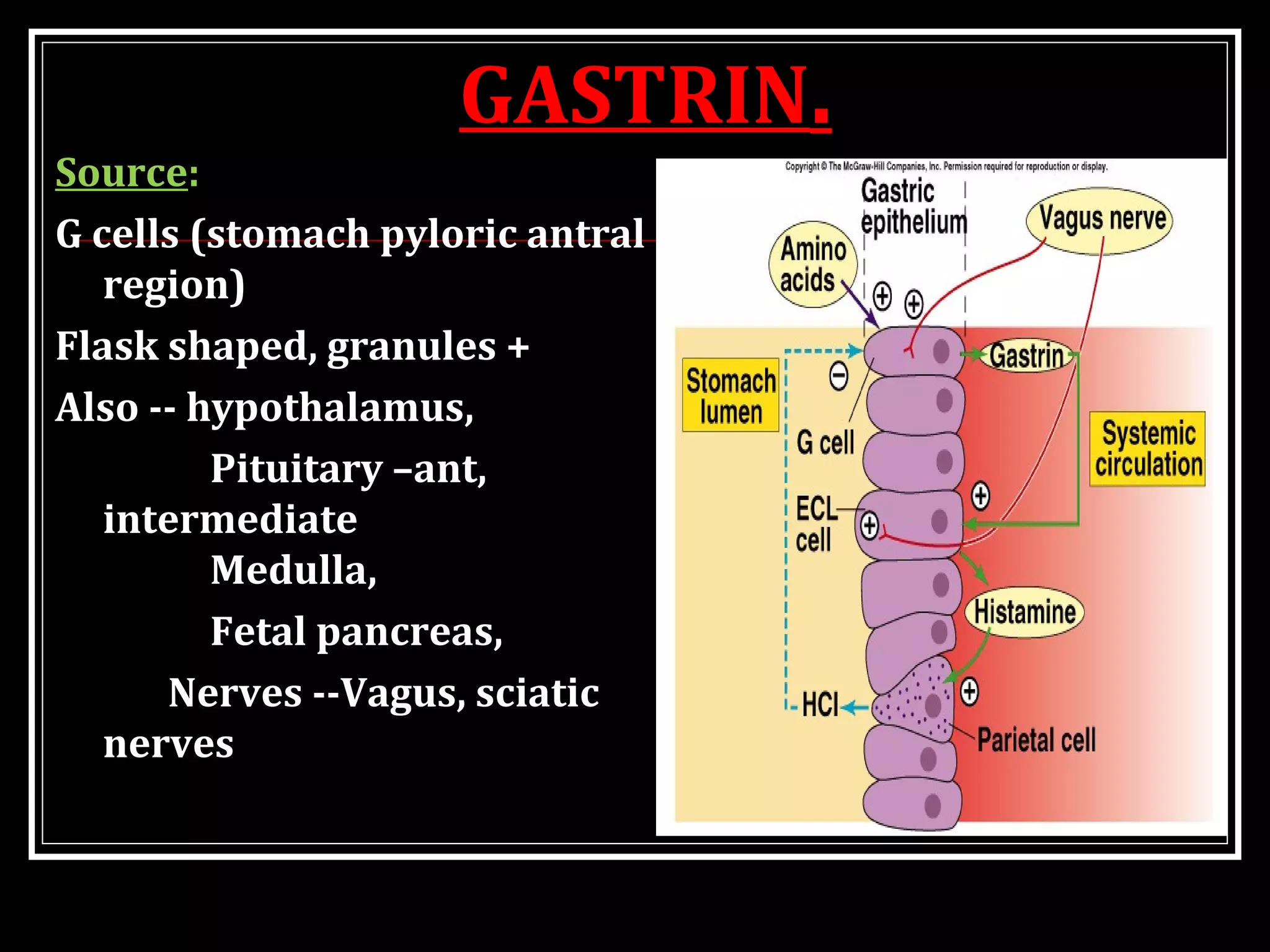
GASTRIN.
Source:
G cells (stomach pyloric antral
region)
Flask shaped, granules +
Also -- hypothalamus,
Pituitary –ant,
intermediate
Medulla,
Fetal pancreas,
Nerves --Vagus, sciatic
nerves
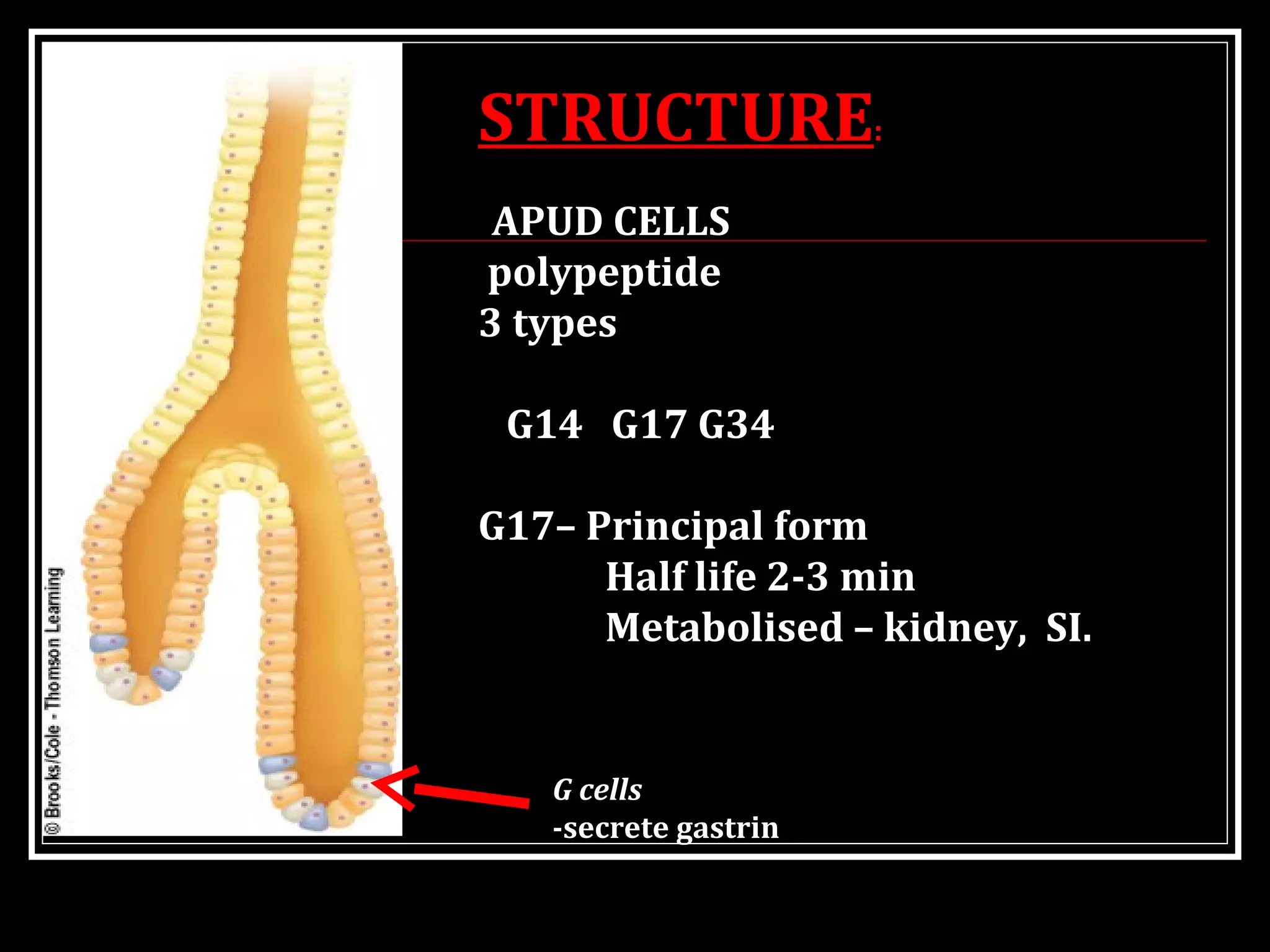
G cells
-secrete gastrin
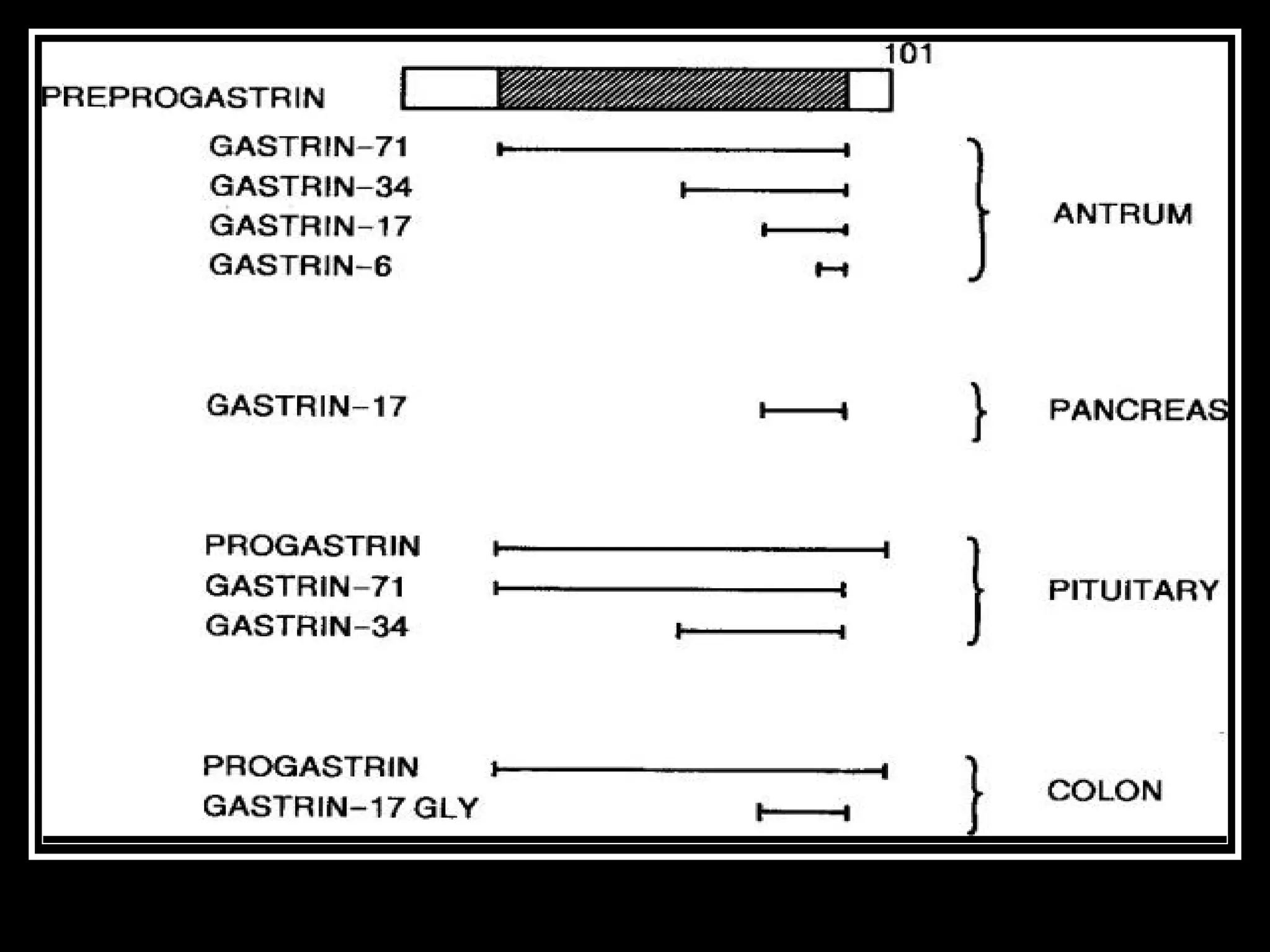
STRUCTURE:
APUD CELLS
polypeptide
3 types
G14 G17 G34
G17– Principal form
Half life 2-3 min
Metabolised – kidney, SI.
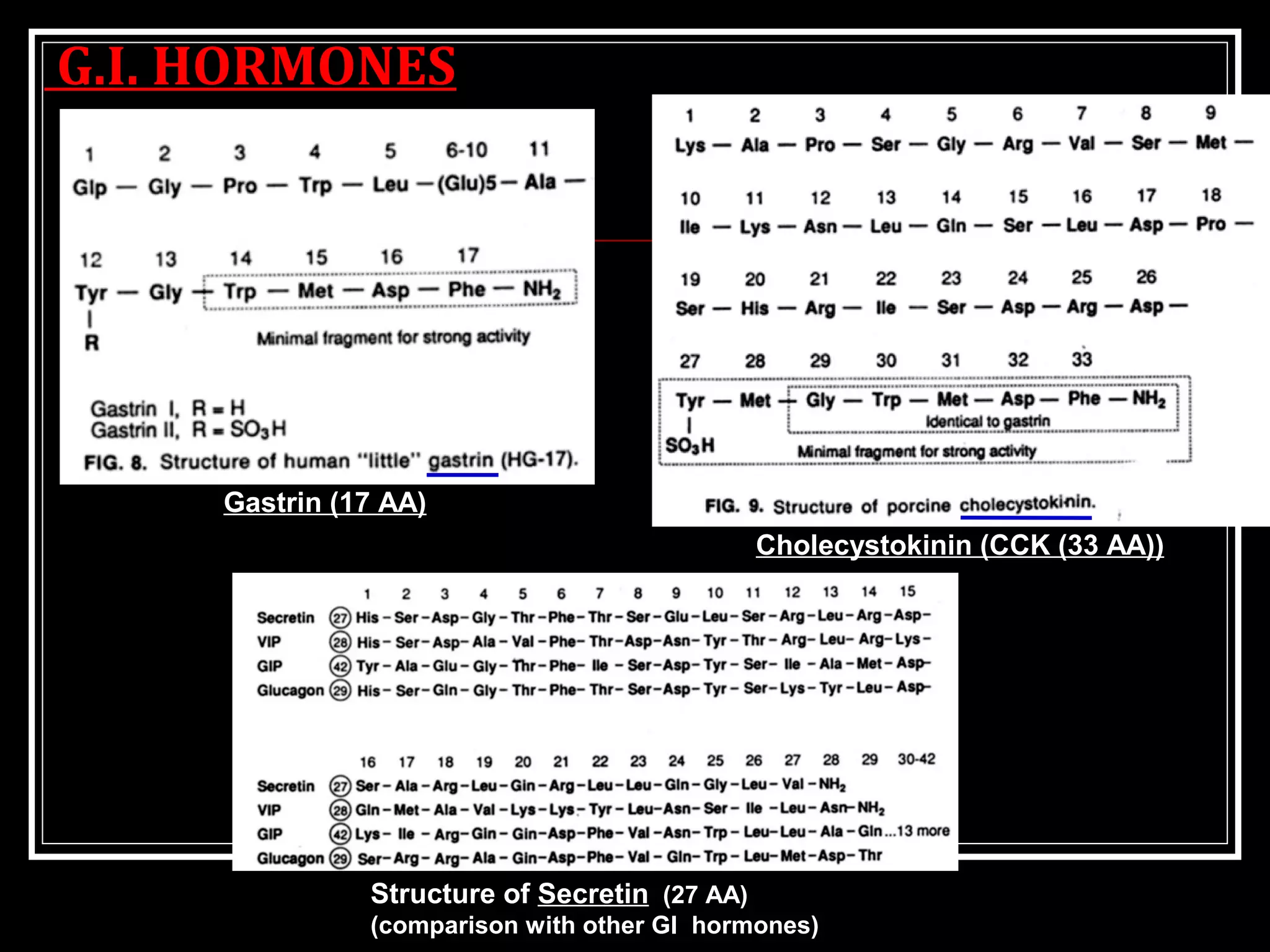
G.I. HORMONES
Structure ofStructure of SecretinSecretin (27 AA)(27 AA)
(comparison with other GI hormones)(comparison with other GI hormones)
Gastrin (17 AA)Gastrin (17 AA)
Cholecystokinin (CCK (33 AA))Cholecystokinin (CCK (33 AA))
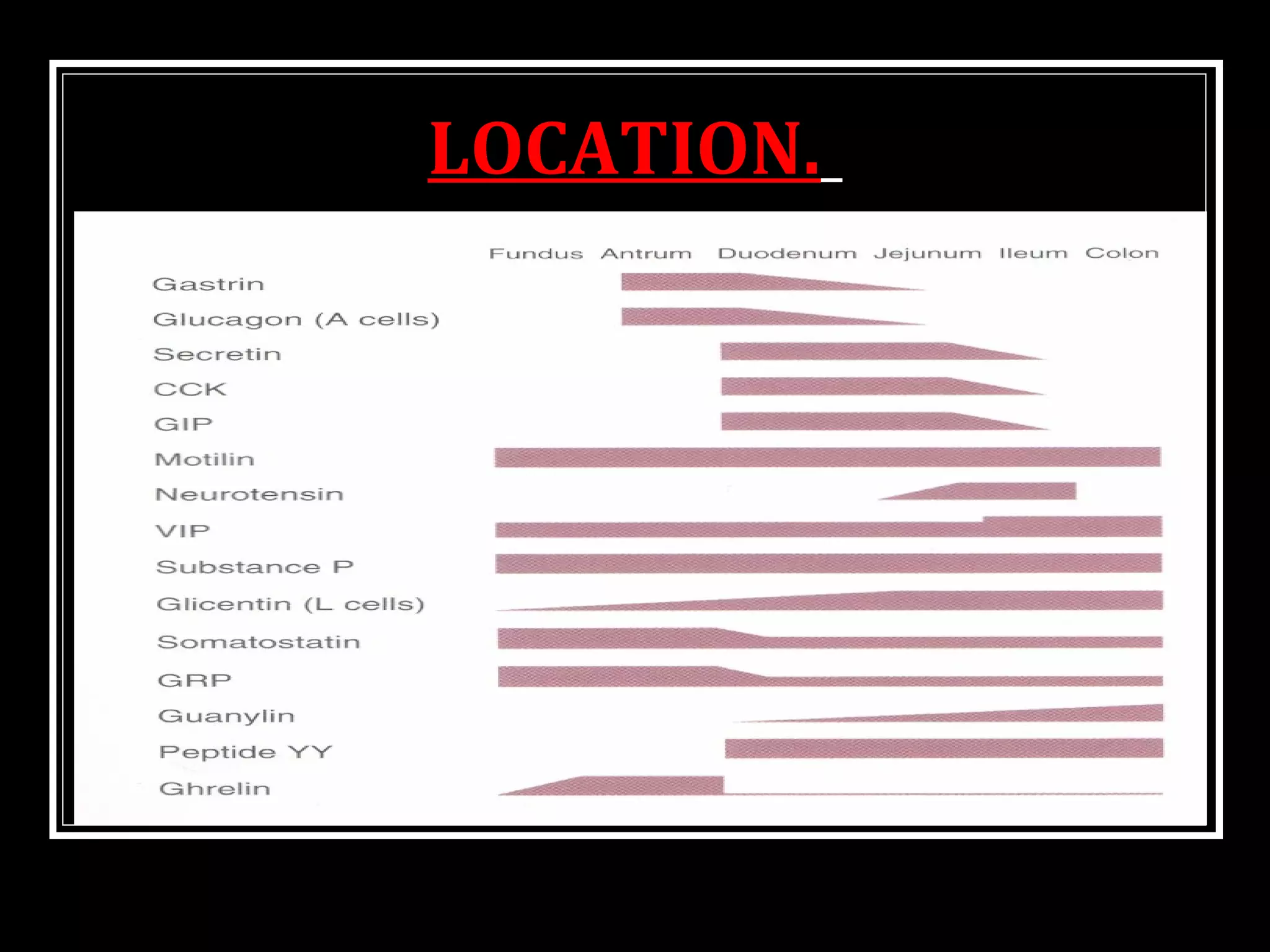
LOCATION.
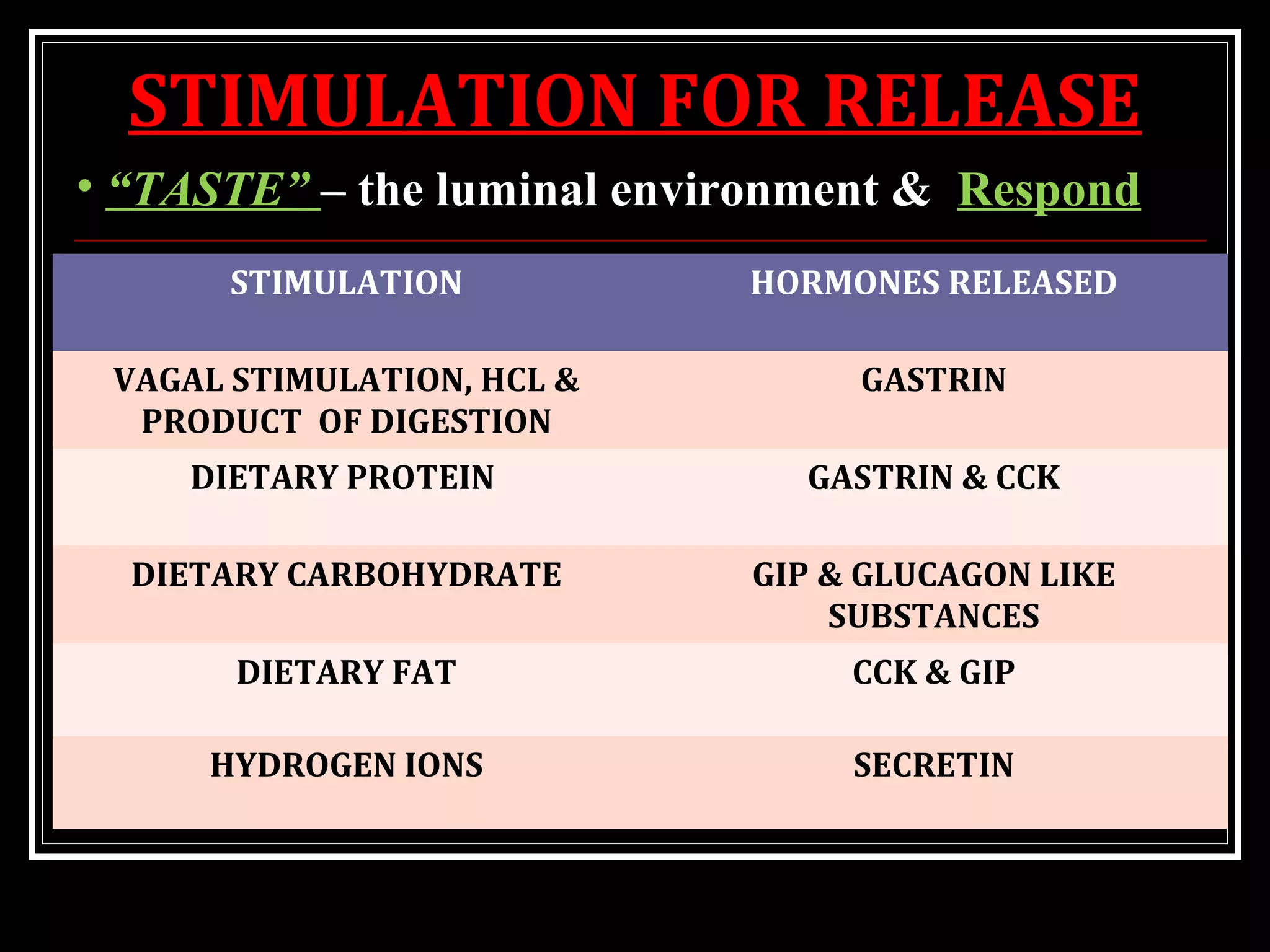
STIMULATION FOR RELEASE
STIMULATION HORMONES RELEASED
VAGAL STIMULATION, HCL &
PRODUCT OF DIGESTION
GASTRIN
DIETARY PROTEIN GASTRIN & CCK
DIETARY CARBOHYDRATE GIP & GLUCAGON LIKE
SUBSTANCES
DIETARY FAT CCK & GIP
HYDROGEN IONS SECRETIN
• “TASTE” – the luminal environment & Respond
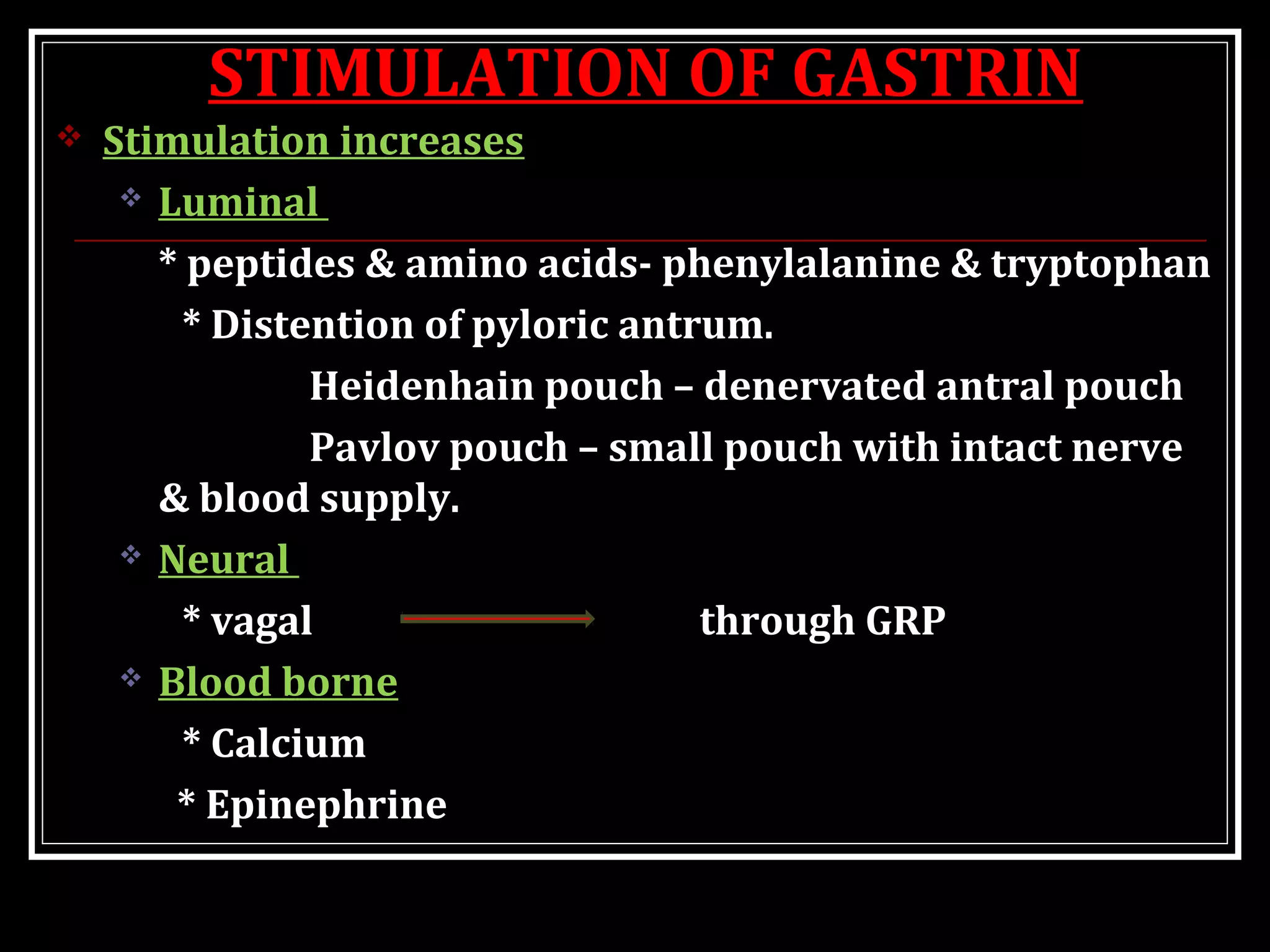
STIMULATION OF GASTRIN
 Stimulation increases
 Luminal
* peptides & amino acids- phenylalanine & tryptophan
* Distention of pyloric antrum.
Heidenhain pouch – denervated antral pouch
Pavlov pouch – small pouch with intact nerve
& blood supply.
 Neural
* vagal through GRP
 Blood borne
* Calcium
* Epinephrine
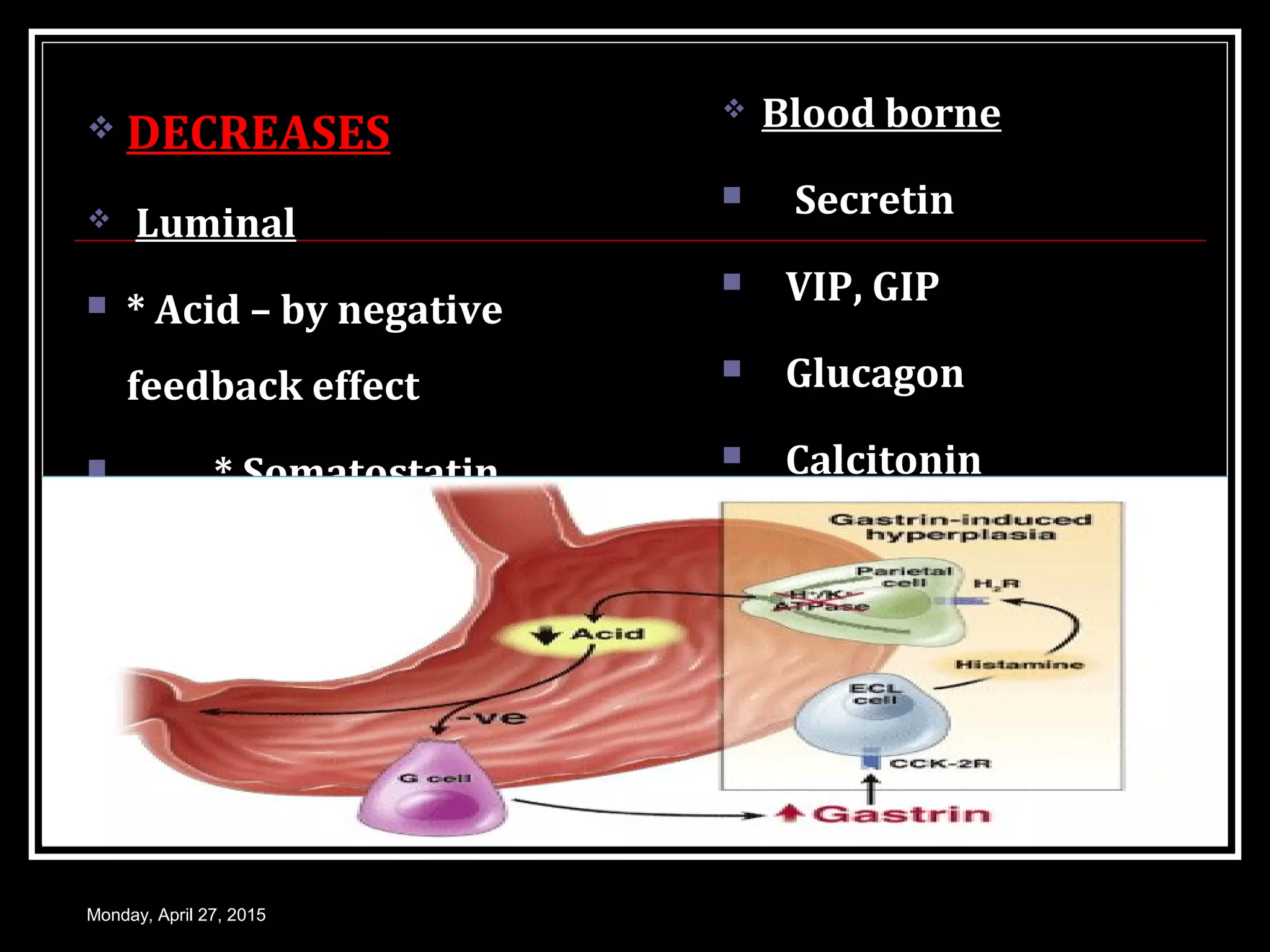
 DECREASESDECREASES
 Luminal
 * Acid – by negative
feedback effect
 * Somatostatin
 Blood borne
 Secretin
 VIP, GIP
 Glucagon
 Calcitonin
Monday, April 27, 2015
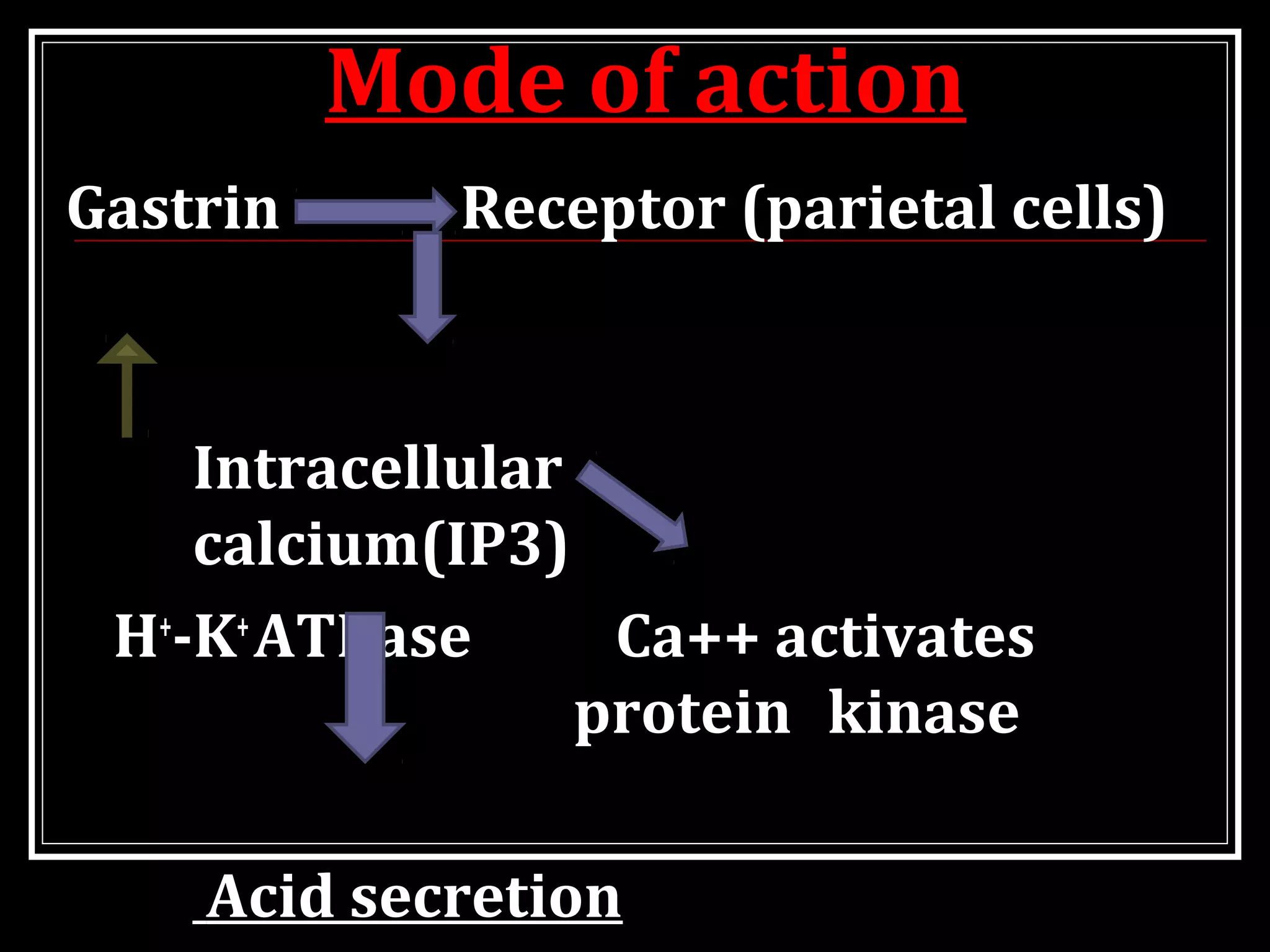
Mode of action
Gastrin Receptor (parietal cells)
Intracellular
calcium(IP3)
H+
-K+
ATPase Ca++ activates
protein kinase
Acid secretion
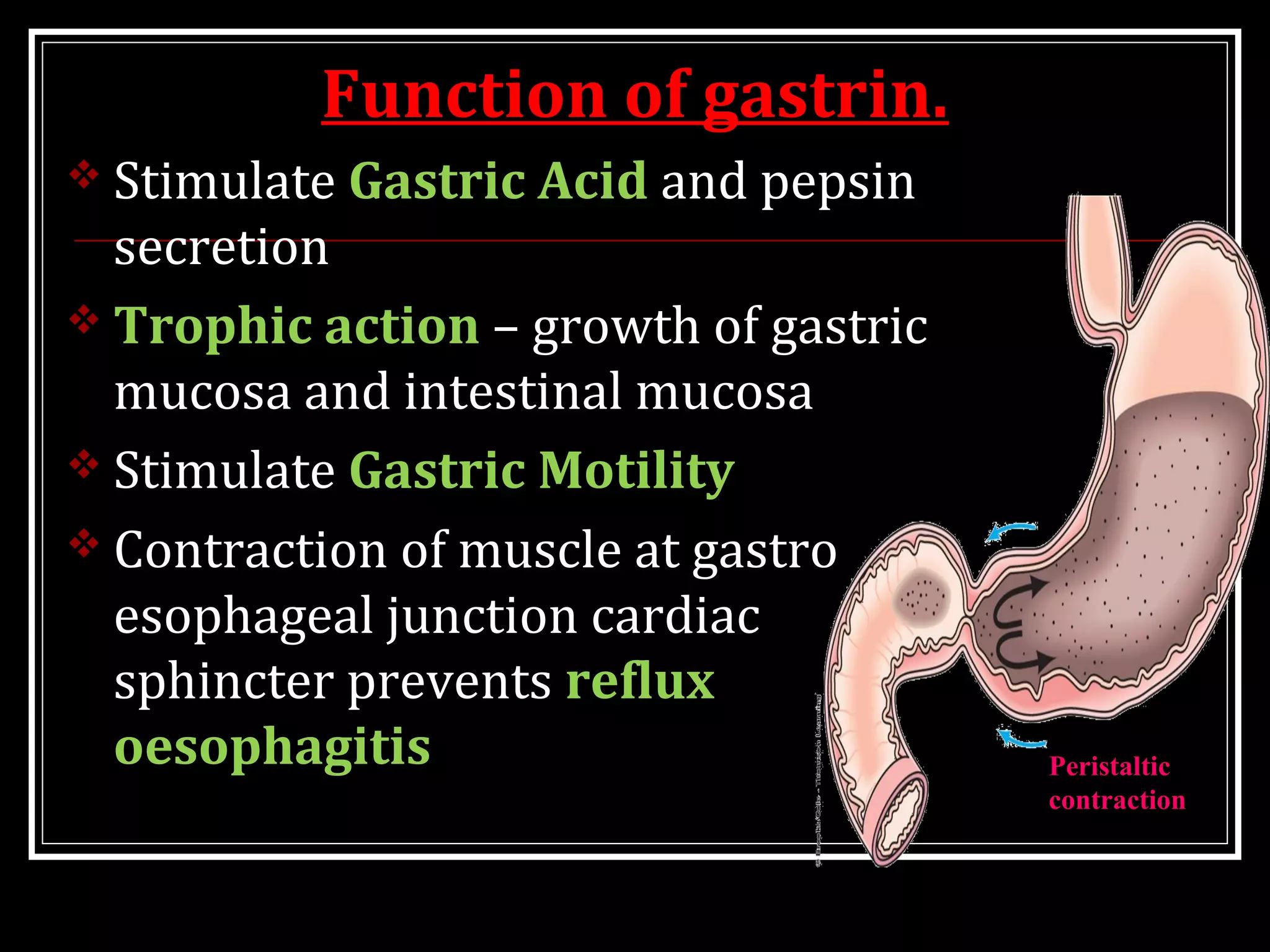
Function of gastrin.
 Stimulate Gastric Acid and pepsin
secretion
 Trophic action – growth of gastric
mucosa and intestinal mucosa
 Stimulate Gastric Motility
 Contraction of muscle at gastro
esophageal junction cardiac
sphincter prevents reflux
oesophagitis Peristaltic
contraction
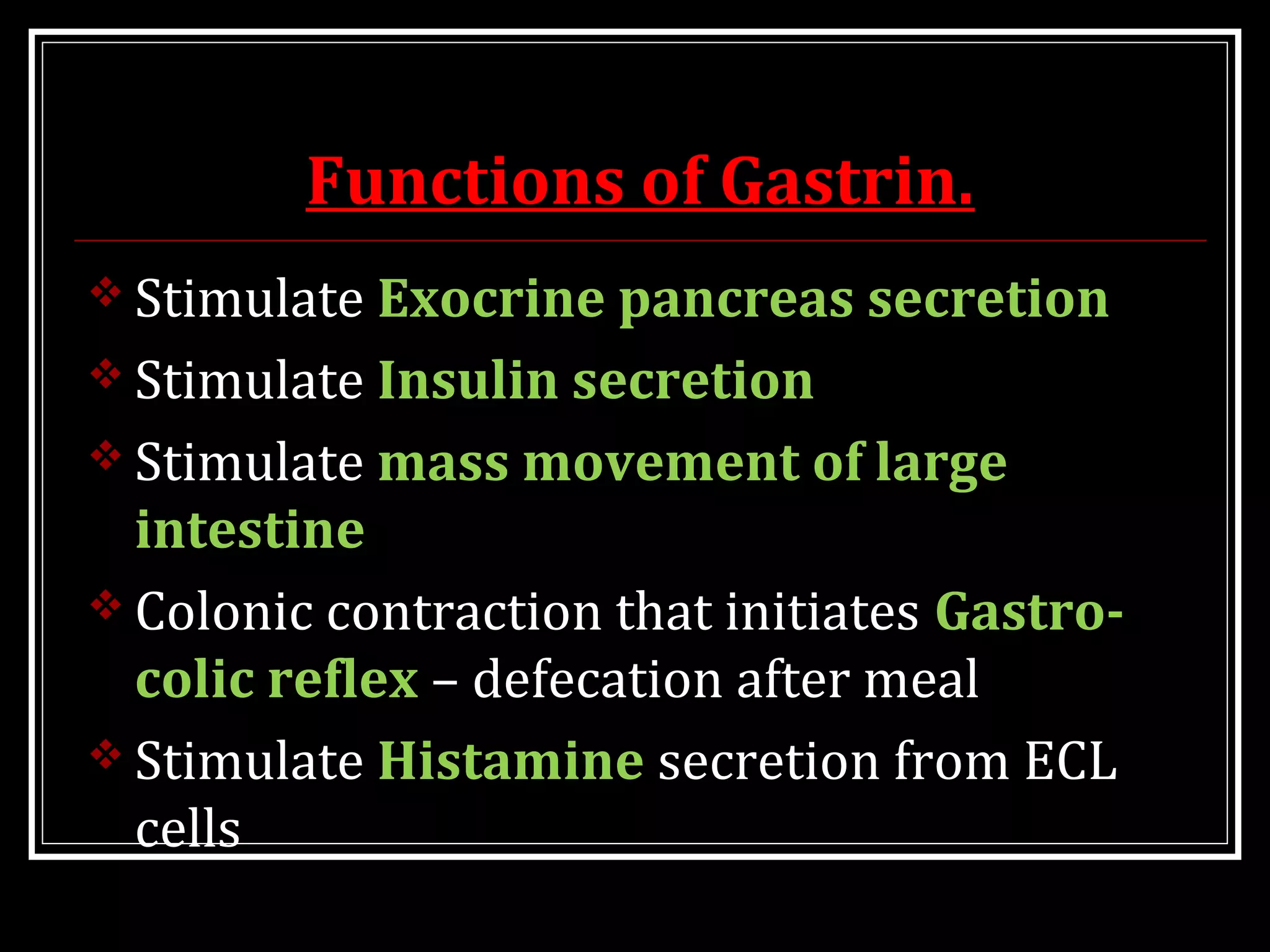
Functions of Gastrin.
 Stimulate Exocrine pancreas secretion
 Stimulate Insulin secretion
 Stimulate mass movement of large
intestine
 Colonic contraction that initiates Gastro-
colic reflex – defecation after meal
 Stimulate Histamine secretion from ECL
cells
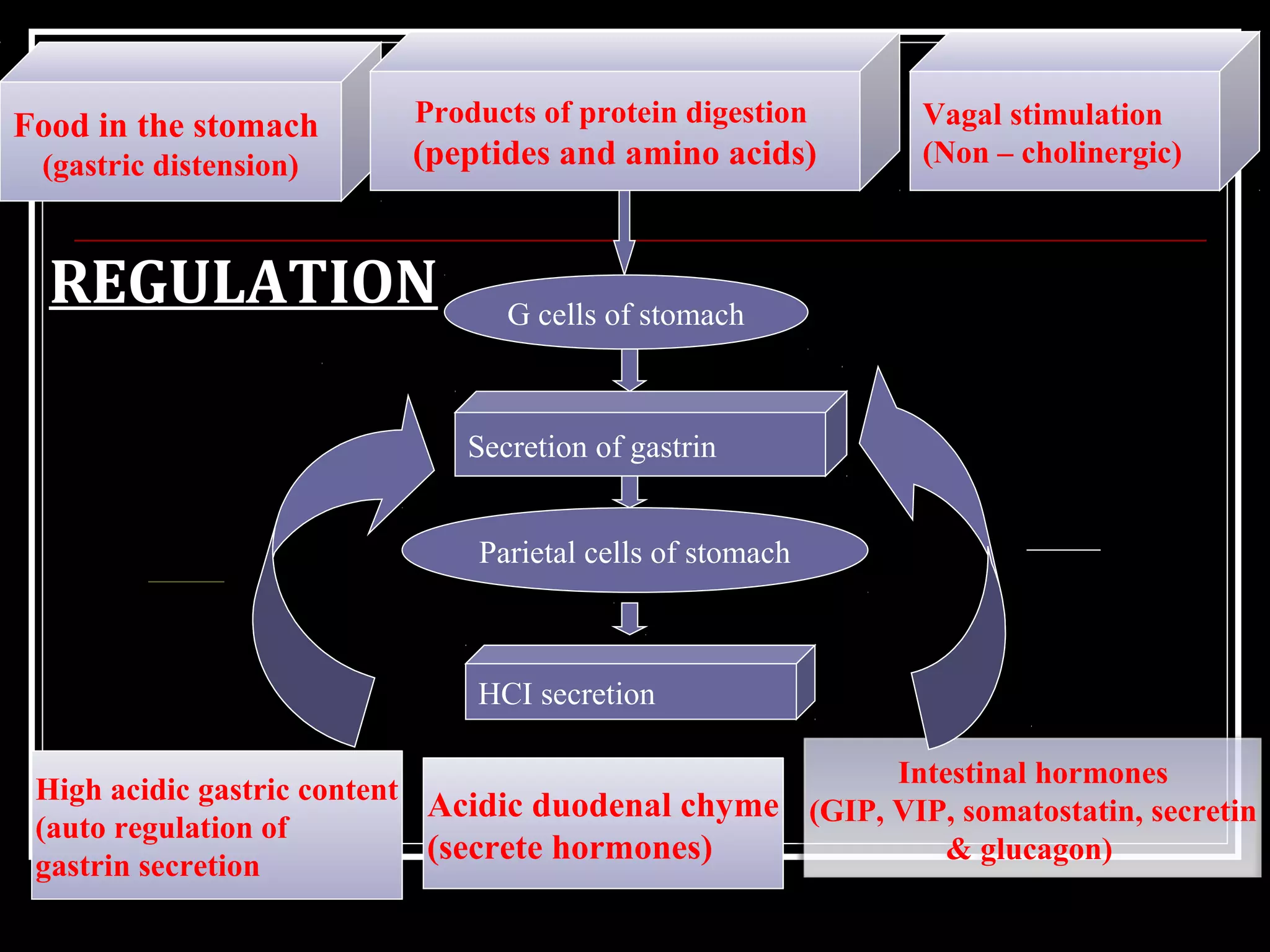
Food in the stomach
(gastric distension)
Products of protein digestion
(peptides and amino acids)
Vagal stimulation
(Non – cholinergic)
G cells of stomach
Secretion of gastrin
Parietal cells of stomach
HCI secretion
High acidic gastric content
(auto regulation of
gastrin secretion
Acidic duodenal chyme
(secrete hormones)
Intestinal hormones
(GIP, VIP, somatostatin, secretin
& glucagon)
REGULATION
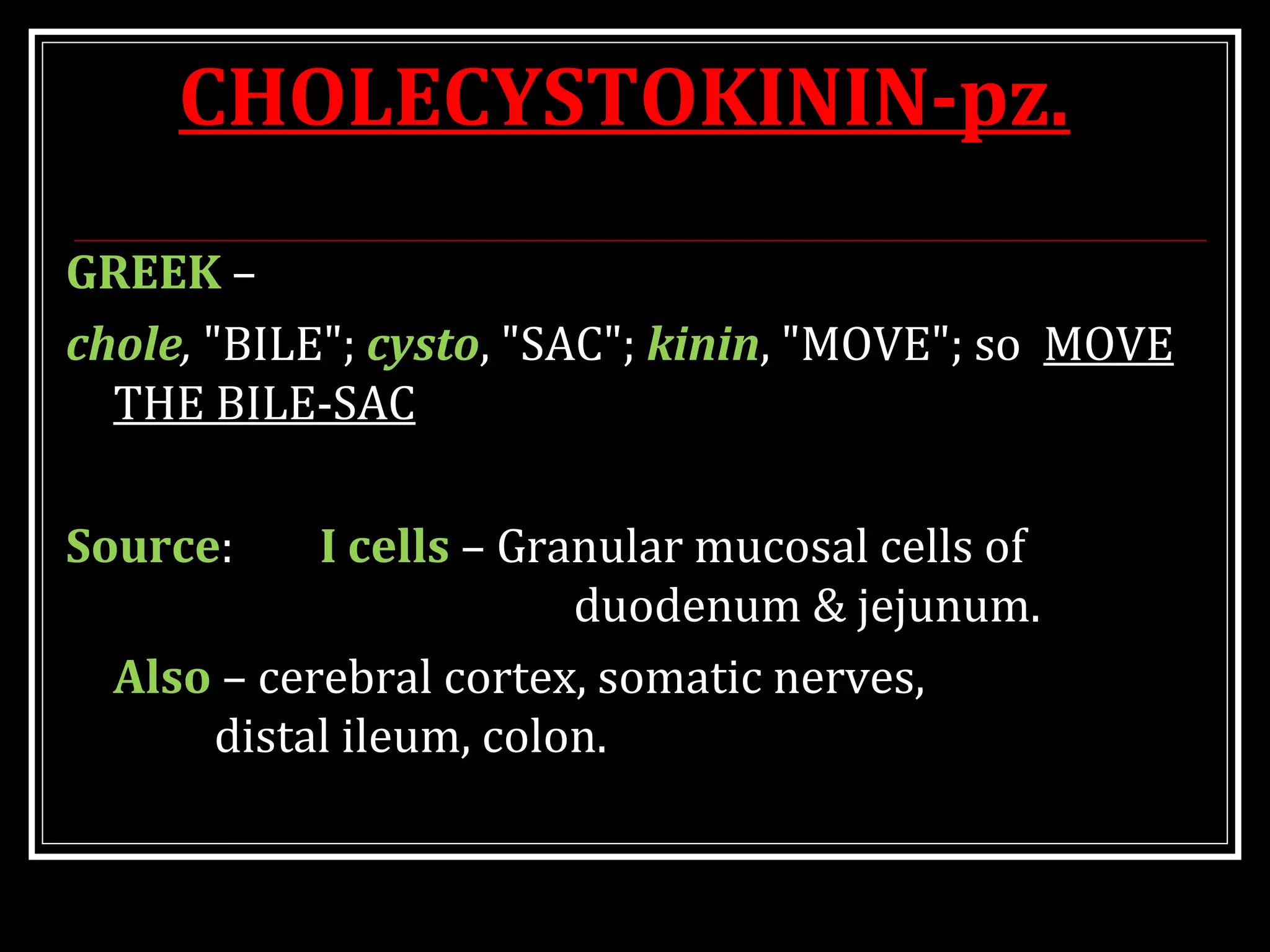
CHOLECYSTOKININ-pz.
GREEK –
chole, "BILE"; cysto, "SAC"; kinin, "MOVE"; so MOVE
THE BILE-SAC
Source: I cells – Granular mucosal cells of
duodenum & jejunum.
Also – cerebral cortex, somatic nerves,
distal ileum, colon.
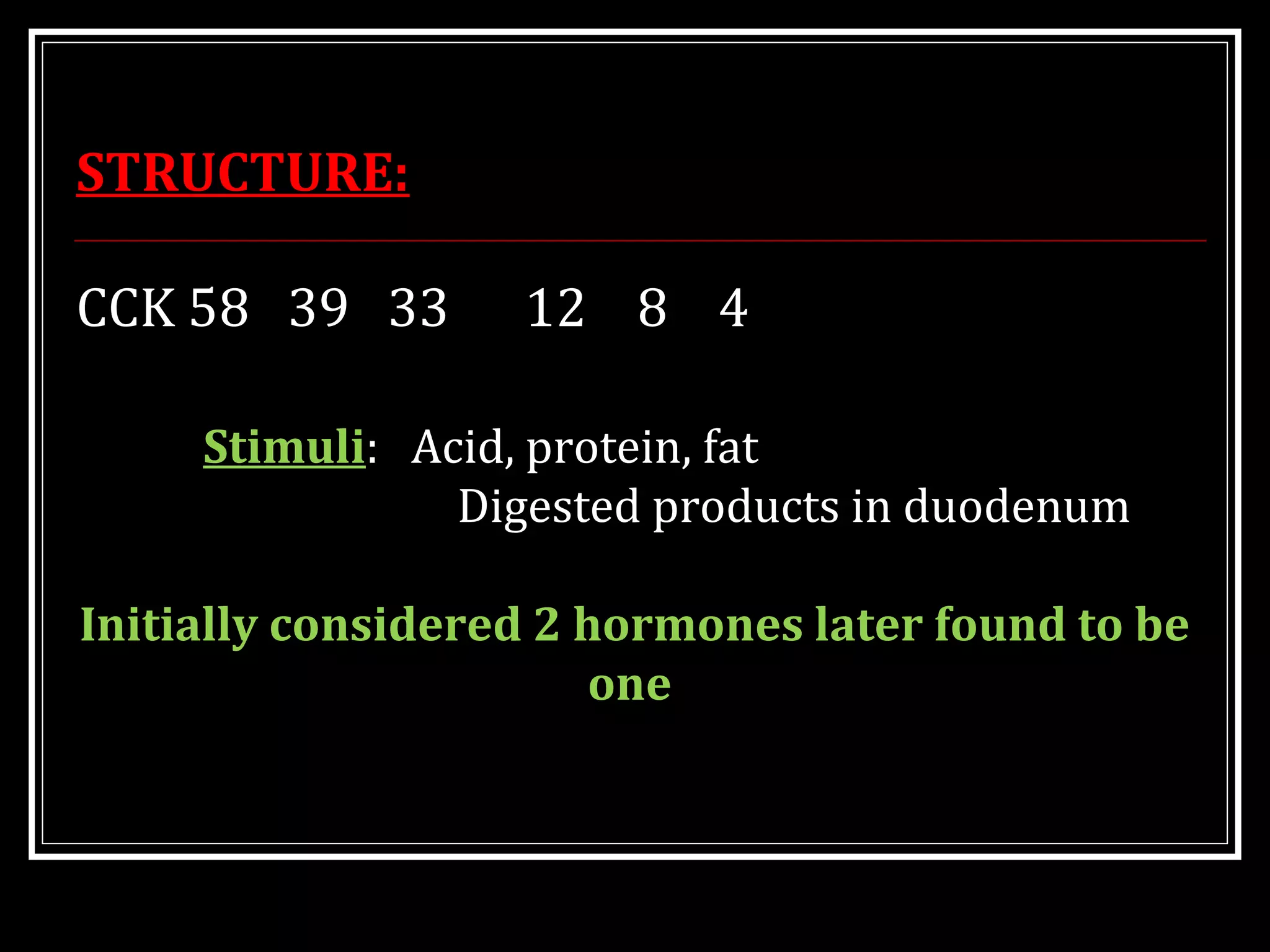
STRUCTURE:
CCK 58 39 33 12 8 4
Stimuli: Acid, protein, fat
Digested products in duodenum
Initially considered 2 hormones later found to be
one
Functions of CCK-pz
 Contraction of gall bladder –
increased bile release
 Stimulate pancreatic secretion
rich in enzyme
 Augments the action of secretin
 Inhibit gastric acid secretion
 Inhibit gastric motility
 Delay gastric emptying
Regulation of secretions.
•CCK-PZ –
• Increased by
Acid in duodenum
Products of carbohydrates, fats, & proteins
digestion.
Mainly peptides & amino acids
Positive feedback–
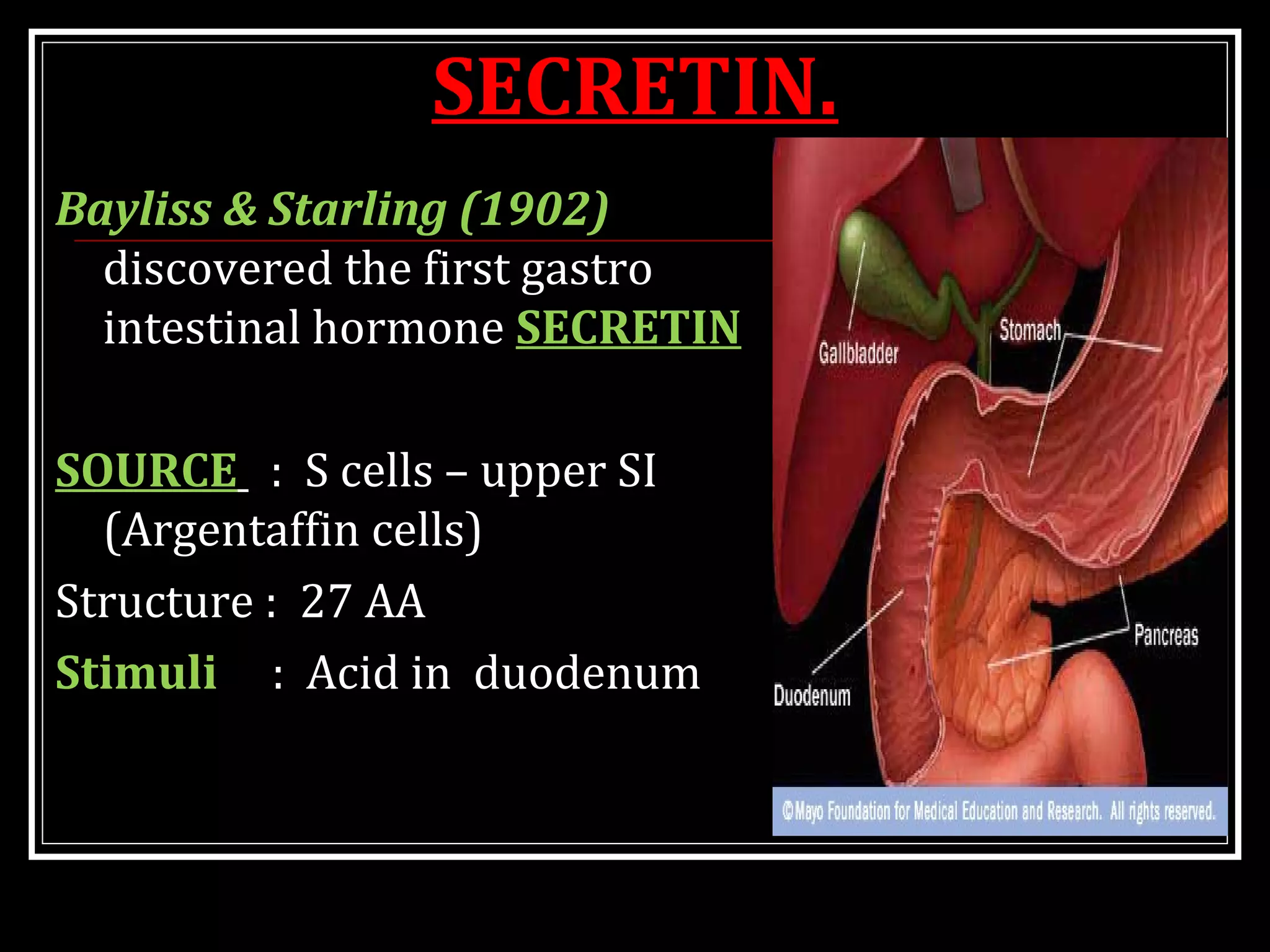
SECRETIN.
Bayliss & Starling (1902)
discovered the first gastro
intestinal hormone SECRETIN
SOURCE : S cells – upper SI
(Argentaffin cells)
Structure : 27 AA
Stimuli : Acid in duodenum
Function of secretin.
 Stimulate secretion of pancreatic juice rich
in HCO3
-
 Stimulate bile secretion.
 Augment action of CCK to produce pancreatic
secretion rich in enzymes
 Reduces the gastric acid secretion and
motility
 Contraction of pyloric sphincter
HCL & MOTILITY
NaHCO3
HCL+
NaHCO
3Nacl , CO
2 , H
2 O
REGULATION OF SECRETION
GASTRIC INHIBITORY
PEPTIDE( GIP)
 Source: K cells – jejunum & duodenum
 Initially called Enterogastrone.
 Discovered as a factor in extracts of
intestine that inhibited gastric motility
and secretion of acid.
GASTRIC INHIBITORY
PEPTIDE( GIP)
 Another activity of GIP is its ability to Enhance
the release of insulin in response to infusions of
glucose. -- Glucose-dependent insulinotropic
peptide.
 Regulation – Increases by fat in duodenum
Monday, April 27, 2015
 Source – Mucosal cells in jejunum
 Stimuli – fatty meal
 Structure -- polypeptide 28 amino acids
 Other sites—
 Nerves in GIT,
 Blood,
 Brain ( cerebral cortex)
 Autonomic nerves.
VASOACTIVE INTESTINAL POLYPEPTIDE (VIP)
 Stimulate Intestinal secretion of electrolytes &
water.
 Vasodilatation – decreases BP
 Induce smooth muscle relaxation (lower
esophageal sphincter, stomach, gallbladder)
 Stimulate secretion of water into pancreatic
juice and bile.
 Inhibition of gastric acid secretion and
absorption from the intestinal lumen.
 Decreases the GI motility.
ACTIONS.
ENTEROGLUCAGON ANDENTEROGLUCAGON AND
GLUCAGON-LIKE PEPTIDES.GLUCAGON-LIKE PEPTIDES.
Source : Terminal SI and LI - L cells.
 Given the name "Enteroglucagon",
"Proglucagon-derived Peptides".
 In both pancreas and gut, 3 types of products are
generated:
• Glucagon-like Peptide-1 (GLP-1)
• Glucagon-like Peptide-2 (GLP-2)
• Glucagon-like Peptide-3 (GLP-3)
Monday, April 27, 2015
GLP-1GLP-1
 Inhibit gastric
emptying,
 Inhibit gastric
secretion and
 Inhibit pancreatic
secretion,
 Decreases food
intake.
 Glucagon-like
peptide-2
 It stimulates
proliferation of
intestinal epithelial
cells.
Monday, April 27, 2015
SOMATOSTATIN (GHIH).
 Source -- S Cells or δ cells
 GIT MUCOSA.
 Structure– SS14, SS28 (more active)
 Somatostatin is also secreted by the Hypothalamus &
pancreas.
 Stimuli –
 Acid in stomach
 stimuli which increases insulin secretion
Monday, April 27, 2015
ACTIONS
 Secretions of Gastrin, secretin, Motilin,
 Pancreatic – Exocrine & Endocrine secretions
 Gastric acid secretions & motility
( Dyspepsia & slow gastric emptying)
 Gall bladder contractions ( Precipitate gall stone)
 Absorption of glucose amino acid, & triglyceride.
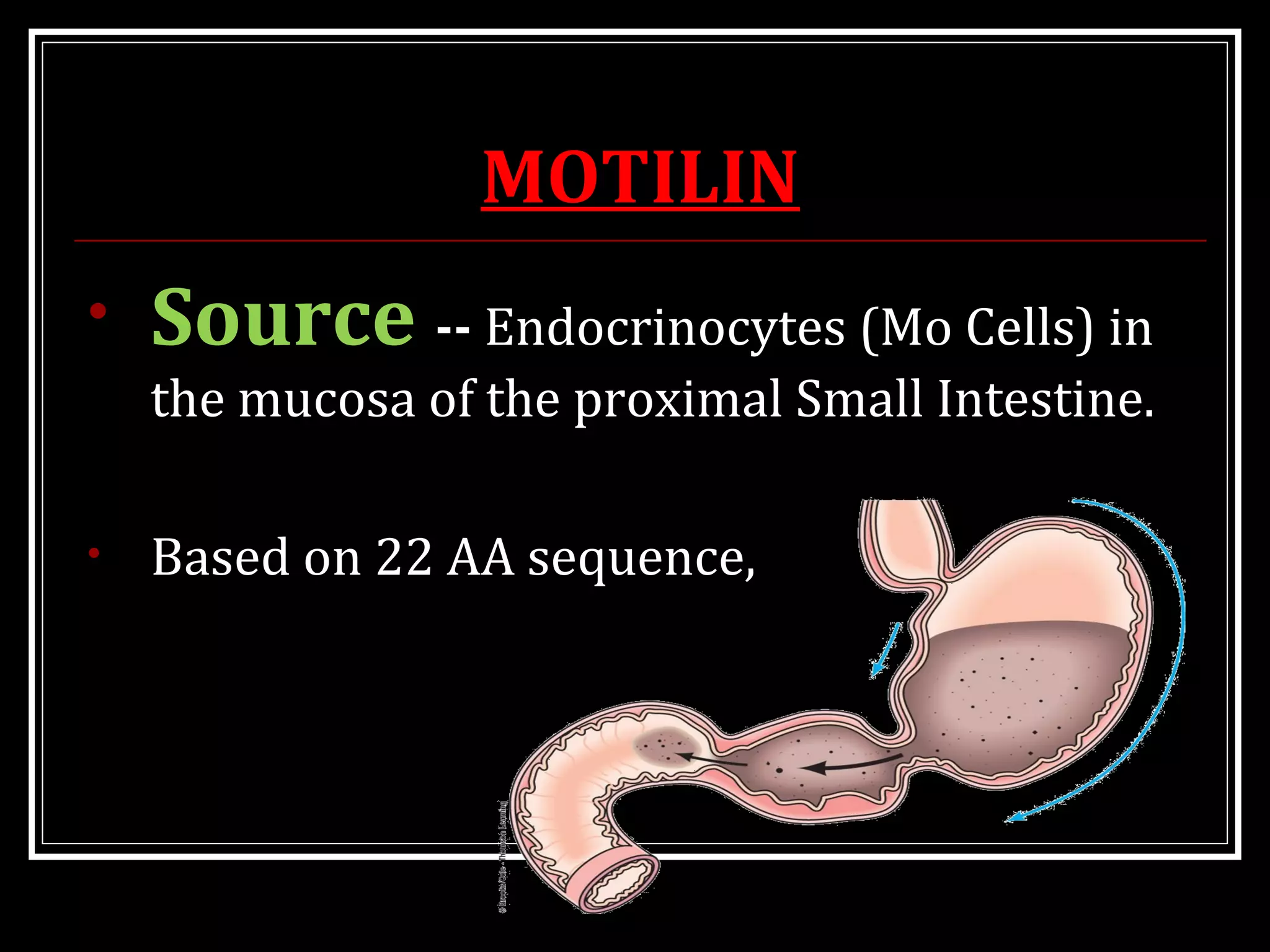
MOTILIN
• Source -- Endocrinocytes (Mo Cells) in
the mucosa of the proximal Small Intestine.
• Based on 22 AA sequence,
 MOTILIN participates in controlling the pattern of
smooth muscle contractions in the upper GI tract that
increases the MIGRATING MYOELECTRIC COMPLEX
("Housekeeping contractions“).
 It sweep the stomach and SI clear of undigested
material and stimulates the production of PEPSIN.
GHRELIN-28 AA
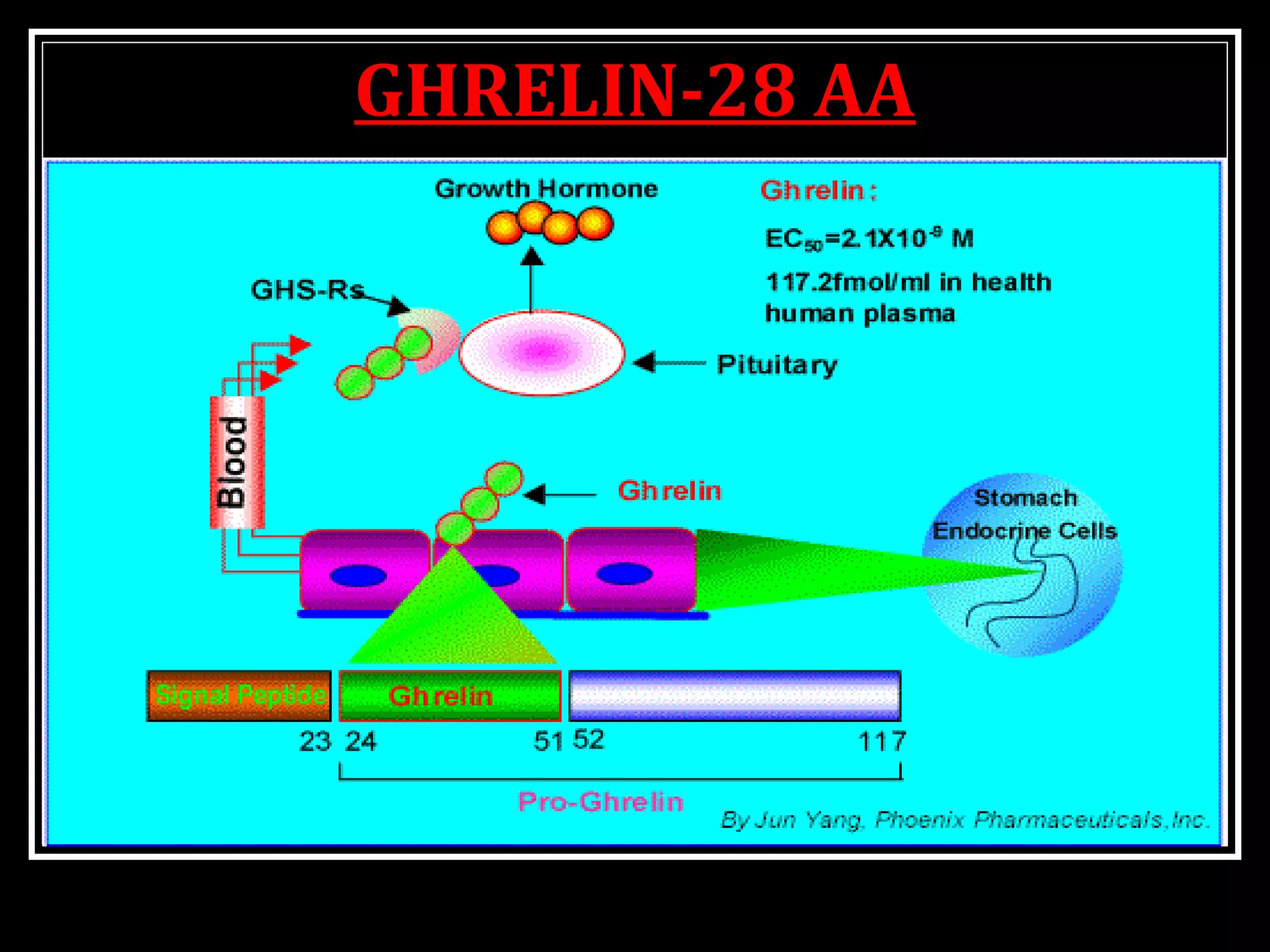
 ’Ghre’’ – Growth ---- Europian name.
 Source -- Endocrine cells in the stomach,
especially when one is hungry;
 Action-- acts on the hypothalamus to stimulate
feeding;
 This action counteracts the inhibition of feeding
by leptin and Pyy 3-36.
Monday, April 27, 2015
GHRELIN-28 AA
GUANYLIN
 15 amino acid residues
 Source:
 Cells of the intestinal mucosa
 Stimulant:
 Stimulation of Guanylin
 Function:
 It increase Cl- movement to intestine
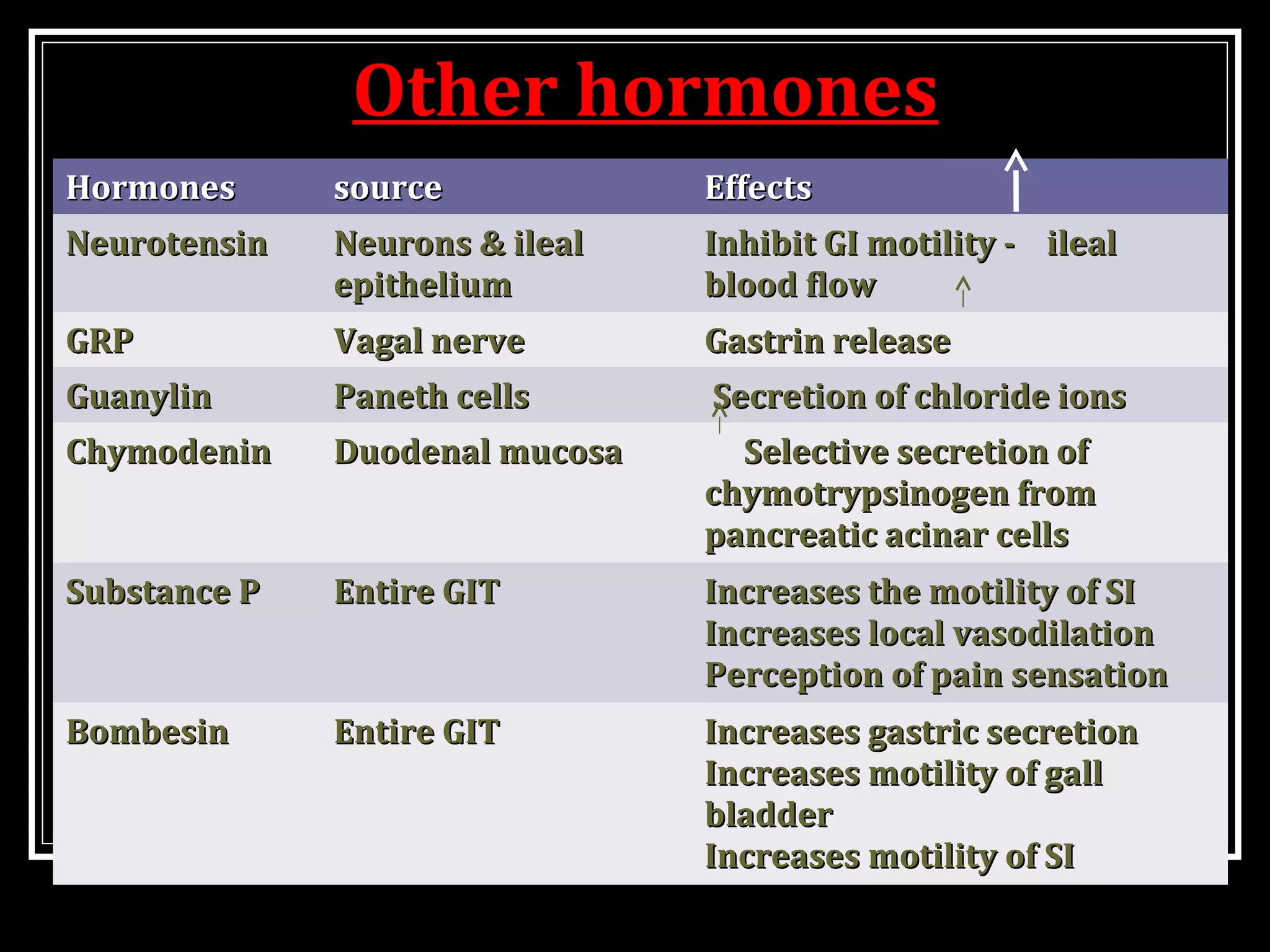
Other hormones
HormonesHormones sourcesource EffectsEffects
NeurotensinNeurotensin Neurons & ilealNeurons & ileal
epitheliumepithelium
Inhibit GI motility - ilealInhibit GI motility - ileal
blood flowblood flow
GRPGRP Vagal nerveVagal nerve Gastrin releaseGastrin release
GuanylinGuanylin Paneth cellsPaneth cells Secretion of chloride ionsSecretion of chloride ions
ChymodeninChymodenin Duodenal mucosaDuodenal mucosa Selective secretion ofSelective secretion of
chymotrypsinogen fromchymotrypsinogen from
pancreatic acinar cellspancreatic acinar cells
Substance PSubstance P Entire GITEntire GIT Increases the motility of SIIncreases the motility of SI
Increases local vasodilationIncreases local vasodilation
Perception of pain sensationPerception of pain sensation
BombesinBombesin Entire GITEntire GIT Increases gastric secretionIncreases gastric secretion
Increases motility of gallIncreases motility of gall
bladderbladder
Increases motility of SIIncreases motility of SI
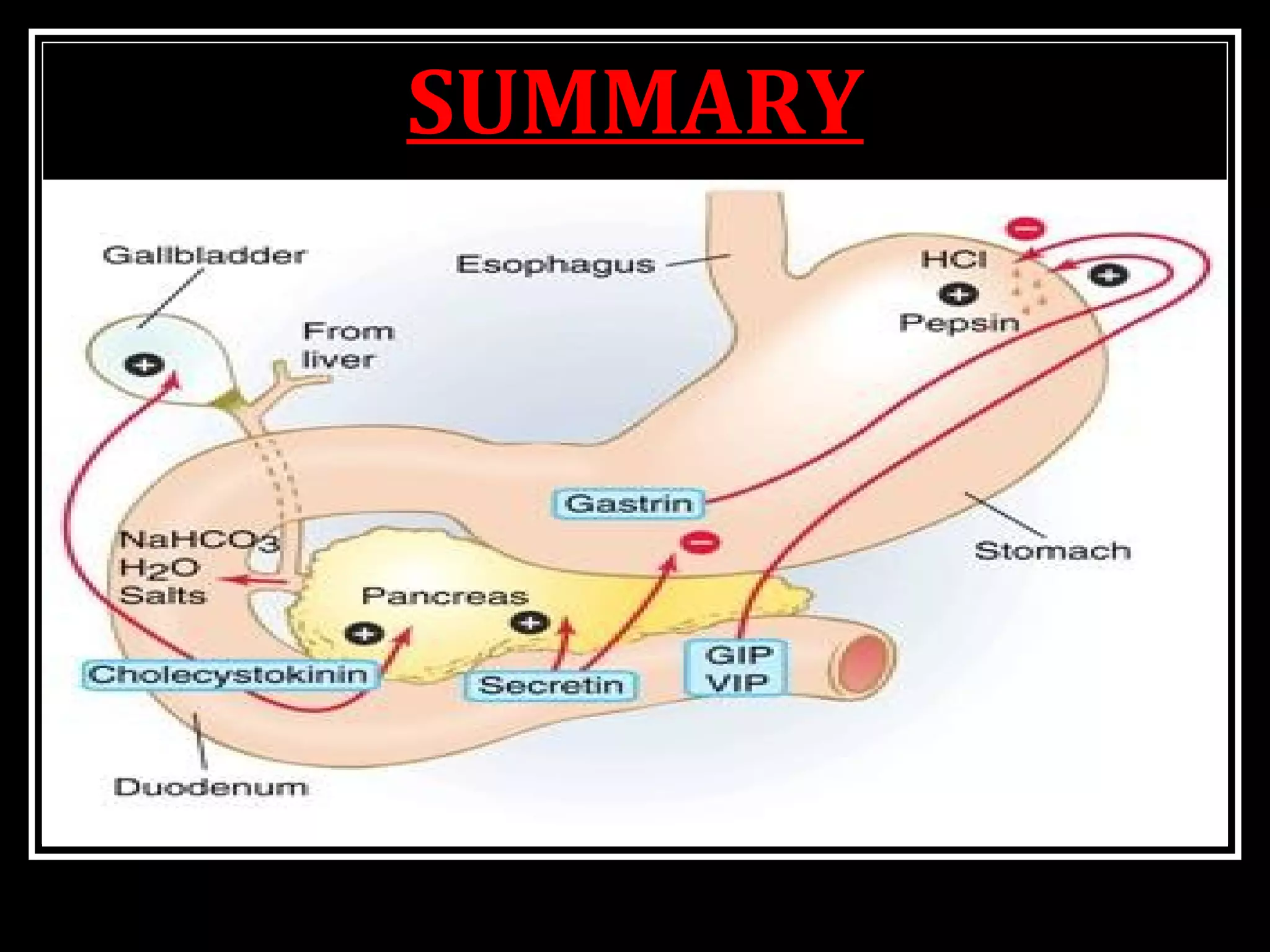
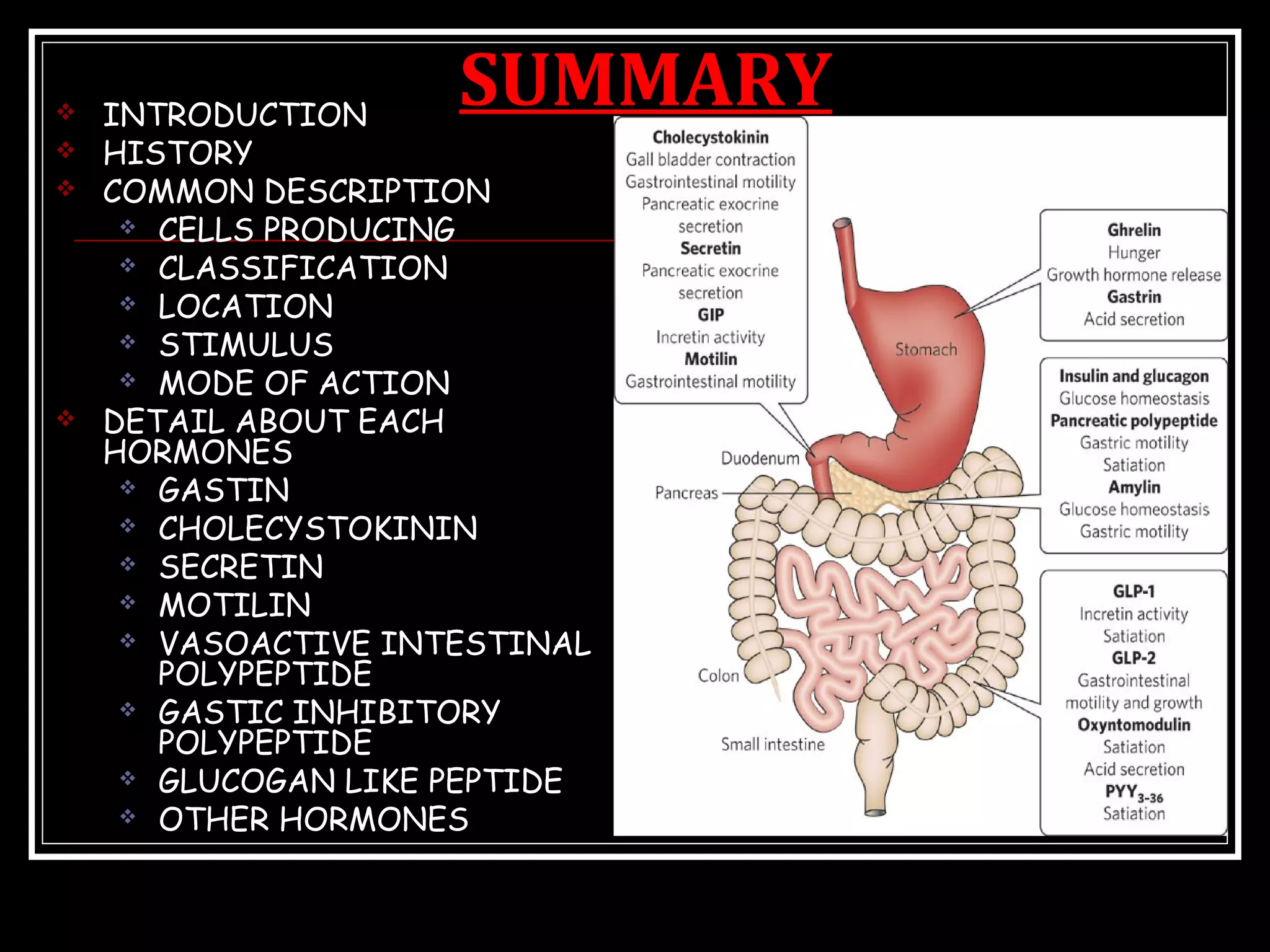
SUMMARY OF ACTIONS
SUMMARY
APPLIED
PHYSIOLOGY.
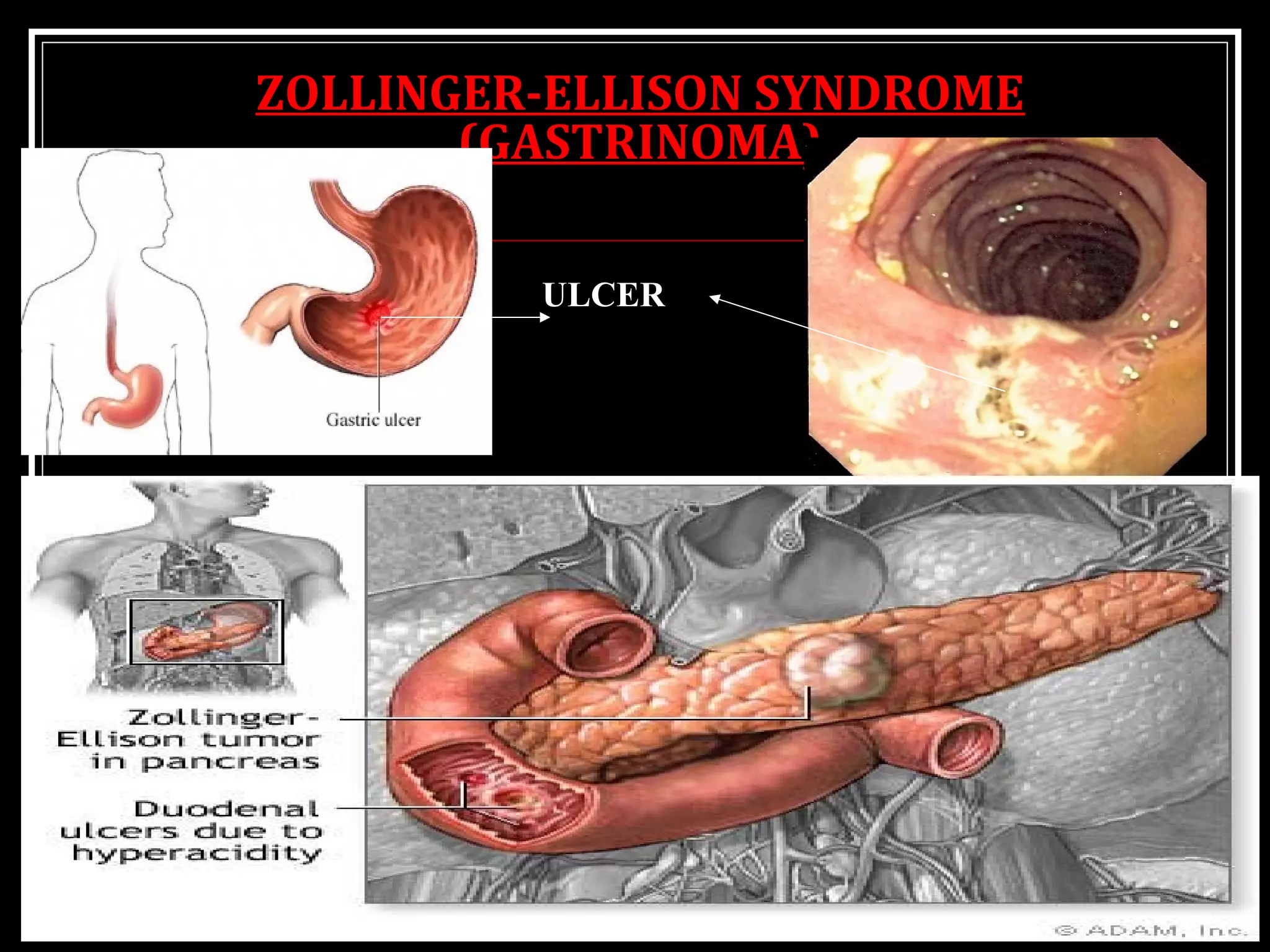
ZOLLINGER-ELLISON SYNDROME
(GASTRINOMA)
ULCER
Zollinger-Ellison Syndrome
(Gastrinoma)
Caused by a tumor (or tumors) called
Gastrinoma gastrin stomach acid.
SIGNS & SYMPTOMS:
Pain in the stomach and esophagus,
Nausea
Vomiting of blood,
Difficulty in swallowing
Sore throat, coughing, and
wheezing
Sour or bitter taste in the mouth
Blood in the stool
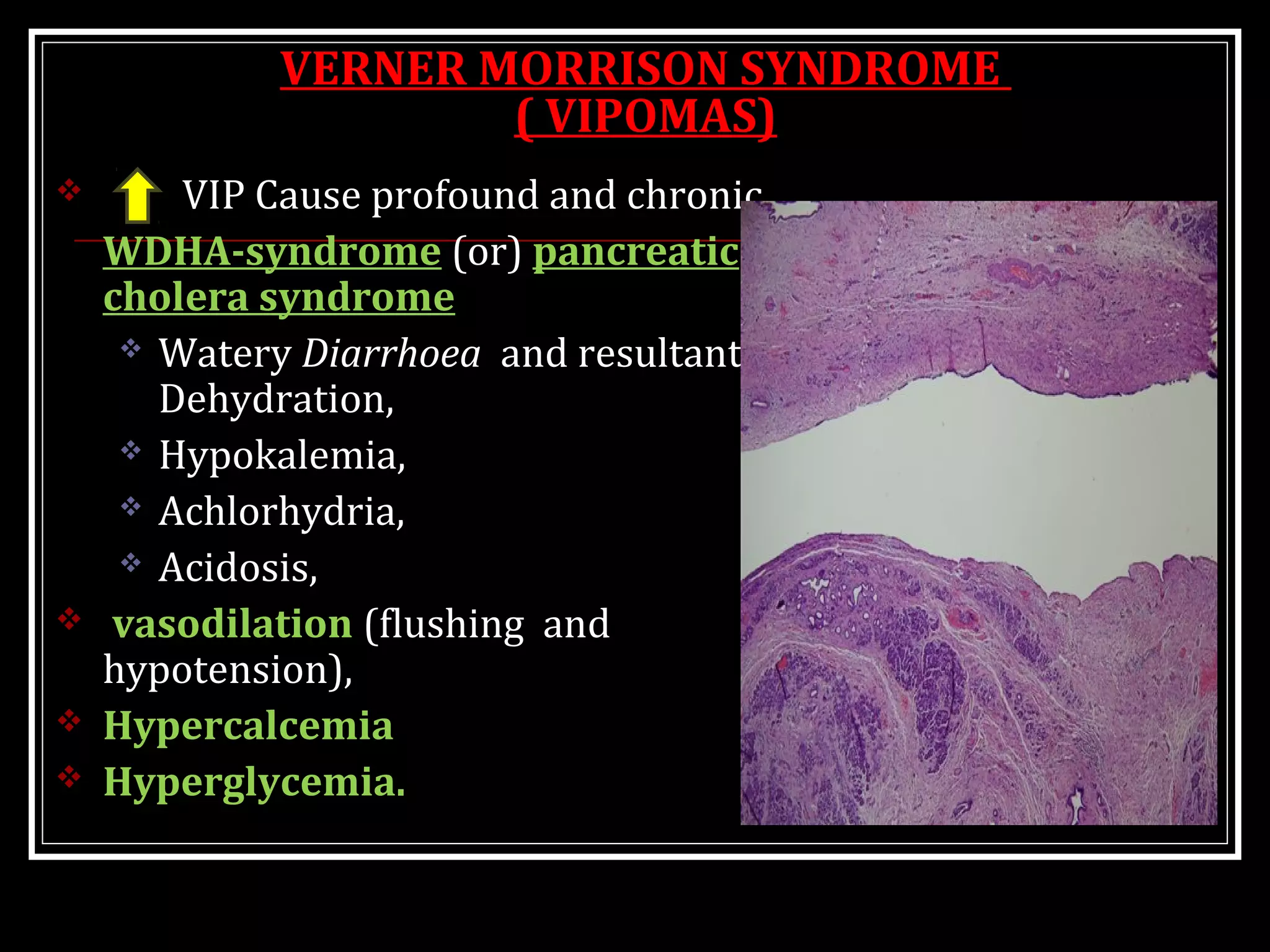
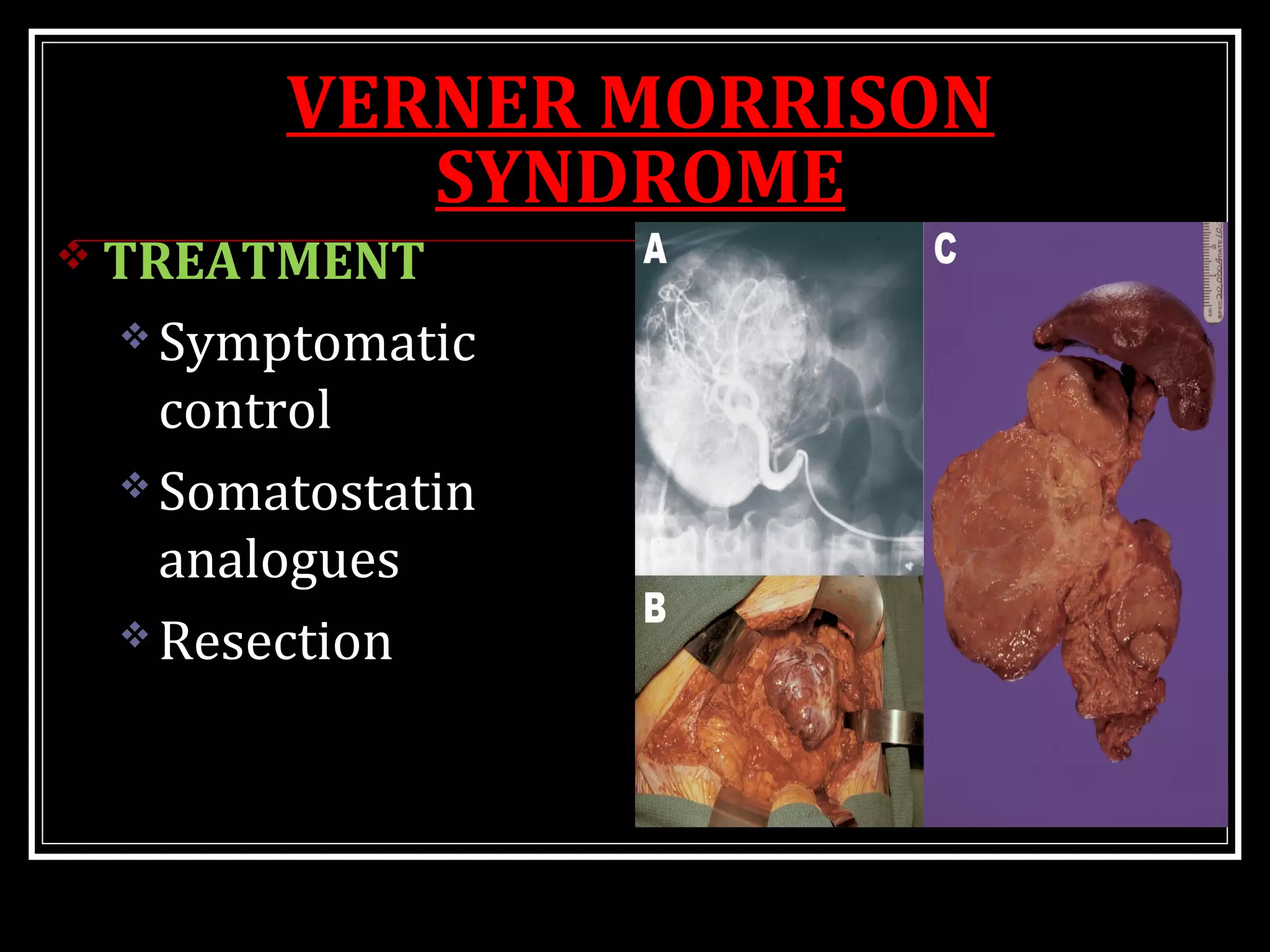
VERNER MORRISON SYNDROME
( VIPOMAS)
 VIP Cause profound and chronic
WDHA-syndrome (or) pancreatic
cholera syndrome
 Watery Diarrhoea and resultant
Dehydration,
 Hypokalemia,
 Achlorhydria,
 Acidosis,
 vasodilation (flushing and
hypotension),
 Hypercalcemia
 Hyperglycemia.
VERNER MORRISON
SYNDROME
 TREATMENT
 Symptomatic
control
 Somatostatin
analogues
 Resection
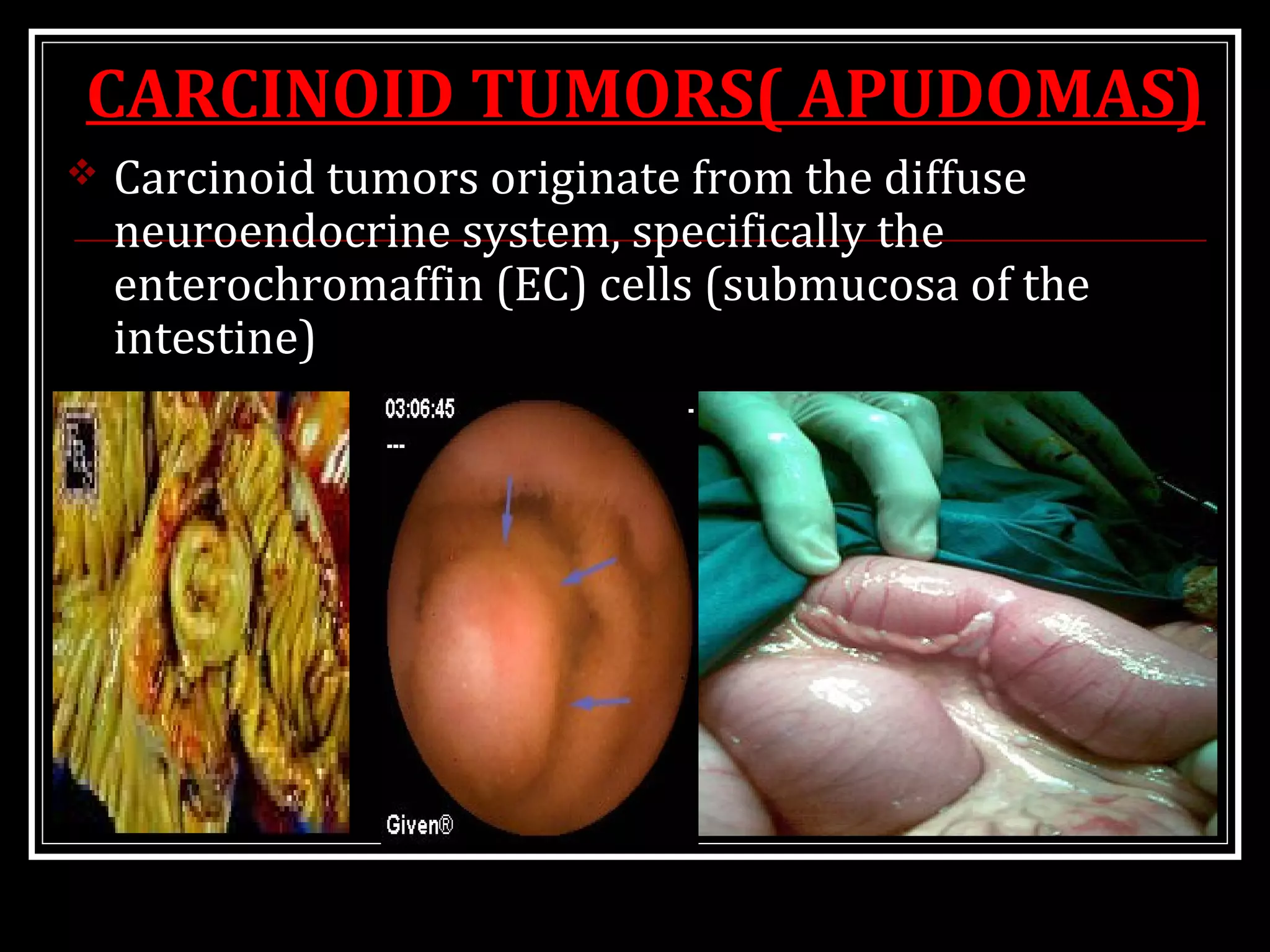
CARCINOID TUMORS( APUDOMAS)
 Carcinoid tumors originate from the diffuse
neuroendocrine system, specifically the
enterochromaffin (EC) cells (submucosa of the
intestine)
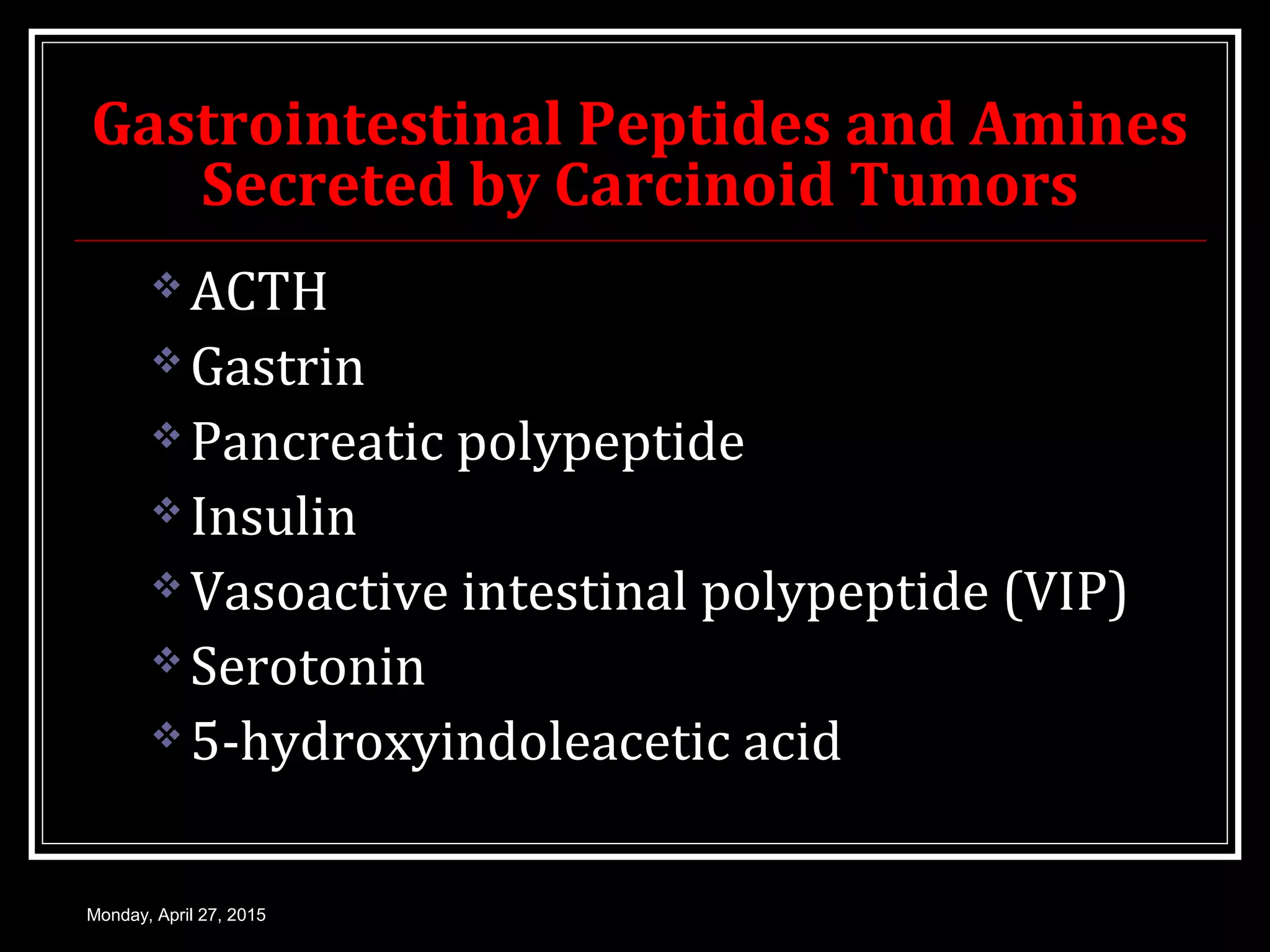
Gastrointestinal Peptides and Amines
Secreted by Carcinoid Tumors
 ACTH
 Gastrin
 Pancreatic polypeptide
 Insulin
 Vasoactive intestinal polypeptide (VIP)
 Serotonin
 5-hydroxyindoleacetic acid
Monday, April 27, 2015
SUMMARY INTRODUCTION
 HISTORY
 COMMON DESCRIPTION
 CELLS PRODUCING
 CLASSIFICATION
 LOCATION
 STIMULUS
 MODE OF ACTION
 DETAIL ABOUT EACH
HORMONES
 GASTIN
 CHOLECYSTOKININ
 SECRETIN
 MOTILIN
 VASOACTIVE INTESTINAL
POLYPEPTIDE
 GASTIC INHIBITORY
POLYPEPTIDE
 GLUCOGAN LIKE PEPTIDE
 OTHER HORMONES
Thank
You
Monday, April 27, 2015

GIT HORMONES

  • 1.
  • 2.
    OBJECTIVES  INTRODUCTION.  HISTORY. CLASSIFICATION.  COMMON DESCRIPTION.  CELLS PRODUCING – SOURCE.  CLASSIFICATION.  LOCATION.  STIMULUS.  MECHANISM OF ACTION.  ACTIONS.  APPLIED.
  • 3.
    INTRODUCTION  Earlier ---BelievedRegulatory mechanisms were controlled by the nervous system  Later numerous chemicals in the name of hormones were found  Hormones -- Play an integral role in most of the regulatory mechanisms in our body  Main objective of learning this topic in detail
  • 4.
    INTRODUCTION. (Cont….)  Largestendocrine organ  Enteric endocrine system.  Total about 30 GIT hormones.  These are biologically active polypeptide & act in a paracrine fashion.  Main function is:  1. To regulate the git secretion  2. To regulate the movement of GI tract. PARACRINE HORMONES.
  • 5.
    SITE OF ACTION. EndocrineAutocrine Paracrine
  • 6.
    HISTORY.  BAYLISS &STARLING (1902) discovered the first GIT hormone secretin.  GREGORY AND TRACY (1964) --chemical definition of Gastrin.  YALOW AND BENSON (1966) invented RIA to estimate quantity .  JORPES AND MUTT (1996) chemical nature of secretin and cholecystokinin and a group of other hormones.
  • 7.
    Endocrinal cells.Endocrinal cells. Origin - Neuroectodermal  Act - On surfaces  Mechanism - 1. Neurocrine  2. Paracrine  3. Classic endocrine
  • 8.
    Endocrine cells -GIT “Enteroendocrine cells”  More than 15 types present  Spread all over --stomach, small intestine, colon  Many cells secrete only one hormone eg. G cells, S cells, K cells, M cells  Cells that manufacture Serotonin in addition to polypeptides – Entero- chromaffin cells.
  • 9.
    APUD cells orNeuroendocrine cells (Amine Precursor Uptake and Decarboxylase).  Cells that manufacture amines in addition to polypeptides  Found in lungs and other organs in addition to GIT  Can form carcinoid tumors
  • 10.
    GI HORMONES GASTRIN FAMILYSECRETIN FAMILY OTHERS 1. Secretin 2. Glucagon 3. Glicentin 4. VIP 5. GIP 1. Gastrin 2. Cholecystokinin (CCK) 1. Peptide YY 2. Ghrelin 3. Motilin 4. Somatostatin 5. Neurotensin 6. Substance P 7. GRP 8. Bombesin 9. Glucagon 10.Guanylin CLASSIFICATION
  • 11.
    GASTRIN. Source: G cells (stomachpyloric antral region) Flask shaped, granules + Also -- hypothalamus, Pituitary –ant, intermediate Medulla, Fetal pancreas, Nerves --Vagus, sciatic nerves
  • 12.
    G cells -secrete gastrin STRUCTURE: APUDCELLS polypeptide 3 types G14 G17 G34 G17– Principal form Half life 2-3 min Metabolised – kidney, SI.
  • 13.
    G.I. HORMONES Structure ofStructureof SecretinSecretin (27 AA)(27 AA) (comparison with other GI hormones)(comparison with other GI hormones) Gastrin (17 AA)Gastrin (17 AA) Cholecystokinin (CCK (33 AA))Cholecystokinin (CCK (33 AA))
  • 14.
  • 15.
    STIMULATION FOR RELEASE STIMULATIONHORMONES RELEASED VAGAL STIMULATION, HCL & PRODUCT OF DIGESTION GASTRIN DIETARY PROTEIN GASTRIN & CCK DIETARY CARBOHYDRATE GIP & GLUCAGON LIKE SUBSTANCES DIETARY FAT CCK & GIP HYDROGEN IONS SECRETIN • “TASTE” – the luminal environment & Respond
  • 17.
    STIMULATION OF GASTRIN Stimulation increases  Luminal * peptides & amino acids- phenylalanine & tryptophan * Distention of pyloric antrum. Heidenhain pouch – denervated antral pouch Pavlov pouch – small pouch with intact nerve & blood supply.  Neural * vagal through GRP  Blood borne * Calcium * Epinephrine
  • 18.
     DECREASESDECREASES  Luminal * Acid – by negative feedback effect  * Somatostatin  Blood borne  Secretin  VIP, GIP  Glucagon  Calcitonin Monday, April 27, 2015
  • 19.
    Mode of action GastrinReceptor (parietal cells) Intracellular calcium(IP3) H+ -K+ ATPase Ca++ activates protein kinase Acid secretion
  • 20.
    Function of gastrin. Stimulate Gastric Acid and pepsin secretion  Trophic action – growth of gastric mucosa and intestinal mucosa  Stimulate Gastric Motility  Contraction of muscle at gastro esophageal junction cardiac sphincter prevents reflux oesophagitis Peristaltic contraction
  • 21.
    Functions of Gastrin. Stimulate Exocrine pancreas secretion  Stimulate Insulin secretion  Stimulate mass movement of large intestine  Colonic contraction that initiates Gastro- colic reflex – defecation after meal  Stimulate Histamine secretion from ECL cells
  • 22.
    Food in thestomach (gastric distension) Products of protein digestion (peptides and amino acids) Vagal stimulation (Non – cholinergic) G cells of stomach Secretion of gastrin Parietal cells of stomach HCI secretion High acidic gastric content (auto regulation of gastrin secretion Acidic duodenal chyme (secrete hormones) Intestinal hormones (GIP, VIP, somatostatin, secretin & glucagon) REGULATION
  • 23.
    CHOLECYSTOKININ-pz. GREEK – chole, "BILE";cysto, "SAC"; kinin, "MOVE"; so MOVE THE BILE-SAC Source: I cells – Granular mucosal cells of duodenum & jejunum. Also – cerebral cortex, somatic nerves, distal ileum, colon.
  • 24.
    STRUCTURE: CCK 58 3933 12 8 4 Stimuli: Acid, protein, fat Digested products in duodenum Initially considered 2 hormones later found to be one
  • 25.
    Functions of CCK-pz Contraction of gall bladder – increased bile release  Stimulate pancreatic secretion rich in enzyme  Augments the action of secretin  Inhibit gastric acid secretion  Inhibit gastric motility  Delay gastric emptying
  • 26.
    Regulation of secretions. •CCK-PZ– • Increased by Acid in duodenum Products of carbohydrates, fats, & proteins digestion. Mainly peptides & amino acids Positive feedback–
  • 27.
    SECRETIN. Bayliss & Starling(1902) discovered the first gastro intestinal hormone SECRETIN SOURCE : S cells – upper SI (Argentaffin cells) Structure : 27 AA Stimuli : Acid in duodenum
  • 28.
    Function of secretin. Stimulate secretion of pancreatic juice rich in HCO3 -  Stimulate bile secretion.  Augment action of CCK to produce pancreatic secretion rich in enzymes  Reduces the gastric acid secretion and motility  Contraction of pyloric sphincter
  • 29.
    HCL & MOTILITY NaHCO3 HCL+ NaHCO 3Nacl, CO 2 , H 2 O REGULATION OF SECRETION
  • 30.
    GASTRIC INHIBITORY PEPTIDE( GIP) Source: K cells – jejunum & duodenum  Initially called Enterogastrone.  Discovered as a factor in extracts of intestine that inhibited gastric motility and secretion of acid.
  • 31.
    GASTRIC INHIBITORY PEPTIDE( GIP) Another activity of GIP is its ability to Enhance the release of insulin in response to infusions of glucose. -- Glucose-dependent insulinotropic peptide.  Regulation – Increases by fat in duodenum Monday, April 27, 2015
  • 32.
     Source –Mucosal cells in jejunum  Stimuli – fatty meal  Structure -- polypeptide 28 amino acids  Other sites—  Nerves in GIT,  Blood,  Brain ( cerebral cortex)  Autonomic nerves. VASOACTIVE INTESTINAL POLYPEPTIDE (VIP)
  • 33.
     Stimulate Intestinalsecretion of electrolytes & water.  Vasodilatation – decreases BP  Induce smooth muscle relaxation (lower esophageal sphincter, stomach, gallbladder)  Stimulate secretion of water into pancreatic juice and bile.  Inhibition of gastric acid secretion and absorption from the intestinal lumen.  Decreases the GI motility. ACTIONS.
  • 34.
    ENTEROGLUCAGON ANDENTEROGLUCAGON AND GLUCAGON-LIKEPEPTIDES.GLUCAGON-LIKE PEPTIDES. Source : Terminal SI and LI - L cells.  Given the name "Enteroglucagon", "Proglucagon-derived Peptides".  In both pancreas and gut, 3 types of products are generated: • Glucagon-like Peptide-1 (GLP-1) • Glucagon-like Peptide-2 (GLP-2) • Glucagon-like Peptide-3 (GLP-3) Monday, April 27, 2015
  • 35.
    GLP-1GLP-1  Inhibit gastric emptying, Inhibit gastric secretion and  Inhibit pancreatic secretion,  Decreases food intake.  Glucagon-like peptide-2  It stimulates proliferation of intestinal epithelial cells. Monday, April 27, 2015
  • 36.
    SOMATOSTATIN (GHIH).  Source-- S Cells or δ cells  GIT MUCOSA.  Structure– SS14, SS28 (more active)  Somatostatin is also secreted by the Hypothalamus & pancreas.  Stimuli –  Acid in stomach  stimuli which increases insulin secretion Monday, April 27, 2015
  • 37.
    ACTIONS  Secretions ofGastrin, secretin, Motilin,  Pancreatic – Exocrine & Endocrine secretions  Gastric acid secretions & motility ( Dyspepsia & slow gastric emptying)  Gall bladder contractions ( Precipitate gall stone)  Absorption of glucose amino acid, & triglyceride.
  • 38.
    MOTILIN • Source --Endocrinocytes (Mo Cells) in the mucosa of the proximal Small Intestine. • Based on 22 AA sequence,
  • 39.
     MOTILIN participatesin controlling the pattern of smooth muscle contractions in the upper GI tract that increases the MIGRATING MYOELECTRIC COMPLEX ("Housekeeping contractions“).  It sweep the stomach and SI clear of undigested material and stimulates the production of PEPSIN.
  • 40.
    GHRELIN-28 AA  ’Ghre’’– Growth ---- Europian name.  Source -- Endocrine cells in the stomach, especially when one is hungry;  Action-- acts on the hypothalamus to stimulate feeding;  This action counteracts the inhibition of feeding by leptin and Pyy 3-36. Monday, April 27, 2015
  • 41.
  • 42.
    GUANYLIN  15 aminoacid residues  Source:  Cells of the intestinal mucosa  Stimulant:  Stimulation of Guanylin  Function:  It increase Cl- movement to intestine
  • 43.
    Other hormones HormonesHormones sourcesourceEffectsEffects NeurotensinNeurotensin Neurons & ilealNeurons & ileal epitheliumepithelium Inhibit GI motility - ilealInhibit GI motility - ileal blood flowblood flow GRPGRP Vagal nerveVagal nerve Gastrin releaseGastrin release GuanylinGuanylin Paneth cellsPaneth cells Secretion of chloride ionsSecretion of chloride ions ChymodeninChymodenin Duodenal mucosaDuodenal mucosa Selective secretion ofSelective secretion of chymotrypsinogen fromchymotrypsinogen from pancreatic acinar cellspancreatic acinar cells Substance PSubstance P Entire GITEntire GIT Increases the motility of SIIncreases the motility of SI Increases local vasodilationIncreases local vasodilation Perception of pain sensationPerception of pain sensation BombesinBombesin Entire GITEntire GIT Increases gastric secretionIncreases gastric secretion Increases motility of gallIncreases motility of gall bladderbladder Increases motility of SIIncreases motility of SI
  • 44.
  • 45.
  • 46.
  • 47.
  • 48.
    Zollinger-Ellison Syndrome (Gastrinoma) Caused bya tumor (or tumors) called Gastrinoma gastrin stomach acid. SIGNS & SYMPTOMS: Pain in the stomach and esophagus, Nausea Vomiting of blood, Difficulty in swallowing Sore throat, coughing, and wheezing Sour or bitter taste in the mouth Blood in the stool
  • 49.
    VERNER MORRISON SYNDROME (VIPOMAS)  VIP Cause profound and chronic WDHA-syndrome (or) pancreatic cholera syndrome  Watery Diarrhoea and resultant Dehydration,  Hypokalemia,  Achlorhydria,  Acidosis,  vasodilation (flushing and hypotension),  Hypercalcemia  Hyperglycemia.
  • 50.
    VERNER MORRISON SYNDROME  TREATMENT Symptomatic control  Somatostatin analogues  Resection
  • 51.
    CARCINOID TUMORS( APUDOMAS) Carcinoid tumors originate from the diffuse neuroendocrine system, specifically the enterochromaffin (EC) cells (submucosa of the intestine)
  • 52.
    Gastrointestinal Peptides andAmines Secreted by Carcinoid Tumors  ACTH  Gastrin  Pancreatic polypeptide  Insulin  Vasoactive intestinal polypeptide (VIP)  Serotonin  5-hydroxyindoleacetic acid Monday, April 27, 2015
  • 53.
    SUMMARY INTRODUCTION  HISTORY COMMON DESCRIPTION  CELLS PRODUCING  CLASSIFICATION  LOCATION  STIMULUS  MODE OF ACTION  DETAIL ABOUT EACH HORMONES  GASTIN  CHOLECYSTOKININ  SECRETIN  MOTILIN  VASOACTIVE INTESTINAL POLYPEPTIDE  GASTIC INHIBITORY POLYPEPTIDE  GLUCOGAN LIKE PEPTIDE  OTHER HORMONES
  • 54.
  • 55.