ADRENOCORTICOTROPIC
HORMONES
DR. RUPALI A. PATIL
ASSOCIATE PROFESSOR, PHARMACOLOGY DEPARTMENT
GES’S SIR DR. M. S. GOSAVI COLLEGE OF PHARMACEUTICAL
EDUCATION & RESEARCH, NASHIK
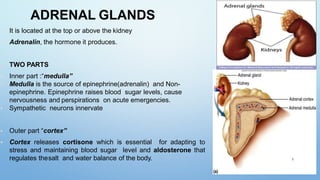
ADRENAL GLANDS
▪ It is located at the top or above the kidney
▪ Adrenalin, the hormone it produces.
▪ TWO PARTS
▪ Inner part :“medulla”
▪ Medulla is the source of epinephrine(adrenalin) and Non-
epinephrine. Epinephrine raises blood sugar levels, cause
nervousness and perspirations on acute emergencies.
▪ Sympathetic neurons innervate
▪ Outer part “cortex”
▪ Cortex releases cortisone which is essential for adapting to
stress and maintaining blood sugar level and aldosterone that
regulates thesalt and water balance of the body. 1
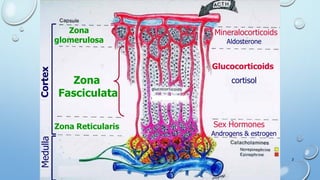
CortexMedulla
Zona
glomerulosa
Zona
Fasciculata
Zona Reticularis
Mineralocorticoids
Aldosterone
Glucocorticoids
cortisol
Sex Hormones
Androgens & estrogen
2
ADRENAL HORMONES
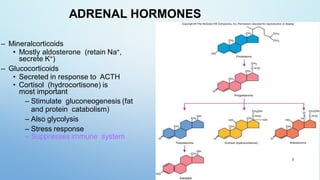
– Mineralcorticoids
• Mostly aldosterone (retain Na+,
secrete K+)
– Glucocorticoids
• Secreted in response to ACTH
• Cortisol (hydrocortisone) is
most important
– Stimulate gluconeogenesis (fat
and protein catabolism)
– Also glycolysis
– Stress response
– Suppresses immune system
3
Hormones of the Adrenal Medulla
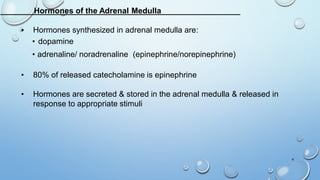
• Hormones synthesized in adrenal medulla are:
• dopamine
• adrenaline/ noradrenaline (epinephrine/norepinephrine)
• 80% of released catecholamine is epinephrine
• Hormones are secreted & stored in the adrenal medulla & released in
response to appropriate stimuli
4
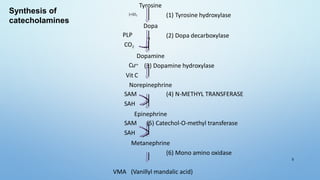
Tyrosine
(1) Tyrosine hydroxylase
Dopa
PLP
CO2
(2) Dopa decarboxylase
Dopamine
(3) Dopamine hydroxylaseCu++
Vit C
Norepinephrine
SAM (4) N-METHYL TRANSFERASE
SAH
Epinephrine
SAM (5) Catechol-O-methyl transferase
SAH
Metanephrine
(6) Mono amino oxidase
VMA (Vanillyl mandalic acid)
(+)O2
5
Synthesis of
catecholamines
Mechanism of Action
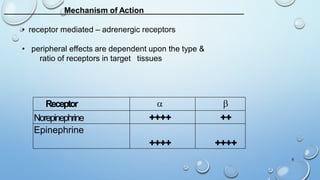
• receptor mediated – adrenergic receptors
• peripheral effects are dependent upon the type &
ratio of receptors in target tissues
Receptor  
Norepinephrine ++++ ++
Epinephrine
++++ ++++
6
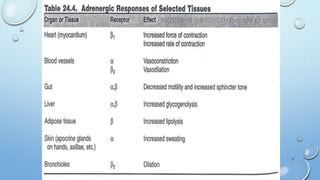
7
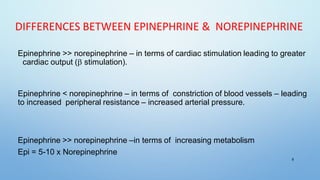
DIFFERENCES BETWEEN EPINEPHRINE & NOREPINEPHRINE
Epinephrine >> norepinephrine – in terms of cardiac stimulation leading to greater
cardiac output ( stimulation).
Epinephrine < norepinephrine – in terms of constriction of blood vessels – leading
to increased peripheral resistance – increased arterial pressure.
Epinephrine >> norepinephrine –in terms of increasing metabolism
Epi = 5-10 x Norepinephrine
8
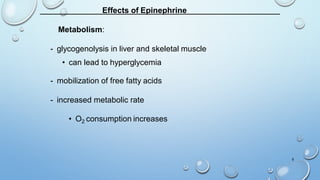
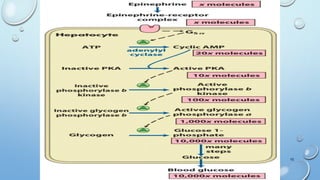
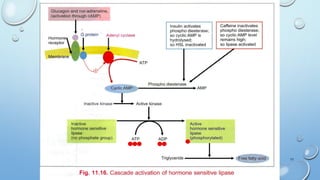
Effects of Epinephrine
Metabolism:
- glycogenolysis in liver and skeletal muscle
• can lead to hyperglycemia
- mobilization of free fatty acids
- increased metabolic rate
• O2 consumption increases
9
10
11
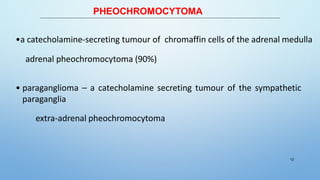
PHEOCHROMOCYTOMA
•a catecholamine-secreting tumour of chromaffin cells of the adrenal medulla
adrenal pheochromocytoma (90%)
• paraganglioma – a catecholamine secreting tumour of the sympathetic
paraganglia
extra-adrenal pheochromocytoma
12
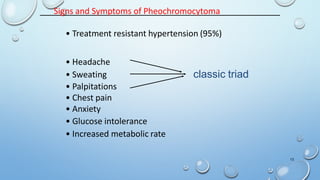
Signs and Symptoms of Pheochromocytoma
• Treatment resistant hypertension (95%)
• Headache
• Sweating
• Palpitations
• Chest pain
• Anxiety
• Glucose intolerance
• Increased metabolic rate
classic triad
13
Diagnosis and Treatment
• Diagnosed by high plasma catecholamines & increased metabolites in urine
• No test for adrenal or extra-adrenal
• Treatment is surgical resection
14
Hormones of Adrenal cortex
15
A. GLUCOCORTICOIDS
CORTISOL : 95% OF TOTAL GLUCOCORTICOID ACTIVITY
16
GLUCOCORTICOIDS - CORTISOL
• a steroid hormone
- plasma bound to corticosteroid binding globulin (CBG or transcortin)
• essential for life (long term) 2hr
• the net effects of cortisol are catabolic
- prevents against hypoglycemia
17
18
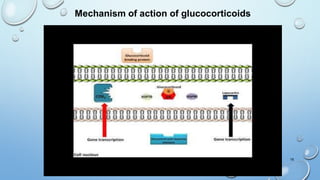
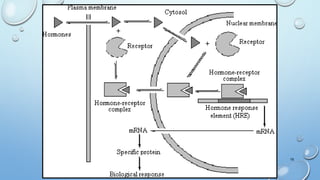
Mechanism of action of glucocorticoids
19
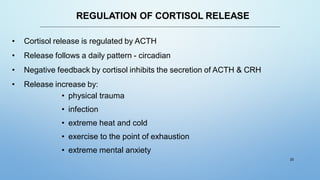
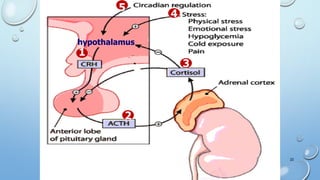
REGULATION OF CORTISOL RELEASE
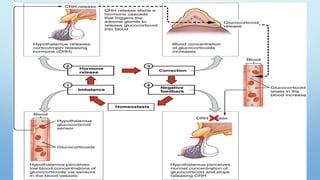
• Cortisol release is regulated by ACTH
• Release follows a daily pattern - circadian
• Negative feedback by cortisol inhibits the secretion of ACTH & CRH
• Release increase by:
• physical trauma
• infection
• extreme heat and cold
• exercise to the point of exhaustion
• extreme mental anxiety
20
21
Control of glucocorticoid secretion
2
4
5
hypothalamus
1
3
22
PHARMACOKINETICS
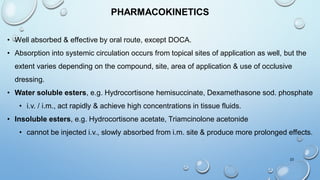
• Well absorbed & effective by oral route, except DOCA.
• Absorption into systemic circulation occurs from topical sites of application as well, but the
extent varies depending on the compound, site, area of application & use of occlusive
dressing.
• Water soluble esters, e.g. Hydrocortisone hemisuccinate, Dexamethasone sod. phosphate
• i.v. / i.m., act rapidly & achieve high concentrations in tissue fluids.
• Insoluble esters, e.g. Hydrocortisone acetate, Triamcinolone acetonide
• cannot be injected i.v., slowly absorbed from i.m. site & produce more prolonged effects.
23
Metabolism
The corticosteroids are metabolized primarily by hepatic microsomal enzymes. Pathways are—
(i) Reduction of 4, 5 double bond & hydroxylation of 3-keto group.
(ii) Reduction of 20-keto to 20-hydroxy form.
(iii) Oxidative cleavage of 20C side chain (only in case of compounds having a 17-hydroxyl group) to yield 17-
ketosteroids.
These metabolites are further conjugated with glucuronic acid or sulfate and are excreted in urine.
24
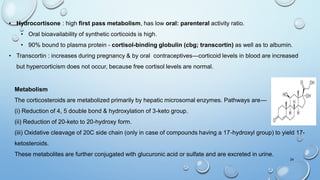
• Hydrocortisone : high first pass metabolism, has low oral: parenteral activity ratio.
• Oral bioavailability of synthetic corticoids is high.
• 90% bound to plasma protein - cortisol-binding globulin (cbg; transcortin) as well as to albumin.
• Transcortin : increases during pregnancy & by oral contraceptives—corticoid levels in blood are increased
but hypercorticism does not occur, because free cortisol levels are normal.
25
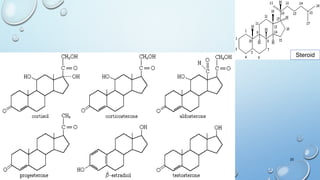
Steroid
26
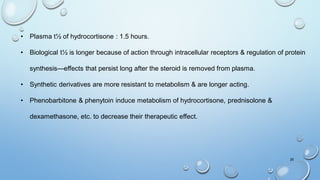
• Plasma t½ of hydrocortisone : 1.5 hours.
• Biological t½ is longer because of action through intracellular receptors & regulation of protein
synthesis—effects that persist long after the steroid is removed from plasma.
• Synthetic derivatives are more resistant to metabolism & are longer acting.
• Phenobarbitone & phenytoin induce metabolism of hydrocortisone, prednisolone &
dexamethasone, etc. to decrease their therapeutic effect.
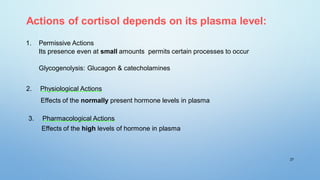
Actions of cortisol depends on its plasma level:
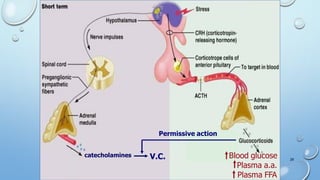
1. Permissive Actions
Its presence even at small amounts permits certain processes to occur
Glycogenolysis: Glucagon & catecholamines
2. Physiological Actions
Effects of the normally present hormone levels in plasma
3. Pharmacological Actions
Effects of the high levels of hormone in plasma
27
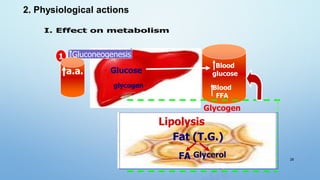
Gluconeogenesis
Glucose
glycogen
Glycogen
2 Glycogen phosphorylase
synthase
e Glucose 6-PO4
3 Glycolysis
pyruvate
Lipolysis
Fat (T.G.)
FA Glycerol
Blood
glucose
Blood
FFA
1
a.a.
28
2. Physiological actions
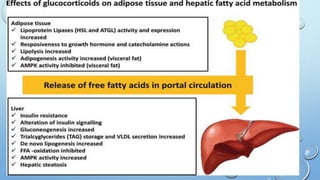
I. Effect on metabolism
II. Effect on CNS
Required for normal EEG pattern
III. Weak mineralocorticoid effect
IV. Anti-stress effect
V.C.catecholamines
Permissive action
Blood glucose
Plasma a.a.
Plasma FFA
29
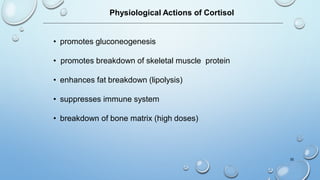
Physiological Actions of Cortisol
• promotes gluconeogenesis
• promotes breakdown of skeletal muscle protein
• enhances fat breakdown (lipolysis)
• suppresses immune system
• breakdown of bone matrix (high doses)
30
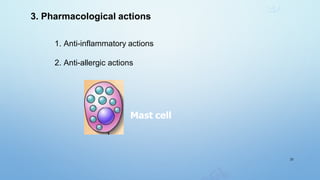
1. Anti-inflammatory actions
2. Anti-allergic actions
Mast cell
31
3. Pharmacological actions
32
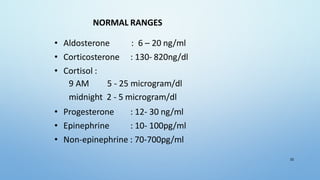
NORMAL RANGES
• Aldosterone : 6 – 20 ng/ml
• Corticosterone : 130- 820ng/dl
• Cortisol :
9 AM 5 - 25 microgram/dl
midnight 2 - 5 microgram/dl
• Progesterone : 12- 30 ng/ml
• Epinephrine : 10- 100pg/ml
• Non-epinephrine : 70-700pg/ml
33
34
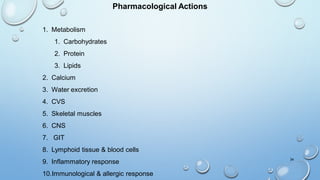
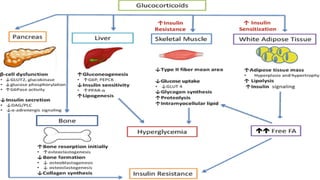
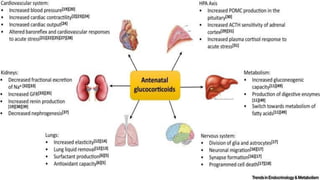
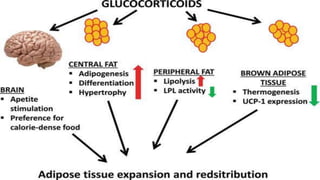
Pharmacological Actions
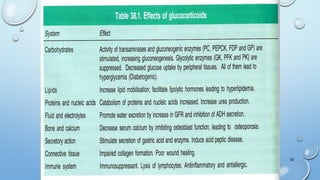
1. Metabolism
1. Carbohydrates
2. Protein
3. Lipids
2. Calcium
3. Water excretion
4. CVS
5. Skeletal muscles
6. CNS
7. GIT
8. Lymphoid tissue & blood cells
9. Inflammatory response
10.Immunological & allergic response
35
36
37
38
EFFECT ON BLOOD CELLS AND IMMUNITY
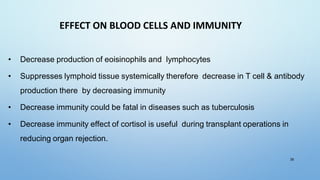
• Decrease production of eoisinophils and lymphocytes
• Suppresses lymphoid tissue systemically therefore decrease in T cell & antibody
production there by decreasing immunity
• Decrease immunity could be fatal in diseases such as tuberculosis
• Decrease immunity effect of cortisol is useful during transplant operations in
reducing organ rejection.
39
40
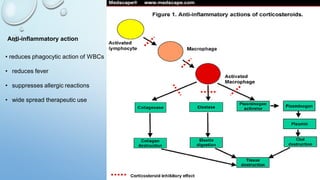
Anti-inflammatory action
• reduces phagocytic action of WBCs
• reduces fever
• suppresses allergic reactions
• wide spread therapeutic use
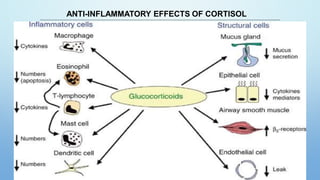
ANTI-INFLAMMATORY EFFECTS OF CORTISOL
41
42
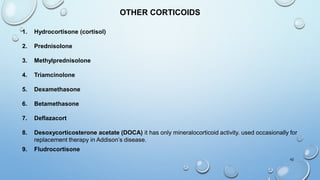
OTHER CORTICOIDS
1. Hydrocortisone (cortisol)
2. Prednisolone
3. Methylprednisolone
4. Triamcinolone
5. Dexamethasone
6. Betamethasone
7. Deflazacort
8. Desoxycorticosterone acetate (DOCA) it has only mineralocorticoid activity. used occasionally for
replacement therapy in Addison’s disease.
9. Fludrocortisone
43
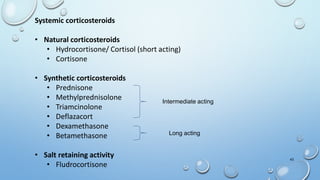
Systemic corticosteroids
• Natural corticosteroids
• Hydrocortisone/ Cortisol (short acting)
• Cortisone
• Synthetic corticosteroids
• Prednisone
• Methylprednisolone
• Triamcinolone
• Deflazacort
• Dexamethasone
• Betamethasone
• Salt retaining activity
• Fludrocortisone
Intermediate acting
Long acting
44
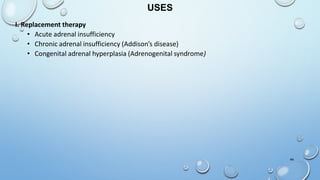
USES
I. Replacement therapy
• Acute adrenal insufficiency
• Chronic adrenal insufficiency (Addison’s disease)
• Congenital adrenal hyperplasia (Adrenogenital syndrome)
45
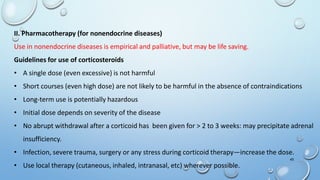
II. Pharmacotherapy (for nonendocrine diseases)
Use in nonendocrine diseases is empirical and palliative, but may be life saving.
Guidelines for use of corticosteroids
• A single dose (even excessive) is not harmful
• Short courses (even high dose) are not likely to be harmful in the absence of contraindications
• Long-term use is potentially hazardous
• Initial dose depends on severity of the disease
• No abrupt withdrawal after a corticoid has been given for > 2 to 3 weeks: may precipitate adrenal
insufficiency.
• Infection, severe trauma, surgery or any stress during corticoid therapy—increase the dose.
• Use local therapy (cutaneous, inhaled, intranasal, etc) wherever possible.
46
• Arthritis
• Rheumatoid arthritis
• Osteoarthritis
• Rheumatic fever
• Gout
• Collagen diseases
• Severe allergic reactions
• Autoimmune diseases
• Bronchial asthma
• Status asthmaticus
• Acute asthma
• Severe chronic asthma
• Other lung diseases
Pharmacotherapeutic uses
47
• Infective diseases
• Eye diseases
• Skin diseases
• Intestinal diseases
• Cerebral edema
• Malignancies
• Organ transplantation and skin allograft
• Septic shock
• Thyroid storm
• To test pituitary-adrenal axis function
48
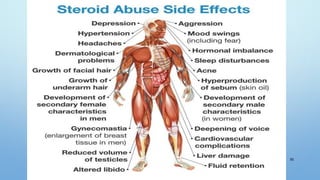
ADVERSE EFFECTS
1. Cushing’s habitus
2. Fragile skin, purple striae—typically on thighs & lower abdomen, easy bruising, telangiectasis, hirsutism.
Cutaneous atrophy localized to the site occurs with topical application as well.
3. Hyperglycaemia: may be glycosuria, precipitation of diabetes.
4. Muscular weakness: proximal (shoulder, arm, pelvis, thigh) muscles are primarily affected. Myopathy occurs
5. Susceptibility to infection: nonspecific for all types of pathogenic organisms.
6. Delayed healing: of wounds and surgical incisions.
7. Peptic ulceration: risk is doubled; bleeding and silent perforation of ulcers may occur
8. Osteoporosis: vertebrae & other flat spongy bones.
Calcium supplements + vit D,
Estrogen/raloxifene or androgen replacement therapy in females & males respectively.
However, bisphosphonates are the most effective drugs in this regard.
Avascular necrosis of head of femur, humerous, or knee joint
49
9. Posterior subcapsular cataract: may develop after several years of use, especially in children.
10.Glaucoma: may develop in susceptible individuals after prolonged topical therapy.
11.Growth retardation: Recombinant GH given concurrently
12. Foetal abnormalities: Intrauterine growth retardation can occur after prolonged therapy, and neurological/
behavioural disturbances in the offspring are feared. Prednisolone : safer than dexa/ beta methasone, as it is
metabolized by placenta, reducing foetal exposure.
13.Psychiatric disturbances: High dose: Mild euphoria ---- manic psychosis.
Nervousness, decreased sleep & mood changes.
Depressive : after long-term use.
14. Suppression of hypothalamo-pituitary-adrenal (HPA) axis: malaise, fever, anorexia, nausea, postural
hypotension, electrolyte imbalance, weakness, pain in muscles & joints
50
51
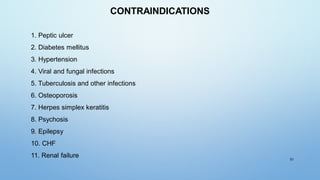
1. Peptic ulcer
2. Diabetes mellitus
3. Hypertension
4. Viral and fungal infections
5. Tuberculosis and other infections
6. Osteoporosis
7. Herpes simplex keratitis
8. Psychosis
9. Epilepsy
10. CHF
11. Renal failure
CONTRAINDICATIONS
Adrenal Cortex Dysfunctions
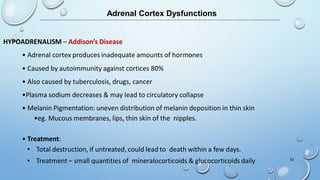
HYPOADRENALISM – Addison’s Disease
• Adrenal cortex produces inadequate amounts of hormones
• Caused by autoimmunity against cortices 80%
• Also caused by tuberculosis, drugs, cancer
•Plasma sodium decreases & may lead to circulatory collapse
• Melanin Pigmentation: uneven distribution of melanin deposition in thin skin
•eg. Mucous membranes, lips, thin skin of the nipples.
• Treatment:
• Total destruction, if untreated, could lead to death within a few days.
• Treatment – small quantities of mineralocorticoids & glucocorticoids daily 52
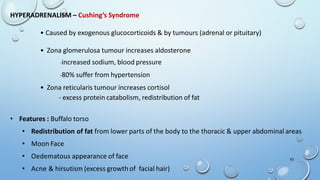
HYPERADRENALISM – Cushing’s Syndrome
• Caused by exogenous glucocorticoids & by tumours (adrenal or pituitary)
• Zona glomerulosa tumour increases aldosterone
-increased sodium, blood pressure
-80% suffer from hypertension
• Zona reticularis tumour increases cortisol
- excess protein catabolism, redistribution of fat
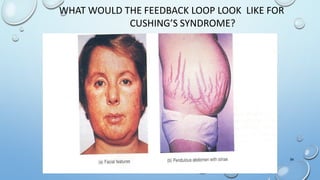
• Features : Buffalo torso
• Redistribution of fat from lower parts of the body to the thoracic & upper abdominal areas
• Moon Face
• Oedematous appearance of face
• Acne & hirsutism (excess growth of facial hair)
53
WHAT WOULD THE FEEDBACK LOOP LOOK LIKE FOR
CUSHING’S SYNDROME?
54
CARBOHYDRATE METABOLISM
“Adrenal diabetes”
• Hypersecretion of cortisol results in increase blood glucose levels, up to 2 x normal (200mg/dl)
• Prolonged over-secretion of insulin “burns out” the beta cells of the pancreas resulting in life
long diabetes mellitus
PROTEIN METABOLISM
• Decrease protein content in most parts of the body resulting in muscle weakness
• In lymphoid tissue – decrease protein synthesis results in suppression of immune system
• Lack of protein deposition in bones can result in osteoporosis
• Collagen fibers in subcutaneous tissue tear forming striae
55
56
• Combination of any other drug with corticosteroids in fixed dose formulation for internal use is banned.
• Metyrapone Inhibits 11-β hydroxylase in adrenal cortex and prevents synthesis of hydrocortisone so that
its blood level falls → increased ACTH release → increased synthesis, release and excretion of 11-
desoxycortisol in urine. Thus, it is used to test the responsiveness of pituitary and its ACTH producing
capacity.
• Aminoglutethimide, trilostane & high doses of the antifungal drug Ketoconazole: Inhibit steroidogenic
enzymes. Ketoconazole reduces gonadal steroid synthesis as well.
Use: Cushing’s disease when surgery / other measures are not an option.
• Glucocorticoid antagonist / Antiprogestin: Mifepristone : In Cushing’s syndrome --- suppress the
manifestations of corticosteroid excess, but blockade of feedback ACTH inhibition leads to over-
secretion of ACTH → more hydrocortisone is produced, which tends to annul the GR blocking action of
mifepristone.
Use: Only in an inoperable cases of adrenal carcinoma & in patients with ectopic ACTH secretion.
SOME IMPORTANT POINTS
MINERALOCORTICOIDS
57
• Produced in the Zonaglomerulosa
• Primary mineralocorticoid :Aldosterone
• Aldosterone is secreted in response to
• high extracellular potassium levels
• low extracellular sodium levels
• low fluid levels & blood volume. 58
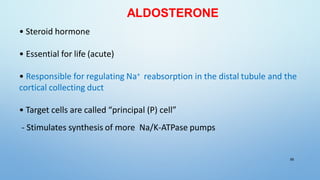
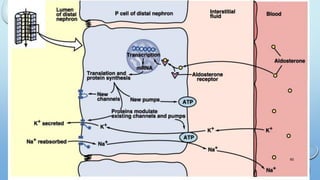
ALDOSTERONE
• Steroid hormone
• Essential for life (acute)
• Responsible for regulating Na+ reabsorption in the distal tubule and the
cortical collecting duct
• Target cells are called “principal (P) cell”
- Stimulates synthesis of more Na/K-ATPase pumps
59
60
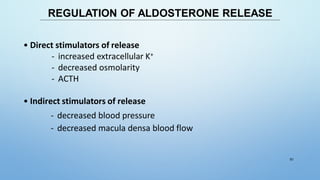
REGULATION OF ALDOSTERONE RELEASE
• Direct stimulators of release
- increased extracellular K+
- decreased osmolarity
- ACTH
• Indirect stimulators of release
- decreased blood pressure
- decreased macula densa blood flow
61
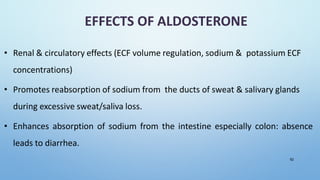
EFFECTS OF ALDOSTERONE
• Renal & circulatory effects (ECF volume regulation, sodium & potassium ECF
concentrations)
• Promotes reabsorption of sodium from the ducts of sweat & salivary glands
during excessive sweat/saliva loss.
• Enhances absorption of sodium from the intestine especially colon: absence
leads to diarrhea.
62
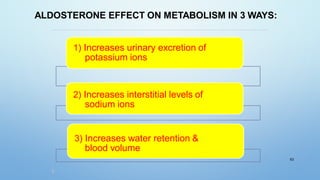
ALDOSTERONE EFFECT ON METABOLISM IN 3 WAYS:
1) Increases urinary excretion of
potassium ions
2) Increases interstitial levels of
sodium ions
3) Increases water retention &
blood volume
63
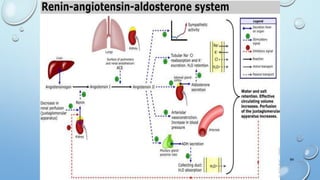
Renin Angiotensin System
64
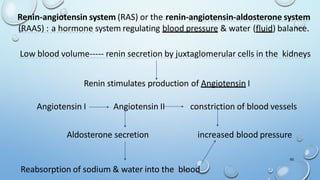
Renin-angiotensin system (RAS) or the renin-angiotensin-aldosterone system
(RAAS) : a hormone system regulating blood pressure & water (fluid) balance.
Low blood volume----- renin secretion by juxtaglomerular cells in the kidneys
65
Renin stimulates production of Angiotensin I
Angiotensin I Angiotensin II constriction of blood vessels
Aldosterone secretion increased blood pressure
Reabsorption of sodium & water into the blood
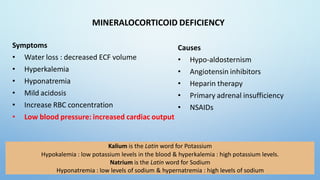
MINERALOCORTICOID DEFICIENCY
Symptoms
• Water loss : decreased ECF volume
• Hyperkalemia
• Hyponatremia
• Mild acidosis
• Increase RBC concentration
• Low blood pressure: increased cardiac output
66
Kalium is the Latin word for Potassium
Hypokalemia : low potassium levels in the blood & hyperkalemia : high potassium levels.
Natrium is the Latin word for Sodium
Hyponatremia : low levels of sodium & hypernatremia : high levels of sodium
Causes
• Hypo-aldosternism
• Angiotensin inhibitors
• Heparin therapy
• Primary adrenal insufficiency
• NSAIDs
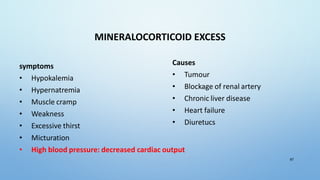
MINERALOCORTICOID EXCESS
67
symptoms
• Hypokalemia
• Hypernatremia
• Muscle cramp
• Weakness
• Excessive thirst
• Micturation
• High blood pressure: decreased cardiac output
Causes
• Tumour
• Blockage of renal artery
• Chronic liver disease
• Heart failure
• Diuretucs
THANKYOU
68