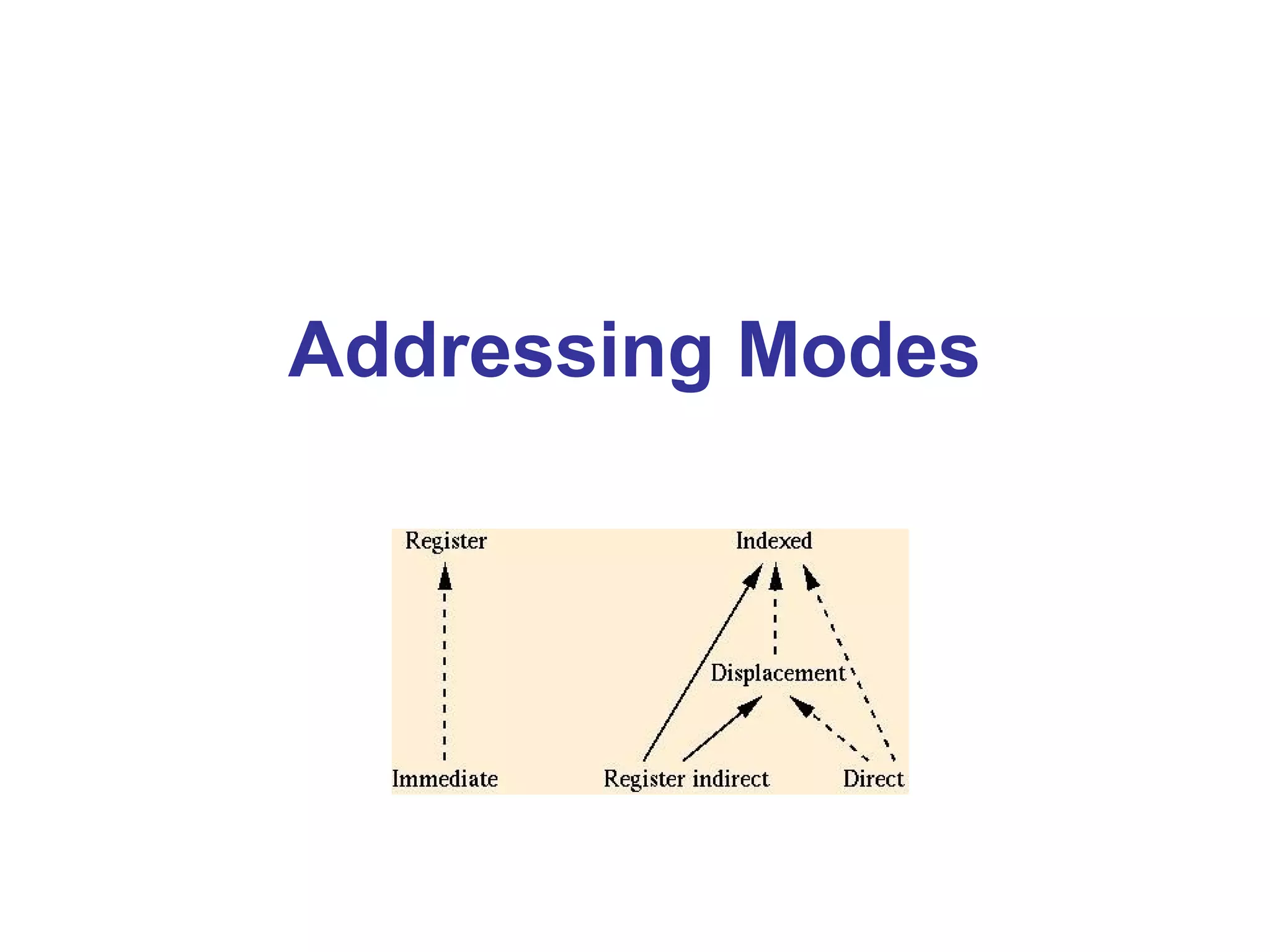
Addressing Modes
In order to access the memory, an address
must be provided.The manner in which the
address is specified in an instruction is called
the addressing mode. Addressing modes can
be categorized into:
 Basic addressing modes
 Special addressing modes
Addressing Modes
Basic Addressing Modes
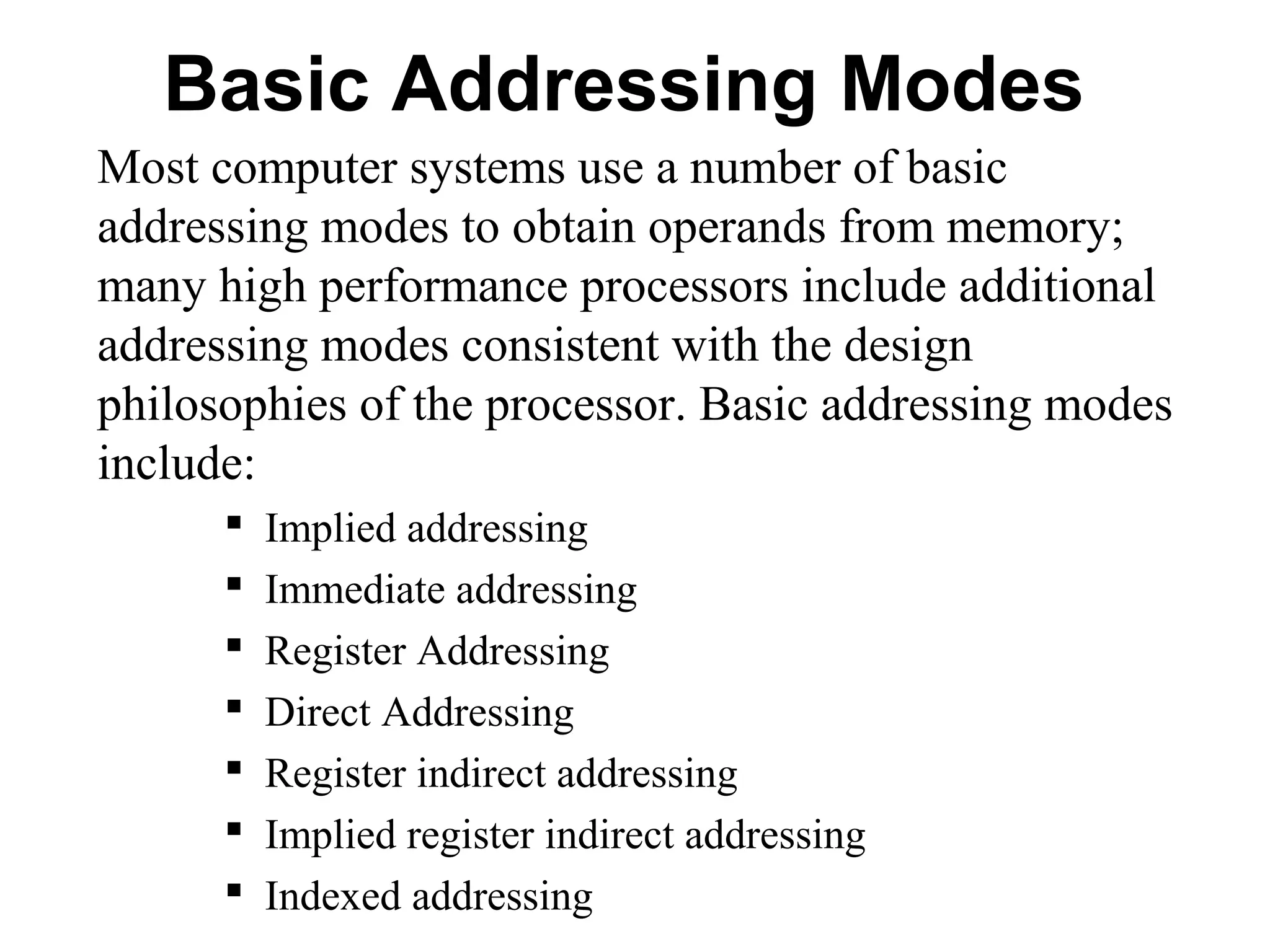
Most computer systems use a number of basic
addressing modes to obtain operands from memory;
many high performance processors include additional
addressing modes consistent with the design
philosophies of the processor. Basic addressing modes
include:
 Implied addressing
 Immediate addressing
 Register Addressing
 Direct Addressing
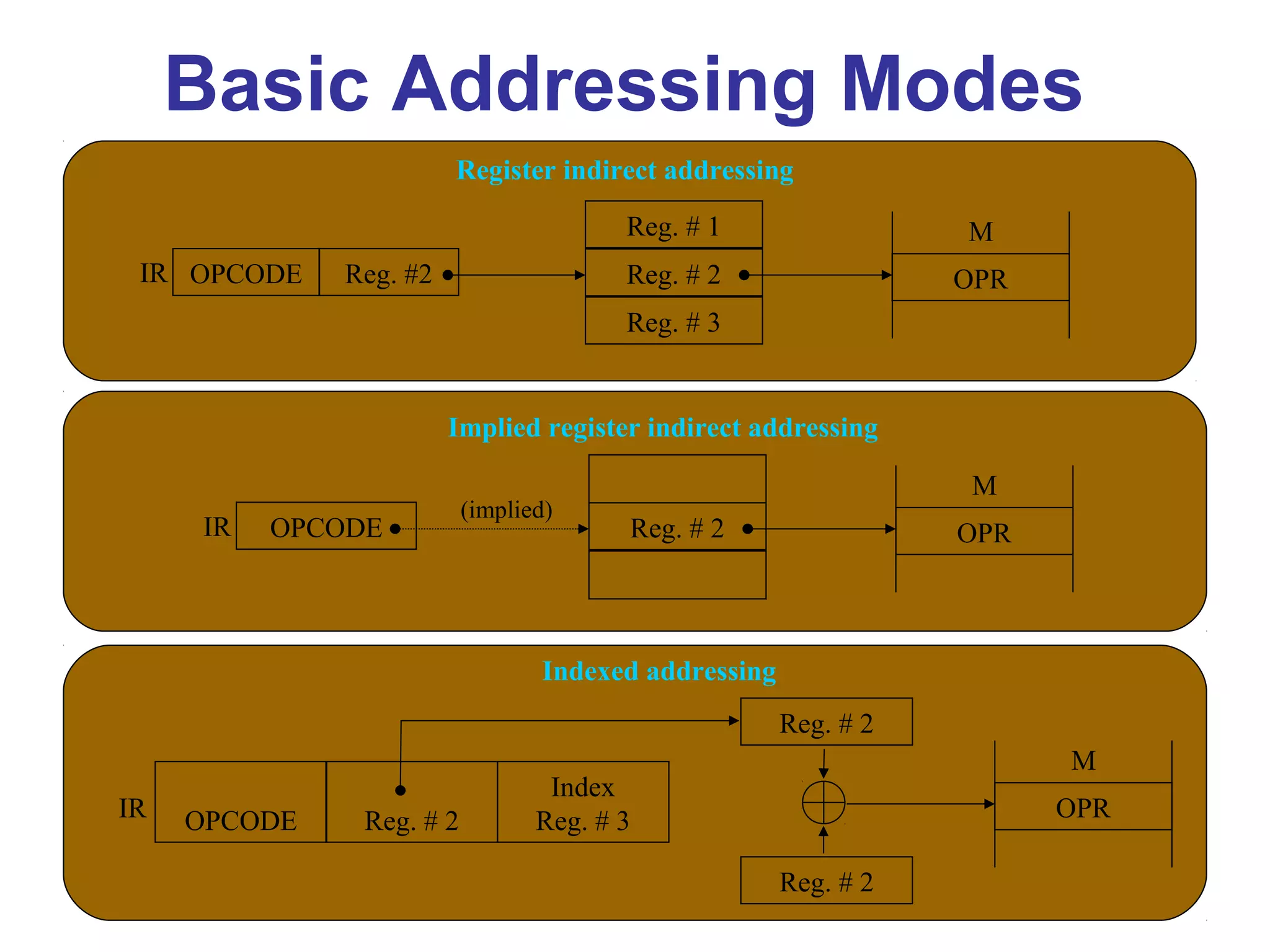
 Register indirect addressing
 Implied register indirect addressing
 Indexed addressing
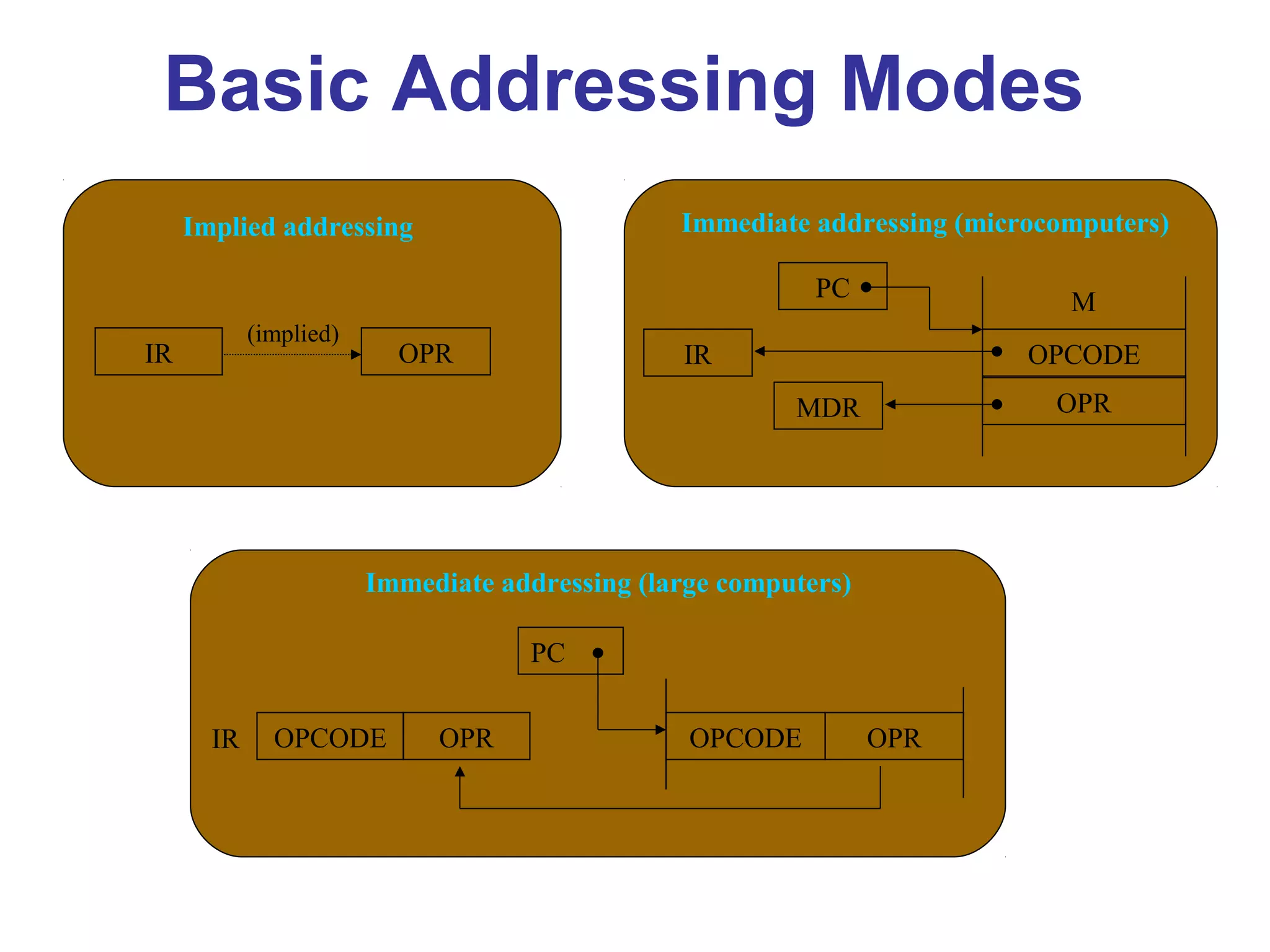
OPR
OPCODE
MPC
MDR
IR
Immediate addressing (microcomputers)
Basic Addressing Modes
OPCODE OPR OPCODE OPR
PC
Immediate addressing (large computers)
IR
IR OPR
Implied addressing
(implied)
Basic Addressing Modes
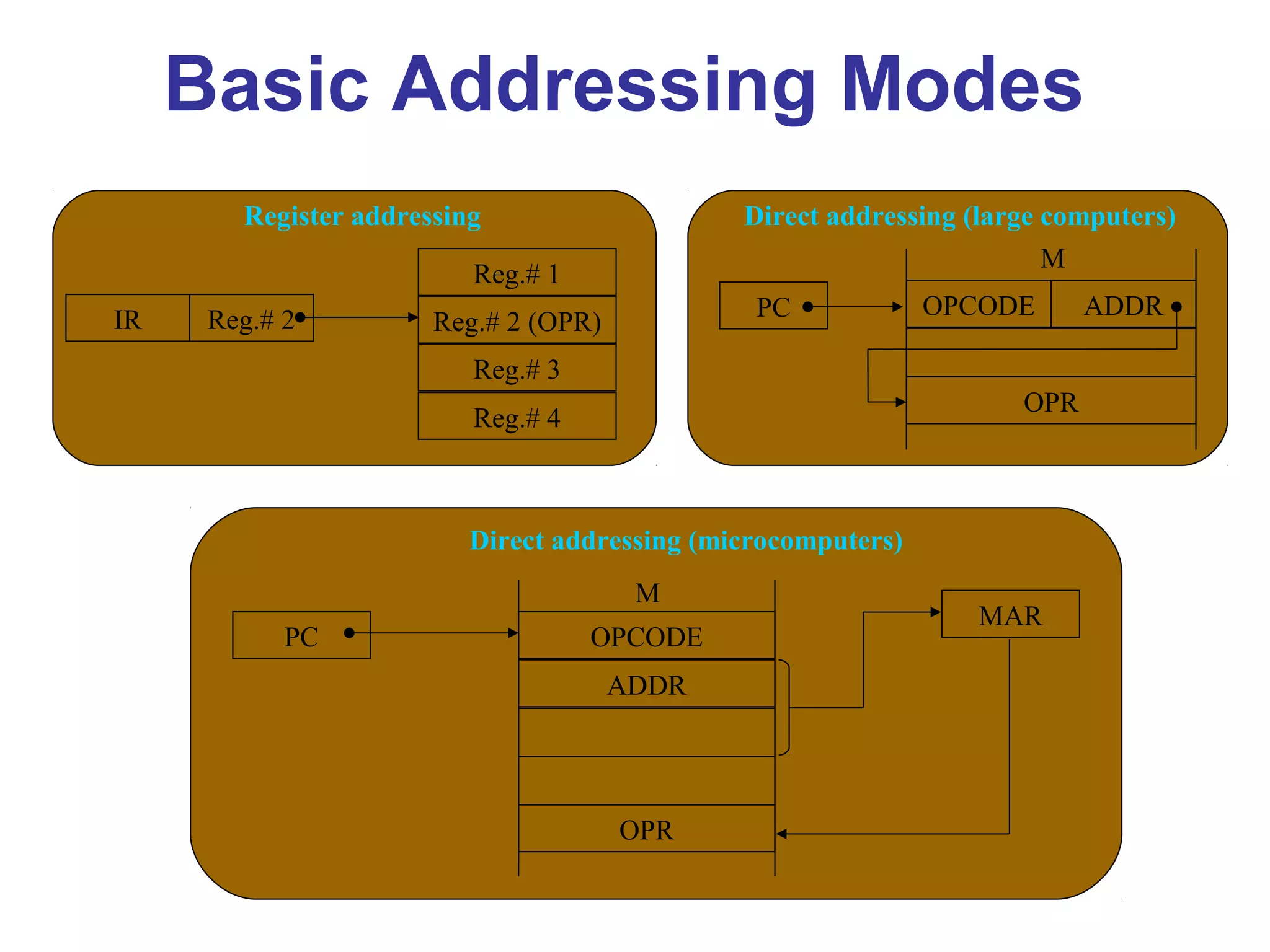
Reg.# 2IR Reg.# 2 (OPR)
Reg.# 1
Reg.# 3
Reg.# 4
Register addressing
OPCODE ADDR
OPR
M
PC
Direct addressing (large computers)
OPCODE
ADDR
OPR
M
MAR
PC
Direct addressing (microcomputers)
Basic Addressing Modes
Reg. # 1
Reg. # 2
Reg. # 3
OPR
M
OPCODE Reg. #2IR
Register indirect addressing
Reg. # 2 OPR
M
OPCODEIR
(implied)
Implied register indirect addressing
OPCODE Reg. # 2
Index
Reg. # 3
Reg. # 2
Reg. # 2
OPR
M
IR
Indexed addressing
Special Addressing Modes
Many processors have additional or special addressing
modes that facilitate ease implementing language
constructs and primitives often used in operating
systems and other systems programming environments.
Special addressing modes include:
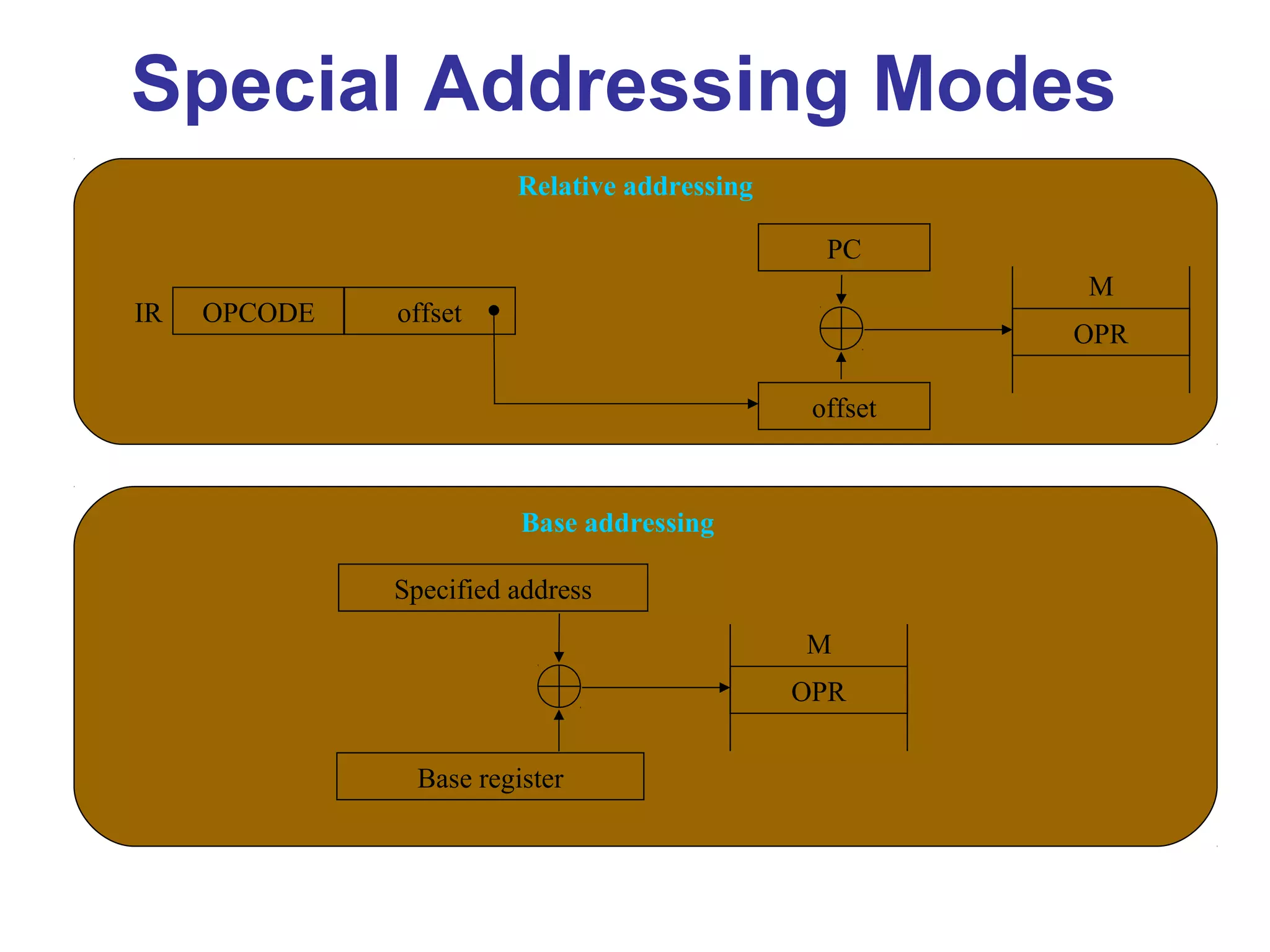
 Relative addressing
 Base addressing
 Page addressing
 Indirect addressing
Special Addressing Modes
OPCODE offset
PC
offset
OPR
M
IR
Relative addressing
Specified address
Base register
OPR
M
Base addressing
Special Addressing Modes
Page EA OPR
M
Page addressing
Page register
ADDR
OPR
M
EA
Indirect addressing
Special Addressing Modes
Page EA OPR
M
Page addressing
Page register
ADDR
OPR
M
EA
Indirect addressing

Addressing modes

  • 1.
  • 2.
    In order toaccess the memory, an address must be provided.The manner in which the address is specified in an instruction is called the addressing mode. Addressing modes can be categorized into:  Basic addressing modes  Special addressing modes Addressing Modes
  • 3.
    Basic Addressing Modes Mostcomputer systems use a number of basic addressing modes to obtain operands from memory; many high performance processors include additional addressing modes consistent with the design philosophies of the processor. Basic addressing modes include:  Implied addressing  Immediate addressing  Register Addressing  Direct Addressing  Register indirect addressing  Implied register indirect addressing  Indexed addressing
  • 4.
    OPR OPCODE MPC MDR IR Immediate addressing (microcomputers) BasicAddressing Modes OPCODE OPR OPCODE OPR PC Immediate addressing (large computers) IR IR OPR Implied addressing (implied)
  • 5.
    Basic Addressing Modes Reg.#2IR Reg.# 2 (OPR) Reg.# 1 Reg.# 3 Reg.# 4 Register addressing OPCODE ADDR OPR M PC Direct addressing (large computers) OPCODE ADDR OPR M MAR PC Direct addressing (microcomputers)
  • 6.
    Basic Addressing Modes Reg.# 1 Reg. # 2 Reg. # 3 OPR M OPCODE Reg. #2IR Register indirect addressing Reg. # 2 OPR M OPCODEIR (implied) Implied register indirect addressing OPCODE Reg. # 2 Index Reg. # 3 Reg. # 2 Reg. # 2 OPR M IR Indexed addressing
  • 7.
    Special Addressing Modes Manyprocessors have additional or special addressing modes that facilitate ease implementing language constructs and primitives often used in operating systems and other systems programming environments. Special addressing modes include:  Relative addressing  Base addressing  Page addressing  Indirect addressing
  • 8.
    Special Addressing Modes OPCODEoffset PC offset OPR M IR Relative addressing Specified address Base register OPR M Base addressing
  • 9.
    Special Addressing Modes PageEA OPR M Page addressing Page register ADDR OPR M EA Indirect addressing
  • 10.
    Special Addressing Modes PageEA OPR M Page addressing Page register ADDR OPR M EA Indirect addressing