COMPUTER ARCHITECTURE
Addressing Modes
ADDRESSING MODES
 The addressing mode specifies a rule for
interpreting or modifying the address field of the
instruction before the operand is actually
referenced. Computers use addressing mode
techniques for the purpose of accommodating one
or both of the following provisions:
1.To give programming versatility to the user
by providing such facilities as pointers to memory,
counters for loop control, indexing of data, and
program relocation.
2.To reduce the number of bits in the
addressing field of the instruction
TYPES OF ADDRESSING MODES
 Implied Mode: In this mode the operands are
specified implicitly in the definition of the instruction.
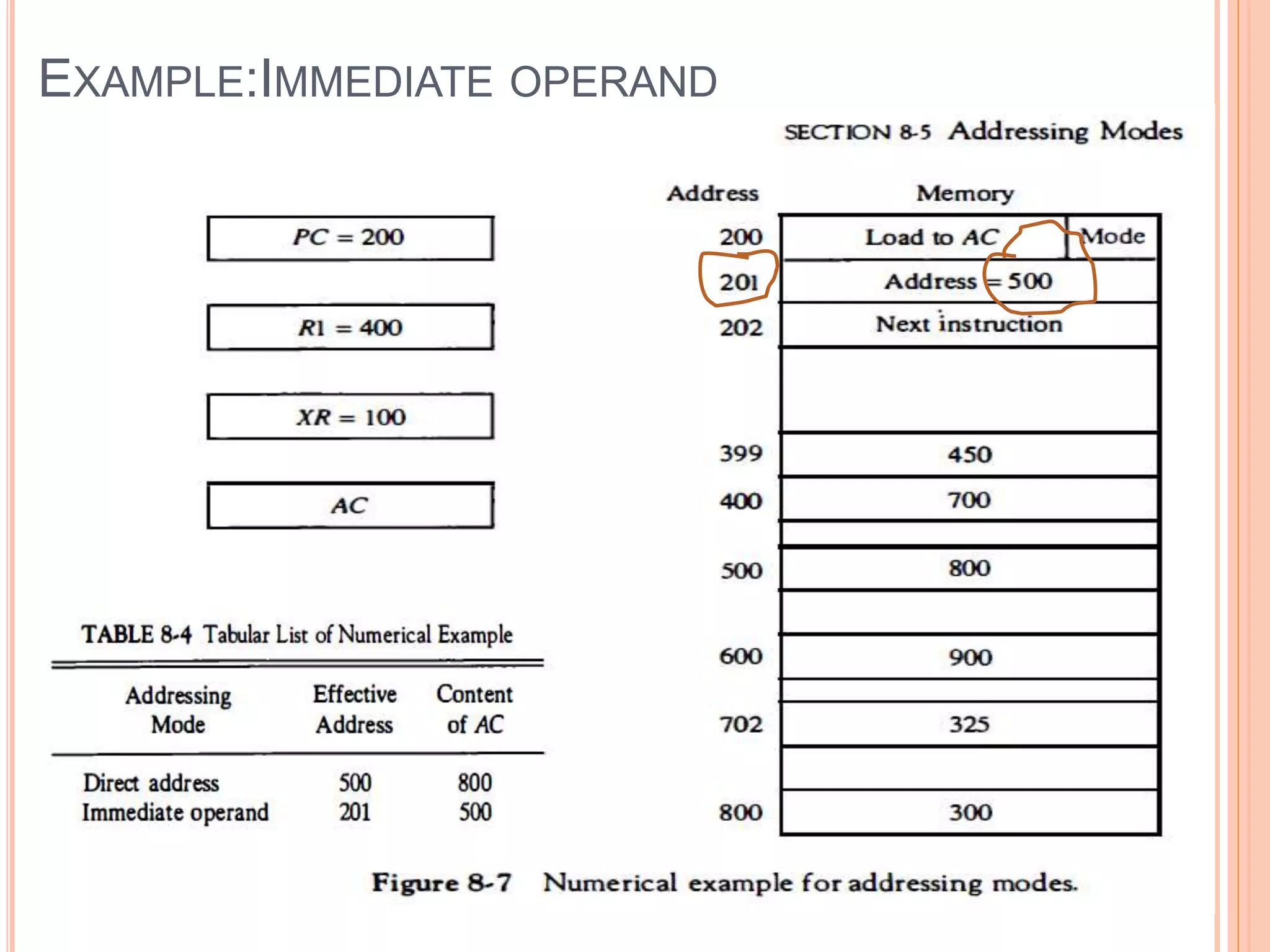
 Immediate Mode: In this mode the operand is
specified in the instruction itself.
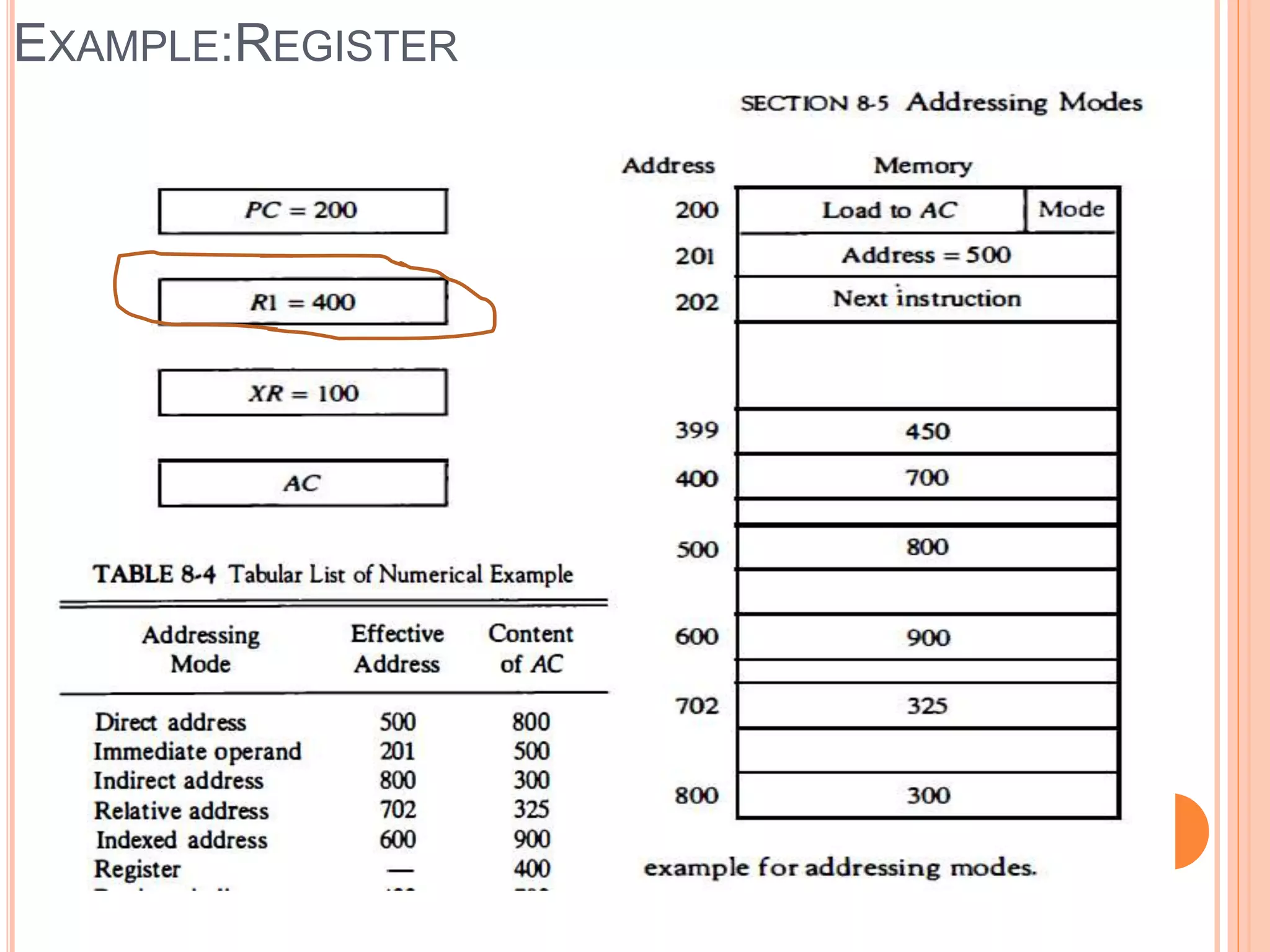
 Register Mode: In this mode the operands are in
registers that reside within the CPU.
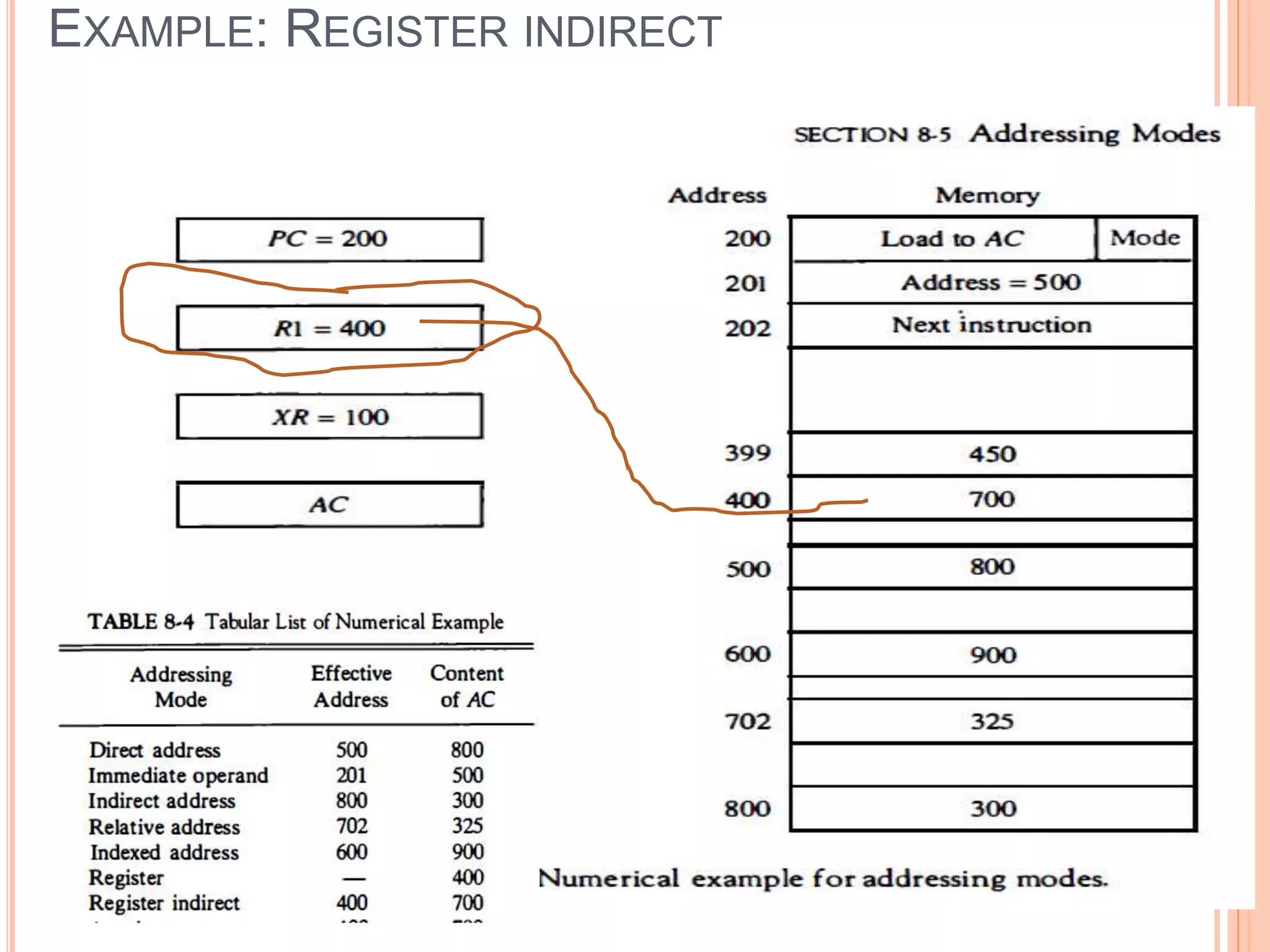
 Register Indirect Mode: In this mode the selected
register contains the address of the operand rather
than the operand itself.
CONTD..
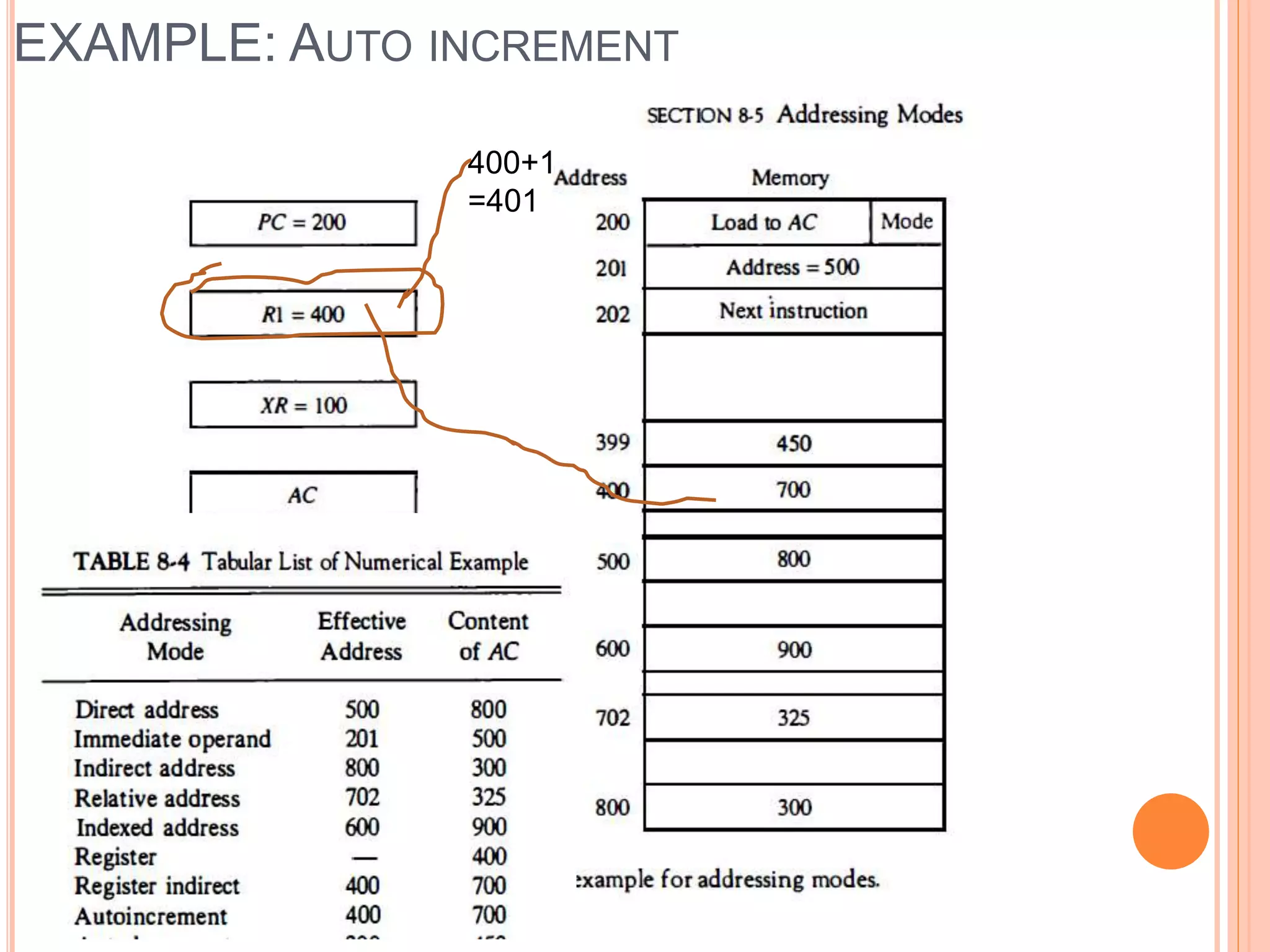
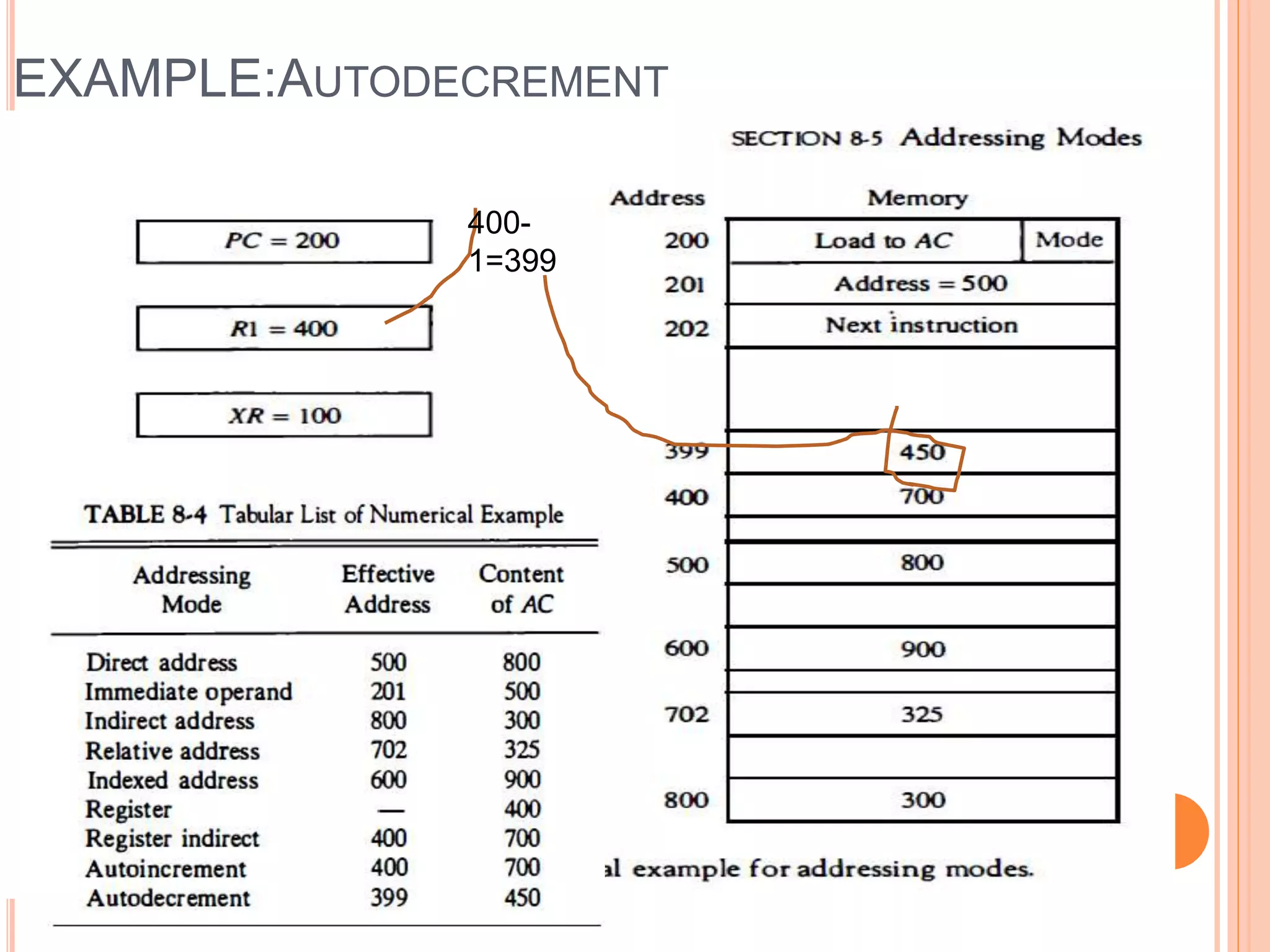
 Autoincrement or Autodecrement Mode: This is
similar to the register indirect mode except that the
register is incremented or decremented after (or
before) its value is used to access memory.
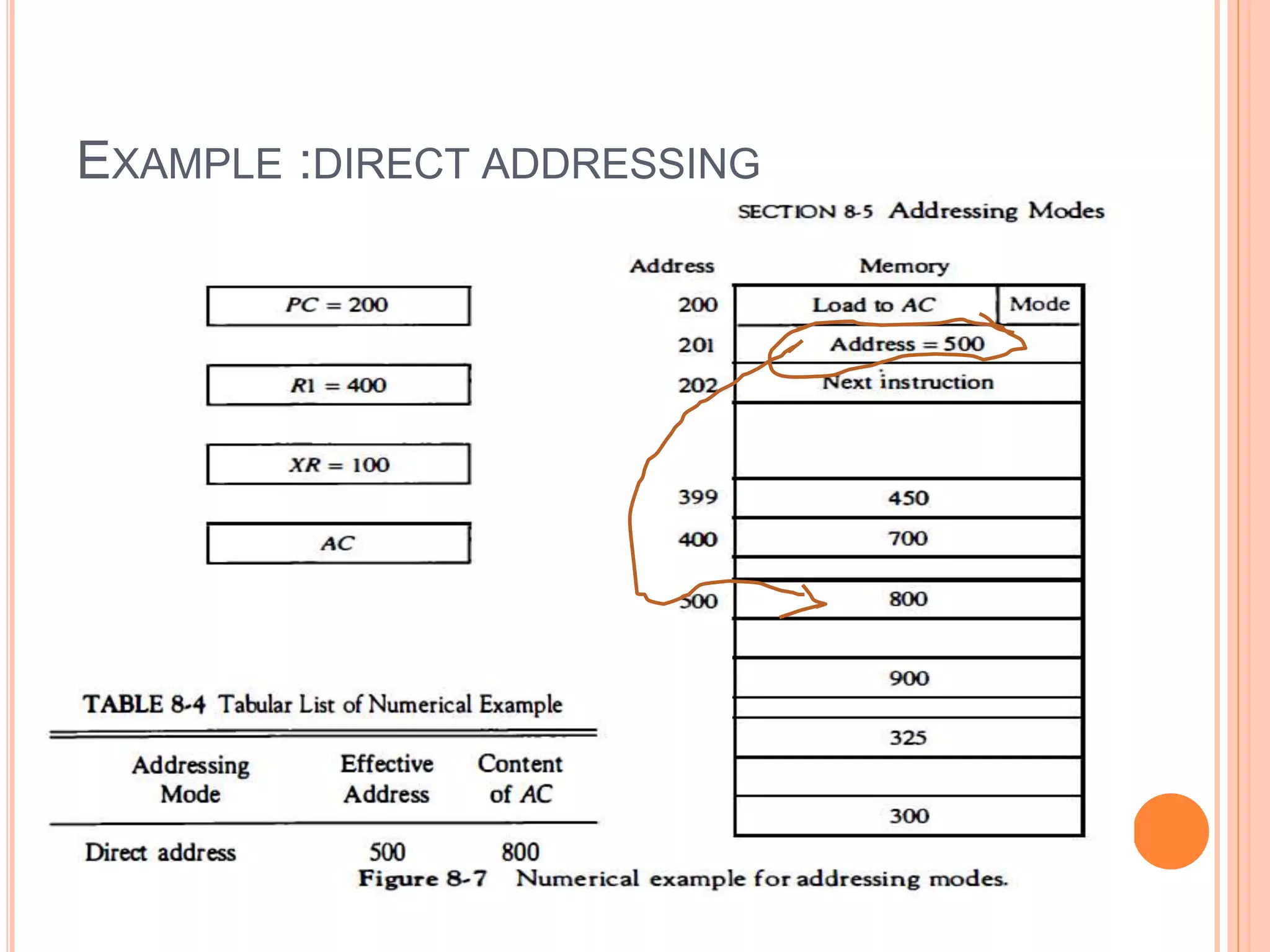
 Direct Address Mode:The operand resides in
memory and its address is given directly by the
address field of the instruction.
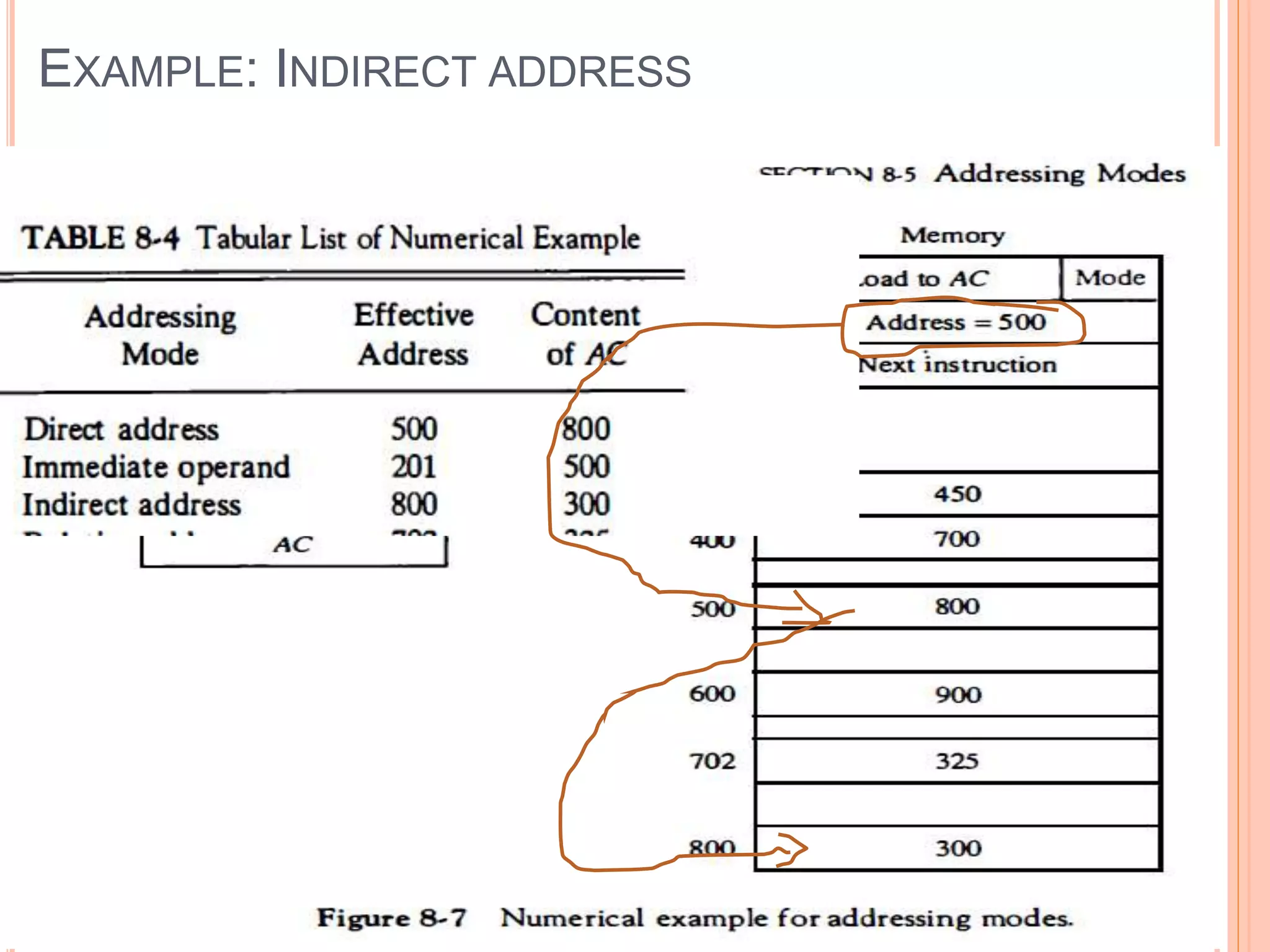
 Indirect Address Mode: In this mode the address
field of the instruction gives the address where the
effective address is stored in memory.
CONTD…
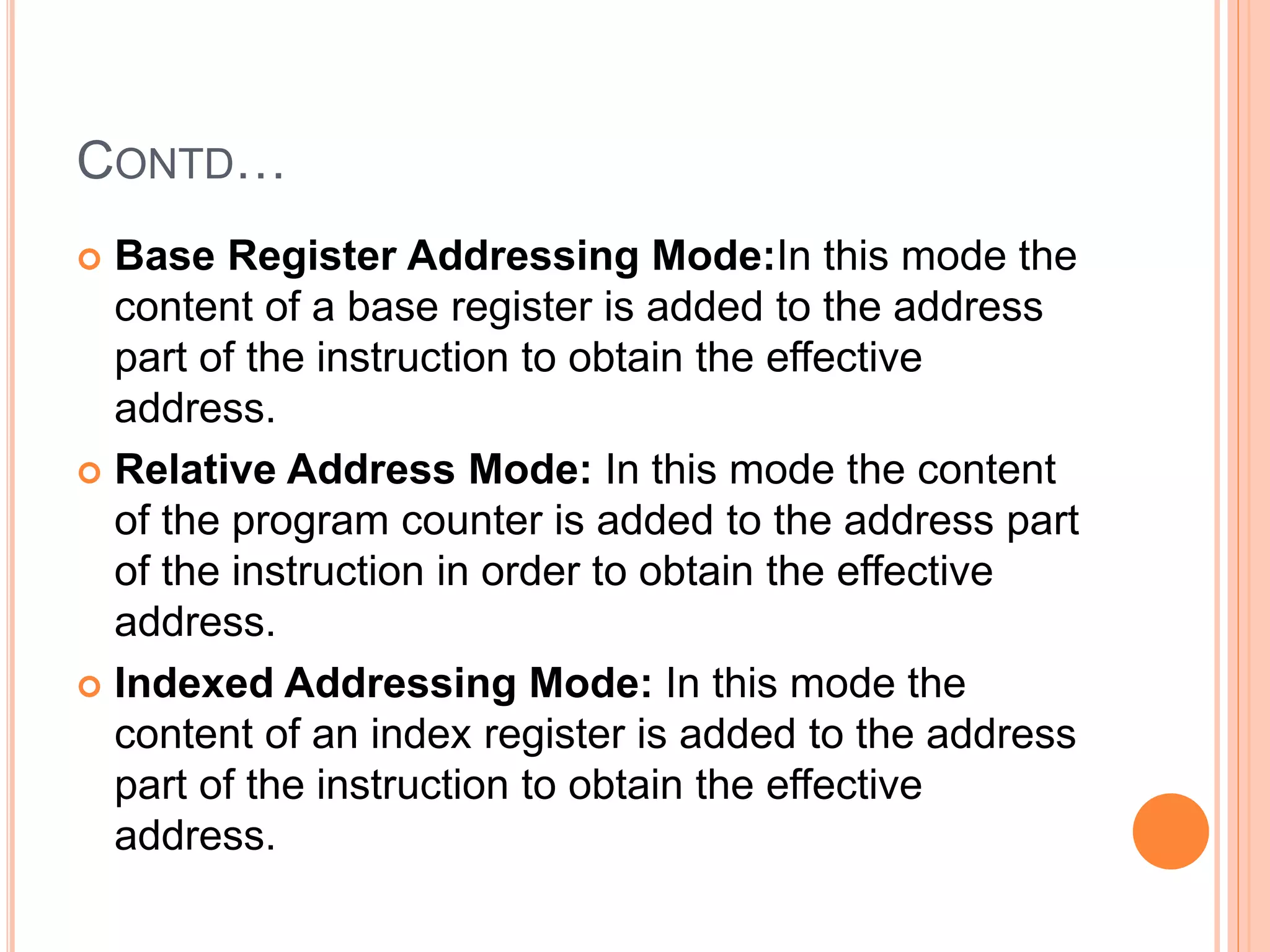
 Base Register Addressing Mode:In this mode the
content of a base register is added to the address
part of the instruction to obtain the effective
address.
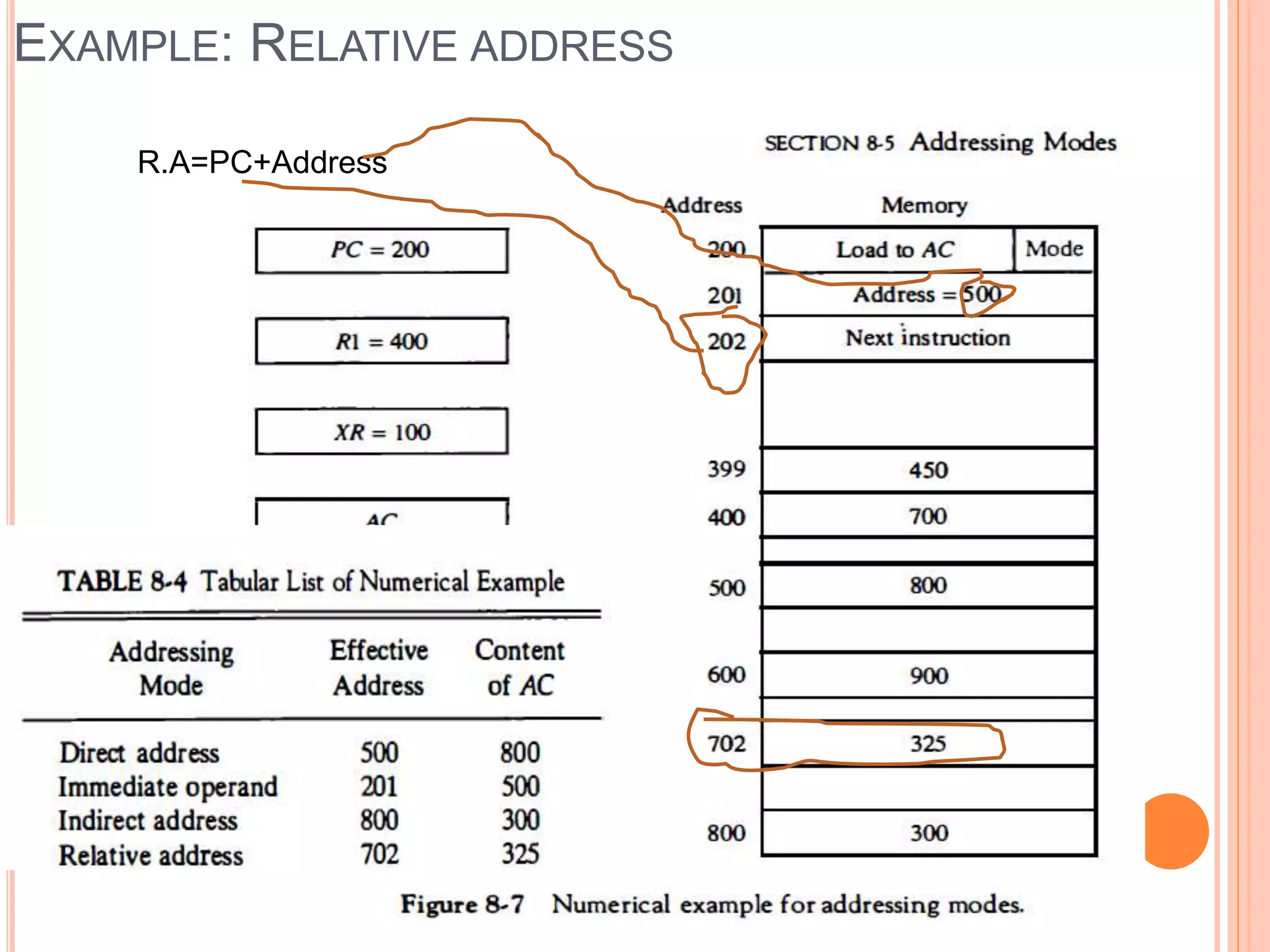
 Relative Address Mode: In this mode the content
of the program counter is added to the address part
of the instruction in order to obtain the effective
address.
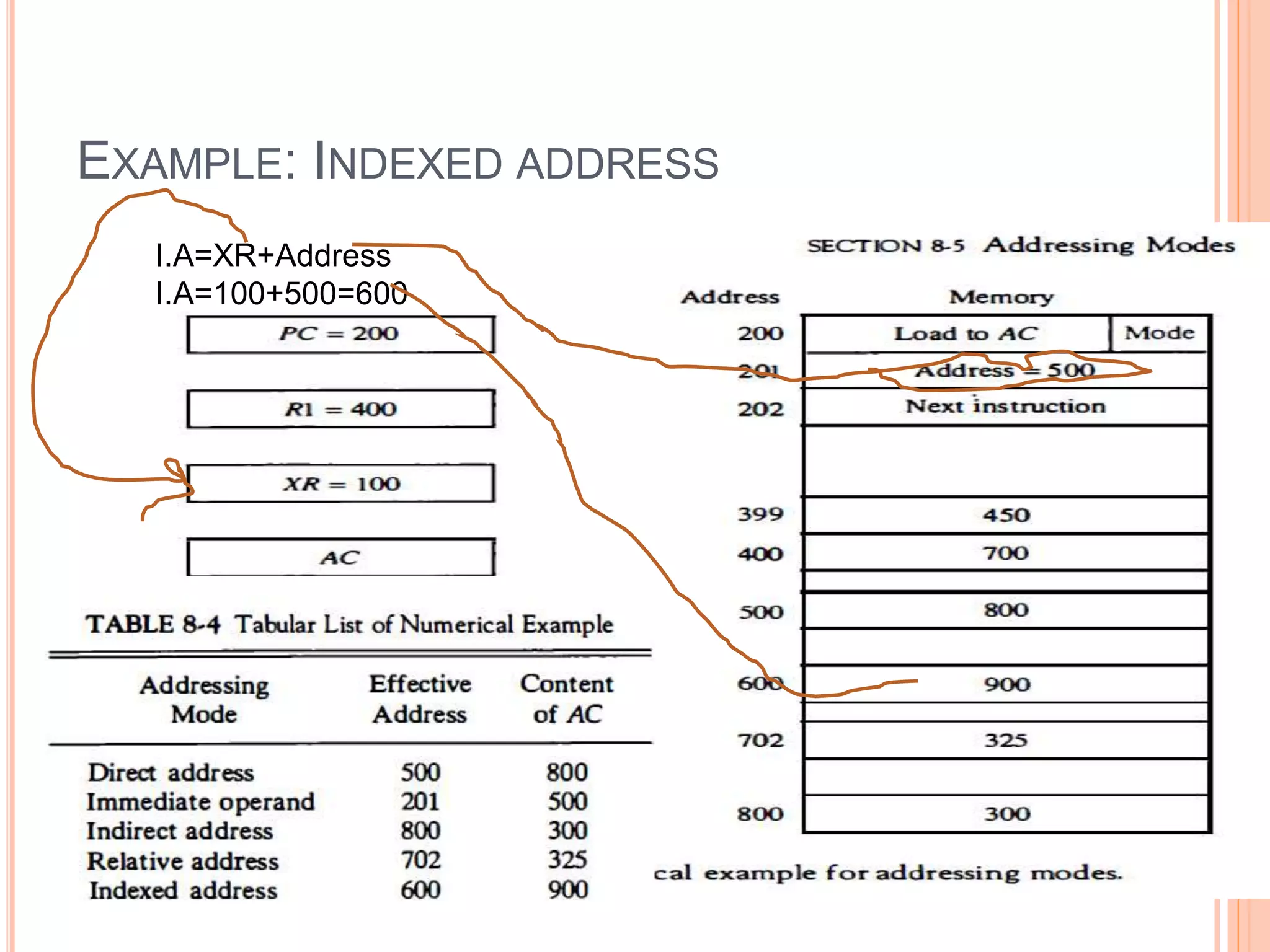
 Indexed Addressing Mode: In this mode the
content of an index register is added to the address
part of the instruction to obtain the effective
address.
EXAMPLE :DIRECT ADDRESSING
EXAMPLE:IMMEDIATE OPERAND
EXAMPLE: INDIRECT ADDRESS
EXAMPLE: RELATIVE ADDRESS
R.A=PC+Address
EXAMPLE: INDEXED ADDRESS
I.A=XR+Address
I.A=100+500=600
EXAMPLE:REGISTER
EXAMPLE: REGISTER INDIRECT
EXAMPLE: AUTO INCREMENT
400+1
=401
EXAMPLE:AUTODECREMENT
400-
1=399

Addressing modes

  • 1.
  • 2.
    ADDRESSING MODES  Theaddressing mode specifies a rule for interpreting or modifying the address field of the instruction before the operand is actually referenced. Computers use addressing mode techniques for the purpose of accommodating one or both of the following provisions: 1.To give programming versatility to the user by providing such facilities as pointers to memory, counters for loop control, indexing of data, and program relocation. 2.To reduce the number of bits in the addressing field of the instruction
  • 3.
    TYPES OF ADDRESSINGMODES  Implied Mode: In this mode the operands are specified implicitly in the definition of the instruction.  Immediate Mode: In this mode the operand is specified in the instruction itself.  Register Mode: In this mode the operands are in registers that reside within the CPU.  Register Indirect Mode: In this mode the selected register contains the address of the operand rather than the operand itself.
  • 4.
    CONTD..  Autoincrement orAutodecrement Mode: This is similar to the register indirect mode except that the register is incremented or decremented after (or before) its value is used to access memory.  Direct Address Mode:The operand resides in memory and its address is given directly by the address field of the instruction.  Indirect Address Mode: In this mode the address field of the instruction gives the address where the effective address is stored in memory.
  • 5.
    CONTD…  Base RegisterAddressing Mode:In this mode the content of a base register is added to the address part of the instruction to obtain the effective address.  Relative Address Mode: In this mode the content of the program counter is added to the address part of the instruction in order to obtain the effective address.  Indexed Addressing Mode: In this mode the content of an index register is added to the address part of the instruction to obtain the effective address.
  • 6.
  • 7.
  • 8.
  • 9.
  • 10.
  • 11.
  • 12.
  • 13.
  • 14.