Achieving
beneficial
backwash
Ana Julia Egas
21/03/2017
outline
 Introduction
 Basic Practical Advice:
 Test the abilities whose development you want to
encourage
 Sample widely and unpredictably
 Use direct testing
 Make testing criterion-referenced
 Base achievement tests on objectives
 Ensure the test is known and understood by students
and teachers
 Where necessary, provide assistance to teachers
 Counting the cost
 Cambridge English: Proficiency (CPE)
 Sources
Introduction
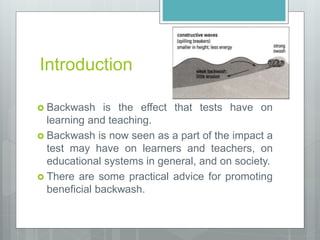
 Backwash is the effect that tests have on
learning and teaching.
 Backwash is now seen as a part of the impact a
test may have on learners and teachers, on
educational systems in general, and on society.
 There are some practical advice for promoting
beneficial backwash.
Test the abilities whose
development you want to
encourage
 There is a tendency to test what is easiest to test
rather than what is most important.
 Certain abilities should be tested and given
sufficient ways in relation to others.
Have you ever been given a test
that had something that were not
prepared for?
Sample widely and unpredictably
 It is important that a sample
taken should represent as far
as possible the full scope of
what is specified.
 Whenever the content of a
test becomes highly
predictable, teaching and
learning are likely to
concentrate on what can be
predicted.
Have you ever seen a test that is
not representative nor
predictable?
Use direct testing
 Direct testing implies the testing of the performance
skills, with texts and tasks as authentic as possible.
 If we test directly the skills that we are interested in
fostering, then practice for the test represents
practice in those skills.
 When we begin to test indirectly, we are removing
an incentive for students to practice they way that
we want them to.
Have you ever been tested on
something that you didn’t
pracitice for during class?
Make testing criterion-referenced
 If tests specifications make clear just what
candidates have to be able to do, an with what
degree of success, then students will have a clear
picture of what they have to achieve.
 The possibility exists of having a series of
criterion-references tests, each representing a
different level of achievement or proficiency.
 Criterion-based tests are useful for indicating how a
group of learners are progressing as they compare
candidates against a standard, rather than each
other.
Which criterion-referenced tests
do you know?
Base achievement tests on
objectives
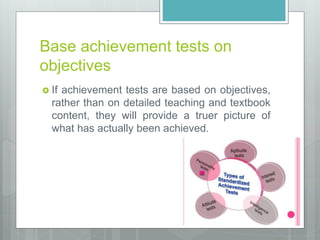
 If achievement tests are based on objectives,
rather than on detailed teaching and textbook
content, they will provide a truer picture of
what has actually been achieved.
What achievement tests have
you taken? Were they based on
objectives?
Ensure the test is known and
understood by students and
teachers
 The positive effect will not be fully
realized if students and those
responsible for teaching do not know
and understand what the test
demands of them (rationale of the
test, its specifications and sample
items).
 This is necessary
 When a new test is being introduced
(novel testing methods)
 To increase test reliability
Have you ever been given a test
that you didn’t understand? Do
you know of a test like this?
Where necessary, provide
assistance to teachers
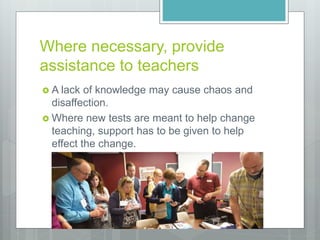
 A lack of knowledge may cause chaos and
disaffection.
 Where new tests are meant to help change
teaching, support has to be given to help
effect the change.
What kind of teacher assistance
programs have you heard of?
Counting the cost
 Aside from reliability and validity we should
consider practicality.
 It is good that a test should be easy and cheap to
construct, administer, score and interpret.
 Validity and reliability should not be sacrificed for
the sake of practicality.
 Instead of lowering standards, concerned
authorities should pre-plan about reasonable
construction and administration of a valid and
reliable test.
What do you think about this
issue? What do you know about
it?
Cambridge English: Proficiency
(CPE)
 General information
 http://www.cambridgeenglish.org/exams/proficiency/
 Exam Format
 http://www.cambridgeenglish.org/exams/proficiency/exam-
format/
 Exam Preparation
 http://www.cambridgeenglish.org/exams/proficiency/preparatio
n/
 Sample of Exam Results
 http://www.cambridgeenglish.org/images/183470-cambridge-
english-proficiency-sample-statement-of-results.pdf
Sources
 Images:
 Slide 1: www.123rf.com, photo.accuweather.com
 Slide 2: www.outlineproductions.co.uk
 Slide 3: www.bcre.org.za
 Slide 4: www.unitedcollegelondon.co.uk,tressays.wordpress.com
 Slide 5: www.teachingchannel.org
 Slide 6: wheaton.com
 Slide 7: tophdimgs.com
 Slide 8: languagetesting.info
 Slide 9: www.linkedin.com
 Slide 10: www.123rf.com
 Slide 11: awakenedlearning.com
 Slide 12: www.slideshare.net
 Slide 13: tecnologia.hola.com
 Slide 14: www.testinteligencia.net
 Slide 15: es.ccm.net
 Slide 16: www.suny.edu
 Slide 17: www.opencolleges.edu.au
 Slide 18 thetowne.net, www.wix.com
 Slide 19: blog.banesco.com
 Slide 20:: idiomas.pucp.edu.pe
 Slide 21: stevekrivda.com
 Information:
 http://www.cambridgeenglish.org/exams/proficiency/
 https://www.teachingenglish.org.uk/article/criterion-referenced-test
 https://www.ccaurora.edu/getting-started/testing/direct-indirect
 http://ebooks.cambridge.org/chapter.jsf?bid=CBO9780511732980&cid=CBO9780511732980A012
 http://sunnyenglishliterature.blogspot.com/2012/09/achieving-beneficial-backwash.html
 Extra information:
 Full Play To The Positive Backwash Effect English Language Essay
 http://www.ukessays.com/essays/english-language/full-play-to-the-positive-backwash-effect-english-language-
essay.php#ixzz43VG7Dnkl
 Manual for Language Test Development and Examining
 http://www.coe.int/t/dg4/linguistic/ManualLanguageTest-Alte2011_EN.pdf

Achieving beneficial blackwash

  • 1.
  • 2.
    outline  Introduction  BasicPractical Advice:  Test the abilities whose development you want to encourage  Sample widely and unpredictably  Use direct testing  Make testing criterion-referenced  Base achievement tests on objectives  Ensure the test is known and understood by students and teachers  Where necessary, provide assistance to teachers  Counting the cost  Cambridge English: Proficiency (CPE)  Sources
  • 3.
    Introduction  Backwash isthe effect that tests have on learning and teaching.  Backwash is now seen as a part of the impact a test may have on learners and teachers, on educational systems in general, and on society.  There are some practical advice for promoting beneficial backwash.
  • 4.
    Test the abilitieswhose development you want to encourage  There is a tendency to test what is easiest to test rather than what is most important.  Certain abilities should be tested and given sufficient ways in relation to others.
  • 5.
    Have you everbeen given a test that had something that were not prepared for?
  • 6.
    Sample widely andunpredictably  It is important that a sample taken should represent as far as possible the full scope of what is specified.  Whenever the content of a test becomes highly predictable, teaching and learning are likely to concentrate on what can be predicted.
  • 7.
    Have you everseen a test that is not representative nor predictable?
  • 8.
    Use direct testing Direct testing implies the testing of the performance skills, with texts and tasks as authentic as possible.  If we test directly the skills that we are interested in fostering, then practice for the test represents practice in those skills.  When we begin to test indirectly, we are removing an incentive for students to practice they way that we want them to.
  • 9.
    Have you everbeen tested on something that you didn’t pracitice for during class?
  • 10.
    Make testing criterion-referenced If tests specifications make clear just what candidates have to be able to do, an with what degree of success, then students will have a clear picture of what they have to achieve.  The possibility exists of having a series of criterion-references tests, each representing a different level of achievement or proficiency.  Criterion-based tests are useful for indicating how a group of learners are progressing as they compare candidates against a standard, rather than each other.
  • 11.
  • 12.
    Base achievement testson objectives  If achievement tests are based on objectives, rather than on detailed teaching and textbook content, they will provide a truer picture of what has actually been achieved.
  • 13.
    What achievement testshave you taken? Were they based on objectives?
  • 14.
    Ensure the testis known and understood by students and teachers  The positive effect will not be fully realized if students and those responsible for teaching do not know and understand what the test demands of them (rationale of the test, its specifications and sample items).  This is necessary  When a new test is being introduced (novel testing methods)  To increase test reliability
  • 15.
    Have you everbeen given a test that you didn’t understand? Do you know of a test like this?
  • 16.
    Where necessary, provide assistanceto teachers  A lack of knowledge may cause chaos and disaffection.  Where new tests are meant to help change teaching, support has to be given to help effect the change.
  • 17.
    What kind ofteacher assistance programs have you heard of?
  • 18.
    Counting the cost Aside from reliability and validity we should consider practicality.  It is good that a test should be easy and cheap to construct, administer, score and interpret.  Validity and reliability should not be sacrificed for the sake of practicality.  Instead of lowering standards, concerned authorities should pre-plan about reasonable construction and administration of a valid and reliable test.
  • 19.
    What do youthink about this issue? What do you know about it?
  • 20.
    Cambridge English: Proficiency (CPE) General information  http://www.cambridgeenglish.org/exams/proficiency/  Exam Format  http://www.cambridgeenglish.org/exams/proficiency/exam- format/  Exam Preparation  http://www.cambridgeenglish.org/exams/proficiency/preparatio n/  Sample of Exam Results  http://www.cambridgeenglish.org/images/183470-cambridge- english-proficiency-sample-statement-of-results.pdf
  • 21.
    Sources  Images:  Slide1: www.123rf.com, photo.accuweather.com  Slide 2: www.outlineproductions.co.uk  Slide 3: www.bcre.org.za  Slide 4: www.unitedcollegelondon.co.uk,tressays.wordpress.com  Slide 5: www.teachingchannel.org  Slide 6: wheaton.com  Slide 7: tophdimgs.com  Slide 8: languagetesting.info  Slide 9: www.linkedin.com  Slide 10: www.123rf.com  Slide 11: awakenedlearning.com  Slide 12: www.slideshare.net  Slide 13: tecnologia.hola.com  Slide 14: www.testinteligencia.net  Slide 15: es.ccm.net  Slide 16: www.suny.edu  Slide 17: www.opencolleges.edu.au  Slide 18 thetowne.net, www.wix.com  Slide 19: blog.banesco.com  Slide 20:: idiomas.pucp.edu.pe  Slide 21: stevekrivda.com  Information:  http://www.cambridgeenglish.org/exams/proficiency/  https://www.teachingenglish.org.uk/article/criterion-referenced-test  https://www.ccaurora.edu/getting-started/testing/direct-indirect  http://ebooks.cambridge.org/chapter.jsf?bid=CBO9780511732980&cid=CBO9780511732980A012  http://sunnyenglishliterature.blogspot.com/2012/09/achieving-beneficial-backwash.html  Extra information:  Full Play To The Positive Backwash Effect English Language Essay  http://www.ukessays.com/essays/english-language/full-play-to-the-positive-backwash-effect-english-language- essay.php#ixzz43VG7Dnkl  Manual for Language Test Development and Examining  http://www.coe.int/t/dg4/linguistic/ManualLanguageTest-Alte2011_EN.pdf