Download to read offline
- 1 / 26

- 2 / 26
- 3 / 26
- 4 / 26
 Most read
- 5 / 26
 Most read
- 6 / 26
- 7 / 26
- 8 / 26
- 9 / 26
- 10 / 26
- 11 / 26
- 12 / 26
- 13 / 26
- 14 / 26

- 15 / 26
 Most read
- 16 / 26
- 17 / 26
- 18 / 26
- 19 / 26
- 20 / 26
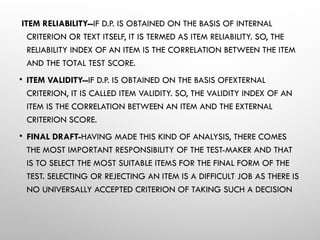
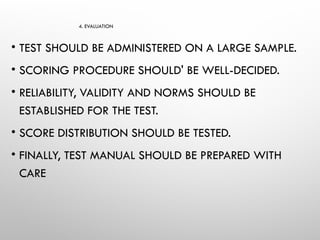
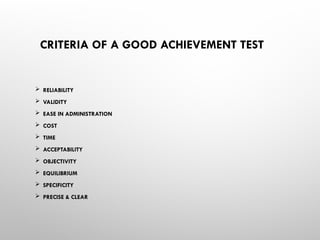
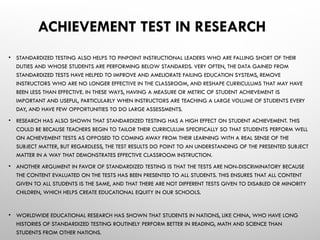
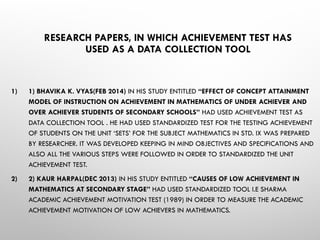
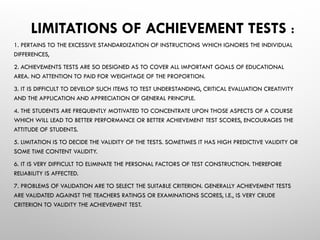


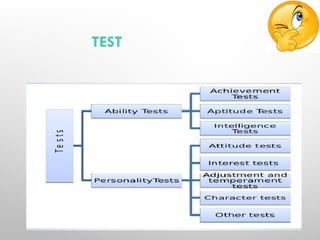
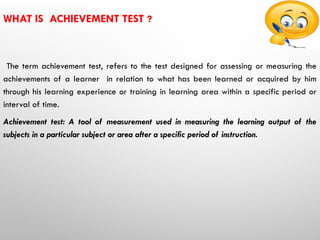
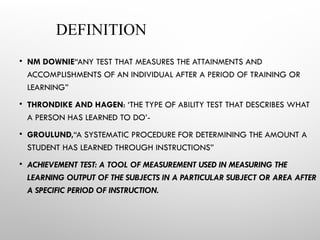
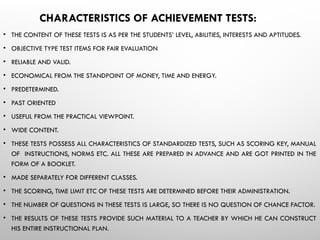
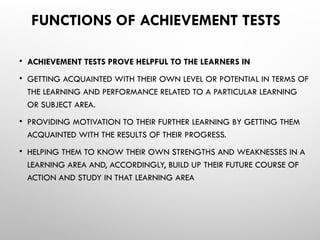
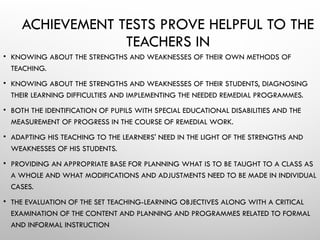
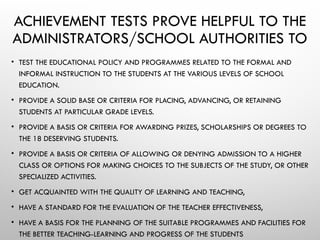
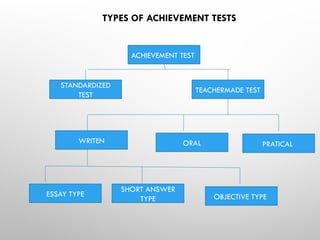
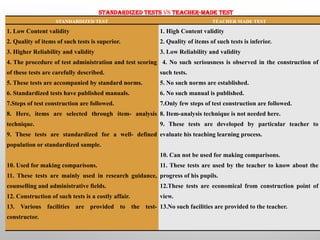
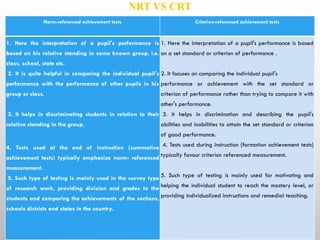
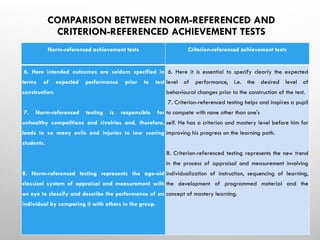
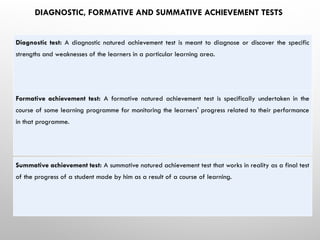
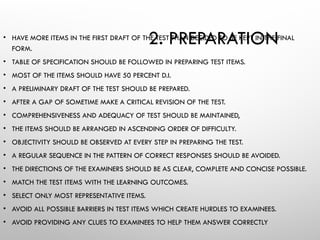
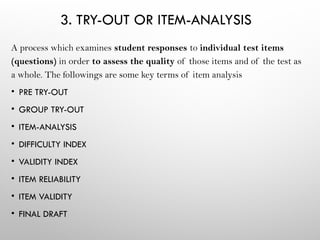
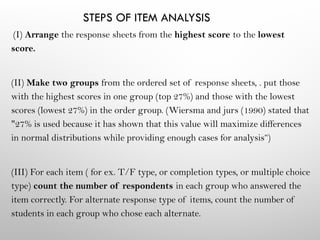
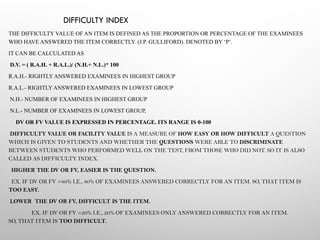
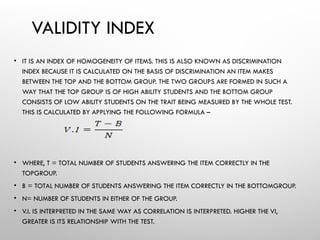
The document includes detailed description on achievement test, norm reference test vs criterion reference test, steps of test construction etc. The presentation explains the essential characteristics of achievement tests, such as reliability, validity, objectivity, practicality, and alignment with learner abilities and instructional objectives. It further elaborates on the functions of these tests for learners, teachers, and administrators—helping learners understand their progress and weaknesses, enabling teachers to evaluate their instructional strategies, and assisting administrators in policy decisions, student placement, and evaluation of institutional effectiveness. The document categorizes achievement tests into written, oral, and practical forms, and distinguishes between standardized and teacher-made tests, as well as norm-referenced and criterion-referenced tests, along with diagnostic, formative, and summative types. A significant portion is devoted to the systematic steps of test construction, including planning, preparing test items, conducting item analysis through indices like difficulty, discrimination, validity, and reliability, and finalizing the draft with established norms and manuals. The criteria of a good achievement test—clarity, objectivity, cost-effectiveness, and comprehensiveness—are outlined, followed by a discussion of research studies where achievement tests have been effectively used as tools of data collection. The presentation also acknowledges limitations, such as overemphasis on standardization, difficulty in measuring higher-order skills, reliance on rote learning, and challenges in ensuring validity and reliability. Broader implications of standardized testing in improving educational systems and influencing teaching practices are also discussed, while noting concerns about its narrowing effect on curriculum. Overall, the document offers a balanced account of the importance, construction, and challenges of achievement tests, presenting them as indispensable yet imperfect tools for evaluating educational outcomes.


