Access Control: Firewalls
Introduction 
Good Guys 
Bad Guys 
• There are two kind of people 
• For both of them there is a Single point 
entry/exit. 
• Protection is to be given to this entry/exit 
point. 
• This protection in the field of computer 
network is given by the “Firewall”.
What is Firewall?? 
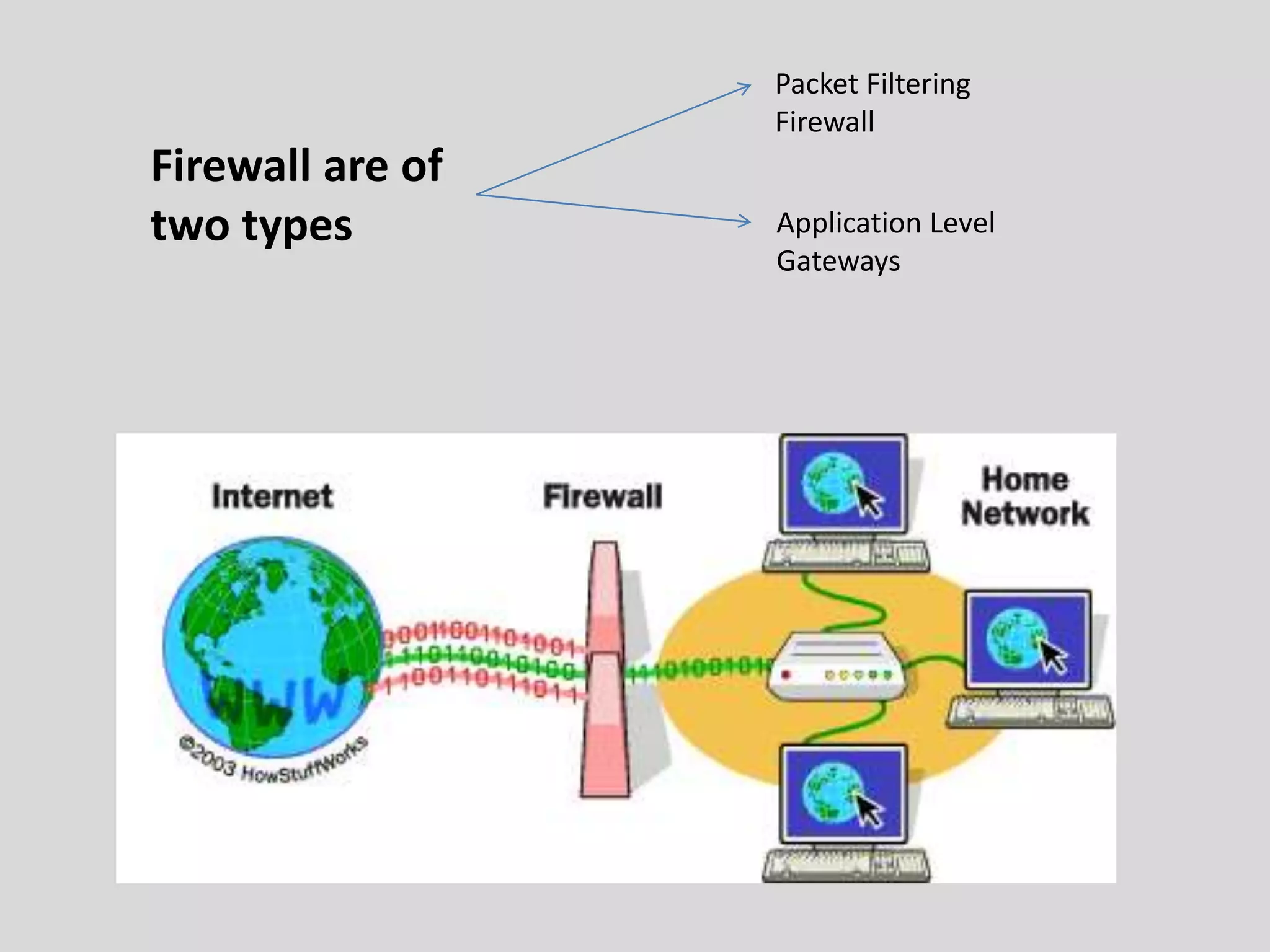
• In a computer network when the traffic 
entering/leaving a network is security 
checked, logged and/or forwarded it is done 
at a device called “Firewall”. 
• Hardware + Software(isolating the internal 
network from internet at large)=Firewall.
Firewall are of 
two types 
Packet Filtering 
Firewall 
Application Level 
Gateways
Packet Filtering 
Internal 
Network 
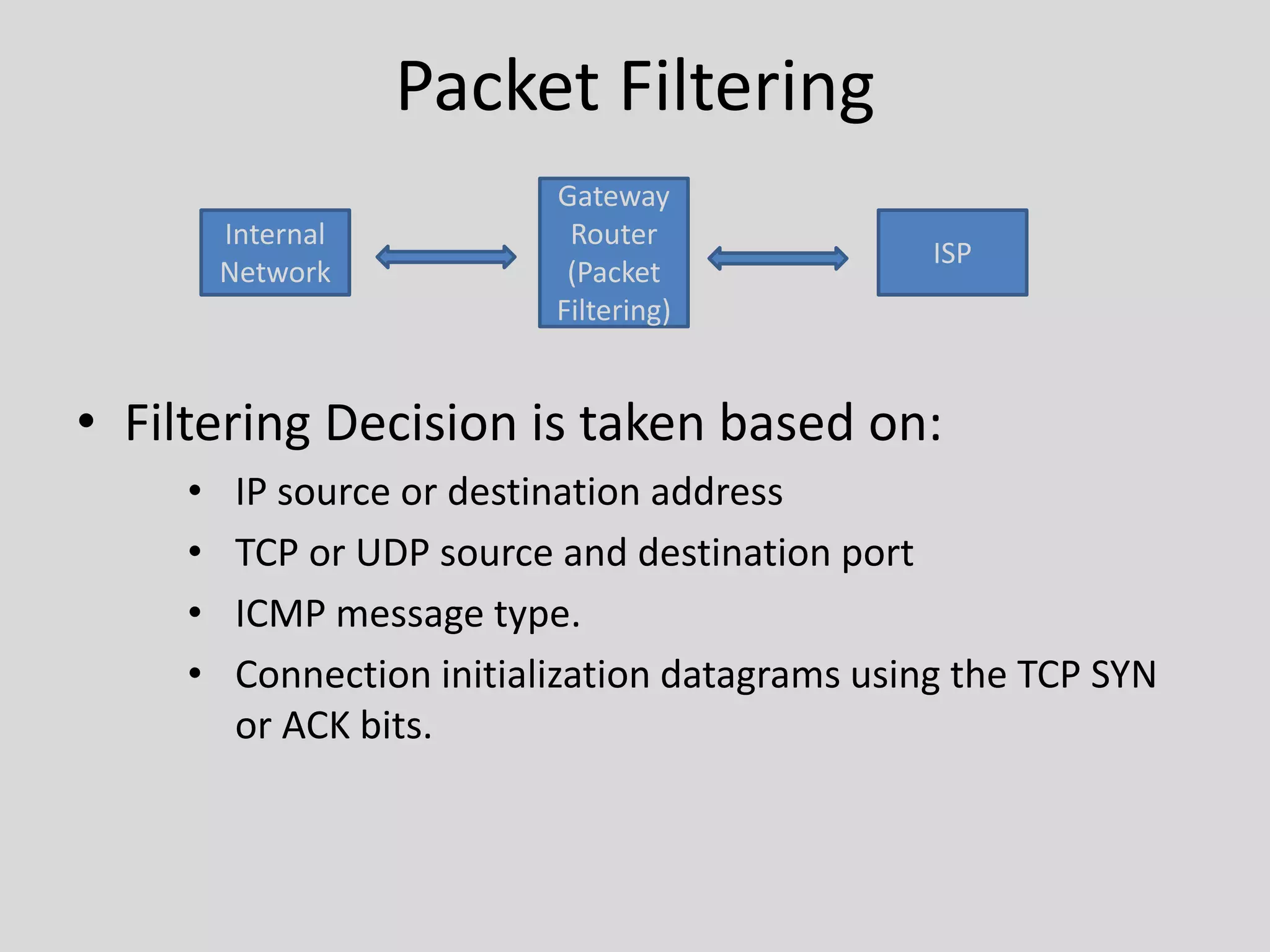
• Filtering Decision is taken based on: 
• IP source or destination address 
• TCP or UDP source and destination port 
• ICMP message type. 
• Connection initialization datagrams using the TCP SYN 
or ACK bits. 
Gateway 
Router 
(Packet 
Filtering) 
ISP
• Filter can block all UDP an Tel-net connections. 
• By this method no one can go out and no one can come 
in. This is the process called filtering UDP. The filtering 
Telnet is also popular as it prevents outsiders. 
• A filtering policy is based on the combination of 
addresses and port numbers. 
• Another filtering policy is based on whether or not to set 
the TCP ACK bit. This trick is quite useful if an 
organization wants too let its internal clients connect to 
external serves but to prevent external client form 
connecting to internal server. 
• These policy have pitfall which is described in the 
example of alice and bob in Pg. 720.
Application Gateway 
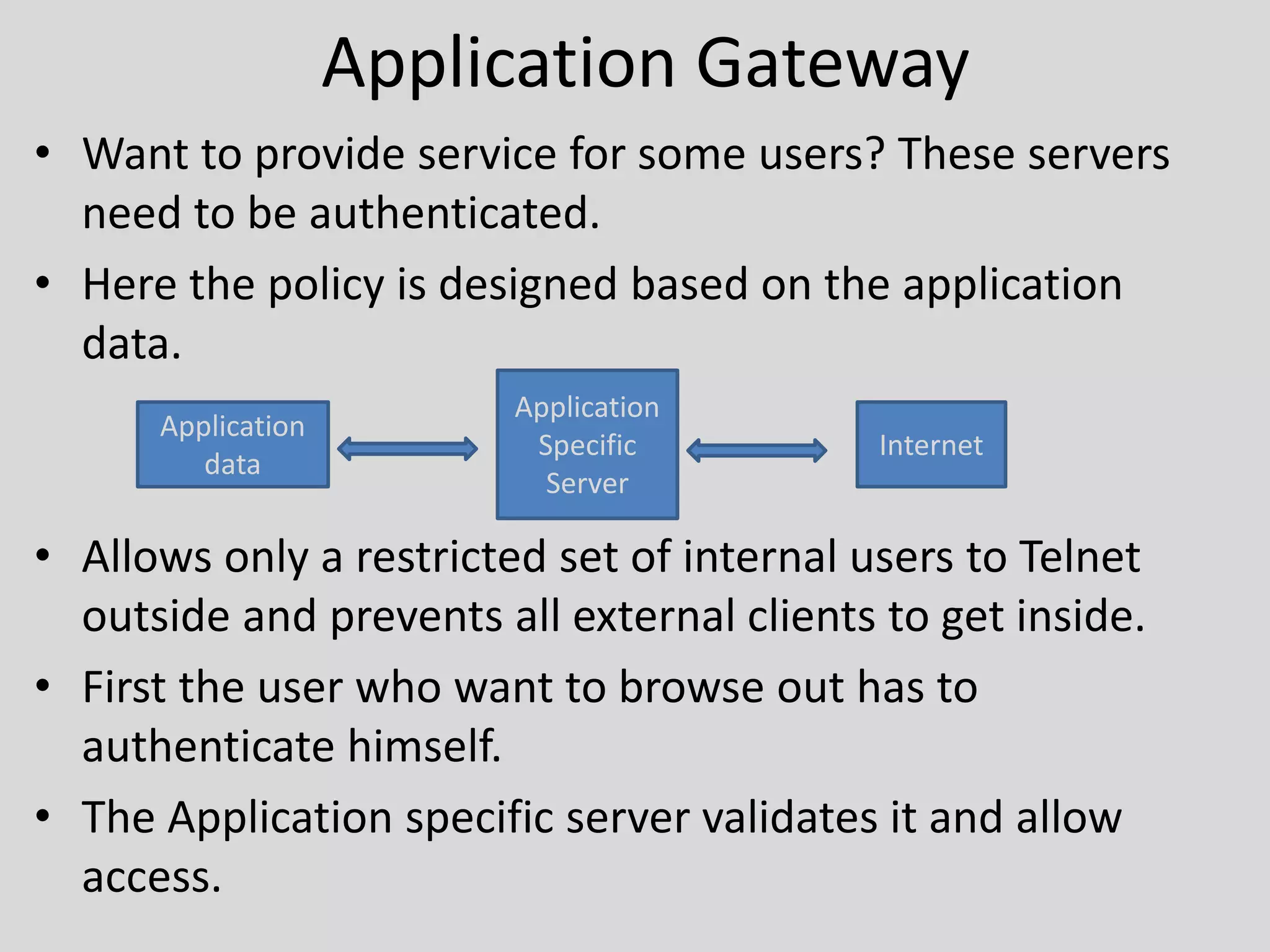
• Want to provide service for some users? These servers 
need to be authenticated. 
• Here the policy is designed based on the application 
data. 
Application 
data 
Application 
Specific 
Server 
Internet 
• Allows only a restricted set of internal users to Telnet 
outside and prevents all external clients to get inside. 
• First the user who want to browse out has to 
authenticate himself. 
• The Application specific server validates it and allow 
access.
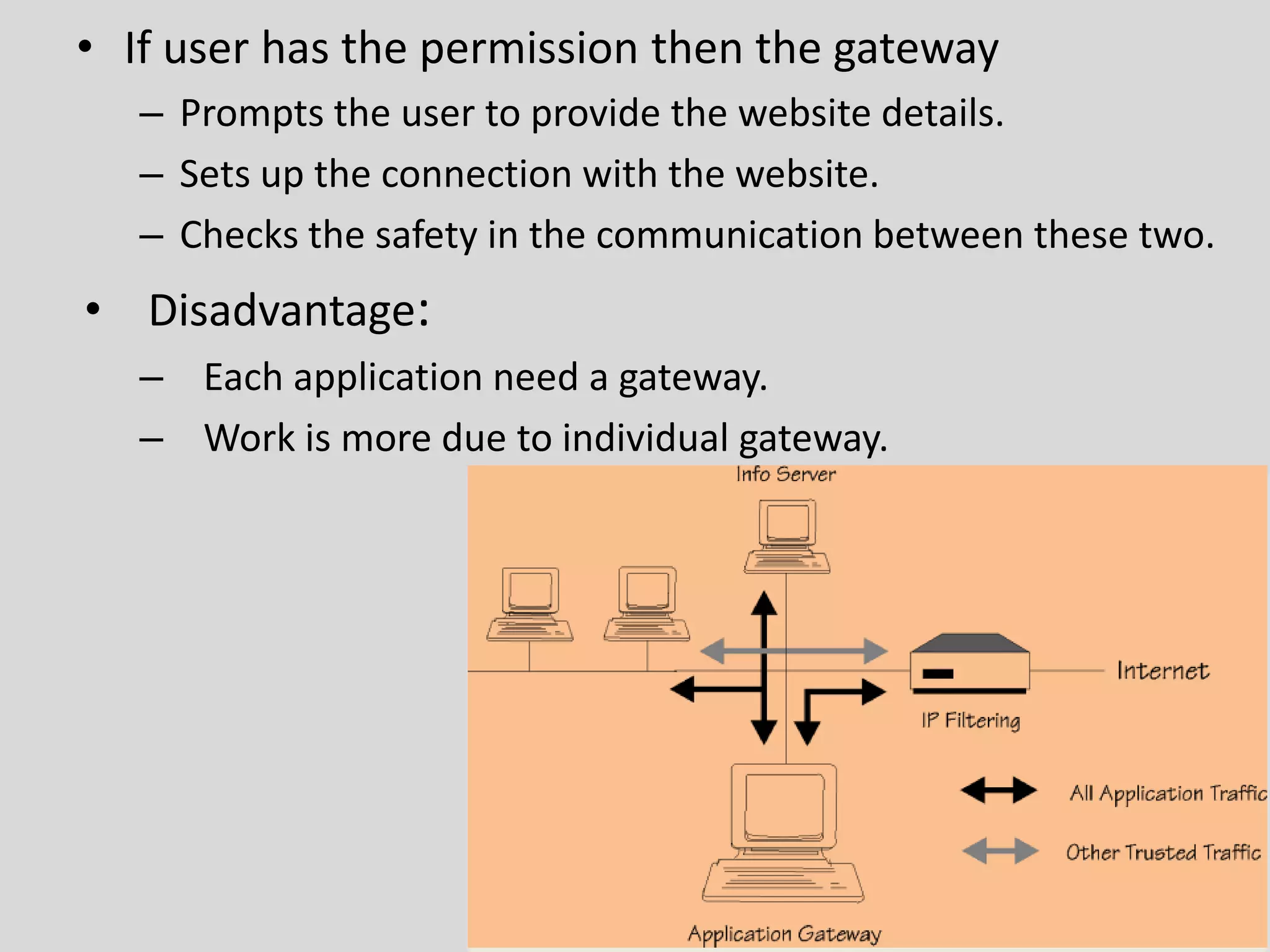
• If user has the permission then the gateway 
– Prompts the user to provide the website details. 
– Sets up the connection with the website. 
– Checks the safety in the communication between these two. 
• Disadvantage: 
– Each application need a gateway. 
– Work is more due to individual gateway.

Access Control Firewall

  • 1.
  • 2.
    Introduction Good Guys Bad Guys • There are two kind of people • For both of them there is a Single point entry/exit. • Protection is to be given to this entry/exit point. • This protection in the field of computer network is given by the “Firewall”.
  • 3.
    What is Firewall?? • In a computer network when the traffic entering/leaving a network is security checked, logged and/or forwarded it is done at a device called “Firewall”. • Hardware + Software(isolating the internal network from internet at large)=Firewall.
  • 4.
    Firewall are of two types Packet Filtering Firewall Application Level Gateways
  • 5.
    Packet Filtering Internal Network • Filtering Decision is taken based on: • IP source or destination address • TCP or UDP source and destination port • ICMP message type. • Connection initialization datagrams using the TCP SYN or ACK bits. Gateway Router (Packet Filtering) ISP
  • 6.
    • Filter canblock all UDP an Tel-net connections. • By this method no one can go out and no one can come in. This is the process called filtering UDP. The filtering Telnet is also popular as it prevents outsiders. • A filtering policy is based on the combination of addresses and port numbers. • Another filtering policy is based on whether or not to set the TCP ACK bit. This trick is quite useful if an organization wants too let its internal clients connect to external serves but to prevent external client form connecting to internal server. • These policy have pitfall which is described in the example of alice and bob in Pg. 720.
  • 7.
    Application Gateway •Want to provide service for some users? These servers need to be authenticated. • Here the policy is designed based on the application data. Application data Application Specific Server Internet • Allows only a restricted set of internal users to Telnet outside and prevents all external clients to get inside. • First the user who want to browse out has to authenticate himself. • The Application specific server validates it and allow access.
  • 8.
    • If userhas the permission then the gateway – Prompts the user to provide the website details. – Sets up the connection with the website. – Checks the safety in the communication between these two. • Disadvantage: – Each application need a gateway. – Work is more due to individual gateway.