Acute and chronic renal failure
Dr. S. Parasuraman
Faculty of Pharmacy,
AIMST.
Renal failure
• Renal failure is defined as a significant loss of renal function in
both kidneys to the point where less than 10 to 20% of
normal GFR remains.
• Renal failure may occur as an acute and rapidly progressing
process or may present as a chronic form in which there is a
progressive loss of renal function over a number of years.
• Acute renal failure has an abrupt onset and is potentially
reversible.

• Chronic failure progresses slowly over at least three months
and can lead to permanent renal failure.
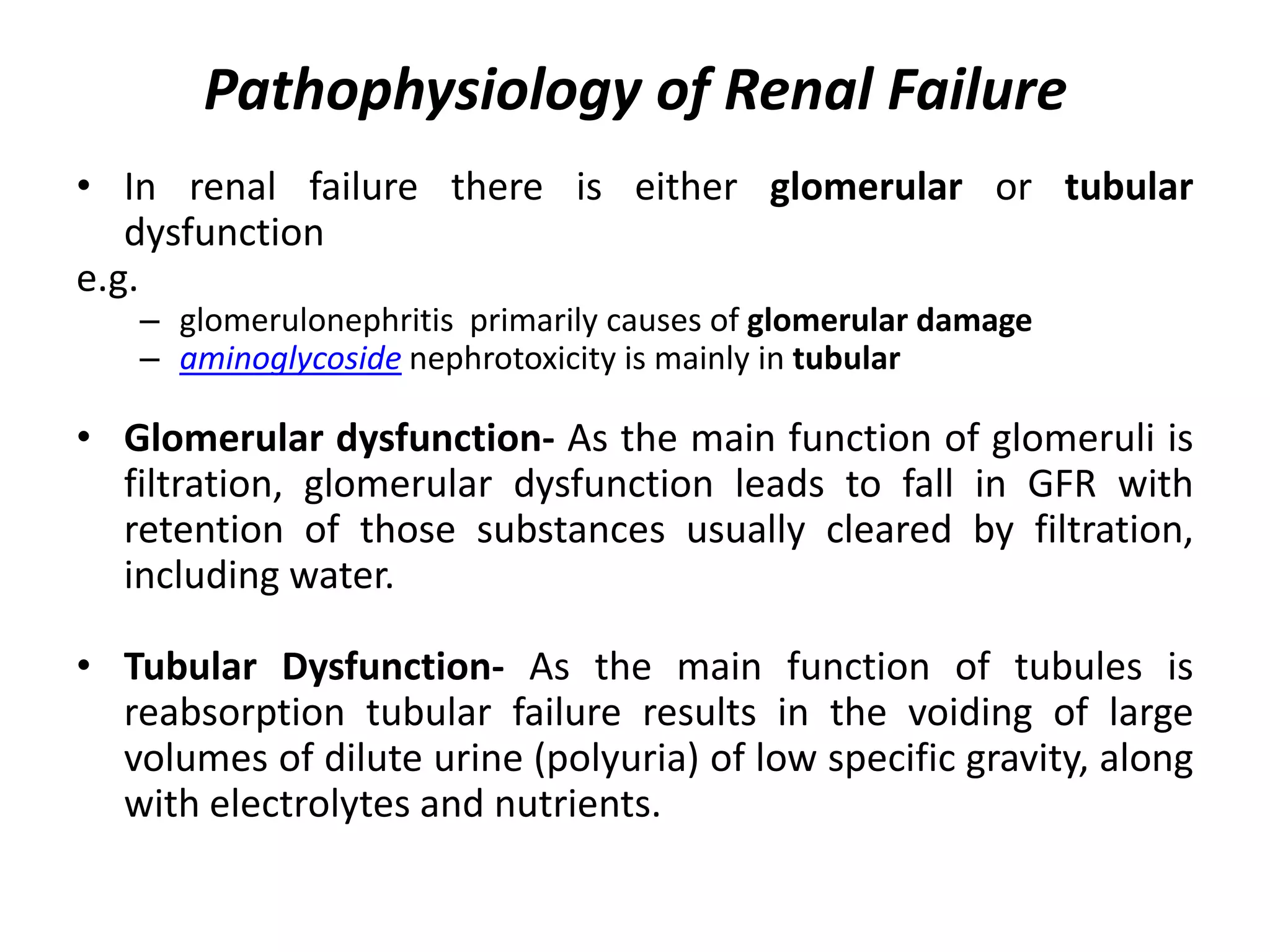
Pathophysiology of Renal Failure
• In renal failure there is either glomerular or tubular
dysfunction
e.g.
– glomerulonephritis primarily causes of glomerular damage
– aminoglycoside nephrotoxicity is mainly in tubular

• Glomerular dysfunction- As the main function of glomeruli is
filtration, glomerular dysfunction leads to fall in GFR with
retention of those substances usually cleared by filtration,
including water.
• Tubular Dysfunction- As the main function of tubules is
reabsorption tubular failure results in the voiding of large
volumes of dilute urine (polyuria) of low specific gravity, along
with electrolytes and nutrients.
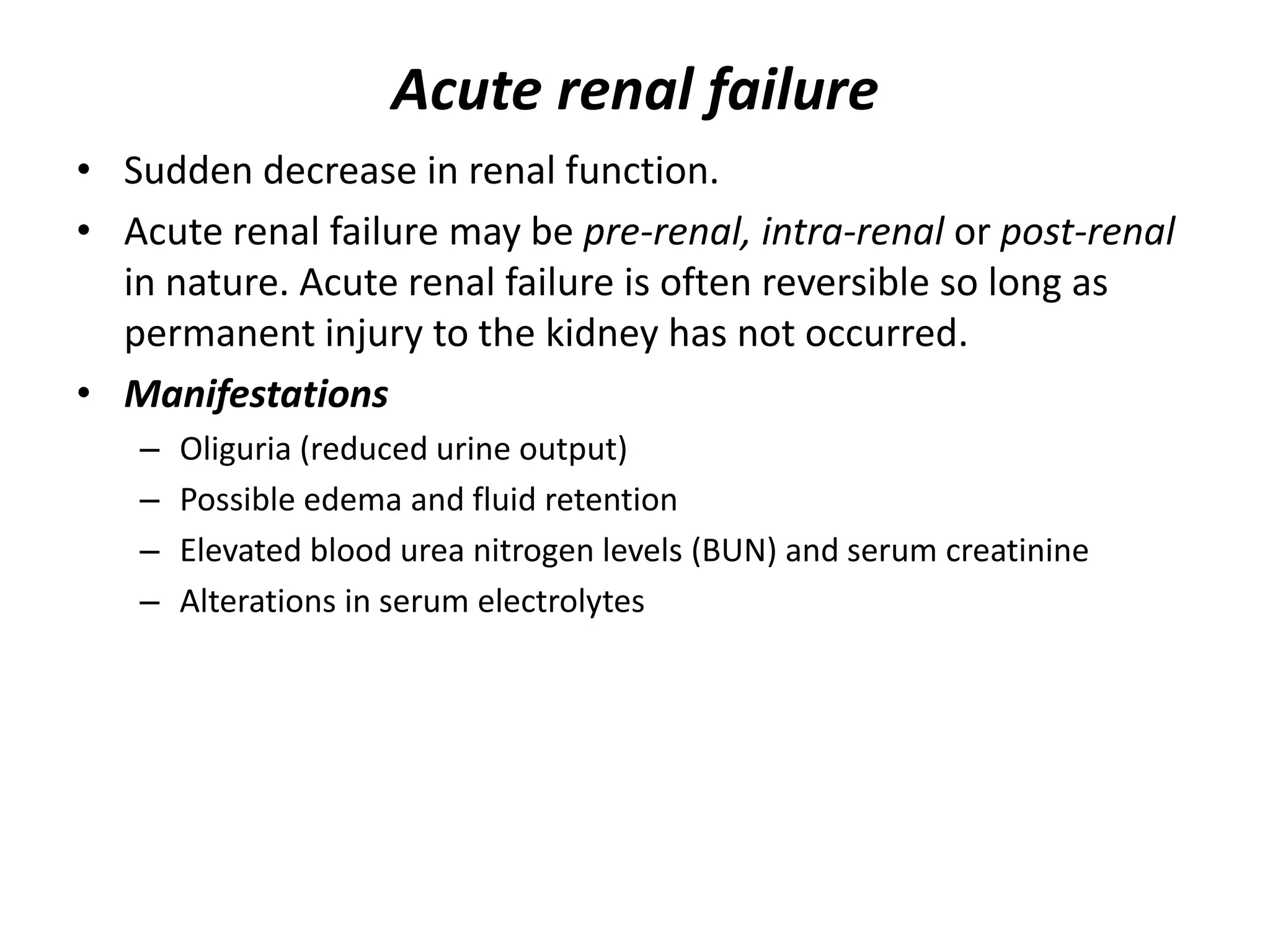
Acute renal failure
• Sudden decrease in renal function.
• Acute renal failure may be pre-renal, intra-renal or post-renal
in nature. Acute renal failure is often reversible so long as
permanent injury to the kidney has not occurred.
• Manifestations
–
–
–
–

Oliguria (reduced urine output)
Possible edema and fluid retention
Elevated blood urea nitrogen levels (BUN) and serum creatinine
Alterations in serum electrolytes
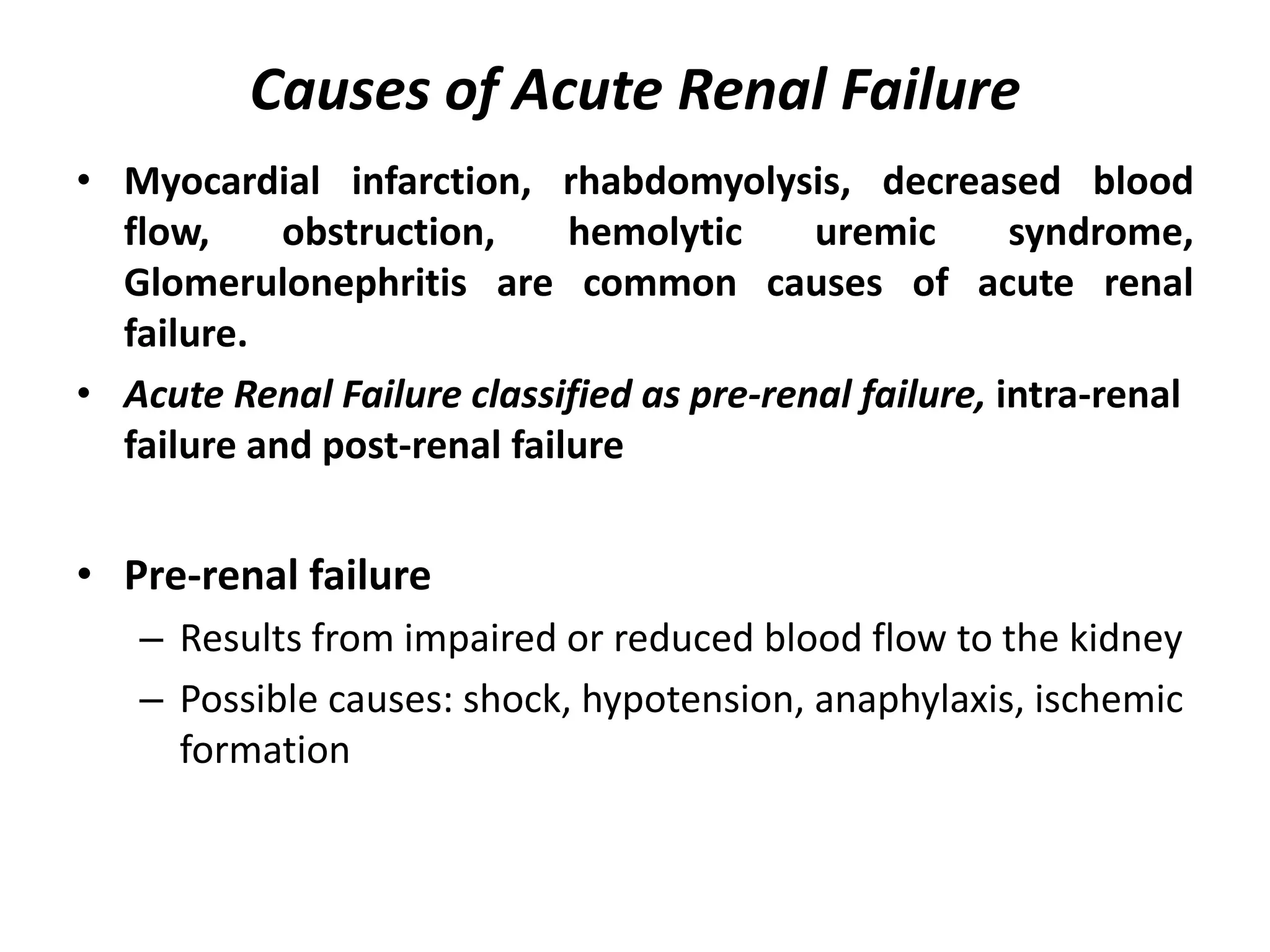
Causes of Acute Renal Failure
• Myocardial infarction, rhabdomyolysis, decreased blood
flow,
obstruction,
hemolytic
uremic
syndrome,
Glomerulonephritis are common causes of acute renal
failure.
• Acute Renal Failure classified as pre-renal failure, intra-renal
failure and post-renal failure

• Pre-renal failure
– Results from impaired or reduced blood flow to the kidney
– Possible causes: shock, hypotension, anaphylaxis, ischemic
formation
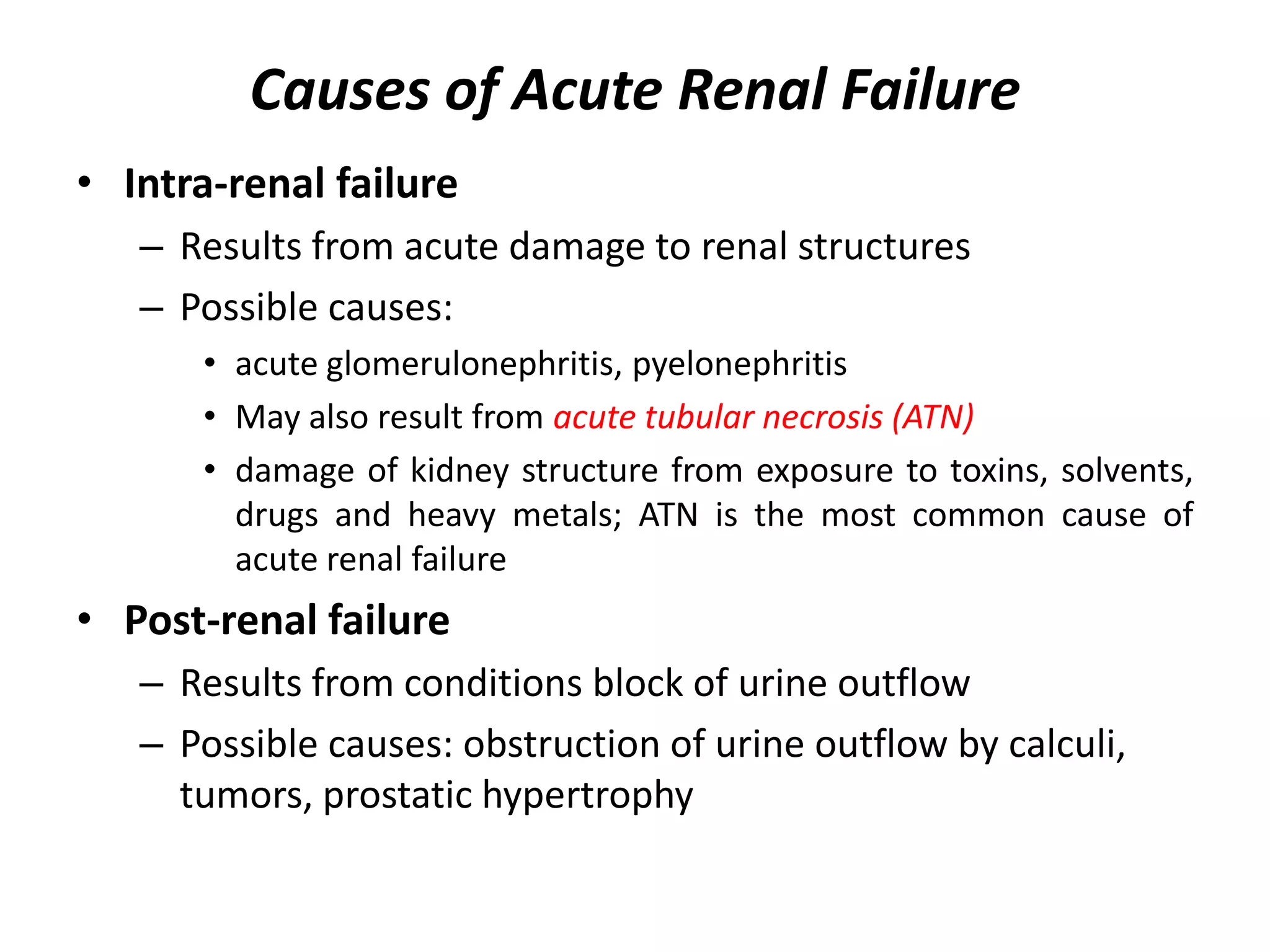
Causes of Acute Renal Failure
• Intra-renal failure
– Results from acute damage to renal structures
– Possible causes:
• acute glomerulonephritis, pyelonephritis
• May also result from acute tubular necrosis (ATN)
• damage of kidney structure from exposure to toxins, solvents,
drugs and heavy metals; ATN is the most common cause of
acute renal failure

• Post-renal failure
– Results from conditions block of urine outflow
– Possible causes: obstruction of urine outflow by calculi,
tumors, prostatic hypertrophy
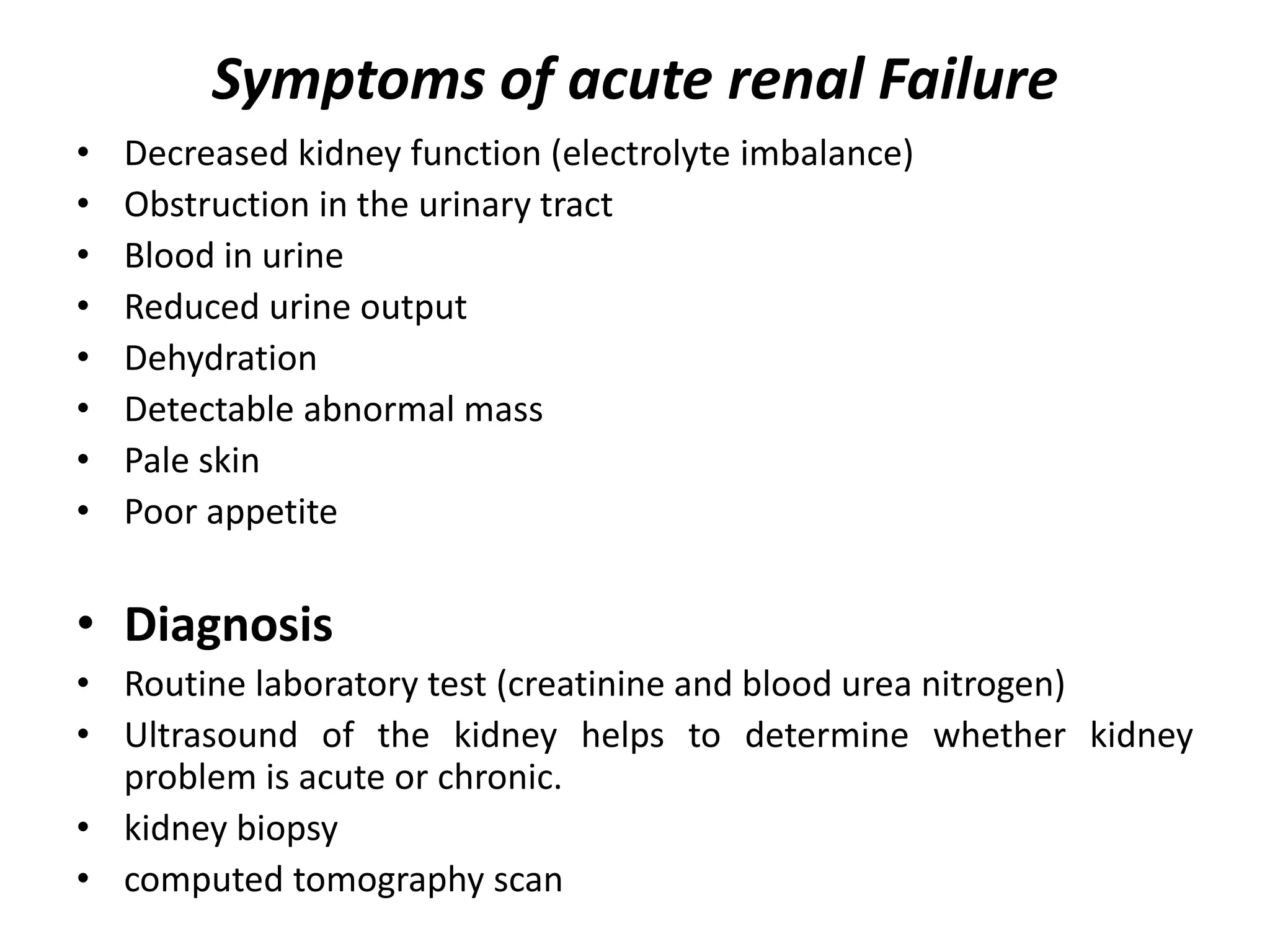
Symptoms of acute renal Failure
•
•
•
•
•
•
•
•

Decreased kidney function (electrolyte imbalance)
Obstruction in the urinary tract
Blood in urine
Reduced urine output
Dehydration
Detectable abnormal mass
Pale skin
Poor appetite

• Diagnosis
• Routine laboratory test (creatinine and blood urea nitrogen)
• Ultrasound of the kidney helps to determine whether kidney
problem is acute or chronic.
• kidney biopsy
• computed tomography scan
Treatment of acute renal failure
• Treatment
– Prevention of acute renal failure through support of blood
pressure and blood volume
– Correction of fluid and electrolyte imbalances
– Dialysis, which may be employed while the kidneys are in
the recovery phase
– Low protein, high carbohydrate diet to minimize the
formation of nitrogenous wastes
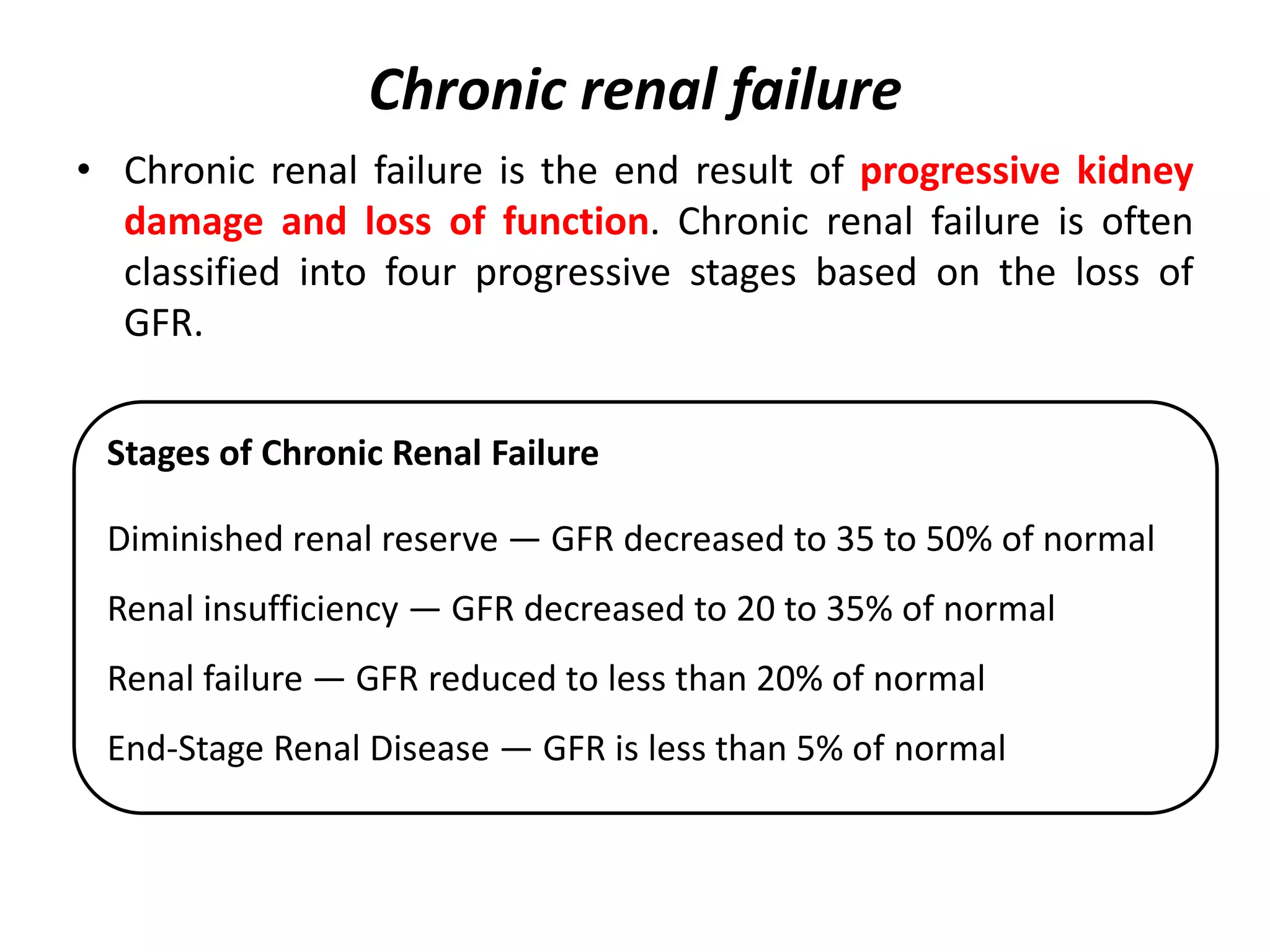
Chronic renal failure
• Chronic renal failure is the end result of progressive kidney
damage and loss of function. Chronic renal failure is often
classified into four progressive stages based on the loss of
GFR.
Stages of Chronic Renal Failure
Diminished renal reserve — GFR decreased to 35 to 50% of normal
Renal insufficiency — GFR decreased to 20 to 35% of normal

Renal failure — GFR reduced to less than 20% of normal
End-Stage Renal Disease — GFR is less than 5% of normal
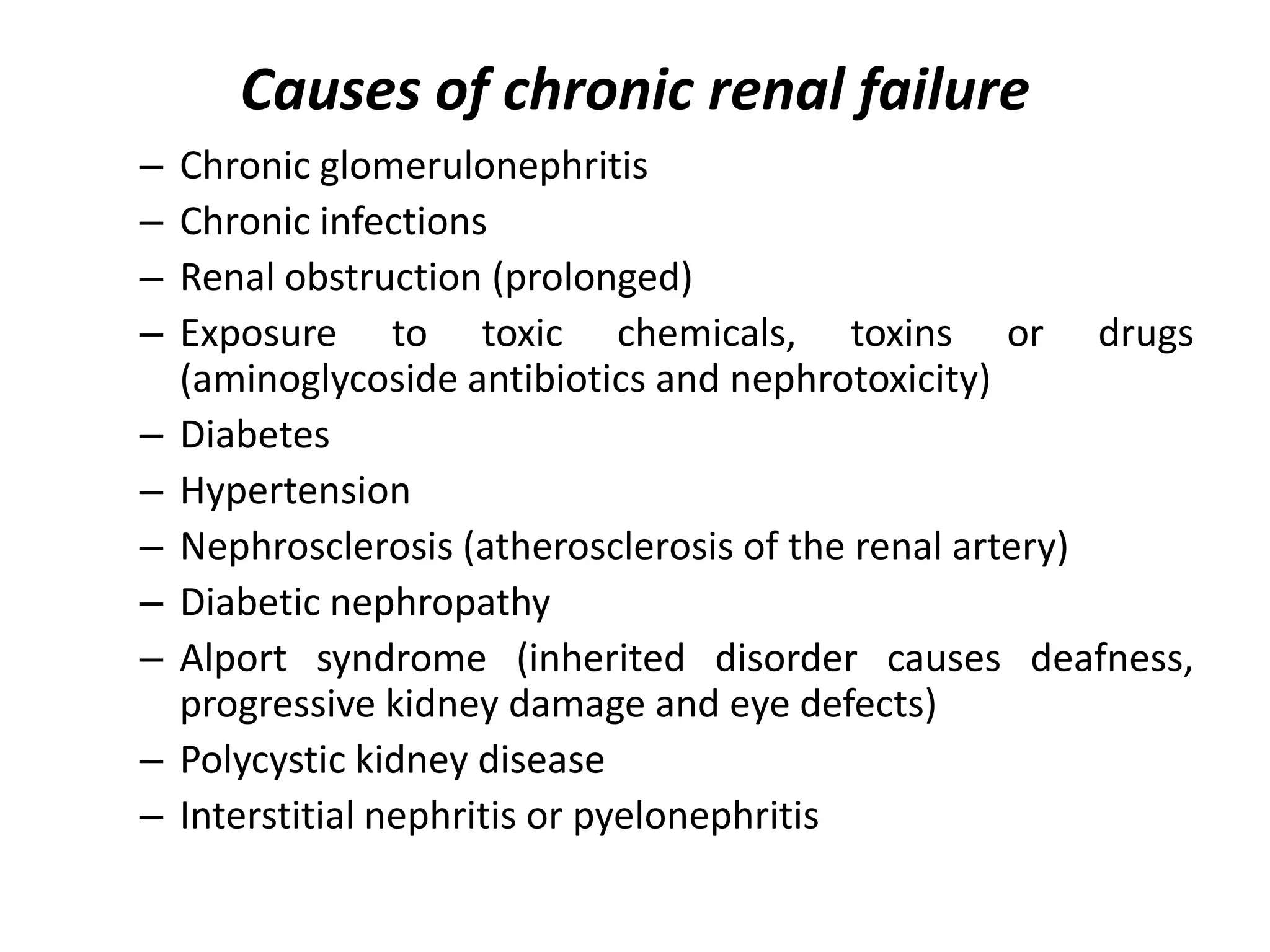
Causes of chronic renal failure
–
–
–
–
–
–
–
–
–

–
–

Chronic glomerulonephritis
Chronic infections
Renal obstruction (prolonged)
Exposure to toxic chemicals, toxins or drugs
(aminoglycoside antibiotics and nephrotoxicity)
Diabetes
Hypertension
Nephrosclerosis (atherosclerosis of the renal artery)
Diabetic nephropathy
Alport syndrome (inherited disorder causes deafness,
progressive kidney damage and eye defects)
Polycystic kidney disease
Interstitial nephritis or pyelonephritis
Symptoms of chronic renal failure
– Until very kidney function remains, chronic renal failure
may not developed
– Anemia, increased levels of phosphates (in blood) are
complications of kidney failure
– Malaise
– Dry skin
– Poor appetite
– Vomiting
– Bone pain
– metallic taste in mouth
– detectable abdominal mass
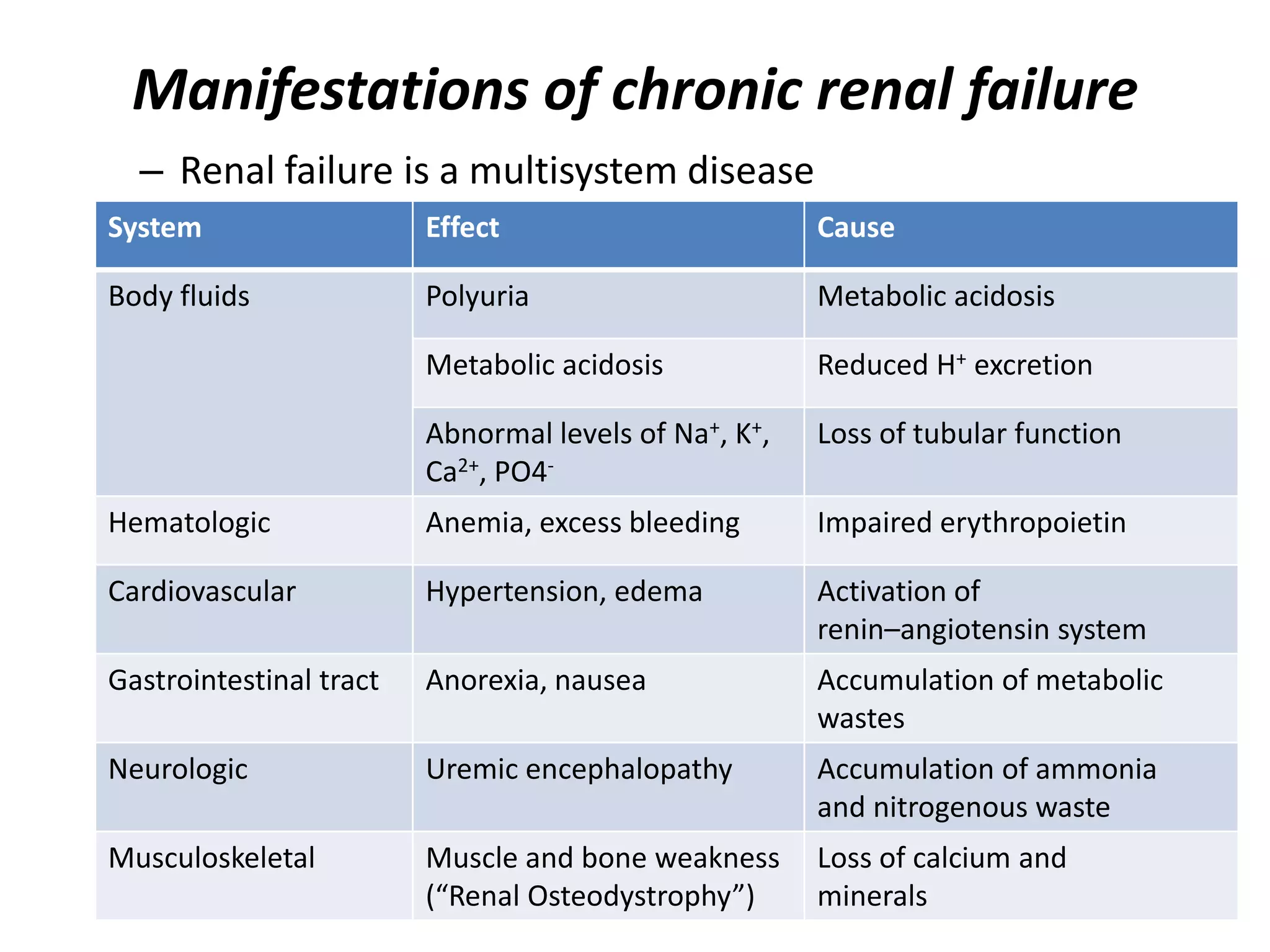
Manifestations of chronic renal failure
– Renal failure is a multisystem disease
System

Effect

Cause

Body fluids

Polyuria

Metabolic acidosis

Metabolic acidosis

Reduced H+ excretion

Abnormal levels of Na+, K+,
Ca2+, PO4-

Loss of tubular function

Hematologic

Anemia, excess bleeding

Impaired erythropoietin

Cardiovascular

Hypertension, edema

Activation of
renin–angiotensin system

Gastrointestinal tract

Anorexia, nausea

Accumulation of metabolic
wastes

Neurologic

Uremic encephalopathy

Accumulation of ammonia
and nitrogenous waste

Musculoskeletal

Muscle and bone weakness
(“Renal Osteodystrophy”)

Loss of calcium and
minerals
Treatment of chronic renal failure
• Careful management of fluids and electrolytes
• Prudent use of diuretics
• Careful dietary management; restriction of dietary
protein intake
• Recombinant erythropoietin to treat anemia
• Renal dialysis
• Renal transplantation
Disorders of the bladder and urethera
– Urine reflux: abnormal movement of urine from the
bladder into ureters or kidneys.
– Neurogenic bladder: disease of the central nervous system
or peripheral nerves involved in the control of micturition.
– overactive bladder: chronic condition of the bladder in the
urinary tract that causes sudden urges to urinate.
Thank you
Aminoglycoside antibiotics and
nephrotoxicity
• Aminoglycoside (streptomycin, gentamicin and kanamycin)
toxicity is most likely to occur in elderly people, those with
renal insufficiency or with chronic use.
• Concurrent use of loop diuretics may also compound the
adverse renal effects of the aminoglycosides.

Back
Dialysis
Type of Dialysis:
• Hemodialysis (primary)
• Peritoneal dialysis (primary)
• Others
•
•
•

Hemofiltration
Hemodiafiltration
Intestinal dialysis

Back

Acute and chronic renal failure

  • 1.
    Acute and chronicrenal failure Dr. S. Parasuraman Faculty of Pharmacy, AIMST.
  • 2.
    Renal failure • Renalfailure is defined as a significant loss of renal function in both kidneys to the point where less than 10 to 20% of normal GFR remains. • Renal failure may occur as an acute and rapidly progressing process or may present as a chronic form in which there is a progressive loss of renal function over a number of years. • Acute renal failure has an abrupt onset and is potentially reversible. • Chronic failure progresses slowly over at least three months and can lead to permanent renal failure.
  • 3.
    Pathophysiology of RenalFailure • In renal failure there is either glomerular or tubular dysfunction e.g. – glomerulonephritis primarily causes of glomerular damage – aminoglycoside nephrotoxicity is mainly in tubular • Glomerular dysfunction- As the main function of glomeruli is filtration, glomerular dysfunction leads to fall in GFR with retention of those substances usually cleared by filtration, including water. • Tubular Dysfunction- As the main function of tubules is reabsorption tubular failure results in the voiding of large volumes of dilute urine (polyuria) of low specific gravity, along with electrolytes and nutrients.
  • 4.
    Acute renal failure •Sudden decrease in renal function. • Acute renal failure may be pre-renal, intra-renal or post-renal in nature. Acute renal failure is often reversible so long as permanent injury to the kidney has not occurred. • Manifestations – – – – Oliguria (reduced urine output) Possible edema and fluid retention Elevated blood urea nitrogen levels (BUN) and serum creatinine Alterations in serum electrolytes
  • 5.
    Causes of AcuteRenal Failure • Myocardial infarction, rhabdomyolysis, decreased blood flow, obstruction, hemolytic uremic syndrome, Glomerulonephritis are common causes of acute renal failure. • Acute Renal Failure classified as pre-renal failure, intra-renal failure and post-renal failure • Pre-renal failure – Results from impaired or reduced blood flow to the kidney – Possible causes: shock, hypotension, anaphylaxis, ischemic formation
  • 6.
    Causes of AcuteRenal Failure • Intra-renal failure – Results from acute damage to renal structures – Possible causes: • acute glomerulonephritis, pyelonephritis • May also result from acute tubular necrosis (ATN) • damage of kidney structure from exposure to toxins, solvents, drugs and heavy metals; ATN is the most common cause of acute renal failure • Post-renal failure – Results from conditions block of urine outflow – Possible causes: obstruction of urine outflow by calculi, tumors, prostatic hypertrophy
  • 7.
    Symptoms of acuterenal Failure • • • • • • • • Decreased kidney function (electrolyte imbalance) Obstruction in the urinary tract Blood in urine Reduced urine output Dehydration Detectable abnormal mass Pale skin Poor appetite • Diagnosis • Routine laboratory test (creatinine and blood urea nitrogen) • Ultrasound of the kidney helps to determine whether kidney problem is acute or chronic. • kidney biopsy • computed tomography scan
  • 8.
    Treatment of acuterenal failure • Treatment – Prevention of acute renal failure through support of blood pressure and blood volume – Correction of fluid and electrolyte imbalances – Dialysis, which may be employed while the kidneys are in the recovery phase – Low protein, high carbohydrate diet to minimize the formation of nitrogenous wastes
  • 9.
    Chronic renal failure •Chronic renal failure is the end result of progressive kidney damage and loss of function. Chronic renal failure is often classified into four progressive stages based on the loss of GFR. Stages of Chronic Renal Failure Diminished renal reserve — GFR decreased to 35 to 50% of normal Renal insufficiency — GFR decreased to 20 to 35% of normal Renal failure — GFR reduced to less than 20% of normal End-Stage Renal Disease — GFR is less than 5% of normal
  • 10.
    Causes of chronicrenal failure – – – – – – – – – – – Chronic glomerulonephritis Chronic infections Renal obstruction (prolonged) Exposure to toxic chemicals, toxins or drugs (aminoglycoside antibiotics and nephrotoxicity) Diabetes Hypertension Nephrosclerosis (atherosclerosis of the renal artery) Diabetic nephropathy Alport syndrome (inherited disorder causes deafness, progressive kidney damage and eye defects) Polycystic kidney disease Interstitial nephritis or pyelonephritis
  • 11.
    Symptoms of chronicrenal failure – Until very kidney function remains, chronic renal failure may not developed – Anemia, increased levels of phosphates (in blood) are complications of kidney failure – Malaise – Dry skin – Poor appetite – Vomiting – Bone pain – metallic taste in mouth – detectable abdominal mass
  • 12.
    Manifestations of chronicrenal failure – Renal failure is a multisystem disease System Effect Cause Body fluids Polyuria Metabolic acidosis Metabolic acidosis Reduced H+ excretion Abnormal levels of Na+, K+, Ca2+, PO4- Loss of tubular function Hematologic Anemia, excess bleeding Impaired erythropoietin Cardiovascular Hypertension, edema Activation of renin–angiotensin system Gastrointestinal tract Anorexia, nausea Accumulation of metabolic wastes Neurologic Uremic encephalopathy Accumulation of ammonia and nitrogenous waste Musculoskeletal Muscle and bone weakness (“Renal Osteodystrophy”) Loss of calcium and minerals
  • 13.
    Treatment of chronicrenal failure • Careful management of fluids and electrolytes • Prudent use of diuretics • Careful dietary management; restriction of dietary protein intake • Recombinant erythropoietin to treat anemia • Renal dialysis • Renal transplantation
  • 14.
    Disorders of thebladder and urethera – Urine reflux: abnormal movement of urine from the bladder into ureters or kidneys. – Neurogenic bladder: disease of the central nervous system or peripheral nerves involved in the control of micturition. – overactive bladder: chronic condition of the bladder in the urinary tract that causes sudden urges to urinate.
  • 15.
  • 16.
    Aminoglycoside antibiotics and nephrotoxicity •Aminoglycoside (streptomycin, gentamicin and kanamycin) toxicity is most likely to occur in elderly people, those with renal insufficiency or with chronic use. • Concurrent use of loop diuretics may also compound the adverse renal effects of the aminoglycosides. Back
  • 17.
    Dialysis Type of Dialysis: •Hemodialysis (primary) • Peritoneal dialysis (primary) • Others • • • Hemofiltration Hemodiafiltration Intestinal dialysis Back